Grønland neighbourhood guide — Oslo's multicultural quarter
Oslo: the taste of Oslo food tour
Duration: 4 hours
- Tastings included
- Small group
What is Grønland in Oslo?
Grønland is Oslo's most diverse neighbourhood — a dense, urban quarter east of Sentrum with a long-established multicultural community (Pakistani, Somali, Eastern European, and other communities), Oslo's cheapest and most authentic street food, a raw nightlife scene, and the boundary with the Tøyen district where Munch grew up.
What Grønland is and why it matters
Grønland doesn’t appear on most Oslo tourist itineraries. It’s not mentioned in hotel concierge recommendations. It’s not featured in the Visit Oslo brochures. This is partly the neighbourhood’s charm: it’s Oslo in a register that tourism hasn’t processed.
The neighbourhood lies east of Sentrum and south of Grünerløkka — a 10 to 15-minute walk from Karl Johans gate in the direction of the Oslo Opera House. It developed in the 19th century as working-class housing and transformed from the 1970s onward with significant immigration from Pakistan, Somalia, the Middle East, and Eastern Europe. Today it’s the most genuinely multicultural part of Oslo, with a density of halal butchers, ethnic grocery shops, prayer spaces, and non-Norwegian restaurants that feels markedly different from any other part of the city.
This matters for visitors because it’s also where some of Oslo’s best-value, most authentic food and nightlife is.
| Where | East of Sentrum, south of Grünerløkka |
| Known for | Cheap authentic food, the Bazaar, unpretentious nightlife |
| Cost | Meals around NOK 100–180, well below Sentrum prices |
| Getting there | Grønland T-bane station (lines 2, 3, 4, 5, 6) |
| Best for | Budget travellers, food lovers, curious walkers |
The Grønland Bazaar and market area
Grønlands torg — the small square at the neighbourhood’s heart — has the Grønland Basar, a compact covered market that is the most interesting food shopping in central Oslo. Inside: halal meat vendors, Pakistani and Somali spice merchants, Middle Eastern pastry shops, South Asian textile stores, and a few fast-food counters serving lamb karahi, falafel wraps, and variations on café culture that have nothing to do with Tim Wendelboe’s artisan espresso.
This is not a romanticised “authentic market” in the tourist-guide sense — it’s a working neighbourhood market used by residents. The spice selection is excellent and genuinely more affordable than the equivalent in Mathallen.
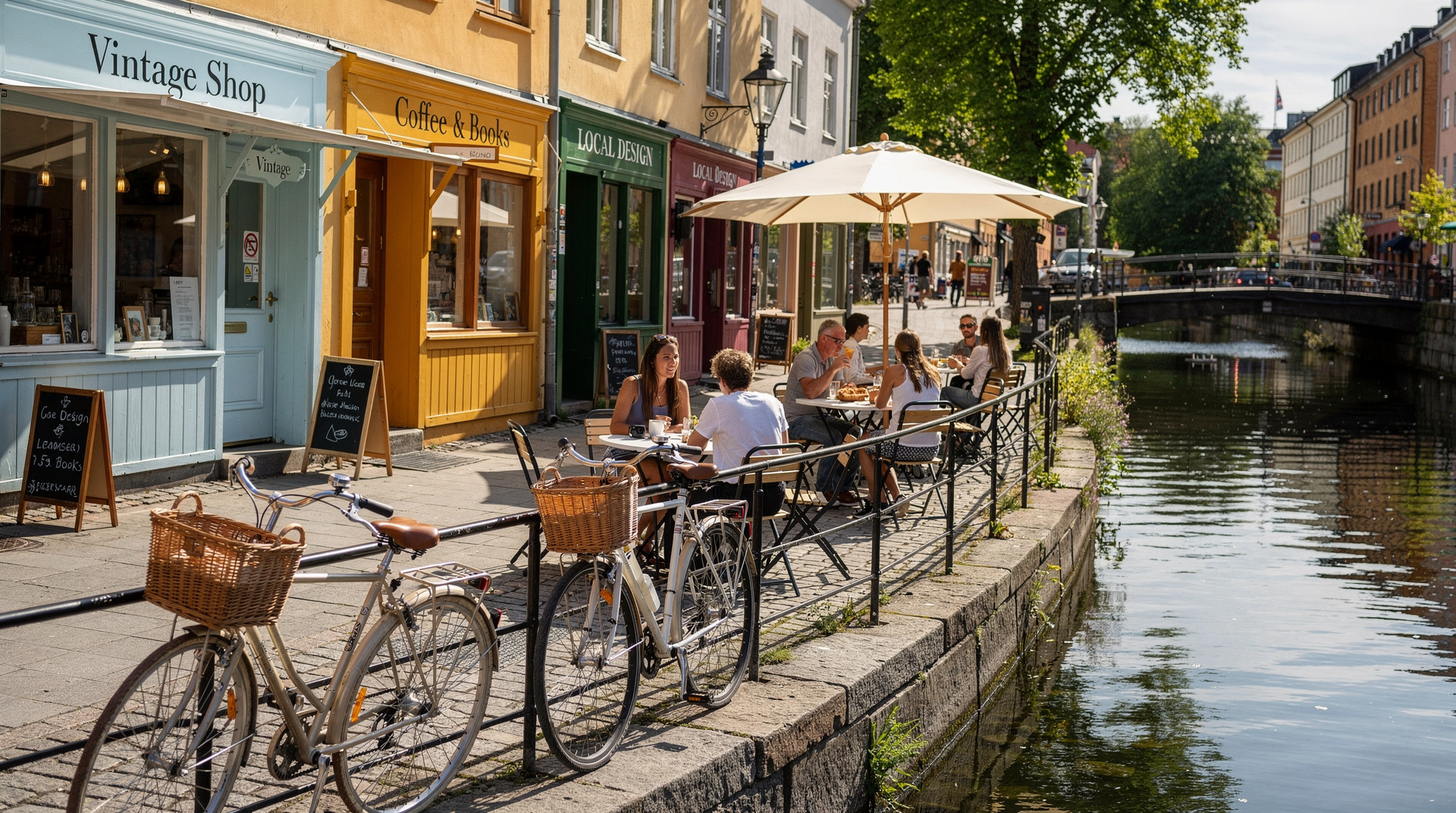
The streets around the bazaar — Grønlandsleiret, Tøyengata — have a similar character: practical, diverse, unpolished. Norwegian corner shops sit next to Pakistani sari shops and Somali grocery importers. The density of cheap, good-quality food on Grønlandsleiret specifically (Pakistani, Vietnamese, Middle Eastern, and Ethiopian restaurants all within 200 metres) makes this the best street in Oslo for budget eating.
Where to eat in Grønland
Pakistani restaurants along Grønlandsleiret: Multiple restaurants serve chicken or lamb karahi, biryani, and naan at NOK 100 to 150 (USD 11 to 16) per person. The quality is genuine — this is the Pakistani community’s own food rather than a simplified version for outsiders. Lahori Karahi and similar family-run spots are consistently good.
Olympen (Grønlandsleiret 15): This is the exception to the “cheap Grønland” rule — a grand Victorian brasserie with ornate interior, dark wood, and chandeliers. Olympen serves traditional Norwegian food (smørbrød, meatballs, kjøttkaker) and Norwegian craft beer. More expensive than the surrounding street food (NOK 200 to 350/USD 21 to 38 for a main course) but excellent quality and a genuinely atmospheric space.
Vietnamese and Middle Eastern: Several excellent Vietnamese restaurants serve pho and bánh mì at NOK 90 to 130 (USD 10 to 14). Middle Eastern bakeries sell fresh flatbread, pastries, and coffee at prices that feel almost disorienting after a day of Oslo tourist pricing.
Kafistova: A Norwegian traditional cafeteria-style restaurant on Rosenkrantz gate (technically Sentrum but closely linked to the Grønland food scene) serving traditional Norwegian home cooking — meatballs, fish soup, potato dumpling (raspeballer) — at prices well below the restaurant mainstream. Lunch from NOK 120 to 180 (USD 13 to 19). Closing time 18:00.
Nightlife and bars
Dattera til Hagen
Dattera til Hagen on Grønlands torg is one of Oslo’s most beloved and consistently enjoyable bars. The building is unassuming; the courtyard garden behind it is extraordinary — a multi-level outdoor space with fairy lights, mismatched furniture, fire pits in cooler months, and the kind of relaxed, cross-demographic crowd that’s hard to find elsewhere in Oslo’s somewhat age-stratified bar scene. Cocktails are NOK 150 to 180 (USD 16 to 19); beer from NOK 90 (USD 10). No meaningful dress code; limited queue even on busy nights. One of the most genuinely good bars in the city.
Internasjonalen (Youngstorget 2, Sentrum/Grønland border)
On Youngstorget square (between Sentrum and Grønland), Internasjonalen has a strong historical connection to the labour movement and a current reality as a large, slightly chaotic bar with good DJ nights and affordable drink prices. The multiple rooms mean it rarely feels over-crowded. Entry usually free before midnight.
Olympen bar section
The bar within Olympen brasserie is worth knowing — good Norwegian craft beer selection, the grand Victorian interior, and a mostly local crowd.
The Munch connection
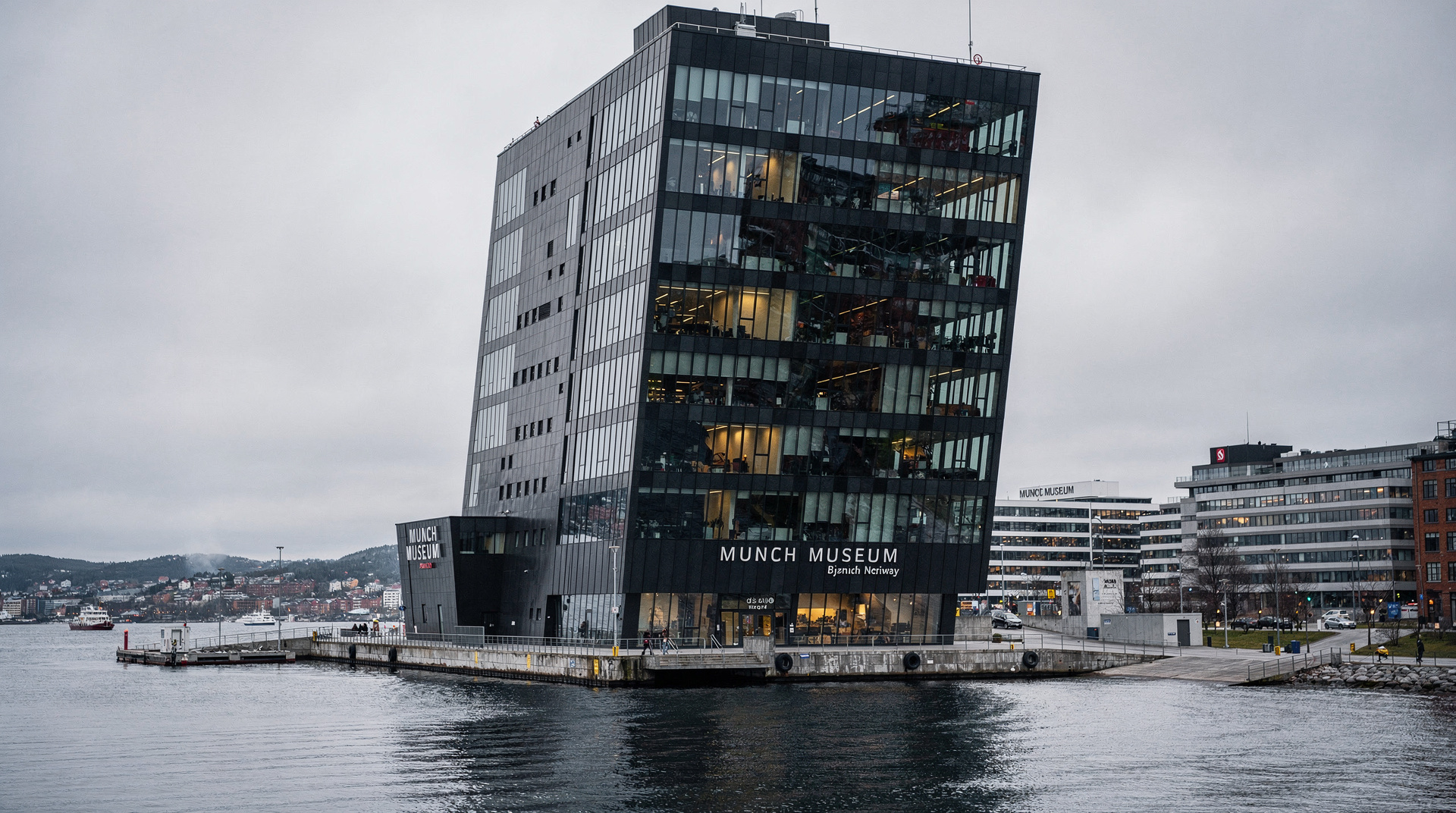
Tøyen, directly north of Grønland, is where Edvard Munch spent his formative years. The house where he lived on Fossveien no longer stands but the neighbourhood’s character — with the remnant Tøyen park, the Botanical Garden, and the area’s particular quality of urban-meets-nature — runs through Munch’s early paintings. The original Munch Museum was in Tøyen; the collection has since moved to the new building in Bjørvika. The Tøyen neighbourhood is currently undergoing significant regeneration.
For the Munch paintings themselves, including multiple versions of The Scream and an enormous collection of works on paper and prints, see our Munch Museum guide.
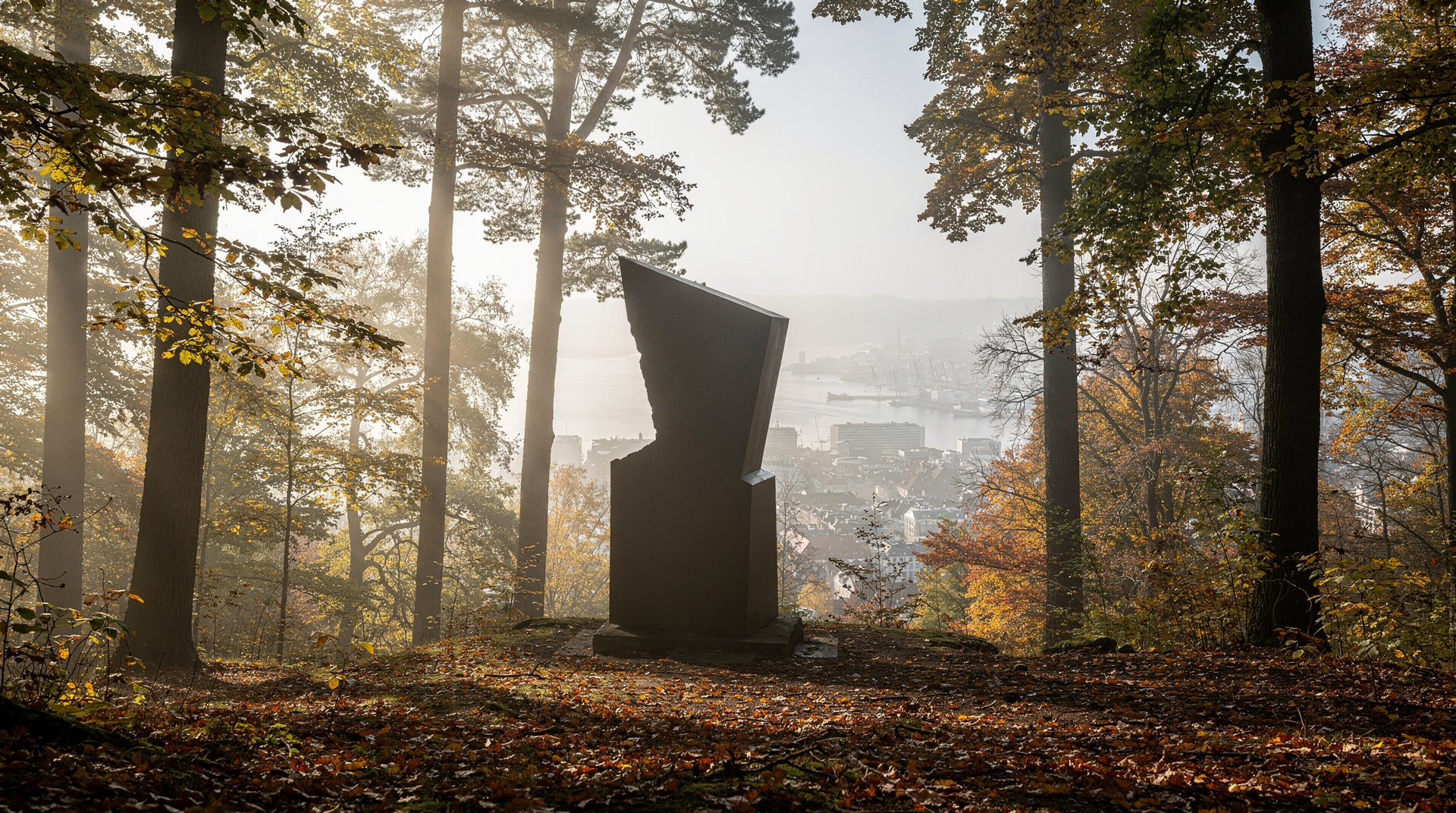
The Ekebergparken hillside above Grønland — with the view that allegedly inspired The Scream — is a 20-minute walk uphill from Grønlands torg. See our Ekeberg sculpture park guide.
Getting around from Grønland
Metro (T-bane): Grønland station (lines 2, 3, 4, 5, 6) is at the centre of the neighbourhood. From here, all lines connect to Sentrum in 5 to 8 minutes and to Majorstuen in 15 minutes. This makes Grønland actually one of the better-connected neighbourhoods for metro access.
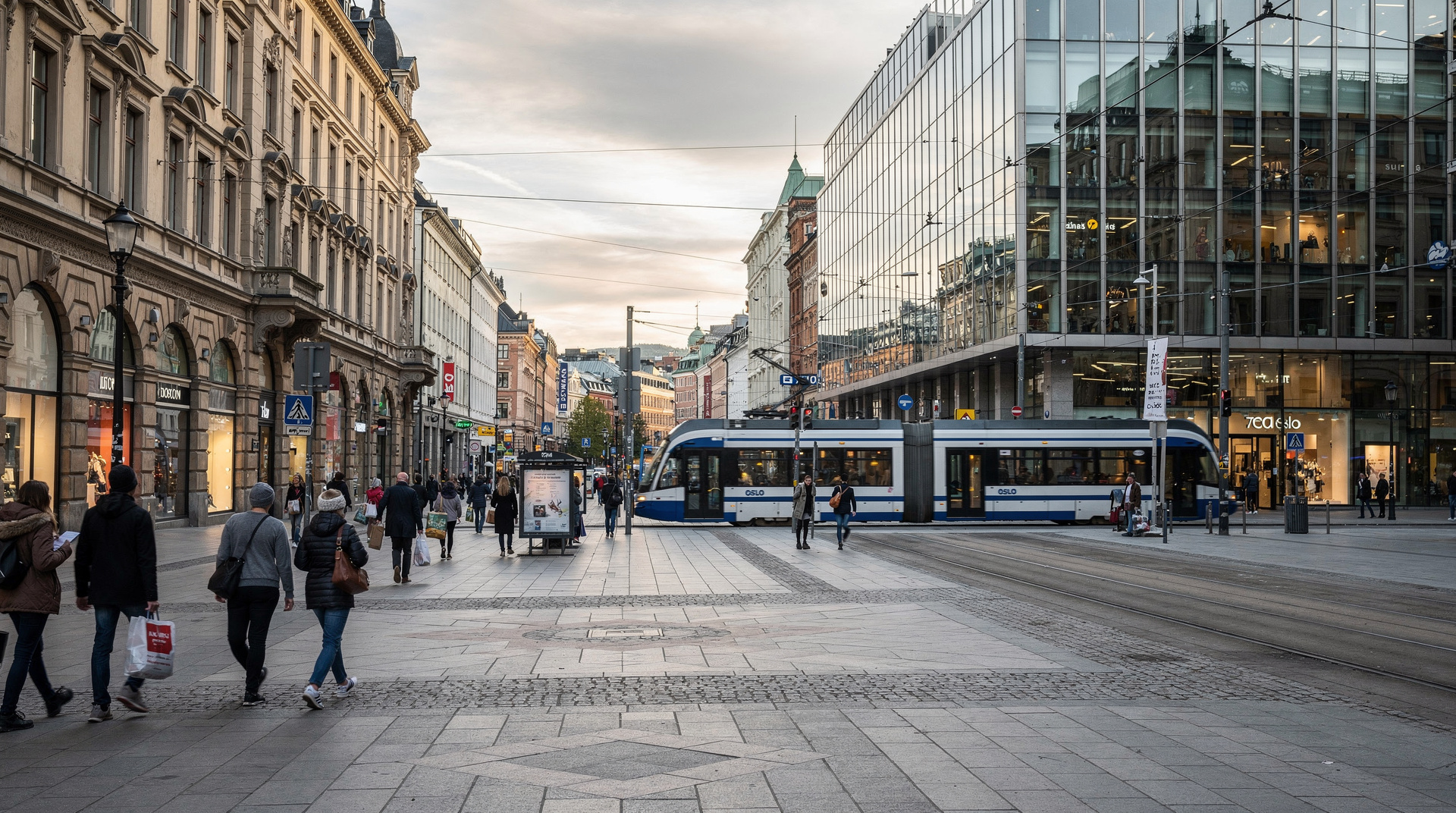
Tram: Lines 18 and 19 pass along Grønlandsleiret, connecting south to Bjørvika and the Opera House (5 minutes) and north toward Tøyen and the Botanical Garden.
Walking: From Grønland to Sentrum (Karl Johans gate): 10 to 15 minutes. To Grünerløkka: 15 to 20 minutes north. To Bjørvika and the Opera House: 10 to 15 minutes southeast.
Ruter ticketing — NOK 41 (USD 4.40) single, day passes available. See Ruter transport guide.
Grønland and the neighbourhood’s honest reputation
Oslo has a history of slightly unfair anxiety about Grønland — the neighbourhood has appeared in Norwegian media stories about immigration and crime in ways that significantly exceed the actual risk profile. By any comparative measure (European city districts, crime statistics, daytime and evening safety), Grønland is a normal urban neighbourhood with a lower crime rate than any equivalent district in London, Paris, or Berlin.
What Grønland does have is an unpolished urban character that some visitors find unfamiliar. The streets are louder at night, the weekend crowd is more varied in age and behaviour, and the aesthetic is less manicured than Frogner. This is simply what a multicultural working neighbourhood looks like, and for many visitors it’s one of the more genuine and interesting parts of Oslo.
For a complete picture of Oslo’s neighbourhoods and honest accommodation advice, see our where to stay in Oslo guide. For budget eating more broadly, see our budget eats in Oslo guide and Oslo on a budget guide.
Grønland vs Grünerløkka: a quick comparison
Visitors weighing up an afternoon (or a base) often ask which of the two eastern neighbourhoods suits them better.
| Grønland | Grünerløkka | |
|---|---|---|
| Character | Unpolished, multicultural, working-class roots | Bohemian, gentrified, café-and-boutique focused |
| Food | Cheapest, most authentic non-Norwegian food | Trendy cafés, brunch spots, craft beer bars |
| Nightlife | Unpretentious, low-key bars like Dattera til Hagen | Livelier, younger, more bar-hopping |
| Cost | Lowest in central Oslo | Mid-range |
| Best for | Budget food, curiosity, an honest slice of the city | People-watching, shopping, café culture |
Most visitors don’t need to choose — the two neighbourhoods are a 15 to 20-minute walk or a couple of tram stops apart, and combining a late afternoon in Grünerløkka with an evening meal in Grønland works well.
A practical half-day in Grønland
Start at the Grønland Basar around midday, when the market is at its liveliest, and browse the spice and grocery stalls before picking up a Pakistani karahi lunch on Grønlandsleiret. Spend the early afternoon wandering the side streets toward Tøyen, where the Munch connection and the Botanical Garden give the walk a quieter second half. If you have energy left, the climb up to Ekeberg sculpture park rewards with the best view over the fjord in this part of the city, and you’re back down in time for dinner and a drink at Dattera til Hagen or Olympen.
How to eat well in Grønland without a plan
The easiest way to enjoy the food here is to resist over-planning. Walk the length of Grønlandsleiret once, read the menus in the windows, and notice where the residents are queueing. A busy room full of people speaking the language of the cuisine is a better signal than any review. Most places are informal, many have a counter where you order and pay first, and nobody will rush you if you take your time deciding. Share a few dishes if you are with others: karahi, rice, bread and a vegetable side make a more interesting table than three identical plates.
If you are curious about the wider picture of how Norwegians and newcomers eat, our guide to Norwegian food to try and the piece on brown cheese and other specialities are a good counterpoint to a Grønland lunch. For something more polished and covered, Mathallen food hall sits a short way north and makes an instructive comparison with the Bazaar: the same love of ingredients, a very different atmosphere and price tag. If you would rather be guided, a food tour in Oslo can add context, though Grønland rewards wandering alone just as well.
Be honest with yourself about the budget, too. Eating here is one of the few ways to keep a holiday in an expensive city under control, which is why it features so heavily in our advice on cheap eats in Oslo and in the broader question of whether the city is expensive. A hearty meal in Grønland can free up money for the things that genuinely cost more, such as museum tickets or a fjord cruise.
Evenings, bars and how late to stay
Grønland’s evenings start earlier and loosen up more slowly than in the busier nightlife districts. Dinner in one of the restaurants, a drink in a courtyard, and a walk back toward the centre make a complete night without any need for a club. If you want to compare scenes, our Oslo nightlife guide and the list of the best bars in Oslo show where Grønland sits among the alternatives, and the craft beer guide covers the taprooms that Olympen’s selection hints at.
Because the neighbourhood is mixed, you will see everything from families finishing a late meal to groups starting a weekend night. That variety is part of the appeal, but it also means the street feels livelier and a little noisier than a residential area. If you are staying nearby and sleep lightly, ask for a room facing away from the main road.
Fitting Grønland into a longer trip
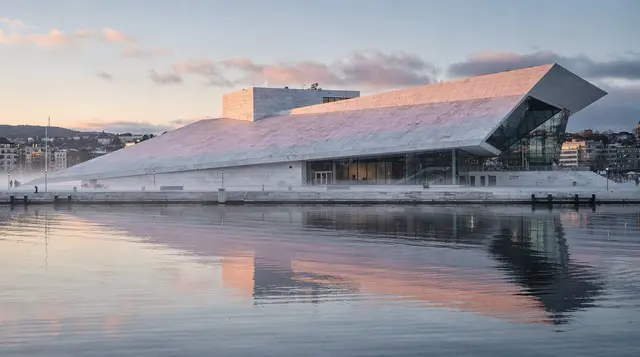
Grønland works best as one piece of a bigger plan rather than a full day on its own. Pair it with the Sentrum neighbourhood for the classic sights, or with the Oslo Opera House and the waterfront for a contrast between the grittier east and the new architecture of the harbour. If you have the destination page for Grønland and Tøyen open alongside this guide, it will help you place the streets on a map, and the wider Oslo overview shows how the eastern districts relate to the centre.
For visitors building a schedule, the Oslo in 2 days and budget weekend itineraries both leave room for an evening meal in an area like this, and the food and design weekend shows how a meal-focused trip can be organised. Anyone who prefers to stay in the east can read about the Grünerløkka food scene for ideas on the next morning’s coffee and brunch.
A few habits make the visit smoother. Carry a card, since the city is largely cashless. Keep a little curiosity about what you are looking at on the shelves of the grocery shops, and ask politely if you are unsure what something is: shopkeepers are generally happy to explain. Dress for the weather rather than the neighbourhood, and give yourself time to pause in the square rather than rushing from one tick-box to the next. The reward for a slower pace is a fuller sense of how Oslo actually lives today.
Frequently asked questions about Grønland neighbourhood guide — Oslo's multicultural quarter
Is Grønland safe?
Yes — Grønland is a safe neighbourhood by any objective measure. Oslo is one of Europe's safest capitals. Grønland has a more urban, unpolished character than Frogner or Grünerløkka, and it gets louder on weekend nights, but it is not dangerous. The fear some tourists express about the area is disproportionate.What is there to eat in Grønland?
Some of Oslo's cheapest and best non-Norwegian food — Pakistani karahi and biryani restaurants, Somali restaurants, Turkish kebab shops, Vietnamese noodle bars, and Middle Eastern cafés. A filling meal in Grønland costs NOK 100 to 180 (USD 11 to 19); the equivalent quality in Aker Brygge would cost three times more.What is the Grønland Bazaar?
The Grønland Basar is a small covered market on Grønlands torg with halal butchers, spice vendors, Middle Eastern and South Asian groceries, fabric stores, and a few fast food stalls. It's the most diverse food market in Oslo and a genuine reflection of the neighbourhood's character.Is Grønland good for nightlife?
Yes — Grønland has Oslo's most unpretentious nightlife. Dattera til Hagen (the legendary bar on Grønland torg with its fairy-lit courtyard) is one of the most loved bars in the city. Olympen is a grand Victorian brasserie. The nightlife here is less expensive and less performative than Aker Brygge.Where is the new Munch Museum in relation to Grønland?
The Munch Museum (MUNCH) opened in 2021 in Bjørvika, about 15 minutes on foot from Grønland. The original Munch Museum was in Tøyen, adjacent to Grønland. Tøyen has a strong Munch connection — he spent significant time in the area in the 1880s.Is Grønland a good base to stay in Oslo?
It can be, especially for budget-conscious visitors who want cheap food and don't mind an unpolished, urban feel over a manicured one. It's genuinely well connected — the T-bane station puts Sentrum 5 to 8 minutes away — and hotel prices are typically lower than Sentrum or Frogner. It's a less obvious choice for visitors who want quiet evenings or a classic 'postcard' Oslo neighbourhood.How does Grønland compare to Grünerløkka?
Grønland is grittier, cheaper, and more multicultural; Grünerløkka is more polished, more café-and-boutique focused, and more geared toward visitors. Both are a short walk or tram ride apart, so many visitors combine an afternoon in one with an evening in the other rather than choosing exclusively between them.
Top experiences
Bookable activities with verified prices and instant confirmation on GetYourGuide.