Sentrum neighbourhood guide — Oslo's central core
Oslo: guided walking tour of central Oslo with a local guide
Duration: 2 hours
- Local guide
- Small group
What is in Oslo Sentrum?
Oslo Sentrum (city centre) contains Karl Johans gate (the main pedestrian street), the Royal Palace and palace park, the National Museum, the Nobel Peace Center, Aker Brygge waterfront, and the main transport hubs. It's where most tourists stay and where Oslo's commercial and cultural infrastructure is concentrated.
| Where | Central Oslo, Oslo S to the Royal Palace |
| Cost | Free to walk; museum entry NOK 130-200 |
| Time needed | Half a day for the core sights |
| Getting there | Arrival point for most visitors — Oslo S, trams, metro |
| Best time | Daytime for sights; evening for one splurge meal at Aker Brygge |
Oslo’s city centre — what it is and what it isn’t
Oslo Sentrum is the commercial, cultural, and administrative core of the city. It’s where you arrive by air express train, where most tourist accommodation is, where the main museums cluster, and where the grand civic architecture of a 19th-century capital is concentrated. Understanding what Sentrum does well — and where it falls short — helps you use your time there effectively.
The honest summary: Sentrum has the best museums and the best architecture, but is not where Oslo’s most interesting daily life happens. For that, you need Grünerløkka, Frogner, or Grønland. Treat Sentrum as your daytime sightseeing base and one or two evenings at Aker Brygge, and use the tram network to experience the rest of the city.
How to read Sentrum on a first visit
Most first-time visitors arrive in Sentrum without a clear picture of how its pieces fit together, and that is the main reason they either love it or find it underwhelming. The neighbourhood is really three things layered together: a ceremonial axis (Karl Johans gate and the civic buildings along it), a waterfront (Aker Brygge, Tjuvholmen and the fortress), and a transport and commercial grid that connects the two. Once you see it that way, planning becomes simple. Spend your daylight on the axis and the waterfront, and treat the grid as the plumbing that gets you elsewhere.
If this is your first time in the city, it also helps to read our top things to do in Oslo alongside this guide, because several of the headline attractions sit in or right next to Sentrum. And if you are still deciding how long to stay overall, the how many days in Oslo guide explains why the centre rarely deserves more than a day or two of your trip.
Karl Johans gate
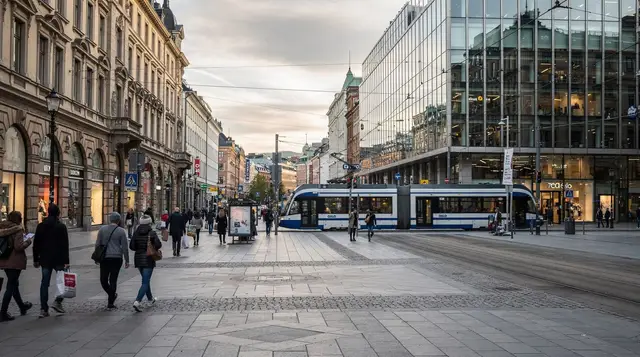
The main axis of Oslo Sentrum runs from Oslo S (Central Station, Jernbanetorget) westward to the Royal Palace — about 1.5 km of broad boulevard. Walking this route gives you the architectural bones of the Norwegian capital:
Oslo Central Station (Jernbanetorget): The eastern end. A functional but handsome late-19th century building, now expanded. Flytoget airport express departs from here — 19 minutes to Oslo Airport Gardermoen (OSL). See our Flytoget vs train guide for airport transport options.
The Bazaar Halls (Basarhallene): A round, covered market building from 1858, now serving as a cultural events venue.
Oslo Cathedral (Oslo Domkirke): The 17th-century cathedral facing onto Stortorvet square. Free to enter; the interior has been well-restored and the altarpiece is worth seeing. Open Monday to Saturday.
Stortinget (Parliament building): A confident piece of 19th-century classical architecture mid-way along Karl Johans gate. The public galleries are accessible during sessions; guided tours run on Saturdays.
National Theatre (Nationaltheatret): Norway’s leading theatre, in a grand building from 1899. Performances are in Norwegian; the building is worth seeing from the outside. The square in front is busy with trams — Nationaltheatret is one of Oslo’s most useful transport interchanges.
The University of Oslo: The classical university buildings (the Aula, decorated with Edvard Munch’s sun murals) face Karl Johans gate opposite Nationaltheatret. The Munch murals in the Aula are open for visits on selected days — check before going.
The Royal Palace: At the western end, raised on a hill in its own park (Slottsparken). The palace itself is open for guided tours in summer (July to mid-August). The park surrounding it is open and free at all times — popular for summer picnics and winter walks. The changing of the guard runs at 13:30 daily.
Walking Karl Johans gate well
The street rewards a slow pace and an early start. In the morning the pavements are calm, the light falls nicely on the facades, and you can stop at each building without being swept along by tour groups. By midday the central stretch fills up with visitors and street performers, and it becomes more of a corridor than a place to linger. If you only want the atmosphere and the photographs, go early; if you want to feel how locals use the street, visit in the evening when people cross it on their way home or to a bar.
Do not judge the whole city by the shop fronts here. The chains and souvenir stores are the least Norwegian part of Oslo, and the street is best treated as a backbone for the buildings rather than a destination for shopping. The full story, including what to look at and what to skip, is in our dedicated Karl Johans gate guide. At the western end, the Royal Palace guide covers the guided tours and the park in more detail.
Aker Brygge and the waterfront
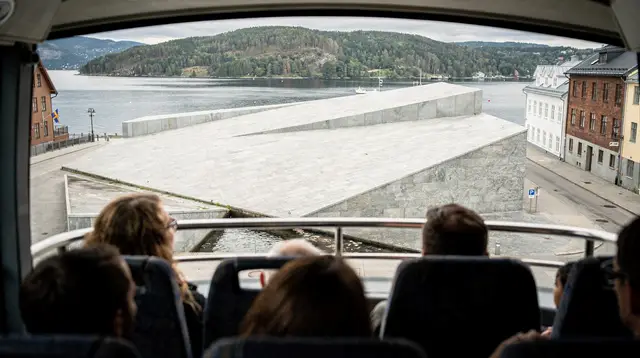
Walking south from Karl Johans gate brings you to Oslo’s redeveloped waterfront. Aker Brygge was an industrial shipyard until the 1980s; it’s now a mixed retail and restaurant complex with apartment towers and waterfront promenades. Adjacent Tjuvholmen, completed more recently, has The Thief hotel, the Astrup Fearnley Museum of Modern Art, and more upmarket residential and commercial development.
Astrup Fearnley Museum of Modern Art: An exceptional private modern art collection in a striking Renzo Piano-designed building with a glass sail roof on Tjuvholmen. Probably Oslo’s best contemporary art museum. Entry: NOK 180 (USD 19). Tuesday to Sunday.
Nobel Peace Center (Nobels Fredssenter): The museum attached to the Nobel Peace Prize, at the western end of Aker Brygge. Exhibitions change with each prize; the permanent installation explains the prize’s history. Entry: NOK 130 (USD 14). Open daily except Mondays.
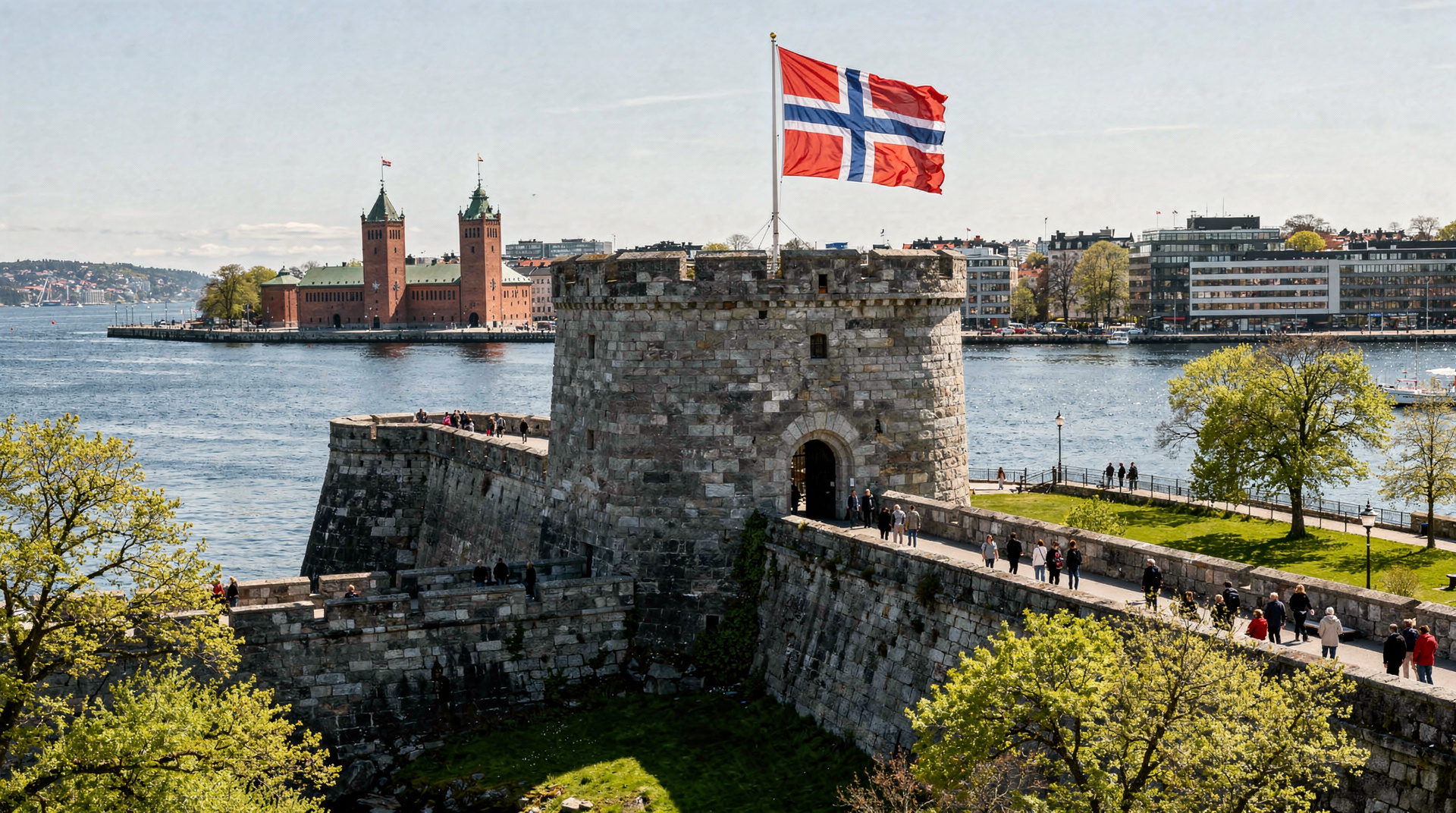
Akershus Fortress: The medieval fortress on the waterfront headland east of Aker Brygge. Free to enter the fortress grounds (open daily); the castle interior museum charges separately. One of Oslo’s most impressive historic sites and with excellent views over the fjord. See our Akershus Fortress guide.
The National Museum (Nasjonalmuseet)
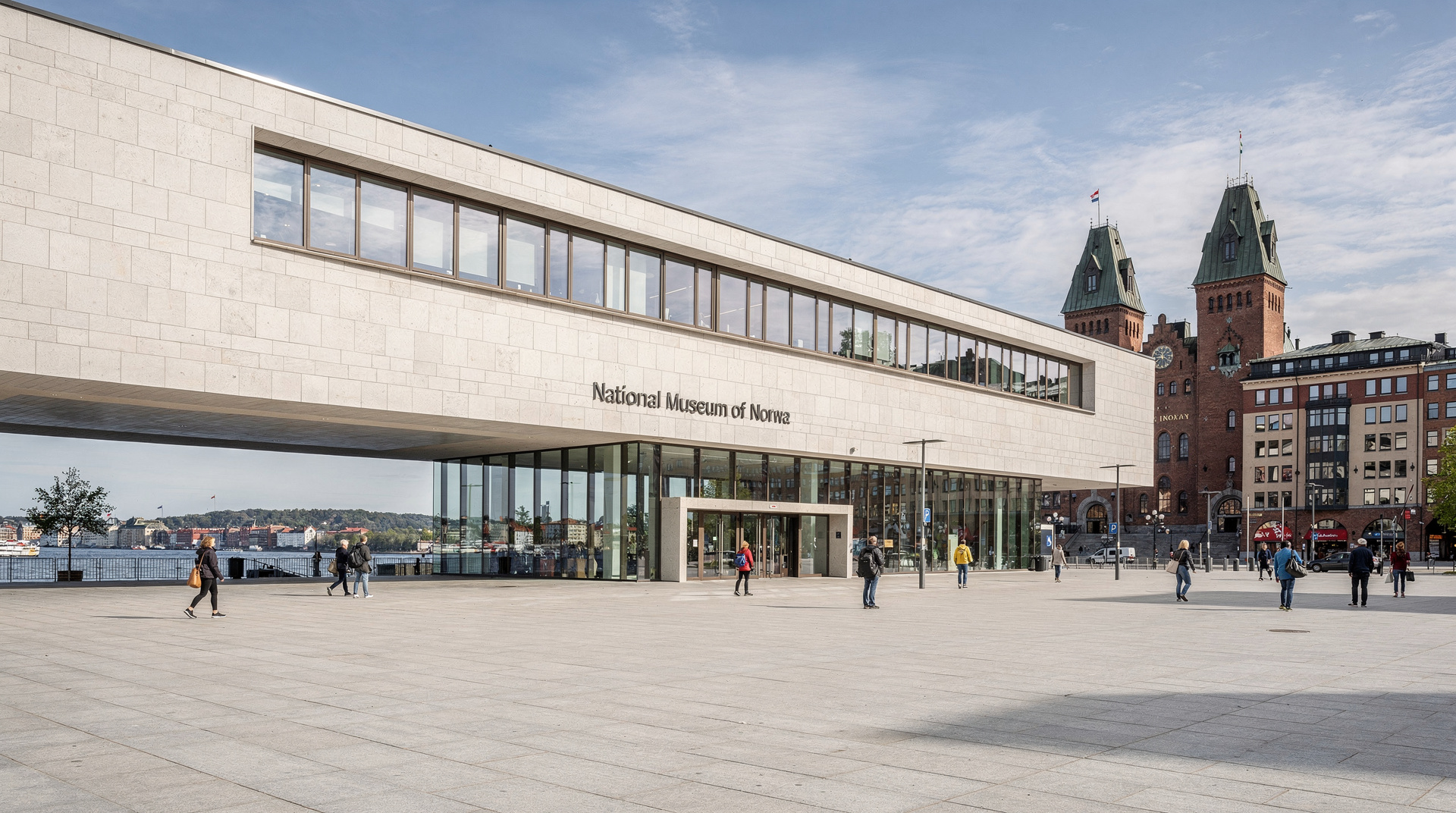
The National Museum on Brynjulf Bulls plass (near Aker Brygge) opened in 2022 and is now the largest art museum in Scandinavia — combining the previous collections of the National Gallery, Museum of Applied Art, and Museum of Architecture into a single purpose-built building of approximately 54,000 square metres.
The highlight for most visitors is Edvard Munch’s The Scream (the most famous version, painted in 1893 in tempera on board) in a dedicated, atmospheric room. The broader collection spans Norwegian art from the Middle Ages to the 20th century, international art, design objects, and architectural drawings.
Entry: NOK 200 (USD 21) adults; free for under-18s and for EU/EEA citizens with valid ID under certain conditions. Covered by the Oslo Pass. Open Tuesday to Sunday; closed Mondays. See our full National Museum guide.
Pairing museums sensibly
The mistake most visitors make in Sentrum is stacking too many indoor sights back to back. Art museums are tiring in a way that walking is not, and the second or third gallery of the day usually gets a tired, half-attentive visit. A better rhythm is one major museum, then a long outdoor stretch along the water or through the park, then perhaps a second, smaller stop. The National Museum pairs naturally with a walk to the waterfront, while the Astrup Fearnley sits well with a coffee on Tjuvholmen. Our Astrup Fearnley guide and the Nobel Peace Center guide help you decide which of the smaller venues suits your interests.
If you are building a longer list, the ranking of Oslo’s best museums puts Sentrum’s options next to those in Bygdøy and Bjørvika, so you can see what is worth the detour and what is not.
Sentrum in bad weather and different seasons
Sentrum is one of the easier parts of Oslo to enjoy when the weather turns. Many of its strongest attractions are indoors, and the distances between them are short, so a wet day does not wreck a plan. Our rainy day museums guide collects the best indoor options, and travelling with children is covered in the rainy day with kids guide.
In summer the centre is at its most pleasant: long evenings, open terraces and a waterfront that feels like the city’s living room. In winter the mood changes completely. Days are short, the palace park becomes a quiet snowy walk, and the museums do the heavy lifting. If you are choosing when to travel, the best time to visit Oslo guide compares the seasons, and daylight hours by season shows how much usable light you can count on for outdoor sightseeing.
The honest tourist trap warning
The restaurants along Karl Johans gate and the Aker Brygge waterfront are Oslo’s biggest tourist trap concentration. NOK 300 to 450 (USD 32 to 48) per main course for food that would cost half as much for better quality in Grünerløkka. The waterfront view is sold at a substantial markup.
One waterfront meal is a legitimate Oslo experience — the setting is undeniably attractive, particularly at sunset in summer. But three nights of Aker Brygge dining is a budget catastrophe and a culinary disappointment. For honest advice on where to eat, see our Oslo restaurant guide and Oslo tourist traps guide.
Eating well without leaving the centre
Avoiding the tourist premium does not mean leaving Sentrum entirely. A few minutes’ walk away from the main boulevard and the waterfront, prices and quality both improve. For quick and affordable options, see the cheap eats guide and the budget eats guide. If you want to understand why a meal in the centre can feel so costly, is Oslo expensive? puts the city’s price levels in context, and the overpriced food warning names the habits that cost visitors the most. The food hall at Grünerløkka, described in our Mathallen guide, is an easy tram ride away when you want something better than a waterfront tourist menu.
Getting around Sentrum
Sentrum is Oslo’s transport hub — every major route passes through or near it. Key transport points:
- Jernbanetorget (Oslo S): Metro (all lines), regional trains (Vy), airport express (Flytoget), most bus routes.
- Nationaltheatret: Metro, multiple tram lines. Best interchange for Frogner and westward journeys.
- Stortinget: Metro central hub.
- Aker Brygge: Ferry to Bygdøy peninsula and fjord islands, accessible in summer.
See our full getting around Oslo guide for the Ruter ticketing system, transport apps, and practical transport advice.
Because everything in the centre is close together, you rarely need more than a walking routine and the occasional tram. The Ruter public transport guide explains how tickets work if you do need them, and visitors arriving by air will find the practical details in the airport to city guide. The centre is also reasonably friendly to people with limited mobility, and the accessible Oslo guide covers what to expect on pavements, trams and at the main sights.
Sentrum beyond sightseeing
The streets behind Karl Johans gate — Torggata, Møllergata, Grensen — have a more varied and local character than the main boulevard. This is where Himkok (Oslo’s acclaimed cocktail bar and distillery) lives, where the Torggata Botaniske botanical cocktail bar is, and where the less tourist-facing café culture operates.
For nightlife beyond Aker Brygge, Youngstorget square (east of Sentrum) has the mainstream club strip and the Internasjonalen bar — covered in our Oslo nightlife guide. For rooftop bars with fjord views, see our rooftop bars guide.
Sentrum and neighbouring areas
Sentrum connects directly to:
- Bjørvika (east, 15-minute walk) — Opera House, Munch Museum, Barcode. See Bjørvika guide.
- Grünerløkka (northeast, 20-minute walk or 15-minute tram) — cafés, bars, food hall. See Grünerløkka guide.
- Frogner (west, 20-minute tram) — Vigeland Park, elegant streets. See Frogner guide.
- Grønland (east, 10-minute walk) — multicultural neighbourhood, cheap eats. See Grønland guide.
For accommodation in the area, see our where to stay in Oslo guide.
A realistic one-day Sentrum plan
If you only have one day for Oslo’s core, a workable order is: start at the Royal Palace and Slottsparken (before the crowds), walk down Karl Johans gate past the parliament and cathedral to Oslo S, detour south to Akershus Fortress for the fjord views, then finish at the National Museum or the Nobel Peace Center before an evening drink at Aker Brygge. This covers the neighbourhood’s genuine highlights in roughly six hours without doubling back. See our Oslo in 1 day itinerary for a fuller version that folds in the Opera House and Bygdøy.
Sentrum’s museum ticket economics
Entry fees in Sentrum add up quickly if you’re visiting the National Museum, Nobel Peace Center, and Akershus Fortress interior in the same day — figure NOK 400-500 (USD 43-54) combined for an adult. The Oslo Pass covers most of Sentrum’s paid museums plus public transport, and is worth comparing directly against paying per ticket if you plan two or more museum visits in a day; see our Oslo Pass vs individual tickets breakdown for the maths.
Frequently asked questions about Sentrum neighbourhood guide — Oslo's central core
Is Oslo Sentrum walkable?
Very much so — the core of Sentrum is about 1.5 km from east to west and most major sights are within 20 minutes on foot of each other. Karl Johans gate runs from Oslo S (Central Station) to the Royal Palace in 20 minutes. Aker Brygge is a 10-minute walk south of Karl Johans gate.What is Karl Johans gate?
Karl Johans gate is Oslo's main ceremonial street — a broad pedestrian boulevard running from Oslo Central Station to the Royal Palace. It passes the Storting (parliament), National Theatre, and cathedral. Most of the tourist-facing shops, cafés, and restaurants are here. It's impressive architecturally but the actual businesses are mostly chains.Is Aker Brygge worth visiting?
For a first visit, yes — the waterfront setting and views over the Oslofjord are genuinely attractive. One meal or drink here is a reasonable Oslo experience. More than that, however, and the tourist-facing prices and generic restaurant quality start to feel like poor value. The real Oslo eating is elsewhere.What museums are in Oslo Sentrum?
The National Museum (Nasjonalmuseet, opened 2022) is the largest art museum in Scandinavia and is in Sentrum near Aker Brygge. The Nobel Peace Center is at Aker Brygge. The Historical Museum is near the university. The newer Munch Museum is technically in adjacent Bjørvika. Akershus Fortress is at the waterfront.What are the tourist traps in Oslo Sentrum?
The restaurants along Karl Johans gate and Aker Brygge waterfront are notably overpriced. Oslo is already an expensive city; these areas add a tourist premium on top. The food quality rarely matches the prices. Budget for one splurge experience here and eat elsewhere the rest of the time.
Top experiences
Bookable activities with verified prices and instant confirmation on GetYourGuide.