Mathallen Oslo: the complete guide to the Vulkan food hall
Oslo: Grünerløkka food and culture walking tour
Duration: 3 hours
- Grünerløkka
- Tastings included
What is Mathallen Oslo and is it worth visiting?
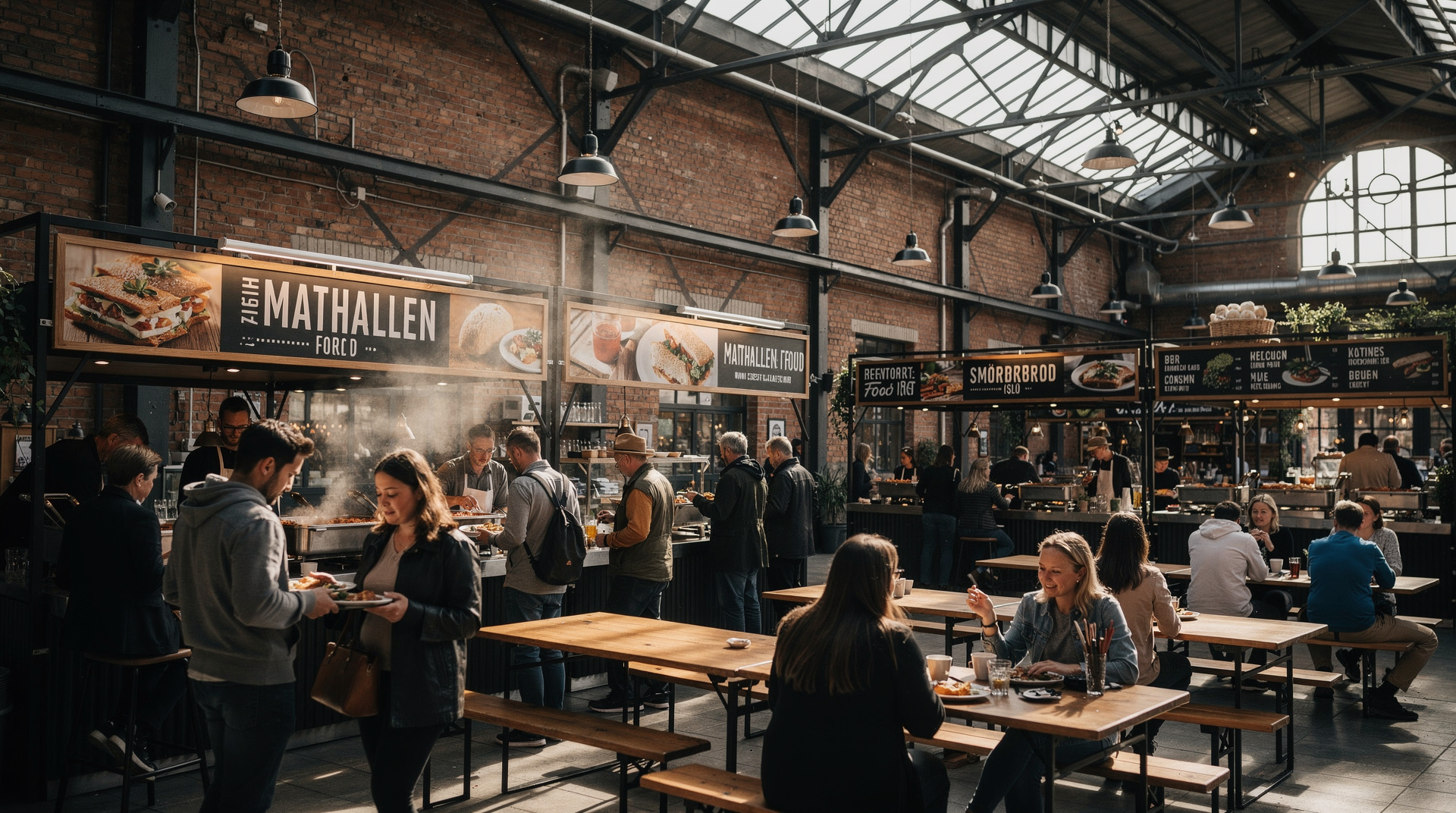
Mathallen is Oslo's premium food hall, housed in a converted industrial building in the Vulkan development on the Akerselva river. It holds around 30 independent food vendors — fishmongers, cheesemongers, butchers, specialty cafés, wine merchants, and hot-food stalls. It's worth visiting for a food-focused lunch or for Norwegian specialty purchases. Budget NOK 150–250 ($16–27) for a full meal.
What Mathallen is and why it matters
| Where | Vulkan, Akerselva riverside, between Grünerløkka and Sentrum |
| Cost | NOK 150–250 per person for a full lunch |
| Getting there | Tram 11/12 to Schous Plass, then 10-min riverside walk |
| Hours | Tue–Fri 10:00–20:00, Sat 10:00–18:00, Sun 11:00–17:00, closed Mon |
| Best time | Weekday 11:30 (before office lunch rush) or Sat opening |
Mathallen Oslo opened in 2012 in the Vulkan development — a former industrial area on the west bank of the Akerselva river that has become one of the more successful urban regeneration projects in modern Norwegian history. The concept was straightforward: gather Oslo’s best independent food producers and vendors under one roof in a beautiful glass-and-steel building, and let Oslonians buy quality food the way they do in Barcelona’s Boqueria or London’s Borough Market.
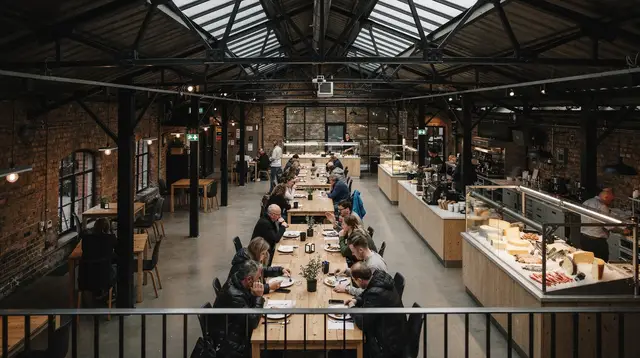
A decade on, Mathallen has survived the test that most food halls fail — it has remained genuinely local. About half its regular clientele are Oslo residents shopping for ingredients or eating a working lunch, not tourists. The vendor mix remains dominated by independent operators rather than chain restaurants. The building itself is impressive: high industrial ceilings, exposed iron columns, an interior gallery of mezzanine-level seating, and large windows facing the river.
It’s worth a half-morning or early afternoon — longer if you’re using it as a jumping-off point for the surrounding Vulkan and Grünerløkka neighbourhood.
Getting there
By tram: Tram 11 or 12 from Jernbanetorget to Schous Plass (about 10 minutes), then follow the Akerselva river path south for 8–10 minutes. The riverside path is one of Oslo’s nicest urban walks.
From Grünerløkka: If you’re already in Grünerløkka, Mathallen is a 10–15 minute walk south. Walk to the river and follow it south past the waterfalls and the old tannery buildings — Vulkan’s brick buildings come into view.
On foot from the city centre: About 20–25 minutes north-east from Karl Johans gate through Storgata and across the bridge at Ankerbrua.
By bike: Oslo city bikes (Bysykkel) have stations at Vulkan. From most central Oslo locations it’s an easy 10-minute ride along relatively flat terrain.
What’s inside Mathallen: the best vendors
Mathallen has around 30 stalls and shops organised over two levels. The permanent vendors include:
For eating in
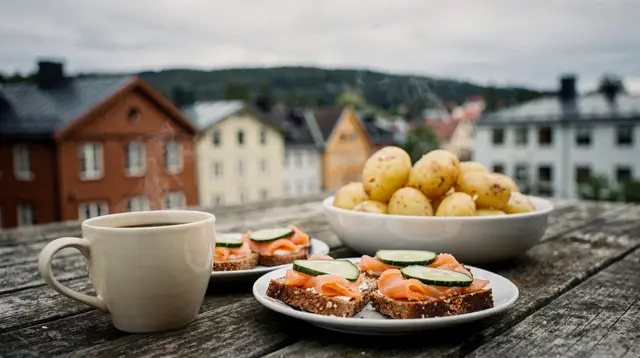
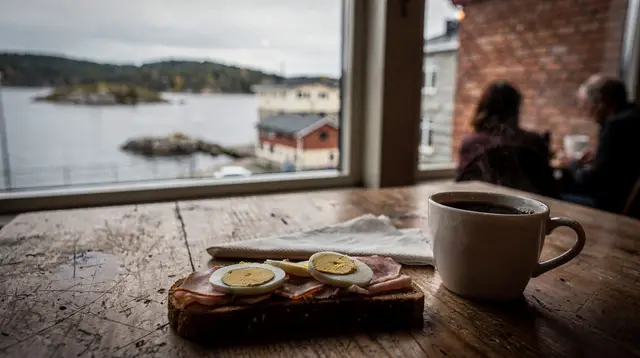
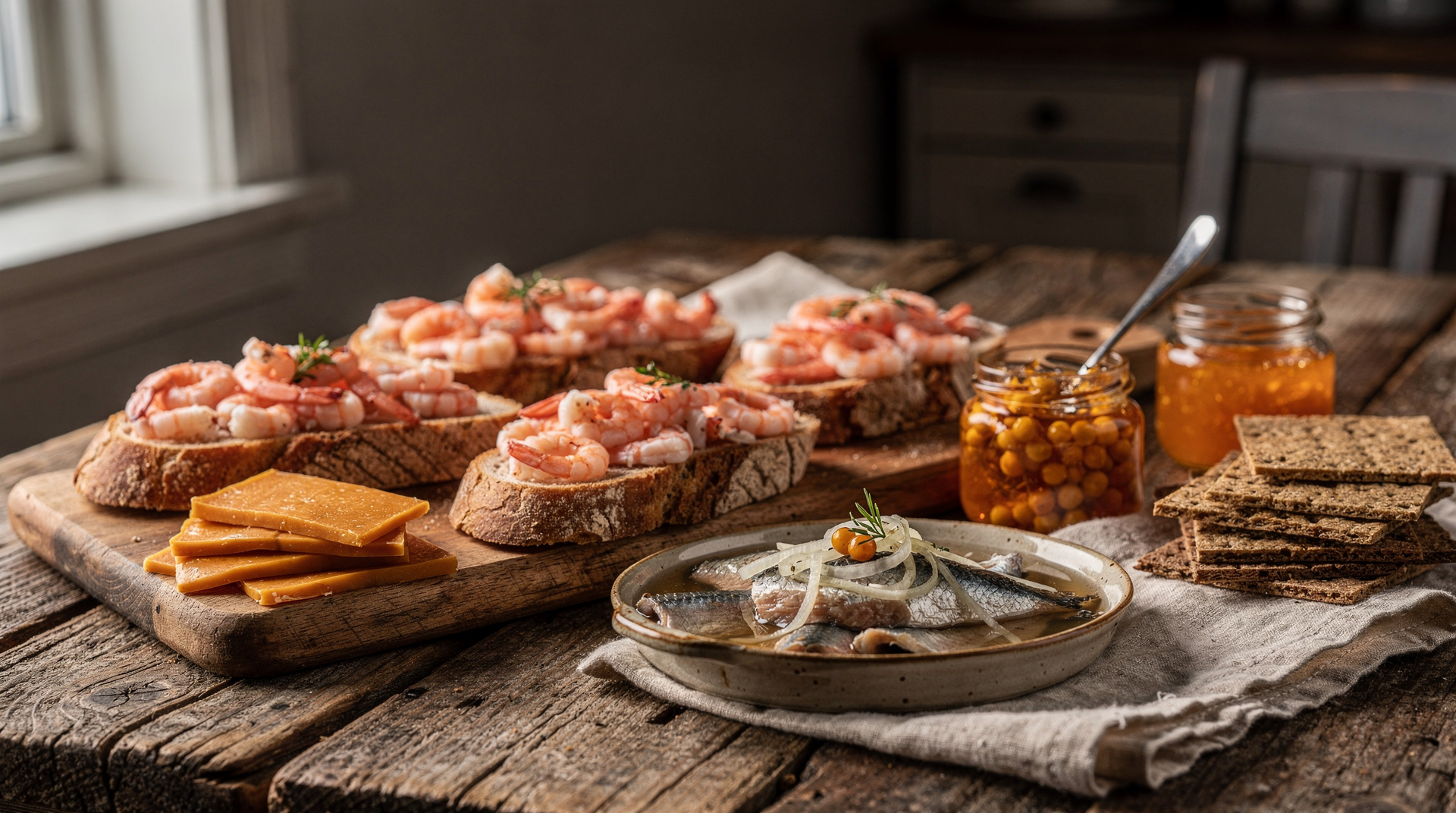
Smørbukk: Widely considered Mathallen’s centrepiece experience. The speciality is smørbrød — Norwegian open-faced sandwiches on dense rye or sourdough bread. Classic combinations include smoked salmon with dill cream, cold shrimp with mayo and lemon, and cured beef with horseradish. Prices range from NOK 75 to 130 ($8–14) per sandwich — expensive by sandwich standards but these are substantial, beautifully assembled, and made with premium ingredients.
Vingen Fisk: The fish counter doubles as a restaurant. Buy raw fish to take home or order prepared dishes. The signature item for eating in is the dagenes fiskekake (fish cake of the day) with salted cucumber and mustard sauce, around NOK 115–145 ($12–16). The fresh reker (boiled shrimp) are excellent, sold by weight, approximately NOK 280–350 per kilo ($30–38).
Mr. Vikram’s or the current Malaysian/Asian hot-food operator (vendors rotate): Mathallen’s concession to the non-Norwegian and draws long lunchtime queues for good reason. Laksa, nasi lemak, or similar — NOK 140–170 ($15–18) for a full bowl.
Fiskeriet (fish soup counter): The classic Norwegian fiskesuppe (creamy fish soup with root vegetables and dill) runs around NOK 120–150 ($13–16) for a bowl with bread. A reliable, warming lunch option, especially in autumn and winter.
Atelier Frank: The specialty coffee and patisserie operation in Mathallen. Croissants and Danish pastries from NOK 45–70 ($5–7.50). One of Oslo’s better espresso-based coffees, though the third-wave coffee scene has stronger options elsewhere in the city.
For shopping (take-home)
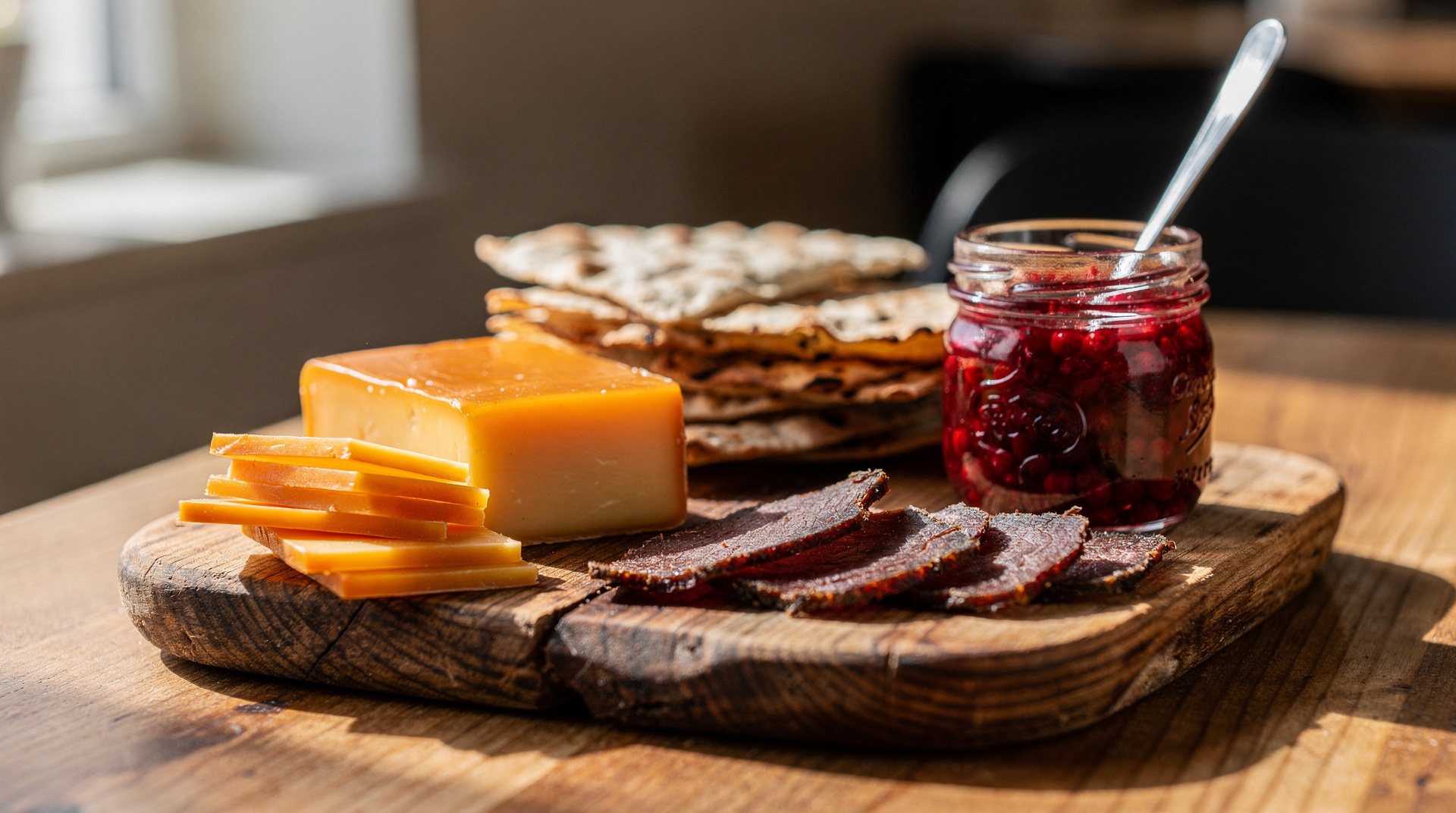
Fenaknoken: Oslo’s specialist in Norwegian cured and smoked meats — fenalår (cured leg of lamb), spekemat boards, dried lamb ribs. The staff are knowledgeable and will explain the curing traditions. Prices run NOK 250–500 ($27–54) per 200–400g.
Gutta på Haugen: The cheese shop with the most serious Norwegian cheese selection in the city. Brunost variations from different regions, fresh geitost, aged Nordic cheeses. Staff offer tastings freely. Budget NOK 60–120 per 100g ($6.50–13).
Kolonihagen Butikk: Artisanal condiments, jams, pickles, and Norwegian pantry items. Good for gifts — cloudberry jam, black currant syrup, and Norwegian wild herb salts are all packable souvenirs.
Bacchus Vinmonopolet outlet: A Vinmonopolet (state alcohol monopoly) outlet is located within Mathallen. This is where to buy Norwegian aquavit, craft beer, and cider for home or picnics. Open during Mathallen hours but closes earlier in line with Vinmonopolet’s Saturday 18:00 cutoff.
How to do Mathallen as a meal
The smørbrød lunch: Arrive around 11:30 on a weekday (before the office lunch crowd hits at 12:00). Head to Smørbukk, get two or three different open-faced sandwiches, and take them to the communal seating area or outside to the riverbank tables in summer. Add a coffee from Atelier Frank. Total: NOK 250–300 ($27–32).
The market tour with tastings: Allow 60–90 minutes, visit 4–5 stalls, accept every offered tasting, and buy a selection for a picnic. Cheese from Gutta på Haugen, cured meat from Fenaknoken, fresh fruit from any produce stall, and cloudberry jam from Kolonihagen. A picnic box assembled this way costs NOK 300–400 ($32–43) and is excellent for Frogner Park or the Oslofjord waterfront.
Weekend brunch: Arrive when it opens at 10:00 Saturday (11:00 Sunday). The café stalls are at their freshest and the weekend crowd doesn’t arrive until 11:30. The pastry quality at this time is excellent.
Mathallen in context: worth a food tour?
The food tours that include Mathallen as a stop — the 4-hour local-led food walking tour and the Norwegian food and hidden gems walk — both visit here as one of several stops, which means you get a curated introduction with cultural commentary rather than navigating it solo. For first-time Oslo visitors, the food tour context adds real value.
For return visitors or confident food explorers, coming independently and spending 90 minutes exploring at your own pace is equally valid and slightly cheaper (you pay for what you eat rather than a tour premium).
What else is at Vulkan?
Mathallen sits within the broader Vulkan development, which includes:
Dansens Hus (the National Dance Centre) — regular contemporary dance performances, tickets around NOK 200–350 ($22–38).
Westerdals Campus Oslo — the arts and media university occupies several buildings in the complex and keeps the area young and creative.
Bar options: Several bars and a brewpub operate in the Vulkan buildings around Mathallen. For weekend evenings, the area comes alive with a young Oslo crowd.
The Akerselva river path: Walk south along the river from Vulkan for 15 minutes to reach central Oslo, passing old watermill ruins, the hip Nedre Foss Gård area, and the Grünerbrua bridge. Walk north for 10 minutes to reach the heart of Grünerløkka. The river path is one of Oslo’s best urban walks in any season.
For the broader Grünerløkka food and neighbourhood guide, see the Grünerløkka food guide. For what to buy and take home from Norway, see the Norwegian specialties guide.
Mathallen vs eating in central Oslo: the value case
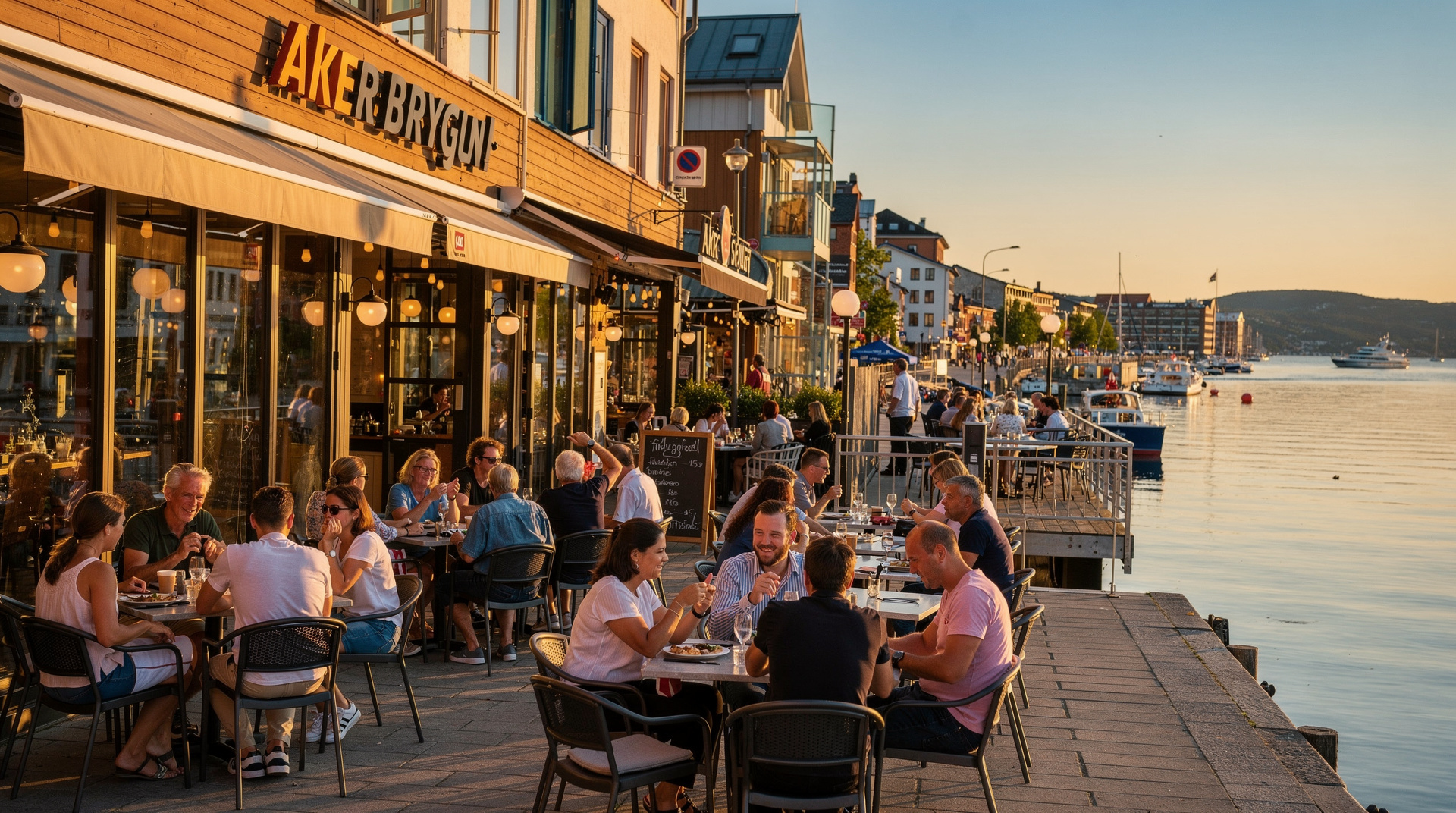
For visitors weighing Mathallen against a sit-down restaurant near Karl Johans gate or Aker Brygge, the comparison is instructive:
| Mathallen | Central Oslo restaurant | |
|---|---|---|
| Typical lunch cost | NOK 150–250 | NOK 250–380 |
| Variety | 4–5 different stalls in one visit | One menu, one cuisine |
| Atmosphere | Casual, communal seating | Table service, formal |
| Best for | Sampling widely, quick lunch | Sit-down meal, evening dining |
Mathallen wins clearly on both cost and variety for a lunch visit. It’s a weaker choice for an evening meal, since most stalls close by 18:00–20:00 and the atmosphere is more market than restaurant. For dinner, the where to eat in Oslo guide covers proper evening dining options.
Seasonal notes for visiting Mathallen
Mathallen operates consistently year-round, but a few seasonal details affect the experience. In summer, the riverside tables outside along the Akerselva are the best seating option and get busy quickly on sunny days — arrive early if you want an outdoor spot.
In winter, the interior seating is well-heated and the market feels cosier, with some stalls introducing seasonal items: rakfisk (fermented trout) is traditionally at its best from late autumn through midwinter, and lutefisk appears on some counters around Christmas. If you’re building a Christmas-season Oslo itinerary, Mathallen is a good alternative to the outdoor Christmas market stalls for a warm sit-down lunch — see the Christmas in Oslo guide.
Budgeting a Mathallen visit into a tight Oslo day
For visitors juggling a packed itinerary, Mathallen is efficient: a focused 45-minute visit covering one hot-food stall and one shopping stop (cheese or cured meats) delivers most of the experience without requiring a full lunch hour. This makes it a practical stop between a morning in Grünerløkka and an afternoon back in the city centre, rather than requiring a dedicated half-day. For a more thorough visit with tastings across several stalls, budget the full 90 minutes described above.
How to pace yourself inside the hall
The most common way to get Mathallen wrong is to buy the first thing that smells good. The hall rewards a slow first lap with nothing in your hands: walk both levels, look at what each counter is serving that day, and only then decide. Hot-food stalls change their specials, and the fish counters work with whatever came in fresh, so the best plate is rarely the one you planned before arriving. Share dishes if you are with someone, because two people ordering different things and splitting them taste far more of the hall than two people each finishing a full portion.
Think of the visit in three moves: something savoury to eat in, something sweet or a coffee to finish, and one take-home purchase on the way out. Buying the take-home item last also means you are not carrying a bag of cheese or cured meat around while you eat. If you are heading on to a museum or a park afterwards, ask the shopping stalls how long their products keep outside a fridge, and plan the rest of your day around the answer.
Pairing Mathallen with the rest of your day
Mathallen works best as the middle of a route rather than a destination on its own. A natural morning is a stroll through Grünerløkka, lunch in the hall, then a walk down the river towards the centre. If you have more time, the Grünerløkka food guide lists what to eat on the surrounding streets so you can keep the food theme going after the hall.
For a full food-led weekend, the Oslo food and design weekend itinerary slots a market lunch alongside the city’s design stops, and the two-day Oslo itinerary shows how a long lunch fits between sightseeing blocks without wrecking the schedule. On a tighter plan, the one-day Oslo itinerary leaves little room for a long meal, which is exactly when the short 45-minute version of a Mathallen visit earns its place.
If the weather turns, a hall with heated seating is a useful fallback. The rainy day museums guide pairs well with a long indoor lunch here, so you can spend a wet afternoon moving from stall to gallery without getting soaked.
Eating well without overspending
Oslo is expensive, and a food hall can look like a premium trap if you are not careful. The honest way to use it is to treat it as a place to eat one good meal rather than a place to graze all afternoon. Our guide to whether Oslo is expensive explains where the money really goes in the city, and the budget eats guide and cheap eats guide show cheaper alternatives for the days when you want to spend less. Many visitors find that one meal at Mathallen balanced with a simpler dinner elsewhere keeps the trip affordable without giving up the best food.
If your budget is the main worry, read the Oslo on a budget guide before you commit to a full spread of stalls. And if you suspect some restaurants are charging more than the food justifies, the overpriced food warning is a useful companion to this page.
Understanding what you are eating
Many of the products on sale here only make sense once you know a little about Norwegian food traditions. Fermented fish, cured lamb, and caramel-coloured cheese are acquired tastes for some visitors, and the stallholders are generally happy to explain them if you ask. The Norwegian food to try guide gives the background on the classics, and the brown cheese and specialties guide covers the cheese and pantry items you will see on the shopping counters. Reading either before your visit makes the tastings far more rewarding, because you know what you are tasting and what to compare it with.
If you would rather have someone lead you around, the Oslo food tours guide compares the guided options, and the where to eat in Oslo guide covers the evenings that the hall cannot. For drinks after the market, the Oslo craft beer guide and the Oslo coffee culture guide point to the best places to carry on.
Frequently asked questions about Mathallen Oslo
What are the opening hours of Mathallen Oslo?
Tuesday to Friday 10:00–20:00, Saturday 10:00–18:00, Sunday 11:00–17:00. Closed Mondays. Some individual stalls have shorter hours — arrive before 14:00 for the widest choice at hot-food stalls.What are the best things to eat at Mathallen?
The smørbrød (open-faced sandwiches) at Smørbukk are widely considered Mathallen's best single item. The seafood counter at Vingen Fisk has excellent fresh Norwegian shrimp and cured salmon. For hot food, the Malaysian stall and the Norwegian fish soup counter are consistently good.Is Mathallen good value by Oslo standards?
Relatively yes. A full lunch runs NOK 150–250 ($16–27) per person, which is cheaper than most sit-down restaurants in Oslo. The quality of ingredients — especially at the artisan producers — justifies the prices, though Mathallen is not budget eating.How do I get to Mathallen Oslo?
Take tram 11 or 12 to Schous Plass, then walk south along the Akerselva river path for about 10 minutes. Alternatively, tram 13 to Nybrua, then a 5-minute walk. Mathallen is in the Vulkan neighbourhood between Grünerløkka and Sentrum.Can I buy Norwegian food specialties to take home at Mathallen?
Yes. Mathallen has some of Oslo's best sources for take-home Norwegian specialties: brunost (brown cheese), rakfisk (fermented trout), lutefisk (in season), spekemat (cured meats), Norwegian chocolate, and cloudberry jam. Check customs regulations for bringing food home from Norway.
Top experiences
Bookable activities with verified prices and instant confirmation on GetYourGuide.