Brunost and Norwegian specialties: the deep dive
Oslo: 3.5-hour walking tour for great food
Duration: 3.5 hours
- Tastings included
- Local guide
What is brunost and where do I buy it in Oslo?
Brunost (brown cheese) is a sweet, caramelised whey cheese unique to Norway. The best varieties are Gudbrandsdalsost (mild, buttery), Geitost (goat's milk, more intense), and premium aged versions from small Norwegian producers. Buy it at any Norwegian supermarket (Kiwi, Rema 1000, Meny) for NOK 45–80 ($4.84–8.60) per 500g. For artisanal versions, Gutta på Haugen at Mathallen food hall has the widest selection in Oslo.
Why brunost is Norway’s greatest food export you’ve never tried
There’s a jar of Nutella in most European cupboards. There’s a block of brunost in virtually every Norwegian fridge. The brown cheese that Norwegians eat on crispbread for breakfast, on waffles as an afternoon snack, and occasionally melted into a cream sauce for moose meat is one of the world’s most distinctive national foods — and one of its least known outside its country of origin.
| What | Caramelised whey cheese, unique to Norway |
| Where to buy | Any supermarket; best selection at Mathallen |
| Cost | around NOK 45–150 per block, depending on variety |
| Take home? | Yes — travels well, check customs limits |
| Best pairing | Waffles or crispbread (knekkebrød) |
This guide covers brunost in depth, along with the other Norwegian food specialties worth seeking out, buying, and potentially taking home from Oslo.
Brunost: the complete guide
What it is and how it’s made
Brunost is the product of a happy accident of Norwegian dairy history. When you make cheese, the liquid left after the curds are separated — the whey — is largely discarded in most dairy traditions. In Norway, it was boiled down. As the water evaporates, the milk sugars concentrate and caramelise (the Maillard reaction, the same process that browns toast), turning the pale liquid into a thick, dark, fudge-like paste. This is then pressed into blocks.
The result is not really a cheese in the conventional sense — it contains the protein, fat, and sugars of cheese, but the caramelisation process gives it a flavour profile unlike any European cheese. It’s closer to dulce de leche or milk caramel than to Cheddar or Gouda.
The main varieties
Gudbrandsdalsost (Brunost standard): The most widely produced and consumed brunost, made with a blend of cow and goat milk whey plus some cream. Flavour: sweet, buttery, slightly tangy, with a long caramel finish. Available at every Norwegian supermarket. The G35 (35% fat) variant is the standard; the G20 is lighter and slightly less rich. Price: NOK 45–65 ($4.84–6.99) for a 500g block.
Ekte Geitost (Genuine Goat Cheese): Made entirely from goat milk whey, this is significantly more intense — more tang, more sour cream, more barnyard. Norwegian dairy lovers consider this the superior version. Harder to find than Gudbrandsdalsost; available at Meny and at Mathallen’s cheese counter. Price: NOK 65–95 ($6.99–10.22) for a 500g block.
Fløtemysost: A lighter, creamier version made with added cream. Less sweet than Gudbrandsdalsost, more delicate. Good for people who find standard brunost too sweet. Price: NOK 45–65 ($4.84–6.99).
Ski Queen (Getost): The export brand sold in international markets. Consistent but slightly different from the Norwegian domestic product — slightly sweeter and less complex. If you’ve tried the international version, the Norwegian domestic versions will taste more interesting.
Small-producer brunost at Mathallen: The artisanal brunost at Gutta på Haugen in Mathallen differs markedly from the supermarket version — more complex, more savoury, with terroir variation depending on the farm. Try side-by-side if you can. Price: NOK 80–150 per 200–300g ($8.60–16.13).
How to eat brunost
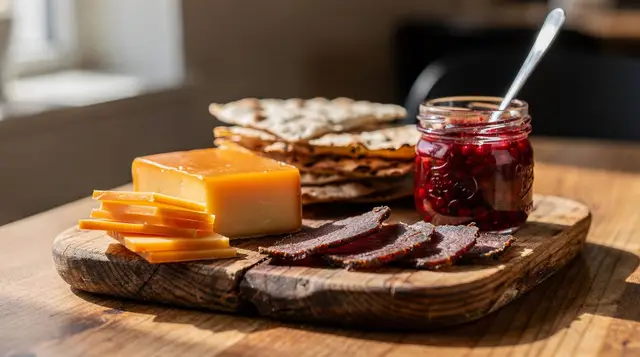
The canonical Norwegian way: use a Norwegian cheese slicer (ostehøvel — invented by a Norwegian in 1925) to cut paper-thin shavings and layer them on crispbread or toasted sourdough. The slice should be thin enough to be slightly translucent. A heavy slab of brunost is incorrect and tastes too sweet.
Paired with: Norwegian crispbread (knekkebrød), fresh waffles (most classic combination), light rye bread, or apple slices. Some Norwegians eat it on white bread with butter.
For cooking: brunost melts beautifully into cream sauces, particularly for game — reindeer stew with brunost sauce (sauté reindeer cubes, deglaze with stock, whisk in cream and a cube of brunost) is an Oslo restaurant staple worth ordering if you see it on a menu.
Buy an ostehøvel: The flat cheese slicer is a genuinely excellent kitchen tool and a very Norwegian souvenir. Available at kitchen shops throughout Oslo for NOK 80–200 ($8.60–21.51) depending on quality.
Other Norwegian specialties to seek out
Spekemat: Norway’s charcuterie tradition
Spekemat means “dried and cured meat” and covers a range of Norwegian preserved meats:
Fenalår (cured leg of lamb): Norway’s most distinctive cured meat product. Mountain-grazing Norwegian lamb is salted and air-dried for months until it resembles a light-coloured prosciutto but with the distinctive flavour of lamb fat and mountain herbs. Eaten thinly sliced on flatbread with goat cheese and sour cream. Available at Fenaknoken in Mathallen (the specialty shop) and at better supermarkets. Price: NOK 250–450 per 200–400g ($26.88–48.39).
Spekepølse (dried sausage): A dried, cured sausage that varies regionally. The best versions use lamb and pork with light seasoning. Available at Fenaknoken and supermarkets.
Spekeskinke: Cured ham, similar in concept to Italian prosciutto but made from Norwegian pigs fed on Norwegian grain. Less intense than Iberian ham but clean and pleasant. Available at Mathallen and Meny.
Rakfisk: for the adventurous
Fermented rainbow trout buried in salt for three to twelve months. The smell is genuinely assertive — similar to very strong blue cheese or long-fermented fish sauce. The flavour, for those who get past the smell, is complex, oceanic, and rich.
Rakfisk is not a visitor trap — it’s genuinely eaten by Norwegian families, particularly around Christmas. Eating it requires willingness to lean into a challenging sensory experience.
Where to try it: Fenaknoken at Mathallen, some specialty delis, and traditional restaurants like Engebret Café during the autumn-winter season. If you want to try before you buy, several food tours include a small rakfisk tasting.
Where to buy it: Mathallen, Meny, or Vinmonopolet (which stocks it seasonally). Price: NOK 200–400 per jar or portion ($21.51–43.01).
Norwegian cloudberry jam (multesyltetøy)
Cloudberries (multebær) are small orange-gold berries that grow only at altitude in Scandinavian climates and ripen briefly in late summer. They have an intense, slightly tart flavour unlike any other berry — a sort of concentrated raspberry-apricot hybrid. The jam made from them is one of Norway’s most celebrated food products.
In Oslo, cloudberry jam is available at Mathallen, Colonihagen, and better supermarkets (Meny has it reliably). The fresh berries with whipped cream (multekrem) is a seasonal dessert in August–September.
Price: NOK 80–150 for a jar of quality jam ($8.60–16.13). The small-producer versions at Mathallen are significantly better than the supermarket standard.
Norwegian smoked salmon
Norway produces the world’s most consumed farmed Atlantic salmon, and Oslo’s smoked salmon is the premium version of that product. The difference between Norwegian smoked salmon in Norway and in export markets is real: the product is fresher, the smoking more recent, and the quality control tighter.
Best versions: Mathallen’s fish counter does salmon smoked in-house or sourced from small Norwegian smokehouses. Price: NOK 95–150 ($10.22–16.13) per 200g.
Supermarket versions from Meny are also good. Avoid the pre-packaged versions at discount supermarkets for eating fresh — they’re fine for cooking but miss the quality of the premium product.
Aquavit
Norway’s national spirit is a caraway-and-dill flavoured distillate, aged in oak barrels. The flavour is assertive and distinctly Nordic — if you’ve had gin, you know the botanical-spirit concept; aquavit replaces juniper with caraway as the dominant spice.
The best Norwegian aquavit producers include Linie (which is matured at sea in sherry casks), Lysholm Linie, and Gilde’s Gammel Opland. Buy at Vinmonopolet — the Oslo city centre stores have the widest selection. A standard bottle: NOK 250–400 ($26.88–43.01). Premium aged versions: NOK 400–800 ($43.01–86.02).
Aquavit is meant to be drunk with food — with smørbrød at lunch, with cured fish and meat, or with traditional Norwegian dinners. Not a cocktail ingredient in the traditional Norwegian approach, though Oslo’s cocktail bars do incorporate it creatively.
Building a tasting day around Norwegian specialties
If you want to taste before you commit to buying, the simplest plan is to treat brunost and its companions as a thread running through a normal day of sightseeing. Start with a breakfast of crispbread and thin shavings of brunost, then let the rest of the day bring in the other specialties naturally. Our guide to Norwegian food to try covers the wider range of dishes, and this page works well as the shopping companion to it.
A relaxed lunch at Mathallen lets you compare artisanal cheese, cured meat and fish under one roof, and the neighbourhood around it is easy to combine with a wander through Grünerløkka. For a longer look at the area’s cafés, bakeries and delis, the Grünerløkka food guide is the natural next read. If you prefer someone else to choose the stops, the Oslo food tours comparison explains which formats lean most heavily on local specialties.
Because most of these products are bought to be carried home, think about the order of your day. Shop for the cheese, cured meat and jam last, close to your hotel or to the train, so nothing sits in a warm bag for hours. If you are flying out, the practical details of the journey are in the airport to city guide, which helps you judge how much time you realistically have for a final shopping stop.
Choosing what to taste first
Start mild and move to the stronger flavours. Fløtemysost and standard Gudbrandsdalsost are the gentle introduction, and Ekte Geitost is the step up for anyone who enjoys tang. Among the cured meats, thin slices of fenalår on flatbread are a good first taste before anything more challenging. Rakfisk belongs at the end of the list, and only for the curious. Tasting in this order keeps your palate fresh and tells you quickly which items deserve space in your luggage.
Pairing ideas to try at home
Brunost keeps well in the fridge, so the question is really how you will enjoy it once you are back. Thin shavings on warm toast with a drizzle of cloudberry jam is a combination that shows how the cheese and the berry flatter each other. Fenalår on crispbread with a spoonful of sour cream recreates a Norwegian lunch table, and a small glass of aquavit alongside it completes the picture. These simple pairings are the best way to make a souvenir feel like a memory rather than something forgotten at the back of a cupboard.
Where to shop for Norwegian specialties in Oslo
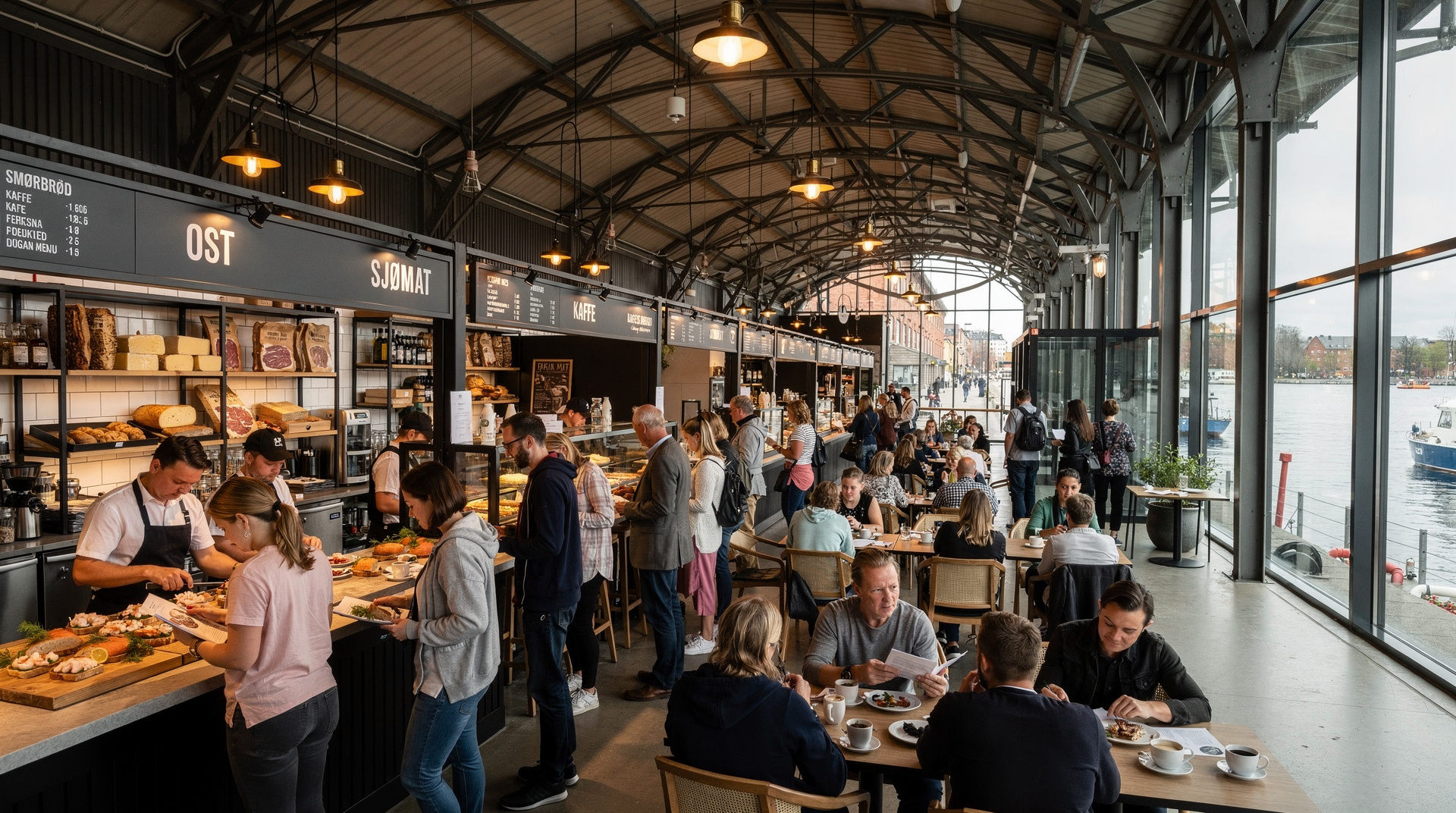
Best overall: Mathallen food hall at Vulkan — the cheese counter (Gutta på Haugen), the cured meat specialist (Fenaknoken), the fish counter (Vingen Fisk), and the condiment shop (Kolonihagen Butikk) cover everything. See the Mathallen guide for full details.
For supermarket versions: Meny has the best quality and range. Kiwi and Rema 1000 are cheapest. Coop Extra is in the middle.
For alcohol: Vinmonopolet only. Multiple central Oslo locations; the one at Mathallen is convenient for a combined shopping trip.
At the airport (Oslo Gardermoen): The duty-free shop sells brunost, cloudberry jam, and aquavit at prices competitive with central Oslo stores. If you forget to shop in the city, the airport is a reasonable last-resort option — not as interesting as Mathallen but reliable for the classic take-home items.
Norwegian specialties worth trying while you’re here (not just buying)
Buying brunost to take home is one thing; actually eating your way through Norwegian specialties in Oslo restaurants is another. A few dishes worth ordering rather than just shopping for:
Fårikål (mutton and cabbage stew): Norway’s official national dish, slow-cooked and restorative, typically appearing on menus in autumn. Ask at traditional restaurants near Grønland or in Frogner.
Reindeer with brunost sauce: A genuinely distinctive Oslo restaurant dish — sautéed reindeer cubes finished with a cream sauce built around a cube of melted brunost. If you see it on a menu, it’s worth ordering; the sweetness of the cheese against the gamey reindeer is a combination unique to Norway.
Shrimp from the harbour boats: Not a shop-bought specialty, but a genuine Oslo food tradition — fresh fjord shrimp bought directly from boats moored at the harbour in summer, eaten on bread at the waterfront. A different way to experience Norwegian seafood than the smoked salmon you’ll take home.
If you are watching your spending, the guide to budget eats and our overview of where to eat in Oslo show how to mix a few splurge tastings with cheaper meals, and what a trip to Oslo costs puts the food budget in context.
For a guided introduction that covers several of these specialties in one outing with an expert explaining the history, our Oslo food tours guide lists the walking tours that combine tastings across multiple stops.
Cost comparison: supermarket vs Mathallen vs airport
| Item | Supermarket (Kiwi/Meny) | Mathallen | Gardermoen duty-free |
|---|---|---|---|
| Brunost (500g) | NOK 45–95 | NOK 80–150 (200–300g) | NOK 90–130 |
| Cloudberry jam | NOK 60–100 | NOK 80–150 | NOK 90–140 |
| Aquavit (standard bottle) | — (Vinmonopolet only) | — | NOK 250–450 |
| Fenalår (200–400g) | NOK 200–350 | NOK 250–450 | Not typically sold |
The supermarket is genuinely the best value for straightforward brunost and jam; Mathallen earns its premium on quality and variety, particularly for fenalår and artisanal cheese; the airport is a reasonable fallback if you’ve run out of time, not a bargain.
Frequently asked questions about Brunost and Norwegian specialties
What does brunost taste like?
Sweet, slightly salty, and caramel-like, with a dense, slightly grainy texture. It's sweeter than any regular cheese and unlike anything else in the cheese world. The closest analogue is dulce de leche or a very mild toffee with a gentle savoury undercurrent. Goat's milk versions (geitost) have more tang and complexity.What is the best brunost to buy?
Gudbrandsdalsost is the classic and best starting point — a cow-and-goat milk blend with a balanced sweet-savoury flavour. Ekte Geitost (genuine goat's milk) is more intense and the choice of Norwegian connoisseurs. Fløtemysost is milder and creamier. For a premium experience, look for small-producer versions at Mathallen — they differ significantly from the supermarket standard.Can I take brunost home in my luggage?
Yes. Brunost is a hard cheese and travels well in a cool bag or wrapped in paper. Check customs regulations for your destination — EU and UK rules allow up to 2.5kg of cheese from Norway for personal use. US rules are more restrictive; check USDA guidelines before buying significant quantities.What other Norwegian food specialties are worth buying in Oslo?
Spekemat (dried and cured meats, especially fenalår — cured leg of lamb), rakfisk (fermented trout — adventurous), cloudberry jam (multesyltetøy), Norwegian smoked salmon, aquavit (spiced spirit), and Norwegian chocolate (particularly Freia varieties). All are available at supermarkets; Mathallen has better quality versions.What is fenalår?
Fenalår is a Norwegian cured leg of lamb — heavily salted then air-dried for months, similar in concept to Spanish jamón but from lamb and with a more intense, gamey flavour. It's eaten thinly sliced like charcuterie, typically with flatbread and sour cream. One of Norway's most distinctive foods and excellent as a take-home gift if you can get it through customs.
Top experiences
Bookable activities with verified prices and instant confirmation on GetYourGuide.