Norwegian food to try in Oslo: from brown cheese to fårikål
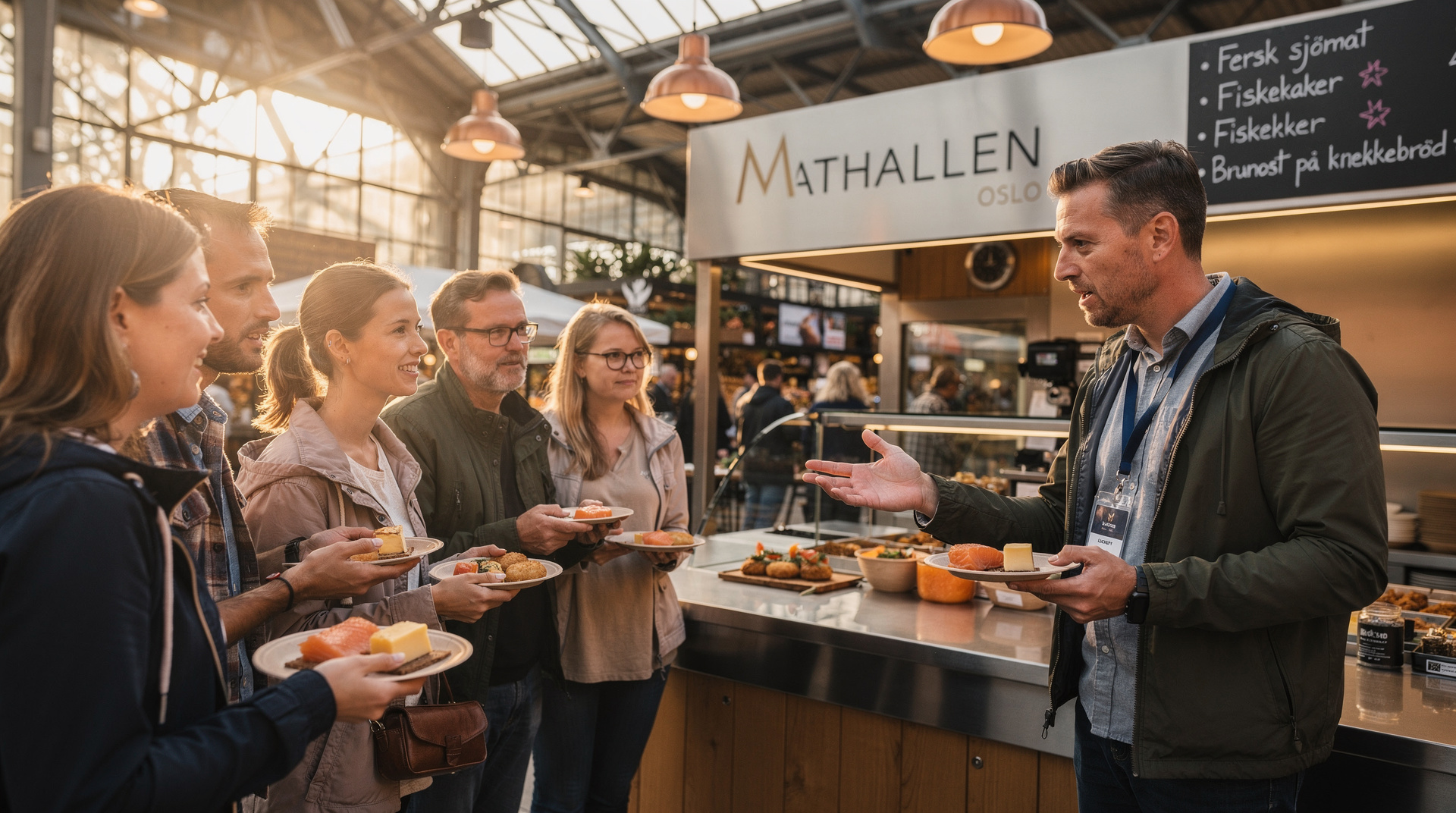
Oslo: 3.5-hour walking tour for great food
Duration: 3.5 hours
- Tastings included
- Local guide
What should I eat in Oslo?
Start with smørbrød (open-faced rye sandwiches with smoked salmon or shrimp), try brunost (brown cheese) on crispbread, eat kanelboller (cinnamon rolls) at a local bakery, and if you visit in summer, buy fresh reker (fjord shrimp) from a harbour boat. For a restaurant meal, fårikål (lamb and cabbage stew) or a traditional fish dish like fiskesuppe are the best introductions to Norwegian cuisine.
Norwegian food: a cuisine worth understanding
| Where | Mathallen food hall, bakeries, and harbour shrimp boats citywide |
| Cost | Around NOK 65–350 (USD 7–38) depending on dish and setting |
| Time needed | An afternoon for a proper food crawl |
| Getting there | Mathallen: tram to Vulkan/Grünerløkka |
| Best time | May–August for harbour shrimp; Sept–Nov for fårikål |
Norwegian food has spent years as the punchline to jokes about bland Scandinavian cooking — all boiled potatoes and grey fish. That reputation was never fully deserved, but it’s now essentially obsolete. Oslo has one of the most interesting food cultures in northern Europe, shaped by world-class seafood, excellent lamb, creative fermentation traditions, and a generation of chefs who grew up eating simple food and decided to make it extraordinary.
This guide walks through the essential Norwegian dishes you should try in Oslo, from the everyday (kanelboller at a bakery) to the adventurous (rakfisk that will divide your group into converts and sceptics). Each comes with honest tasting notes and where to find the best version in the city.
Smørbrød: the daily bread of Oslo
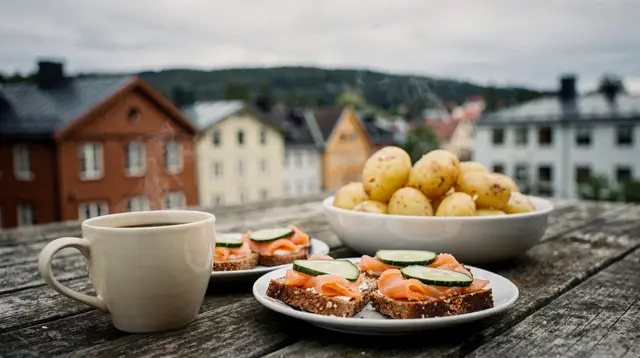
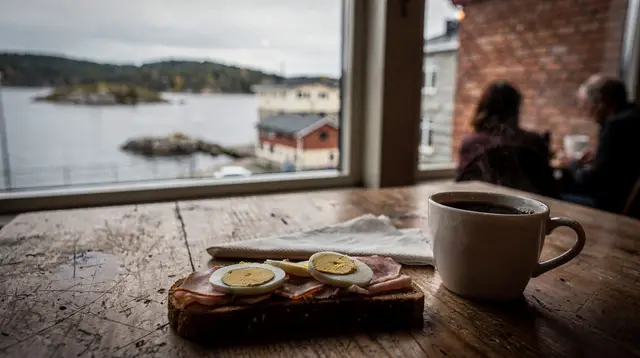
The word means “butter bread” but smørbrød is really a whole philosophy of eating — the open-faced sandwich elevated to an art form. Dense, slightly sour rye bread, thin-sliced and buttered, topped with an ingredient that’s taken seriously.
The canonical Oslo smørbrød toppings:
Røkt laks (smoked salmon): The baseline and the benchmark. Norwegian farmed salmon is the finest in the world, and smoked with alder or birch it becomes something complex and oceanic. Served with lemon, dill, and either cream cheese or butter. Any bakery in Oslo will have this; quality varies. The best: Smørbukk at Mathallen (NOK 95–115 / $10–12 per open sandwich).
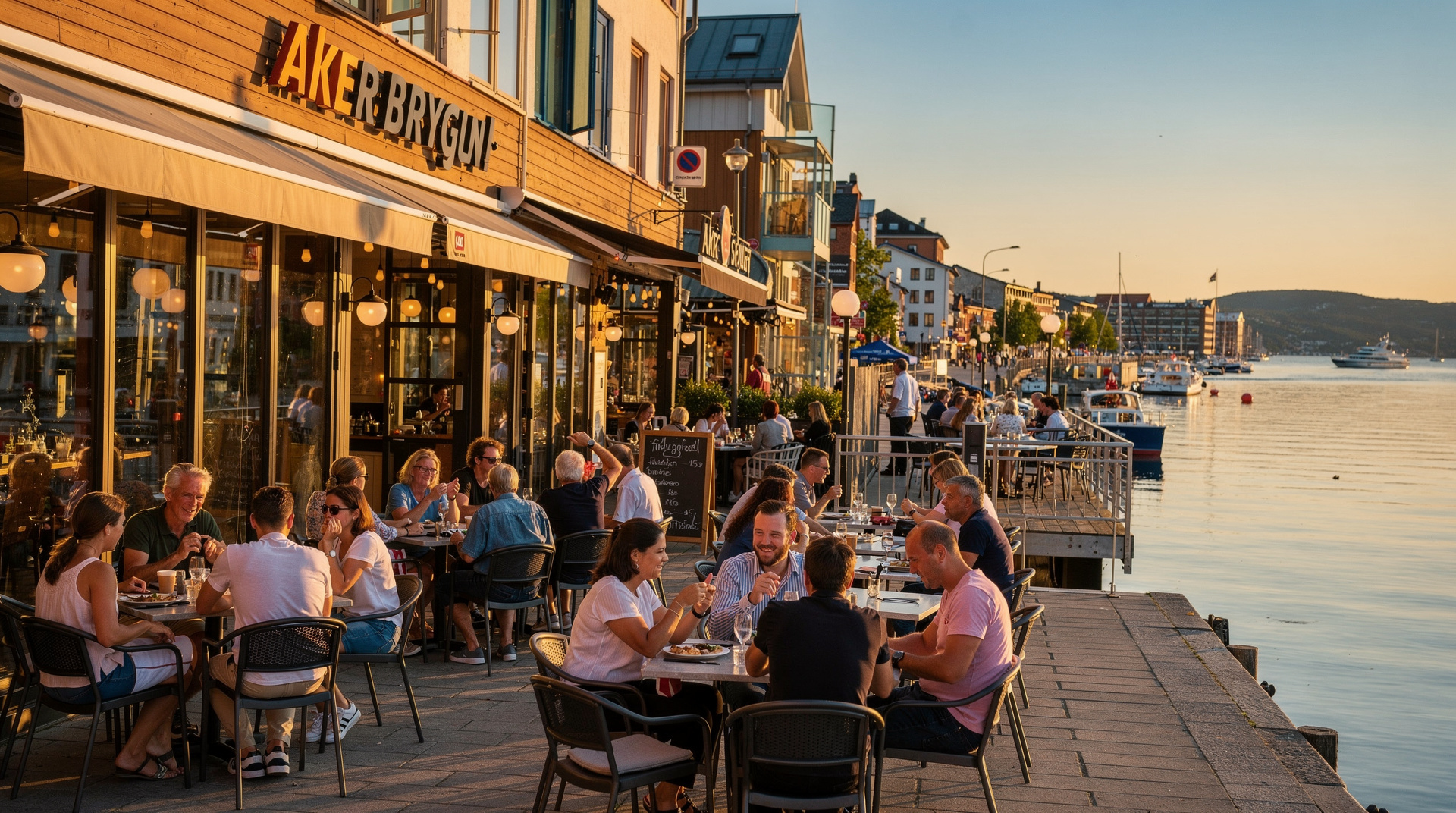
Reker (fresh boiled shrimp): In summer, the shrimp boats moored at Rådhusbrygga and Aker Brygge sell fresh fjord shrimp by the container. Buy a bag (around NOK 150–200 / $16–22 for a meal-sized portion), peel them on the spot, and eat them on white bread with mayonnaise. This is the quintessential Oslo summer eating experience.
Egg og tomater (egg and tomatoes): The simple smørbrød that Norwegian grandmothers make — hard-boiled egg, sliced tomato, a little salt, maybe anchovy. Humble and perfect. Every older-style Norwegian café has it for around NOK 65–80 ($7–9).
Makrell i tomat (mackerel in tomato): Canned mackerel on bread sounds unglamorous. Eaten on good rye with a squeeze of lemon and a few capers, it’s genuinely excellent — the kind of food that tastes like a coastal country’s honest relationship with the sea. Available in shops for DIY; the tubes of mackerel paste (makrelltun på tube) sold in supermarkets are an iconic Norwegian thing.
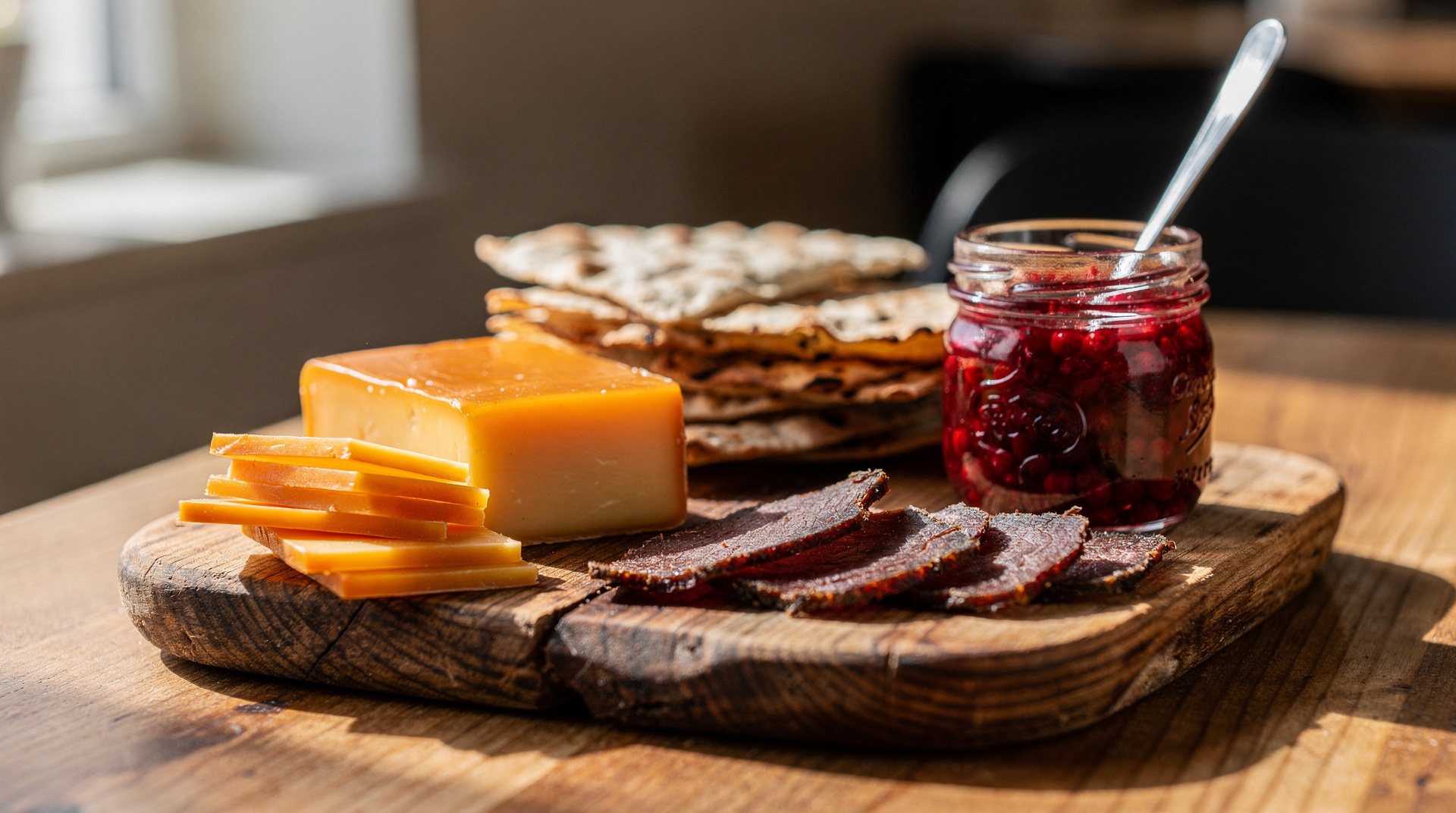
Brunost: brown cheese explained
Brunost deserves its own section because it’s the most polarising and most fascinating food in Norway. More than half of visitors either love it immediately or need two or three exposures before it clicks.
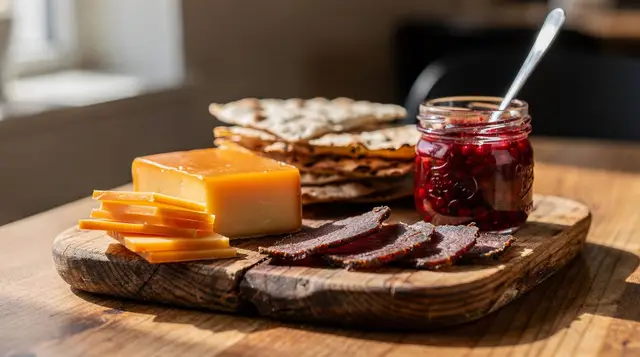
What it is: caramelised whey cheese. When you make Norwegian brown goat’s milk cheese, the liquid whey left behind is boiled down until the water evaporates and the milk sugars caramelise to a deep brown. This is then pressed into blocks. The flavour is sweet, slightly salty, fudge-like, with a distinctive tang that’s neither like regular cheese nor like caramel but genuinely its own thing.
Gudbrandsdalsost is the classic brown cheese — a blend of cow and goat milk. Geitost is made entirely from goat milk and is more intensely flavoured. Fløtemysost is a milder cow-milk version. The full guide to brunost and Norwegian specialties is in the specialties deep dive.
Where to try it in Oslo: Any café serving Norwegian breakfast will have it. For the full range, Gutta på Haugen at Mathallen does tastings. Buy a block of Gudbrandsdalsost at Meny or Coop Extra (supermarkets) for NOK 45–75 ($5–8) per 500g block and eat it with crispbread (knekkebrød) in your accommodation.
Fårikål: Norway’s national dish
Fårikål means “lamb in cabbage” and that’s almost exactly what it is — bone-in lamb pieces, whole black peppercorns, and white cabbage layered in a pot and simmered for three to four hours until the meat falls off the bone and the cabbage has absorbed all the lamb fat. The simplicity is the point. Norwegian autumn lamb from mountain-grazing sheep is some of the finest in the world, and the recipe lets the ingredient speak.
It’s a seasonal dish, made in autumn as Norway’s lamb harvest happens. You’ll find it on menus from September through November. Outside that window, the frozen version exists but the fresh seasonal dish is what you want.
Where to eat fårikål in Oslo: Engebret Café (Bankplassen 1) is Oslo’s oldest restaurant, dating from 1857, and serves traditional Norwegian food including seasonal fårikål. Expect to pay NOK 265–295 ($28–32) for a main. Brasserie Paleo and Olympen (Grønlandsleiret 15) also serve it seasonally. Some food tour operators include a tasting of fårikål or a close relative in autumn.
Kanelboller: Oslo’s favourite daily pastry
The Norwegian cinnamon roll (kanelbolle, plural kanelboller) is not the same as a Swedish kanelbulle. It’s denser and more bread-like, less sweet, coiled into a spiral, sometimes dusted with pearl sugar or cardamom, and eaten warm. Virtually every Oslo bakery makes them daily and virtually every Norwegian eats one several times a week.
Cardamom is the distinguishing spice — it runs through the dough and fills the bakery with a fragrance that’s instantly and completely Norwegian. Once you’ve eaten a good kanelbolle in Oslo, the inferior versions everywhere else will disappoint you for years.
The best kanelboller in Oslo:
Godt Brød (multiple locations, flagship at Thorvald Meyers gate 57) — the cooperative bakery that Oslo’s food community considers the gold standard. NOK 40–50 ($4.30–5.40).
Baker Hansen (multiple central locations) — reliable chain with high-quality kanelboller, slightly sweeter than Godt Brød. NOK 35–45 ($3.80–4.80).
Åpent Bakeri (Universitetsgata 5 and other locations) — modern Oslo bakery with excellent kanelboller and sourdough. NOK 45–55 ($4.80–5.90).
Fiskesuppe: Norwegian fish soup
Creamy fish soup with root vegetables, dill, and a generous amount of white fish and shellfish — this is one of Norwegian home cooking’s finest achievements and shockingly underrated. The base is typically a fish stock with cream and a little white wine, loaded with cod, salmon, and shrimp, thickened slightly and seasoned with dill and chives.
At midrange Oslo restaurants it runs NOK 145–195 ($16–21) for a bowl and constitutes a light lunch. At Mathallen’s fish counter it’s around NOK 125–150 ($13–16). For a traditional version, any coastal-menu Norwegian restaurant will serve it.
Reker: fresh fjord shrimp
Oslo’s most democratic luxury. From May to August, several boats moored at Rådhusbrygga (the pier in front of City Hall) sell freshly boiled fjord shrimp by the bag. You peel them yourself, usually standing at the waterfront, eating them with white bread and mayonnaise. A bag large enough for two people as a starter costs NOK 150–200 ($16–22).
This is not farmed industrial shrimp — Norwegian fjord reker are smaller, sweeter, and more intensely flavoured than anything you’ll find at home. Even if you’re not a shrimp enthusiast, eating them fresh off a harbour boat in Oslo is worth doing once.
Waffles and forest coffee
Norwegian waffles are heart-shaped, slightly crispy on the outside, soft inside, and served with sour cream (rømme) and strawberry jam. They’re not a restaurant dish — they’re a café and hytte (cabin) dish, eaten in the afternoon. You’ll encounter them at ski lodges, café terraces, and forest cabin huts throughout the city.
The specific Oslo experience: walk or ski into Nordmarka and stop at a forest café (skogskoie) or a staffed trail hut. Order waffles and coffee. The combination of physical exertion, winter air, and warm waffles with sour cream is a fundamental Norwegian experience. A guided version is available through the forest coffee and waffles tour, which takes you into the forest by T-bane and delivers exactly this experience with local commentary.
Rakfisk: the adventurous option
Fermented trout is not for everyone. Buried in salt and left to ferment for three to twelve months, rakfisk has an intensely pungent aroma and a flavour that some people describe as the finest thing they’ve ever eaten and others find completely inedible. It’s eaten on flatbread (lompe or lefse) with raw onion and sour cream.
The smell is assertive before you taste it — this is normal. The flavour, once you get past the smell, is complex and oceanic in a way that good strong cheese is complex and pungent. If you like anchovies, aged blue cheese, or strong fermented fish (Japanese shiokara, for instance), you’ll likely love rakfisk. If those foods alarm you, skip it.
Mathallen has it at the specialty fish counter. Engebret Café serves it seasonally. The Norwegian specialties guide covers rakfisk and other fermented and preserved Norwegian foods in detail.
Lefse and flatbread
Lefse is a traditional Norwegian flatbread made from cooked potatoes, flour, and cream, rolled very thin and cooked on a griddle. It’s soft, slightly starchy, and eaten with butter and cinnamon sugar as a snack or with cured meat as a light meal. The potato version (potetlefse) is the most common; the thinner crispy variant (flatbrød) is closer to a cracker.
Both are sold at Mathallen, most bakeries, and any Norwegian food market. They keep well in a bag and make excellent snack food for a day exploring the city.
Seasonal eating in Oslo
Oslo’s food culture is strongly seasonal — some dishes are simply not available outside their natural window. Key seasonal notes:
Crayfish (kreps): September in Oslo sees crayfish parties (krepselag) — boiled freshwater crayfish eaten outdoors with dill, bread, and aquavit. Some restaurants host special crayfish evenings; watch for them in late August–September.
Multekrem: Cloudberry cream — cloudberries (multebær) cooked with sugar and whipped cream. Cloudberries are found only at high altitude and ripen in late summer. The season is short and the price reflects it. The cloudberry jam at Mathallen is available year-round; the fresh cream dessert is August-September only.
Pinnekjøtt: Salted and dried lamb ribs, soaked and steamed — the traditional Christmas Eve dish (December). Rich, intensely flavoured, and deeply Norwegian. Try it at any restaurant offering a Christmas menu in December.
For the deepest dive into Norwegian food, the brown cheese and Norwegian specialties guide goes further into brunost, rakfisk, preserved meats, and what to buy to take home.
Eating Norwegian food on a budget
Trying every dish in this guide doesn’t require restaurant prices throughout. Supermarkets (Kiwi, Rema 1000, Coop) sell brunost, smoked salmon, and rye bread at a fraction of café prices — a DIY smørbrød lunch assembled from a supermarket costs under NOK 100 for two people.
The budget eats guide and cheap eats guide map the best-value Oslo food beyond what’s covered here, and the where to eat guide gives a fuller restaurant picture for anyone planning multiple meals out. For a neighbourhood with a strong concentration of good, moderately priced food, the Grünerløkka food guide covers the district referenced throughout this guide in more depth.
Guided food tours vs going it alone
A guided food tour makes sense if you want to try 5–8 dishes in a few hours with context and don’t want to research or queue at multiple vendors yourself — the Oslo food tours guide covers the main operators and what each covers. Going it alone works well if you already know what you want to try (this guide gives you that list) and prefer to set your own pace — Mathallen alone lets you replicate much of a guided tour’s variety independently, at lower cost and without a fixed schedule.
Frequently asked questions about Norwegian food to try in Oslo
What is brunost and why do Norwegians love it?
Brunost (brown cheese) is made by caramelising whey — the liquid left after making regular cheese — until it thickens and browns. The result is sweet, slightly grainy, and fudge-like, with a gentle saltiness. It's eaten thinly sliced on crispbread or waffles. The caramelised milk sugars are what make it taste unlike any other cheese in the world. Norwegians eat roughly 10,000 tonnes of it per year.Is Norwegian food only fish?
No, though fish and seafood are prominent. Norwegian cuisine also includes lamb (Norway has excellent mountain lamb), wild game (elk, reindeer, grouse), dairy (particularly good butter and cheese), root vegetables, berries, and cured and dried meats. The New Nordic movement in Oslo has expanded the palette significantly with fermented, foraged, and grain-forward cooking.Where can I try fårikål in Oslo?
Fårikål is a seasonal dish, traditionally made in autumn when lamb is harvested — look for it September through November. Traditional Norwegian restaurants like Engebret Café (Bankplassen 1) serve it seasonally. It's also the feature dish of Fårikålens Dag (National Fårikål Day, last Thursday of September).What are kanelboller and where are the best ones in Oslo?
Kanelboller are Norwegian cinnamon rolls — denser and spicier than Danish pastry versions, typically coiled and topped with pearl sugar rather than frosting. The best in Oslo are at Godt Brød (Thorvald Meyers gate 57, Grünerløkka) and Baker Hansen bakeries throughout the city. They cost around NOK 35–55 ($4–6).What is rakfisk and should I try it?
Rakfisk is fermented trout, buried in salt for several months until it develops a pungent, complex flavour similar to anchovies or strong blue cheese. It's an acquired taste — genuinely challenging for the uninitiated. Served on flatbread with onion and sour cream. Try a small amount at Mathallen or on a food tour before committing to a full portion.Can vegetarians eat well in Oslo?
Yes. Oslo has embraced plant-based eating enthusiastically. Most restaurant menus now include vegetarian mains as standard. The Grünerløkka neighbourhood has the most vegetarian-friendly options — cafés like Elias Mat og Sant (Thorvald Meyers gate 10) do excellent vegetarian Norwegian food.What is the best way to try lots of Norwegian food in one visit?
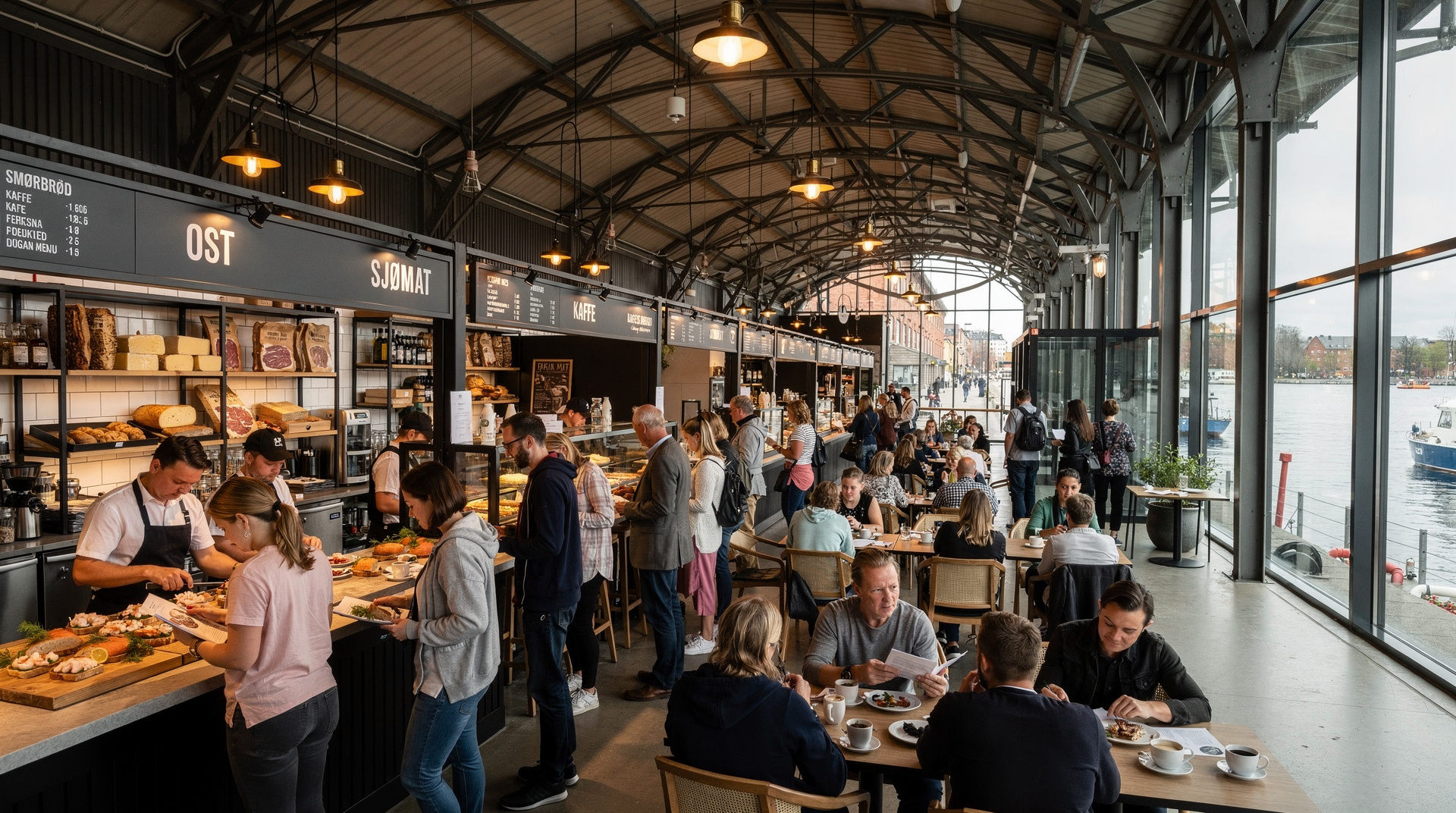
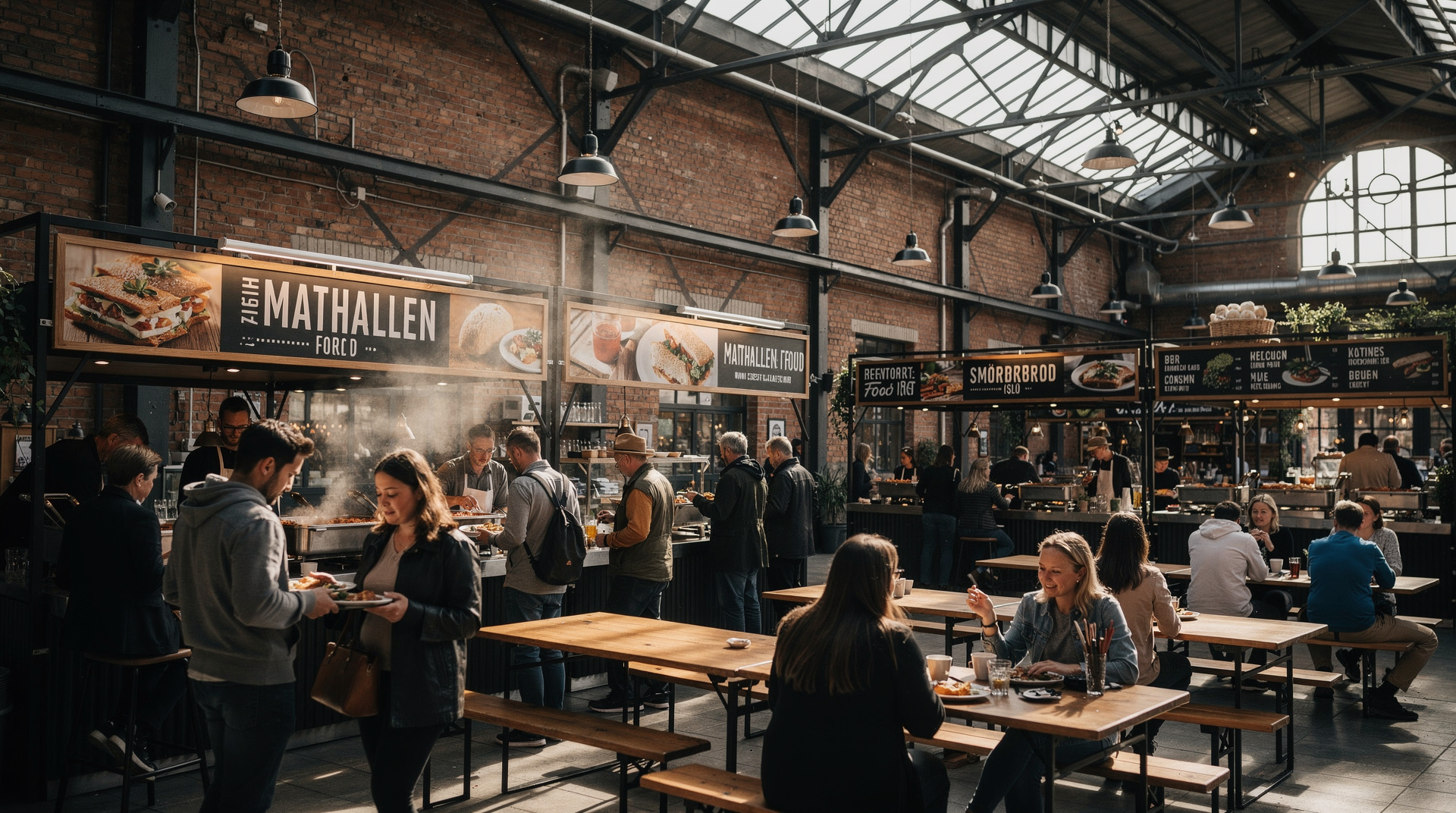
Mathallen food hall in Vulkan (Grünerløkka) is the single most efficient stop — a dozen-plus vendors under one roof covering smoked salmon, brunost, fish soup, and rakfisk, letting you sample widely without committing to a full restaurant meal at each. A guided food tour is the next-best option if you want context and don't want to research vendors yourself.Is Norwegian food expensive?
By most international standards, yes — Norway's high wages and food regulations push prices up across the board. A casual smørbrød lunch runs NOK 80–120 ($9–13) and a sit-down restaurant main is commonly NOK 250–350 ($27–38). Supermarket and market food (Mathallen, harbour shrimp boats) is the most cost-effective way to eat well without restaurant markups.
Top experiences
Bookable activities with verified prices and instant confirmation on GetYourGuide.