Christmas in Oslo — markets, lights, gløgg and what to book
Oslo: Christmas tour with gløgg and Christmas sweets
Duration: 2.5 hours
- December only
- Gløgg included
Is Oslo good for Christmas?
Yes — Oslo has a genuine, low-key Nordic Christmas atmosphere with good markets, ice skating, festive lights and activities. It is not over-commercialised like some European capitals. Expect cold temperatures (minus 5 to 0°C), 6–7 hours of daylight, and prices that are high even by Oslo standards in December.
Why Oslo’s Christmas is different from other European capitals
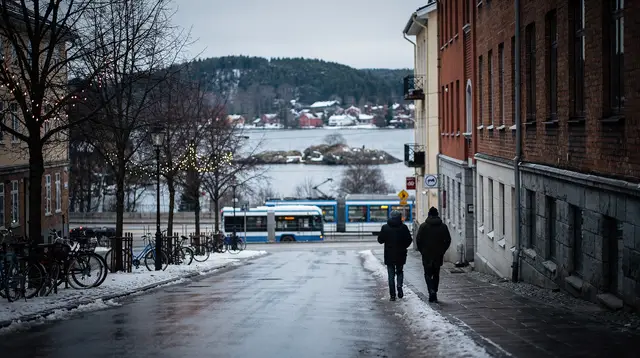
Oslo at Christmas does not try to be Vienna or Prague. There is no vast Christkindlmarkt covering a historic square, and the markets are fewer and smaller than in many Western European cities. What Oslo has instead is something more sustainable: a quiet, authentic Nordic festive atmosphere rooted in the way Norwegians actually celebrate the season.
| Where | Spikersuppa, Aker Brygge, Karl Johans gate |
| Cost | around NOK 200–400 for a market visit |
| Time needed | Half-day for markets + skating |
| Getting there | Central; walkable or T-bane/tram |
| Best time | First 3 weeks of December (before the peak-week price spike) |
This means cosy, candlelit interiors with the scent of cardamom buns and pine. It means gløgg served from steaming cauldrons at Spikersuppa while snow falls on the National Theatre. It means ice skating under city lights, and a cultural respect for advent that feels unhurried. If you are drawn to festive overkill, Vienna will serve you better. If you want a genuinely Nordic December experience, Oslo delivers.
Oslo’s Christmas markets: where to go
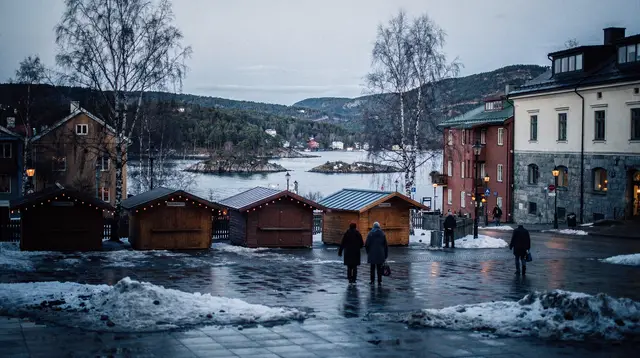
Spikersuppa Christmas Market (by the National Theatre, Studenterlunden park): the main city-centre market. Runs from mid-November to 23 December. Wooden huts sell crafts, Norwegian food, Christmas decorations, and the obligatory gløgg. The outdoor ice rink alongside the market is free to skate — hire blades for NOK 100 to 150 (approximately USD 11 to 16) and skate to piped Christmas music beside a city-centre fountain. This is the heart of Oslo’s Christmas.
Aker Brygge Christmas Market: the waterfront location adds a scenic element — the old wooden sailing ship moored at Aker Brygge is decorated with lights and is photogenic. Slightly more commercial than Spikersuppa, with higher prices, but the setting at dusk with the fjord reflecting the lights is genuinely beautiful.
Norsk Folkemuseum Julenisse market (Bygdøy): the open-air folk museum hosts a traditional Christmas market at weekends in December. It takes place among the museum’s historic buildings and traditional wooden houses — a more atmospheric setting than the city-centre markets. A julenisse figure wanders the grounds. Entry to the museum (NOK 230, approximately USD 25) is required.
Karl Johans gate: the main boulevard is decorated with substantial lights from late November through January. The shops and department stores (Paleet, Oslo City) have full Christmas windows and the street has a festive energy all month.
The gløgg walking tour: why this is worth booking
The Christmas gløgg tour is a 2.5-hour guided walk through the city’s festive highlights, visiting the main markets and stopping for gløgg and traditional Norwegian Christmas sweets at each. The guide shares the history and cultural context of Norwegian Christmas traditions — what the julenisse actually means, why Norwegians eat pinnekjøtt on Christmas Eve, and why Norway’s Christmas is distinct from Danish and Swedish versions.
It fills up fast in December — book at least 1–2 weeks ahead, ideally more. The tours typically run from late November through 23 December. This is genuinely one of Oslo’s better guided experiences: a small group, a local guide, and a city that looks its best after dark in December.
Ice skating: the best outdoor rinks
Spikersuppa (National Theatre): central, atmospheric, free admission. The rink is small but well-maintained. Evenings are particularly good — the surrounding Christmas market stalls and lights create a scene that feels quintessentially Nordic.
Vigeland Park (Frogner): a larger rink is installed in the park seasonally. Free entry. Surrounded by the famous sculpture park and illuminated with lights, this is a more spacious option. Tram 12 or 19 gets you there in 15 minutes from the centre.
Narvisen (Solli plass): a smaller neighbourhood rink. Less crowded than Spikersuppa, more local in feel.
Skate hire at most rinks costs NOK 100 to 150 (approximately USD 11 to 16). Bring warm gloves and a hat — rink temperatures are significantly colder than the ambient air around them.
Christmas light display in Oslo
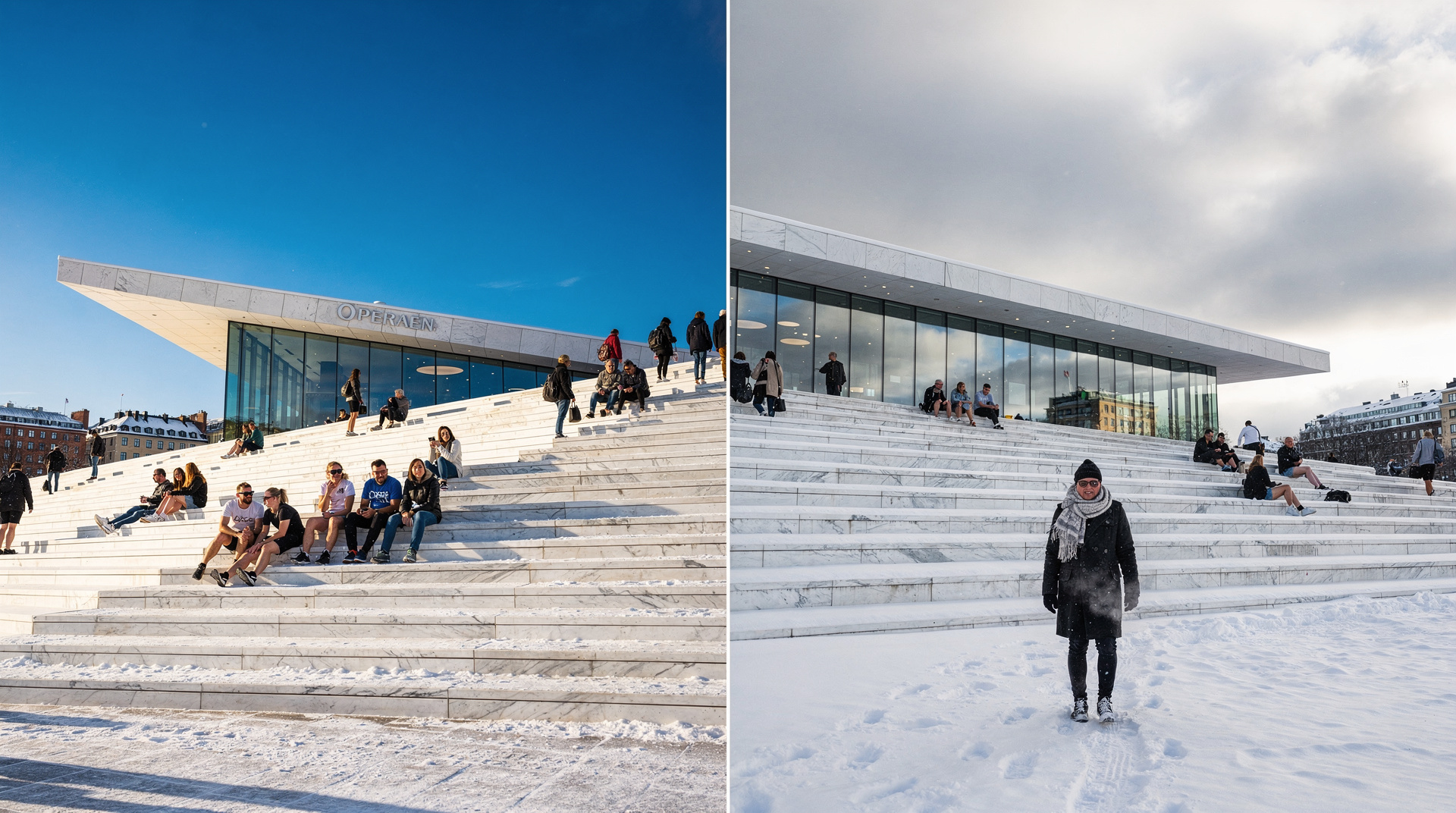
Oslo’s Christmas lights are tasteful rather than overwhelming: white LED strings on Karl Johans gate and Aker Brygge, illuminated trees, and individual buildings decorated with restraint. The Opera House in Bjørvika, lit at night, makes a dramatic Christmas backdrop for photos.
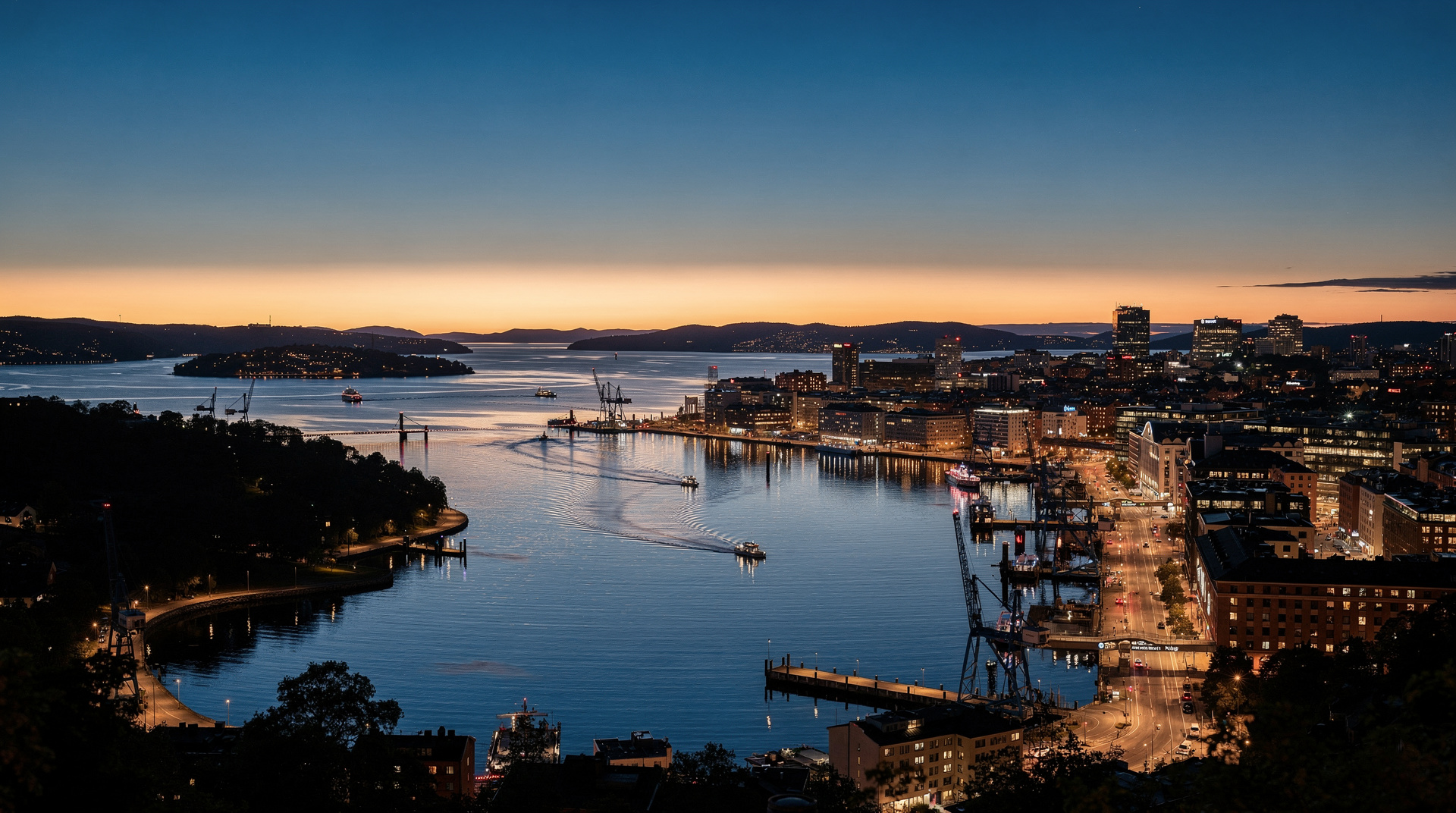
The view from Ekebergsletta (easily reached by tram 18 or 19 to Ekebergrestauranten stop) gives you a panoramic view over the city lights at dusk — genuinely magical in clear December weather.
What to eat and drink at Christmas in Oslo
Gløgg (NOK 60 to 80 per cup, approximately USD 6.50 to 9): warm spiced wine at every market. The Norwegian version is notably richer than German Glühwein. With almonds and raisins in the cup; ask for aquavit added if you want the full effect.
Juleribbe (Christmas ribs): roast pork belly, the traditional Norwegian Christmas Eve dish. Available at some restaurants in December, though it is primarily a home meal. Brasserie Blanche (Frogner) and several traditional restaurants serve it as a December special.
Pinnekjøtt: cured and dried lamb ribs, the western Norway Christmas tradition increasingly popular in Oslo. Excellent at traditional Norwegian restaurants in December. Budget NOK 350 to 500 for a proper pinnekjøtt main course (approximately USD 38 to 54).
Julesalat (Christmas bread): a rich, raisin-studded sweet bread sold in all bakeries from late November. A slice with butter from a konditori (bakery-café) costs NOK 35 to 55 (approximately USD 4 to 6).
Aquavit: Norway’s national spirit, a caraway-flavoured distillate typically aged in oak. Available at Vinmonopolet year-round but particularly associated with the Christmas season. A small glass at a restaurant costs NOK 90 to 120 (approximately USD 10 to 13). Try it with the traditional Christmas foods.
Budget reality: Oslo Christmas spending
December is not the cheapest time to visit Oslo. Hotel rates recover from November lows toward mid-range to high in the Christmas week (20–27 December is peak). A mid-range hotel in central Oslo will typically run NOK 1,400 to 2,200 per night in December (approximately USD 150 to 237).
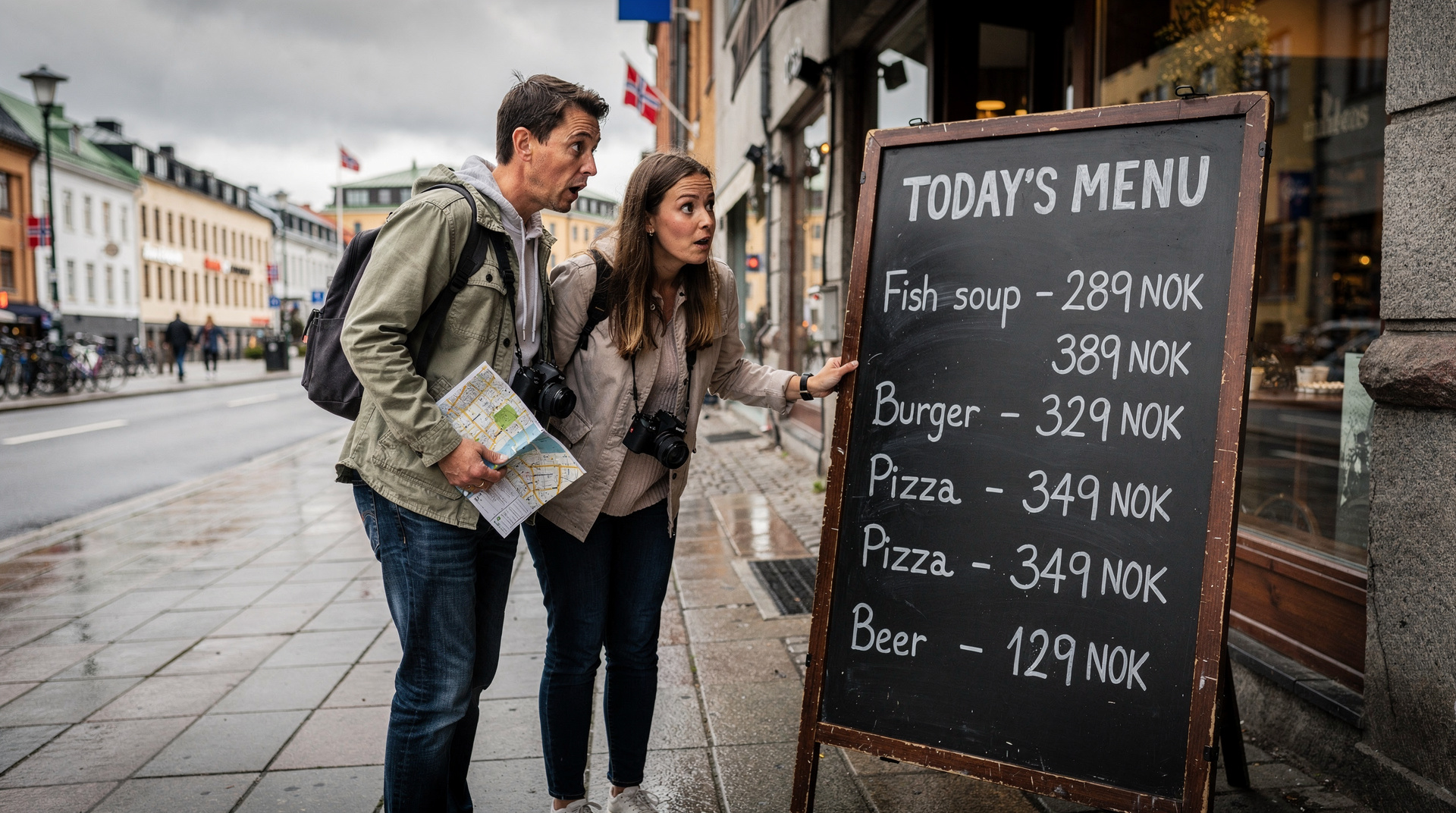
Christmas market prices are not bargains: mulled wine at NOK 70, a small pastry at NOK 50, craft items significantly marked up. Budget NOK 200 to 400 per person for a pleasant 90-minute market wander (approximately USD 22 to 43).
Christmas restaurant meals — especially if you book a full julemiddag (Christmas dinner menu) — run NOK 600 to 1,200 per person (approximately USD 65 to 130), not including drinks. This is the category where costs escalate fastest. Booking a traditional Christmas dinner experience is worthwhile once; eating out every night over Christmas in Oslo is a significant expense.
Pre-purchasing wine or spirits from Vinmonopolet for self-catering evenings is a practical strategy. Vinmonopolet stores are closed on Sundays and close early on Saturdays — check hours carefully during the Christmas period.
What to book in advance for Christmas
- Christmas gløgg walking tour — 1 to 3 weeks ahead in December
- Christmas spirit tour — fills quickly on December weekends
- Central hotels for 20–27 December — book as far ahead as possible
- Restaurant Christmas menus — 2 to 4 weeks ahead for popular restaurants
- Norsk Folkemuseum Christmas market weekends — check if tickets required in the year you visit
Practical logistics for December visits
Daylight: Oslo has approximately 6.5 to 7 hours of daylight in December. The sun rises around 09:00 and sets around 15:30 in mid-December. Plan outdoor activities and photography for the midday window, roughly 10:00 to 14:00, for the best light. Evenings are long — markets, rinks, and lit-up streets from 15:30 onward.
Temperatures: expect minus 5 to 0°C in December. Pack accordingly: thermal base layer, warm mid-layer, windproof outer jacket, hat, gloves, and waterproof boots. Cobblestones in the old town freeze and become slippery — footwear with grip is essential.
Transport: Ruter runs its full winter schedule. T-bane (metro), tram, and bus cover all the Christmas market locations. The T-bane is heated and reliable. See Ruter transport guide for ticketing details.
New Year’s Eve: the city puts on a fireworks display at midnight visible from the harbour. Aker Brygge and the Opera House area fill with crowds. Restaurants charge significant supplements for New Year’s Eve menus.
Combining Christmas markets with other December attractions
December is also a strong month for indoor culture, since outdoor daylight is short. The Munch Museum and National Museum are both excellent options for the midday hours before the markets come alive after dark. If you’re near Bjørvika, the Opera House roof lit up at night makes a striking backdrop for photos even without going inside.
For families, the Norsk Folkemuseum at Bygdøy runs its own Julenisse weekend market among the historic wooden buildings — a more atmospheric, less commercial alternative to the city-centre stalls, though it requires the museum’s regular entry fee.
Combine a Christmas market visit with a broader look at Oslo in winter using our Oslo winter activities guide, which covers skiing, saunas, and other cold-weather options beyond the markets themselves.
Shaping a December day around the markets
The simplest way to enjoy Oslo at Christmas is to treat the short daylight as a feature rather than a problem. Spend the bright hours indoors or on a gentle walk, then let the city light up around you. A museum visit late morning, a slow lunch, and a stroll along Karl Johans gate as the decorations switch on makes a natural rhythm. By the time you reach Spikersuppa the stalls are glowing and the rink is busy, which is exactly when it feels best.
If you are staying a few days, spread the festive highlights out instead of cramming them into one evening. Our 3-day winter itinerary shows how to balance markets with saunas, museums and a day outdoors, and it works well as a skeleton for a December trip. Visitors with only a short stop can follow the pacing of the 2-day itinerary and swap in a market evening.
Rainy and grey days
December weather is not always crisp and white. Wet, grey days happen, and the markets are less appealing in the rain. Keep a plan B ready: the rainy-day museum guide lists indoor options that keep a trip enjoyable whatever the sky is doing. Warm cafés are another reliable refuge, and the Oslo coffee culture guide will point you to places worth lingering in with a cardamom bun.
Travelling with children
Christmas is a good season for families, because much of what makes it special is simple and free to look at: lights, a rink, a julenisse, a cup of something warm. Little ones tend to run out of energy quickly in the cold, so build in warm-up stops and keep outdoor stretches short. For more ideas that suit younger travellers, see our Oslo with kids guide, which helps with pacing a day when daylight is limited.
Warming up properly
A good Christmas trip in Oslo includes a way to get properly warm. Many visitors pair a cold afternoon with a sauna session, and the comparison of Oslo saunas helps you choose between the options. Finishing a market evening in a hot sauna, with the fjord outside, is one of the more memorable ways to close a winter day. If you are unsure about the customs, read the sauna etiquette guide before you go so you feel comfortable from the first minute.
Eating well without overspending
Festive meals add up quickly, and December rarely offers discounts. A sensible approach is to choose one memorable sit-down Christmas dinner and keep the other meals simple. The guide to Norwegian food explains the dishes you will meet on December menus, so you can order with confidence, while the budget eats guide covers lighter options for the rest of the trip. If the overall cost worries you, is Oslo expensive? gives honest context before you commit to a date.
Getting the most from the evenings
Evenings are long in December, so plan them rather than defaulting to the nearest restaurant. Wander between the markets, pause for gløgg, watch the skaters, and look back over the water towards the Opera House once the lights are on. Keep your phone warm, since cold drains batteries fast, and carry a small bag so your hands stay free for a hot cup. The pace is the point: Norwegians treat advent as a time to slow down, and you will enjoy the city more if you borrow that attitude instead of ticking off a checklist.
Christmas vs the rest of winter: is December worth the premium?
December sits between November (the cheapest, greyest month) and the January–March ski season on price and atmosphere. If festive atmosphere matters more to you than saving money, December wins outright — nothing else in the Oslo calendar replicates the markets, lights, and gløgg culture. If budget is the priority and you don’t need Christmas specifically, our best time to visit Oslo guide breaks down how November and January compare on cost versus atmosphere.
Frequently asked questions about Christmas in Oslo — markets, lights, gløgg and what to book
When do Oslo's Christmas markets open?
The main Christmas markets typically open in mid to late November and run through 23 December. Spikersuppa (near the National Theatre) and Aker Brygge are the two main locations. Karl Johans gate has festive decorations and stalls throughout December.Is there ice skating in Oslo in December?
Yes — Spikersuppa in the city centre has an outdoor ice rink with free admission (skate hire costs NOK 100 to 150, approximately USD 11 to 16). Vigeland Park in Frogner also has a seasonal rink. These are genuinely atmospheric on a crisp December evening.Does it snow at Christmas in Oslo?
Snow is common but not guaranteed in December. Oslo at Christmas is typically 0 to minus 5°C with a roughly 50–60% chance of snow on the ground. Early December is less certain than late December and January.What is gløgg?
Gløgg is the Norwegian/Scandinavian version of mulled wine — warm, spiced red wine typically served with almonds and raisins. It is sold at all Christmas markets for around NOK 60 to 80 per cup (approximately USD 6.50 to 9), with optional shots of aquavit or port added. Richer and more warming than most European versions.What should I book in advance for Christmas in Oslo?
The Christmas gløgg walking tour (very popular, fills in December), Julemarked tickets for major events, and accommodation — especially around the 20–27 December peak period. Restaurant Christmas menus (julemiddag) at better restaurants should be booked weeks ahead.What is julenisse?
Julenisse is the Norwegian Santa Claus figure — a gnome-like character from Norwegian folk tradition who evolved into the gift-bringer. Children leave a bowl of rice porridge out for him on Christmas Eve. Department stores and some markets have julenisse meet-and-greets through December.
Top experiences
Bookable activities with verified prices and instant confirmation on GetYourGuide.