Oslo highlights bike tour: review, tips and booking
Oslo: 3-hour highlights bike tour
Duration: 3 hours
- Small group
- Bike included
| Where | Starts Aker Brygge, loops via Frogner, Vigeland Park, Akershus |
| Cost | Around NOK 620–670/adult |
| Time needed | 3 hours (~12–15 km) |
| Getting there | Meeting point confirmed at booking |
| Best time | April–October standard; November–March winter variant |
Why the bike tour works well in Oslo
Oslo has a geography that rewards cyclists. The city centre is compact enough to cross in 20 minutes, the major parks and waterfronts are largely flat or gently rolling, and the bike infrastructure — dedicated lanes, cyclist signals, reasonable driver awareness — is better than most European cities outside the Netherlands and Denmark. A guided bike tour takes advantage of all this while adding the contextual layer that turns a physical journey into a cultural one.
The 3-hour highlights tour is the standard version. It runs daily in spring, summer, and autumn (April through October), and with a slightly modified winter programme from November through March. Groups are typically kept under 12 to 15 people per guide, which keeps the pace manageable and allows for stops without chaos.
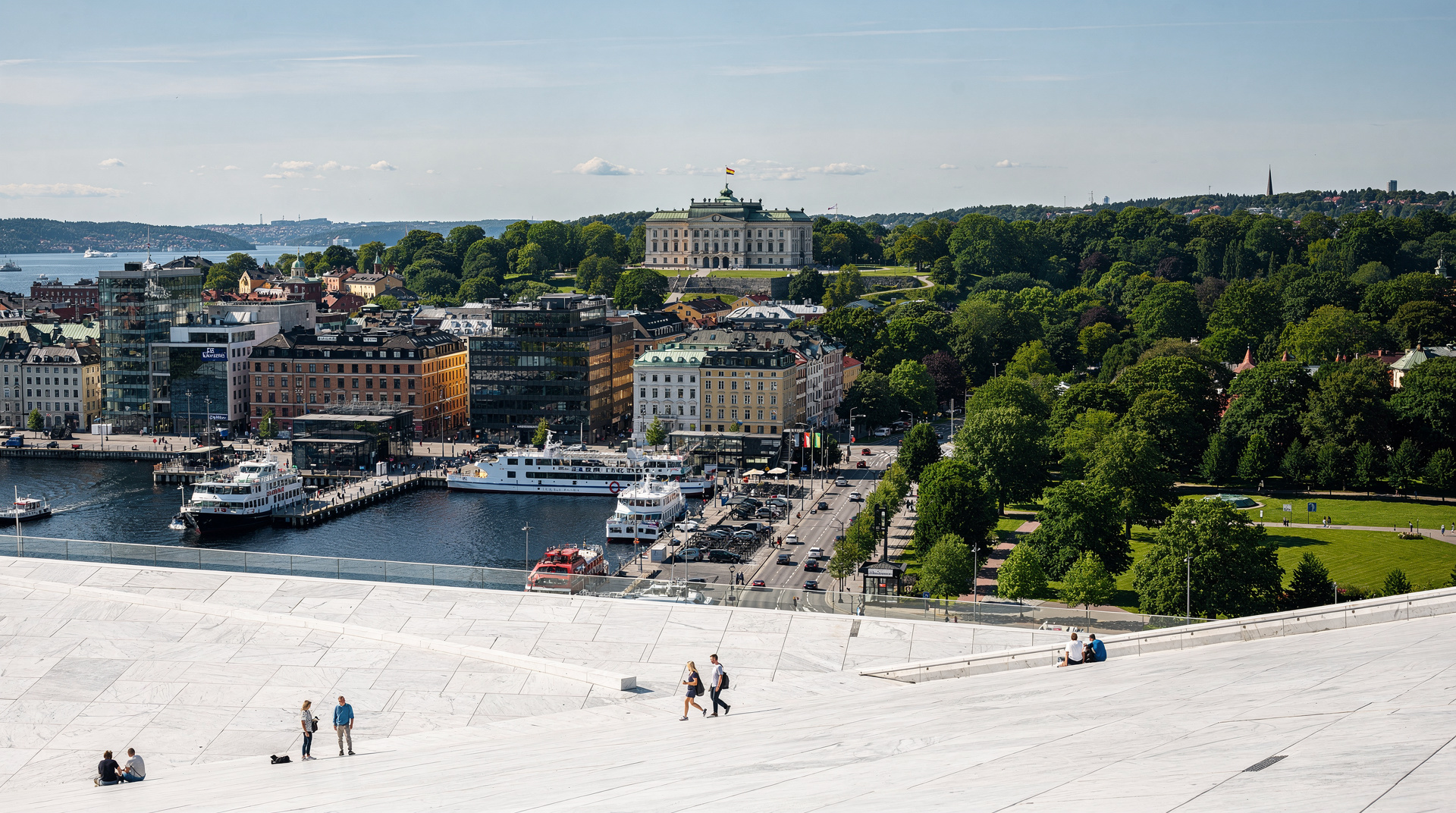
Oslo’s relatively flat city core — from the harbourfront up through Frogner, around the perimeter of Vigeland Park, and back down toward the Opera House — is ideal cycling territory. The city’s Vision Zero road safety programme has lowered speed limits across much of the centre to 30 km/h, and the number of cars in the inner city has been deliberately reduced through parking removal and filtered streets. The result for cyclists is a noticeably calmer experience than in most comparable European capitals.
The route in detail
The exact route varies slightly between operators and seasons, but the standard highlights tour traces Oslo’s main cultural and historical spine. A typical itinerary:
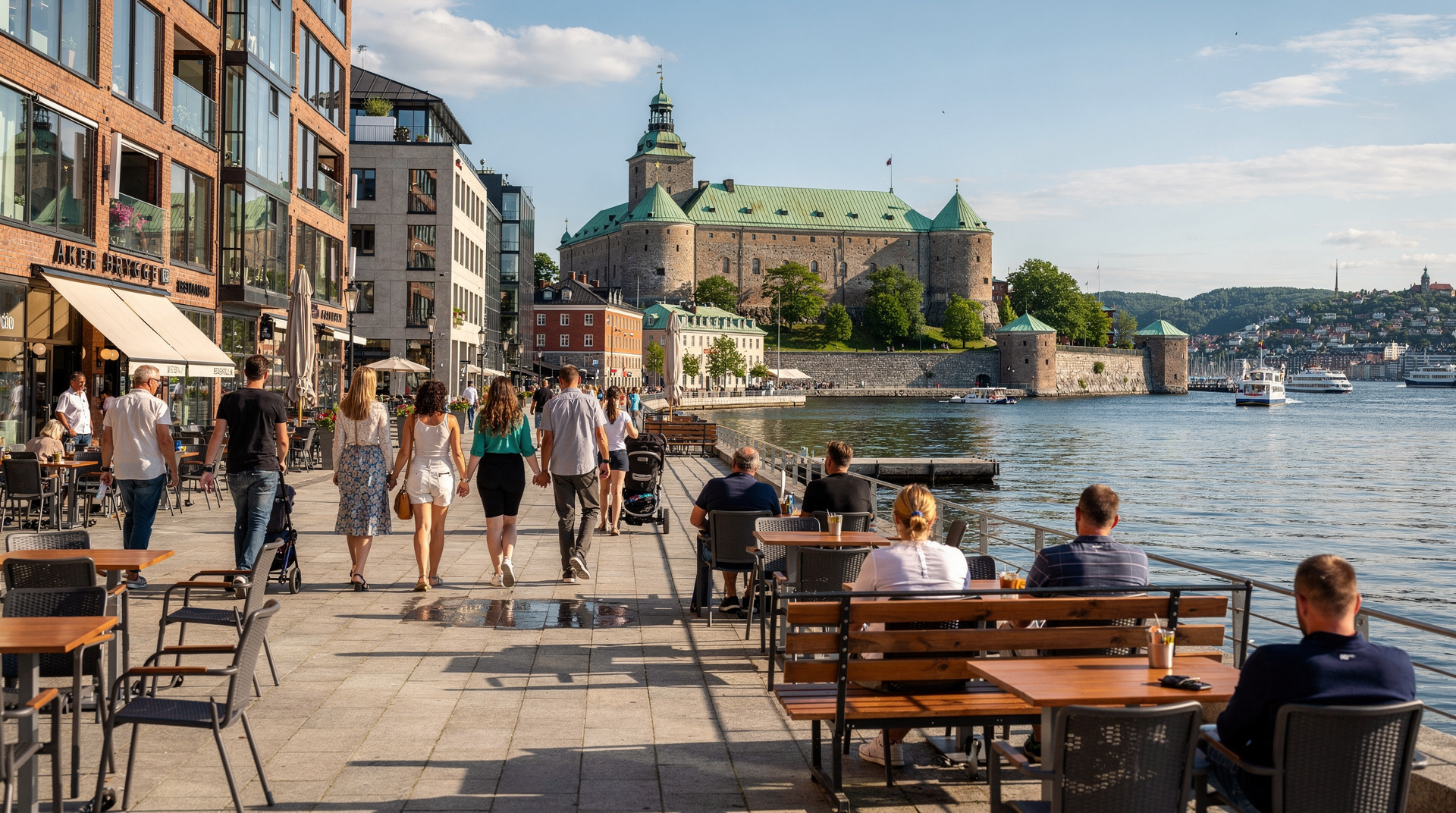
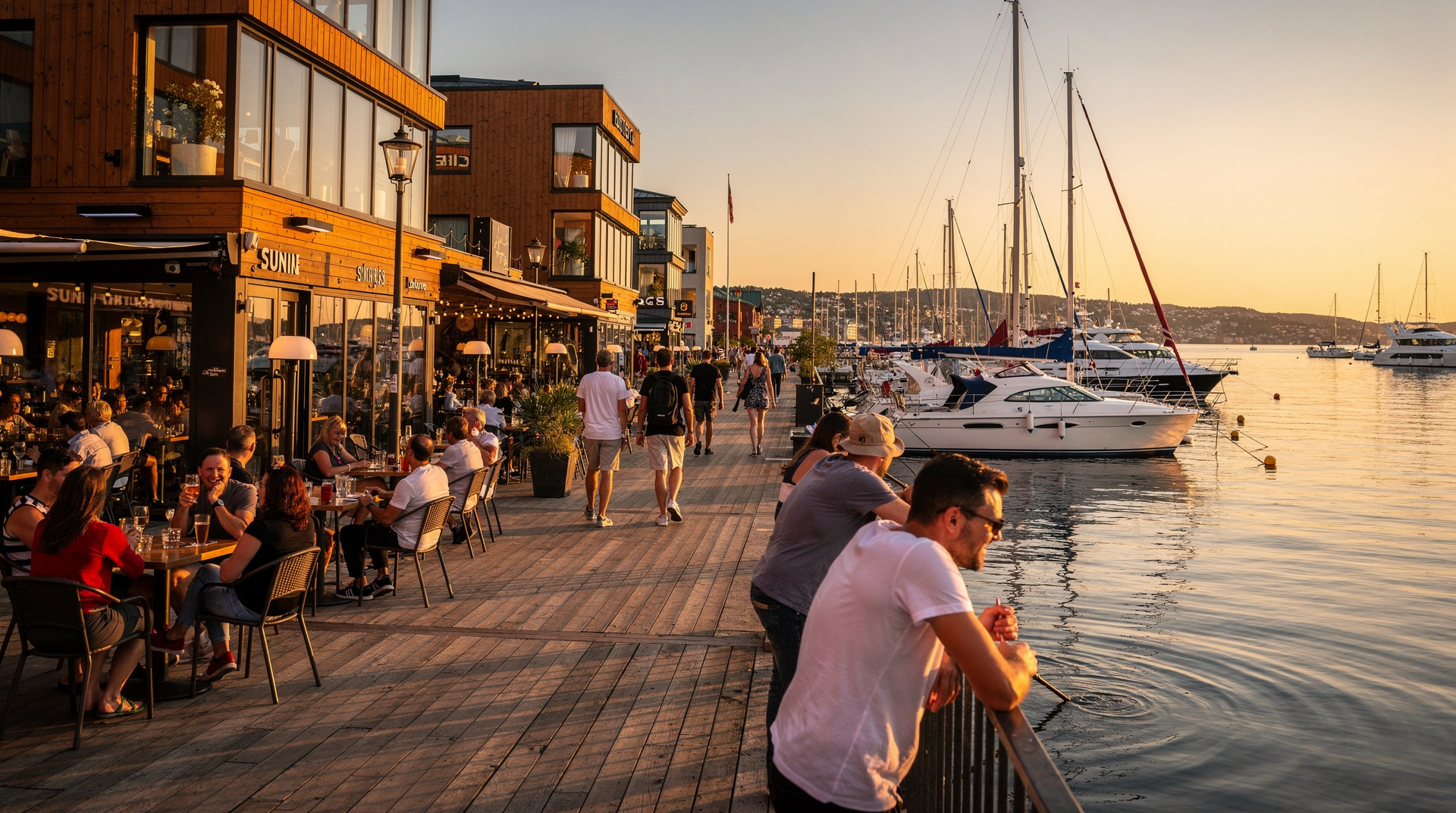
Starting at Aker Brygge or a central meeting point near the harbour, the tour moves west along the waterfront and into the Tjuvholmen quarter — the Astrup Fearnley Museum on the left, the marina, the floating sauna boats visible on the water. Then north through Frogner toward the Royal Palace gardens, which are freely accessible and frame the tree-lined Karl Johans gate axis beautifully by bike.
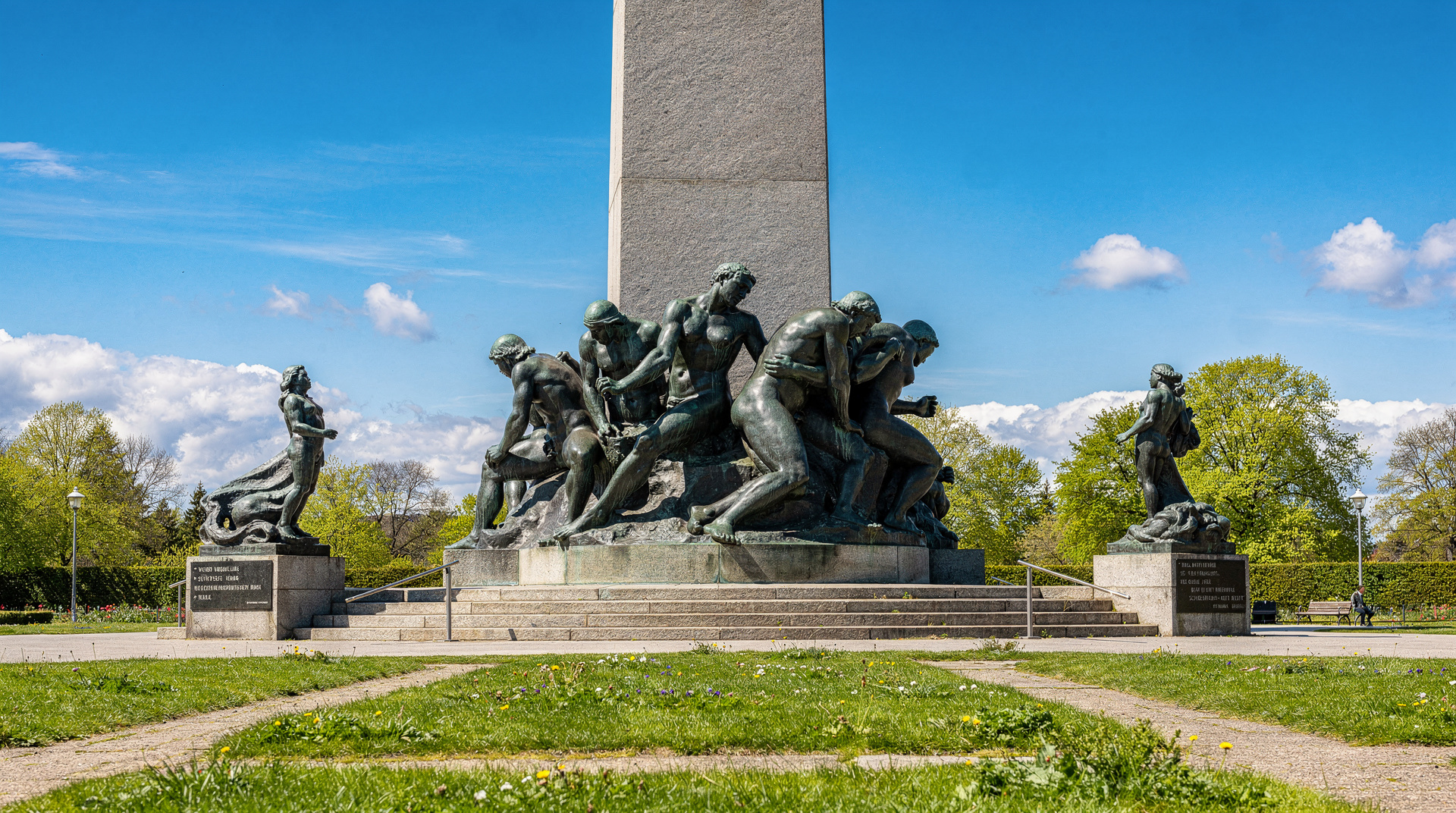
From the palace the route typically continues through Frogner to Vigeland Sculpture Park, where the group stops for 20 to 30 minutes. The guide explains the context of Gustav Vigeland’s 214-sculpture cycle — a life’s work depicting the human condition from birth to death — and allows time for photography around the bridge and monolith. This is the tour highlight for most participants.
The return leg passes through Majorstuen, down Bogstadveien (one of Oslo’s best shopping streets), and back toward the centre, often with a stop at Akershus Fortress for views over the harbour and fjord. The total riding time is approximately 90 minutes out of the 3-hour tour; the rest is stops.
Fitness, pace, and practicalities
The standard bike tour on regular city bicycles is accessible to anyone with basic cycling competence and moderate fitness. The terrain is mostly flat or gently rolling — Frogner and the palace gardens are flat; the approach to Holmenkollen, if included, is not on the standard route and appears only on upgraded variants. A guide travelling with 10 to 12 riders sets a pace that the slowest rider can sustain; you are not racing.
If you have not cycled recently, or if your group includes people who are hesitant about hills, the e-bike panorama tour (oslo-elbike-panorama) removes all physical concern. The electric assist handles any incline the standard route encounters, and the extended panorama version sometimes ventures as far as Holmenkollen — a climb that would be exhausting on a regular bike but is pleasant on electric.
Equipment included: bike, helmet, padlock for stops, and a guide. Wear comfortable clothes and shoes you can cycle in; the tour does not stop at accommodation for a kit change. In summer, sun protection is sensible; in shoulder season bring a layer.
Winter bike tour: a genuine alternative
The winter highlights bike tour (oslo-winter-highlights-bike) runs December through February on specially adapted bikes with wide snow-grip tyres. This is not a compromised version of the summer experience — it is a different one. Oslo under a thin crust of snow, the palace gardens bare and silver, Vigeland Park’s sculptures dusted white, the harbour still and dark: the visual palette is completely different from the August version.
The guide adjusts the route to avoid unsalted or icy sections, but otherwise the format is the same. Groups are smaller in winter, the pace slightly slower, and the experience distinctly atmospheric. Dress very warmly — you generate less heat cycling at low winter temperatures than you might expect.
E-bike alternatives: what changes
The e-bike panorama (oslo-elbike-panorama) is the version for anyone who wants to go further and higher without physical effort. The electric assist on Oslo’s bike infrastructure means you can tackle the climb toward Holmenkollen without aerobic strain. The panorama name refers to the expanded route coverage — more elevated viewpoints, more distance in the same time window. Price is broadly comparable to the regular tour or marginally higher.
The Oslo and beyond e-bike tour (oslo-ebike-and-beyond) extends further from the city centre — sometimes reaching Nordmarka forest trailheads or longer coastal routes. This is a 4 to 5-hour commitment and suits travellers who are comfortable cycling and want to see something of Oslo’s natural periphery rather than only the tourist core.
Oslo by bike: why it works better here than in most cities
Oslo’s cycling infrastructure has improved significantly over the past decade. Dedicated cycle lanes now run along most major routes in the city centre, including the harbourfront promenade from Bjørvika through Aker Brygge to Tjuvholmen. The city’s Vision Zero programme has redesigned dozens of intersections to improve cyclist safety. While Oslo is not Amsterdam or Copenhagen, it is a genuinely pleasant cycling city for anyone with basic road confidence.
The guided bike tour takes advantage of this infrastructure without requiring participants to navigate it independently. The guide leads from the front, manages traffic crossings, and knows which routes avoid the steeper cobbled sections that trip up visitors unfamiliar with the city. The result is a fluid experience where you spend your mental energy looking at Oslo rather than watching for bus lanes.
Oslo’s bike lane coverage is also ideally suited to the highlights tour route: the harbourfront, Frogner, and the approaches to Vigeland Park all have dedicated infrastructure. The hillier sections toward Holmenkollen that might deter cyclists are reserved for the e-bike variants.
What to know about Oslo’s streets
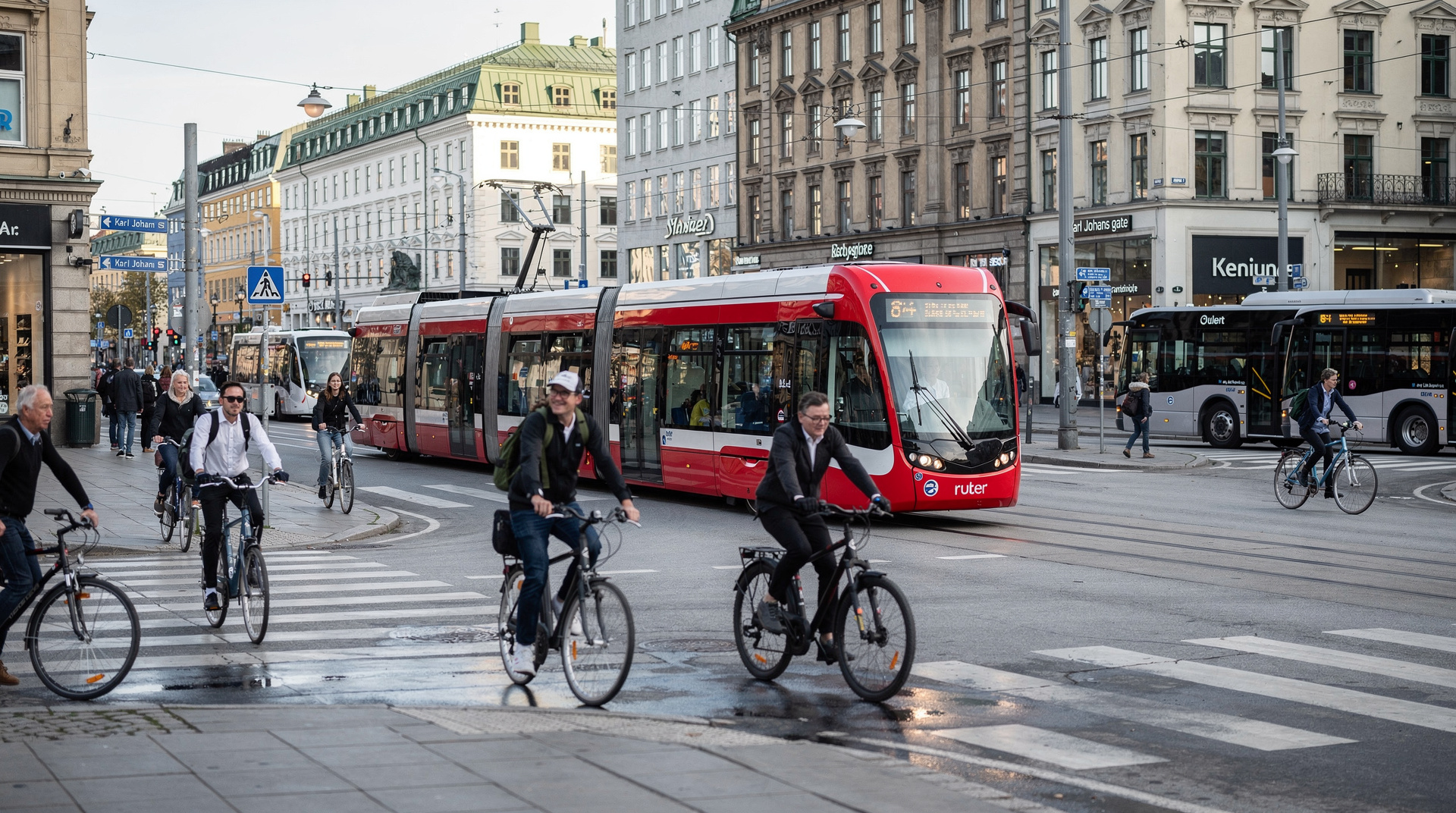
A few practical notes for first-time visitors cycling in Oslo. The city’s tram network uses embedded rails on many central streets — particularly on Storgata, Prinsens gate, and Karl Johans gate — and these rails can catch a bicycle wheel at an angle. The guide navigates around the worst of these, but it is worth knowing to approach tram tracks at a right angle if you encounter them.
Oslo’s motorists are generally well-behaved and aware of cyclists, but the interaction between trams, cyclists, and pedestrians in the central city requires attention. The guided format is useful precisely because the guide handles the navigation decisions while you observe.
The weather in Oslo can shift quickly. In summer (June to August) afternoon temperatures of 20 to 25 degrees Celsius are common, with occasional rainfall. In shoulder season (April, May, September) mornings can be cold — 8 to 12 degrees — warming by midday. The bike tour runs in all but the most extreme weather; if it is called off due to conditions, the operator will contact you in advance.
Vigeland Park: allowing enough time
The tour typically allocates 20 to 30 minutes at Vigeland Sculpture Park, which is the right amount of time for a guided overview but may leave you wanting more. Vigeland is the world’s largest sculpture installation made by a single artist: 212 bronze, granite, and wrought-iron figures spread across 80 acres of the Frogner Park. Gustav Vigeland worked on the commission from 1907 until his death in 1943, and the result is a complete artistic vision of human life from birth through childhood, love, old age, and death.
The monolith — a 14-metre column of 121 intertwined human figures — is the centrepiece and takes 10 to 15 minutes to walk around properly. The bridge over the Frognerbadet has 58 bronze figures along its railings; the map of human emotion from infant to old age carved into these figures repays slow looking.
If you want to return to Vigeland after the tour, entry is free at any time (the park never closes). See the Vigeland Sculpture Park guide for a more detailed walking route.
Combining the bike tour with other Oslo activities
The bike tour works well as a morning activity leaving the afternoon free for museums or the waterfront. A typical combination: 09:00 bike tour, lunch at Aker Brygge or Mathallen, afternoon at the Munch Museum or National Museum. Another strong combination is the bike tour in the morning followed by an afternoon silent electric fjord cruise — you cover the city by land in the morning and by water in the afternoon, which together give a comprehensive first impression of Oslo.
For visitors with an Oslo Pass, the bike tour is separate — it is not included in the pass — but the T-bane journeys between activities are covered.
Comparing the bike tour to alternatives
For those who prefer to explore on foot, walking tours in Oslo cover much of the same territory — Vigeland Park, Akershus, the harbourfront — at a slower pace with more time at each stop. Walking tours are more accessible for mixed-fitness groups and more comfortable in rainy weather.
The hop-on hop-off bus covers more territory but from a seated, passive position — you see Oslo rather than move through it. The bike tour’s active engagement with the city is a meaningfully different experience that many participants describe as the best single thing they did in Oslo: not because the individual sights are different from what the bus sees, but because arriving at each one by bicycle changes how it registers.
Practical details
- Meeting point: typically Aker Brygge or a central downtown location (confirmed at booking)
- Duration: 3 hours
- Group size: usually 8 to 15 people maximum per guide
- Price: approximately NOK 620 to 670 per adult (USD 67 to 72)
- Includes: bicycle, helmet, guide; does not include food or drink
- Physical requirement: basic cycling competence; moderate fitness for the standard tour; e-bike option removes fitness concern entirely
- Minimum age: typically 8 years old; younger children by arrangement with the operator
- Booking: advance booking recommended in summer; available on GetYourGuide with free cancellation up to 24 hours before departure
- Operating season: year-round (standard tour April to October; winter variant November to March)
For a full view of Oslo’s cycling infrastructure and where to hire bikes independently for self-guided exploration, see the getting around Oslo guide.
Comparing the bike tour formats
| Tour | Duration | Effort | Best for |
|---|---|---|---|
| Highlights bike tour | 3 hours | Moderate pedalling | Fit travellers wanting the classic route |
| E-bike panorama | 3 hours | Minimal, electric-assist | Anyone wanting hills without effort |
| Oslo and beyond e-bike | 4–5 hours | Minimal, longer distance | Travellers wanting Nordmarka or coast |
| Winter highlights | 3 hours | Moderate, slower pace | Winter visitors wanting a different Oslo |
What a competent guide adds beyond directions
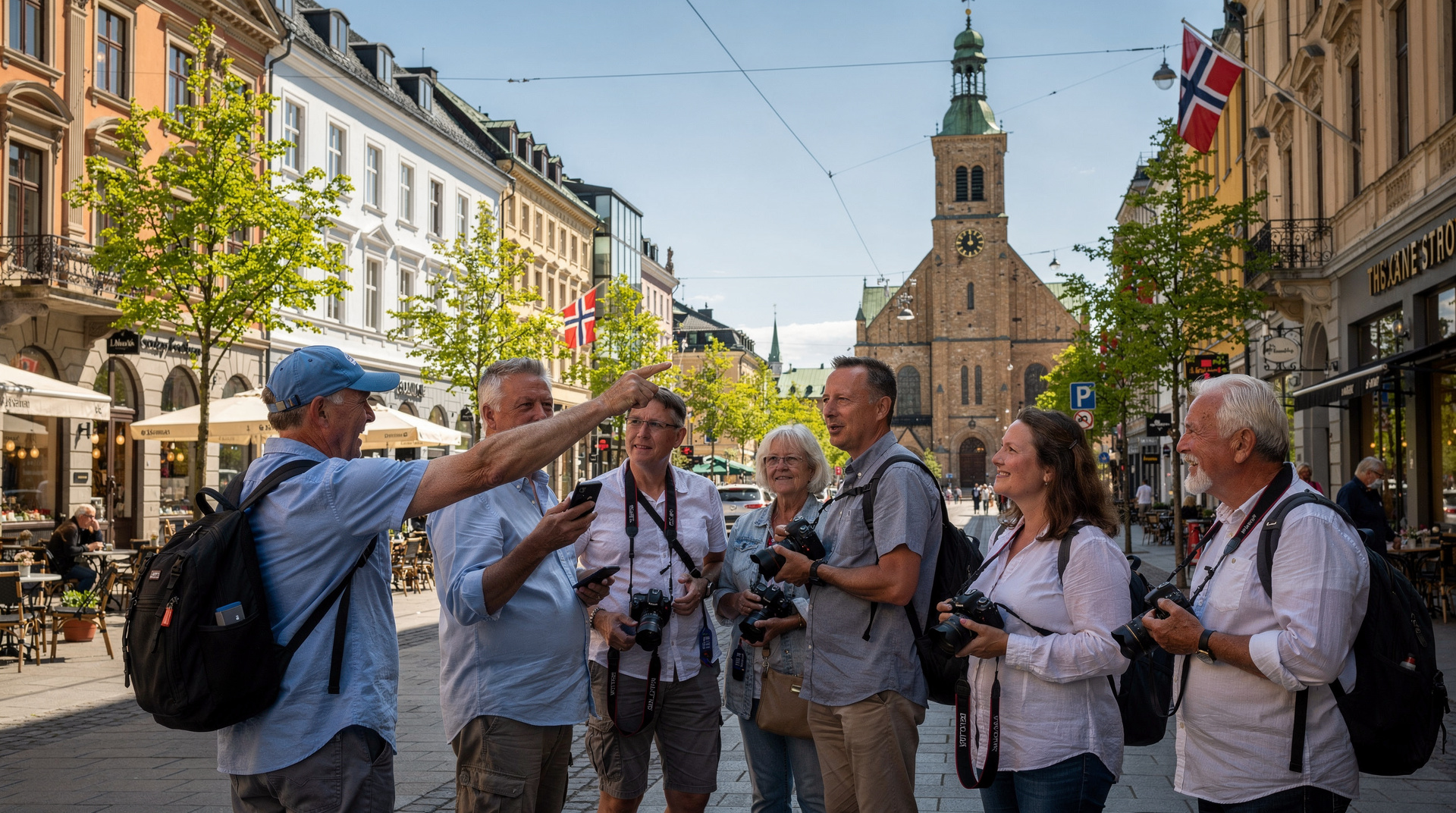
A good bike tour guide in Oslo does more than lead the route safely — they read the group’s energy and adjust stop lengths, know which side streets avoid the worst tram-track crossings at a given time of day, and can answer questions ranging from “why does the Royal Palace have no fence” (deliberate, reflecting Norway’s low-key monarchy) to which café near Vigeland Park is worth a return visit. This local, conversational knowledge is genuinely the differentiator between a guided tour and simply following a map on your phone, and it is worth factoring into the value calculation alongside the bike rental itself.
Solo travellers and families on the bike tour
Solo travellers consistently find guided bike tours a comfortable way to see Oslo without the self-consciousness of dining or sightseeing alone — the shared physical activity and stops for photos naturally generate conversation with other riders. Families with children old enough to cycle independently (usually 8 and up per most operators’ minimum age) find the tour a good way to cover ground that would otherwise mean a lot of tired walking; younger children are better served by the e-bike variants with tag-along or child-seat options where offered, confirmed directly with the operator before booking.
Compare alternative tours
Frequently asked questions about Oslo highlights bike tour
How long is the Oslo highlights bike tour?
The guided highlights tour is 3 hours. It covers approximately 12 to 15 kilometres of Oslo's main sights, moving at a comfortable pace with stops for commentary and photography.What is the price?
The 3-hour guided bike tour costs around NOK 620 to 670 per adult (approximately USD 67 to 72) in 2026. The price includes a good-quality city bicycle, a helmet, and the guide.Do I need to be fit to do this tour?
The main bike tour is on a regular city bicycle and covers some modest inclines. Moderate cycling fitness is helpful. The e-bike panorama option removes the fitness concern entirely — the electric assist makes Oslo's hills effortless.What does the route cover?
The typical route includes Vigeland Sculpture Park, Frogner, the Royal Palace gardens, Karl Johans gate, Akershus Fortress, Aker Brygge, and the harbourfront. Some operators include the Opera House area in Bjørvika.Is the bike tour suitable for children?
Most operators require participants to be 8 or older and able to ride a bike independently. Tag-along bikes or child seats on adult bikes are sometimes available — check with the specific operator when booking.What is the difference between the regular bike tour and the e-bike panorama?
The regular bike tour (oslo-highlights-bike-tour) uses standard city bicycles; you pedal the whole route. The e-bike panorama (oslo-elbike-panorama) provides electric-assist bikes that make hills easy and allow the tour to cover more ground in the same time, including Holmenkollen on some variants.Is there a winter version of the bike tour?
Yes. The winter highlights bike tour (oslo-winter-highlights-bike) runs from November through March and covers a modified route. Snow tyres are fitted to the bikes. The pace is somewhat slower and the route avoids icy steep sections. A genuinely different and memorable experience.What should I wear on the bike tour?
Comfortable, weather-appropriate layered clothing and closed shoes you can pedal in. Avoid long loose skirts or coats that could catch in the chain. In summer, sun protection; in shoulder season, a windproof outer layer, since moving air on a bike feels several degrees cooler than standing still.Can I rent a bike and cycle Oslo's highlights on my own instead?
Yes, Oslo's city bike-share scheme and private rental shops make independent cycling straightforward, and the infrastructure described in this guide works equally well self-guided. What you lose without a guide is the contextual commentary — the Vigeland Park history, the Vision Zero traffic story, the tram-track warnings — and the route planning is entirely on you.