Oslofjord silent electric cruise: review, tips and booking
Oslo: guided sightseeing fjord cruise on a premium silent electric boat
Duration: 2 hours
- Silent electric boat
- Free cancellation
- Best seller
A cruise that actually deserves its reputation
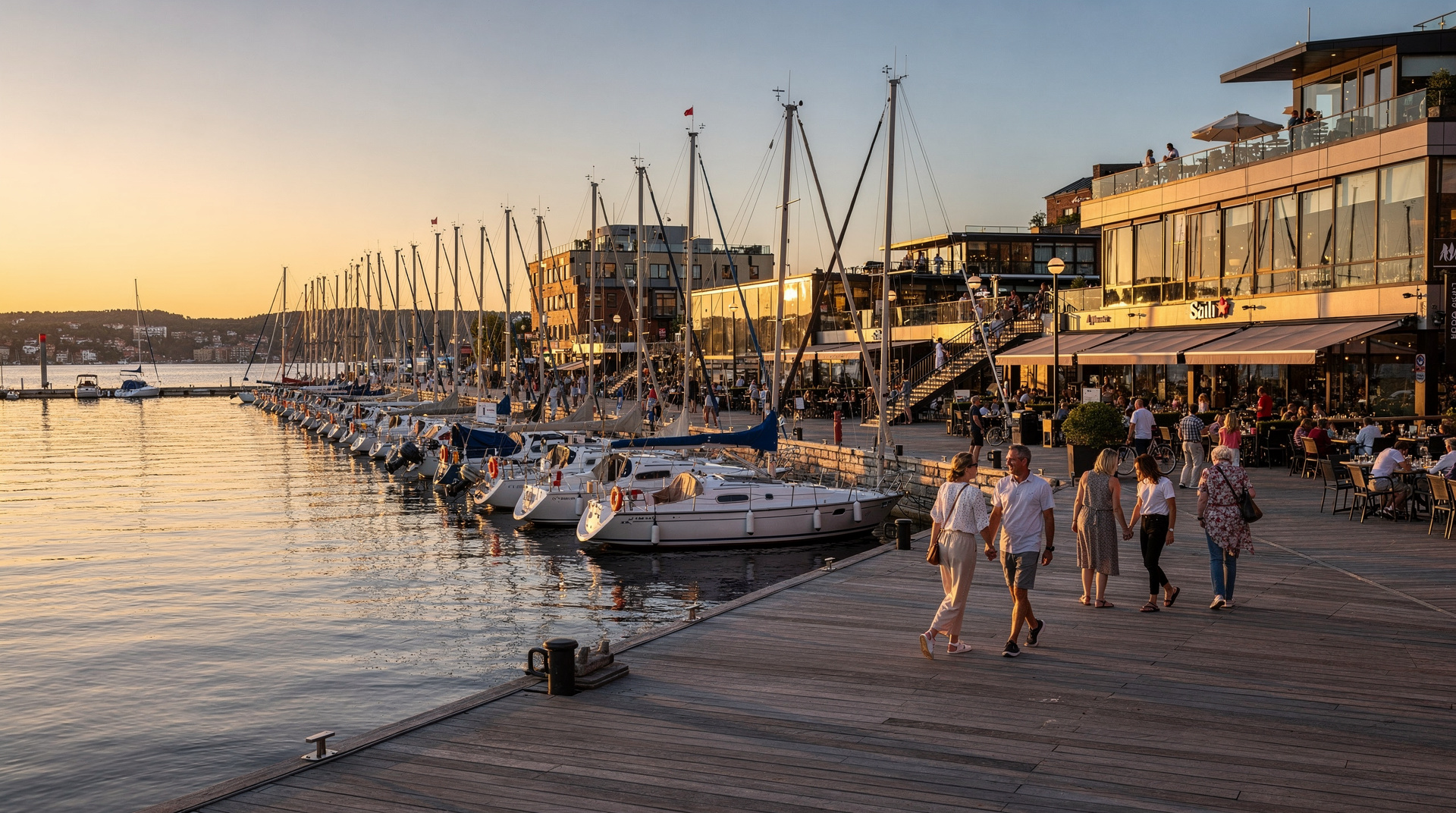
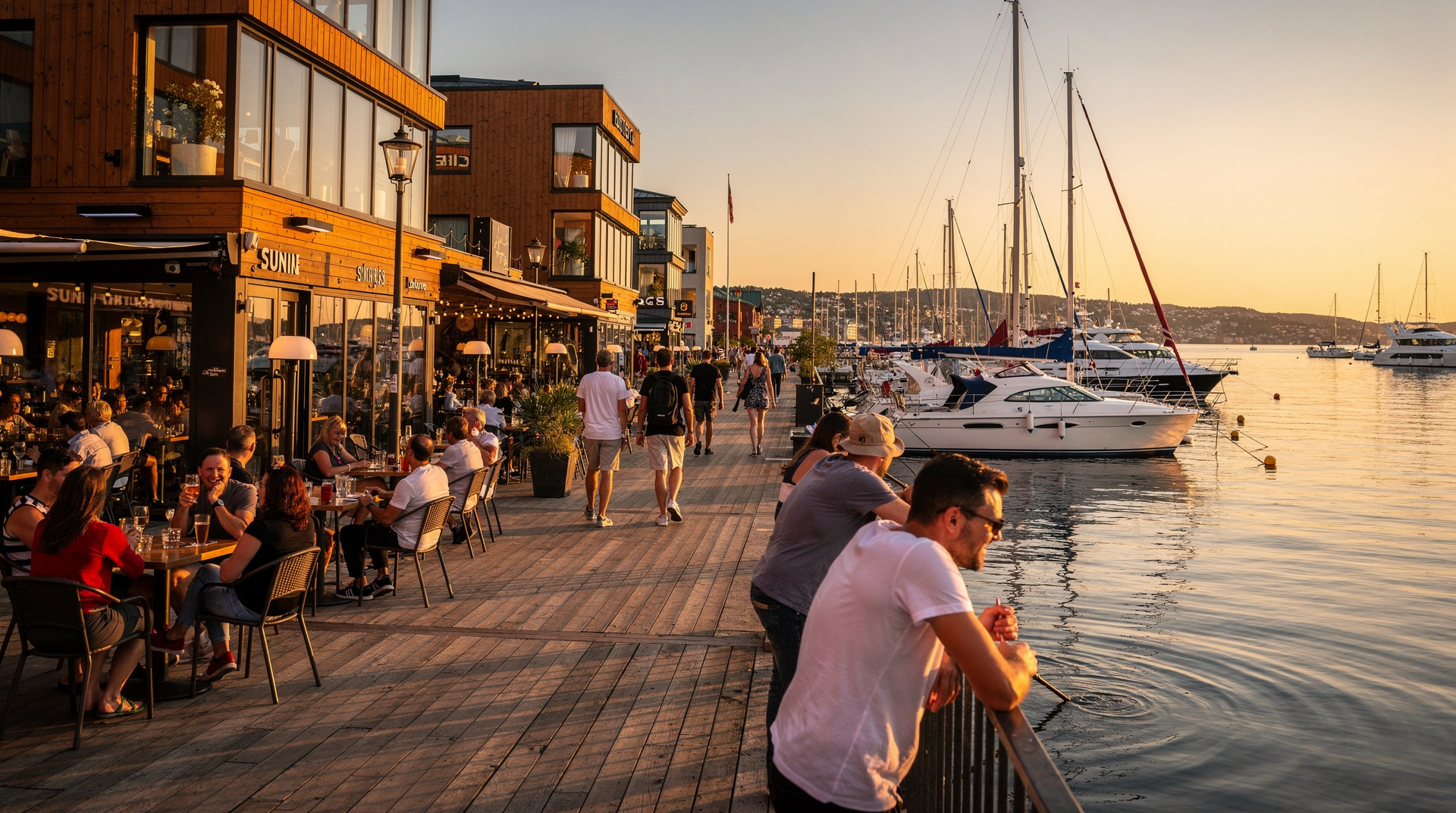
Oslo’s waterfront is among the most architecturally dramatic harbour edges in northern Europe, and the silent electric boat gives you arguably the cleanest way to see it. No diesel smell, no engine roar competing with the guide’s commentary, and a low-slung hull that keeps you close to the water rather than above it. It is not a coincidence that this is one of the city’s best-selling individual experiences — the 4.7 rating across nearly 1 900 reviews on GetYourGuide is one of the highest for any Oslo activity.
| Where | Departs Aker Brygge pier 3, central Oslo |
| Cost | around NOK 595–650/adult |
| Time needed | approximately 2 hours |
| Best time | weekday mornings (10:00–11:00) for softer light and fewer crowds |
| Getting there | tram 12 (Aker Brygge) or tram 13 (Tjuvholmen), or 15-minute walk from Oslo Central Station |
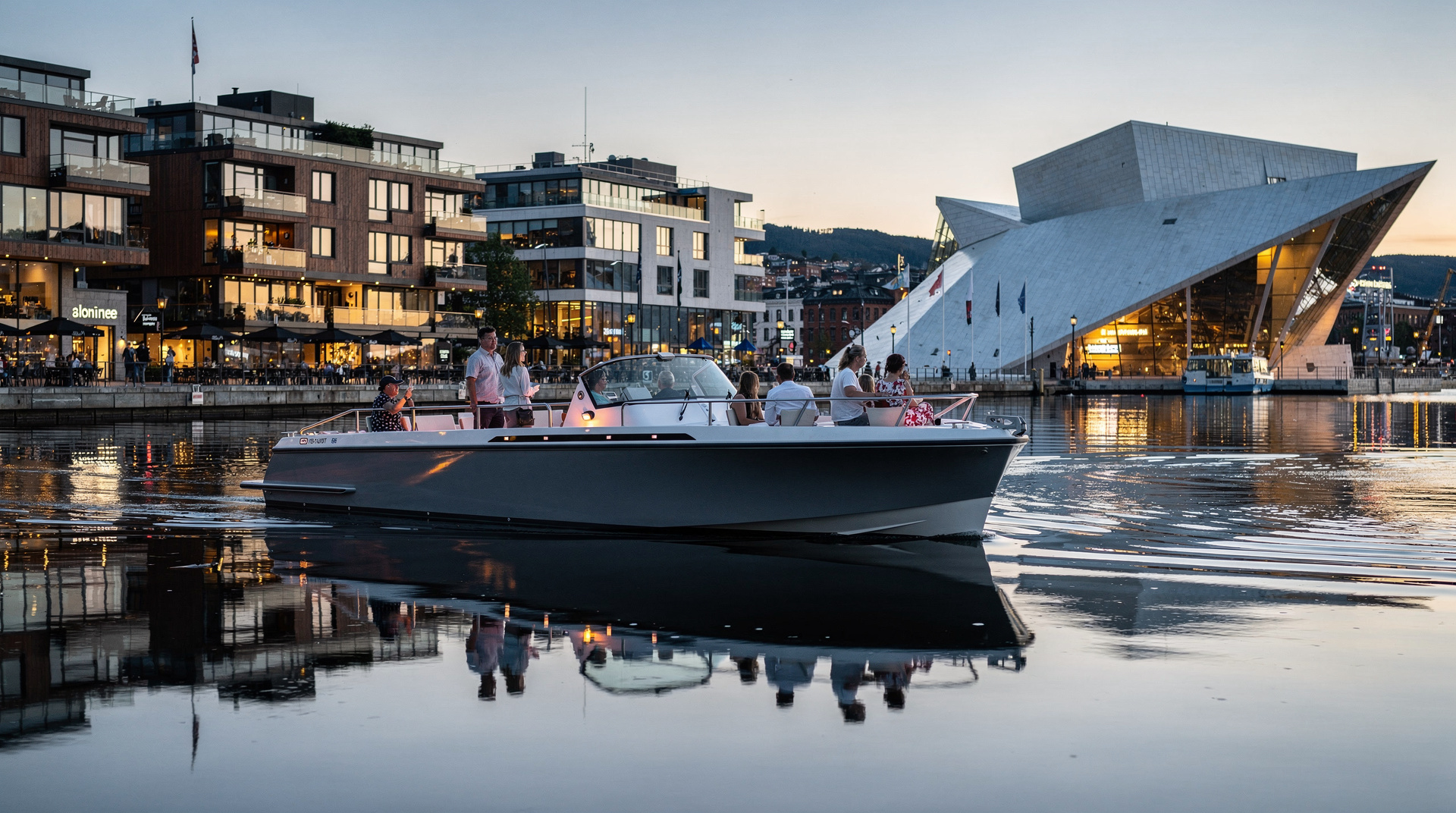
The boat — typically a sleek, purpose-built electric vessel — seats around 50 passengers on a covered upper deck with open railings and optional indoor seating below. The outer deck has unobstructed sight lines in most directions, which matters when the guide is pointing out Akershus Fortress or the islands of Hovedøya and Gressholmen in the middle distance.
What the “silent” descriptor actually means: electric propulsion eliminates both exhaust fumes and the constant drone of a diesel engine that characterises most harbour tour boats. Conversations at normal speaking volume are possible on the open deck throughout the cruise. The guide can be heard clearly without a microphone from anywhere on the upper deck. This is a small but significant improvement in experience quality — on a conventional diesel tour boat, the noise floor is high enough that commentary requires amplification and passengers at the back lose detail.
What happens during the two hours
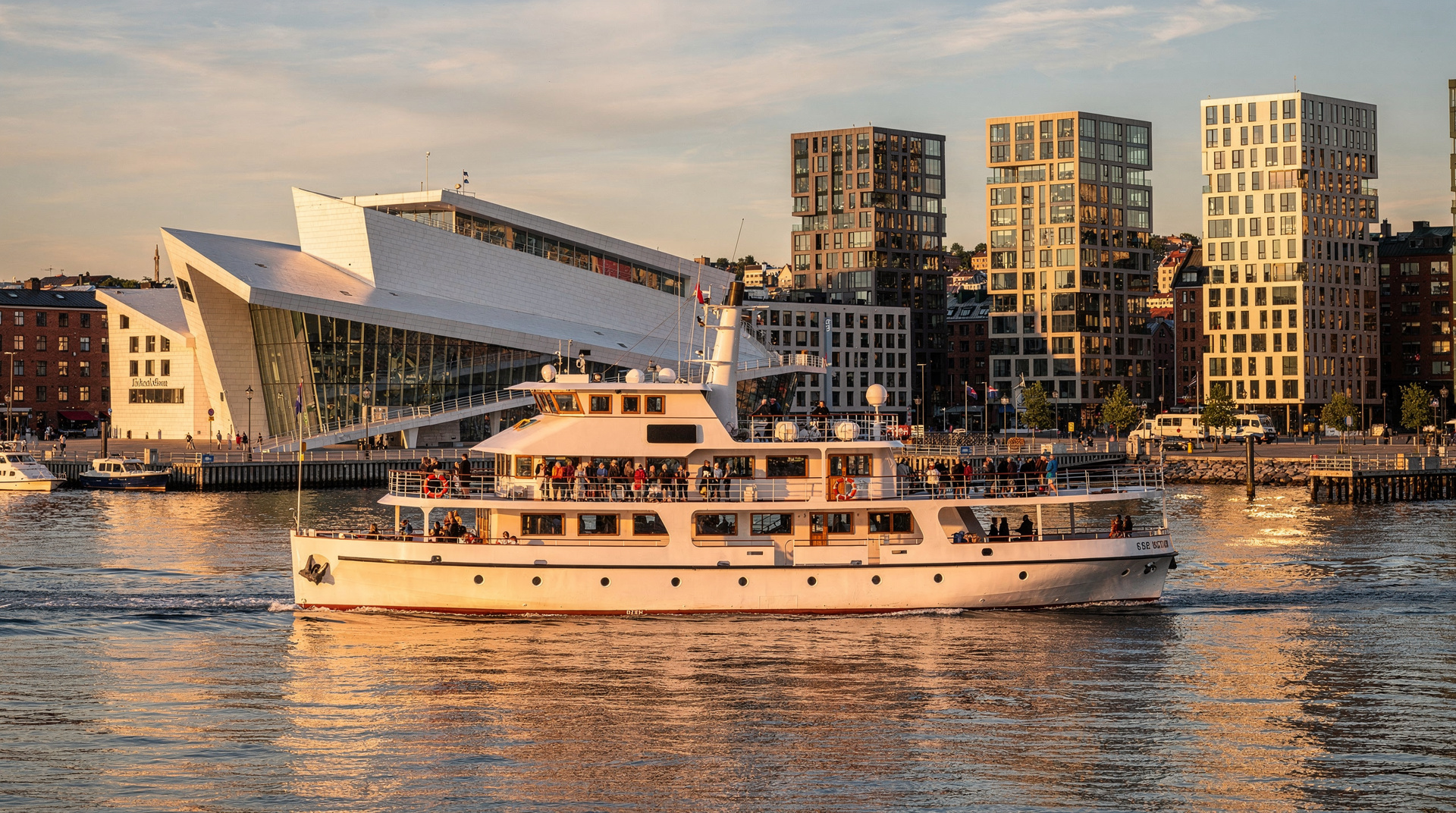
The departure is from Aker Brygge pier 3, within a few minutes’ walk of the City Hall and the Nobel Peace Center. The boat eases out of the inner harbour at low speed — the electric motor is genuinely quiet — and almost immediately you get the full-width view of the city skyline: the Munch Museum tower to the east at Bjørvika, the Opera House slanting roof ahead, the Akershus Fortress rising on the western headland, and the green hills beyond.
The guide covers the major visual landmarks in a conversational style rather than a formal lecture. Expect detail on Oslo’s rapid waterfront transformation since the early 2000s, the story behind the Opera House’s tilted rooftop design by Snøhetta, and the function of Akershus as both a medieval castle and a Nazi prison camp during the German occupation. The fjord’s ecology — its depth, the fish that populate it, the surprising cleanliness achieved through sewage treatment over the past two decades — also comes up.
The cruise moves out toward the inner islands. You pass Hovedøya with its ruined Cistercian monastery (12th century, visible from the water), Langøyene (Oslo’s most popular wild swimming island in summer), and usually one or two of the smaller uninhabited outcrops. The boat does not land on any island; this is a sightseeing cruise, not an island-hopping tour. For island visits, see island hopping from Oslo.
Coming back, the guide draws attention to the Tjuvholmen quarter — the Astrup Fearnley Museum of Modern Art, the sculpture-filled Tjuvholmen allmenning — and to the dense residential and commercial development that has replaced old container quays over the past 15 years.
Real pricing and how to book
At the time of writing, adult tickets are in the range of NOK 595 to 650 (USD 64 to 70). The price sits at the premium end of Oslo’s fjord cruise market — roughly NOK 200 to 250 more than the audio-guide-only electric cruises — and the difference is essentially the live guide. For travellers who learn better from a human narrator who can respond to questions than from a pre-recorded track, the premium is easy to justify.
Book in advance through GetYourGuide, especially in summer (June to August) when daily departures can sell out. Early morning and late afternoon slots tend to be slightly less crowded and have better light for photographs.
The Oslo Pass does not cover this cruise. If you are budget-calculating, that is a meaningful distinction: spending NOK 650 on the cruise on top of an Oslo Pass day is a significant outlay. Some visitors choose the Oslo Pass and skip the sightseeing cruises in favour of the Ruter-operated island ferries — those are included in the pass.
What it is really like on board
The electric boats used for this route are modern and well-maintained. There are toilets on board. The covered lower section has heating in cooler months. The upper open deck is popular in summer, particularly for photographs; grab an outer-rail seat on the starboard (right) side as you leave for the best views of Akershus Fortress, then move to the port (left) side for Bjørvika and the Opera House.
Crowd levels are highest on summer weekend afternoons. A weekday morning departure between 10:00 and 11:00 typically has more breathing room, a more attentive audience, and softer light across the water.
The boat is not particularly suited to those with serious mobility restrictions — boarding involves stepping down from the pier, and the deck has standard boat-grade stability. In calm fjord conditions this is a non-issue, but it is worth noting.
How this cruise compares to the alternatives
For a detailed side-by-side comparison, see which Oslofjord cruise to pick. In brief:
The electric audio-guide cruise offers essentially the same route at a lower price point (around NOK 380 to 420, USD 41 to 45) but substitutes a recorded audio commentary for the live guide. This is fine if you prefer self-pacing the experience but less engaging if you want to ask questions about what you see.
The scenic audio cruise (oslofjord-scenic-audio-cruise) is the economy option at roughly NOK 280 to 340 (USD 30 to 37) — a shorter route with recorded commentary. Suitable for visitors on a tight budget who want a taste of the fjord without the full guided experience.
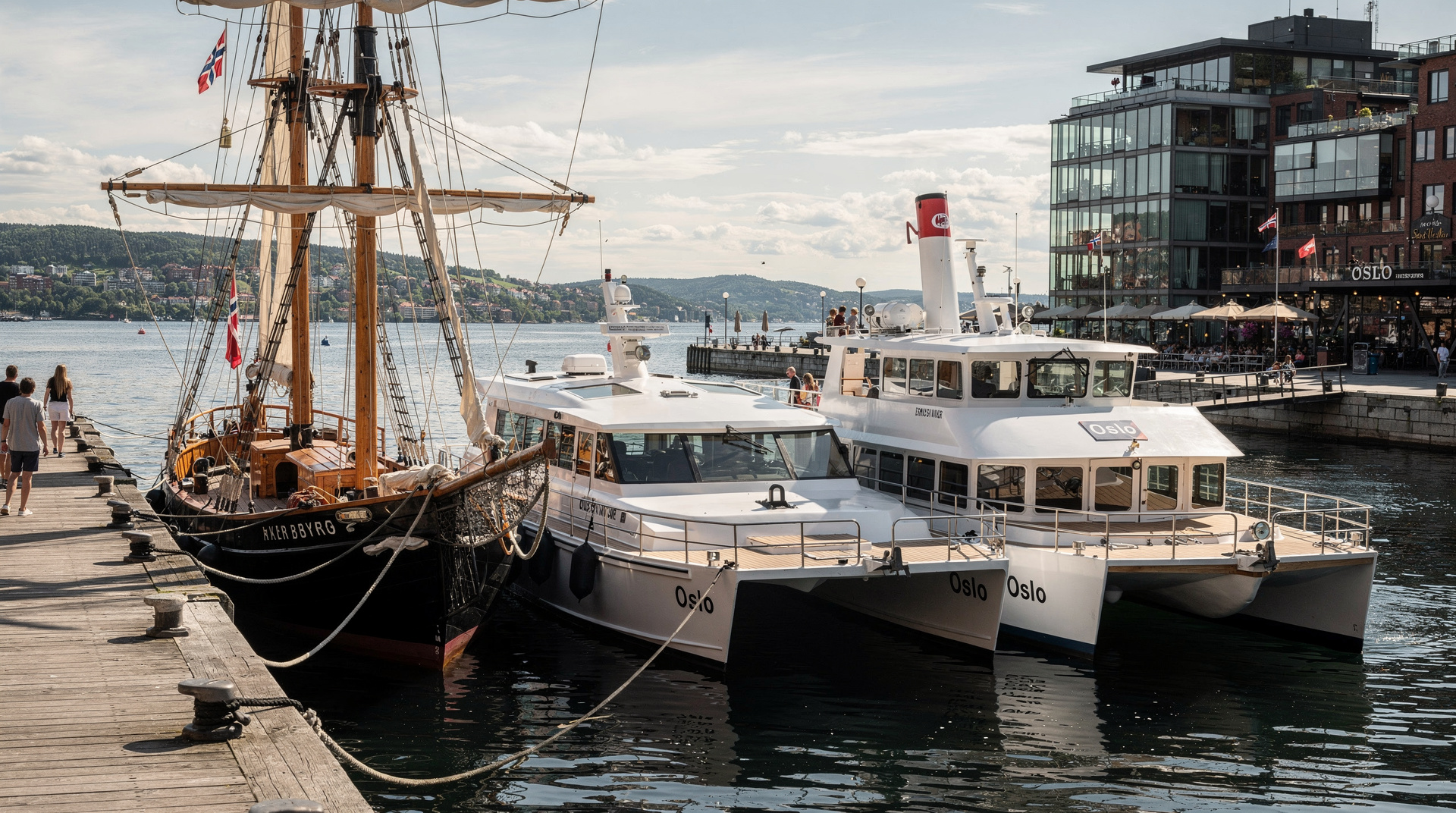
The sailing ship cruise covers similar waters on a traditional tall ship, which is atmospheric but slower and noisier. It works well if the vessel type itself is part of the appeal — see the sailing ship cruise guide for details.
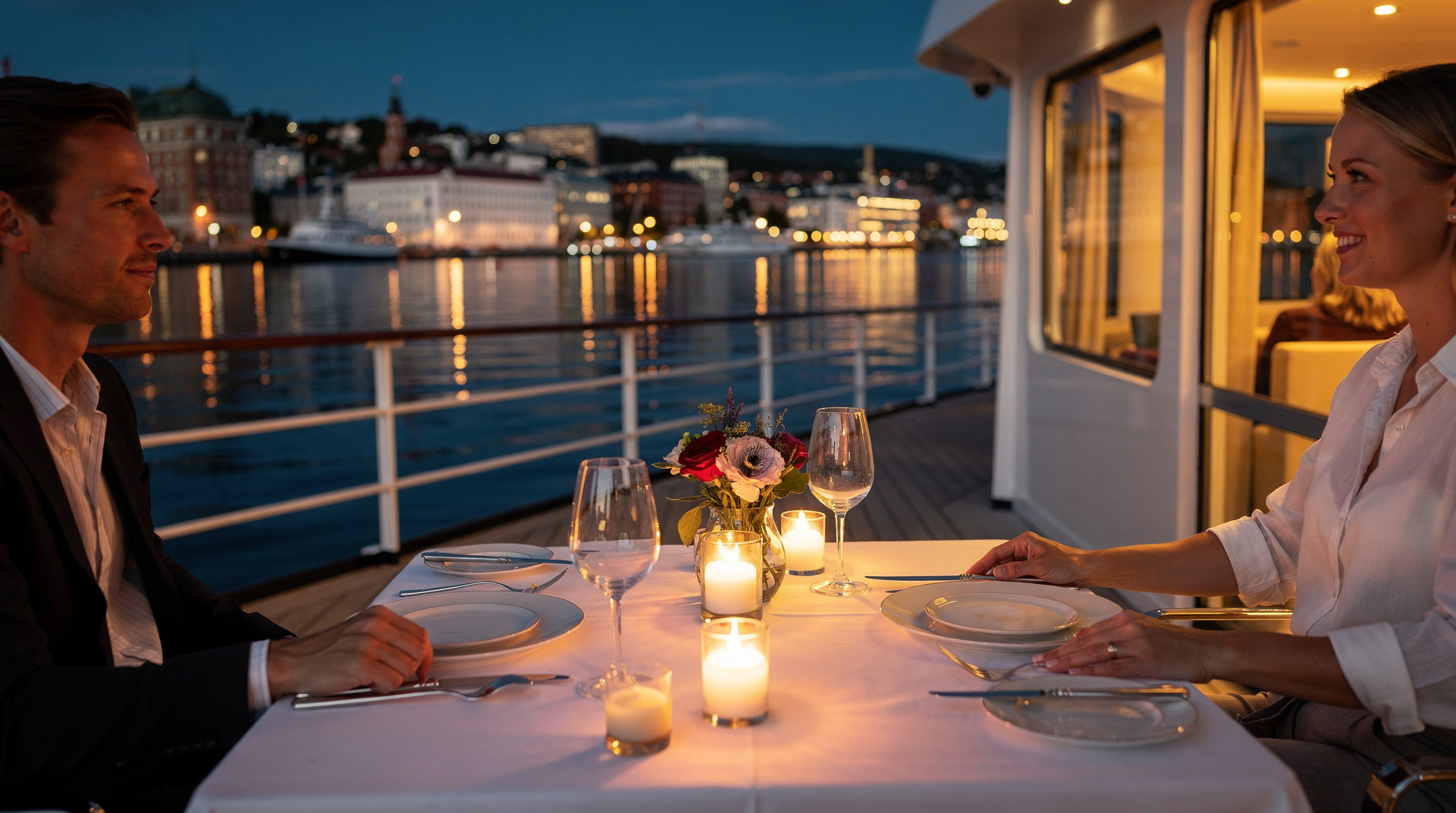
For the full spectrum of evening dining cruises — shrimp buffet, jazz, rock, or seafood dinner — see Oslo dinner cruises compared. Those are fundamentally different products: food and entertainment first, sightseeing second.
| Cruise | Duration | Cost (per adult) | Guide |
|---|---|---|---|
| Silent electric cruise (this tour) | 2 hours | around NOK 595–650 | live guide |
| Electric audio-guide cruise | around 2 hours | around NOK 380–420 | recorded audio |
| Scenic audio cruise | shorter route | around NOK 280–340 | recorded audio |
| Sailing ship cruise | varies, generally longer | premium, check current rate | live crew, atmosphere-led |
| Ruter island ferry (self-guided) | flexible | included in Oslo Pass | none |
Weather, seasons, and what to expect underway
Summer (June to August) is the busiest season, with the longest daylight and the highest chance of a calm, warm crossing — though wind off the water can still cut through a light jacket even on a sunny July afternoon. Spring and early autumn see fewer crowds and cooler but still comfortable conditions; a mid-layer is usually enough. Winter departures run on a reduced schedule and the cold is genuine — the electric motor’s lack of engine heat means the open deck can feel considerably colder than the air temperature suggests, so dress as you would for a winter walk, not just a boat ride. Rain does not usually cancel departures, but check the forecast and consider a covered-deck seat if showers are likely.
Getting the most from the live guide
Because the cruise has no fixed seating, the value of the live guide depends partly on where you position yourself. Standing or sitting near the open rail on the side the guide is facing gives the clearest commentary and the best sightline for photos; drifting to the covered lower deck trades some of that immediacy for warmth and a seat. Guides generally welcome questions once the formal commentary on a landmark finishes, so this is a good cruise for travellers who want to ask about Norwegian history or the practicalities of visiting Akershus Fortress or the Oslo Opera House afterwards.
The Oslofjord: what you are actually sailing through
The Oslofjord is not technically a true fjord in the geological sense — it lacks the sheer U-shaped walls carved by a single glacier. It is a more complex geological formation, narrowing from around 10 kilometres at its mouth near Drøbak to under 1 kilometre at the inner harbour. The water depth reaches 220 metres in the middle sections but is shallower near the islands.
The fjord’s water quality has improved dramatically since the 1970s when it was seriously polluted. Modern sewage treatment plants, restrictions on industrial discharge, and a deliberate cleanup effort over four decades mean the fjord is now clean enough for swimming from the Oslo shoreline and the islands — a significant achievement for a major European capital.
The inner islands — Hovedøya, Lindøya, Bleikøya, Gressholmen, and about 35 others in the Oslo archipelago — are all accessible by Ruter ferry from Aker Brygge and Vippetangen. The sightseeing cruise passes near several of these islands, giving you a visual impression of the archipelago and helping you decide whether to make the trip out to any of them. In summer, these islands host most of Oslo’s best wild swimming spots.
Photography and the light
The Oslofjord cruise offers some of Oslo’s best photography opportunities, particularly in summer. The angles available from the water are not replicable from the shore: the full width of the Akershus Fortress headland, the Opera House seen from the fjord level rather than the street, the Barcode towers reflected in the harbour. A smartphone camera with a wide-angle lens captures the scale reasonably well; a longer focal length is useful for details on the fortress walls.
Light quality: morning departures (before 11:00) have softer, directional light that picks out architectural texture. Afternoon (13:00 to 16:00) can be flat and bright in summer but excellent for the Oslo skyline. Evening departures in late June or July catch the long golden hours that make the fjord particularly photogenic.
Who this cruise suits best
First-time visitors to Oslo who want a structured, informative overview of the harbour and fjord in a comfortable two-hour window. Photography enthusiasts who want the city skyline from the water. Families with children old enough to sit through a guided commentary (broadly, ages 6 and up). Travellers with limited mobility for whom long walking tours are not ideal — the boat is stable and comfortable in normal fjord conditions.
The cruise is less well-suited to visitors who have already done multiple days in Oslo and know the waterfront well, and to budget travellers who find NOK 600-plus for a single two-hour activity uncomfortable. The audio-guide-only version at around NOK 380 to 420 is a meaningful saving if the live guide element is less important to you. Simply walking the 3-kilometre harbourfront from Bjørvika to Tjuvholmen and taking a Ruter ferry to one of the islands is a perfectly satisfying free alternative.
What comes before and after: building a day around the cruise
The cruise departs from Aker Brygge, making it easy to combine with the surrounding area. Before the cruise: walk west along the Tjuvholmen waterfront past the Astrup Fearnley Museum, then back along the Aker Brygge quayside for the 10 to 15 minutes before boarding. After the cruise: Oslo City Hall is a 5-minute walk east (free entry, significant murals by Munch and others, interesting as a piece of 1950s architecture); the Nobel Peace Center is immediately adjacent.
If you are planning an evening dinner cruise after a daytime sightseeing cruise, see the Oslo dinner cruises guide — the shrimp buffet cruise or the jazz buffet cruise use a different boat and departure time and are easy to book on the same day as the sightseeing cruise.
Practical details
- Departure point: Aker Brygge pier 3, central Oslo
- Duration: approximately 2 hours
- Capacity: around 50 passengers per departure
- Language: English-language guided departures run multiple times daily in summer; check specific departure languages when booking
- Accessibility: step-down boarding from pier level, open deck; contact operator in advance if mobility assistance is needed
- Cancellation: free cancellation if booked via GetYourGuide up to 24 hours before departure
- Getting there: tram 12 (Aker Brygge stop), tram 13 (Tjuvholmen stop), or a 15-minute walk from Oslo Central Station along the harbourfront
- Booking: advance booking strongly recommended in summer; multiple daily departures in peak season
For more on the fjord and what to see beyond the boat — the islands, the Bygdøy peninsula, the inner and outer fjord character — the Oslofjord destination guide is the right companion read. The which Oslofjord cruise to pick guide gives a full comparison table of every cruise option available from Aker Brygge.
Compare alternative tours
| Tour | Duration | Rating | Price | Highlights | |
|---|---|---|---|---|---|
| Oslo: 100% electric Oslofjord sightseeing cruise with audio guide | 2 hours | ★ 4.4 | From $41 | Electric boat · Audio guide | Check |
| Oslo: scenic fjord cruise with audio guide commentary | 2 hours | — | — | Audio guide · Free cancellation | Check |
| Oslo: Oslofjord sightseeing cruise by sailing ship | 2 hours | — | — | Classic sailing ship · Free cancellation | Check |
Frequently asked questions about Oslofjord silent electric cruise
How long is the silent electric cruise?
The guided sightseeing cruise runs for approximately 2 hours, departing from Aker Brygge pier 3 in central Oslo.What does the silent electric cruise cost?
Adult tickets are around NOK 595 to 650 (approximately USD 64 to 70) in 2026. Prices vary slightly by season; summer rates are at the top of that range. Book in advance online — last-minute prices can be higher.Is a live guide included?
Yes. A local guide provides commentary throughout the 2-hour cruise, covering Oslo's harbour history, the opera house, Akershus Fortress, the islands, and the waterfront development at Tjuvholmen and Bjørvika. This distinguishes it from the audio-guide-only alternatives.Is the silent electric cruise suitable for children?
Yes, and it is particularly popular with families. The electric motor means no exhaust fumes and minimal noise, making it comfortable for young children. Reduced-price children's tickets are available.What is the difference between this cruise and the electric audio-guide cruise?
The premium silent electric cruise includes a live guide rather than a recorded audio commentary, uses a higher-spec boat, and generally has a higher per-seat price. The electric audio-guide option (oslofjord-electric-audio-cruise) costs less but lacks a human narrator.Can I take the cruise in winter?
The cruise operates year-round, though some departure times change in winter. The fjord scenery in winter is stark and atmospheric, though obviously colder. Dress for the temperature — wind off the water can be sharp.Where does the cruise depart from?
Aker Brygge pier 3, in central Oslo, a short walk from the City Hall and easily reached on tram 12 (stop: Aker Brygge) or tram 13 (stop: Tjuvholmen).Is the Oslo Pass accepted on this cruise?
No. The tourist sightseeing cruises from Aker Brygge are not included in the Oslo Pass. They must be booked and paid for separately.Can I combine the cruise with a visit to Bygdøy or Akershus Fortress?
Yes. The cruise passes both Akershus Fortress and views toward Bygdøy but does not stop there. A common combination is to take the cruise in the morning, then walk to Akershus Fortress (a 10-minute walk from Aker Brygge) in the afternoon, or take a separate ferry to Bygdøy's museums, which departs from a different pier near Rådhusbrygge.How does the silent electric cruise compare to visiting the Oslofjord islands directly?
The cruise is a fixed-route sightseeing experience with a live guide and no stops, while a Ruter ferry to islands like Hovedøya or Langøyene lets you land, walk, and swim in summer, at a fraction of the cost with the Oslo Pass. They serve different purposes: choose the cruise for guided orientation and photography, and the ferry for a hands-on island visit.