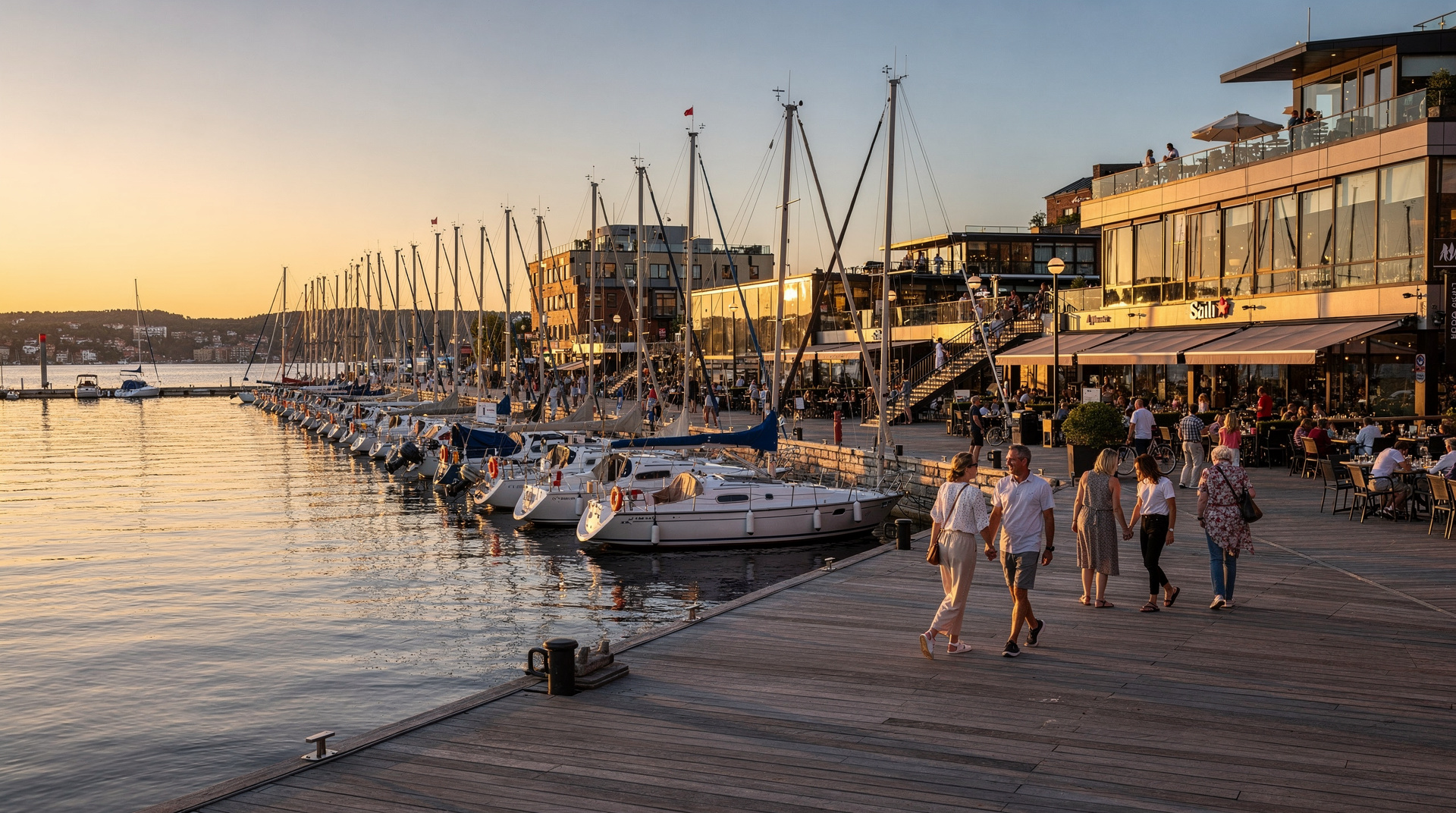
Sailing-ship fjord cruise Oslo: the traditional wooden sailboat experience
Oslo: Oslofjord sightseeing cruise by sailing ship
Duration: 2 hours
- Classic sailing ship
- Free cancellation
What is the sailing-ship cruise in Oslo?
Oslo offers two sailing-vessel options on the Oslofjord: a sightseeing cruise on a traditional two-masted sailing ship, and a similar cruise on a smaller traditional Norwegian wooden sailboat. Both last 2-3 hours from Aker Brygge, cost NOK 320-420 per adult, and operate May to September. If the wind cooperates, the sails go up — otherwise the motor takes over.
| Where | Departs Aker Brygge |
| Cost | around NOK 320-450/adult |
| Time needed | 2-2.5 hours |
| Season | May-September |
| Weather note | Sails go up when wind allows; motor otherwise |
Why a sailing ship changes the fjord experience
There is a meaningful difference between watching a fjord from a motor vessel and actually sailing across it. When the wind catches the sail and the engine cuts, the character of the cruise changes entirely: the noise drops, the motion becomes responsive to the water rather than overcoming it, and you get something that more closely resembles what the Oslofjord has meant to people for a thousand years.
Norway’s maritime heritage is not Viking-only. The traditional wooden sailing boats — the oselver, the hardangerjakt, the Colin Archer rescue sloop — are part of a living tradition that continues in Norwegian sailing culture. Taking a sailing cruise on the Oslofjord connects to that tradition in a way that no diesel or electric motor boat can.
This guide covers the two sailing options available from Oslo: the larger sailing-ship cruise and the smaller traditional Norwegian wooden sailboat cruise.
The sailing-ship cruise
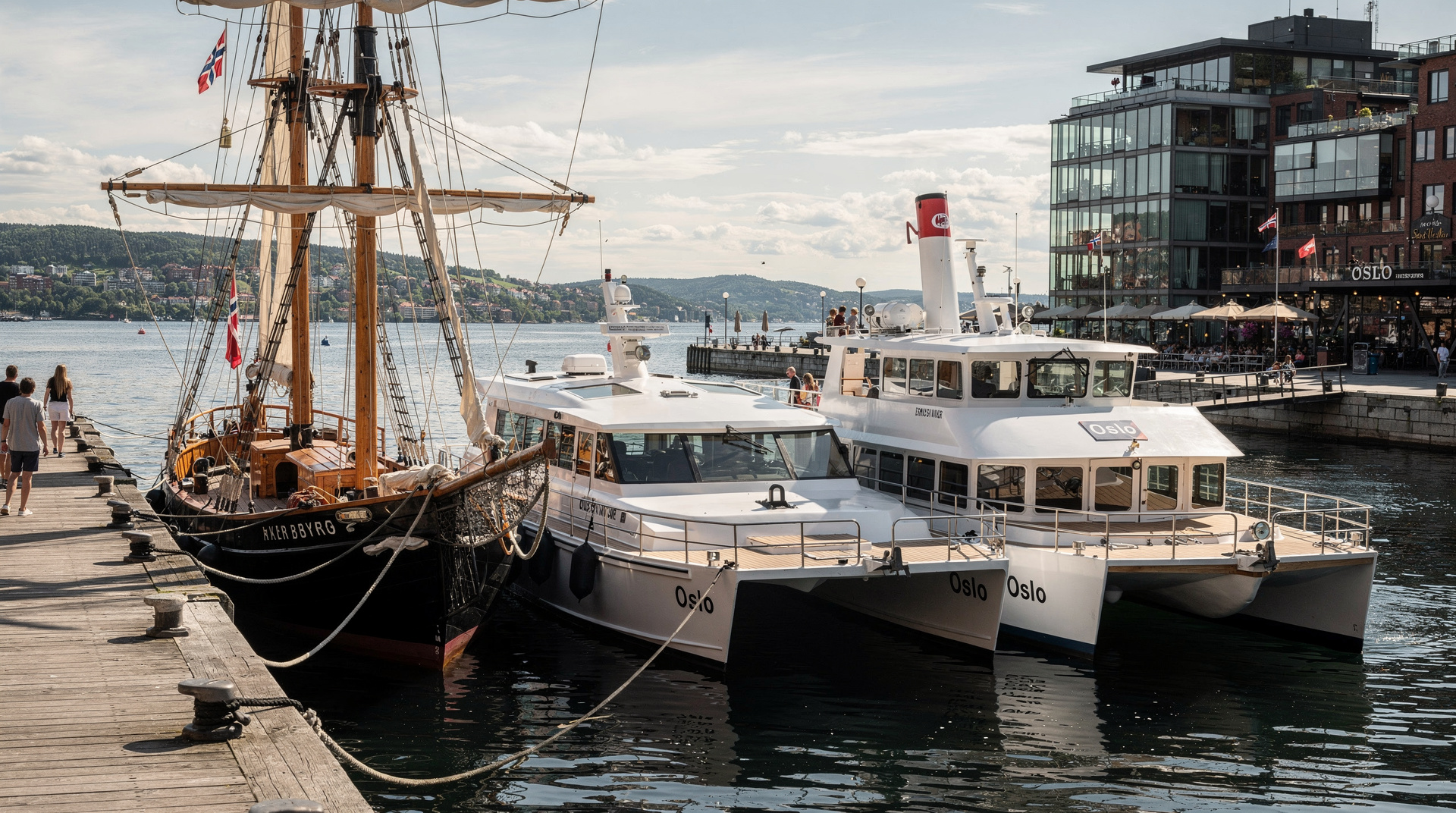
The Oslofjord sailing-ship cruise uses a traditionally-rigged two-masted sailing vessel that can carry between 30 and 60 passengers depending on the specific boat. These are properly rigged sailing ships with functional sails — not just decorative rigging on a motor boat.
Route: The cruise departs from Aker Brygge and follows the inner Oslofjord arc: past Akershus Fortress, around the Bygdøy peninsula, into the island archipelago, and back. The route takes approximately 2 hours; some departures run 2.5 hours with a more extended outer-fjord leg.
When the sails go up: The inner Oslofjord is partially sheltered by the Bygdøy peninsula, but the stretch between Bygdøy and the outer islands typically catches reasonable wind on summer afternoons and evenings. A westerly or south-westerly breeze is ideal. The boat’s captain will raise the mainsail and foresail when conditions allow. When sailing properly, the speed is roughly 6-8 knots — comfortable and purposeful.
When the wind fails: The motor is used without ceremony. This is a practical cruising boat, not a racing yacht; the experience of being on the vessel is the point, and the motor version is still a pleasant 2-hour cruise on a beautiful fjord.
Deck experience: Open deck seating along both rails, with a central cockpit area near the helm. You can move around freely, lean over the rails, watch the crew manage the sails. The crew are typically friendly and will answer questions about the boat’s history and the sailing conditions.
Audio guide / commentary: Some sailing-ship cruise versions include audio commentary about the fjord and its landmarks; others are narrated live by the crew. Check the specific booking listing.
Price: Approximately NOK 320-420 per adult (~USD 34-45). Children discounts available.
Season: May to September.
The wooden sailboat cruise
The wooden sailboat cruise uses a smaller, traditionally-built Norwegian sailboat — typically a vessel of 8-12 metres in length with space for 10-20 passengers. These boats are built in the classical Norwegian sailing tradition: clinker-built planking, varnished wood, a working rig designed for the coastal conditions of western Norway.
What distinguishes this from the sailing-ship cruise is scale and intimacy. With fewer than 20 passengers, you are not watching the boat from a crowded deck — you are part of a small sailing party. You can sit near the helm and talk to the skipper, hear the creak of the wooden hull, feel the boat respond to waves and wind in a way that larger vessels mask.
Route: Similar inner-fjord route, but the wooden sailboat tends to spend more time in the outer island archipelago, benefiting from the open water. Some versions of this cruise specifically target the island passages between Nakholmen, Lindøya, and Bleikøya, which are narrow and scenic.
Capacity: Typically 10-20 passengers. The small capacity means a more exclusive experience and also means it books out faster.
Price: Approximately NOK 350-450 per adult (~USD 38-48). The slight premium over the larger sailing ship reflects the more intimate experience.
Season: May to September. Fewer departures per week than the larger sailing ship.
Comparing sailing to electric
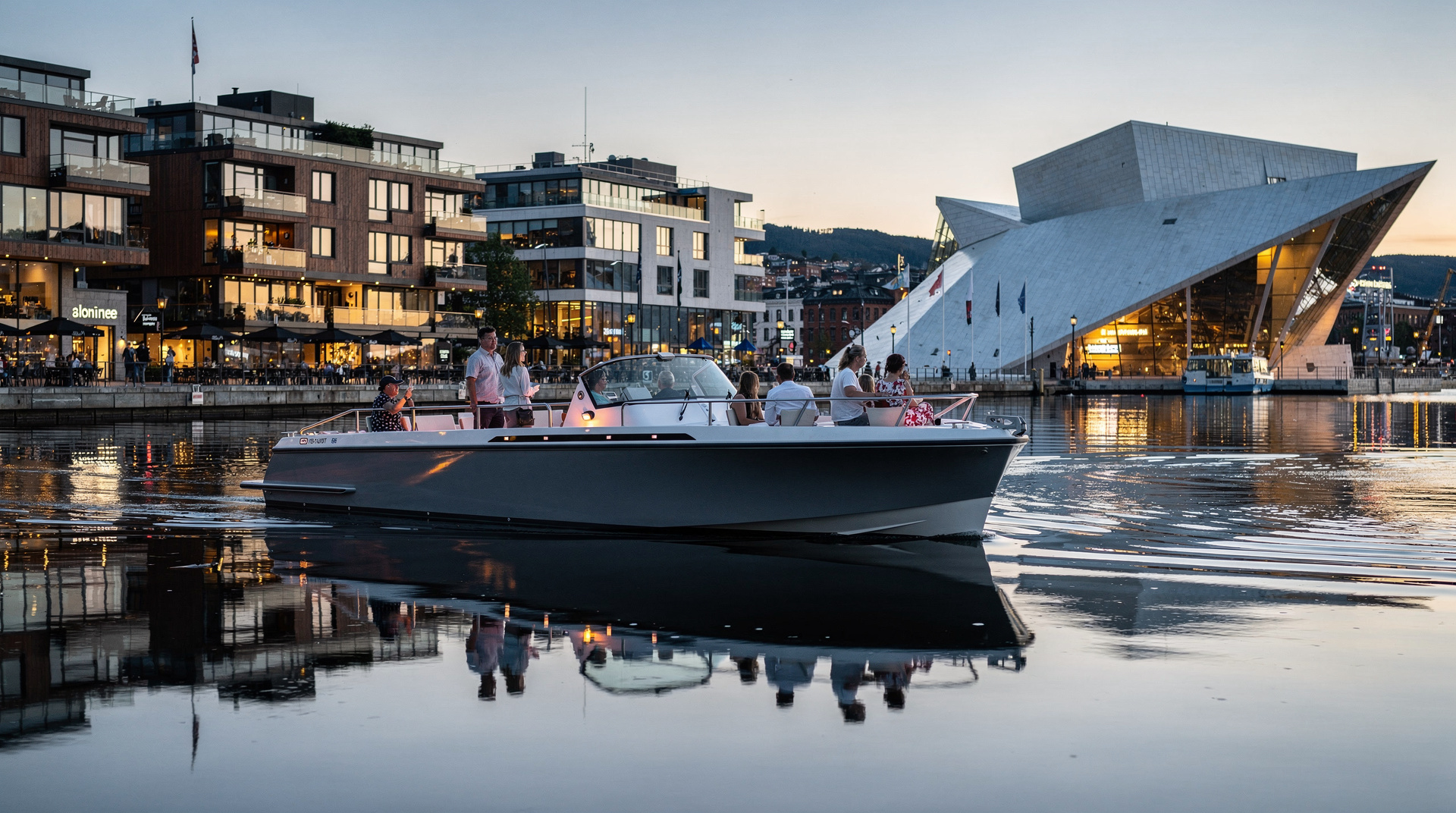
The most natural comparison is between the sailing options and the silent electric cruise, which is the most popular standard sightseeing cruise on the fjord.
| Sailing ship | Wooden sailboat | Silent electric | |
|---|---|---|---|
| Capacity | 30-60 | 10-20 | 20-50 |
| Noise | Low (sailing), motor when needed | Low | Silent |
| Speed | 6-10 knots | 5-8 knots | 8-12 knots |
| Intimacy | Medium | High | Medium |
| Weather dependence | Sails wind-dependent | Sails wind-dependent | Not affected |
| Price | NOK 320-420 | NOK 350-450 | NOK 299-380 |
| Best angle | Atmosphere, tradition | Intimacy, heritage | Clarity, comfort |
The electric cruise wins on comfort and reliability; the sailing options win on atmosphere and tradition. Neither is objectively better — they suit different moods and priorities.
When to choose sailing over electric
Choose the sailing-ship cruise if:
- You care about the experience of being on a sailing vessel more than the commentary or sightseeing efficiency
- You are visiting in summer with good wind probability (afternoons from May to August tend to be windiest)
- You want photographs of a traditional sailing rig against the Oslo skyline
- You are a sailing enthusiast or have children who would enjoy watching the sails and crew work
Choose the wooden sailboat if:
- You want the most intimate possible fjord experience (small group, close to the water)
- You are travelling as a couple or small group and the larger boat feels too crowded
- You specifically appreciate traditional wooden boat construction and craftsmanship
Choose the electric boat if:
- You prioritise audio commentary and structured sightseeing
- You want guaranteed quietness regardless of whether sails go up
- You prefer a faster-boarding, smoother experience
Practical details
Departure: All sailing-vessel cruises depart from Aker Brygge pier area. Exact pier confirmed in booking.
What to wear: A sailing boat on the open fjord is windier and cooler than land temperatures suggest. A windproof jacket or light waterproof layer is important even in summer. Bring sunglasses — reflected fjord light is intense on a sunny day.
Motion: Both vessels move more than the electric cruise because they respond to waves rather than ploughing through them. If you are prone to seasickness on boats, the electric vessel is a more stable choice for the inner-fjord route. The inner Oslofjord is not rough by ocean standards, but wooden boats do rock.
Booking: The wooden sailboat in particular books quickly in July. Book at least a week in advance for summer weekends.
For a complete overview of all Oslofjord cruise options, see the comprehensive cruise guide. For help deciding, see which cruise to pick.
Pairing a sailing cruise with the rest of your day
Both sailing options depart from the same pier area as most other Oslofjord cruises, which makes it easy to combine one with a wider fjord day. A morning sailing-ship cruise pairs naturally with lunch at Aker Brygge and an afternoon at the Astrup Fearnley Museum next door on Tjuvholmen. If you’re weighing an evening option instead, the sunset fjord cruise guide covers timing for golden-hour departures across all vessel types, sailing included.
For visitors staying multiple days, it’s worth not treating the sailing cruise as a one-off box to tick. Sailing enthusiasts who enjoy the wooden sailboat often come back the next evening for the shrimp buffet cruise, which runs on a different (motorised) vessel but shares the same fjord scenery in a completely different, food-focused format.
What the experience feels like on board
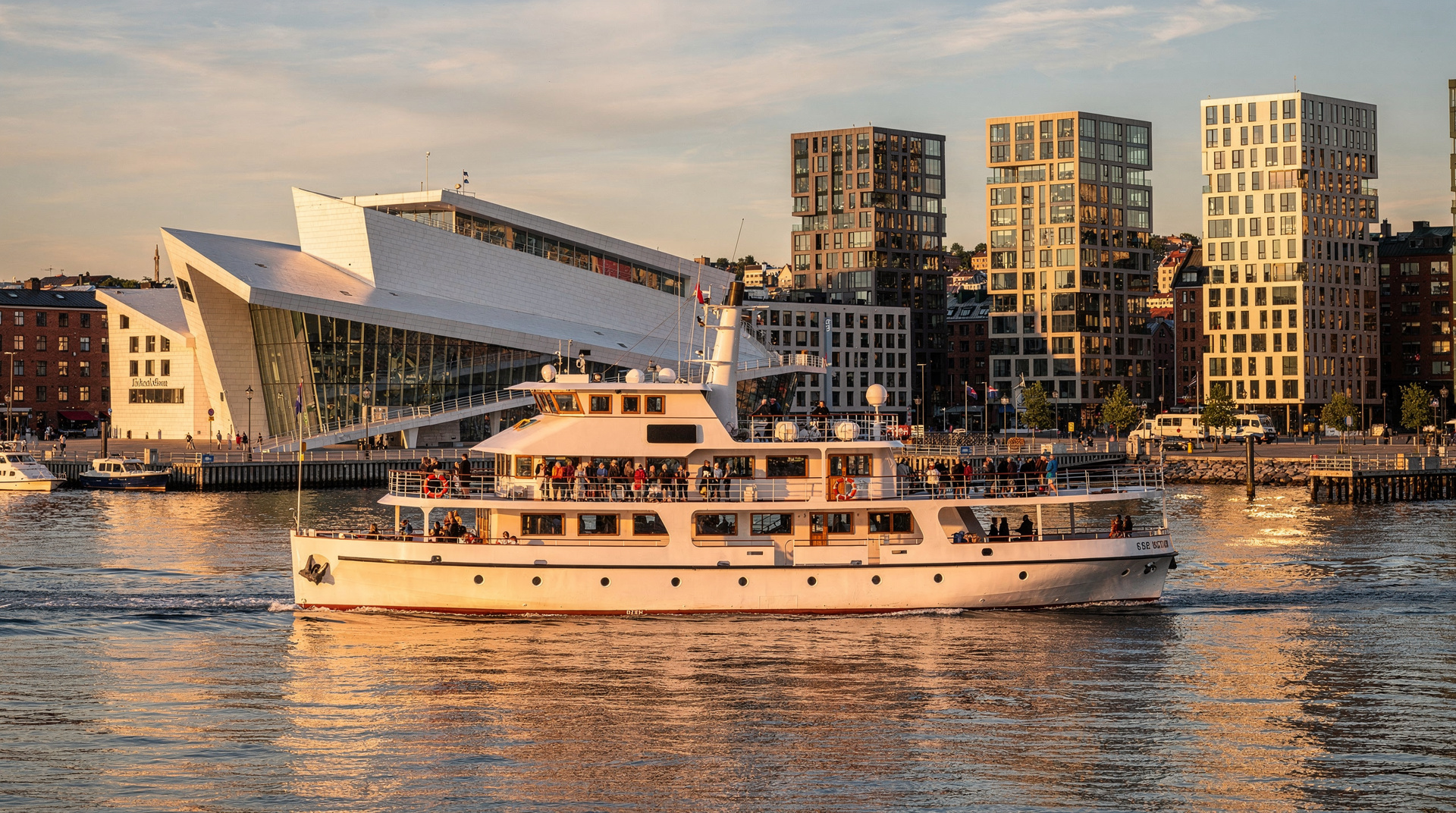
The first thing most passengers notice is how little there is to do, and how pleasant that is. On a sailing vessel there is no engine drone to talk over, no rush to tick off landmarks, and no screen between you and the water. You find a spot on the deck, watch the crew work the lines, and let the city slide past at a walking pace. Oslo looks different from this angle: the fortress walls, the cranes and glass of the waterfront, and the green islands all sit low against the water rather than towering above it.
If you have already spent time on land, the cruise works as a recap. Places you walked through in the morning, such as the Akershus fortress area or the museum peninsula covered in the Bygdøy destination page, appear again from the fjord side, and the geography of the city finally makes sense. If you are arriving fresh, the cruise is a gentle orientation before you commit to a plan for the remaining days.
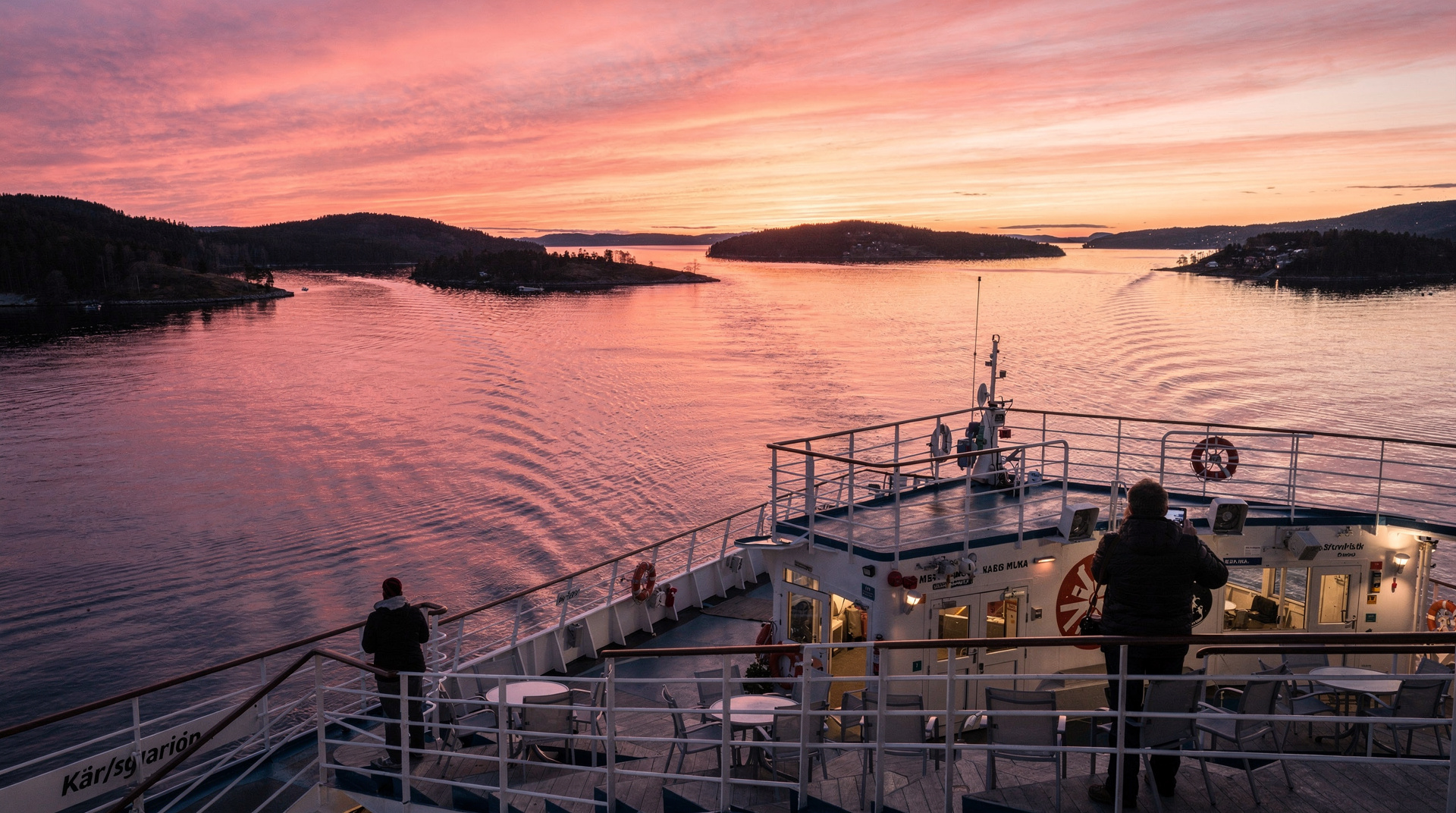
Light matters a great deal on the water. Summer evenings stretch long in the north, and a low sun on varnished wood and canvas makes for the best photographs of the trip. The daylight guide explains how the hours change through the season, which helps you choose between a bright midday departure and a softer late one.
Choosing the right departure
Departure time shapes the cruise more than most visitors expect. Afternoons and evenings usually offer steadier breezes, which is the main reason to choose them if you hope to see the sails raised. Mornings tend to be calmer and often quieter on board, which suits anyone who cares more about the stillness than the sailing. None of this is a promise: the fjord decides, and the crew will tell you honestly what the conditions allow.
Think about the rest of your day as well. A sailing cruise pairs well with a relaxed lunch on the waterfront, and it works as a counterweight to a museum-heavy schedule. If you are building a longer stay, the one-day plan and the two-day plan show where a fjord outing fits naturally between city sights. For a fuller summer programme, the five-day summer itinerary puts several boat experiences in sequence without repeating yourself.
Who will enjoy it most
Couples tend to prefer the wooden sailboat, where the small group makes conversation easy and the skipper is within reach. Families with children often favour the larger ship, where there is room to move and plenty to watch. The family fjord activities guide compares the options for younger travellers, and the Oslo with kids guide helps you fit a boat trip around naps, meals and museum stops.
Solo travellers will find a sailing cruise easy to join. Conversation starts naturally on a shared deck, and nobody expects you to fill the silence. The solo travel guide covers other relaxed ways to meet people in the city.
Photographers should expect to be busy. The rigging, the crew in motion and the skyline behind them all make strong frames, and the movement of a sailing boat means you will want to shoot quickly and keep your balance. Hold on to your phone or camera strap near the rail.
Sailing compared with other fjord outings
A sailing vessel is only one way onto the water, and it helps to know the alternatives before you commit.
- The kayaking guide covers paddling, which puts you at water level but asks real effort from you.
- The island-hopping guide and the ferry guide explain how to reach the islands cheaply with ordinary public boats, which is the budget route to a similar view.
- The winter fjord cruise guide is the answer if your trip falls outside the sailing season.
- The private cruise guide is worth a look if you want a whole boat to yourselves for a celebration.
- The dinner cruise guide suits travellers who would rather combine the water with a meal.
If you are still unsure after reading all of these, the comparison in which cruise to pick lays the options side by side.
Planning around the weather
Oslo weather changes quickly, and a fjord amplifies every shift. A bright departure can turn cool within the hour, and a grey morning can clear into a golden afternoon. Dress in layers you can add or remove, and keep a light waterproof in your bag rather than in your hotel room. The best time to visit guide and the summer guide help you judge what to expect in the months when the boats run.
If rain is forecast, do not automatically cancel. A grey fjord has its own mood, and the crew still sail. If the forecast is truly poor, though, keep a fallback ready; the rainy-day museums guide gives you somewhere worthwhile to spend the hours instead.
Getting to the pier
The departure point sits on the waterfront in the western part of the centre, and reaching it is easy on foot from most central hotels. The getting around Oslo guide and the Ruter public transport guide explain trams, buses and ticketing if you are staying further out. Arrive a little before departure so you can pick a good seat on the deck and settle in without hurrying.
If you hold a city pass, check whether any fjord outing is covered before you pay separately. The Oslo Pass guide explains what is typically included, and the honest assessment of the pass helps you decide if it matches your plans at all.
Frequently asked questions about Sailing-ship fjord cruise Oslo
Do the sails actually go up on the sailing cruise?
Yes, when conditions allow. Oslo's inner fjord is relatively sheltered, but summer breezes are common. On a good day, the sailing ship will raise her sails and you'll get the proper sailing experience. On windless days, the motor is used and the boat proceeds under power. The operator cannot guarantee sailing conditions, but it happens frequently enough in summer that it is worth hoping for.What is the difference between the sailing-ship cruise and the wooden sailboat cruise?
The sailing-ship cruise uses a larger, two-masted traditional vessel with open deck seating and space for 30-60 passengers. The wooden sailboat cruise uses a smaller, traditionally-built Norwegian sailing boat with space for 10-20 passengers — more intimate, more historic in feel, slightly further into the fjord. Both offer the same core experience but at different scales.Is the sailing cruise more expensive than the electric cruise?
Slightly. Sailing-ship cruises typically cost NOK 320-420 per adult, compared to NOK 299-380 for the electric cruise. The price difference is small and reflects the different character rather than quality advantage either way.Is the sailing cruise suitable for children?
Yes. The sailing vessels are stable and safe, and children over about 5 generally enjoy the novelty of a sailing boat. The wooden sailboat carries fewer passengers and may feel more intimate and engaging for older children. Life jackets are available on board.When does the sailing-ship cruise run?
May through September, with the highest frequency in July and August. Some operators begin in late April. Always check current availability as season dates vary by year.
Top experiences
Bookable activities with verified prices and instant confirmation on GetYourGuide.
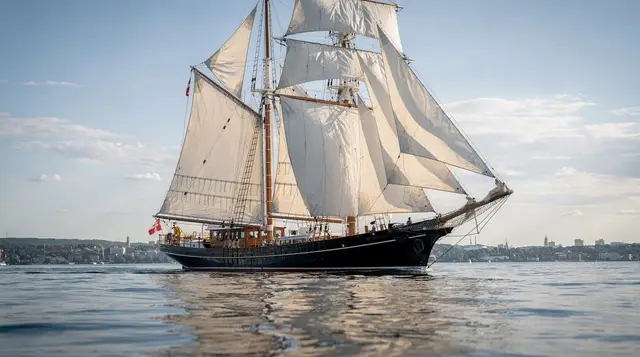
Oslo: Oslofjord sightseeing cruise by sailing ship
- Classic sailing ship
- Free cancellation
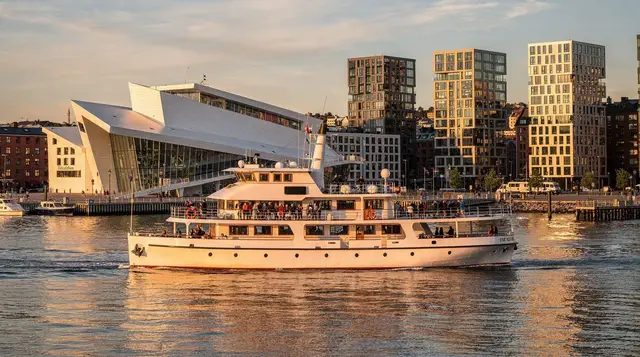
Oslo: fjord mini cruise by wooden sailing ship
- Wooden sailing ship
- Scenic
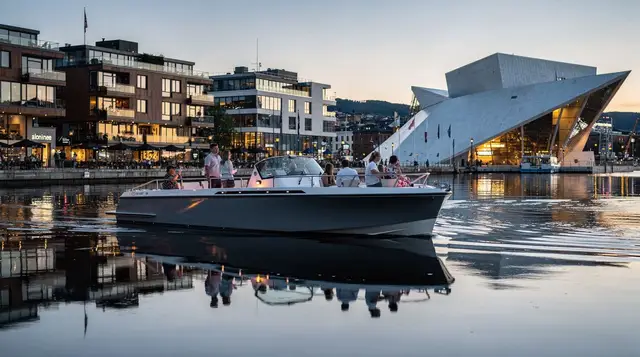
Oslo: guided sightseeing fjord cruise on a premium silent electric boat
- Silent electric boat
- Free cancellation
- Best seller
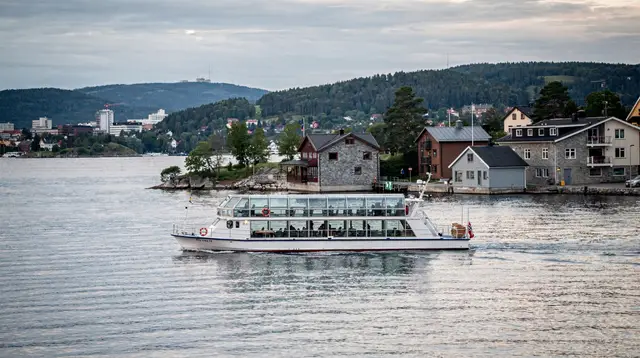
Oslo: scenic fjord cruise with audio guide commentary
- Audio guide
- Free cancellation

Oslo: fjord dinner cruise on a sailing ship with seafood buffet
- Seafood buffet
- Sailing ship