Geirangerfjord — the postcard fjord
Geirangerfjord is UNESCO-listed and spectacularly beautiful — but it's 8 hours from Oslo. Here's the honest case for making it a multi-day trip.
From Oslo: 5-day tour to Nærøyfjord, Bergen, Hardanger and Preikestolen
Duration: 5 days
- Multi-day
- Preikestolen
Quick facts
- Best time
- Late May to September; July–August for peak waterfalls and boat schedules
- Days needed
- 3–4 days from Oslo minimum; this is not a day trip — be honest with yourself
- Getting there
- Oslo → Åndalsnes by train (5–6h), then bus; or Oslo → Bergen → Ålesund → bus. Drive 8h+
- Budget per day
- NOK 800–1 400 (USD 86–150) in the area, excluding Oslo travel costs
The honest truth about Geirangerfjord from Oslo
Let us start with what most travel guides skip over: the Geirangerfjord is genuinely difficult to reach from Oslo.
It is approximately 340 kilometres northwest of Oslo, and the journey — by whatever combination of train, bus, ferry, and road you choose — takes between 8 and 12 hours depending on route. There is no quick option. It is not a day trip from Oslo. It is not realistic as an add-on to a busy 3-day Oslo itinerary.
This matters because search engines and travel articles routinely list “Geirangerfjord” among the best day trips from Oslo. They are wrong. Anyone who has actually done it will confirm that a day return requires over 16 hours of travel with barely two hours at the destination. What Geirangerfjord deserves — and what the journey demands — is a genuine multi-day commitment: at least three days including travel, and ideally four or five.
If you have that time, it is absolutely worth it. The Geirangerfjord is one of the most dramatically beautiful places in Europe. The waterfalls are extraordinary, the surrounding mountains are vertiginous, and the village of Geiranger at the inner end of the fjord is small enough to retain a sense of place despite the tourism. But go in knowing what you are signing up for. This page will tell you what that actually looks like.
What makes Geirangerfjord extraordinary
The Geirangerfjord is 15 kilometres long, up to 260 metres deep, and flanked by mountains rising 1 200–1 500 metres from the water. Like the Nærøyfjord, it was inscribed as a UNESCO World Heritage site in 2005.
The defining features:
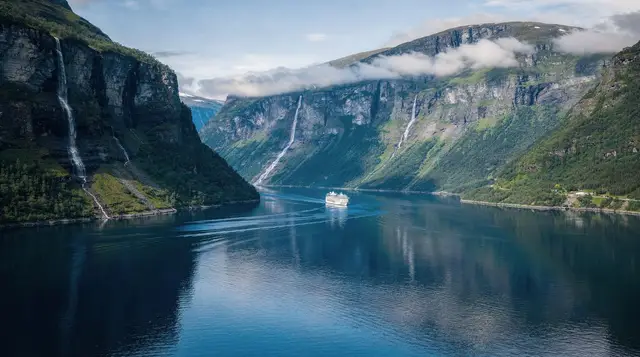
The Seven Sisters (De syv søstrene): seven separate waterfalls dropping nearly side by side from a ledge 250 metres above the fjord on the north shore, falling freely into the water below. In spring and early summer, with maximum snowmelt, all seven run at full force. The visual effect from a boat is one of the most striking in Norway.
The Suitor (Friaren): directly opposite the Seven Sisters on the south shore, a single waterfall appears to be “proposing” to the seven across the fjord. The Norwegian naming of the waterfalls as a romantic narrative is slightly sentimental but the visual juxtaposition is real.
The Veil (Brudesløret): further into the fjord, a single narrow fall drops 250 metres near the abandoned Skageflå farm. The farm terraces cling to the cliff at 250 metres above sea level — reached by a steep hiking trail — and were abandoned in the 1900s after decades of dangerous isolation. The walk to Skageflå is one of the best short hikes in the area (2–3 hours return, steep).
Dalsnibba: a viewpoint platform at 1 476 metres, reached by the Nibbevegen toll road from Geiranger village. It offers a literally aerial view straight down into the fjord — on clear days, you can see the cruise ships in the water 1 400 metres below as toy-like objects. This is the most remarkable thing to do in the Geiranger area and should not be skipped.
Eagle Road (Ørnesvingen): the famous hairpin-bend view point on the road descending to Geiranger from the west, showing the fjord in its full cinematic glory. This is the view on most Geiranger postcards — accessible by car or the Geiranger–Stryn tourist bus.
Getting to Geirangerfjord from Oslo
There is no single best route. The options each have trade-offs:
Option A — Train to Åndalsnes, bus to Geiranger (recommended for scenery). The Rauma Railway (Raumabanen) from Otta to Åndalsnes is one of the most scenic railways in Norway — it crosses the Romsdal valley and descends through the Romsdalen canyon, passing the Trollveggen (“Troll Wall”) cliff face, the highest vertical rock face in Europe. Total journey: Oslo → Otta by Bergen Railway or express train (about 3 hours), Otta → Åndalsnes by Raumabanen (about 1.5 hours), then bus Åndalsnes → Geiranger (about 2.5 hours via Trollstigen in summer). Total travel time: approximately 7–8 hours.
Trollstigen is a famous mountain road with 11 hairpin bends at a gradient up to 9%. The road is open only in summer (typically late May to October, depending on snow clearance). The summer tourist bus over Trollstigen is an attraction in itself.
Option B — Oslo to Bergen by train, Bergen to Ålesund by boat or bus, Ålesund to Geiranger. This is the longest routing but allows you to combine Bergen and Geirangerfjord in a single trip. The Hurtigruten coastal express from Bergen to Ålesund takes about 16 hours; the express ferry (“Hurtigbåt”) is faster at about 4 hours. Total Oslo to Geiranger time this way: 14–16 hours split over two days. The Oslo to Bergen train guide covers the rail segment in detail.
Option C — Drive from Oslo. By car, the most direct route is via the E6 north to Lillehammer, then northwest via Otta and Andalsnes, and the mountain road to Geiranger — approximately 8 hours in normal conditions. Car travel allows you to stop at viewpoints at will and is the only way to access Dalsnibba and Eagle Road independently. If Geirangerfjord is a priority, a rental car removes most of the logistical complexity.
For all these reasons, Geirangerfjord fits better into a 5-day western Norway itinerary than a standard 3-day Oslo trip. See the day trips from Oslo guide for a frank comparison of what is actually reachable in a day.
Geiranger village: small, scenic, touristy
The village of Geiranger (population around 300 permanent residents) is at the inner end of the fjord. In summer, cruise ships anchor offshore and the village receives a disproportionate number of day visitors for its size — on peak summer days, several thousand people arrive by boat, car, and bus, and the main street has the corresponding atmosphere of a tourist resort.
This is worth knowing in advance, not as a reason to avoid the place, but because expectations calibrated to “remote Norwegian fjord village” will need adjustment. Geiranger in July is busy. The waterfalls and mountains don’t notice, but the village streets do.
Best time to be there: early morning (before the cruise ships dock) or shoulder season — early June and September see far fewer people and the light is arguably better.
Accommodation: the Union Hotel Geiranger is the landmark property, a large hotel with fjord views dating to 1891. Rooms start around NOK 1 800–2 800 (USD 194–301) in summer. More modest options include Geiranger Camping, with cabin accommodation from NOK 900–1 200 (USD 97–129). Camping is possible in site and is popular with those driving.
The fjord cruise from Geiranger
The classic 1-hour boat tour from Geiranger to Hellesylt (or vice versa) passes the Seven Sisters and Suitor waterfalls and is the single most iconic tourist experience in the area. The public car ferry on this route (operated by Norled) takes about 1 hour and costs around NOK 150 (USD 16) per adult — excellent value for the scenery delivered. It also carries vehicles, so if you are driving, this crossing is both practical and scenic.
Smaller RIB speedboat tours from Geiranger marina go faster and get closer to the waterfall bases — the experience of being close enough to feel the spray from the Seven Sisters is genuinely thrilling. These tours run approximately 1 hour and cost around NOK 550–700 (USD 59–75) per person.
Kayaking is available for those wanting to experience the fjord at water level. Several operators in Geiranger run half-day and full-day kayak tours with guides.
Preikestolen: a different fjord destination entirely
Some visitors considering Geirangerfjord from Oslo are actually looking for Preikestolen (Pulpit Rock) — the famous flat cliff above the Lysefjord near Stavanger. These are entirely different destinations.
Preikestolen is 604 metres above the Lysefjord, accessible via a 4-hour return hike (8 km) from the Preikestolen fjellstue car park. It is reached from Stavanger, which is approximately 5.5–6 hours from Oslo (train or flight). The hike is challenging but well-marked, and the view from the rock ledge straight down to the fjord is as vertiginous as Geirangerfjord’s Dalsnibba in a different way.
If Preikestolen is your target, the route is: Oslo → Stavanger by train or direct flight, then bus from Stavanger to the ferry, ferry to Tau, and bus to the trailhead. The combined Oslo–Preikestolen–Oslo trip requires 2 days minimum.
Combining Geirangerfjord with other western Norway destinations
The Geirangerfjord makes most sense as part of a longer western Norway loop rather than an out-and-back from Oslo.
Ålesund — a coastal town built in Art Nouveau style after a catastrophic fire in 1904 — is 2 hours from Geiranger by bus and is a natural overnight stop. The Aksla hill viewpoint above Ålesund is one of the great coastal panoramas in Norway.
Trollstigen — the 11-hairpin mountain road between Andalsnes and Geiranger — is itself a sight worth planning around. The national tourist route visitor centre at the top of the road is architecturally striking (Norwegian Scenic Routes programme).
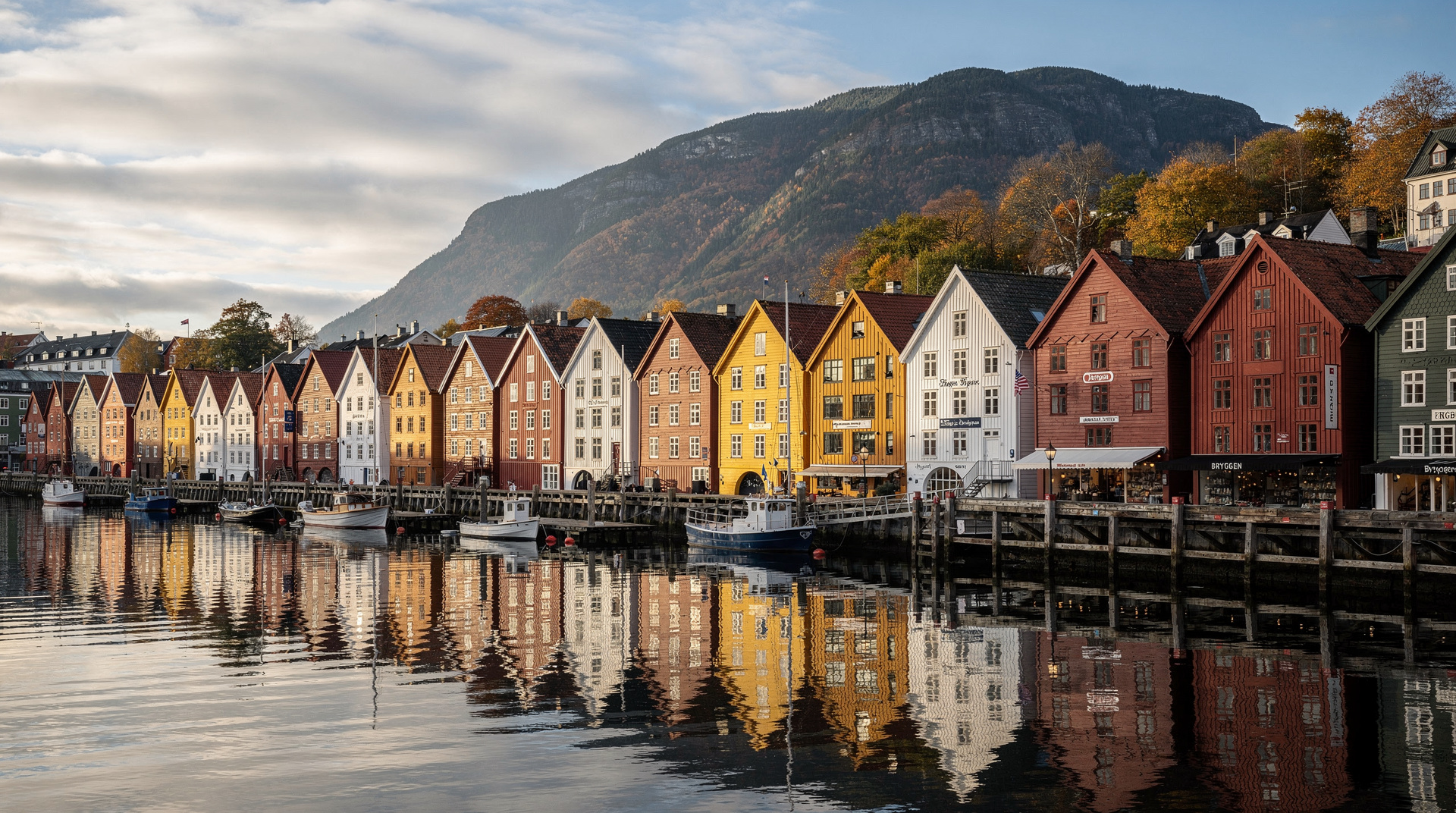
Bergen — reached from Ålesund by express boat (4 hours) or flight (45 minutes) — can close the loop before the train back to Oslo. This Oslo → Geirangerfjord → Ålesund → Bergen → Oslo circuit is the logical 5-day western Norway itinerary.
Seasonal and practical notes
The Geiranger area is accessible only in summer for most activities. The Nibbevegen road to Dalsnibba typically opens in late May and closes in late October. Trollstigen usually opens in late May. In winter, Geiranger is reachable only from the Stryn side and the village is very quiet — most accommodation and all cruise operations are closed.
Fjord cruises on the Geirangerfjord run from May to September. The July–August peak is when the Seven Sisters waterfall flow is highest (snowmelt supplemented by rainfall). September is excellent for light, colour, and reduced crowds.
Zero-emission cruise vessel regulations have been implemented for the Geirangerfjord (as for the Nærøyfjord), with deadlines for the elimination of diesel engines from large cruise ships in the UNESCO fjords. By 2026, the majority of tour boats operating in the fjord are hybrid or electric, significantly reducing the noise pollution that previously affected the experience.
Frequently asked questions about the Geirangerfjord
Can I visit the Geirangerfjord as a day trip from Oslo?
Not in any meaningful sense. The round-trip from Oslo takes a minimum of 16 hours and involves 14+ hours of travel. You would arrive exhausted and have barely 2 hours in the area. Plan for at least 3 nights away from Oslo to make the journey worthwhile — ideally 4–5 nights as part of a western Norway circuit. See the day trips from Oslo guide for destinations that are actually feasible in a day.
What is the best way to see the Seven Sisters waterfall?
From a boat on the fjord. The standard Geiranger–Hellesylt public ferry (about 1 hour, NOK 150 / USD 16) passes the falls and gives an excellent view. A closer experience comes from a RIB speedboat tour from Geiranger marina — these get close enough to feel the spray. The falls are most dramatic in May and June when snowmelt is at its peak.
Is the Geirangerfjord better than the Nærøyfjord?
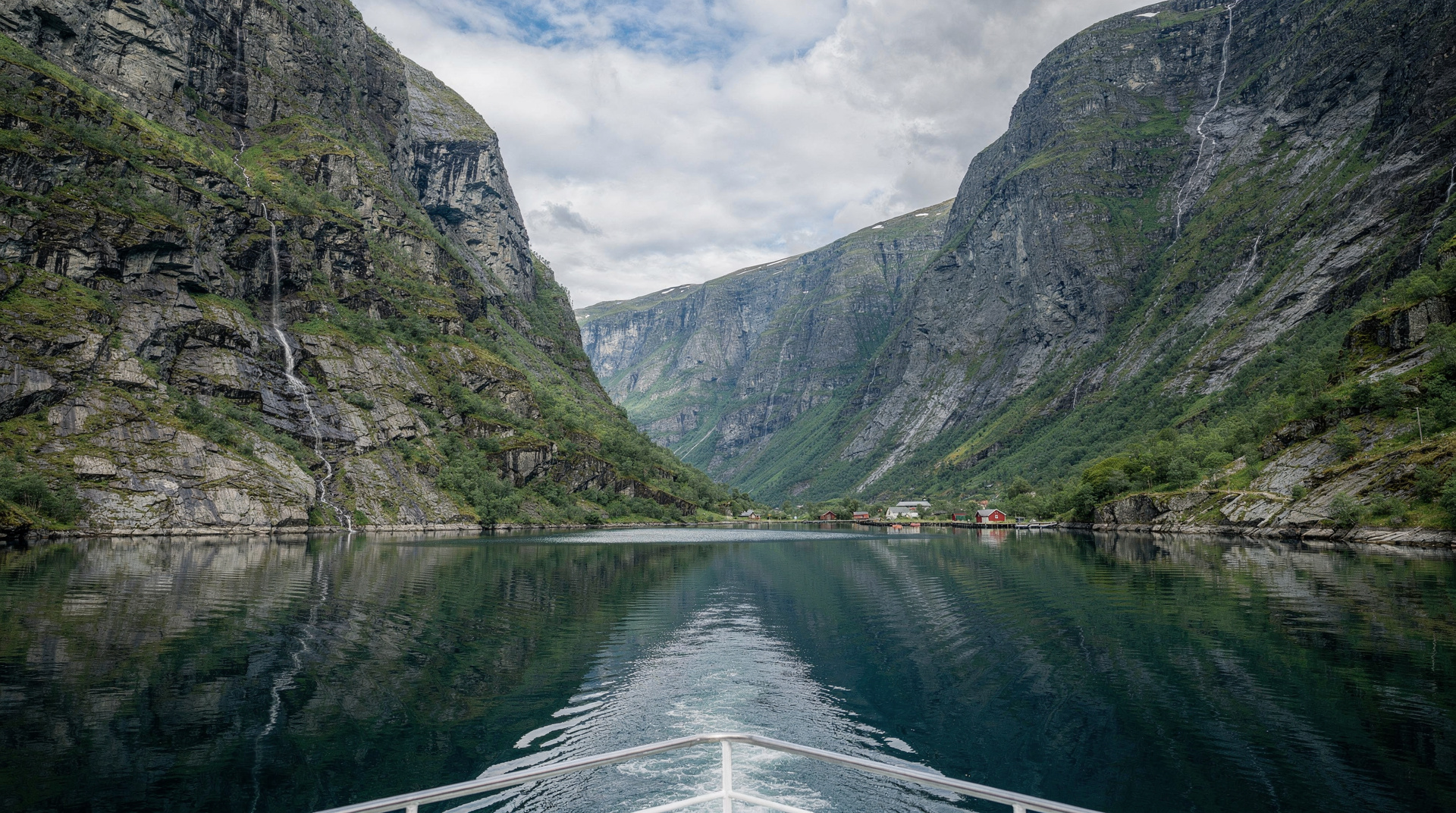
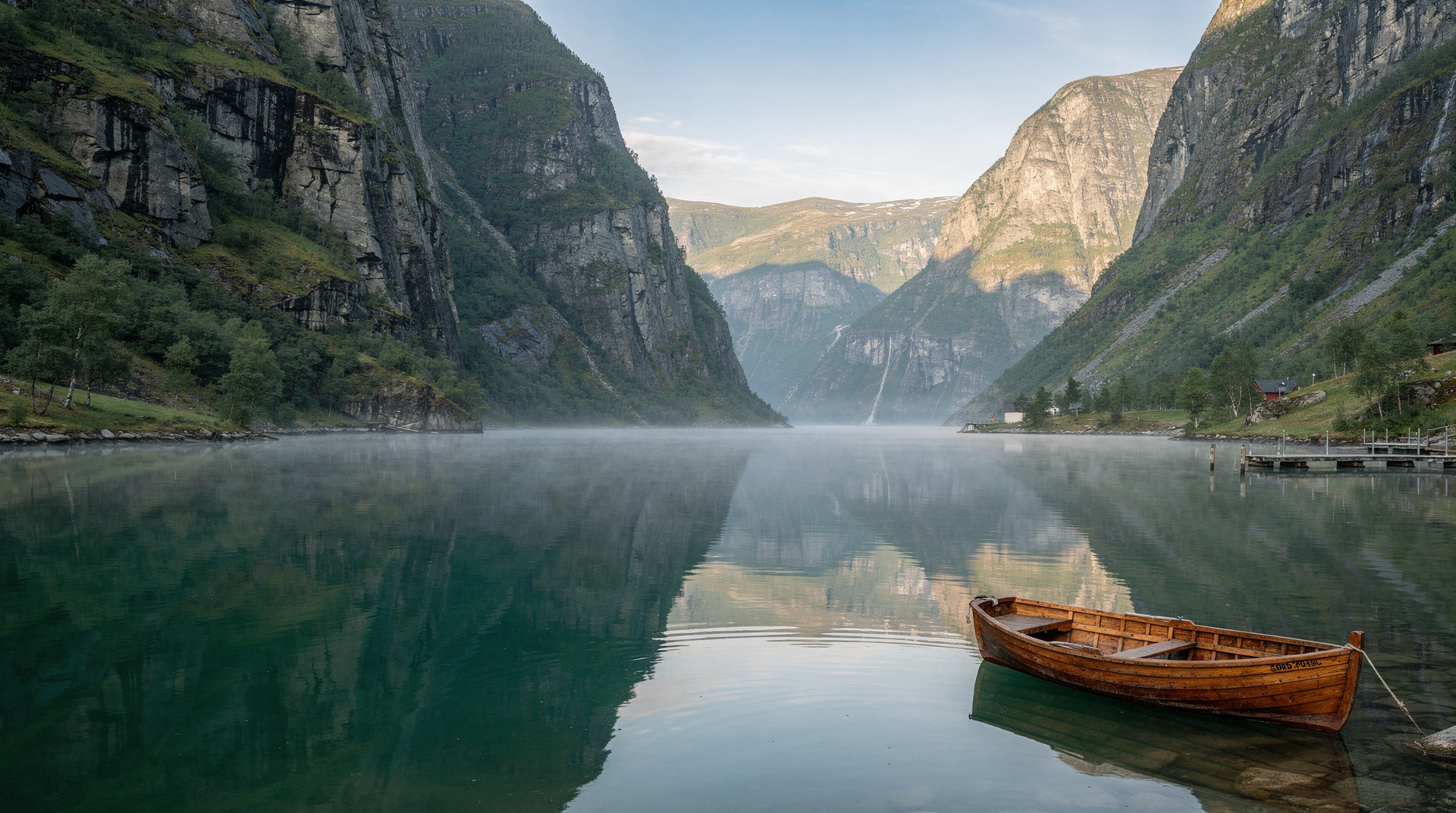
Different rather than better. The Nærøyfjord is narrower and more intimate, and it is far easier to reach from Oslo via the Norway in a Nutshell route. The Geirangerfjord is wider, has more dramatic individual waterfall features (especially the Seven Sisters), and is surrounded by more accessible viewpoints (Dalsnibba, Eagle Road). If you can only do one, do the Nærøyfjord — it is both more accessible and the more typical fjord experience. Geirangerfjord is the reward for visitors with more time.
Is Dalsnibba worth the toll road price?
Yes, emphatically. The Nibbevegen toll road to Dalsnibba costs around NOK 100–150 per car (USD 11–16) and the platform at 1 476 metres delivers the best elevated view of any Norwegian fjord. Standing at the edge looking straight down 1 400 metres to the water below is genuinely breathtaking. If you have a car in the area, do not skip this.
When is the Geirangerfjord most crowded?
July and August are peak season — cruise ships dock daily and the village streets are busy from mid-morning until late afternoon. Early June and September offer dramatically reduced crowds with still-excellent conditions. If visiting in peak summer, arrive at viewpoints and Geiranger village before 09:00 for the best experience.
What is the Eagle Road viewpoint?
Ørnesvingen (Eagle Road) is a viewpoint on the main road descending into Geiranger from the west, offering the classic panoramic view of the fjord and its hairpin bends. It is accessible by car and by tourist bus from Hellesylt or Ålesund. This is the view that appears in most photographs of the Geirangerfjord.
Is the Raumabanen (Rauma Railway) to Åndalsnes worth taking?
Absolutely. The Rauma Railway from Otta to Åndalsnes is one of the most scenic short railways in Norway — it descends through the dramatic Romsdalen valley, passes the Trollveggen cliff face (highest vertical rock face in Europe), and arrives in a town flanked by mountains reaching straight out of the fjord. It is a worthy addition to any Geirangerfjord trip and the most scenic approach from the east. For another iconic Norwegian mountain railway, compare it with the Flåmsbana guide.
Top experiences
Bookable activities with verified prices and instant confirmation on GetYourGuide.