Oslo saunas compared: public, private, and guided — which to pick
Oslo: self-service public floating sauna ticket, Tjuvholmen
Duration: 1 hour
- Floating sauna
- Fjord swim
What is the best sauna option in Oslo?
For solo travellers or social types, the public floating sauna (NOK 250–310 / $27–33) offers the authentic communal experience. Couples and groups of 4 get better value from a private pod (NOK 650 / $70 split among friends). First-timers who want guidance should book the 90-minute guided sauna-and-fjord-swim experience at around NOK 650 ($70) per person.
Three ways to sauna in Oslo — and how to choose
Oslo’s floating saunas have evolved from a quirky local thing into one of the city’s most talked-about experiences. But faced with the choice between a public session, a private pod, or a guided tour, most visitors pause. They’re all on the same pontoon at Tjuvholmen, they all involve hot wooden rooms and cold fjord water, yet the experience, price, and appropriate audience differ meaningfully. This guide breaks it down without the marketing gloss.
| Where | Tjuvholmen pontoon, Aker Brygge/Tjuvholmen waterfront |
| Cost | Around NOK 250-650 depending on public, private or guided |
| Time needed | 45-90 minutes per session |
| Booking | 1-5 days ahead depending on season; book early in summer |
| Best time | Weekday afternoons for easiest availability |
Option 1: the public floating sauna
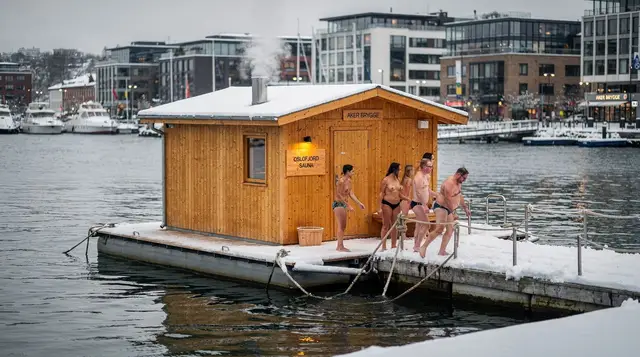
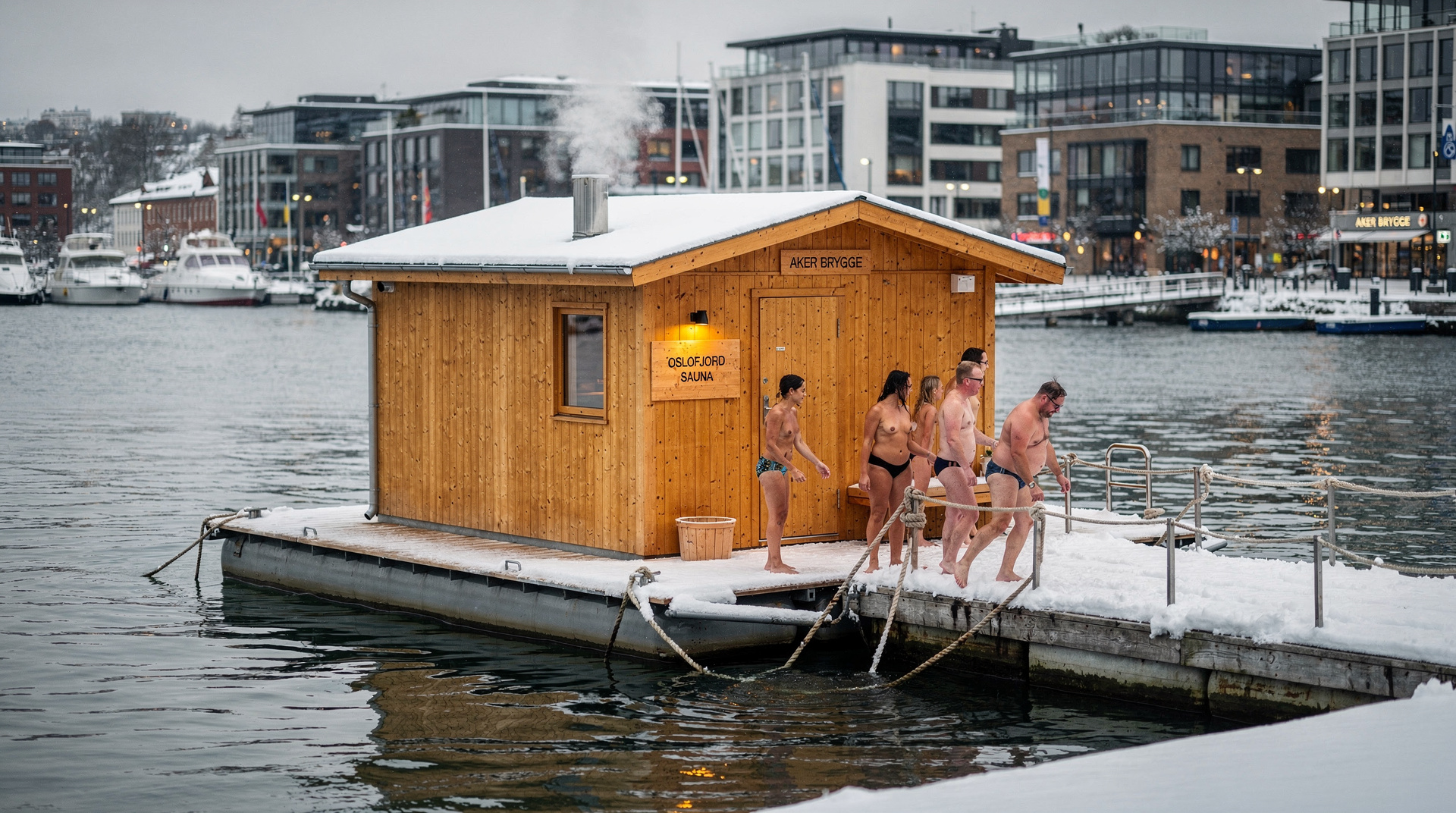
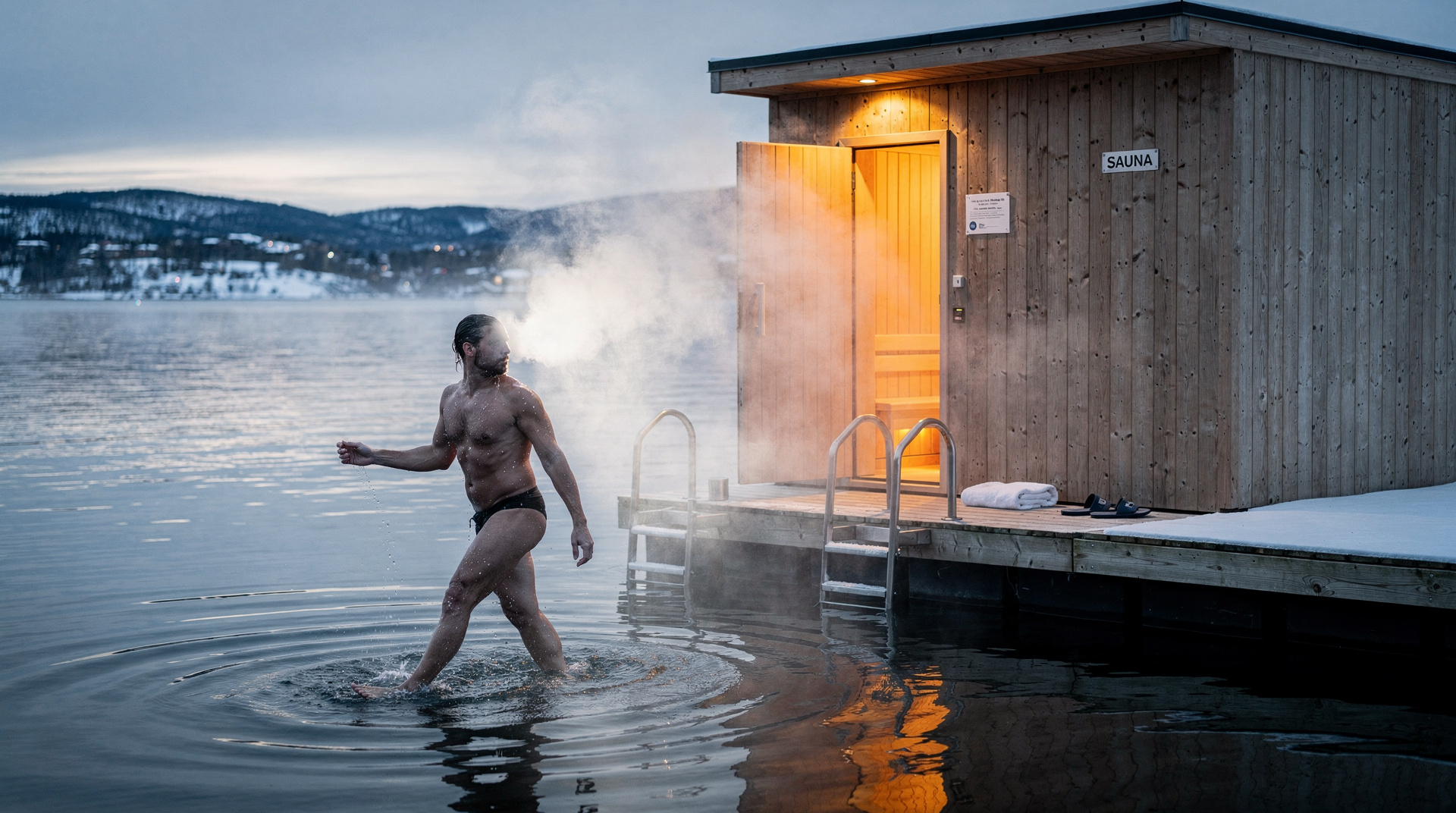
What it is: A large communal sauna cabin accommodating 10 to 20 people per session. You book a timeslot online (typically 45–60 minutes), arrive with your swimsuit and towel, and share the sauna with a mix of Oslonians and tourists.
Price: Approximately NOK 250 to 310 per person ($27 to $33). This is competitive by Oslo standards — you’re paying roughly what a coffee and a pastry costs in the city.
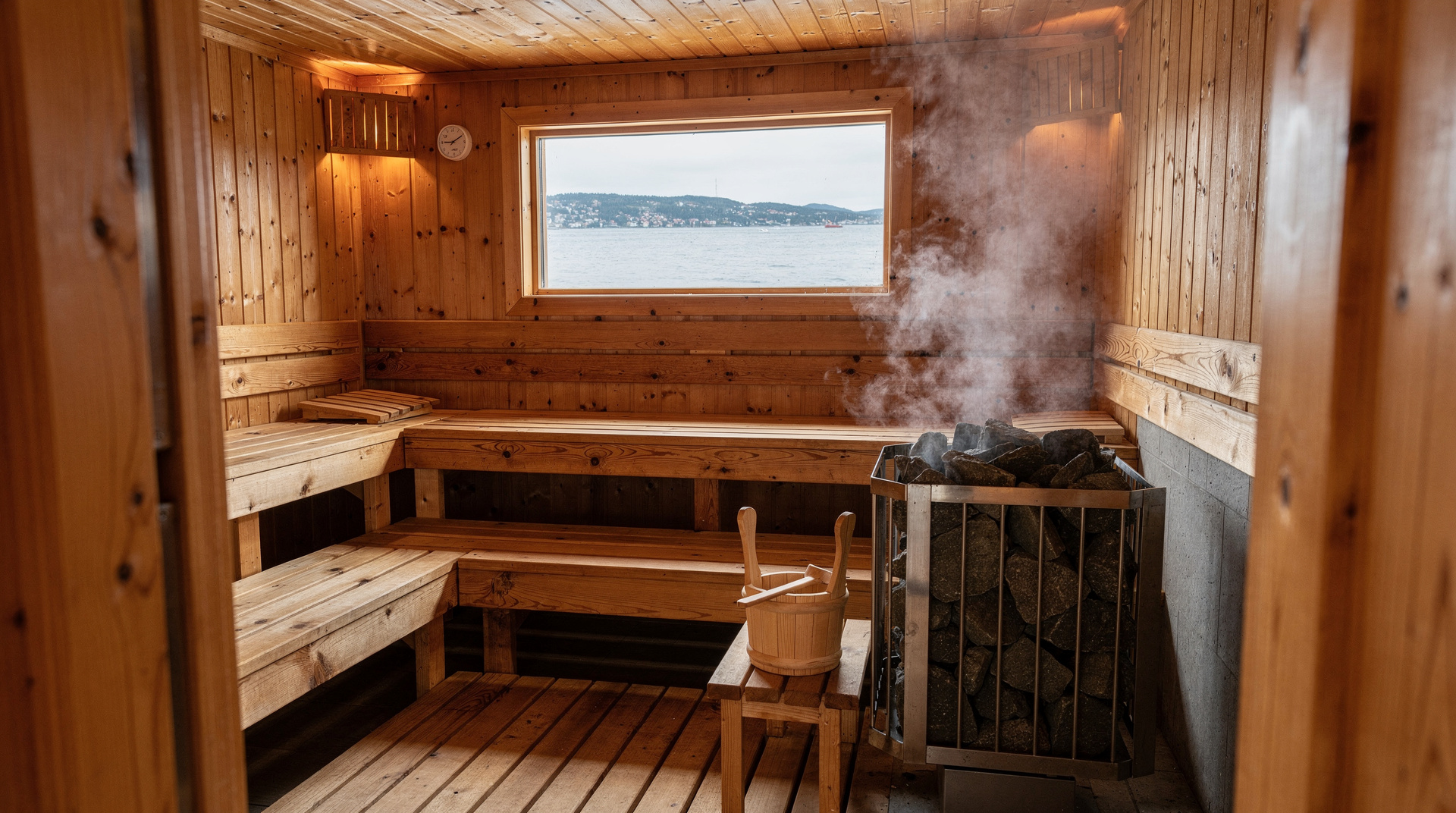
The experience: Arrive, change in the basic locker area, enter the sauna cabin. Temperature runs 80–90°C with dry heat (you can add water to the stones for a steam burst). Other bathers may be nude; swimwear is also common. Conversation is muted — Norwegians tend to be quiet in saunas. The outdoor deck with fjord-plunge ladders is shared by all public session guests.
Best for: Solo travellers who want to meet locals; budget-conscious visitors; people who are comfortable with shared sauna culture; anyone who has done saunas before and just wants the fjord access without fuss.
Drawbacks: Less privacy; you can’t control the temperature timing; the communal etiquette takes a moment to read if you’re unfamiliar with it.
Verdict: Authentic, affordable, and the option locals use. If you’re comfortable with communal bathing, start here.
Option 2: the private floating sauna pod
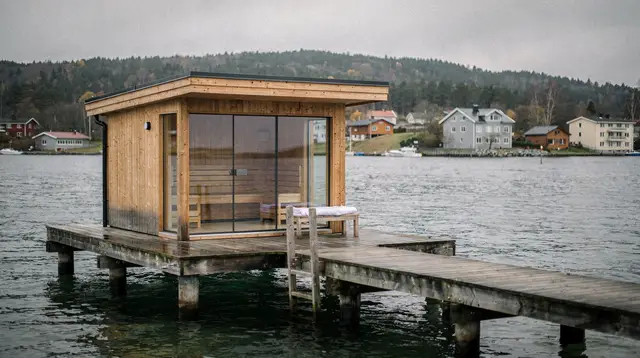
What it is: A smaller sauna barrel (often called “Bragi” or similar) rented exclusively by your group for 90 minutes. Capacity is typically 2 to 6 people. You have your own sauna space, your own private deck area, and fjord-plunge access without sharing with strangers.
Price: Around NOK 650 to 800 total for the pod ($70 to $86). Per-person cost in a group of four works out to NOK 160 to 200 ($17 to $22) — actually cheaper per person than the public session.
The experience: You set the rhythm. Want to stay in the sauna for 20 minutes? Go for it. Want to play music through the cabin speaker? Usually allowed. The private deck section gives you a space to towel off, warm up between rounds, and do the cold plunge in your own time without a queue.
Best for: Couples on a romantic trip; groups of friends who want the experience together; travellers who find public nudity uncomfortable; anyone with a specific schedule (private pods offer more predictable timeslots).
Drawbacks: Requires advance booking with more lead time than the public session; at NOK 800 total, it’s pricier in absolute terms for a solo traveller or couple of two.
Verdict: Best value per person for groups of three or four. The intimacy transforms the experience — you get to share the ritual with the people you came to Oslo with rather than strangers.
Option 3: the guided sauna and fjord swim experience
What it is: A structured, guide-led session typically running 90 minutes. A local guide leads a small group (usually 6–10 people) through the full hot-cold ritual, explaining the physiology, cultural history, and practical technique. Multiple sauna-plunge cycles are included, plus warm drinks at the end.
Price: Approximately NOK 600 to 650 per person ($65 to $70). This is the most expensive option but includes knowledge and supervision that the others don’t.
The experience: The guide starts with a 10-minute briefing — why Norwegians sauna, what to expect from the cold plunge, how to breathe through the shock. Then two to three structured heat-plunge cycles with the guide present on the deck throughout. You end with warm drinks (often hot lingonberry juice or tea) and a Q&A.
Best for: First-timers who want to understand the ritual, not just do it; solo travellers who want company and context; nervous swimmers who want supervision at the pontoon; people interested in Norwegian culture and wellness traditions.
Drawbacks: More expensive; runs on a fixed schedule; the group aspect may feel constraining if you prefer solo or very intimate experiences.
Verdict: Worth it for a first visit. The difference between “I jumped into cold water” and “I understand why Norwegians jump into cold water” is the guide. For a second or third visit, switch to public or private.
Side-by-side comparison
| Public session | Private pod | Guided experience | |
|---|---|---|---|
| Price per person | NOK 250–310 ($27–33) | NOK 160–200 ($17–22) in group of 4 | NOK 600–650 ($65–70) |
| Duration | 45–60 min | 90 min | 90 min |
| Group size | Shared (10–20) | Exclusive (2–6) | Small group (6–10) |
| Guide included | No | No | Yes |
| Privacy | Low | High | Medium |
| Booking lead time | 1–2 days | 2–3 days | 2–4 days in season |
| Best for | Solo, budget, communal | Groups, couples | First-timers, cultural learners |
What about hotel saunas?
Several Oslo hotels have saunas — particularly the higher-end properties near Aker Brygge and Bjørvika. These are typically dry Finnish saunas in basement spa areas, occasionally with a rooftop hot tub. They’re convenient and some are genuinely luxurious, but they lack two things: the fjord immersion and the cultural authenticity. A hotel sauna is a hotel sauna anywhere in Europe; a floating barrel on the Oslo waterfront is specifically and irreducibly Oslo.
If you’re staying in a central Oslo hotel with a sauna, use it for morning warm-ups but don’t count it as the Oslo sauna experience. Make the trip to Tjuvholmen.
Booking tips to avoid disappointment
Summer peak (July–August): Private pods sell out 3–5 days ahead on weekends. Public sessions sell out 1–2 days ahead. Book as soon as your travel dates are confirmed.
Winter weekends: Surprisingly popular with locals doing “polar bear” cold-plunges. Book 2–3 days in advance.
Weekday afternoons: Easiest window to get your preferred session type. Tuesday through Thursday between 14:00 and 17:00 generally has good availability.
Cancellation policy: Most GYG bookings allow free cancellation up to 24 hours in advance. Use this to secure a slot early and reassess if Oslo’s weather looks uncooperative (though rain and even light snow don’t actually diminish the experience — they enhance it).
A note on pricing in context
At first glance NOK 650 ($70) for a guided 90-minute session feels steep. But consider what Oslo charges for comparable leisure activities: a meal at a midrange Aker Brygge restaurant runs NOK 350–500 per person before drinks. An Oslo museum costs NOK 160–200. A two-hour fjord cruise with audio commentary costs NOK 400–600. The guided sauna session is competitive, offers a genuinely unique experience, and — as the comments section of any travel forum about Oslo will confirm — is consistently rated among the city’s highest-value activities.
The public session at NOK 250 to 310 is simply one of the best value experiences in one of Europe’s most expensive cities. Do it.
For full logistics, etiquette, and everything else you need to know before you arrive, read the complete floating saunas guide. For the cold-plunge science and technique, see the fjord swim ritual explained. For the rules of the sauna — what to bring, how to behave, the nudity question — read the Oslo sauna etiquette guide.
Combining a sauna session with the rest of your day
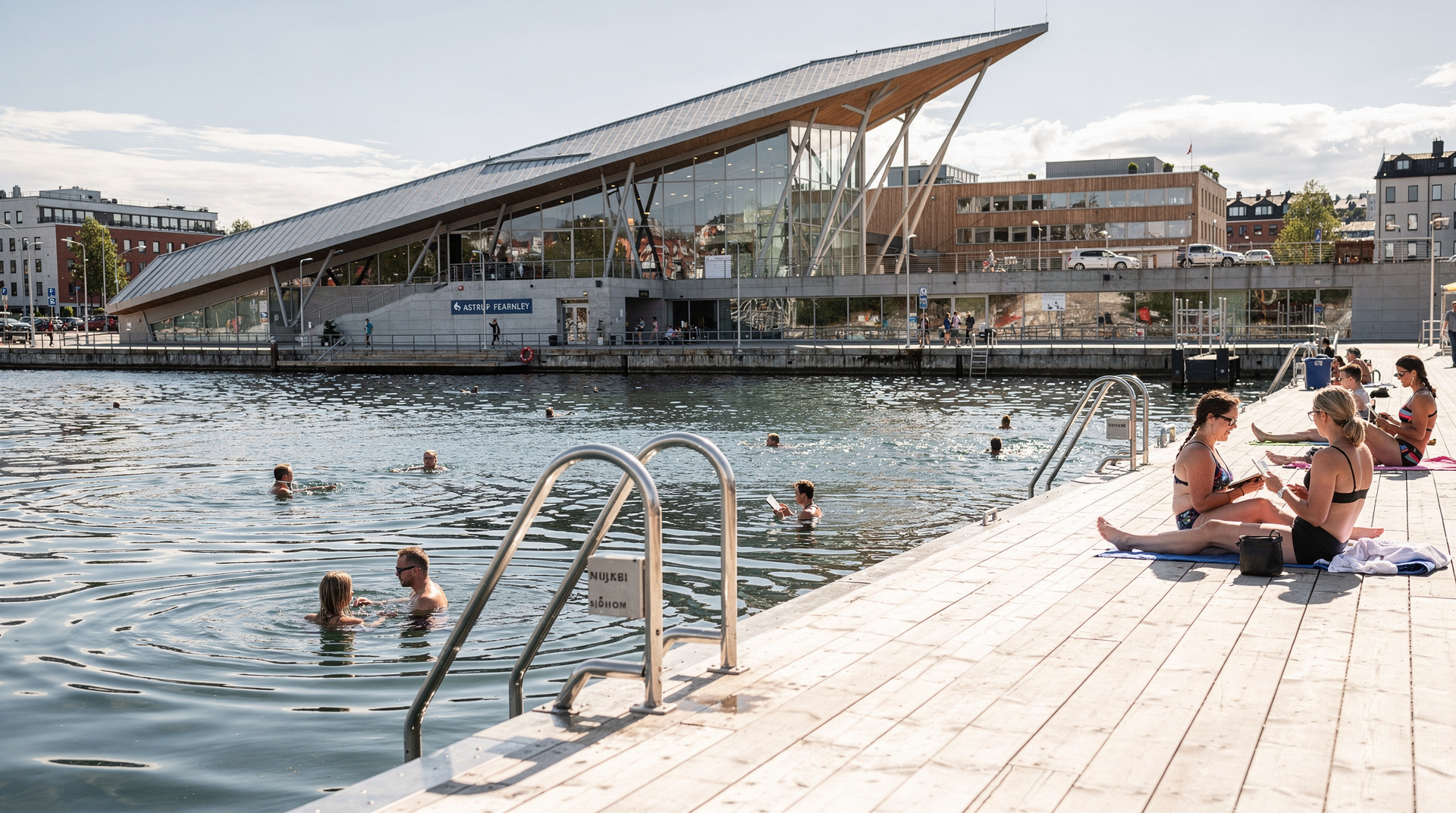
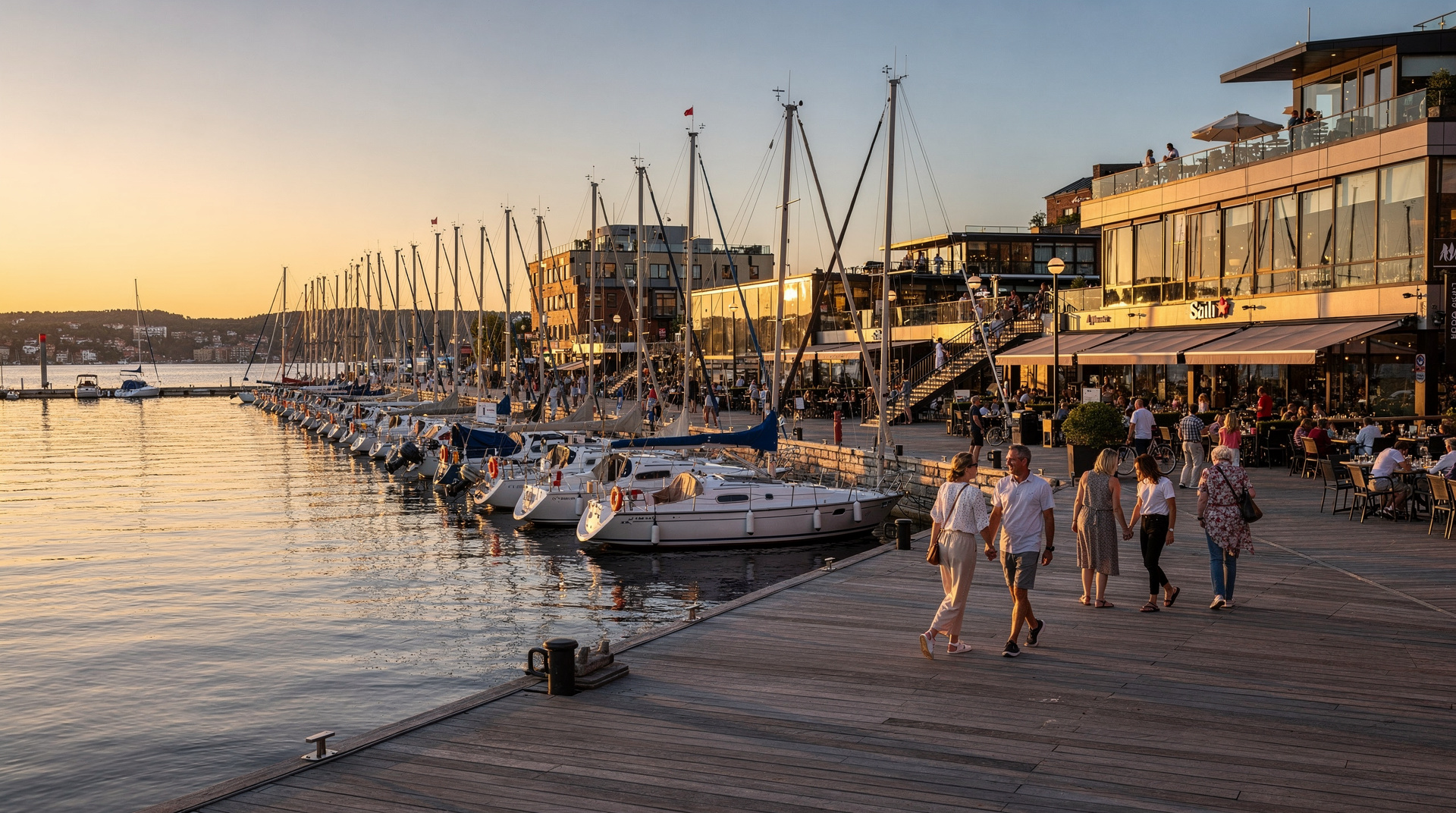
The Tjuvholmen pontoon sits a short walk from several other attractions, which makes a sauna session easy to slot into a fuller day rather than treating it as a standalone booking. Pair a morning session with an afternoon at the Astrup Fearnley Museum, both within the same waterfront district, or follow an evening sauna with dinner nearby at Aker Brygge. In winter, several visitors combine the sauna with the Oslo winter activities circuit, treating the cold-plunge as a genuine highlight of an otherwise indoor-heavy winter day rather than an outlier.
Who should skip the sauna entirely
Despite the near-universal praise this experience gets in travel writing, it isn’t for everyone. Visitors with certain cardiovascular conditions should consult a doctor before rapid hot-cold transitions, and anyone with a strong aversion to cold water immersion may find the whole ritual more stressful than enjoyable even with guidance. If that describes you, Oslo’s spa and wellness options extend beyond the floating sauna — several hotels near Aker Brygge and Bjørvika have conventional dry saunas without the fjord plunge element, discussed briefly above and in more depth in the where to stay in Oslo guide.
How to decide in two minutes
If the choice still feels fiddly, run through three questions. How many of you are there? Alone or as a pair, the public session is the natural fit; with three or more friends, the private pod starts to make sense. Have you ever done a hot-cold sauna ritual before? If not, the guided session removes most of the uncertainty. How much do you care about privacy? If a shared cabin with strangers makes you tense, a private pod is the answer regardless of group size. Most people land on one clear option after those three questions, and the table above confirms it.
It also helps to think about what the sauna is for in your trip. For some travellers it is the highlight, the one story they bring home. For others it is a pleasant break between museums. The first group should invest in the guided or private option and give it room in the schedule; the second can happily take the public session and move on. Our how many days in Oslo guide and the Oslo in 3 days itinerary show where a sauna slot fits without crowding the rest of the plan.
Where the sauna fits in a wider Oslo plan
The waterfront around Tjuvholmen rewards a slow day. If you have a single day only, the Oslo in 1 day itinerary is tight, and a sauna probably belongs on a longer stay. With two days, the Oslo in 2 days itinerary leaves room for an evening session after sightseeing. Travellers who like to be outdoors will enjoy the active outdoors 3-day plan, where a sauna and plunge make a natural reward after a hike. In the colder months, the Oslo winter 3-day itinerary uses the sauna as a warm anchor in short, dark days.
On a tighter budget, read the Oslo budget weekend itinerary and the Oslo on a budget guide before deciding, since the public session is often the cheapest way to get a distinctly Oslo experience. If you want to see how the sauna compares with other paid activities, Is Oslo expensive? puts the costs in context, and the Oslo daily costs guide helps you spread spending across a trip.
Making the most of a session
A few habits improve any of the three options. Arrive a little early so you are not rushing to change. Drink water before and after, and resist the urge to treat the plunge as a contest. Listen to your body: if you feel dizzy, sit down, cool off gradually and skip the next round. Between rounds, rest on the deck rather than heading straight back in; the pause is part of the ritual, and it is when most people notice how relaxed they feel.
Think about the rest of the day too. A session on the fjord often leaves you hungry, so plan something simple afterwards. The where to eat in Oslo guide and the Oslo overpriced food warning help you avoid the obvious traps near the waterfront. If you want a longer wellness-minded outing, a walk on the nearby islands or a trip along the fjord pairs well; the Oslo island hopping guide and the Oslofjord cruises guide offer ideas for the hours before or after your slot.
For a more personal take on why the sauna boom happened and what it says about the city, the blog post the sauna boom explained is a good companion read, and Oslo’s design scene shows how the waterfront itself has changed. Nearby neighbourhoods are covered in the Frogner guide and the Oslo city centre destination page, useful if you want to explore before or after your booking.
Choosing for a particular kind of traveller
Couples: The private pod gives the most atmosphere, though the guided session also works if you both want to learn the ritual together. Solo travellers: The public session is the easiest way to feel part of local life, while the guided option adds company and context; see the solo travel in Oslo guide. Families: Check the rules and the comfort level of everyone involved before booking; the Oslo with kids guide covers other options that suit younger travellers better. Groups of friends: Book the private pod early, since the group is the reason it works so well.
Whichever you pick, the fjord does the real work. The heat, the cold water and the quiet city skyline together are what people remember, far more than the details of the booking.
Frequently asked questions about Oslo saunas compared
What is the cheapest sauna option in Oslo?
The public floating sauna session at Tjuvholmen is the most affordable, running around NOK 250 to 310 per person ($27–33). In a group of four sharing a private pod, per-person cost drops to roughly NOK 160–200 ($17–22), making that competitive too.Are private sauna pods worth the extra cost?
Yes, for groups of 3 or more. A 90-minute private pod (the Bragi) costs around NOK 650 total, which works out to about NOK 165 per person in a group of 4. You get exclusive use of the sauna and deck space, your own music/silence, and no need to navigate shared etiquette with strangers.Is the guided sauna tour better than going alone?
For first-timers, yes. The guided session (around NOK 650 per person) provides breathing instruction for the cold plunge, cultural context about Norwegian sauna traditions, and supervision that makes the experience less daunting. Returning visitors typically prefer the public or private sessions to save money.Are there saunas in Oslo outside of Tjuvholmen?
Yes. The Oslofjord waterfront has several wellness venues, and some hotels (particularly in Aker Brygge and the Opera district) have rooftop or indoor saunas for guests. The floating experience at Tjuvholmen is unique and worth prioritising, but it's not the only option.Can I visit multiple sauna locations in one day?
Physically possible but not recommended. One full sauna session (two to three rounds) is physiologically taxing enough for a day. Let your body recover overnight and return the following day if you want more.Do I need to know how to swim to do an Oslo floating sauna?
Basic swimming ability is expected for the cold-plunge element, since you enter open fjord water from a ladder rather than a pool. Guided sessions provide the most supervision for nervous swimmers; the public and private sessions assume a reasonable comfort level in open water.What should I bring to an Oslo floating sauna?
A swimsuit, a towel, flip-flops for the deck, and a dry change of clothes for afterwards. Most venues have basic changing facilities but not full lockers with valuables storage, so avoid bringing anything you can't keep an eye on.
Top experiences
Bookable activities with verified prices and instant confirmation on GetYourGuide.