Tjuvholmen sauna guide: Oslo's best waterfront wellness cluster
Oslo: self-service floating sauna private session "Bragi"
Duration: 1.5 hours
- Private sauna
- Fjord swim
Where exactly are the floating saunas at Tjuvholmen?
The saunas are moored on a floating pontoon off the Tjuvholmen waterfront, a 5-minute walk west from the main Aker Brygge promenade. They're visible from the harbour path. Address: Tjuvholmen allé, 0252 Oslo. Nearest tram stop: Aker Brygge (tram 12), about 10 minutes from Oslo Central Station.
Tjuvholmen: from shipyard to sauna capital
The name Tjuvholmen translates roughly as “thief island” — a reference to the area’s working-class waterfront past. For most of the twentieth century, this peninsula jutting into the Oslofjord from the western edge of the city centre was industrial dockland: shipyards, warehouses, workshops. The transformation that began in the late 2000s turned it into something Oslo had never quite had before: a genuinely contemporary, architecturally ambitious waterfront neighbourhood built around culture, design, and outdoor living.
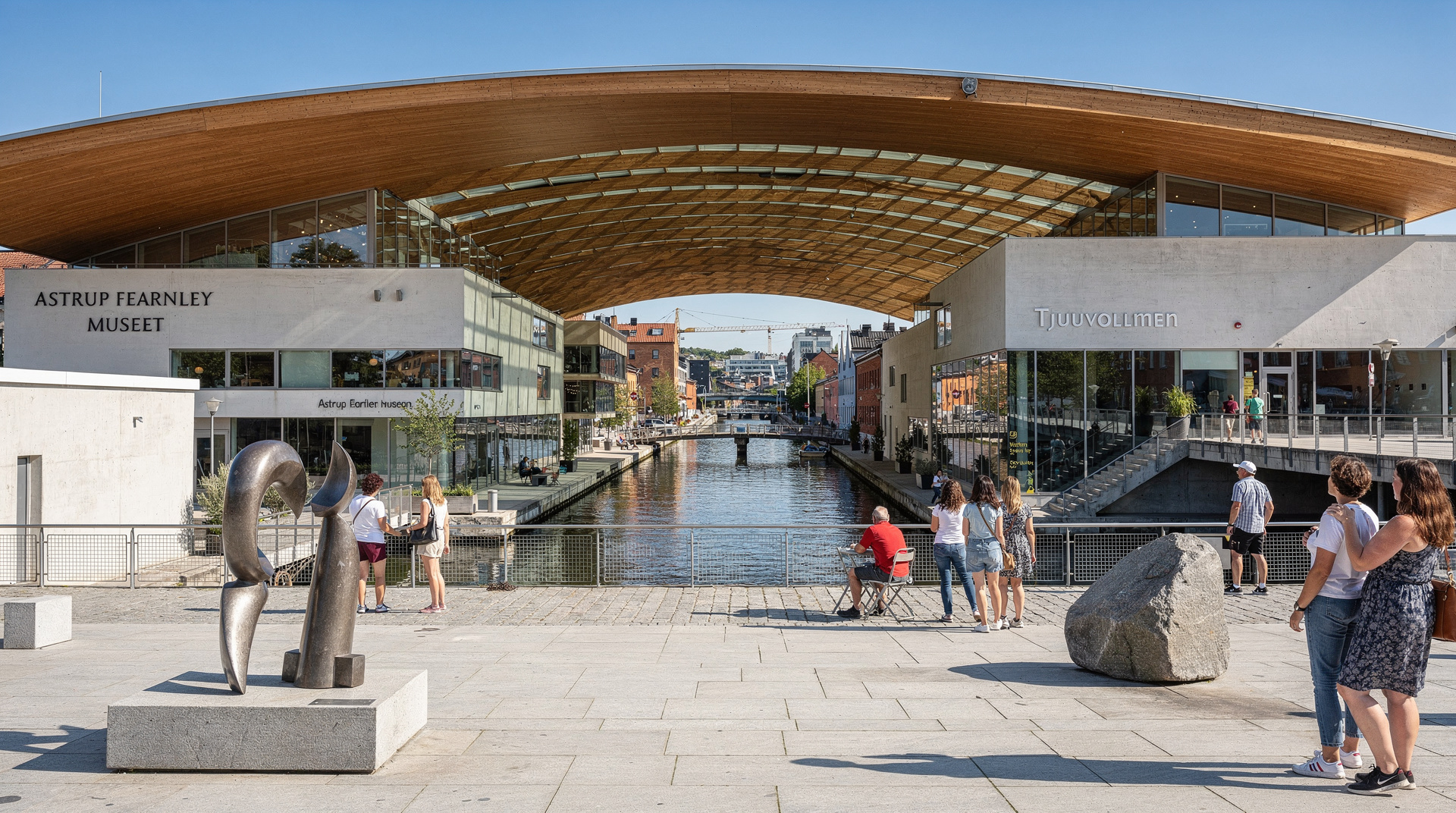
The floating saunas arrived as part of that transformation, and they fit the neighbourhood perfectly. Tjuvholmen is where Oslo faces the water most directly — the Astrup Fearnley Museum of Modern Art, designed by Renzo Piano, sits right at the water’s edge; the promenade curves around into a small bay that the sauna pontoon occupies. If you’re going to do the Norwegian hot-cold ritual anywhere in Oslo, doing it here — with the city’s cleanest, most striking architecture behind you and the fjord ahead — is the right choice.
| Where | Tjuvholmen allé, 0252 Oslo, 5 min walk from Aker Brygge |
| Cost | Around NOK 250–310/person public session; NOK 160–220/person private pod (groups of 3–4) |
| Time needed | 60–90 minute session |
| Open | Year-round, roughly 10:00–22:00 daily |
| Booking | 4–5 days ahead for summer weekends; 2–3 days off-peak |
What the sauna complex looks like
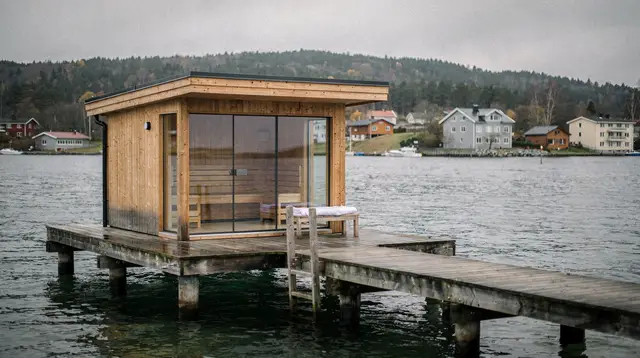
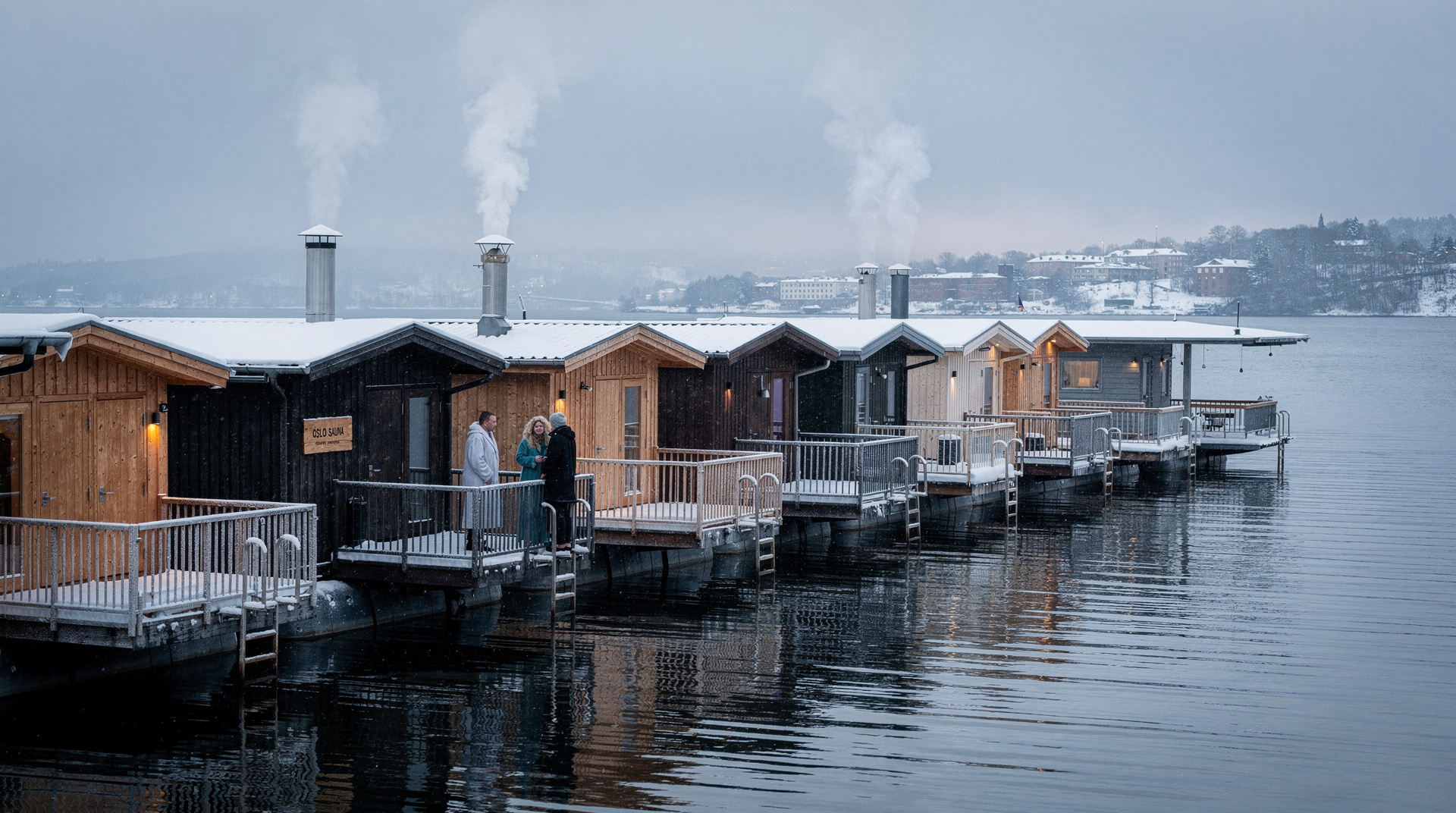
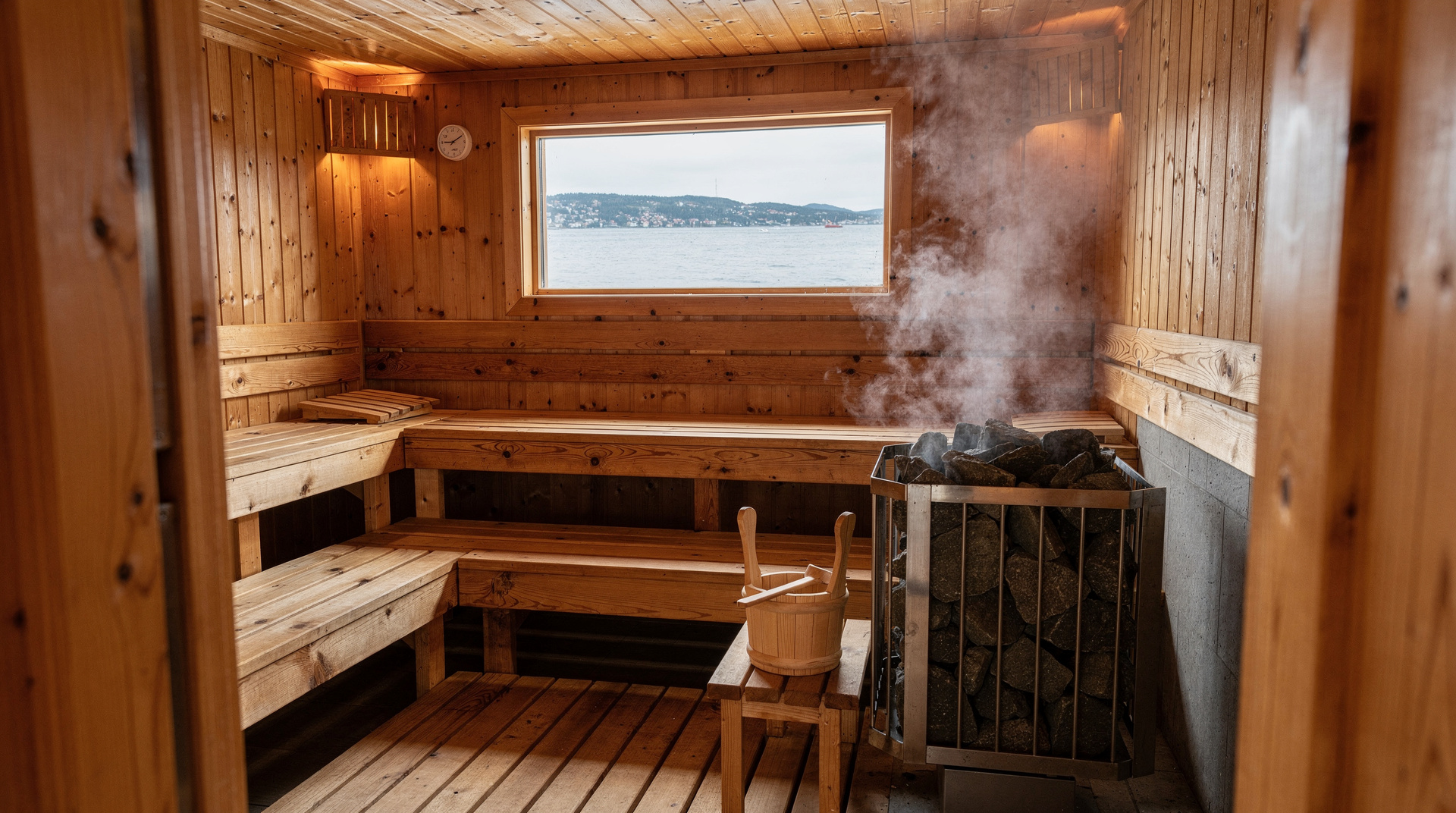
The pontoon is a collection of small wooden sauna barrels bobbing at the end of a floating dock. Some are round, some octagonal, all are clad in Norwegian pine that weathers to a warm grey-brown. From the shore they look like a cluster of oversized bobbing casks. Up close, they’re comfortable, well-maintained, and warm in a way that expensive renovations have not managed to make sterile.
The pontoon includes:
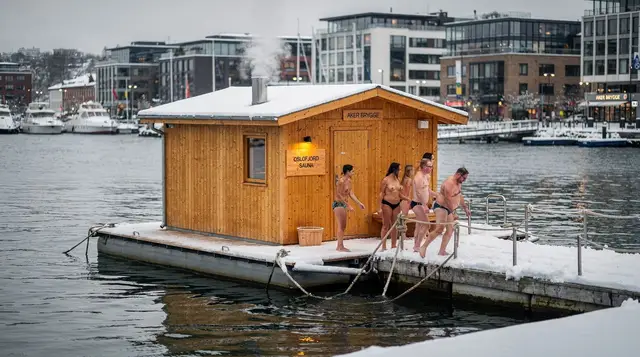
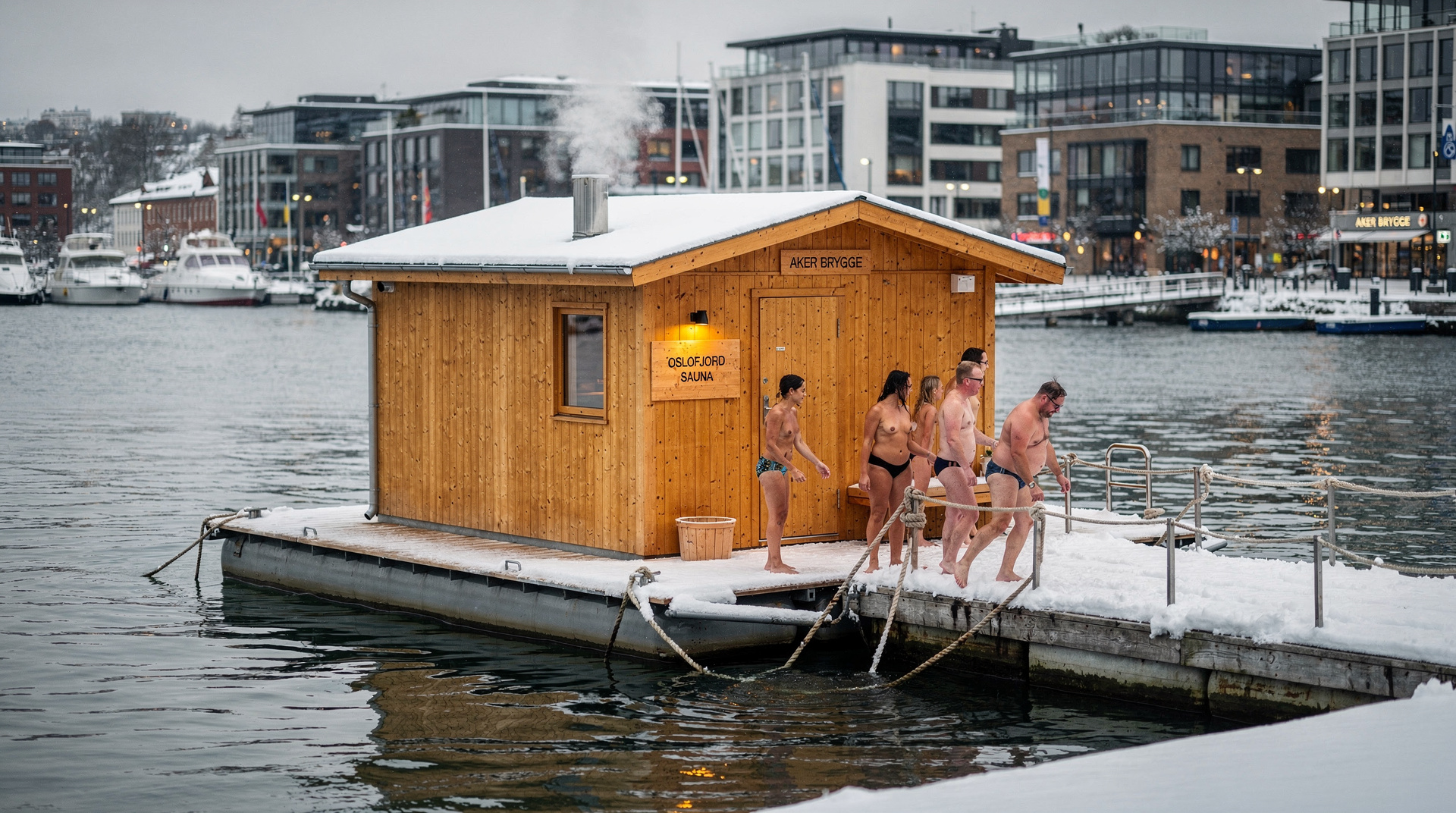
The public communal sauna: A larger structure accommodating 10–20 people simultaneously. This is the original format — shared benches, shared heat, shared deck. The social democracy of the sauna, where Oslo’s bank director and the student doing a gap year sit at the same temperature in the same silence.
Private pods (Bragi-type units): Smaller barrels for groups of 2 to 6. These are booked as exclusive use for 90-minute slots. The pods have their own small deck section for cooling down between rounds. Names vary slightly depending on which operator is running which structure, but the concept is consistent.
The guided session departure point: The same pontoon is where the guided floating sauna and fjord swim experience departs. Your guide meets you at the pontoon entrance.
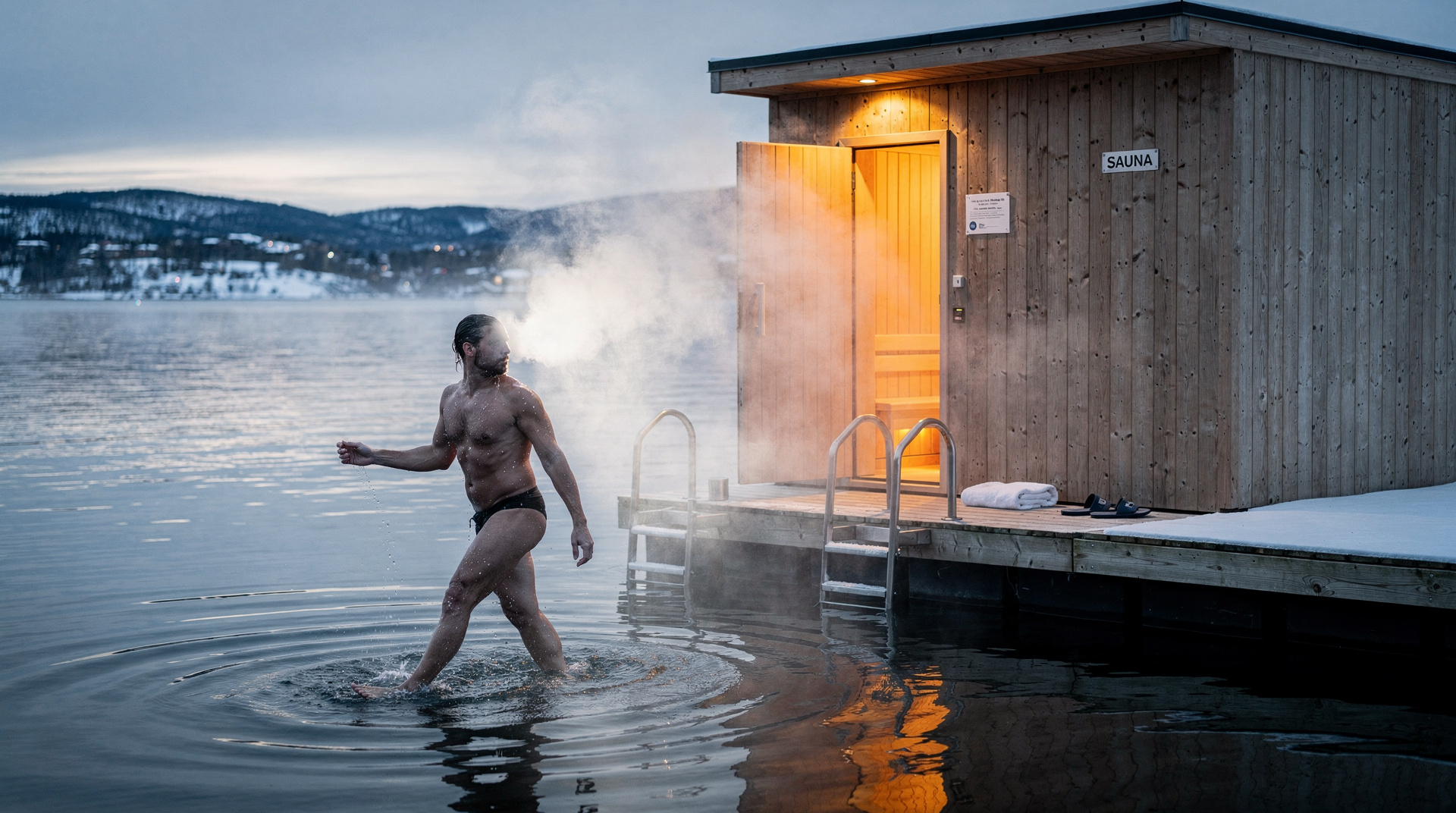
Cold-plunge infrastructure: Multiple ladders descend from the pontoon directly into the Oslofjord. Water depth at the ladders is several metres — this is the open fjord, not a pool. The platform around the ladders has handrails and non-slip surfaces.
Getting to Tjuvholmen
By tram: Tram 12 from Jernbanetorget (central Oslo) to Aker Brygge takes about 10 minutes. From the tram stop, walk west along the harbour promenade. Tjuvholmen is the peninsula at the far end of Aker Brygge, visible from the tram stop. Total transit time from Oslo Central Station: 15–20 minutes.
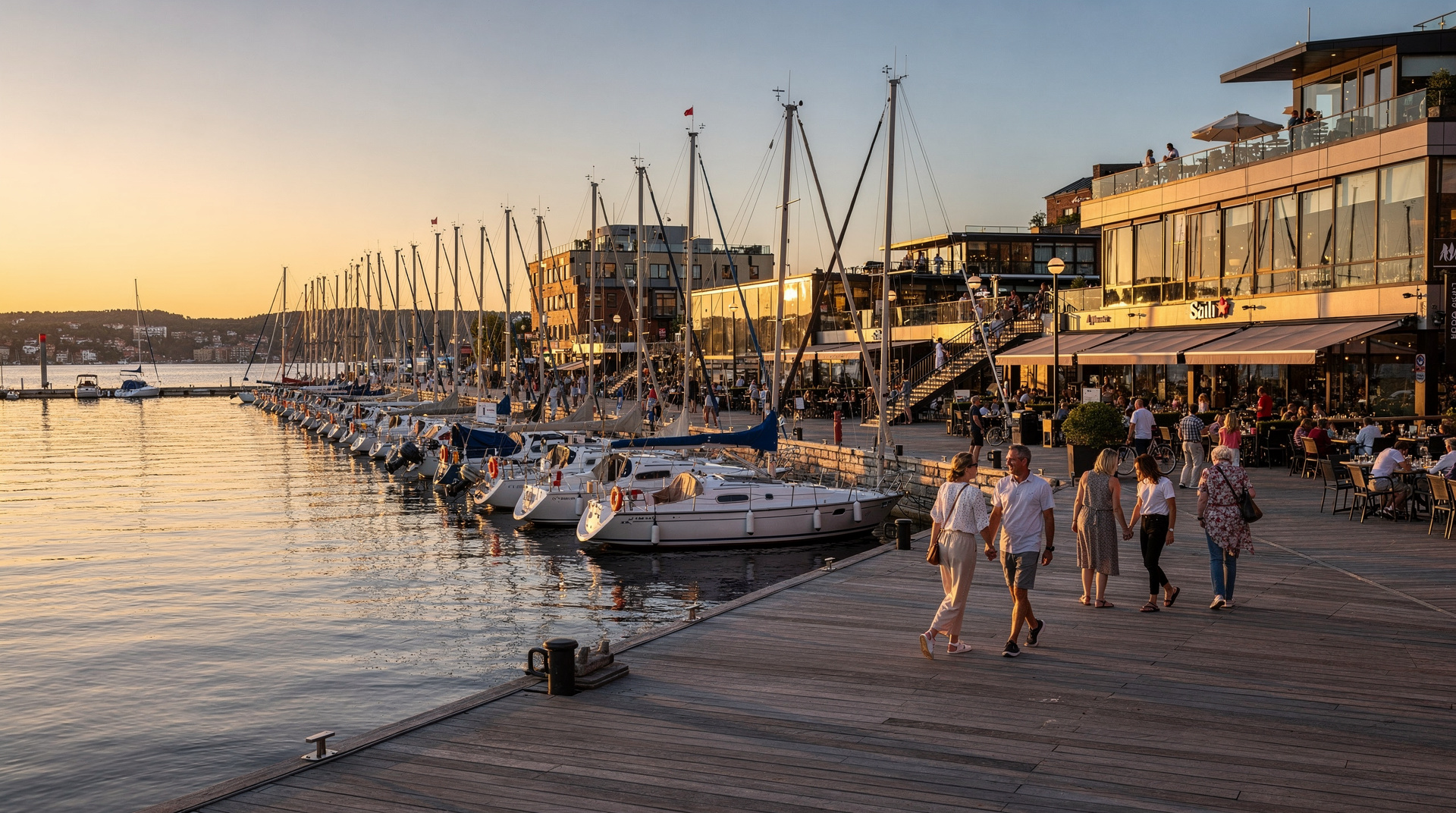
On foot from the city centre: From Karl Johans gate, walk south-west towards the harbour (approximately 15 minutes), following the waterfront path west through Rådhusplassen (City Hall Square) and into Aker Brygge. The promenade takes you directly to Tjuvholmen.
By bike: Oslo’s city bike system (Bysykkel) has stations at Aker Brygge, a 5-minute ride from Tjuvholmen. A 24-hour pass costs NOK 99 ($11). The waterfront route is flat and direct.
By boat: In summer, Ruter’s boat service (covered by the standard Ruter ticket or Oslo Pass) runs to Aker Brygge from Rådhusbrygga. Novel approach if you’re already doing a harbour day.
The neighbourhood context: what to do before and after
Tjuvholmen is one of the densest concentrations of good things to do in a small area anywhere in Oslo. The sauna session works best as part of a half-day or full-day itinerary in this corner of the city.
Before the sauna:
The Astrup Fearnley Museum of Modern Art (Strandpromenaden 2) is literally next door to the sauna pontoon. It opens at 12:00 Tuesday to Sunday and holds a permanent collection that includes major works by Damien Hirst, Cindy Sherman, and Jeff Koons, plus rotating Norwegian contemporary art. Entry is NOK 160 ($17) for adults. Spending an hour here before your sauna slot works perfectly — you arrive at the pontoon warm from walking and mentally switched off from the exhibition.
The Tjuvholmen sculpture park (free, always open) is a small but worthwhile collection of outdoor sculptures installed between the museum and the water’s edge. Norwegian artists dominate, with works by Elmgreen and Dragset among others. Worth 20 minutes of wandering.
After the sauna:
The post-sauna state — alert, calm, hungry — is ideal for eating. Aker Brygge’s restaurant strip has every price point from NOK 180 fish and chips ($19) to NOK 350 salmon with seasonal sides ($38) at the waterfront tables. Quality varies; the best spots are away from the main tourist promenade. Ask the sauna staff for their current local favourite.
For something cheaper and more authentic, catch the tram back to Grünerløkka and explore the neighbourhood’s cafés and bistros — Oslo’s best concentration of independent food culture, covered in the Grünerløkka food guide.
For a longer stay in the area:
The Akershus Fortress is a 15-minute walk east along the harbourfront. The Oslo Opera House is 25 minutes east. Between the sauna, the museum, and the fortress, you can fill a full Oslo day without going near the main shopping street.
Booking a private pod: the practical details
The private sauna pods (usually called Bragi or similar) book up fastest. Here’s how to make it work:
Group size sweet spot: Three or four people makes a private pod most economical (NOK 160–220 per person vs NOK 250–310 for the public session). Two people pay more per person for privacy; five or six people get the best rates but need to fit comfortably in the pod.
Booking window: In June and July, book 4–5 days ahead for weekend slots. Weekday mid-afternoon slots (Tuesday to Thursday, 13:00–17:00) are often available the same week. In autumn and spring, 2–3 days advance booking is usually sufficient.
What to bring for a private session: The pod usually has a small side table for drinks (bring a thermos of tea or hot chocolate in winter), a Bluetooth speaker (the operator may also have one), and towel hooks. Swimwear, flip-flops, and a post-plunge warm layer are all you need.
Communication: Book via the operator website or through GetYourGuide. Confirmation arrives immediately. The operator sends a reminder with precise pontoon access instructions 24 hours before your session.
Tjuvholmen vs other Oslo sauna locations
Tjuvholmen is the canonical address for Oslo floating saunas, but it’s worth knowing what else exists:
Hotel saunas: Several hotels near Aker Brygge and Bjørvika include saunas for guests. These lack the fjord-access component and are standard dry saunas — comfortable but not distinctively Oslo.
Sørenga and the Opera district: Oslo’s eastward waterfront development includes Sørenga Sjøbad (an outdoor seawater pool, summer only, free). No sauna here.
Nordmarka and forest lakes: In winter, some guided experiences combine a bonfire sauna (a wood-fired portable unit set up in the forest) with a plunge into a frozen lake. These are located in the forests north of the city and accessed by T-bane (Oslo Metro) to stations like Frognerseteren. A different experience from the urban floating sauna — wilder and more remote.
For the quintessential Oslo waterfront sauna experience with maximum practical convenience, Tjuvholmen wins. It’s easy to reach, professionally operated, available year-round, and embedded in a neighbourhood where you could spend a whole day without running out of things to appreciate.
Read the complete floating saunas guide for full booking details, session types, and seasonal advice. For the etiquette you need before entering the sauna, see Oslo sauna etiquette.
Tjuvholmen by season
Summer (June–August): The busiest season and the most social — the public sessions fill with a mix of locals and visitors, and the cold plunge feels genuinely refreshing rather than punishing. Book several days ahead for weekend slots.
Autumn (September–November): A quieter, arguably more atmospheric time — mist over the fjord, fewer tourists, and the temperature contrast between sauna and water becomes more dramatic without being extreme.
Winter (December–February): The signature Tjuvholmen experience for many Oslo residents. Steam rising off the water in freezing air, the shock of the plunge at close to 2–4°C, and the warm pontoon deck afterward. This is when the ritual feels most distinctly Norwegian. Not recommended for those with heart conditions without medical advice.
Spring (March–May): Transitional — still cold water, lengthening daylight, and easier booking availability than peak summer.
Combining with a full Aker Brygge day
For visitors basing a day around this stretch of waterfront, a natural sequence is: morning at the Astrup Fearnley Museum, lunch at Aker Brygge, an afternoon or early-evening sauna session, then dinner nearby once you’ve warmed through. Pairing this with the SUP paddleboarding available at the same waterfront makes for an active-then-restorative full day on the water. See the Aker Brygge and Tjuvholmen destination guide for the fuller neighbourhood picture.
How a good session unfolds
The ritual is simple, and it works better when you do not rush it. Most people start with a first round in the heat, long enough to feel the warmth settle into the shoulders, then step out onto the deck and let the air cool the skin. Only then comes the ladder and the fjord. After the plunge, a few minutes of rest on the deck, a drink of water, and back inside for a second round. Two or three rounds is a natural rhythm; nobody is counting, and nobody is judging how long you stay in the water. If you are new to the practice, the Oslo sauna etiquette guide explains the unwritten rules, and the cold plunge guide walks through how to ease into the water without panic.
What makes the pontoon special is the view from the bench. Through the window you see the harbour moving: small boats, ferries crossing, the odd paddleboarder gliding past. It is a very different feeling from a sauna in a basement spa, and it is the main reason people come back for a second visit in another season.
Choosing between public and private
The choice mostly comes down to mood and group size. The public session suits solo travellers and curious visitors who enjoy the social side: conversation tends to be quiet, often in English, and locals are usually happy to share how they do things. A private pod suits friends, families with older children, or anyone who wants to play their own music and linger without sharing the bench. If you are still weighing options across the city, the comparison of Oslo’s saunas sets Tjuvholmen next to the alternatives, and the floating saunas overview covers the different formats side by side.
Travelling with a mixed group, including people who would rather not swim? Nothing forces anyone into the fjord. They can enjoy the heat and the view, rest on the deck, and join the others for the meal afterwards. The sauna part of the ritual is the real pleasure; the plunge is a bonus.
Practical comfort tips
- Arrive a little early so you can change without hurry and get used to the pontoon before your slot begins.
- Drink water before and after, and keep alcohol for dinner rather than the session itself.
- Wear sandals you can slip off easily on a wet deck, and keep valuables to a minimum.
- Bring a towel you do not mind getting damp, plus a dry layer for the walk back. Winter sessions in particular reward a hat and a warm coat.
- Keep your phone in a bag; the whole point is to switch off for an hour.
Building a wider day around the waterfront
Tjuvholmen sits at the heart of one of the most walkable stretches of the city, which makes it easy to fold into a bigger plan. If you are still sketching your stay, the one-day Oslo itinerary and the two-day itinerary both make room for the harbour, and the food and design weekend pairs well with a sauna afternoon. For a wider look at the area, the Oslo city centre guide and the Bjørvika and Opera district show what sits on either side of the waterfront walk.
On a rainy day the sauna is actually one of the better plans: the weather matters less when you are already planning to get wet. Pair it with the rainy day museums for a morning indoors and an afternoon in the steam.
Those watching the budget should read is Oslo expensive before booking so the sauna sits comfortably in the rest of the trip, and the Oslo daily costs breakdown helps put a session in context. Getting to the pontoon is easy with the Ruter public transport guide, and the guide to getting around Oslo covers the other options. If the fjord itself has caught your interest, the Oslofjord cruises guide and the sunset fjord cruise are natural follow-ups, and the blog piece on why Oslo is worth the price and the sauna boom explained give more context on why this ritual has become so central to the city.
Frequently asked questions about Tjuvholmen sauna guide
What is the Tjuvholmen neighbourhood like?
Tjuvholmen (literally 'thief island') is a converted former shipyard that became Oslo's most upmarket waterfront district, featuring the Astrup Fearnley Museum, design hotels, galleries, waterfront restaurants, and the floating sauna cluster. It's polished and modern — Oslo's answer to the London South Bank.Can I walk from Aker Brygge to the sauna?
Yes, easily. From the Aker Brygge tram stop, walk west along the waterfront promenade past the restaurants and marina. Tjuvholmen is the peninsula at the end of the promenade, roughly 5–8 minutes on foot. The sauna pontoon is signposted and visible from the path.What else is there to do near the Tjuvholmen saunas?
The Astrup Fearnley Museum of Modern Art is a 3-minute walk. Aker Brygge has Oslo's densest concentration of restaurants and bars. The Nobel Peace Center and Akershus Fortress are 10 minutes east on foot. Tjuvholmen also has a small sculpture park and excellent harbour views.Is there parking near Tjuvholmen?
Limited and expensive (Oslo parking rates run NOK 50–80 per hour / $5–9). Public transport is strongly recommended. The harbour area is also accessible by e-scooter or cycling via Oslo's extensive bike infrastructure.Are the saunas open year-round?
Yes. The pontoon operates every day of the year, typically 10:00–22:00. Winter is a popular local season — the drama of steam on the fjord and the contrast of cold water makes it a different but equally compelling experience to summer.
Top experiences
Bookable activities with verified prices and instant confirmation on GetYourGuide.