Sauna and cold plunge in Oslo: the fjord swim ritual explained
Oslo: floating sauna and fjord swimming experience in central Oslo
Duration: 1.5 hours
- Floating sauna
- Cold plunge
Can you really swim in the Oslo fjord after a sauna?
Yes — the cold plunge into the Oslofjord is the core of Oslo's floating sauna experience. From the pontoon at Tjuvholmen you step directly from the 85°C sauna into fjord water ranging from 2°C in winter to 22°C in summer. Guided sessions explaining the ritual run about 90 minutes and cost roughly NOK 600–650 ($65–70).
| Where | Tjuvholmen floating pontoon, Aker Brygge waterfront |
| Cost | around NOK 250-310 self-directed; NOK 600-650 guided |
| Time needed | 60-90 minutes |
| Getting there | Tram 12 to Aker Brygge, 5 min walk west |
| Best time | Year-round; winter for the full cold-shock experience |
The ritual that defines Oslo wellness
If you ask Oslonians what separates their city from other European capitals, many will mention the saunas. Not hot tubs or spas — saunas. Floating ones, moored on the Oslofjord, where you sweat until your skin hums and then lower yourself into water that may, in January, be just above freezing. The hot-cold-hot cycle, repeated two or three times over an hour or so, is the closest thing Norway has to a secular ritual.
This guide explains exactly how the sauna-to-cold-plunge experience works in Oslo: the physiology behind it, the practical logistics of where and how to do it, and why a guided session is worth considering if this is your first time.
The science of hot-cold contrast therapy
You don’t need to care about the science to enjoy the ritual, but understanding what’s happening to your body makes the experience less alarming and more intentional.
In the sauna: Your core temperature rises to around 38–39°C. Blood vessels dilate, heart rate increases to 100–150 beats per minute (similar to light exercise), and you begin sweating heavily to cool down. Plasma volume in the blood increases slightly. After 10–15 minutes, your body reaches a comfortable plateau where the heat feels meditative rather than oppressive.
In the cold water: The shock of the cold causes immediate vasoconstriction — blood vessels constrict, blood is driven to your core to protect vital organs. Heart rate spikes briefly before settling. Norepinephrine (a neurotransmitter associated with alertness and mood) releases at levels two to three times baseline. Cortisol spikes momentarily then drops. Most people exit the water feeling profoundly awake, calm, and positive.
After the cycle: The “afterglow” — the warm, content feeling that persists for 30–60 minutes after a full session — results from endorphin release, normalising blood pressure, and the sharp contrast between heat stress and cold recovery. Norwegian physiologists have studied this; the data supports what generations of Scandinavians already knew empirically.
Where to do it in Oslo
Tjuvholmen floating pontoon (main location)
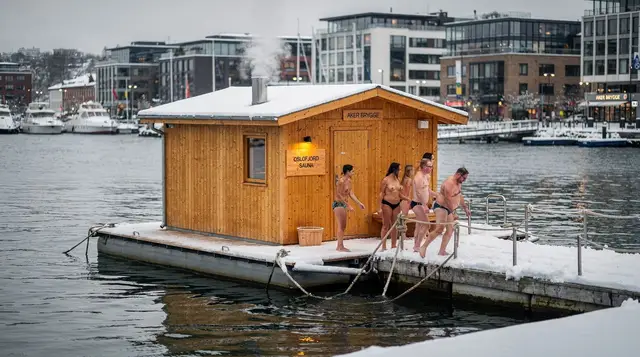
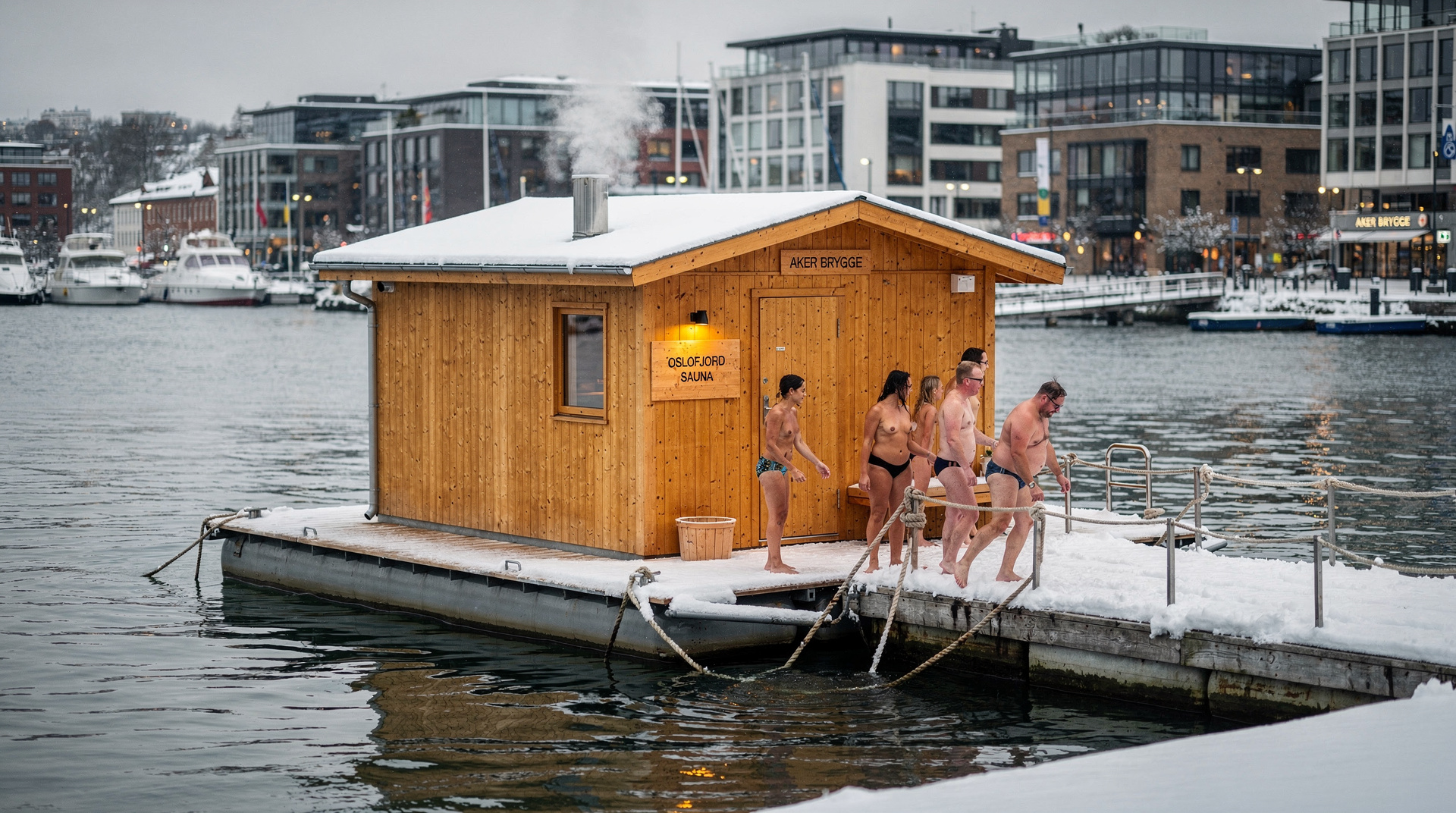
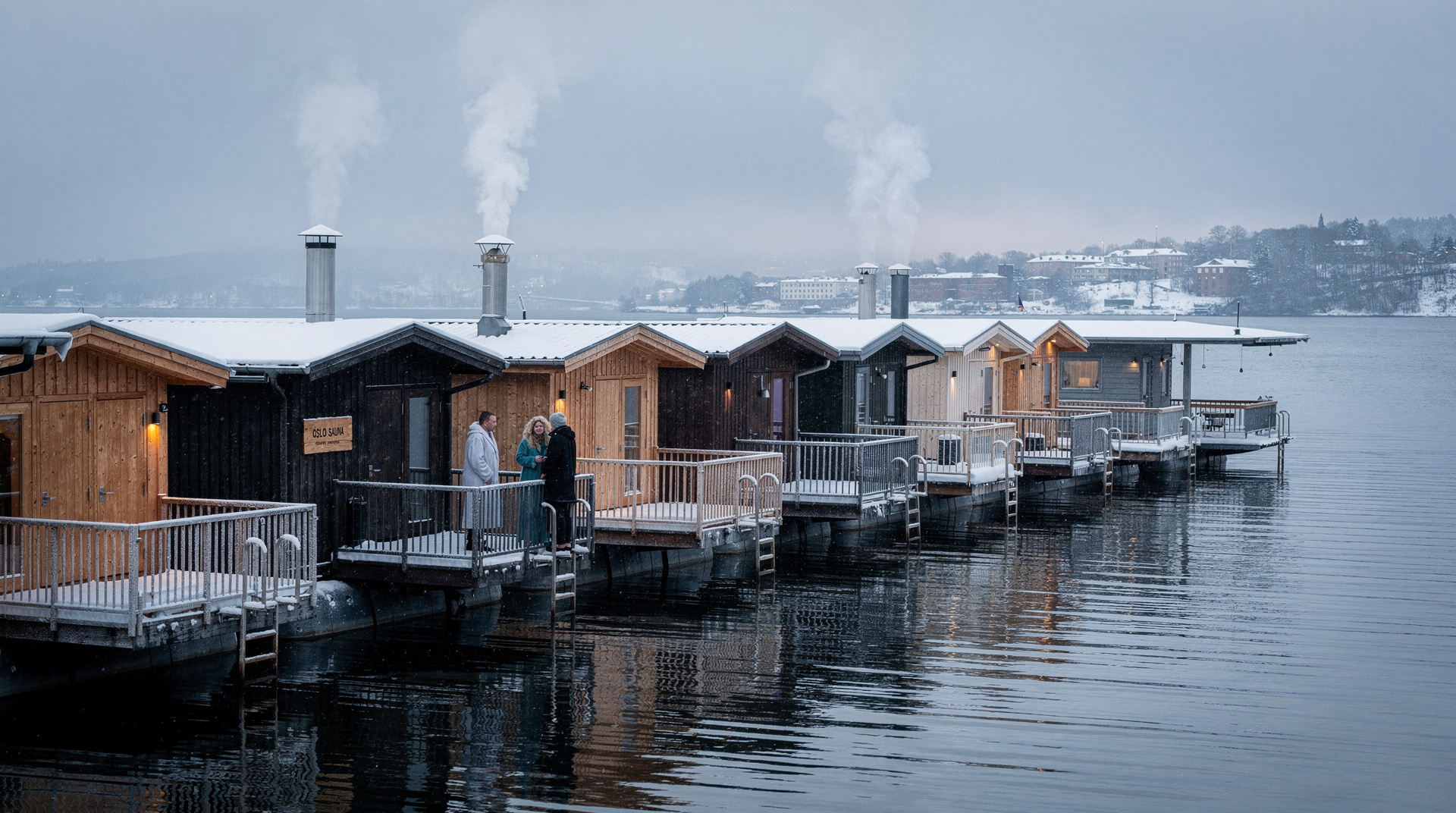
The primary location for the full sauna-plus-cold-plunge experience is the Tjuvholmen pontoon, operated by KOK Oslo. This is where the guided floating sauna and fjord swimming experience runs. The pontoon has wooden sauna barrels at 85–90°C and direct ladder access to the fjord. Water temperature is posted daily at the entrance.
Getting here is straightforward: tram 12 from central Oslo to Aker Brygge (about 10 minutes from Jernbanetorget), then walk west along the harbour promenade for five minutes. See the full floating saunas guide for detailed directions.
The Oslo Opera House steps and Sørenga
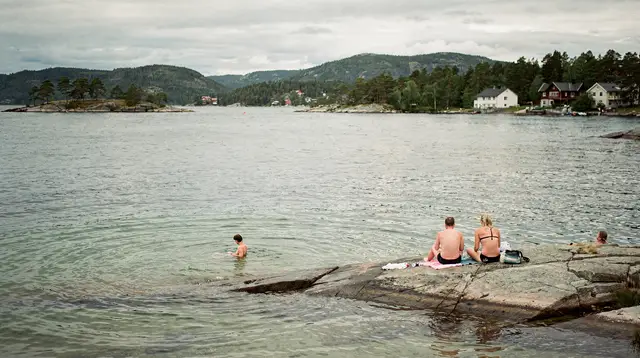
In summer, the sloping marble steps of the Oslo Opera House become an informal open-air swimming spot. This is not a sauna-and-plunge setup — there’s no sauna — but it shows how deeply embedded fjord swimming is in the city’s culture. Free entry, no booking, no lifeguard. Locals bring lunch and swim off the steps in July.
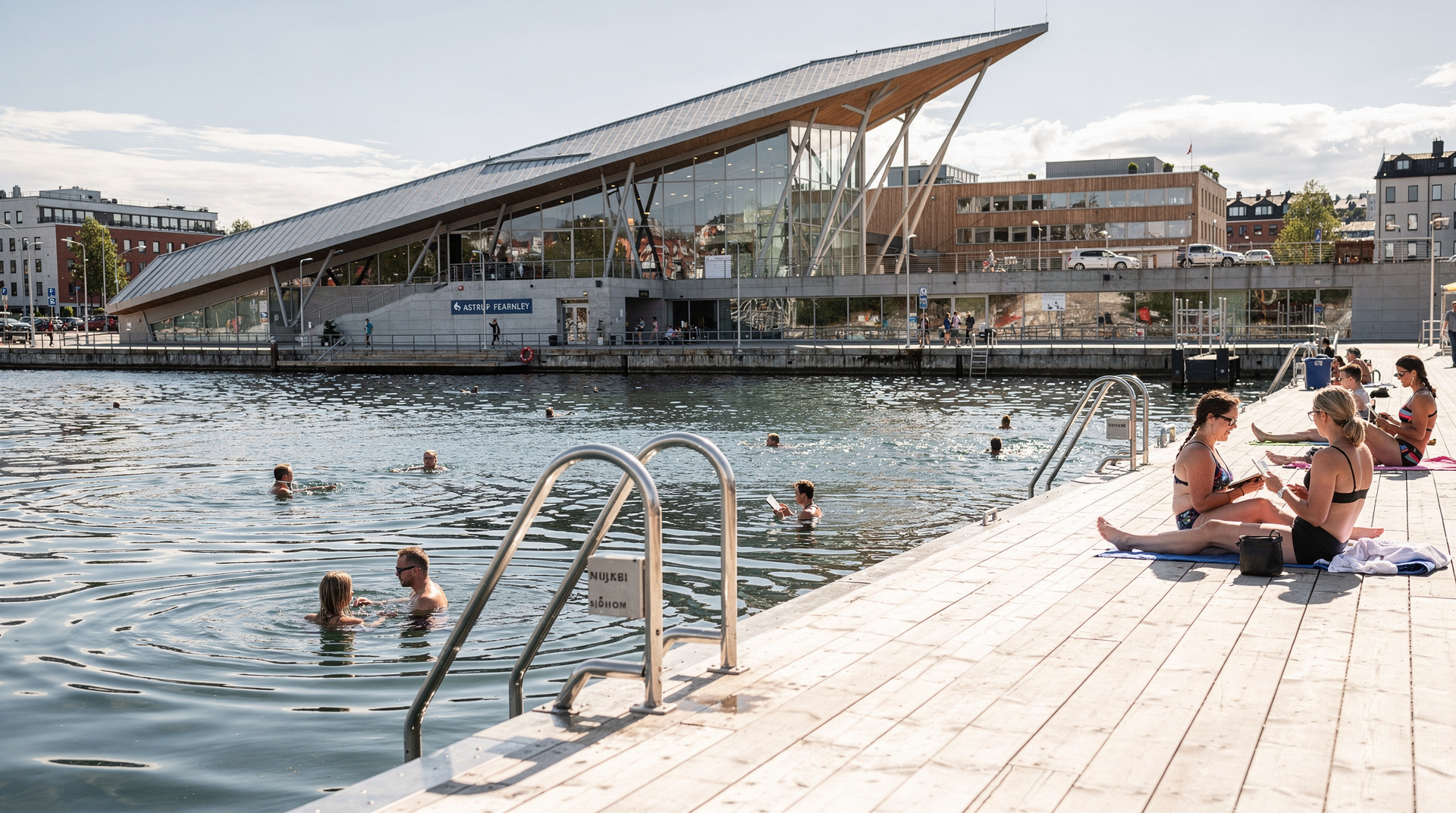
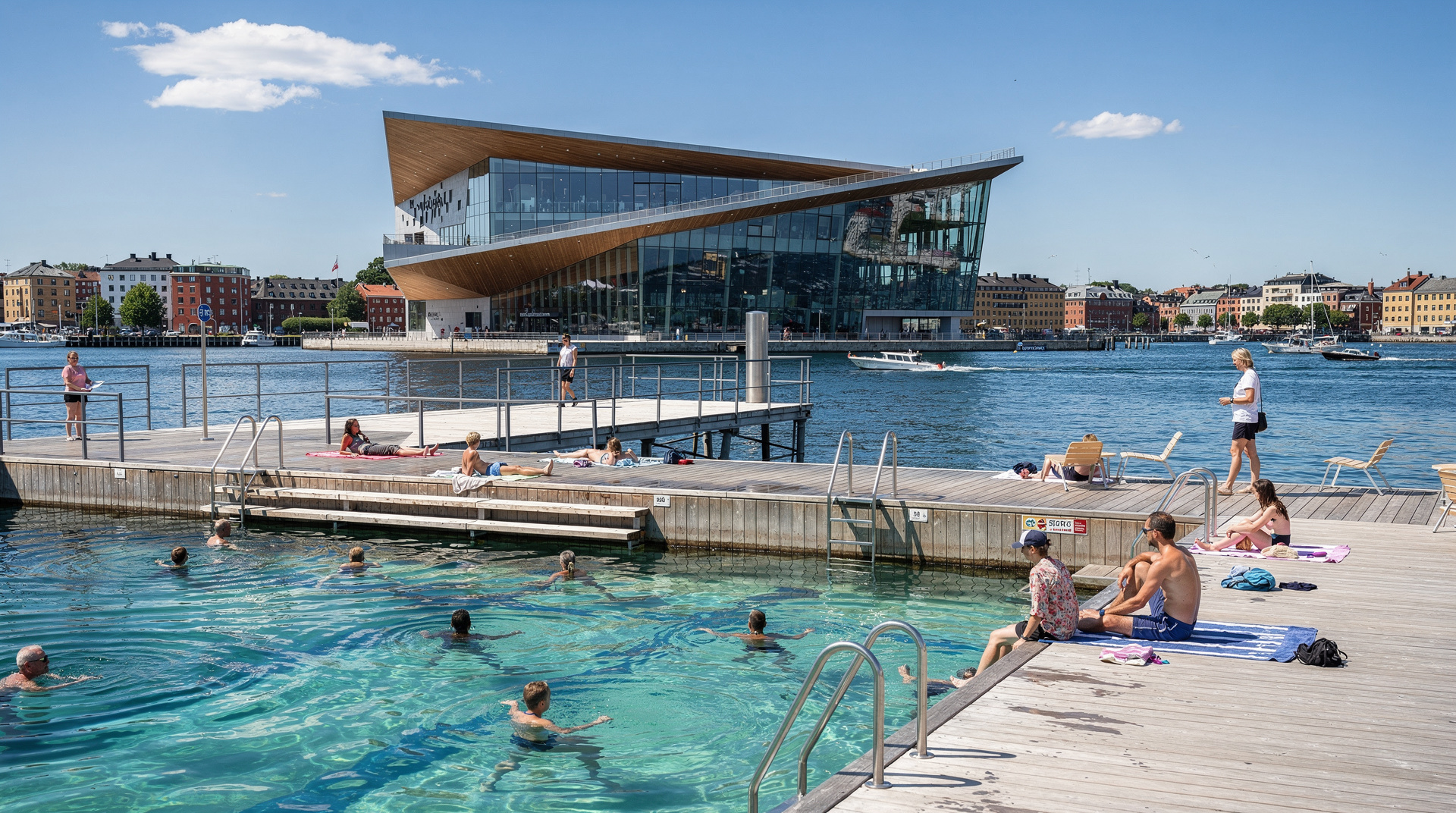
The Sørenga neighbourhood, a short walk east of the Opera House, has an outdoor seawater pool (Sørenga Sjøbad) that is popular in summer. Again, no sauna here, but good for understanding the broader Oslo swimming culture before or after a session at Tjuvholmen.
Winter-specific locations
Several operators run winter-focused cold-exposure experiences in the forests outside the city as part of winter Oslo activities — bonfire saunas in the Nordmarka forest combined with snow bathing and a cold plunge into a forest lake. These differ from the floating fjord saunas but follow the same ritual logic.
The guided session: what to expect
The guided floating sauna and fjord swim experience at Tjuvholmen runs approximately 90 minutes and costs around NOK 600–650 ($65–70) per person. Groups are typically small (6–10 people). Here’s the structure:
Welcome and briefing (15 minutes): Your guide explains the health basics, the heat-cold protocol, and the Norwegian cultural context. You’ll get practical advice on breathing during the cold plunge and how to read your own body’s signals. This section alone is worth the premium over a DIY session.
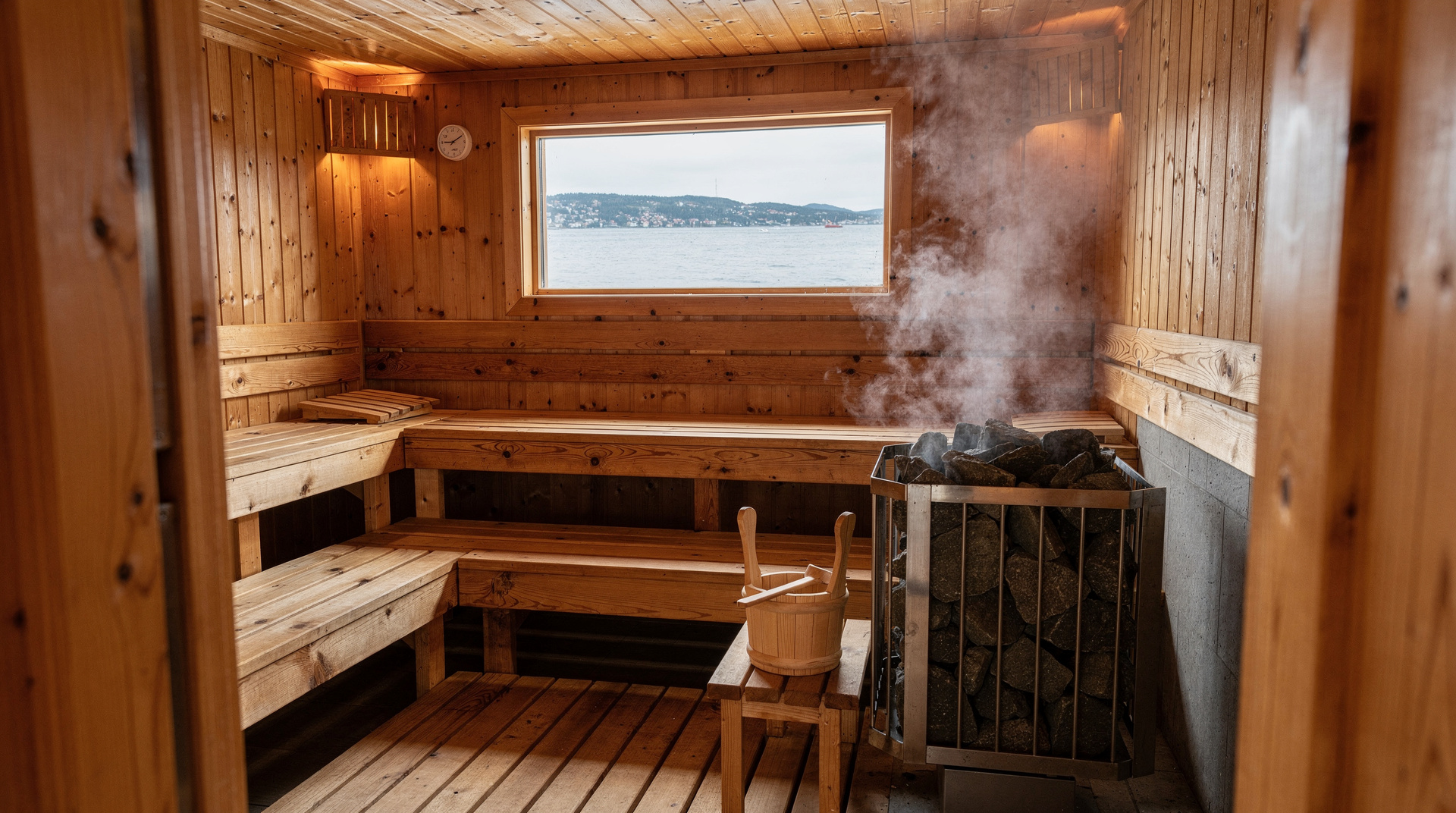
First sauna round (15 minutes): Enter the heated pod at around 85°C. Sit quietly on the wooden benches. The guide may ladle water onto the stones to increase humidity. This first round is gentler — your body needs time to acclimate.
First cold plunge (2–5 minutes): Exit to the deck, spend a minute in the open air, then use the ladder to enter the fjord. The guide is on deck to assist if needed. Most first-timers last 30–90 seconds in the water; this is perfectly fine.
Second and third rounds: Repeat the sauna-plunge cycle two more times. By the third plunge, most people find the cold water actually feels pleasant — the body has acclimatised somewhat, and the endorphin baseline has risen.
Cool-down and debrief (10–15 minutes): Warm drinks (often herbal tea or hot lingonberry juice) are served on the deck. Your guide answers questions and gives recommendations for continuing the practice independently during your Oslo stay.
Doing it independently
If you prefer to self-direct, the public floating sauna session at Tjuvholmen (NOK 250–310 / $27–33) includes the same fjord access without the guided commentary. It’s worth reading the Oslo sauna etiquette guide first — there are unwritten rules about silence, towel placement on benches, and the general rhythm that locals expect visitors to observe.
Key self-directed tips:
Don’t rush. Fifteen minutes in the sauna, a minute on the deck, then the plunge. Repeat. The temptation is to get the cold part over quickly; resist it.
Breathe through the shock. When you enter cold water, your body triggers an involuntary gasp response. Breathe slowly and deliberately through your nose for the first 10 seconds. Once the gasp reflex subsides, your nervous system settles.
Stay horizontal if possible. Floating on your back for 30 seconds after entering the water dramatically extends how long you can remain in it. The water around your body warms slightly; movement distributes that warmer water layer.
Don’t overdo it in winter. One cold plunge per sauna round is plenty. Experienced winter swimmers build up gradually over weeks; don’t try to replicate three seasons of acclimatisation in one session.
Before your first session
A little preparation changes how the whole experience feels. Eat something light beforehand rather than arriving hungry or heavy, and drink water earlier in the day, because sweating in the heat takes more out of you than it seems while you are sitting still. Leave jewellery and anything metal in your bag, since it gets uncomfortably hot against the skin in the sauna and uncomfortably cold on the deck.
Think about the logistics of the cold as well as the heat. A warm robe or a large towel within arm’s reach of the ladder makes the walk from water to bench far more pleasant, and in winter a hat and dry socks for the moments between rounds make a real difference. If you are visiting in the cold months, the winter activities guide helps you plan the rest of the day around a session, while the best time to visit Oslo guide explains how the seasons shape everything else you might want to do.
It also helps to decide in advance what you want from the session. Some people come for the physical jolt, some for the quiet, some simply to tick off a signature Oslo experience. All of those are valid, and knowing your own goal makes it easier to listen to your body and get out when it tells you to.
How it compares with other Oslo sauna options
The cold-plunge format is only one way to enjoy a sauna in the city. If you are still deciding between formats, the best Oslo saunas compared guide lays out the differences, and the broader floating saunas guide covers the wider picture of operators and pontoons. For a closer look at the main waterfront site itself, the Tjuvholmen sauna guide goes into the setting in more detail.
What sets the fjord plunge apart from a hotel spa or a gym sauna is the setting. You are sitting in wood-lined heat with the harbour on the other side of the window, and when you step outside the city is right there around you, ferries and all. That mixture of urban waterfront and raw cold water is hard to find in many other European capitals, and it is a large part of why the ritual has become so tied to the city’s identity.
A note on pace and company
Sauna culture in Norway is social without being loud. People talk quietly, or not at all, and nobody is expected to perform. If you are travelling with friends, agree beforehand that everyone goes at their own speed, and that nobody gets teased for skipping a round or for exiting the water early. If you are on your own, the format suits solo travel in Oslo particularly well, because the shared silence makes it easy to feel part of the group without any small talk.
Families should think carefully about whether the experience suits their children. The Oslo with kids guide is a better starting point for activities designed for younger travellers, and the cold plunge is best treated as an adult or older-teenager experience that depends on the operator’s own rules.
Fitting a session into your itinerary
A sauna session works best as an anchor point in an otherwise relaxed day, not something squeezed between museum visits. Many visitors place it after a morning of walking, when tired legs benefit most from the heat. The Oslo in 2 days and Oslo in 3 days itineraries both leave room for this kind of slower afternoon, and the winter itinerary for three days shows how to build the cold-weather version of the plan.
If you are weighing how much time to give the city overall, the how many days in Oslo guide can help you decide whether a full wellness afternoon fits your trip. Budget travellers will want to check Oslo daily costs to see where a paid session sits alongside the other things on the list, and the Tjuvholmen and Aker Brygge area page covers what else is worth doing nearby once you are warm and dry again.
Fjord temperatures by season
| Season | Water temperature | Cold plunge character |
|---|---|---|
| June–August | 17–22°C | Refreshing, manageable for everyone |
| September–October | 12–17°C | Invigorating; good for most people |
| November | 7–12°C | Brisk; first-timers may find 30 seconds enough |
| December–February | 2–5°C | Intense cold shock; exhilarating for experienced bathers |
| March–May | 4–12°C | Improving week by week; ideal shoulder season |
Safety and who should be cautious
The cold plunge is safe for most healthy adults. The population-level data on winter swimming and cold exposure is overwhelmingly positive for people without underlying conditions.
Use more caution if you have:
- Cardiovascular disease or hypertension: Cold immersion causes a brief but sharp increase in blood pressure and heart rate. Consult your GP before doing prolonged cold exposure.
- Raynaud’s syndrome: The extreme vasoconstriction during cold exposure can trigger episodes.
- Recent surgery or injury: Cold water immersion is not recommended within four weeks of major surgery.
- Alcohol consumption: Never cold-plunge drunk. Alcohol impairs thermoregulation and judgement.
For everyone else — including older adults, people who are nervous about cold water, and those who haven’t swum outdoors before — the guided session at Tjuvholmen offers a properly managed introduction with trained supervision on deck.
What the cold teaches you
Most people who try the plunge describe the same arc. There is dread on the deck, a sharp moment of shock at the ladder, and then a surprising calm once the breathing settles. The mind tends to be quiet afterwards, which is why so many locals treat the ritual as a reset rather than as exercise. If you want to understand how widely this attitude is shared, the blog piece on the sauna boom explained traces how the habit spread through the city, and the Oslo in winter article sets the cold season in context.
Do not treat the plunge as a test of toughness. Staying in longer does not make the experience better, and the people who enjoy it most are the ones who get out while it still feels good. The point is the contrast, and a short, controlled dip repeated a few times delivers that more reliably than a heroic single immersion.
Combining with a broader Oslo wellness day
The floating sauna session pairs naturally with several other Oslo experiences:
Walk to the sauna via the Aker Brygge waterfront and stop for a coffee at one of the promenade cafés. After the session, the Oslo coffee culture guide lists the best specialty cafés for a post-plunge warm-up. Or head east along the fjord to the Opera House and Bjørvika for lunch — a 20-minute walk through one of the most architecturally interesting parts of the city.
If you’re visiting in summer and want to extend the swimming theme, the Oslo swimming spots guide covers all the free waterfront and island options accessible by Ruter ferries.
The cold-plunge ritual, whether guided or self-directed, is one of those experiences that sounds mildly punishing in description and feels genuinely transformative in practice. Book it early in your Oslo stay rather than saving it for the last day — you’ll want to go back.
Frequently asked questions about Sauna and cold plunge in Oslo
Is cold-water swimming in Oslo safe?
Yes, with basic precautions. The saunas have staffed pontoons with ladders, lifelines, and shallow entry points. Cold-shock response (involuntary gasping) is the main risk; going in slowly via the ladder rather than jumping is recommended for first-timers. People with heart conditions should consult a doctor first.How cold is the Oslofjord in winter?
Between December and March, fjord water temperature sits at 2–5°C. This is genuinely very cold and causes an immediate gasping response in most people. Acclimatise gradually — enter up to the chest first, breathe slowly, then submerge fully. Most people last 30–90 seconds at peak winter temperatures.What is the health benefit of the hot-cold ritual?
Repeated heat exposure dilates blood vessels and increases heart rate, mimicking moderate exercise. The cold plunge causes vasoconstriction, norepinephrine release (alertness, mood lift), and — over time — improved cold tolerance. The endorphin release after exiting the cold water is significant and immediate.Do I need experience to do the guided sauna-fjord swim tour?
No experience is needed. The guided session is specifically designed for first-timers. The guide explains the ritual, manages the heat cycles, helps you with breathing technique for the cold plunge, and contextualises the experience within Norwegian culture.What should I wear for the cold plunge?
A swimsuit is all you need. Wetsuits are explicitly not used — they defeat the purpose of the cold exposure. Bring a warm changing robe or towel for afterwards. Wool socks and a hat between rounds are popular in winter.
Top experiences
Bookable activities with verified prices and instant confirmation on GetYourGuide.