Bergen Railway scenic highlights: what to look for, when to look, and where to sit
From Oslo: one-way self-guided tour to Bergen (rail and cruise)
Duration: Full day
- Scenic railway
- Fjord cruise
What are the most scenic parts of the Bergen Railway?
The most dramatic section is Geilo to Myrdal — roughly 90 minutes crossing the Hardangervidda plateau. Finse station (1,222 m) is the visual highlight, with the Hardangerjøkulen glacier visible from the platform. The descent from Myrdal toward Voss is the most technically dramatic. The approach into Bergen through Bergensdalen is scenic but gentler.
What makes the Bergen Railway extraordinary
Most scenic train journeys are scenic for an hour or two. The Bergensbanen is scenic for five of its seven hours, moving through a progression of landscapes that represents more of Norway’s geographical range than any other single railway.
The journey from Oslo to Bergen covers 492 km and crosses the spine of Norway — from the maritime-influenced east, up through the mountain forests, across the Hardangervidda at over 1,200 metres, and down through the fjord country to the west coast. Each section has its own character; none of them look like anywhere else in Europe.
This guide is a detailed look at what you actually see, section by section, with advice on which side to sit, what to look for, and how the experience changes by season.
| Route | Oslo S to Bergen Stasjon, 492 km, about 6.5-7 hrs |
| Best seats | Right side (B/D) for the Finse glacier view Oslo-to-Bergen |
| Key highlight | Hardangervidda plateau crossing, Geilo to Myrdal |
| Booking | Reserved seating on vy.no; book early for a seat-side choice |
| Best season | Late spring for snow-green contrast; summer for full daylight |
Section 1: Oslo to Drammen (km 0-53, 45 min)
What you see: Oslo’s suburban sprawl, the Oslofjord briefly visible from the right side, then forest and the Drammen river valley.
Worth noting: The Drammen River bridge gives the first proper landscape view. Drammen city centre is visible briefly as the train curves through.
Scenic rating: 2/5 — this is commuter country.
Sit: Either side. Get oriented and find the food trolley.
Section 2: Drammen to Honefoss (km 53-130, ~50 min)
What you see: The river valley of the Drammenselva broadens, then the Numedal valley begins. Forests of birch and spruce. Rolling terrain gradually becoming hills. The first farms with traditional red Norwegian wooden buildings appear.
Worth noting: Vikersund has a famous ski jumping hill visible from the train. Geilo (the ski resort) is still two hours away; this section is the transition zone.
Scenic rating: 3/5 — genuinely Norwegian countryside, not spectacular but representative.
Sit: Right side for forest views; the terrain is not strongly asymmetric here.
Section 3: Honefoss to Geilo (km 130-263, ~90 min)
What you see: Increasing altitude. The trees thin out, then give way to moorland. The first mountain peaks appear. Lake systems become larger. By Nesbyen, you are clearly in the mountains.
Worth noting: At Al (around km 240), the landscape has opened fully into mountain terrain. The valley bottom is wide; the surrounding peaks are 1,000-1,200 m.
At Geilo (km 263, 800 m altitude): the train arrives at the first major ski resort on the route. In winter, the slopes are visible from the train. In summer, Geilo is a walking and cycling destination. The town is a brief stop.
Scenic rating: 3.5/5 — building.
Section 4: Geilo to Finse — the Hardangervidda crossing (km 263-341, ~80 min)
This is the centrepiece of the Bergen Railway journey. Everything else is build-up or resolution; this is the main event.
What you see: Beyond Ustaoset (km 278), the last significant tree cover ends. The railway enters the Hardangervidda — 8,000 square kilometres of high-altitude plateau at roughly 1,000-1,300 metres. Treeless, lake-dotted, vast.
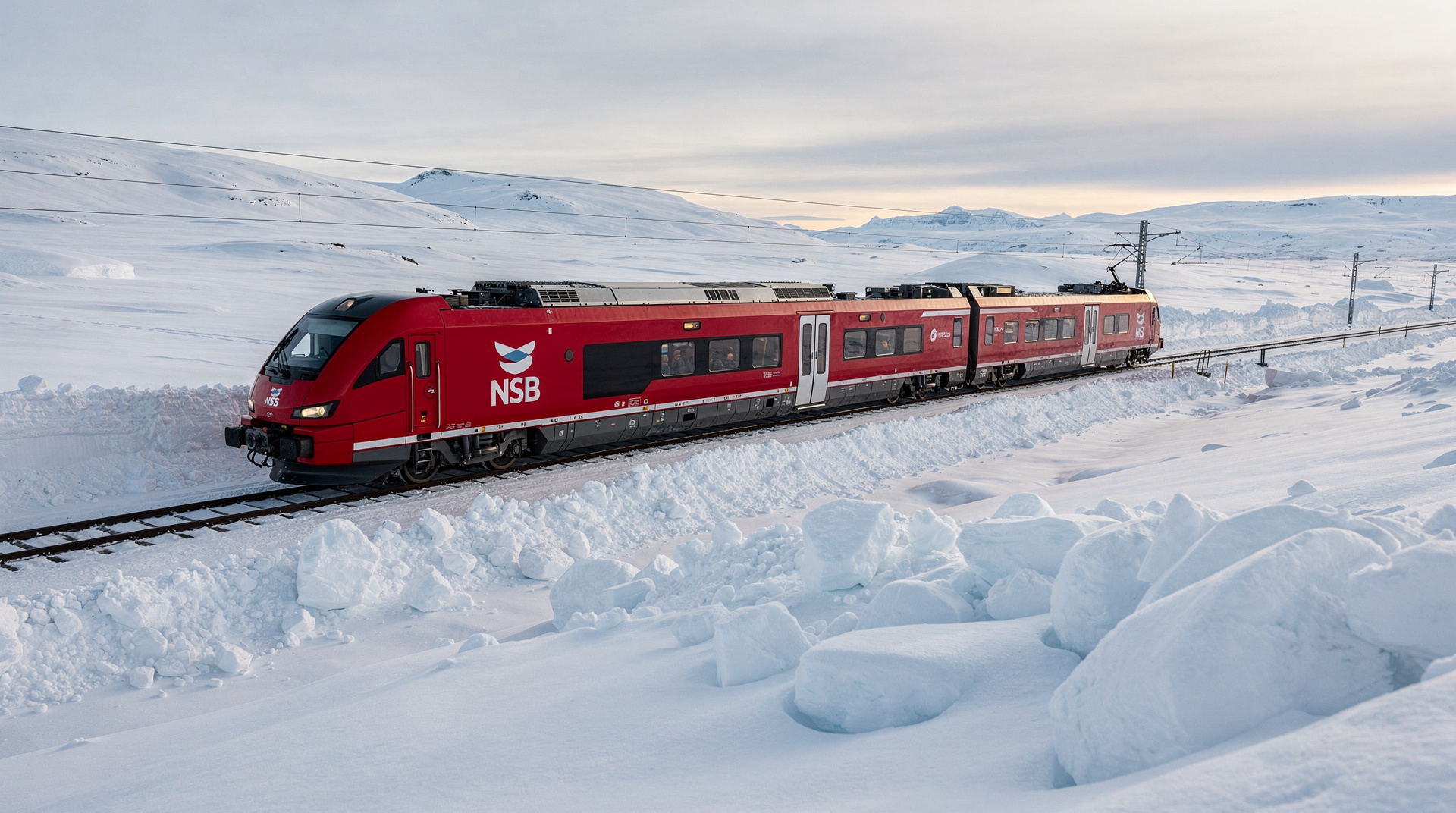
In summer, the Hardangervidda looks like tundra: low vegetation, bog pools, lichen-covered rock. Reindeer are frequently visible from the train — the Hardangervidda has one of Europe’s largest reindeer populations (approximately 7,000-10,000 animals). In April and May, snow still covers much of the plateau; in January and February, it can be several metres deep.
Finse (1,222 m): The visual highlight of the Bergen Railway. The station sits at the highest point of the main line and is accessible only by train (no road reaches Finse; in winter, not even snowmobile). The Hardangerjøkulen glacier is visible 3-5 km to the south — its blue-white dome is the dominant backdrop behind the station.
Finse is also the location where parts of the ice planet Hoth sequences in The Empire Strikes Back were filmed in 1979. The desolate snow landscape was almost perfectly suited.
Photography at Finse: The glacier is on the right side (south) if you are travelling Oslo to Bergen. Window B/D seats give the best view. The train stops briefly at Finse; you will not have time to go outside for photos unless you are getting off.
After Finse (km 341-380): The railway continues across the plateau past the Hardangervidda lake system. Long tunnels carry it through the most exposed ridges; open sections give plateau views. The tundra begins to slope westward toward the fjords.
Scenic rating: 5/5.
Sit: Right side (B/D seats) for the glacier at Finse.
Section 5: Myrdal junction (km 380-395)
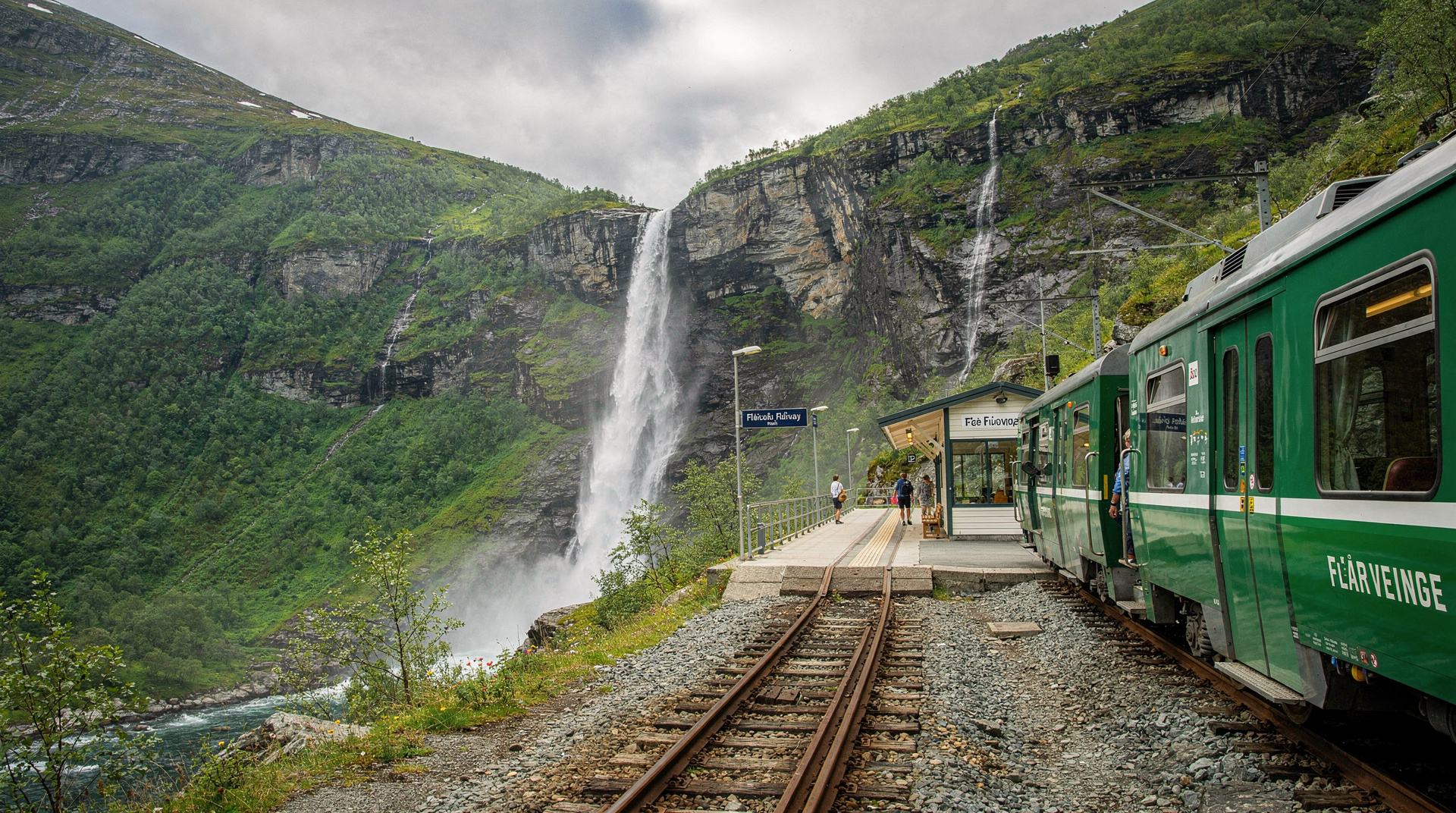
Myrdal (867 m) is where the Flåm Railway branches south down to Flåm. The junction station sits in a bowl surrounded by mountains; there is not much to see at the station itself, but it is the starting point for the Flåmsbana descent.
If you are continuing on the Bergen Railway, the train proceeds west.
Between Myrdal and Voss (km 395-430): The most technically dramatic section of the Bergen Railway. The train descends 480 metres in 35 km through a combination of long tunnels and exposed ridge crossings. The famous Gravhalsen tunnel (a curved tunnel that turns 180° inside the mountain to achieve the altitude drop) is not visible to passengers, but the effect of arriving facing a completely different direction from how you entered demonstrates the engineering.
Scenic rating: 4.5/5 for the engineering drama; the views are partially enclosed by tunnels.
Sit: Left side (A/C) gives better valley views in the descent section toward Voss.
Section 6: Voss to Bergen (km 430-492, ~60 min)
What you see: From Voss westward, the terrain becomes fjordland. The railway follows lake and fjord shorelines, with occasional glimpses of water and the mountains above. The Evangerfjord and Bolstadfjord are briefly visible.
The Bergen approach: Descending through Bergensdalen — the valley leading into Bergen — the city’s ring of mountains comes into view. Bergen is famously surrounded by seven hills; from the train you see several of them converging toward the city below.
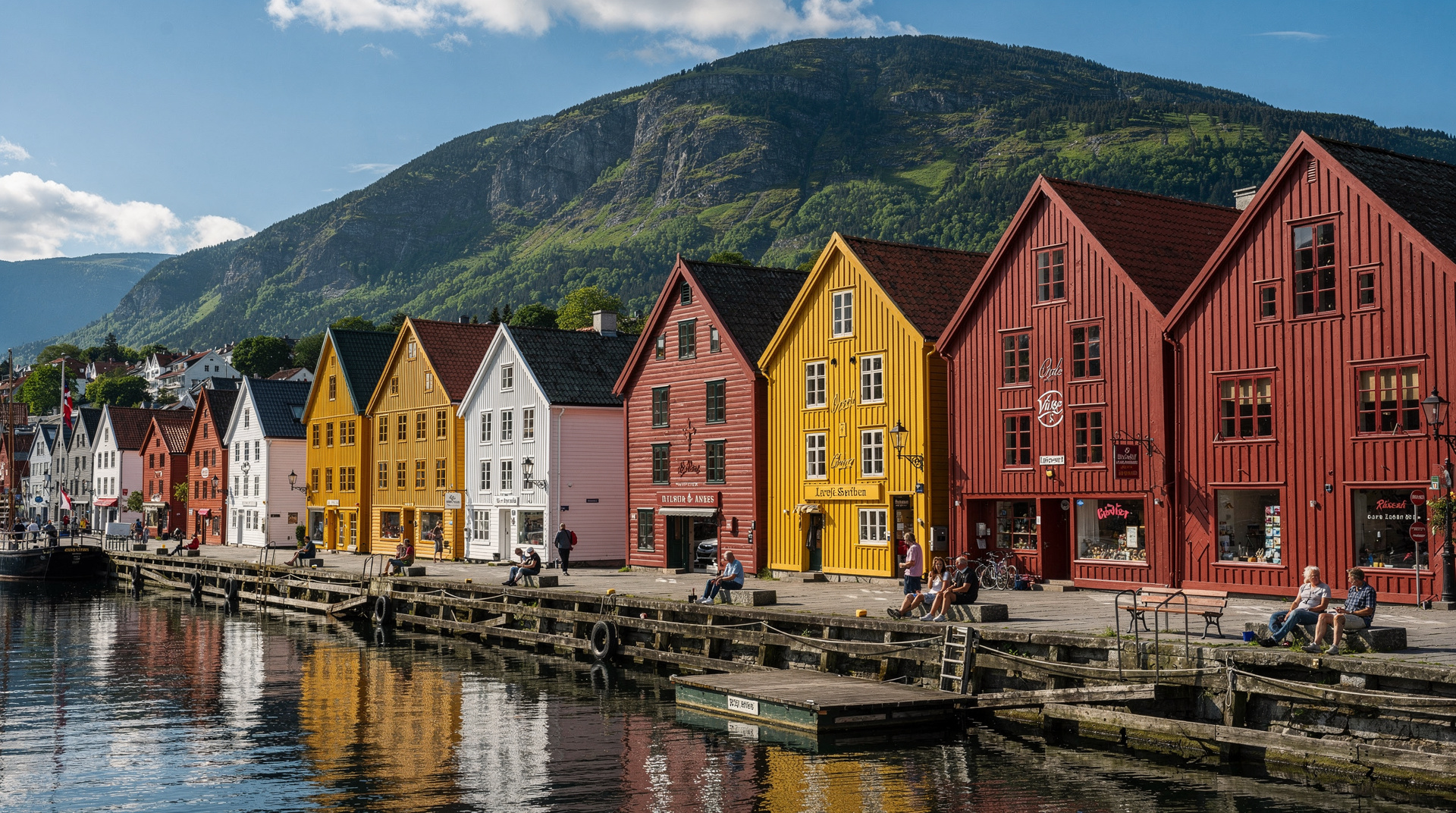
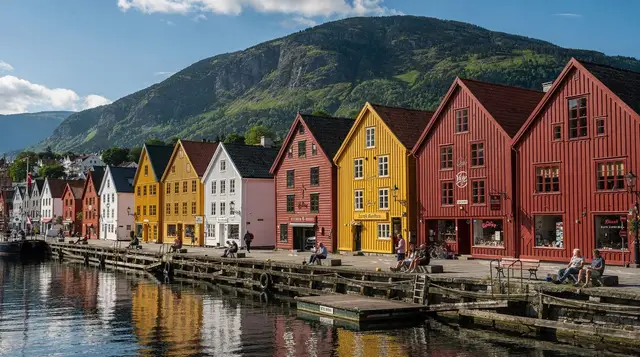
Arrival at Bergen Stasjon: The station is in the city centre, a 10-minute walk from Bryggen, the Hanseatic wharf, and the waterfront fish market.
Scenic rating: 3.5/5 — beautiful fjordland, less dramatic than the plateau.
Seasonal guide: when to travel
Summer (June-August)
Pros: Maximum daylight (17-18 hours), all facilities open, wildflowers on the plateau, waterfalls in full force.
Cons: July is crowded; the train carries many tourist groups. Book well in advance.
Spring (late April-May)
Exceptional: The Hardangervidda still has snow at altitude while the valleys are greening. Waterfalls from snowmelt are at their most powerful. The contrast between white plateau and green valley is strongest.
Crowds: Very low compared to summer. Often the best time to travel.
Autumn (September-October)
Recommended: The birch forest in the valleys turns yellow-gold. The Flåmdalen valley in particular has spectacular autumn colours from mid-September. Crowds drop sharply after the school holidays end.
Winter (November-March)
Different experience: The Hardangervidda in winter is an Arctic landscape of deep snow and frozen lakes. The train carries fewer tourists and more locals. Journey time increases slightly due to conditions. Finse in February is covered in metres of snow — extraordinary to see.
Photography practical notes
Camera settings: The window glass on Norwegian trains is clean and usually scratch-free, but polarising filters help reduce reflections. For fast-moving landscape shots, use shutter speed of at least 1/500s.
Best light: Morning trains departing Oslo around 07:09 reach Finse around 12:30 — midday light, not ideal for photography. The 09:05 departure reaches Finse around 14:20, which gives better afternoon light on the western-facing glacier. Afternoon departures (14:05 from Oslo) reach Finse after 19:00 in summer — excellent golden light, but the descent to Bergen arrives after dark.
For full route planning including the Norway in a Nutshell connection, see Norway in a Nutshell explained and Oslo to Bergen train guide.
Should you do the full railway or break the journey?
Riding the Bergensbanen straight through in one 6.5-7 hour sitting is the simplest option and works well if you’re comfortable with a long train day — the scenery carries the journey and the onboard food trolley covers meals. Breaking the journey at Geilo or Finse turns it into a multi-day trip: Geilo suits a winter ski stopover, while Finse (accessible only by train) rewards travellers who want to walk the tundra around the Hardangerjøkulen glacier rather than just view it from the window.
Either stop requires planning around limited onward departures, since services to these stations run only a few times a day. For those combining the railway with the fjords, the standard approach is to alight at Myrdal and descend on the Flåmsbana rather than stopping at Geilo or Finse — see the Flåm Railway guide for that connection in detail.
Comparing the Bergen Railway to Norway’s other scenic routes
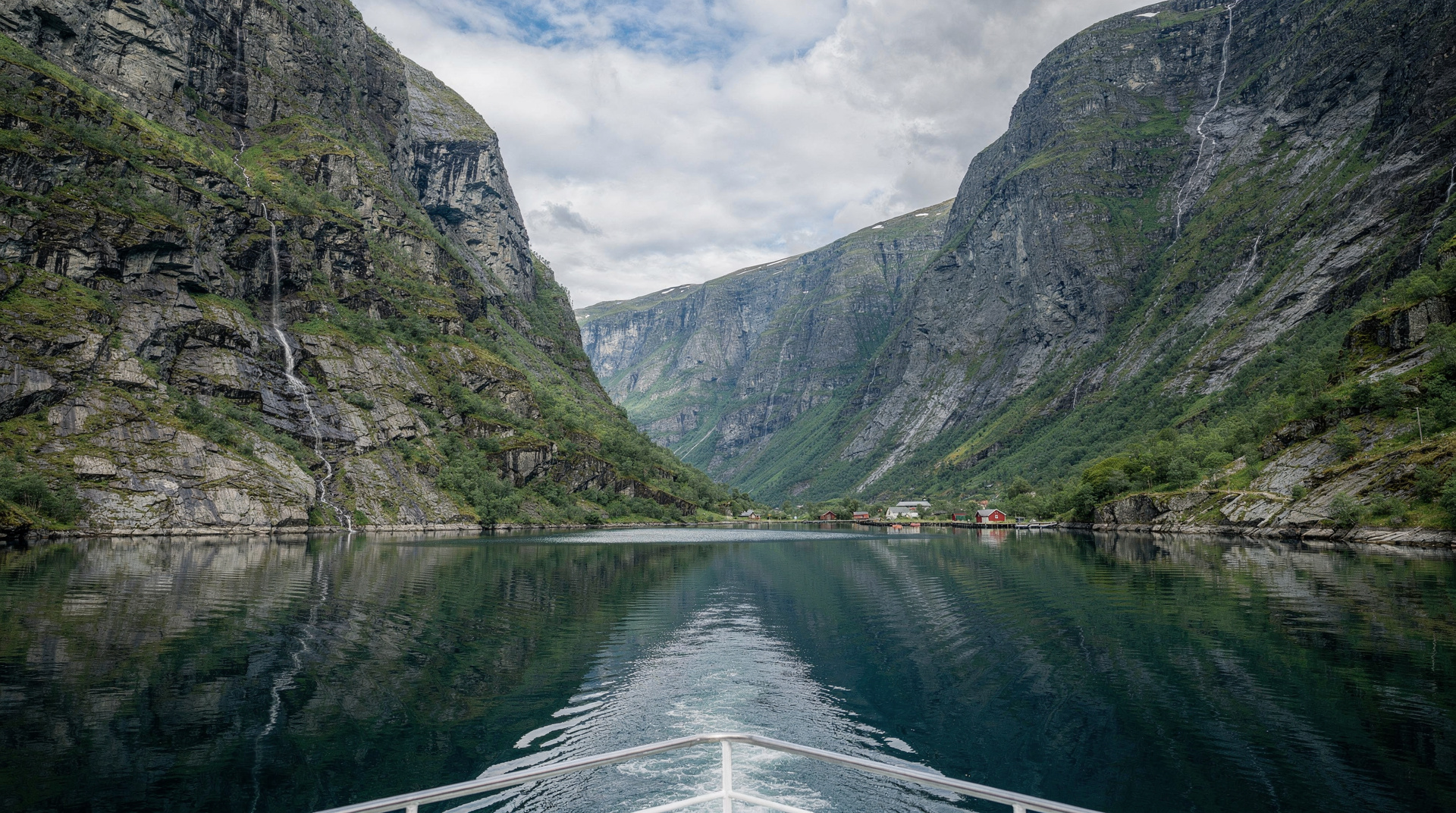
The Bergensbanen is Norway’s most complete single-route scenic railway, but it isn’t the only option for travellers weighing up how to combine train, boat and bus into a fjord itinerary. The Norway in a Nutshell explained guide lays out how the Bergensbanen, Flåmsbana, and a Nærøyfjord cruise combine into the best-known multi-modal route from Oslo. If your priority is fjord water rather than mountain plateau, the Oslofjord cruises guide and the wider fjord day trips from Oslo guide cover options that don’t require the full Bergen journey at all.
Planning the rest of the trip around the railway
The railway works best when it is one chapter of a longer plan rather than a stand-alone day. If you are still deciding how to travel between the two cities, the Oslo to Bergen options guide compares the train with the alternatives, and Bergen from Oslo covers what the arrival end looks like. The Oslo vs Bergen comparison helps if you are unsure how to split your nights between the two, and the Bergen destination page gives a sense of what waits at the end of the line.
Travellers who like a fixed shape for the days can follow the Oslo to Bergen Nutshell in 2 days itinerary, which strings the railway, the Flåmsbana and the fjord together without improvisation. For the Flåm end of the trip, the Flåm destination page and the Nærøyfjord page describe the water side of the story, while the Hardangerfjord page and the Sognefjord page suit anyone with extra days who wants a second fjord.
Before and after the train
A long scenic day is easier when the Oslo end is calm. If you are arriving in the city just before the journey, the Oslo airport to city guide explains how to reach the centre, and the guide to getting around Oslo covers the local transport that gets you to Oslo S on the morning of departure. Leaving a little margin before the train is worth more than any seat choice, because a rushed boarding means a poor start to the plateau views.
It also helps to read the honest first-person account in the Norway in a Nutshell honest review before you commit, since it describes how the route feels on the day rather than how a brochure presents it. And if the weather turns, the train is one of the few scenic experiences that does not depend on clear skies: low cloud over the plateau gives the Hardangervidda a stark, moody character of its own, and rain keeps the waterfalls full.
Practical habits that improve the ride
- Choose your seat before anything else. The seat side shapes the whole day, so make that decision at booking rather than at the platform.
- Keep the camera ready from the Geilo section onward. The landscape changes quickly once the trees disappear, and the best moments rarely announce themselves.
- Eat on your own schedule. The onboard trolley is handy, but bringing something simple means you are never tied to its timing while the best scenery is passing.
- Dress for the destination, not the departure. Conditions on the plateau can feel very different from Oslo, so a warm layer in your bag is sensible even in summer.
- Let the landscape lead. Put the phone down for a while. The long, empty stretches across the plateau are the point of the journey, and they reward patience more than constant photography.
Frequently asked questions about Bergen Railway scenic highlights
Which side of the train has the best views on the Bergen Railway?
From Oslo: right side (B or D seats) for the Hardangervidda plateau and glacier approach at Finse. Left side (A or C) for certain valley views toward Voss and the Bergen approach. For first-timers, right side Oslo-to-Bergen gives the best overall scenery including the Hardangerjøkulen glacier view at Finse.What is Finse like as a train stop?
Finse (1,222 m) is one of the most unusual railway stations in Norway — accessible only by train, no road. The station building has a hotel and a small café. The Hardangerjøkulen glacier is visible within 3-5 km of the station. In April-May, the 'ice hunt' cycle race uses the frozen terrain around Finse. In winter, it is a cross-country skiing destination.Is the Bergen Railway scenic in winter?
Yes, dramatically so. The Hardangervidda in winter is an Arctic tundra landscape — snow-covered, white, and vast. Finse can have several metres of snow. The visual character is completely different from summer and equally impressive. Winter trains run slower due to conditions; the journey may take up to 7.5-8 hours.How does the Bergen Railway compare to the Flåm Railway for scenery?
They are complementary. The Bergen Railway shows you a wide, horizontal landscape — the vast Hardangervidda plateau, mountain lakes, and open sky. The Flåm Railway shows you a vertical landscape — the 866-metre descent down a narrow valley with waterfalls and sheer walls. Together they form the complete Norway in a Nutshell scenic package; neither alone tells the full story.Are there good stops to get off along the Bergen Railway?
Geilo is a ski resort worth visiting in winter. Finse is worth a brief stop in summer if you have flexibility — the scenery around the station is extraordinary and there is a cycle rental (the 'Rallarvegen' cycle route from Finse to Flåm is a famous summer activity). Voss is a base for outdoor activities. All require overnight planning as the next train may be hours away.Do I need to book a specific seat on the Bergen Railway?
Vy trains use reserved seating, so you can request a specific side when booking on vy.no — look for the seat map option during checkout. Booking early in the season gives more choice; last-minute bookings on popular summer departures may leave only the side you didn't want.Is the Bergen Railway wheelchair accessible?
Vy's long-distance trains have wheelchair-accessible carriages and toilets; request this when booking, ideally a few days ahead so staff can assist at both Oslo S and Bergen stasjon. Finse and some intermediate stations have step-free platform access, though staff assistance is recommended for boarding at request stops.
Top experiences
Bookable activities with verified prices and instant confirmation on GetYourGuide.
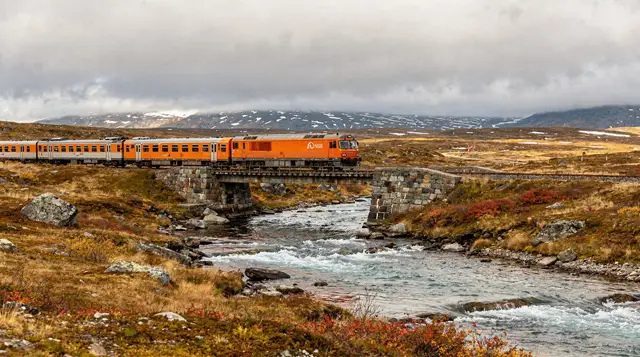
From Oslo: one-way self-guided tour to Bergen (rail and cruise)
- Scenic railway
- Fjord cruise
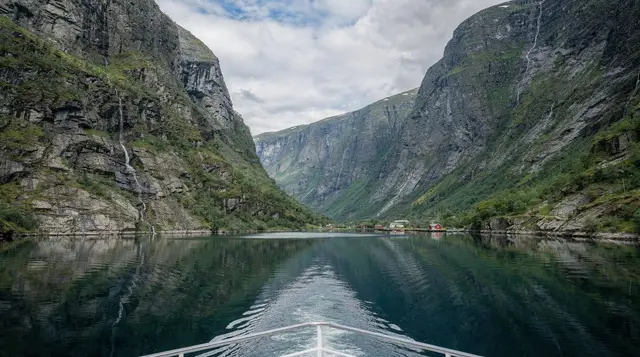
From Oslo: self-guided Norway in a Nutshell round trip (Flåm train and Nærøyfjord cruise)
- Flåm Railway
- Nærøyfjord cruise
From Oslo: train and bus tour to Bergen via Hardangervidda and fjord
- Hardangervidda
- Fjord views