Fredrikstad day trip from Oslo: Scandinavia's best-preserved fortress town
Oslo: Oslo Pass with public transport and free museum entry
Duration: 24-72 hours
- Instant confirmation
- Free public transport
- Skip museum queues
How do you get to Fredrikstad from Oslo by train?
Vy regional train from Oslo S toward Halden, alight at Fredrikstad. Journey approximately 1 hour. Fares from NOK 199–299 (USD 21–32) return booked in advance at vy.no. Trains run roughly every 30–60 minutes. The Gamlebyen (old fortress town) is a 15-minute walk or short bus ride from Fredrikstad station.
The fortress town most visitors fly over
Most international visitors to Norway who arrive in Oslo, head for the fjords, and leave without travelling south have missed one of the most impressive pieces of military heritage in Scandinavia. Fredrikstad — 100 km south of Oslo, one hour by train — contains a complete 17th-century fortress town so well preserved that it functions both as a living community and as the kind of heritage site other countries would have built a major museum around and charged NOK 300 admission.
Instead, you arrive by a 5-minute ferry crossing from the train station (or walk the bridge), enter through a drawbridge, and walk cobbled streets within earthwork walls and a moated perimeter that are largely unchanged from their construction in the 1660s. The cafés serve lunch; people live in the historic houses; the town square has summer concerts. It’s a heritage site you inhabit rather than observe.
| Where | Fredrikstad Gamlebyen, 100 km south of Oslo |
| Cost | Around NOK 199–299 return train fare, booked ahead |
| Time needed | 3–4 hours minimum; full day recommended |
| Getting there | Vy train from Oslo S toward Halden (~1 hr), then ferry or bridge walk |
| Best time | May–September for outdoor bastion walks and summer square life |
The train from Oslo
The journey from Oslo S on the Vy regional train toward Halden takes approximately 1 hour — through Oslo’s southern suburbs, into agricultural flatland, and then along the eastern bank of the Glomma river into Fredrikstad. The journey is not especially scenic (the Bergensbanen this is not) but it’s painless: the trains are modern, punctual, and comfortable.
Fares: The standard adult fare is NOK 299–349 (USD 32–38) return, booked at vy.no or the Vy app. Book 3–7 days in advance for the lowest fare tier (which can be NOK 199 / USD 21 return). Walk-up fares on the day are typically NOK 399–499 (USD 43–54). Children aged 4–15 travel at a 50% discount; under 4 free.
Frequency: Trains from Oslo S toward Halden run approximately every 30–60 minutes throughout the day. The journey is short enough that a missed train means only a short wait.
Important: The train arrives at Fredrikstad station in the new town (Nybyen), not the old fortress town. The Gamlebyen is across the Glomma river. Getting there:
- By foot: 15 minutes walking through the new town and across the new bridge (Fredrikstad Bridge).
- By ferry: A small public ferry (NOK 5 / USD 0.50) runs from Ferjestedet in the new town across to the Gamlebyen pier — a 3-minute crossing and one of Norway’s shortest and most characterful ferry crossings. Operating hours: approximately 6am–11pm on weekdays; reduced on Sundays. Worth using at least once.
Fredrikstad Gamlebyen: the old fortress town
History and architecture
Fredrikstad was founded in 1567 by King Fredrik II of Denmark-Norway (hence the name) after the medieval town of Sarpsborg was burned by Swedish forces. The new town was built on a peninsula at the mouth of the Glomma, designed from the beginning with military defence in mind.
The star-shaped bastion fortification you see today was built between the 1660s and 1690s — a Dutch-influenced design with five angled earthwork bastions projecting from the main walls, a water-filled moat around the perimeter, and access only through a gatehouse with a drawbridge. The design was intended to make siege artillery fire ineffective by removing right angles and exposing attacking forces on multiple sides.
The result is a self-contained town of about 5 hectares, with a street plan that has changed remarkably little since the late 17th century. The main street (Ferjestedet to the central square) and the side streets preserve their original layout. The wooden houses within the walls are mostly 18th and 19th century reconstructions after fires, but built on the same plots as the originals.
The bastions and moat
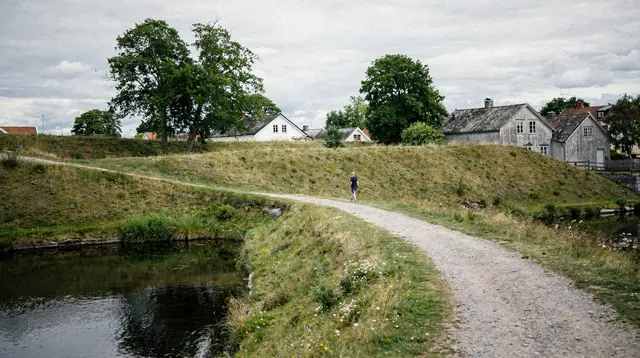
The earthwork bastions are accessible to walk — paths run along the top of the walls and through the bastion points. The view from the wall top over the moat and across to the new town is one of the better panoramas in eastern Norway: the Glomma river, the city bridge, and the flat agricultural plain beyond.
The moat itself is a genuine water feature — a wide channel around the perimeter that would have made any direct assault costly. Today it’s home to ducks and reflects the wall fortifications attractively on still days. In summer, small boats occasionally navigate the moat section open to the outer waterway.
Allow 30–45 minutes for a complete circuit of the walls and bastions.
The old town streets and square
The interior of the old town is more pleasant than it is dramatic — low buildings, cobbled streets, some excellent cafés, a central square (Torget) with market stalls in summer. The scale is intimate rather than impressive: everything is within 300 metres of the central square.
Key things to see:
- The gatehouse and drawbridge: The main entrance gate, now fixed open, still has its working mechanisms. The guardroom above the gate has been converted to a small exhibition space.
- The church (Gamlebyen kirke): A plain Lutheran church in the centre of the old town, dating from 1779 on the site of earlier fortification buildings.
- Kongensgate and Dronningensgate: The two main residential streets running parallel inside the walls — well-preserved, with 18th and 19th-century wooden houses and a handful of craft shops.
- The old pharmacy (Apoteket): A 19th-century pharmacy building on the main square, now a café and museum exhibit.
Fredrikstad Museum
The Fredrikstad Museum has collections covering military history, Norwegian folk life, and the town’s industrial heritage (the Glomma paper mills). It’s housed in the old warehouse buildings near the river pier. Entry approximately NOK 120 (USD 13). Worth 45–60 minutes if you want historical depth; skippable if you prefer to spend more time walking the bastions and eating lunch.
Where to eat in Fredrikstad old town
The cafés in the old town handle lunch at good quality and prices that are noticeably below Oslo (a reasonable lunch is NOK 150–220 / USD 16–24):
Majorstykket: A popular café in the old town square, known for good smørbrød and pastries. Outdoor seating in summer.
Balaklava café: On Kongens gate, with a slightly more modern menu and reliable coffee. Good for a long lunch.
The bastion picnic: The old town deli (near the main square) sells good sandwich ingredients — bread, cheese, cured meats — for a picnic on the bastion walls. This is the least expensive and most atmospheric lunch option and gives you 45 minutes on the walls rather than in a chair.
The full day plan
8:30am: Catch the first convenient Vy train from Oslo S. Arrive Fredrikstad approximately 9:30am.
9:30–9:40am: Walk to the river ferry or take Fredrikstad Bridge. Cross to Gamlebyen.
9:45–11:00am: Walk the bastion circuit and outer walls. Views, moat, drawbridge.
11:00am–12:30pm: Old town streets, church, gatehouse exhibition, a look at the museum exterior.
12:30–1:30pm: Lunch in the old town square or picnic on the bastions.
1:30–3:00pm: Museum (optional), more street browsing, ice cream on the square.
3:00–3:30pm: Ferry back to new town; walk to train station.
3:30–4:00pm: Vy train back to Oslo S. Arrive approximately 4:30–5:00pm.
Evening free in Oslo.
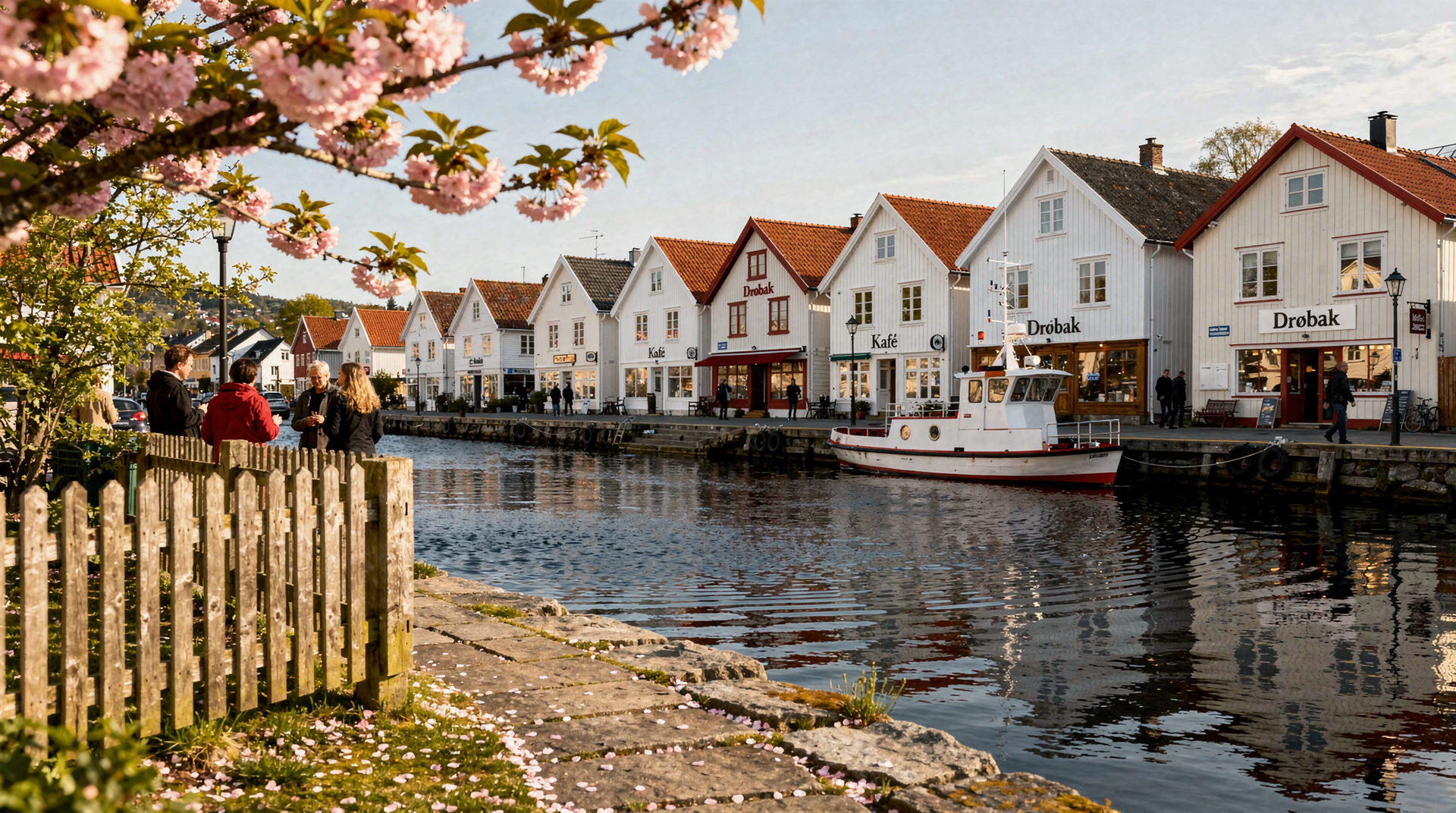
Fredrikstad versus Drøbak: choosing your day trip
Both are solid southern Oslofjord day trips; they suit different interests:
- Fredrikstad: Better for history enthusiasts, architecture, and those who want a complete fortified town with significant depth. More intellectually engaging.
- Drøbak: Better for families with children (Christmas House, Oscarsborg story, beach), more suited to a half-day, easier transit.
If you have two days for day trips south of Oslo, do both. If you have one, Fredrikstad gives more per hour for adults interested in history; Drøbak is the stronger family choice.
The best day trips guide ranks all Oslo day trips together. The Ruter guide covers Oslo city transit; for train bookings, vy.no is the direct source.
Fredrikstad vs Lillehammer: the other classic Oslo day trip
Fredrikstad and Lillehammer are both popular single-day escapes from Oslo, but they suit very different moods:
- Fredrikstad is coastal, fortified, and historically dense — the right pick for military and architectural history, with a shorter (1 hour) train journey.
- Lillehammer is inland, mountain-adjacent, and Olympic-legacy focused — better for those wanting a taste of Norwegian mountain and lake scenery, with a longer (2+ hour) train journey.
If your Oslo trip has room for only one southern/inland day trip beyond the fjords, Fredrikstad’s shorter travel time makes it the easier add to a busy schedule. See the full Lillehammer day trip guide for the comparison in the other direction.
Photography and the best light in the old town
Fredrikstad Gamlebyen photographs well at most times of day, but a few specifics help:
- Morning (before 10am): The main square and Kongensgate are quiet and well-lit without harsh shadows — the best window for street-level shots without crowds in frame.
- Midday: The bastion walls and moat photograph best under full sun, when the water reflects the fortification clearly.
- Late afternoon: Warm light on the wooden house façades along Dronningensgate gives the most atmospheric colour.
The gatehouse and drawbridge are the single most photographed spot in the old town — arrive early if you want it without other visitors in frame.
The new town (Nybyen) — is it worth exploring?
Most visitors head straight from the train station to the ferry or bridge, bypassing Fredrikstad’s new town (Nybyen) entirely. This is a reasonable choice for a single-day visit — Nybyen is an ordinary Norwegian regional town centre with limited specific appeal — but if you have extra time before your return train, a short walk along the Nybyen waterfront gives a contrasting view back across the Glomma to the old fortress walls, which is a genuinely good photo opportunity not available from inside Gamlebyen itself.
Fitting Fredrikstad into a wider Oslo trip
Fredrikstad works best as a change of pace inside a longer stay rather than as the centrepiece of a short one. If you are still deciding how long to stay in the capital, the how many days in Oslo guide helps you judge whether a day away from the city is affordable in your schedule. The four-day itinerary leaves room for a trip like this, and so does the three-day plan if you swap one of the museum days.
A good rhythm is to spend a day in the city’s museums first, then use the fortress town as the quieter counterpoint. The ranking of Oslo’s best museums shows what you might trade away, and the Akershus Fortress guide is a natural companion: visiting Oslo’s own fortress before or after Fredrikstad lets you compare how two very different fortified places were built to defend the same coast.
Practical tips for a smooth day
- Check the weather the night before. The bastion walk is the heart of the visit, and it is far more enjoyable dry. On a wet day the cafés and museum carry more of the schedule, and you can still follow the plan above at a slower pace. If the forecast is poor for the whole week, the rainy day museums guide gives you indoor options in Oslo instead.
- Wear comfortable shoes. Cobbles and earthwork paths are uneven, and you will be on your feet for most of the day.
- Bring a refillable bottle and a light layer. The walls are exposed, and the breeze off the river can feel cooler than the town streets.
- Keep your return ticket flexible. Trains run often enough that there is no need to rush the last coffee, but confirm the timetable in the Vy app before you settle in for a long lunch.
- Plan your Oslo evening. Arriving back in the afternoon leaves time for dinner, and the where to eat in Oslo guide is a good starting point if you want a proper meal after a day of walking.
Who will enjoy Fredrikstad most
Travellers who like walking, old buildings and unhurried lunches will get the most from the day. It also suits people who have already seen the headline sights and want something quieter, which is why it appears among the options in the fjord and coastal day trips guide. If you travel with children, read the Drøbak comparison above before committing, and if you are watching your budget, the Oslo on a budget guide explains how a low-cost day out like this one helps balance a pricey city stay.
Solo visitors will find the old town easy and relaxed, with plenty of benches and café tables for a slow afternoon; the solo travel guide covers the wider picture of travelling alone in the region. Whatever your pace, the fortress rewards curiosity: the more time you give the walls, the gatehouse and the quiet side streets, the more of the old town’s layout you start to read for yourself.
Frequently asked questions about Fredrikstad day trip from Oslo
What is special about Fredrikstad's old town?
Fredrikstad Gamlebyen is one of Scandinavia's most intact 17th-century fortress towns. The entire old town is enclosed by star-shaped earthwork bastions, a water-filled moat, and defensive walls — all still largely intact. The cobbled street plan, wooden houses, and military buildings inside largely date from the 17th–18th centuries. It's listed as a protected heritage area.How long does it take to see Fredrikstad old town?
3–4 hours is enough to walk the full old town, the bastions, and have lunch. A full day allows slower exploration, the Fredrikstad Museum, a walk along the river, and a more relaxed return. Most visitors find a full day (with early departure from Oslo) gives the best experience.Is Fredrikstad a good day trip for families?
Yes — the old town's enclosed scale, the moat, the drawbridge entry, and the open spaces of the bastions appeal to children. The town has good cafés and ice cream. There are no specific family-oriented attractions (no theme park, no interactive museum), but the historic environment is inherently engaging for curious children aged 6 and up.What is there to eat in Fredrikstad old town?
Several good cafés operate in the old town's main street and around the town square. Prices are lower than Oslo — expect NOK 150–250 (USD 16–27) for a main course at lunch. The town square area has both casual and sit-down options. There's also a good deli in the old town for a picnic in the bastions.Is the Fredrikstad Museum worth visiting?
The Fredrikstad Museum has collections covering the town's military, maritime, and cultural history. It's a good companion to the old town walk if you want historical depth. Entry approximately NOK 120 (USD 13) adults. For most day-trippers, the old town itself is the main event and the museum is an optional add-on.
Top experiences
Bookable activities with verified prices and instant confirmation on GetYourGuide.