Oslo to Bergen: train, flight, Norway in a Nutshell — honest comparison
From Oslo: one-way self-guided tour to Bergen (rail and cruise)
Duration: Full day
- Scenic railway
- Fjord cruise
What is the best way to get from Oslo to Bergen?
The Bergen Railway (Bergensbanen) takes 6.5–7 hours and is one of the world's great train journeys — genuinely scenic and comfortable from NOK 299 (USD 32) booked in advance. A direct flight takes 50 minutes and can cost NOK 400–900 (USD 43–97) but adds airport time. Norway in a Nutshell via Flåm takes most of a day and is magnificent but expensive at NOK 1 700–2 500+ (USD 183–269).
Three ways to travel, three different experiences
Getting from Oslo to Bergen is one of Norway’s classic travel decisions, and the right answer genuinely depends on what you want from the journey. Here’s the honest comparison:
| Fastest | Flight, ~50 min in the air (~4 hrs door-to-door) |
| Most scenic direct | Bergensbanen train, 6.5–7 hrs |
| Most spectacular | Norway in a Nutshell, 12–14 hrs |
| Cheapest | Train from NOK 299 booked well ahead |
| Book at | vy.no or fjordtours.com |
- Direct train (Bergensbanen): One of the world’s most celebrated rail journeys — 7 hours of mountain, fjord, and plateau scenery. Choose this if the journey itself is the point.
- Flight: Fast but sterile. 50 minutes in the air, add 3 hours for airport formalities and transfers. Choose this if Bergen is just a destination and you’re pressed for time.
- Norway in a Nutshell: A full day combining train, mountain railway, fjord boat, and bus. Choose this if you want to experience Nærøyfjord and the Flåm Railway without organising each segment separately.
Option 1: the Bergensbanen direct train
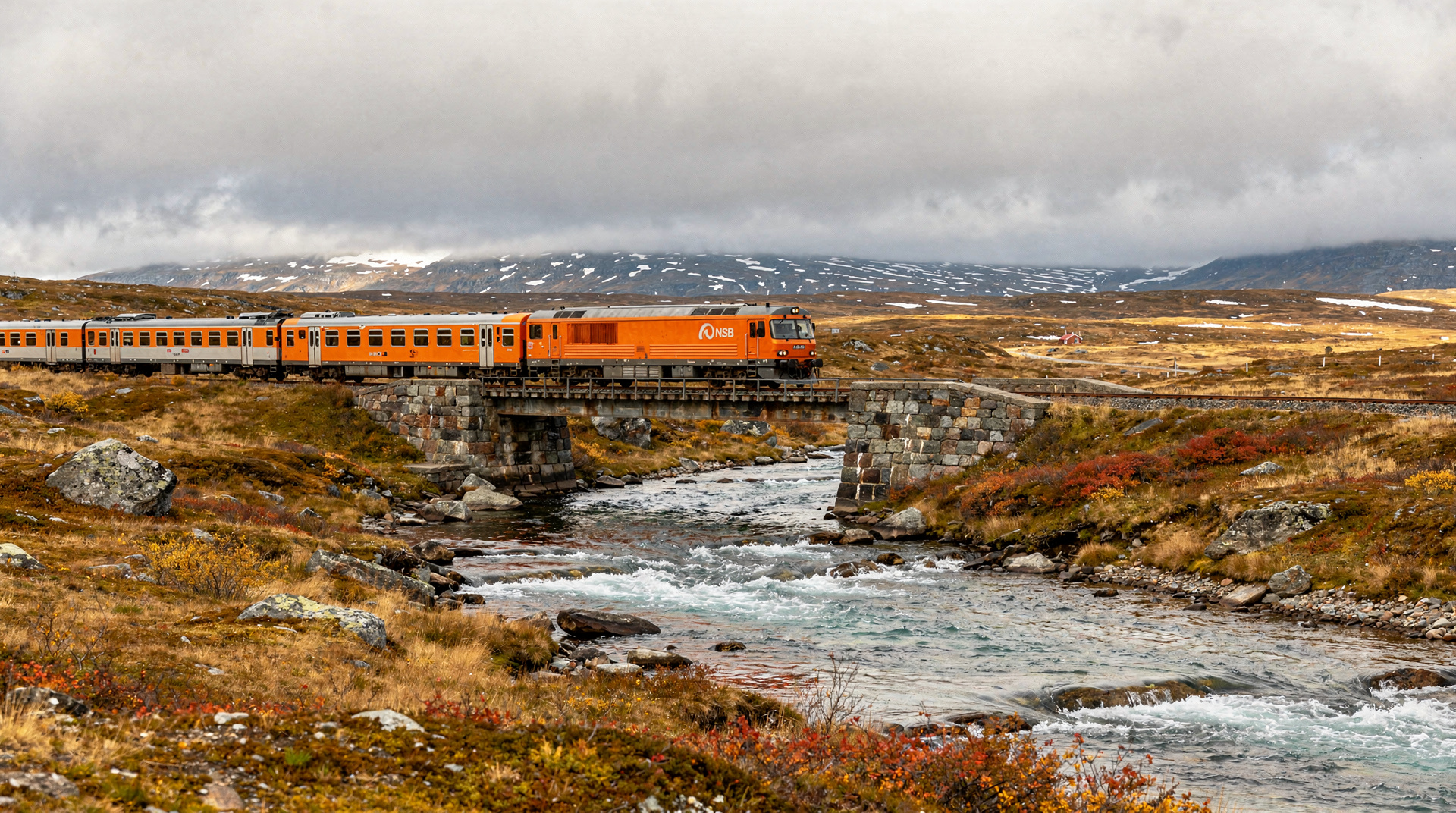
The Bergen Railway (Bergensbanen) runs 496 km from Oslo S to Bergen, crossing the Hardangervidda plateau at about 1 300 metres, passing Finse (the highest station on the Norwegian rail network at 1 222 m), and descending via Voss to the coast. It is regularly cited as one of the 10 most scenic rail journeys on Earth.
Journey time: 6 hours 30 minutes to 7 hours Frequency: 4–5 direct services per day from Oslo S Ticket price: From NOK 299 / USD 32 (booked well in advance via Vy); standard prices NOK 599–899 / USD 64–97; flexible fares from NOK 899+ / USD 97+ Book at: vy.no (English interface) or the Vy app. Book at least 2–3 weeks in advance for the cheapest fares; summer peak (June–August) sells out early.
The train departs from Oslo S on the ground floor. The most scenic stretch is between Geilo and Voss — particularly the high plateau approach to Finse, which has snow even in June, and the descent from Myrdal toward Voss. Sit on the left (south) side for fjord views on the descent.
What to expect on board: Vy’s long-distance trains have a café car selling sandwiches, pastries, and hot drinks at Norwegian prices (coffee NOK 45 / USD 5; sandwich NOK 75–120 / USD 8–13). Bring your own food for a cheaper journey. Power outlets at seats. Free Wi-Fi on most services.
Is it worth 7 hours? Yes, unambiguously, if you have the time. The Hardangervidda plateau is one of Europe’s most impressive high-altitude landscapes. The descent into the western fjord country is genuinely beautiful. This is not a journey to sleep through.
Option 2: direct flight
Norwegian and SAS both fly Oslo Gardermoen (OSL) to Bergen Flesland (BGO) approximately 10 times per day.
Flight time: 50 minutes in the air Total door-to-door time: Realistically 3.5–4.5 hours from central Oslo to central Bergen
- Oslo city to Gardermoen: 19–30 min train (plus airport time)
- Check-in/security: 45–60 minutes
- Flight: 50 minutes
- Baggage claim: 20–30 minutes
- Bergen Flesland to Bergen city: 45–60 minutes (light rail or bus)
Ticket price: NOK 400–700 / USD 43–75 advance; NOK 900–1 400 / USD 97–150 standard; can be very cheap with sales but add luggage fees for checked bags.
Honest assessment: The flight is faster in flight time but not necessarily faster door-to-door if you’re already in central Oslo and your hotel is central Bergen. The train is more relaxing, more scenic, significantly better for the environment, and requires no airport security theatre. If time genuinely matters — you have a late-morning meeting in Bergen — fly. Otherwise, the train is the superior experience.
Option 3: Norway in a Nutshell
Norway in a Nutshell is a self-guided itinerary assembled from several components. You book and manage each segment individually, or you book the complete package through Fjord Tours or Vy.
The classic one-way Oslo–Bergen Nutshell:
- Bergensbanen Oslo S to Myrdal (approx. 3 hours, scenic mountain section)
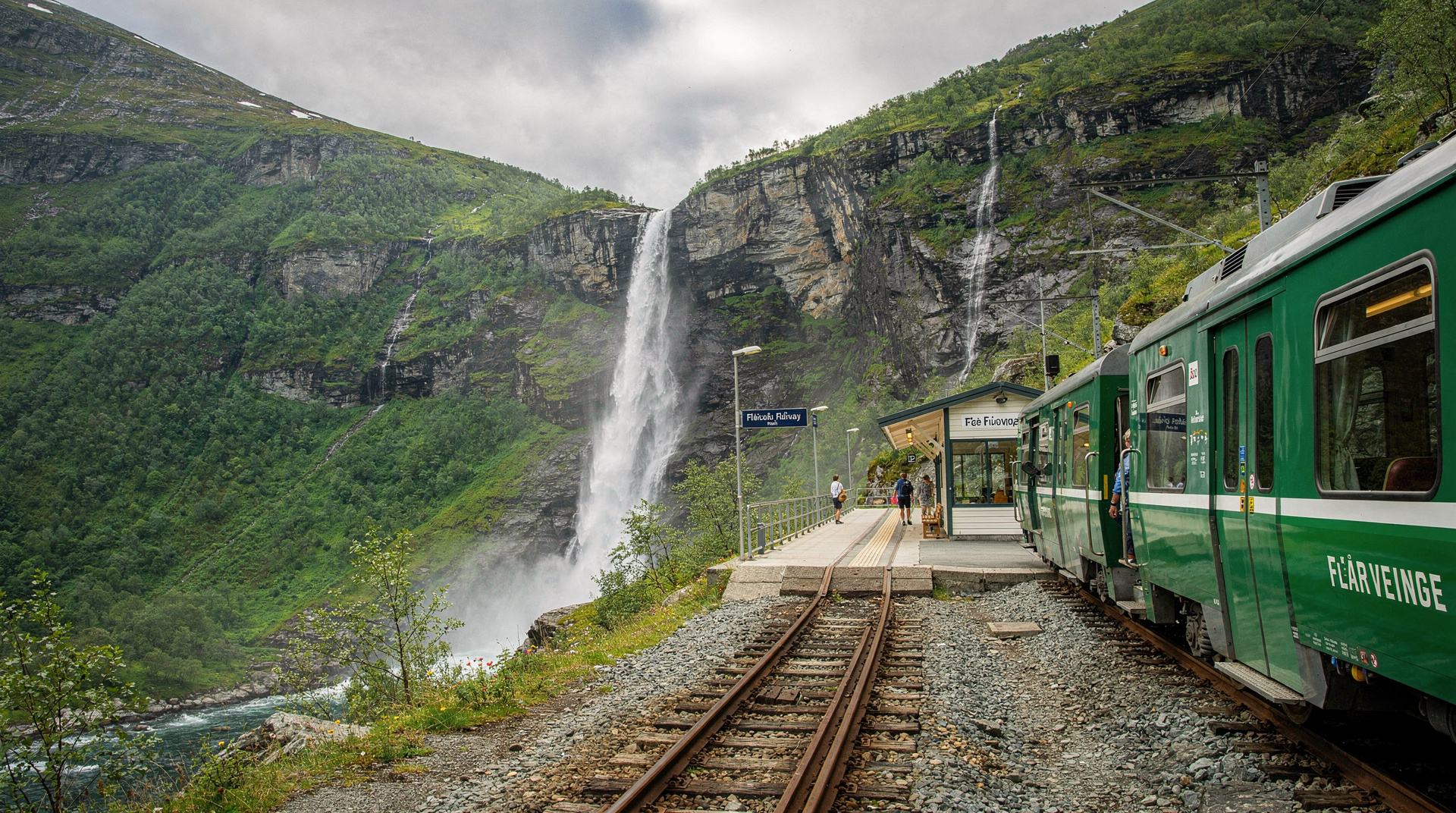
- Flåmsbana (Flåm Railway) Myrdal to Flåm (1 hour; 867m descent; waterfalls, hairpin curves; genuinely spectacular — one of Europe’s steepest standard-gauge lines)
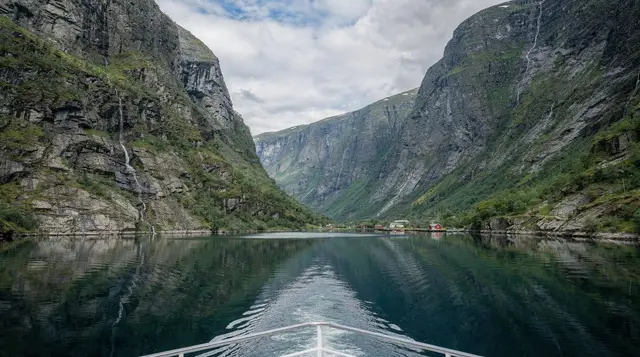
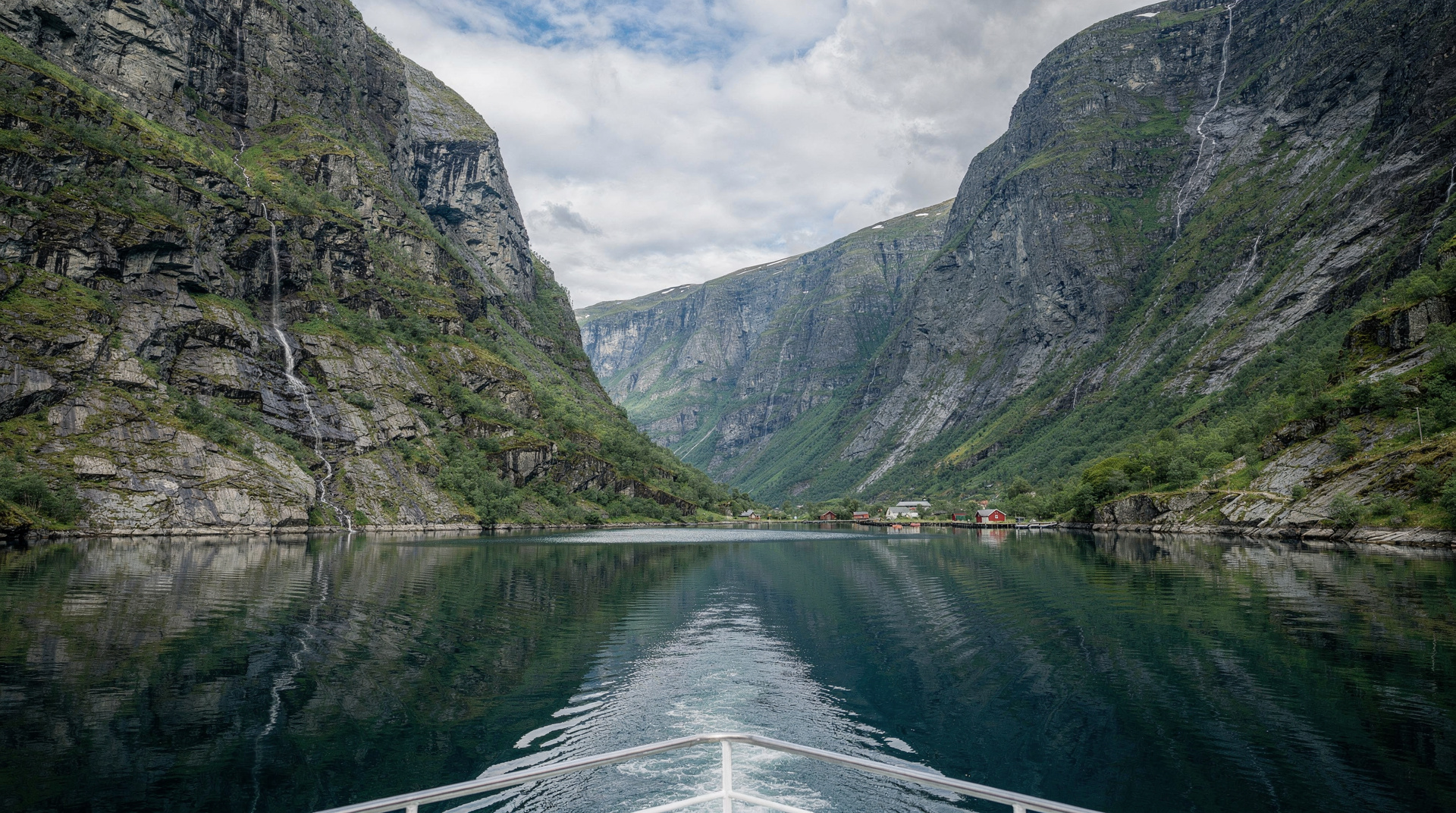
- Fjord boat Flåm to Gudvangen via Nærøyfjord (2 hours; UNESCO World Heritage Site; narrow fjord walls 1 400m high)
- Bus Gudvangen to Voss (45 minutes)
- Bergensbanen Voss to Bergen (1 hour)
Total journey time: 12–14 hours Oslo to Bergen Price (2026, one-way, booked via Fjord Tours/Vy package): Approximately NOK 1 700–2 500 / USD 183–269 depending on season and booking date. Summer (July–August) is highest.
Booking: Book well in advance for summer. Fjord Tours (fjordtours.com) and Vy both sell the package. Buying components separately on the Vy app can sometimes be cheaper — compare.
Is it worth the price? For first-time visitors who want to experience the Norwegian fjord landscape deeply, yes. Nærøyfjord is genuinely one of the most dramatic natural sights in Europe. The Flåmsbana descent is unforgettable. The package compresses a lot of Norway’s best scenery into a single very long day.
Honest caution: This is a popular route and in peak summer (July–August) it can feel crowded, particularly on the fjord boat. If you’re travelling in May, September, or October, the crowds thin significantly. Pre-book the fjord boat as far in advance as possible.
The Norway in a Nutshell guide covers each segment in detail with current prices and booking strategy.
Comparison table
| Bergensbanen direct | Flight | Norway in a Nutshell | |
|---|---|---|---|
| Door-to-door time | 7 h | 3.5–4.5 h | 12–14 h |
| Price (per person) | NOK 299–899 / USD 32–97 | NOK 400–1 400 / USD 43–150 | NOK 1 700–2 500 / USD 183–269 |
| Scenery | Excellent (mountain/plateau) | None | Outstanding (fjord + mountain) |
| Comfort | High (train with café) | Moderate (50-min flight) | Varied (4 modes) |
| Environmental impact | Low | High | Low (mostly rail + boat) |
| Best for | Journey as experience | Time-poor travellers | Fjord seekers |
Practical tips
Book the Bergensbanen early. Cheapest fares (from NOK 299 / USD 32) sell out quickly for summer weekends. The cheapest Vy fares require purchasing via the app several weeks ahead.
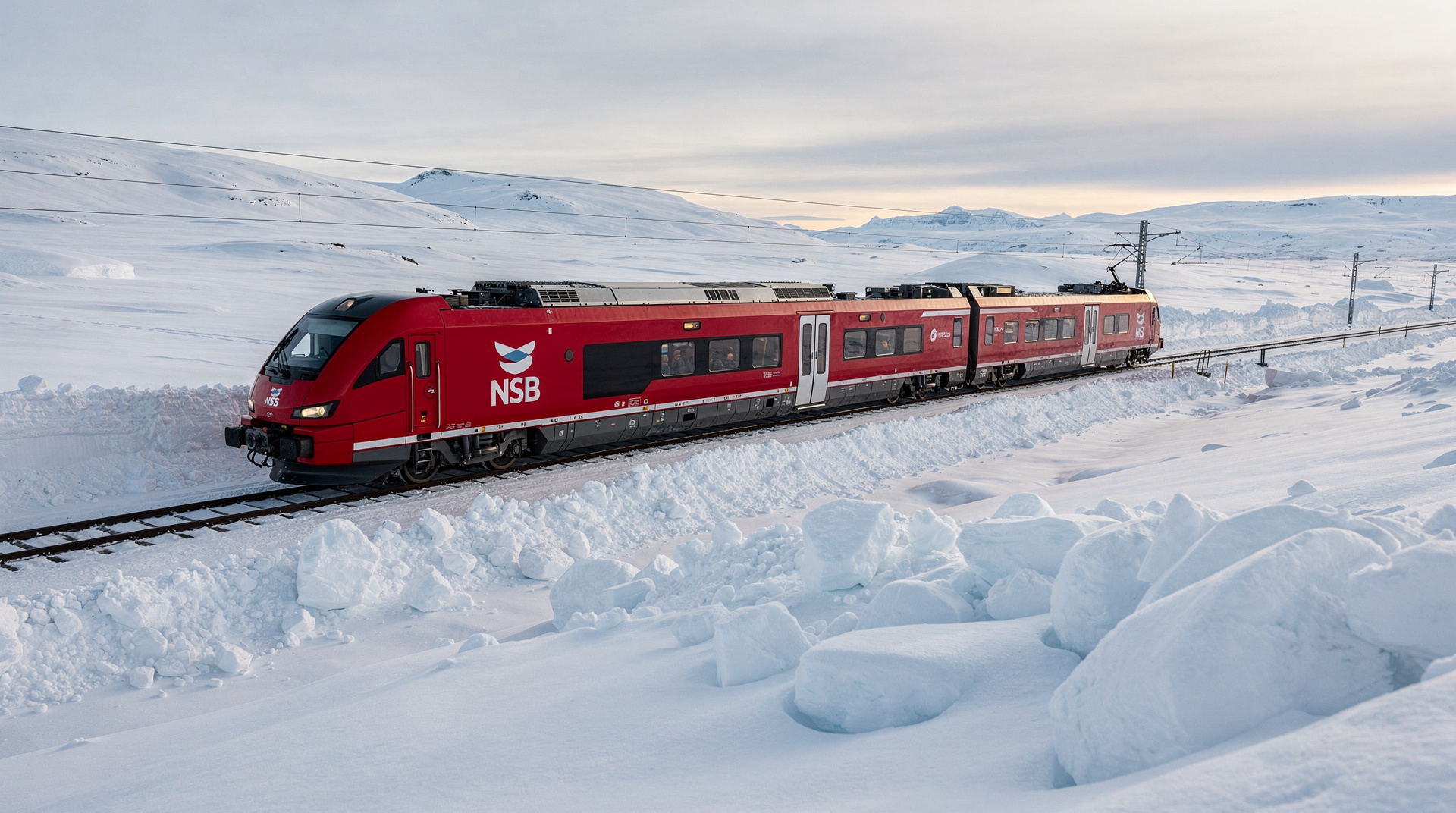
Choose your day. The Bergensbanen is most atmospheric in clear weather when the plateau is visible. Norwegian summer (June–August) is usually good. September is often excellent (autumn colours on the lower slopes). Winter crossings are dramatic — the plateau can be snow-covered as late as June.
Outward vs return: Many travellers take the train outward to Bergen and fly back — or vice versa. Both are valid strategies if you don’t want to spend 14 hours on a single transit day.
Bergen itself: See the Bergen day trip and overnight guide for what to do once you arrive. The city of Bergen, Bryggen wharf (UNESCO World Heritage), and Fløyen funicular are significant attractions in their own right.
The Flåm Railway as a standalone: It’s possible to take the Bergensbanen to Myrdal, the Flåm Railway down to Flåm, stay overnight, and return the same way (Flåmsbana back to Myrdal, then train back to Oslo). This gives you the best of the mountain railway without the full Norway in a Nutshell commitment. See the Flåm Railway guide for full details.
What to see on the Bergensbanen
For those taking the direct train, knowing where to look adds significantly to the experience. Here’s a rough sequence of highlights:
Oslo to Honefoss (first 90 minutes): The train leaves Oslo S heading northwest through the suburban Romerike plain, then climbs into forested hills. The Tyrifjord (the third-largest lake in Norway) is visible briefly from the right side of the train before Honefoss.
Honefoss to Geilo (2–3 hours from Oslo): The landscape opens into broader valleys. The train passes through Nesbyen and along the shore of the Hallingdalselv river. Not the most dramatic stretch — feel free to have lunch in the café car.
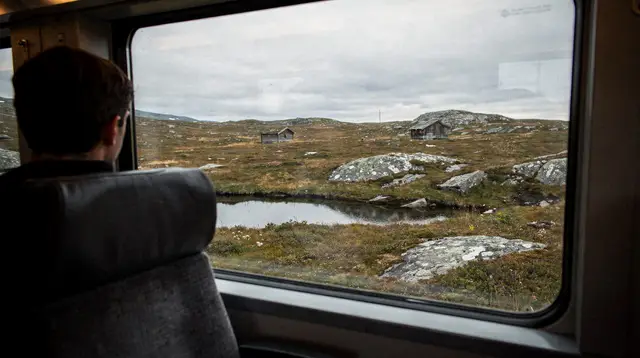
Geilo to Finse (3.5–4.5 hours from Oslo): This is where the scenery dramatically changes. The train climbs onto the Hardangervidda plateau — a vast, flat, treeless landscape at 1 200–1 300 metres elevation. In summer it looks like highland moor; in winter it’s entirely snow-covered. Finse station (1 222m above sea level, no road access) is a famous destination for glacier hiking and was used as a filming location for the Hoth scenes in The Empire Strikes Back.
Finse to Myrdal: The descent from the plateau. If you’re doing Norway in a Nutshell, you exit at Myrdal to board the Flåmsbana. If continuing to Bergen, stay on the train.
Myrdal to Voss: The train continues its descent into the fjord country. Wooded valleys, small farms, and dramatic drops in elevation.
Voss to Bergen (final 1.5 hours): Voss itself is a well-known ski and adventure sports town. The final stretch to Bergen runs through the fjord hinterland, arriving at Bergen S station in the city centre.
Seat recommendation: Sitting on the left side (south-facing) of the train heading west from Oslo gives the best views of the Hardangervidda plateau and the fjord landscape on the descent.
Bergen: what to do on arrival
If you’re making the full trip, Bergen deserves at least one full day after the train journey.
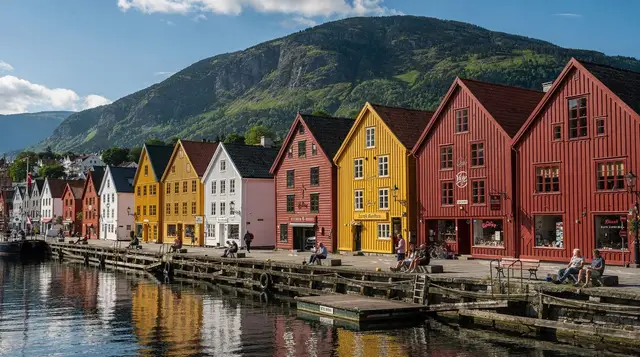
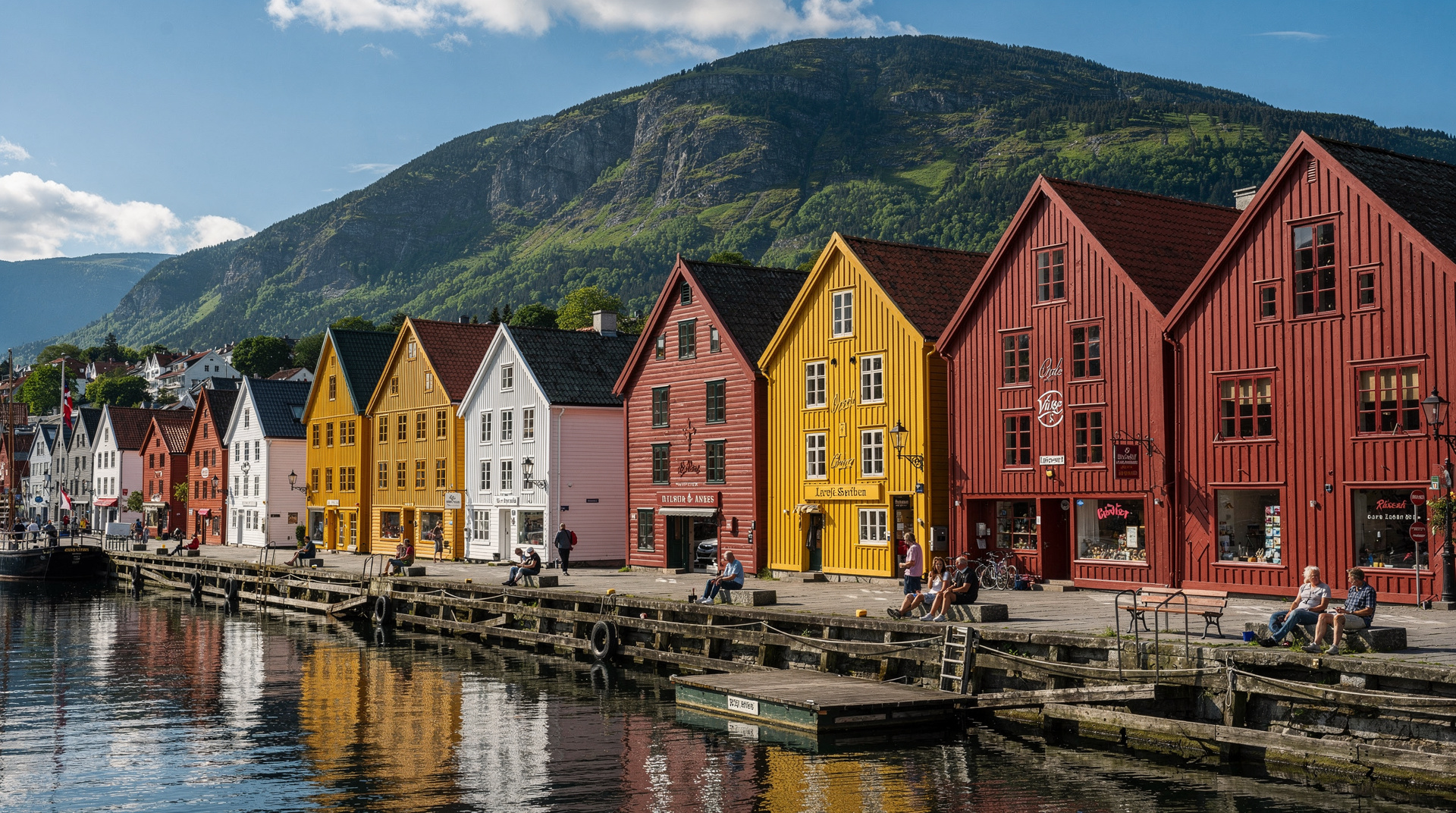
Bryggen wharf (UNESCO World Heritage): The row of 14th-century Hanseatic wooden buildings along the Bergen waterfront is the city’s defining image. NOK 0 to walk and photograph; Bryggens Museum (NOK 120 / USD 13) tells the history.
Fløibanen funicular: A 7-minute funicular ride (NOK 110 / USD 12 return) from the city centre to Fløyen mountain (320m). Panoramic views over Bergen, the harbour, and the surrounding fjords. The most efficient way to understand Bergen’s geography.
Fish market (Fisketorget): Bergen’s outdoor and indoor fish market has been operating since the 1200s. Outdoor stalls sell fresh seafood, smoked salmon, and shrimp. Prices are tourist-facing; the indoor market (Mathallen on the ground floor of Fisketorget) is slightly cheaper and the quality is excellent.
Bergen as a Norway in a Nutshell base: Some travellers take the Nutshell from Bergen to Flåm as a day trip and return to Bergen for the night, rather than continuing to Oslo. Bergen’s accommodation and restaurant scene is excellent — the city rewards a two-night stay before or after the fjord experience.
The full Bergen guide covers the city’s attractions, accommodation, and restaurant recommendations in detail.
Sustainability and carbon comparison
For travellers weighing environmental impact:
Train (Bergensbanen): Norway generates over 90% of its electricity from hydropower. Vy’s train fleet runs on Norwegian electricity. The carbon footprint per passenger km is among the lowest of any mode of transport in Norway.
Flight: Oslo to Bergen (about 500 km) by air produces approximately 70–100 kg CO2 equivalent per passenger (including the multiplier for high-altitude emissions). Norwegian and SAS have carbon offset programmes, but offsets don’t eliminate emissions.
Norway in a Nutshell: The rail and boat components have low emissions. The bus section (Gudvangen to Voss) is the highest-emissions segment.
For most travellers who care about environmental impact, the Bergensbanen is clearly the preferable option if time allows.
Some travellers choose a hybrid approach specifically to balance this trade-off: take the low-emission train or Nutshell route outward, and accept the higher-emission flight only on the return leg when time pressure (an onward international flight, a work commitment) makes the extra hours harder to justify. This is a common and reasonable compromise rather than an all-or-nothing choice.
Which option suits which traveller
Time-poor business or short-break travellers: fly. The 50-minute flight plus transfers is the only option that fits a genuine day trip or a single overnight, and it’s the right call if Bergen itself — not the journey — is the point of your visit.
First-time Norway visitors with one big scenic day to spend: Norway in a Nutshell. It compresses the Bergensbanen’s plateau scenery, the Flåm Railway’s engineering, and the Nærøyfjord’s UNESCO-listed cliffs into a single unforgettable (if long) day.
Travellers who want the train experience without the full Nutshell commitment: take the direct Bergensbanen — our dedicated train guide covers seat choice, dining, and the exact scenic sequence in more depth than the comparison above.
Budget-conscious travellers: the direct train booked well in advance (from NOK 299) beats both the flight and the Nutshell package on price, especially if you don’t need the fjord boat specifically.
Combining with other fjord destinations
If Nærøyfjord and Flåm whet your appetite for more fjord scenery, several other fjords are reachable from the same general route or as separate excursions: the Sognefjord, Norway’s longest and deepest fjord, lies just north of the Nutshell route, and Flåm itself is worth an overnight rather than a pass-through if you have the extra day. Bergen is also the gateway to Hardangerfjord for those extending the trip westward before returning to Oslo.
Booking timeline: when to lock in each option
For a summer trip, the booking sequence matters more than most travellers expect. Book the Nærøyfjord boat component of Norway in a Nutshell first if that’s your choice — it’s the segment most likely to sell out, sometimes 6–8 weeks ahead for peak July dates. The direct Bergensbanen’s cheapest Lowpris fares go next, released roughly 90 days ahead and selling out for popular departure times within weeks. Flights are the most forgiving — prices fluctuate but availability rarely disappears entirely, so they can be booked last if your dates are fixed. For shoulder-season travel (May, September), 2–3 weeks ahead is usually sufficient for any of the three options.
Costs summary for a 2-person Bergen trip
| Option | Per person | For 2 people | Notes |
|---|---|---|---|
| Train return (advance) | NOK 598–1 798 / USD 64–193 | NOK 1 196–3 596 | Cheapest advance to full flexible |
| Norway in a Nutshell (1-way) | NOK 1 700–2 500 / USD 183–269 | NOK 3 400–5 000 | One way only |
| Flight return (advance) | NOK 800–2 800 / USD 86–301 | NOK 1 600–5 600 | Add airport transfers at both ends |
| Bergen 1-night hotel | NOK 1 200–2 000 / USD 129–215 | NOK 2 400–4 000 per room |
Frequently asked questions about Oslo to Bergen
How long does the train from Oslo to Bergen take?
The Bergensbanen direct train takes 6 hours 30 minutes to 7 hours depending on the service. Vy (the state railway) runs 4–5 direct services per day. Best advance booking price: from NOK 299 (USD 32).What is Norway in a Nutshell?
Norway in a Nutshell is a self-guided scenic tour combining the Bergen Railway, the Flåm Railway (Flåmsbana — Europe's steepest standard-gauge line), a fjord boat through Nærøyfjord (UNESCO World Heritage Site), and a bus connection. It takes a full day from Oslo to Bergen (or Bergen to Oslo). Priced from approximately NOK 1 700–2 500+ (USD 183–269) per person one-way, depending on booking source and season.Is Norway in a Nutshell worth it?
Yes, if fjord scenery is your priority and you're OK with a full travel day. The Nærøyfjord boat section is exceptional — a narrow, cliff-walled fjord that is genuinely one of Norway's most spectacular sights. Book directly with Vy or Fjord Tours rather than through third-party aggregators to avoid mark-up.How much does a flight from Oslo to Bergen cost?
Norwegian and SAS fly Oslo Gardermoen (OSL) to Bergen Flesland (BGO) in about 50 minutes. Advance fares from NOK 400–700 (USD 43–75); peak times can reach NOK 1 200+ (USD 129+). Add airport transfer time at both ends — the flight is only faster door-to-door if you're not in a central Oslo location.Can I do Oslo to Bergen as a day trip?
A day trip is technically possible (early train from Oslo S, a few hours in Bergen, last train back) but brutal — you'd have 3–4 hours in Bergen and spend 13–14 hours travelling. An overnight is strongly recommended.
Top experiences
Bookable activities with verified prices and instant confirmation on GetYourGuide.