Oslo airport survival guide: Gardermoen tips that save time and money
Oslo: Oslo Pass with public transport and free museum entry
Duration: 24-72 hours
- Instant confirmation
- Free public transport
- Skip museum queues
Before you leave the airport: what to know
Oslo Gardermoen (OSL) is Norway’s main international airport, located about 47 km north of the city centre. It is, by European airport standards, efficient and well-organised. The domestic and international terminals share a building (Terminal 2 handles almost all departures; the smaller Terminal 1 handles some low-cost and charter flights). Most arrivals clear immigration quickly, and the luggage carousels move at a reasonable pace.
| Where | Gardermoen (OSL), about 47 km north of central Oslo |
| Cost to city | around NOK 118–250 depending on Vy or Flytoget |
| Time needed | 19–27 minutes by train to Oslo S |
| Getting there | Flytoget express or Vy regional train, both from the airport station |
| Best time | avoid 6–9 am and pre-weekend evenings for security queues |
The moment you land, three decisions matter: how to get to the city, whether to change money, and where to buy your first SIM or activate data roaming. Let us go through them in order.
The trains from Gardermoen suit a solo traveller, but a pre-booked car can make more sense late at night, with heavy bags or with a group sharing the fare. Check that the driver tracks your flight, that the meeting point is clear, and that the final price is fixed before you pay, then arrange a Gardermoen transfer with Kiwitaxi for the ride into the city.
Flytoget vs the Vy regional train: an honest comparison
This is the question we are asked more than any other, and we have a clear view on it.
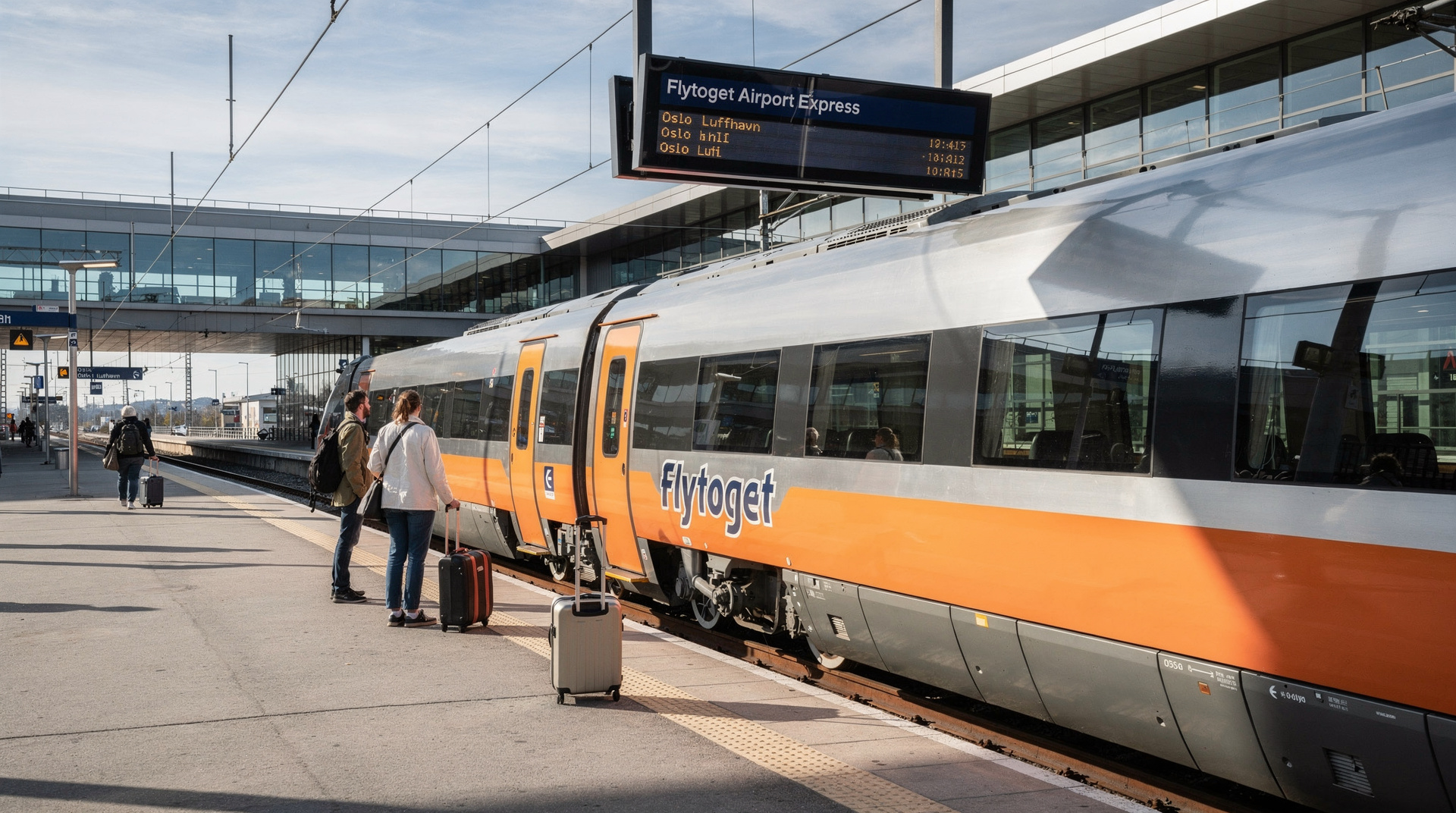
The Flytoget (literally “the airport express”) runs every 10 minutes between Gardermoen and Oslo Central Station (Oslo S). Journey time is 19–20 minutes. A single ticket costs around NOK 230–250 (USD 25–27) for adults, purchased in advance via the Flytoget app or at the airport station. Children under 16 travel free with a paying adult.
The Vy regional train (formerly NSB) covers the same route in about 23–27 minutes depending on the service, stopping at a few suburban stations. A ticket costs around NOK 121–145 (USD 13–15.60) purchased via the Vy app in advance. Vy trains run roughly every 20–30 minutes.
Our take: if you are travelling with heavy luggage and want a guaranteed seat, the Flytoget is pleasant and stress-free. If you are on a budget or travelling with just a carry-on, the Vy train is perfectly good and saves you around NOK 100 (USD 11) per person. The 5-minute difference in journey time is real but rarely decisive. See our full Flytoget vs Vy train comparison for an in-depth breakdown.
| Option | Journey time | Cost (one-way) | Best for |
|---|---|---|---|
| Flytoget express | 19–20 min | NOK 230–250 | Guaranteed seat, heavy luggage, tight connections |
| Vy regional train | 23–27 min | NOK 118–145 | Budget travellers, carry-on only |
| Flybussen coach | longer, more stops | around NOK 219 | Central hotels not near Oslo S |
| Taxi | 30–45 min, traffic-dependent | NOK 700–900 | Groups of four with heavy luggage |
Note for future planning: Flytoget is expected to be absorbed into the Vy network around late 2027, at which point the distinction between these two services will disappear.
The Oslo airport to city centre guide also covers bus options (the Flybussen coach, which is slower but stops at more central hotels) and taxi costs (roughly NOK 700–900 / USD 75–97 to central Oslo — not worth it for most solo or couple travellers, but potentially competitive with taxis for a group of four with luggage).
Do not change money at the airport
This bears repeating: the currency exchange kiosks in the arrivals hall offer very poor rates. Oslo is, for practical purposes, a cashless city — you can use a contactless card for every purchase including single bus/tram tickets bought via the Ruter app. If you have a foreign card that does not charge foreign transaction fees, you will never need Norwegian cash.
If you do need NOK for any reason, use a bank ATM (look for the Nordea, DNB, or Sparebank machines) rather than a currency exchange desk. The ATM rate is the interbank rate with your card’s own conversion fee, which is almost always better than what the airport desks offer. The airport’s exchange desks typically charge a spread of 5–8% above the market rate.
Norwegian currency is the krone (NOK). At the time of writing, 1 USD buys approximately 9.3 NOK and 1 EUR buys approximately 10 NOK. Our currency converter lets you check the current rate before you travel.
The airport station: finding your train
Both the Flytoget and Vy trains depart from the same underground station directly beneath the terminal building. Follow the “Airport Rail Link” signs from the arrivals hall — it is a single escalator or lift ride down. The station is clean, well-signed, and there is usually a Narvesen kiosk open for snacks and water.
Buy your ticket before you board. Both Flytoget and Vy have app-based purchasing, and both have ticket machines at the station. Conductors do check tickets on most journeys. A single journey on the Flytoget costs significantly more if purchased on board versus in advance.
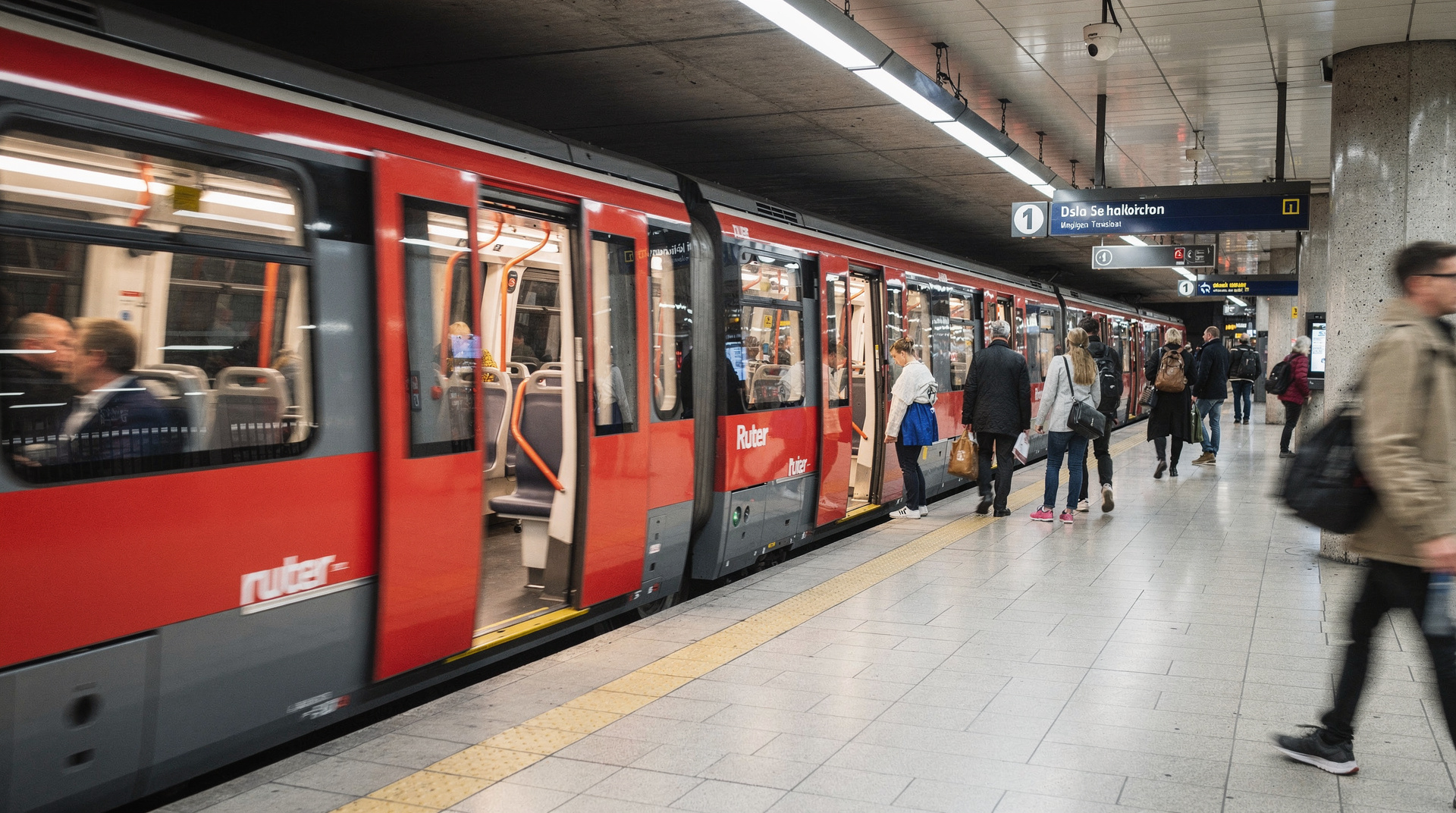
Both services terminate (or stop at) Oslo Central Station (Oslo S), which is the main hub for onward connections to trams, buses, and the T-bane metro. From Oslo S you can reach most hotels and neighbourhoods within 15–25 minutes.
Food and drink at the airport
Gardermoen has a reasonable range of food options but nothing that will tempt you to arrive early. Prices reflect the airport premium — a coffee costs NOK 60–80 (USD 6.50–8.60), a sandwich or pastry NOK 80–150 (USD 8.60–16). The most useful option is the Circle K convenience store airside, which has pre-made food at slightly more reasonable prices.
If you are departing Oslo on a budget, eat before you arrive at the airport. The city has significantly better and cheaper food options than the terminal.
Lounges
Gardermoen has a number of lounges, including the SAS Business lounge (accessible to SAS Business, EuroBonus Gold/Diamond, and Star Alliance Gold members), and the independent Norwegian Lounge. There is also a Priority Pass lounge, Plaza Premium, accessible to Priority Pass holders and many premium credit card holders. These are worth knowing if you hold a qualifying card.
Long layovers: is it worth going into Oslo?
For a layover of four hours or less: probably not. The train journey is 20 minutes each way, and you should plan at least 90 minutes at the airport before an international departure. A 4-hour layover leaves you about 80 minutes in the city — enough for a walk around Oslo S and a coffee, but not much more.
For a layover of five or more hours: the trip into Oslo is absolutely worth it. Buy a Ruter day pass (NOK 119 / USD 12.80) after you arrive at Oslo Central, and you can use all transit in the city for the rest of the day. Head to the Opera House roof, walk the waterfront to Aker Brygge, and have a coffee in Grünerløkka before heading back. Check our getting around Oslo guide for the quickest ways to navigate.
Storing luggage
Gardermoen has luggage storage (consigne/bagasjeutlevering) in the arrivals hall. Prices are around NOK 80–120 (USD 8.60–12.90) per bag per day depending on size. This makes it feasible to check out of a hotel, store luggage at the airport in the morning, spend a few more hours in Oslo, and then collect bags before departing.
Alternatively, several city-centre luggage storage services operate near Oslo Central Station at similar prices — useful if you want to explore the city before heading to the airport for an evening flight.
SIM cards and data on arrival
If you need a local SIM rather than roaming, the airport has kiosks for Telenor and Telia, Norway’s two largest carriers, both with tourist-oriented prepaid data plans available airside. Prices run NOK 200 to 350 (USD 21.50 to 38) for a data-focused SIM valid one to two weeks — comparable to city-centre prices, so there is no real penalty to buying at the airport if your phone needs data the moment you land. Most international carriers also offer reasonable EU/EEA roaming rates that cover Norway, which for a short trip is often simpler than swapping a SIM at all. Coverage across Oslo and the wider region, including on the Bergen railway, is generally strong.
Planning your first days after you land
A smooth arrival is easier when you already know what the first day looks like. If you land with energy to spare, our Oslo in one day itinerary works as a ready-made plan, and the two-day version suits a slightly slower start. Not sure how long to stay? The how many days in Oslo guide helps you decide before you book your flights.
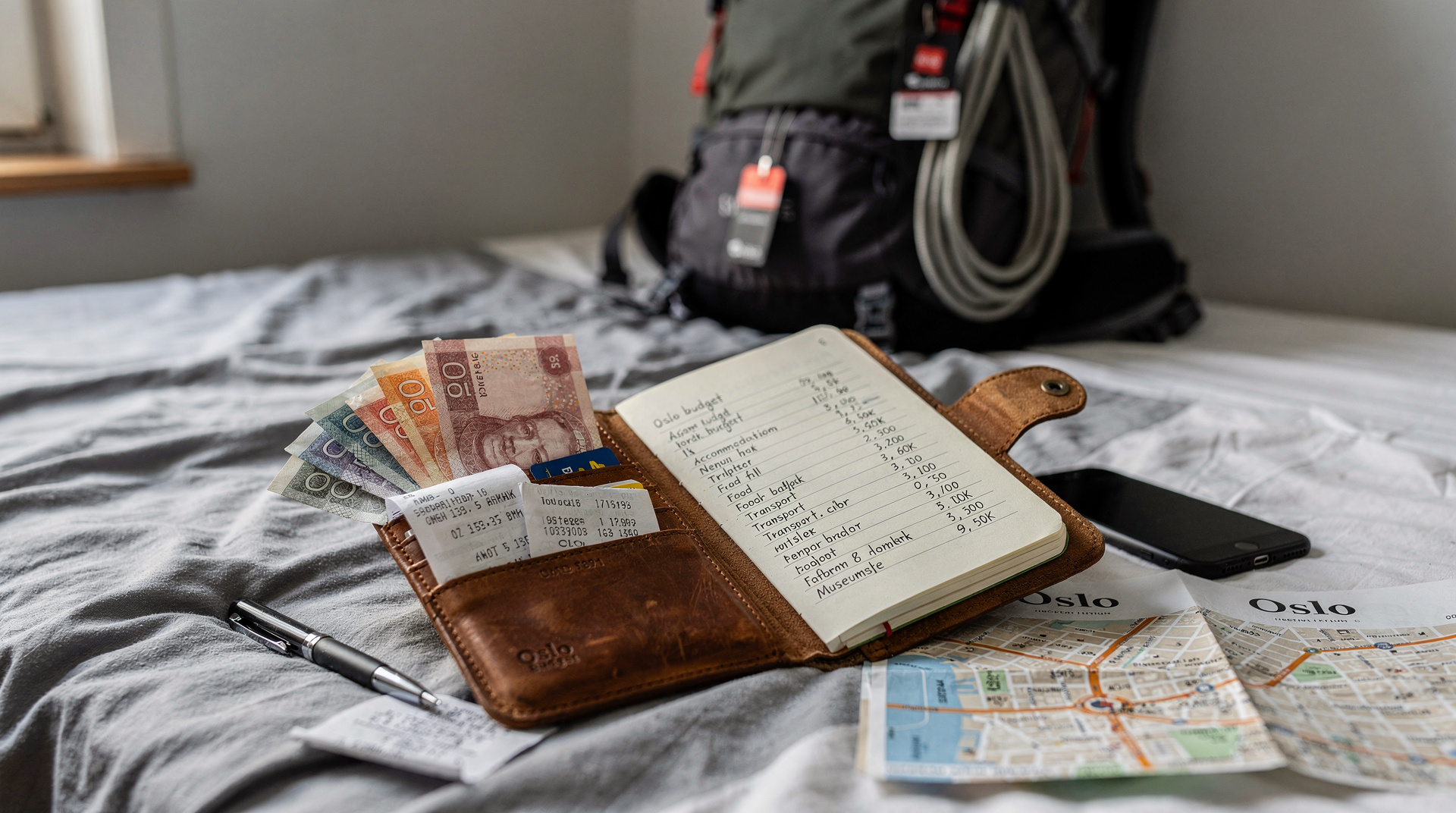
Where you sleep changes which train you want. If your hotel sits close to Oslo S, either service drops you within easy reach; if it sits further out, the where to stay in Oslo guide will help you match neighbourhood to arrival route. Once you have dropped your bags, the top things to do in Oslo is a good place to pick a first outing, and the Oslo on a budget guide keeps the early spending in check, since airport and first-day purchases are where costs tend to creep up.
If you are arriving by air only to head straight on to the west coast, the Oslo to Bergen options guide compares the ways to make that onward journey.
A few things to know about departures
Gardermoen’s security queues can be significant during morning peak (6–9 am) and pre-weekend evenings. Allow at least 2 hours before your flight for international departures and 90 minutes for domestic. The airport app shows real-time queue times.
The departure gates are a longer walk than you might expect — the terminal is large and some gates at the far end require 15+ minutes from security. Check your gate early. All this is manageable; it just requires not cutting things too fine.
For the complete picture of transport costs and options for your Oslo visit, our trip cost breakdown puts all the numbers in one place, and the Ruter transport guide covers everything you need once you are in the city.
Top experiences
Bookable activities with verified prices and instant confirmation on GetYourGuide.