What dining out in Oslo actually costs — and how to cope
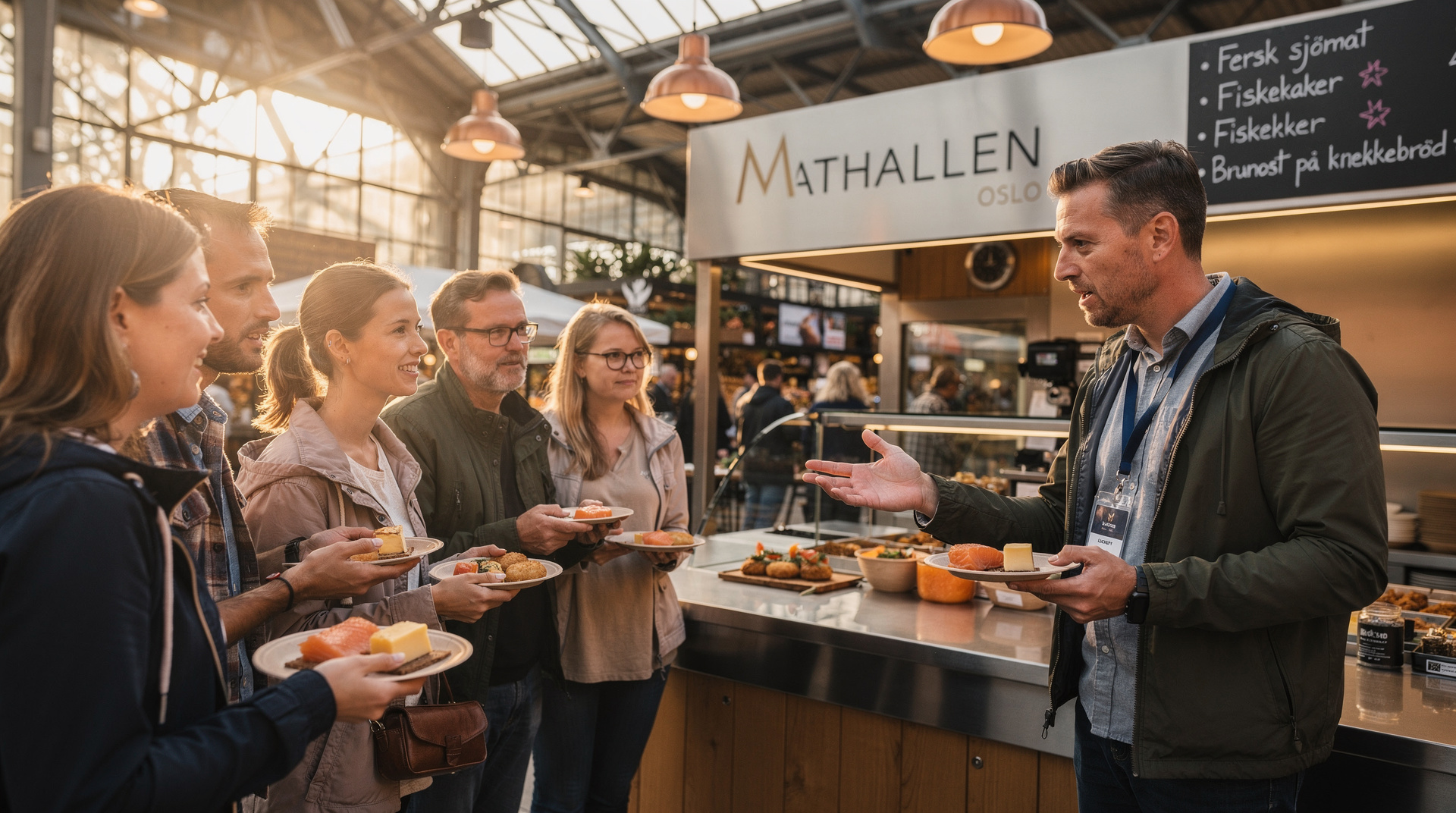
Oslo: the taste of Oslo food tour
Duration: 4 hours
- Tastings included
- Small group
The number that stops the conversation
When people ask me how expensive Oslo is for food, I have learned to be specific rather than vague. The vague answer — “it’s very expensive” — lands differently depending on where the person is coming from. For someone accustomed to London or New York prices, it comes as confirmation. For someone from Central or Eastern Europe, “very expensive” does not begin to cover it.
So here is a specific number: a glass of house red wine in a mid-range Oslo restaurant costs approximately NOK 110 to 140 (USD 12 to 15). A main course in the same restaurant costs NOK 280 to 380 (USD 30 to 41). Two people sharing a starter, two mains, and a bottle of wine can expect to spend NOK 1,200 to 1,600 (USD 129 to 172), before the service charge that some restaurants add.
| Mid-range restaurant, per person | NOK 400–600 (USD 43–65) without alcohol |
| Supermarket meal | NOK 60–150 (USD 6–16) |
| Realistic daily food budget | NOK 600–900 per person (USD 65–97) |
| Biggest single cost driver | Alcohol — tax-driven, non-negotiable |
| Best value format | Food halls (Mathallen) and neighbourhood cafés |
That is a significant amount of money. Over a four-day Oslo trip, if you are eating out for every meal at this level, the food budget alone will be NOK 5,000 to 8,000 per person (USD 538 to 860). This is why Oslo food costs require a strategy. For the full daily cost picture beyond food, our Oslo daily costs guide covers accommodation, transport, and attractions on top of what you spend eating.
The alcohol situation: the most honest section
Before discussing food, the alcohol situation requires direct treatment because it is the single largest driver of Oslo dining costs and is frequently underestimated.
Norway taxes alcohol aggressively. The rationale is public health — reducing consumption through price — and it has demonstrably worked in terms of consumption statistics. The practical effect for visitors is that alcohol is expensive in a way that cannot be negotiated around.
A pint of draught beer in a bar costs NOK 90 to 130 (USD 10 to 14). A 500ml can of decent lager in a supermarket costs NOK 30 to 45 (USD 3.20 to 4.80). The comparison tells you the obvious strategy: if you are going to drink, buy from a supermarket and take it to a park, a waterfront, or back to your accommodation. Norway has no equivalent of Mediterranean outdoor drinking culture, but it does have excellent parks and a tolerant approach to public consumption of what you have legally purchased.
For spirits and wine to take back to your accommodation, Vinmonopolet — the state alcohol monopoly — operates shops throughout the city. The prices are not cheap but they are the floor. Wine starts around NOK 150 to 200 per bottle (USD 16 to 22) for something drinkable. There is no cheaper legal alternative.
Meal costs without alcohol are significantly more manageable. A two-course lunch for two without drinks at a good mid-range restaurant comes to NOK 550 to 750 (USD 59 to 81), which is expensive but not outrageous.
What breakfast costs and why it matters
Most Oslo hotels and hostels charge separately for breakfast or include a buffet that ranges from genuinely excellent (traditional Norwegian spread with smoked salmon, various cheeses, eggs, rye bread) to perfunctory. The buffet price, where charged separately, is typically NOK 120 to 180 per person (USD 13 to 19).
The alternative — which I strongly recommend — is the Norwegian supermarket breakfast. A KIWI or REMA 1000 store (the budget end of Norwegian supermarkets) will yield a morning’s sustenance for NOK 60 to 90 per person: good quality bread, sliced meat or cheese, a piece of fruit, milk. The quality ceiling on Norwegian supermarket food is higher than in many countries because the supply chains are short and the standards are well-enforced.
Stopping at a good Oslo bakery for bread, pastry, and coffee costs approximately NOK 100 to 140 per person. Pågen, Baker Hansen, and the various independent neighbourhood bakeries represent the sweet spot of quality-to-price for Oslo breakfast.
The lunch strategy: Mathallen and the food halls
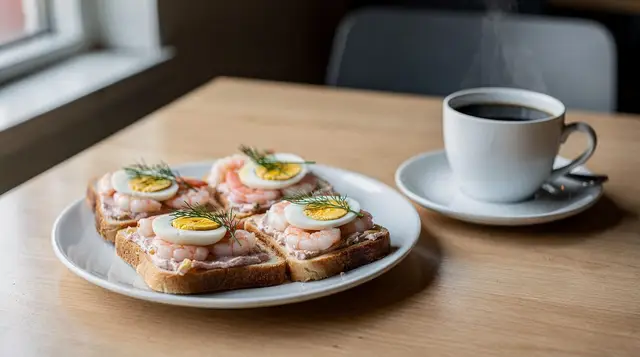
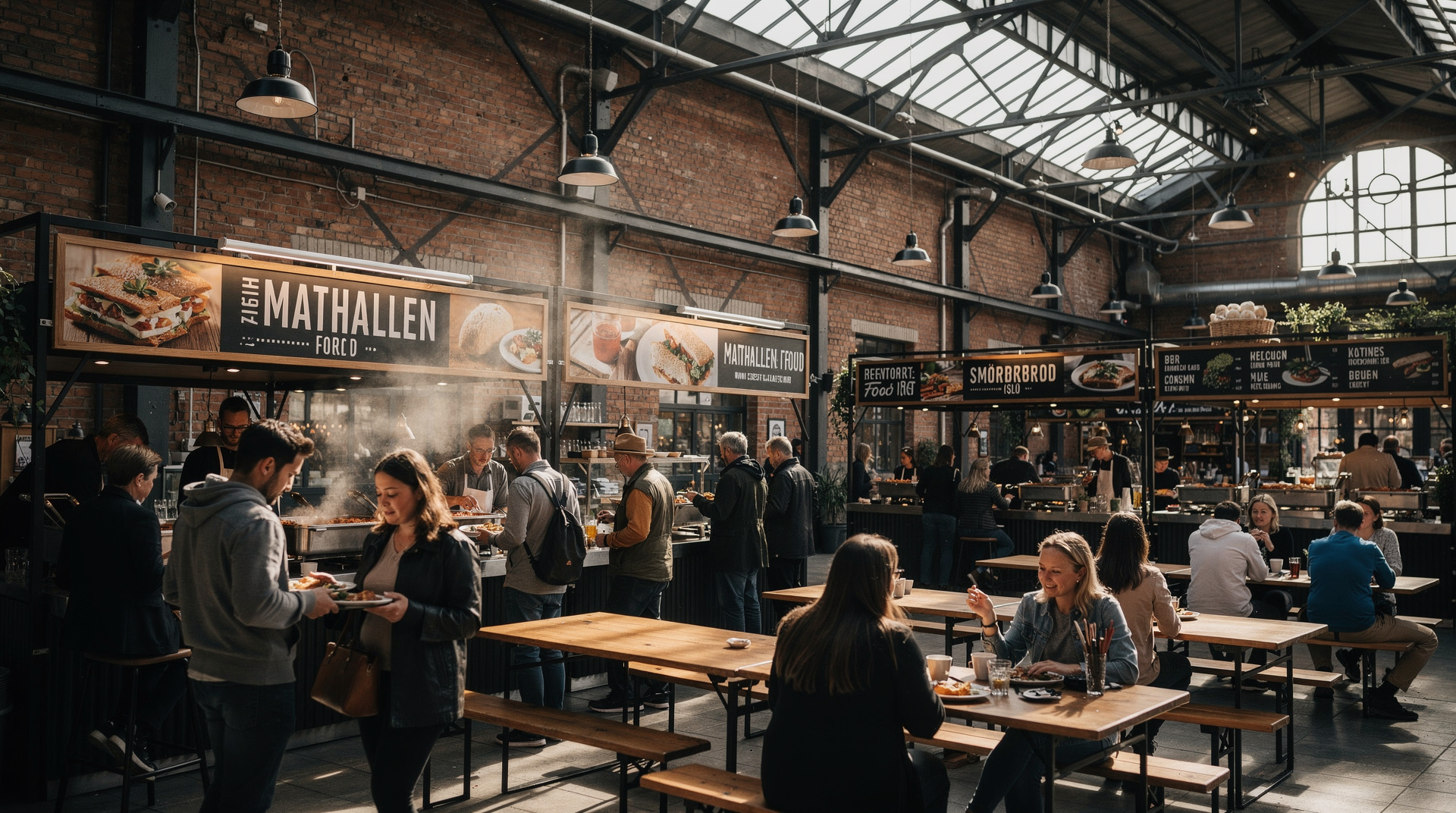
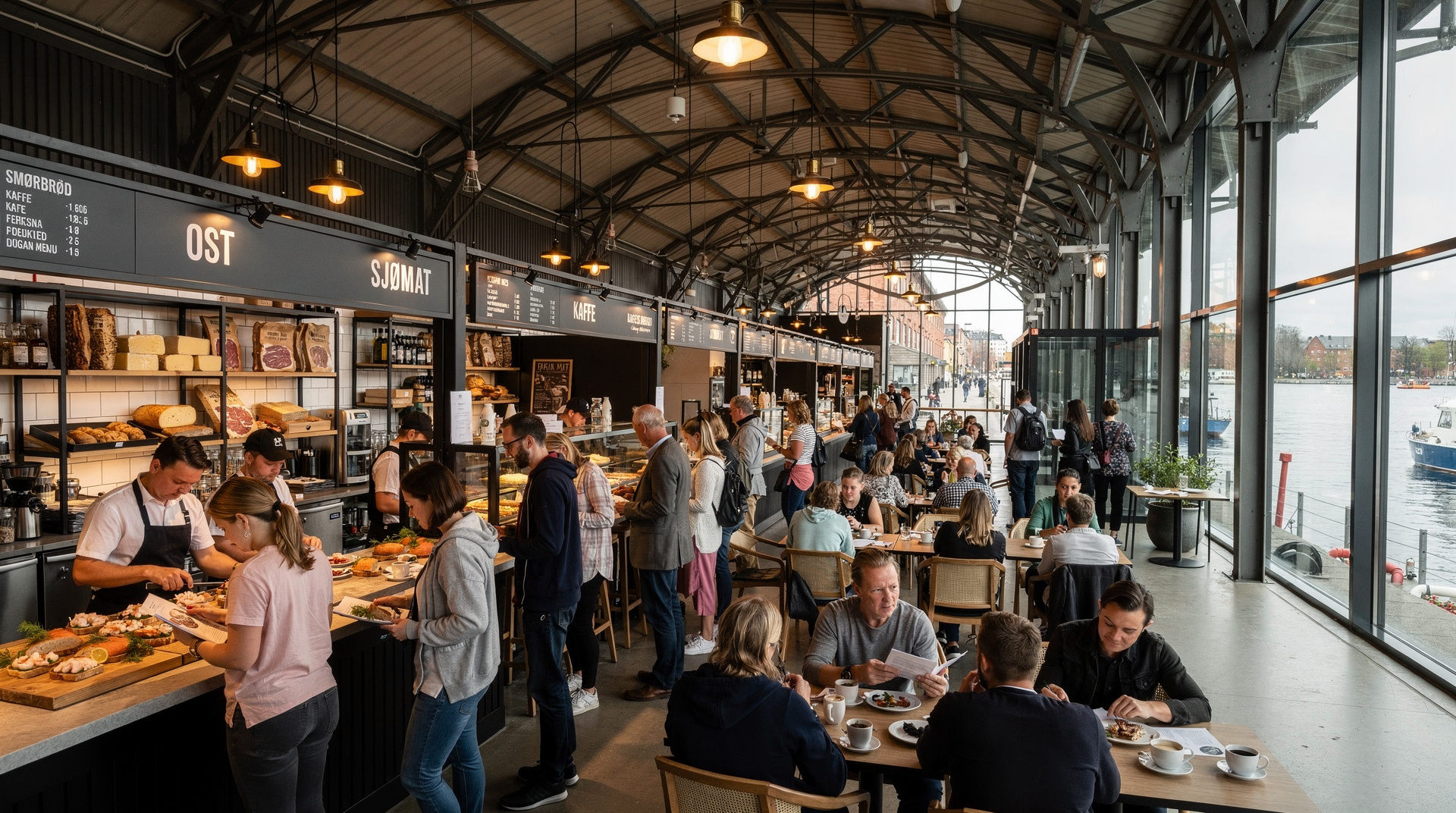
Oslo’s best mid-price food proposition is the Mathallen food hall in Vulkan, near Grünerløkka. This is a covered market hall with approximately 30 independent food vendors selling everything from Norwegian smørbrød (open-faced sandwiches) to ramen to Korean-influenced street food. A full lunch costs NOK 140 to 220 per person (USD 15 to 24), which is about 30 to 40% less than a comparable restaurant meal.
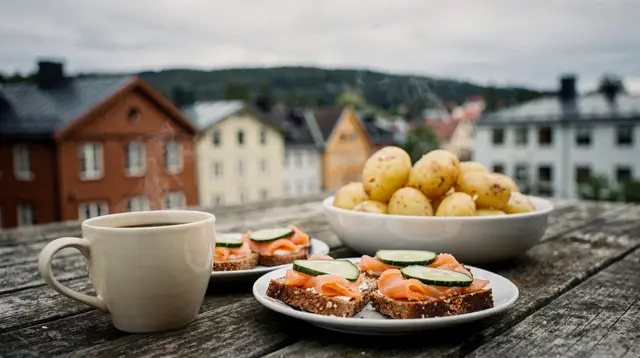
The quality at Mathallen is genuinely good. The Norwegian vendors in particular — the deli counters selling smoked fish, the stands selling traditional lunch dishes — offer food that is both authentic and representative. A plate of cured salmon on rye bread with mustard and dill for NOK 120 (USD 13) is more genuinely Norwegian than anything in the tourist-facing restaurants on Karl Johans gate.
For a full guide to cheap eating across the city, the budget eats guide covers every neighbourhood and format.
Where the restaurant money goes and why Oslo is expensive to operate in
Oslo restaurant prices are not simply greed. The operating costs of running a restaurant in Oslo are among the highest in Europe. Commercial rents in the central neighbourhoods run to NOK 3,000 to 6,000 per square metre per year. Norwegian labour law requires employer contributions, holiday pay, and sick pay arrangements that add approximately 30 to 40% above the nominal salary to the cost of each employee. A kitchen worker earning NOK 35,000 per month costs the restaurant approximately NOK 45,000 to 48,000 per month all-in.
These costs are passed on to diners. A restaurateur in Oslo who is not charging NOK 280 to 380 for a main course is either running a specific value concept (fast casual, food hall, sandwich shop) or is heading for financial difficulty. Understanding this does not make Oslo cheaper to eat in, but it does suggest that the prices are structural rather than exploitative.
The craft beer detour (and why it costs what it costs)
Oslo’s craft beer scene has grown considerably over the past decade, and it is worth a specific mention because the pricing logic surprises people. A pint of craft beer at a specialist bar or brewpub often costs more than a pint of standard lager — NOK 110 to 160 (USD 12 to 17) is typical — because the excise duty in Norway is calculated by alcohol volume and volume of production, which hits small-batch craft breweries harder proportionally than mass producers. Our Oslo craft beer guide covers the taprooms and breweries worth the premium, and there are genuinely excellent ones in Grünerløkka and around the harbour.
Brown cheese and the specialties worth paying for
Not every Norwegian food splurge is dinner-sized. Brunost — brown cheese, made from caramelised whey — is inexpensive (a block from a supermarket costs NOK 40 to 70) but worth understanding before you try it, since the flavour is genuinely unusual to first-timers. Our brown cheese and Norwegian specialties guide covers this and the other foods worth seeking out — cured salmon, reindeer, and the seasonal seafood that justifies its price at a good restaurant far more than the average tourist-strip main course does.
The restaurants that are actually worth the price
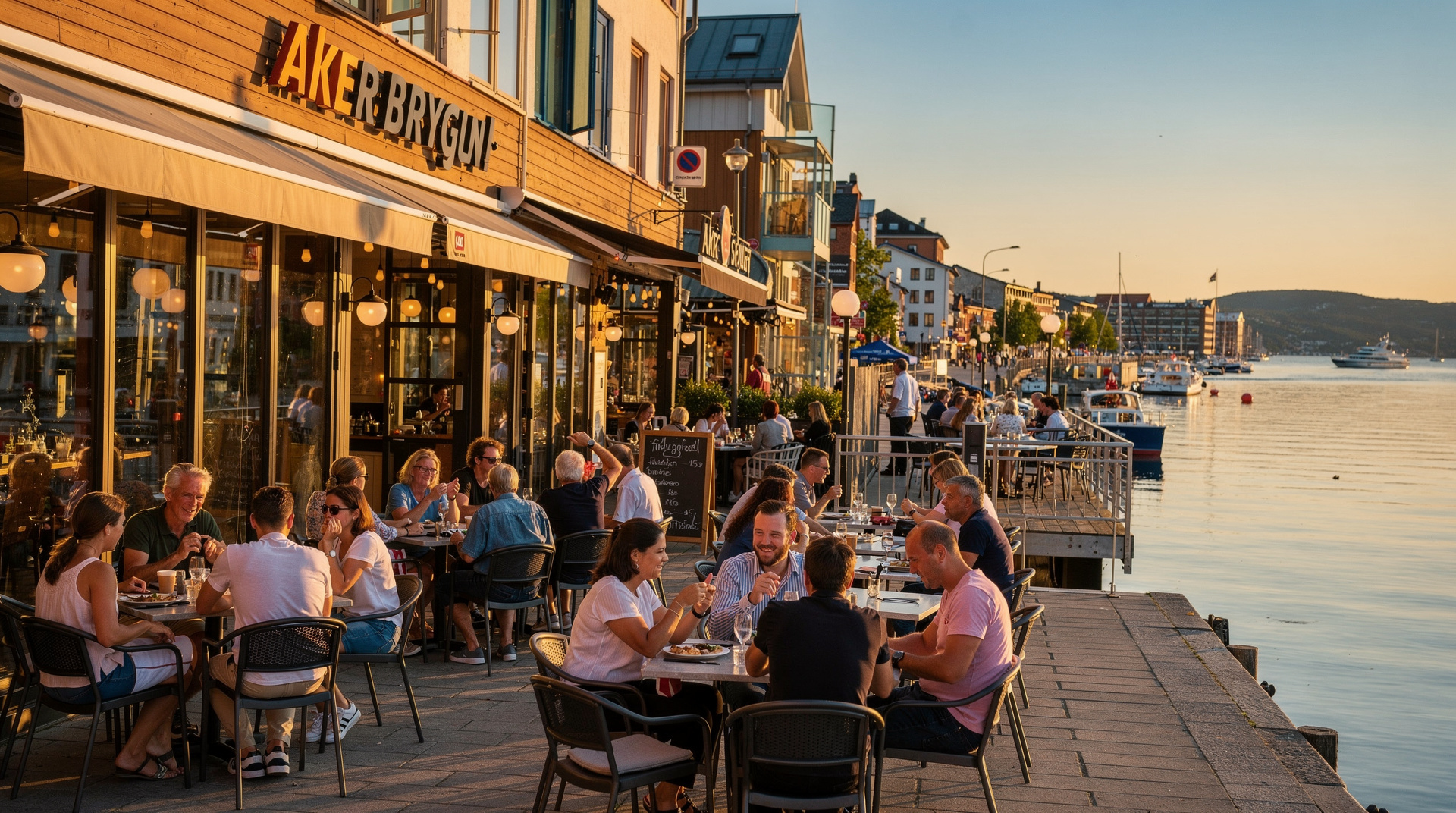
Not all Oslo restaurants justify their prices equally. The tourist-facing restaurants along the Karl Johans gate strip and the most visible Aker Brygge waterfront locations charge Oslo prices for food that is often mediocre. These are the places that give Oslo dining its worst reputation.
The restaurants in Grünerløkka, Grønland, Majorstuen, and the side streets of Frogner are generally better value and better quality. A few categories where Oslo consistently overdelivers relative to its price:
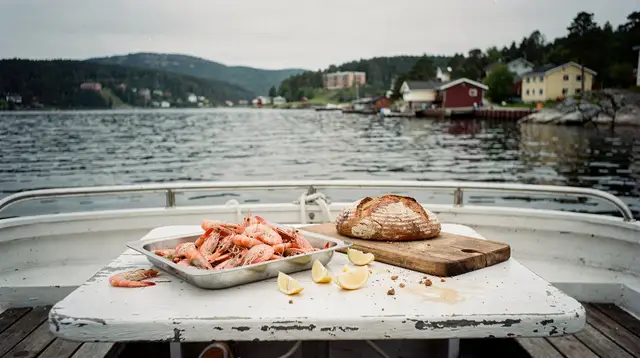
Norwegian seafood: Oslo is at the convergence of cold-water fishing traditions, and the fish quality at good restaurants is remarkable. Whole grilled fish, cured salmon prepared in-house, bacalao, and Norwegian shellfish are categories where the price premium over equivalent offerings elsewhere in Europe is genuinely earned.
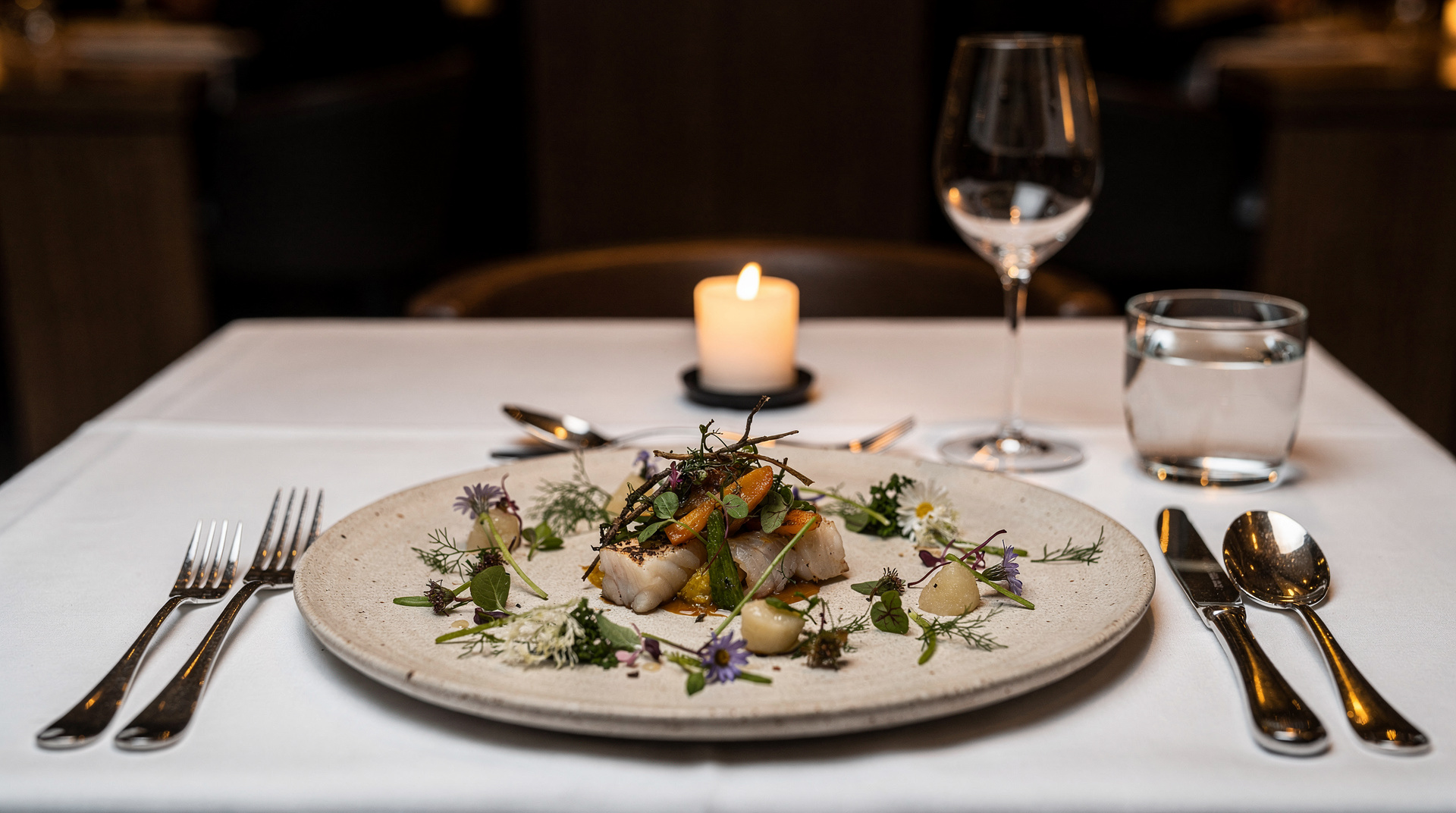
New Nordic cuisine: Oslo has several restaurants working in the tradition influenced by the Copenhagen new Nordic school — seasonal, local, technically precise, small plates. These restaurants are expensive (NOK 1,200 to 2,500 per person for a full tasting menu) and some of the best are very good indeed. This is a category where the price reflects genuine ambition.
Café lunch: Oslo café culture — the mid-morning coffee and open sandwich culture — is well-priced relative to the quality. A coffee and smørbrød at a good Frogner or Grünerløkka café costs NOK 150 to 200 (USD 16 to 22) and is a high-quality experience.
The full Oslo restaurant guide covers specific recommendations across price categories and neighbourhoods. The fine dining guide covers the top-end options with honest assessment of what the money buys. For neighbourhood-level detail, the Grünerløkka food guide is our most-used single resource, and it is also where our overpriced food warning guide flags the specific tourist-strip traps to skip.
The honest coping strategy
For a realistic Oslo food budget, here is the framework that works: buy breakfast from a supermarket or bakery (NOK 80 to 140 per person); eat a proper cooked lunch at Mathallen, a neighbourhood restaurant, or one of the ethnic restaurants in Grønland (NOK 140 to 250 per person); eat dinner at a mid-range restaurant two or three times during a four-day trip, and otherwise eat from supermarkets or the food hall (NOK 0 to 80 for a prepared meal from KIWI’s ready-to-eat section).
Avoid alcohol at restaurants if budget is a concern; buy it from Vinmonopolet instead.
Accept that even this strategy will produce a food-and-drink spend of approximately NOK 600 to 900 per day per person (USD 65 to 97). This is simply what eating in Oslo costs if you want to eat reasonably well.
For food tours that provide genuine access to Oslo food culture with expert guidance, the Oslo food tours guide covers the options and what each includes.
Top experiences
Bookable activities with verified prices and instant confirmation on GetYourGuide.