Oslo vs Bergen — the honest head-to-head for a Norway trip
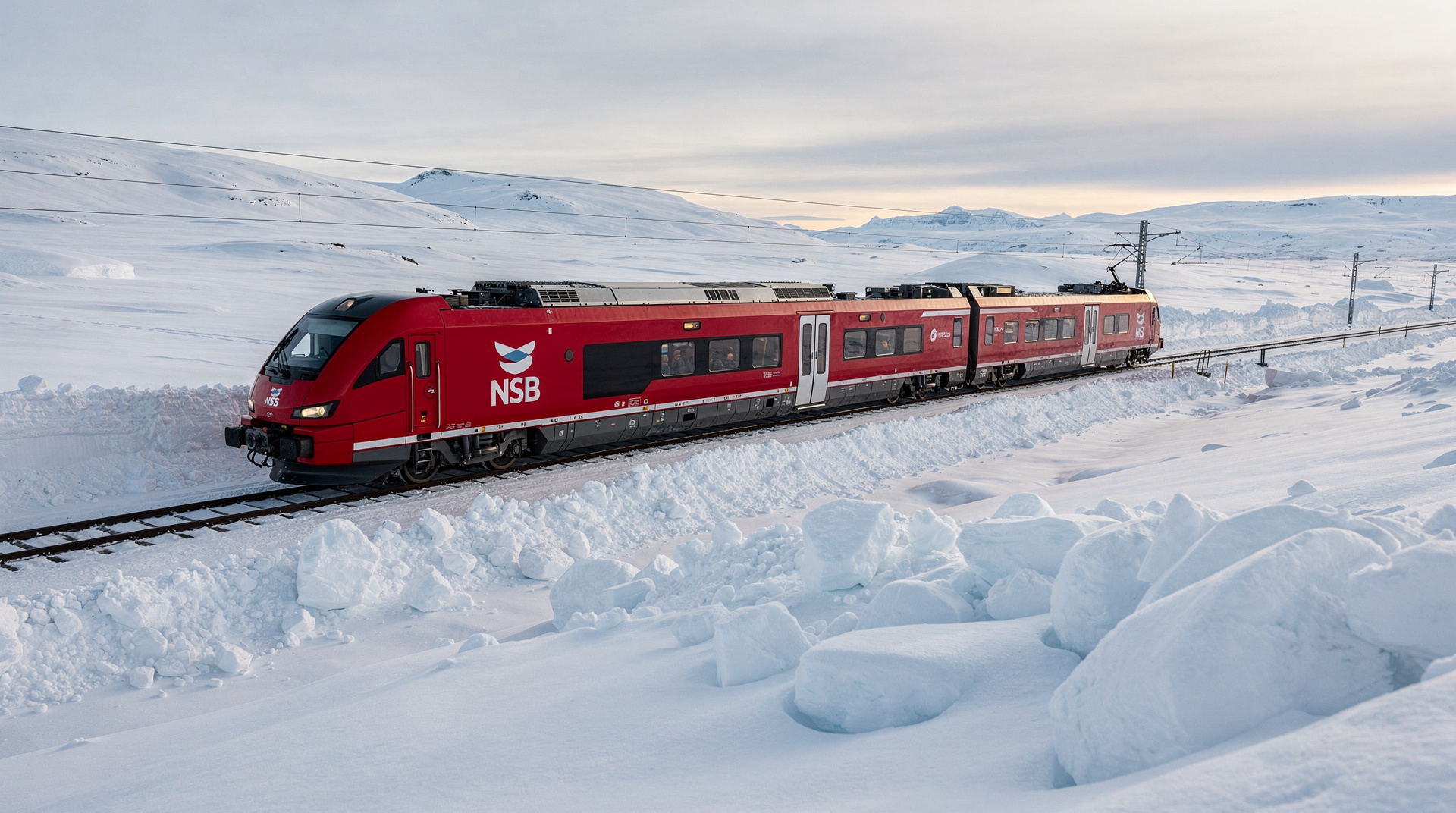
From Oslo: one-way self-guided tour to Bergen (rail and cruise)
Duration: Full day
- Scenic railway
- Fjord cruise
Should I visit Oslo or Bergen for a Norway trip?
Bergen is the gateway to the most dramatic fjords; Oslo is the cultural and urban capital. Bergen has rawer natural scenery; Oslo has better museums and city life. For most first-time visitors, the real answer is to do both — the train between them (Bergensbanen, 6.5–7 hours) is one of Europe's most beautiful rail journeys.
The real question: Oslo vs Bergen or Oslo and Bergen?
Most travel forums ask “Oslo or Bergen?” as though you must choose. For a first Norway visit with 7 or more days, the stronger question is “how do I do both?” — because the two cities serve genuinely different functions in a Norway trip and complement rather than replace each other.
That said, for short trips of 3 to 4 days, a genuine choice is required. This guide gives you the honest comparison so you can decide.
| Oslo | Bergen | |
|---|---|---|
| Strength | Museums, urban culture, nightlife | Dramatic fjord gateway, Bryggen old town |
| Rain days/year | Around 100–120 | Around 240 |
| Compactness | Larger, more spread out | Very walkable, sights close together |
| Best for | Culture-first, drier summer trips | Fjord-first, willing to pack a raincoat |
| Getting there from the other | Bergensbanen train, 6.5–7 hrs | Same train, or 1-hr flight |
What each city actually does best
Oslo’s strengths
Oslo is Scandinavia’s most culturally varied capital. It has the Munch Museum (over 26,000 works, not just The Scream), the National Museum (largest art collection in Norway), the Astrup Fearnley contemporary museum in Tjuvholmen, and the extraordinary Vigeland Sculpture Park. For urban culture, galleries, restaurant variety, and nightlife, Oslo wins clearly.
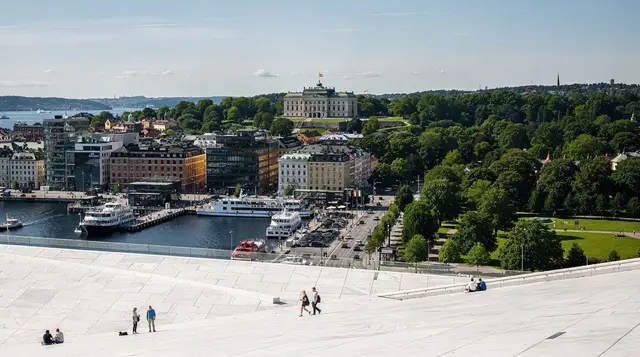
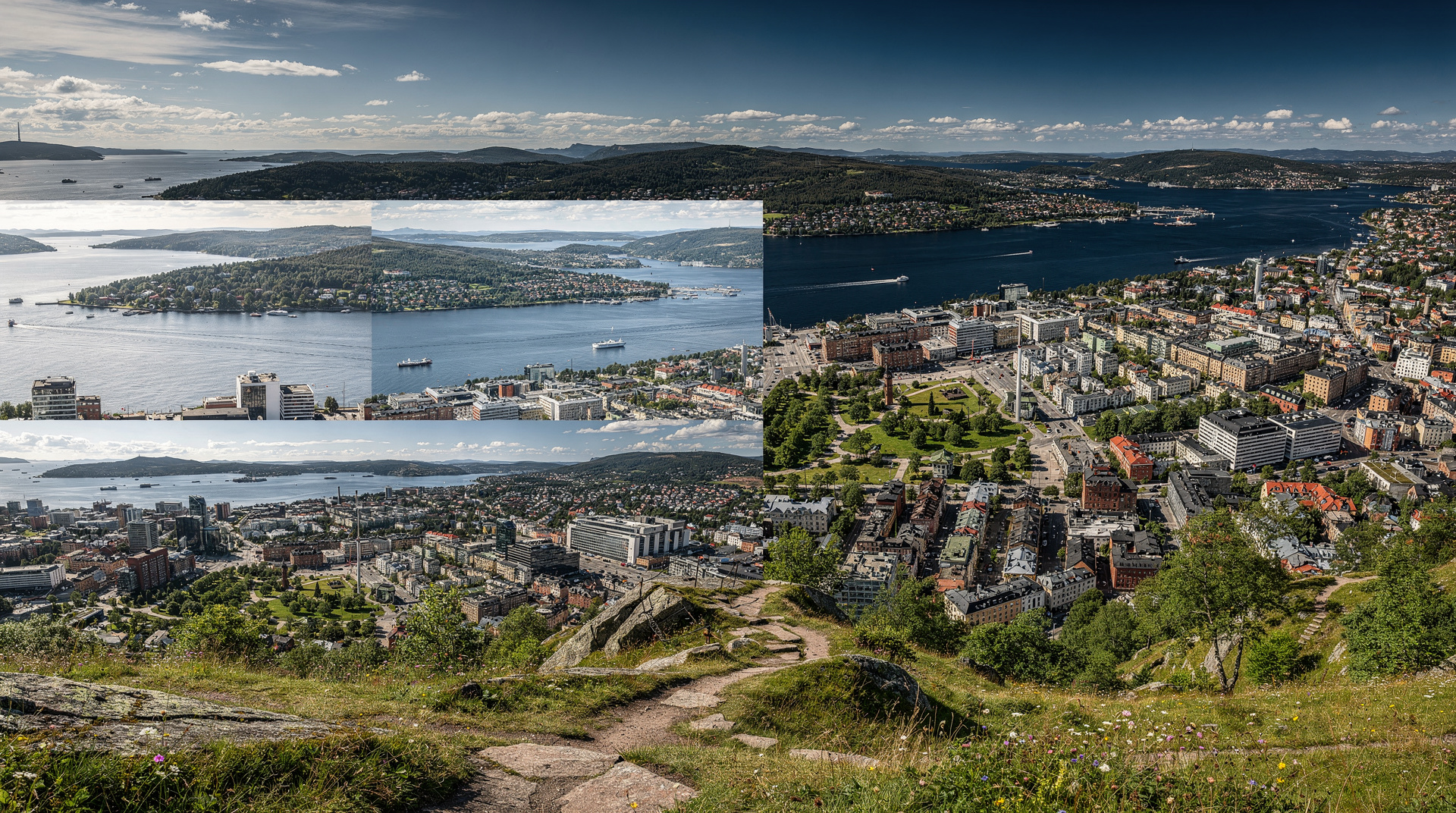
The city is also more walkable than Bergen for urban sightseeing. The arc from the Opera House through Bjørvika, along Aker Brygge to Tjuvholmen, and up to Sentrum is a genuinely coherent city-walk. The T-bane metro network is comprehensive and easy.
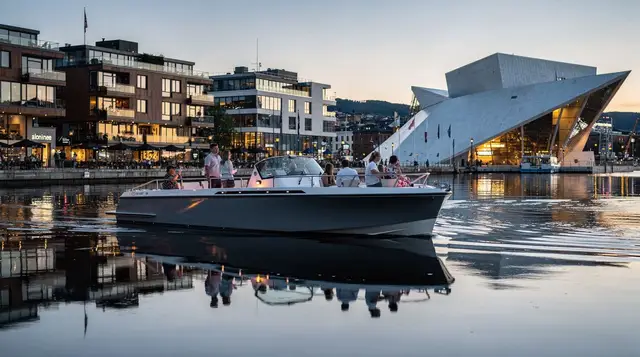
The Oslofjord is beautiful in its own right — not the vertical drama of western fjords, but wide, island-studded water with a gentler character. The fjord cruise from Oslo on a summer evening is one of Europe’s underrated urban water experiences.
Bergen’s strengths
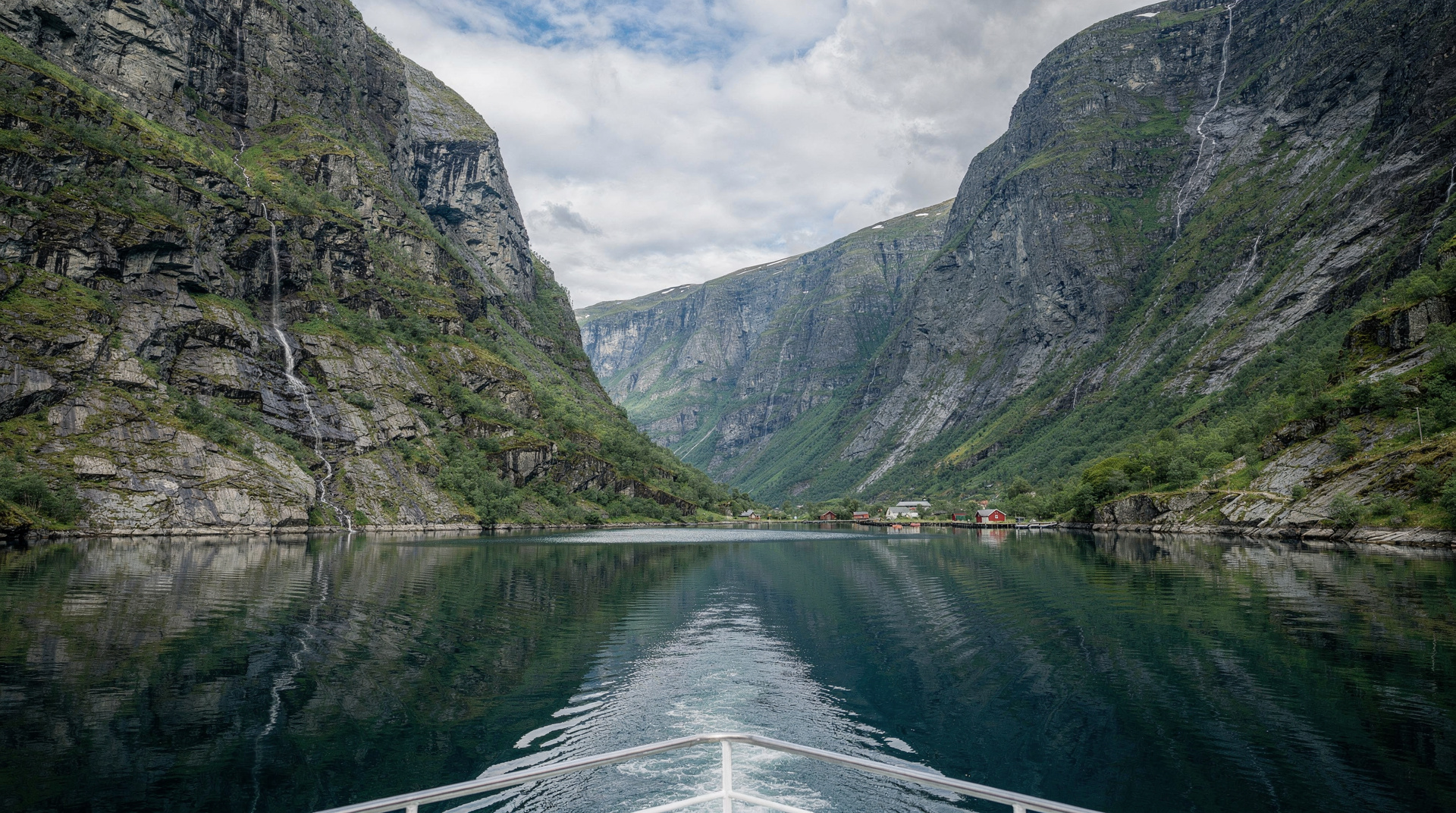
Bergen’s singular asset is its position as the gateway to Norway’s most dramatic fjord scenery. Sognefjord (the world’s second longest fjord at 205km), Nærøyfjord (a UNESCO World Heritage narrow arm), and Hardangerfjord are all accessible as day trips from Bergen. These are in a different league of natural grandeur from the Oslofjord.
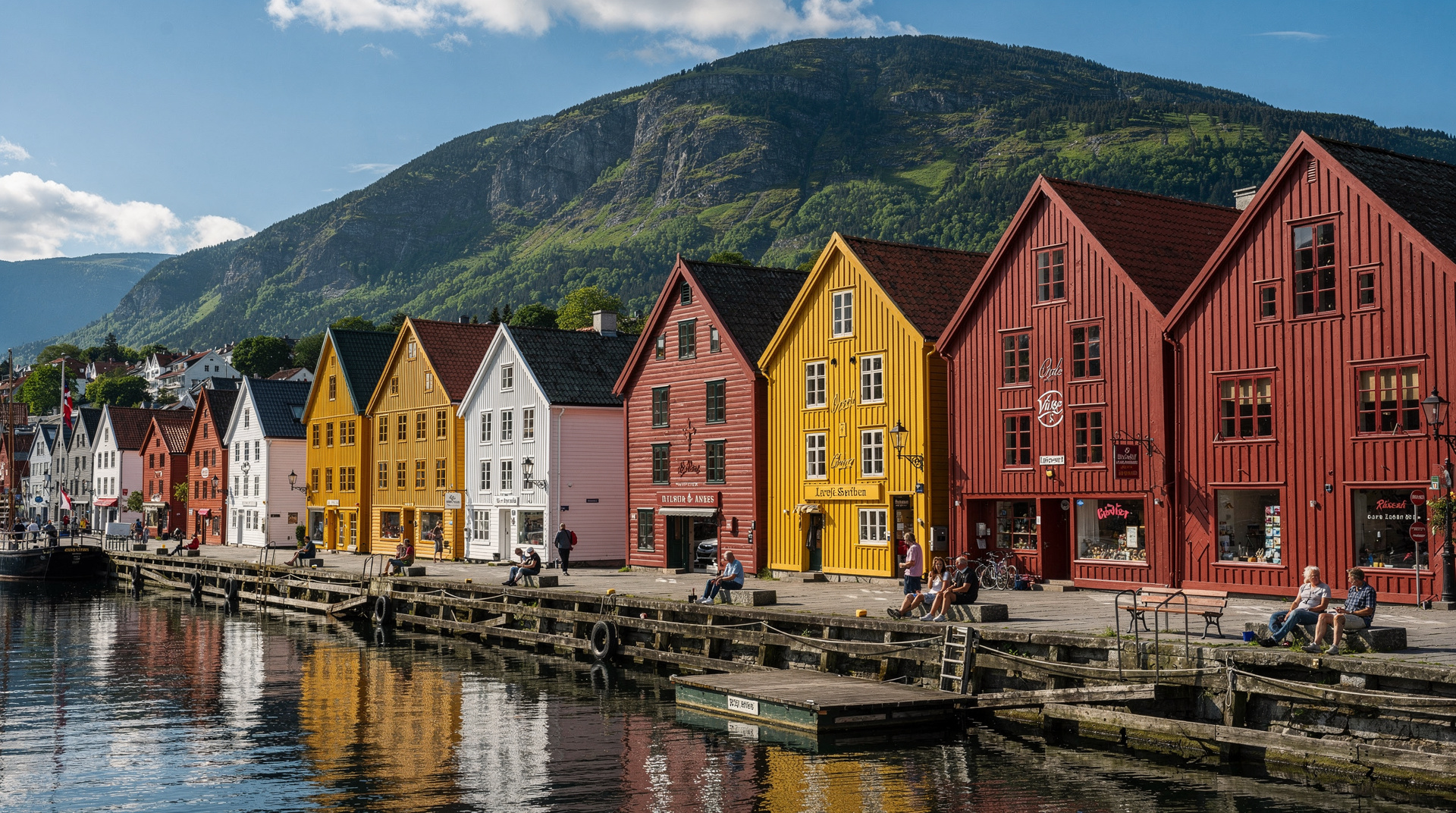
The Bryggen wharf — Bergen’s medieval wooden warehouse district — is also more historically atmospheric than anything equivalent in Oslo. The funicular up Mount Fløyen (NOK 110 return, approximately USD 12) gives panoramic views that require more effort to replicate in Oslo (though Holmenkollen and Vettakollen offer their own rewarding views).
Bergen also wins on compactness: you can walk between its main attractions — Bryggen, the fish market, Fløibanen funicular, and the old town — in under 30 minutes. Oslo is larger and more spread out.
Weather: a genuine difference
This is where the comparison tilts meaningfully. Bergen receives approximately 240 days of rain per year — it is one of the wettest cities in Western Europe by precipitation days. It sits between mountains and the coast, and catches weather fronts coming off the North Atlantic with notable consistency.
Oslo, by contrast, receives around 100 to 120 rain days annually. It has a more continental climate: colder in winter, warmer and drier in summer. A June week in Oslo is more likely to deliver the sun-drenched fjord experience tourists imagine than the same week in Bergen.
If you are visiting in July or August and weather matters for outdoor activities, Oslo is a meaningfully more reliable bet. Bergen in September and October has spectacular autumn colour in the mountains, but expect rain most days.
Cost comparison
Both cities are expensive. The differences are marginal by global standards.
Accommodation: Oslo mid-range hotels in Sentrum average NOK 1,800 to 2,500 per night in peak season (approximately USD 194 to 269). Bergen averages NOK 1,600 to 2,300, very slightly lower but not dramatically so.
Food: similar. A restaurant main course in both cities typically runs NOK 200 to 350 (approximately USD 22 to 38). Beer at a bar is NOK 90 to 130 in both cities (approximately USD 10 to 14).
Activities: here the difference matters. Oslo’s museums are expensive individually but manageable with an Oslo Pass. Bergen’s fjord day trips (Norway in a Nutshell, Hardangerfjord tours) cost NOK 900 to 2,000+ per person (approximately USD 97 to 215), and you will want to do 2 to 3. Bergen’s activity budget can spiral.
How a day actually feels in each city
Numbers only go so far, so it helps to picture the rhythm of a normal day. In Oslo, a good day is built from several different settings: a morning in a museum, a walk through a neighbourhood, a long lunch, and an evening on the waterfront or in a bar. The city rewards people who like to move between moods. Our top things to do in Oslo guide shows how much variety is packed into the centre, and the Oslo city centre page explains how the districts connect.
A good Bergen day is more focused. You wander the old wharf, climb to a viewpoint, eat something from the harbour, and then either head out on the water or retreat from a shower. The city is smaller, so you rarely lose time in transit, but you also run out of urban variety sooner. That is exactly why Bergen works best as a base for the fjords rather than as a place to spend a whole week.
Culture, food and nightlife
If your trip is about what happens after dark, Oslo is the stronger choice. Its bar scene, music venues and restaurant range are broader than anything a smaller city can sustain. Start with the Oslo nightlife guide and the list of best bars in Oslo, then look at where to eat in Oslo if food is a priority. For a more neighbourhood-driven evening, Grünerløkka is the obvious place to begin.
Bergen has a lively, student-influenced evening scene and a food culture built around the sea, but it is a more intimate experience. Visitors who want a quiet drink after a day on the water will be happy there; visitors who want a different venue every night will find Oslo easier to satisfy. If you are curious about the local plate before you travel, the Norwegian food to try guide applies to both cities.
Choosing by season
Season changes the comparison more than most people expect. In summer, long evenings make Oslo’s waterfront and islands especially appealing, and the Oslo in summer guide shows what that looks like in practice. In winter, Oslo trades terraces for cold-weather activities, which you can explore in Oslo in winter activities. Bergen in the cold months is quieter and moodier, and the weather pushes more of your day indoors.
Autumn is a good middle ground for travellers who do not mind grey skies: the Oslo in autumn guide covers the colour in the forests above the city. If you are still deciding when to go, the best time to visit Oslo guide lines up the seasons side by side, and Oslo summer vs winter is useful if you are torn between the two ends of the year.
Getting around once you arrive
Both cities are easy to move through without a car. Oslo has a unified public transport system, explained in the Oslo public transport guide, and the broader getting around Oslo guide covers the practical choices. If you wonder whether renting a vehicle is worth the trouble, do you need a car in Oslo answers it directly. Bergen’s compact centre means you will mostly be on foot, with transport used for the fjord excursions rather than daily movement.
The train between them: a reason to do both
The Bergensbanen railway from Oslo to Bergen is one of Europe’s great train journeys. It crosses the Hardangervidda plateau at 1,222m, passes Finse (the film location for ice-planet Hoth in The Empire Strikes Back), and descends through Myrdal and Flåm — where you can detour onto the famous Flåmsbana railway down to the Nærøyfjord.
The journey takes 6.5 to 7 hours. Book through Vy (the national rail operator). Tickets can be as cheap as NOK 299 (approximately USD 32) if booked well ahead. This single journey is worth doing for its own sake — plan a stop at Flåm or Myrdal if your schedule allows.
See our dedicated Oslo to Bergen train guide and the Norway in a Nutshell explained guide for detailed logistics.
Verdict for different trip types
3–4 days in Norway: choose Bergen if fjords are your priority; choose Oslo if you want urban culture and museums. Bergen gives you the more dramatic natural scenery; Oslo gives you more to do indoors and a better city-life experience.
5–7 days in Norway: do both. Two to three days in Oslo, then train to Bergen for two to three days, with a night or day trip at Flåm if budget allows. This is the classic Norway first-trip itinerary for good reason.
10+ days in Norway: Oslo and Bergen are the anchor cities; add Flåm, Geirangerfjord, and Lofoten depending on your priorities.
Budget travellers: Oslo may have a slight edge — the Oslo Pass can make museum-heavy days affordable, the fjord islands are accessible on the Ruter transport pass, and the city’s free attractions (Vigeland Park, Akershus Fortress grounds, the Opera House roof) are numerous. Bergen’s best experiences require fjord day trips that add significantly to costs.
Families with children: both work well. Oslo has more family-specific museum options (Fram Museum, Norsk Folkemuseum) and the TusenFryd amusement park nearby. Bergen has mountain hiking, the funicular, and the aquarium. A close call.
Booking and timing: what to lock in first
Whichever way you decide, book the Bergensbanen train early if your trip touches both cities — the cheapest NOK 299 fares sell out weeks ahead in June and July, and last-minute tickets can run 3–4x that. Bergen accommodation in peak July also books out earlier than Oslo’s, partly because the city is smaller and partly because cruise-ship days push demand spikes — check the cruise schedule for your dates if you’re hunting for a quiet Bryggen visit.
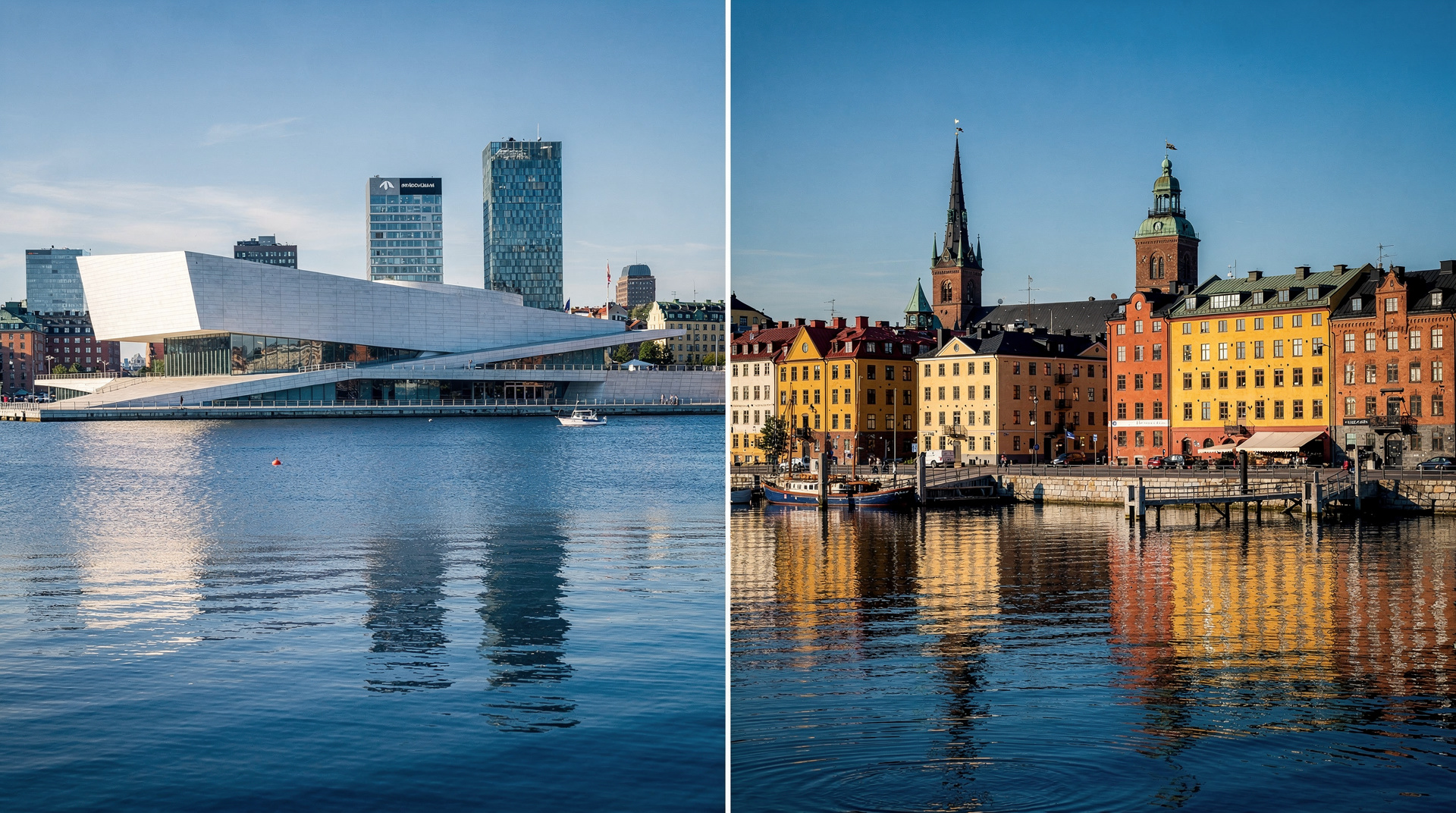
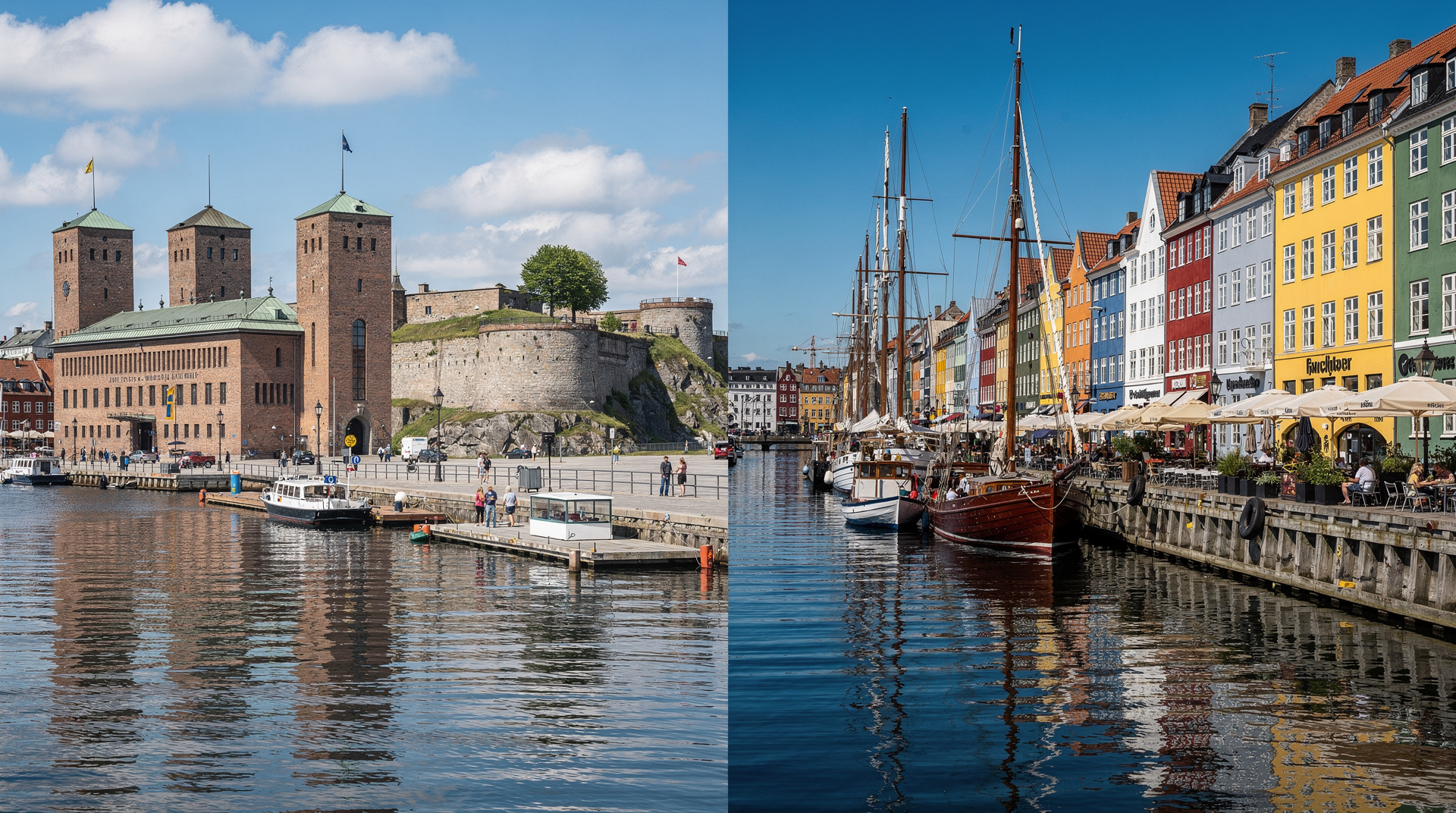
If Bergen’s weather is the deciding worry, shift the balance of nights toward Oslo and treat Bergen as a shorter, focused visit built around the Norway in a Nutshell day rather than a multi-day base. That way a wet Bergen day costs you less of the trip. For the reverse case — travellers set on fjord depth over city polish — see how Bergen stacks up against Oslo’s other Scandinavian rivals in our Oslo vs Stockholm and Oslo vs Copenhagen comparisons, which use the same honest framework.
For a closer look at the city itself before you commit nights to it, the Bergen destination guide and Bergen from Oslo guide cover logistics in more depth than we can here.
Turning the comparison into a plan
Once you know which way you lean, the next step is to put days on the calendar. Our Oslo to Bergen options guide compares the ways of making the trip, and the Oslo to Bergen Nutshell two-day itinerary shows one way to combine the train with a fjord crossing. If you would rather stay in the capital, the Oslo in three days itinerary gives a full city rhythm, and the Oslo in four days plan leaves room for a day trip.
For readers who enjoy a personal take, the blog post Oslo vs Bergen: the debate argues the same question from a more opinionated angle. And if the fjords are what you came for, the Flåm railway guide and the Nærøyfjord page show what the western end of the route offers.
The common mistake to avoid
The most common mistake for first-time Norway visitors is spending too many days in Bergen waiting for fjord-day-trip weather and not enough time in Oslo. Bergen’s weather can keep you indoors for 2 out of 5 days. Oslo’s weather is more predictable. Balance your days accordingly.
The second common mistake: treating the Bergensbanen train as transit rather than a destination in itself. Book a window seat on the right side (coming from Oslo) and allow yourself to stare out of the window at the plateau for 7 hours. This is one of the best things you can do in Norway.
For practical Oslo planning, our how many days in Oslo guide helps structure your city time. The Oslo tourist traps guide tells you what to avoid in the capital.
Frequently asked questions about Oslo vs Bergen — the honest head-to-head for a Norway trip
Is Oslo or Bergen cheaper?
Both are expensive by global standards. Bergen is very slightly cheaper for accommodation in peak season, but not significantly. Food prices are broadly similar. The biggest cost difference is activities: Oslo's museum pass and city sightseeing offers more variety; Bergen's value is in fjord day trips which add up quickly.How do you get from Oslo to Bergen?
The Bergensbanen train takes 6.5 to 7 hours and costs NOK 300 to 700 depending on how far ahead you book (approximately USD 32 to 75). This is one of Europe's most scenic rail journeys — book a window seat. Flights take 1 hour and cost NOK 400 to 1,200. Driving is 460km, around 6 hours.Is Bergen a base for the fjords?
Yes — Bergen is the western gateway to Sognefjord, Hardangerfjord, Nærøyfjord and the Norway in a Nutshell route. Fjord day trips from Bergen are substantially more impressive than the Oslofjord, which is beautiful but not the dramatic glacier-carved scenery of western Norway.Does Bergen get more rain than Oslo?
Significantly more. Bergen is one of the wettest cities in Europe, averaging around 240 rain days per year. Oslo averages around 100–120. June and July are Bergen's driest months but rain is still common. Oslo is drier and sunnier in summer.Which city is better for day trips?
Bergen, decisively, if you want dramatic fjord and mountain scenery. The day trip to Flåm via the Flåm Railway, and Norway in a Nutshell, both originate from Bergen. Oslo's day trips are good (Drøbak, Holmenkollen, the islands) but not in the same natural league.Which city has better nightlife?
Oslo, by a margin. The capital has a more developed bar and restaurant scene, better music venues, and a larger population to fill them. Bergen has a good student-influenced bar scene around Vågsallmenningen but it is a different scale from Oslo.
Top experiences
Bookable activities with verified prices and instant confirmation on GetYourGuide.