Oslo vs Copenhagen — honest comparison for a Scandinavia trip
Oslo: Oslo Pass with public transport and free museum entry
Duration: 24-72 hours
- Instant confirmation
- Free public transport
- Skip museum queues
Should I visit Oslo or Copenhagen?
Copenhagen is cheaper, has better architecture and food value, more to see in a compact area, and the famous Nyhavn. Oslo is more expensive but offers unique fjord and forest nature. For most first-time Scandinavia visitors, Copenhagen is the higher-value destination.
Starting with the honest summary
Copenhagen consistently beats Oslo on value for money. This is not a subtle judgement call — it is a structural fact about Norwegian costs. If you are optimising for a Scandinavia experience per dollar spent, Copenhagen wins on food, drink, and nightlife categories. Oslo wins where nature is concerned, and matches Copenhagen on museum quality.
For most visitors choosing between the two, this guide will help you decide — and if you have 8 to 10 days, explain why doing both makes sense.
| Oslo | Copenhagen | |
|---|---|---|
| Value for money | Weaker — high alcohol/dining costs | Stronger across food, drink, nightlife |
| Architecture | Mostly 19th–20th century | Historic core, Nyhavn, 17th-century fabric |
| Nature access | Fjord + Nordmarka forest at the doorstep | Flat, limited immediate nature |
| Getting between them | 1.5–2 hr flight or ~8 hr train | Same |
| Best combined trip length | 8–10 days for both cities | Same |
Architecture: Copenhagen has the historic city Oslo lacks
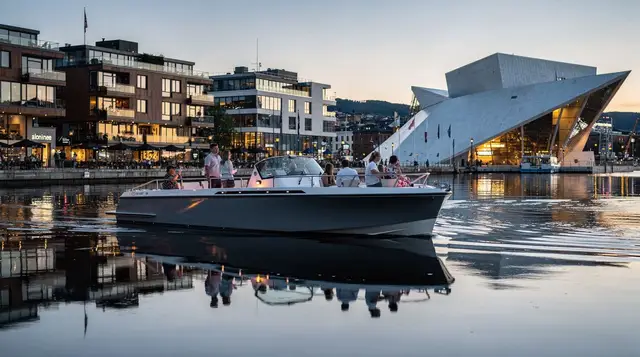
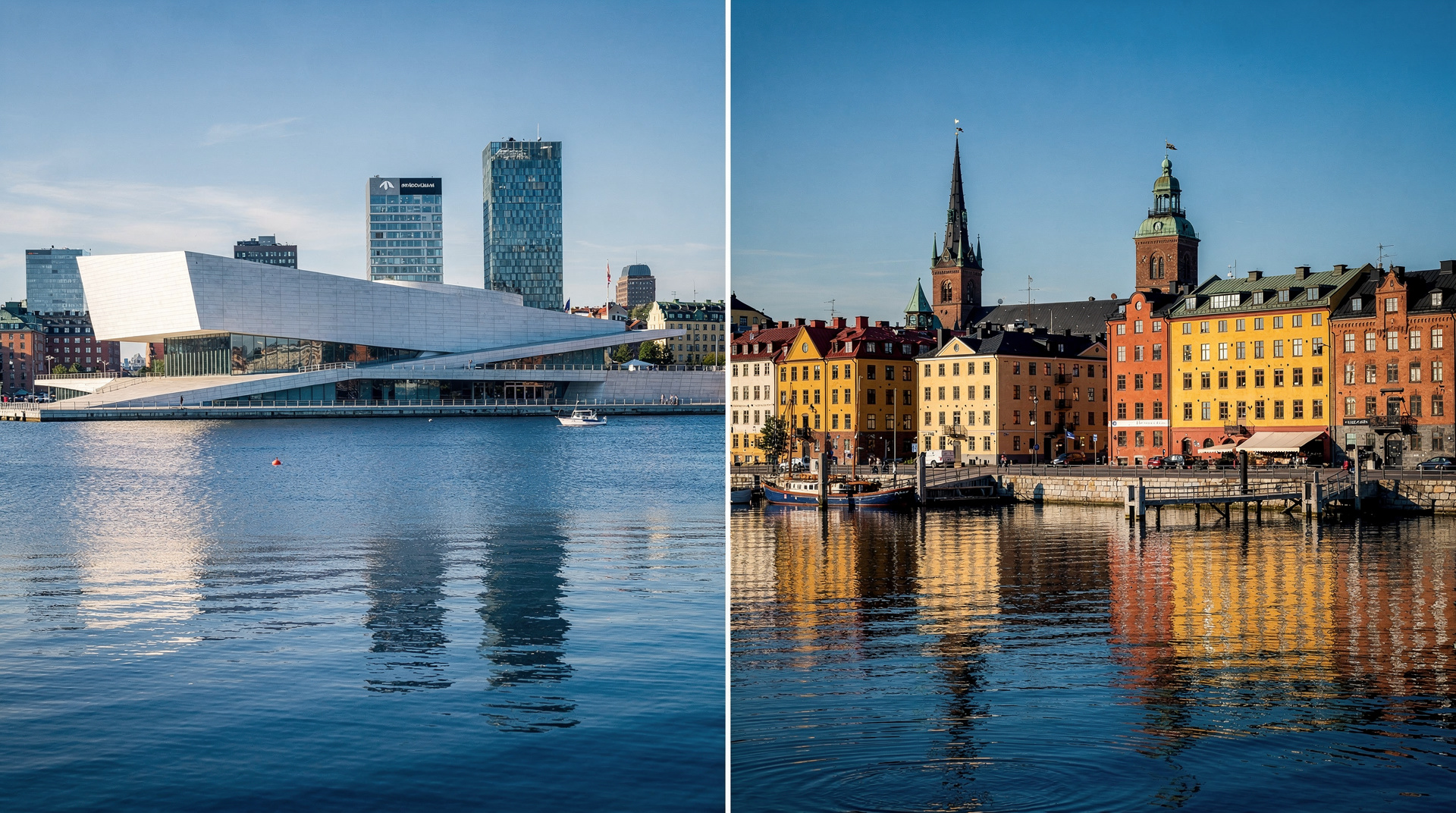
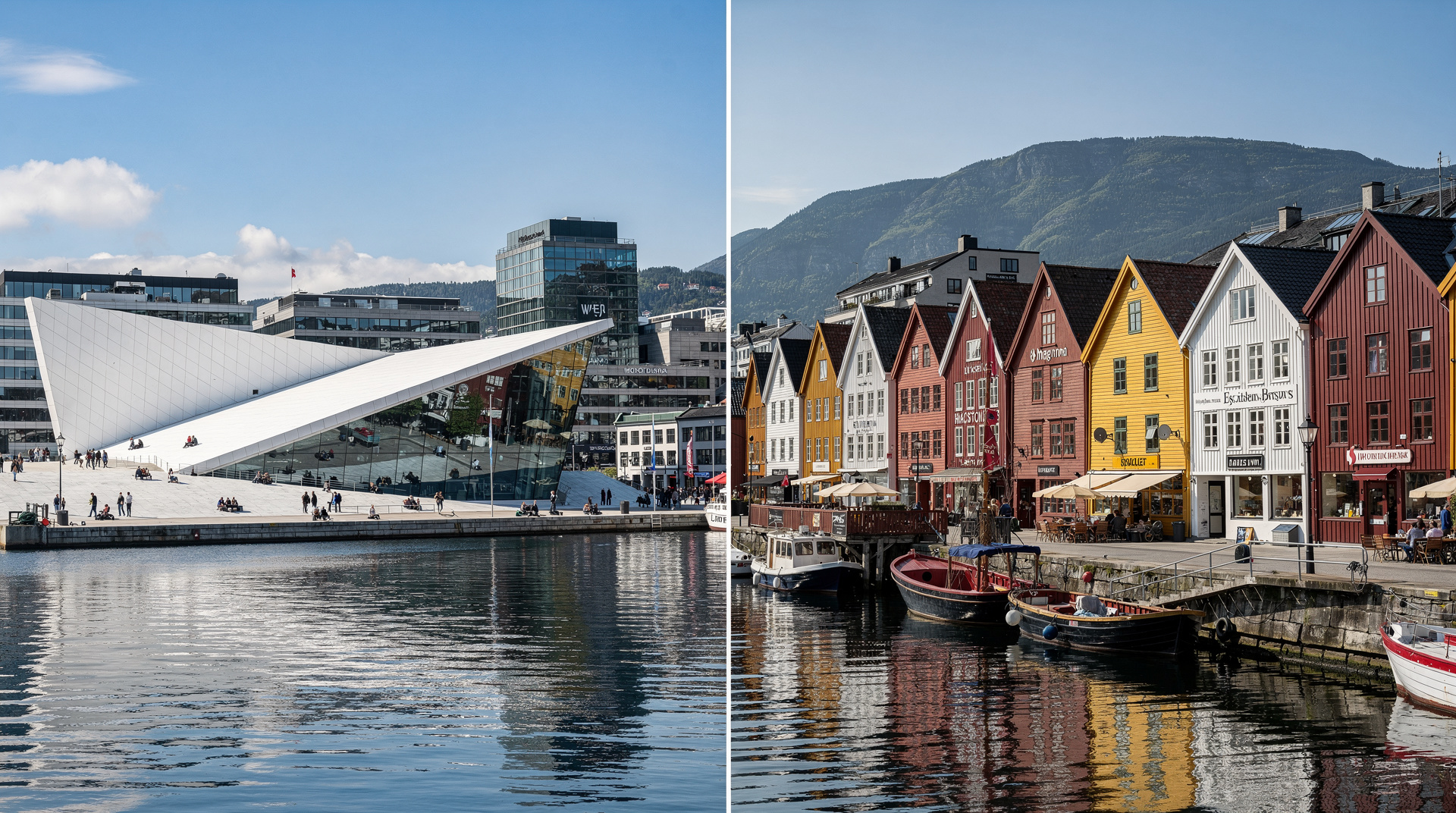
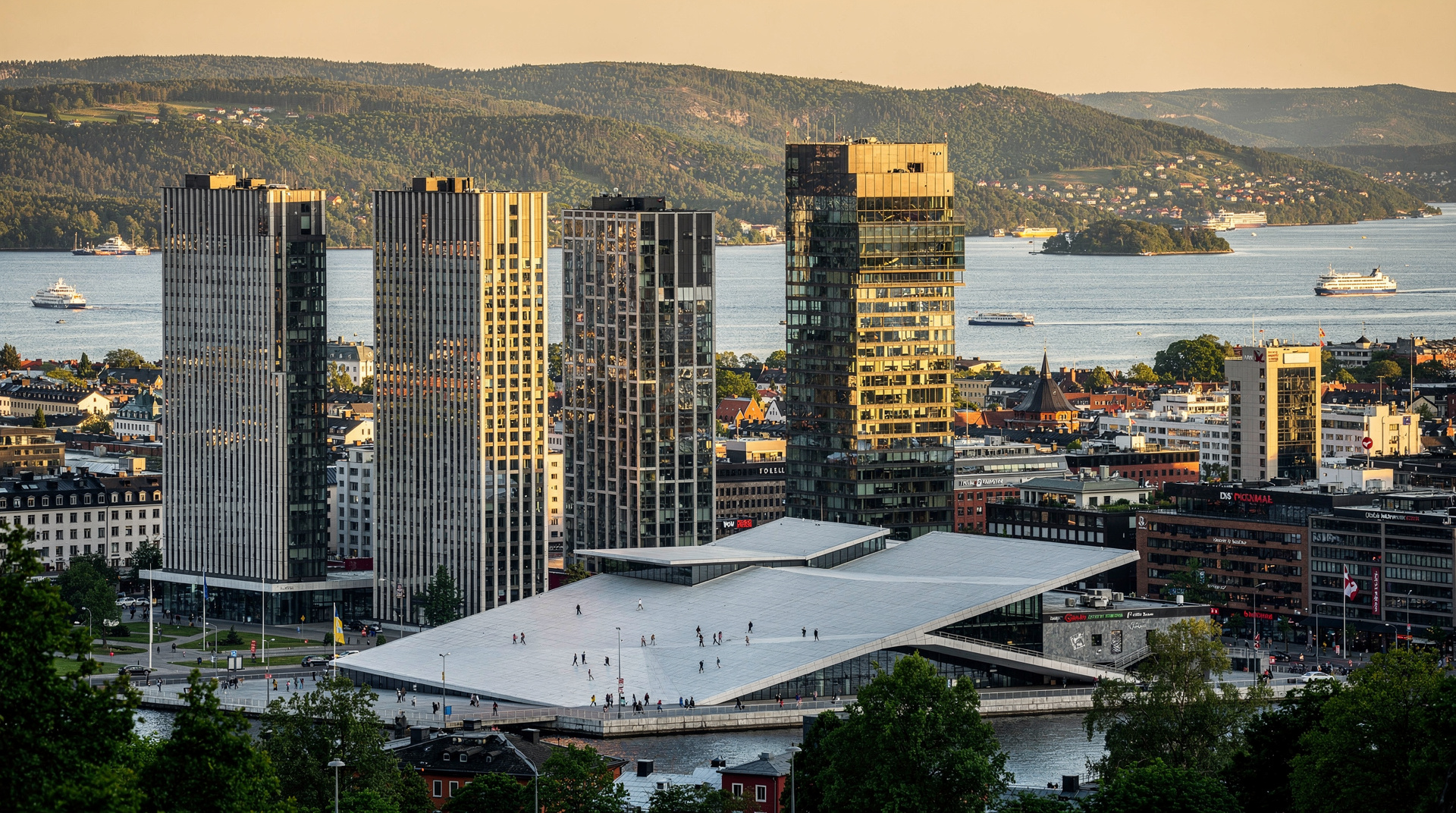
Oslo was largely rebuilt in the 19th century and expanded rapidly in the 20th. Its architectural landmarks are genuinely good — the striking white marble Opera House in Bjørvika, the Munch Museum’s distinctive slanted tower, the medieval Akershus Fortress — but the city lacks the continuous historic fabric of other European capitals.
Copenhagen’s Nyhavn canal with its painted 17th-century townhouses is one of the most photographed streetscapes in Scandinavia. Christiansborg Palace (the Danish Parliament, on an island in the city centre), Amalienborg Palace, the Marble Church, and the Indre By’s cobbled grid all contribute to a historic city centre that rewards aimless wandering in a way that Oslo’s modern centre does not.
If old-world European atmosphere matters to your trip, Copenhagen delivers it more consistently.
Cost: the most significant practical difference
Norwegian alcohol pricing is the most dramatic cost differential between Oslo and Copenhagen. Norway’s state Vinmonopolet monopoly, combined with high alcohol taxes, means:
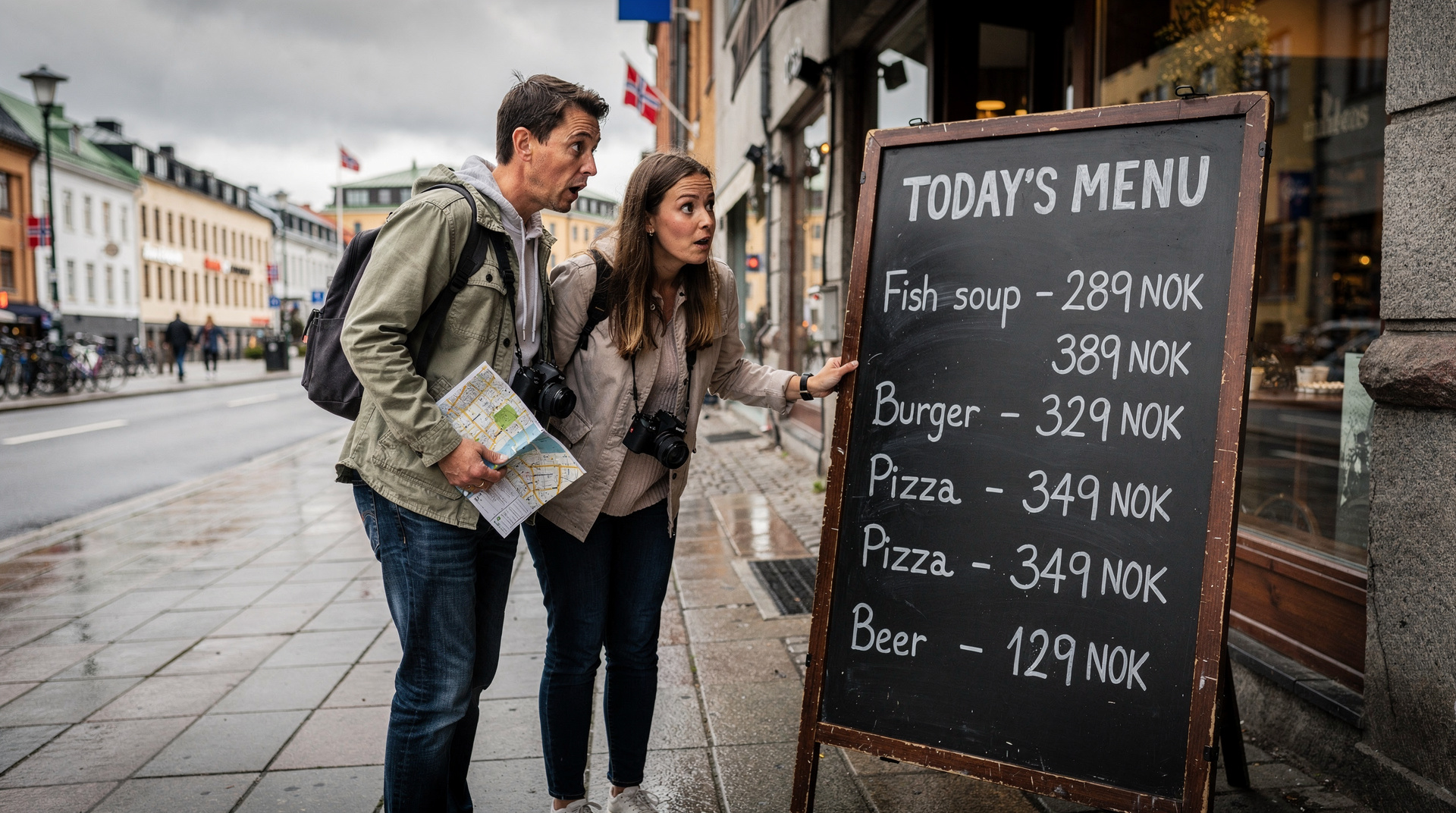
Beer at a bar: Oslo averages NOK 90 to 130 (approximately USD 10 to 14). Copenhagen averages DKK 55 to 75 (approximately USD 8 to 11). Roughly similar, but the Oslo end is significantly higher for premium bars.
Wine at a restaurant: a house pour by the glass in Oslo runs NOK 100 to 160 (approximately USD 11 to 17). In Copenhagen, the equivalent is DKK 60 to 100 (approximately USD 9 to 15).
Spirits: Norway’s Vinmonopolet closes on Sundays and charges significantly above market rates. A standard spirits measure at an Oslo bar is NOK 110 to 160 (approximately USD 12 to 17). Copenhagen spirits are 25–35% cheaper.
Restaurant meals: a main course in Oslo averages NOK 220 to 350 (approximately USD 24 to 38). In Copenhagen, DKK 150 to 280 (approximately USD 22 to 41). Broadly similar at mid-range, but Copenhagen’s higher end offers significantly more for the price.
For a week-long trip with regular dining out and evening drinks, the Oslo premium over Copenhagen could easily amount to USD 300 to 500 per person.
Food culture: New Nordic is stronger in Copenhagen
Both cities are leaders in the New Nordic food movement, but Copenhagen’s version is more mature and more accessible at everyday price points. The influence of Noma (the restaurant that arguably originated the movement before its 2024 closure) permeated Copenhagen’s entire food culture, with fermented, foraged, and seasonal Nordic ingredients appearing at mid-range and casual restaurants.
Oslo’s food scene is excellent — Maaemo, Kontrast, and Pjoltergeist are among Scandinavia’s best — but the gap to Copenhagen is felt at mid-range. A Tuesday lunch at a Copenhagen restaurant around Vesterbro will more consistently deliver creative, high-quality food for DKK 150 to 200 (approximately USD 22 to 29) than an equivalent in Oslo for NOK 200 to 280.
Street food is a genuine Copenhagen advantage: Reffen (the outdoor street food market) and Torvehallerne food hall offer eclectic, affordable food in a social outdoor setting that has no equivalent in Oslo.
Nature: Oslo’s clear advantage
This is where Oslo wins decisively. Copenhagen is flat, coastal in a gentle way, and has limited immediate nature access. Frederiksberg Garden and the Deer Park (Dyrehaven, 30 minutes north) are pleasant urban escapes, but they do not compare to what Oslo offers.
Oslo’s Nordmarka — a vast forest of lakes, trails, and wilderness — begins at the edge of the city and is accessible by T-bane in 30 minutes. The Oslofjord offers island hopping, fjord kayaking, and open-air swimming at the city’s edge. Cross-country skiing in Nordmarka is a unique city-based winter experience that has no equivalent in the flat Danish landscape.
If you are drawn to Scandinavia for its natural landscapes, Oslo delivers this alongside city life in a way that Copenhagen simply cannot.
Museums: a genuine contest
Copenhagen has world-class museums: the National Museum of Denmark (strong Viking history and prehistoric collections), the SMK (National Gallery, strong on Danish golden age painting), the Louisiana Museum of Modern Art (exceptional, in a spectacular coastal setting 30 minutes north by train), and the slightly kitschy but genuinely entertaining Nationalmuseet Viking section.
Oslo matches Copenhagen museum-for-museum in depth and quality: the Munch Museum, National Museum, Fram Museum, Norsk Folkemuseum, and Astrup Fearnley contemporary museum are all excellent. Oslo’s Viking-related institutions are temporarily disrupted — the Viking Ship Museum is closed until approximately 2027, currently redirected to the Viking Planet and Historical Museum — but the overall museum quality is high.
Verdict: close call. Copenhagen’s Louisiana Museum edges ahead as a single standout institution; Oslo’s Munch Museum is an equivalent drawcard for Munch fans. For pure breadth, Copenhagen has more variety.
Cutting Oslo’s cost gap without skipping it
If Oslo’s alcohol and dining premium is the main hesitation, the gap is manageable with a few habits: buy beer and wine from Vinmonopolet or a supermarket rather than bars, lean on the budget eats and Mathallen food hall circuit rather than waterfront tourist restaurants, and use the Oslo Pass to convert several separate museum entries into one predictable cost. None of this closes the gap entirely — Copenhagen will still be cheaper — but it narrows it enough that Oslo’s nature advantage becomes the deciding factor rather than cost alone.
Copenhagen travellers looking to do the same in reverse should note there is less to trim: Copenhagen’s mid-range dining and nightlife are already close to the best-value baseline in Scandinavia, so the savings opportunity is smaller.
How each city feels on the ground
Numbers only tell part of the story, and the day-to-day rhythm of the two cities is different. Copenhagen is compact and easy to read: you can drift from one neighbourhood to the next without planning much, and the city rewards that kind of unhurried wandering. Oslo asks for a little more intention. Its highlights are spread between the waterfront, the museum peninsula and the hills, so a good day here usually has a shape, such as a morning at the museums and an afternoon on the water.
That difference matters when you are deciding how to spend limited time. If you like a trip with few decisions, Copenhagen is the lower-effort option. If you like a trip that mixes city streets with a ferry ride or a forest walk in the same day, Oslo is the more interesting puzzle. Our getting around Oslo guide and the Ruter public transport guide explain how easy that mix actually is once you have a ticket sorted.
Neighbourhoods worth your time in Oslo
Visitors who write Oslo off after a quick look at the main street usually missed the neighbourhoods where the city is at its best. Grünerløkka is the creative, café-heavy district, and the Grünerløkka food guide shows where to eat without paying waterfront prices. Grønland is the multicultural, lower-key corner with a very different feel from the polished centre. Frogner is quieter and more residential, with its park and sculptures close by.
None of these districts has the postcard canal of Nyhavn, and it would be dishonest to pretend otherwise. What they offer instead is a lived-in, slightly rougher city that reveals itself to people who walk beyond the central streets. If you want a first impression of Oslo that goes beyond a few landmarks, the Sentrum neighbourhood guide is the sensible starting point, and the top things to do in Oslo page helps you choose what to add around it.
Choosing by season
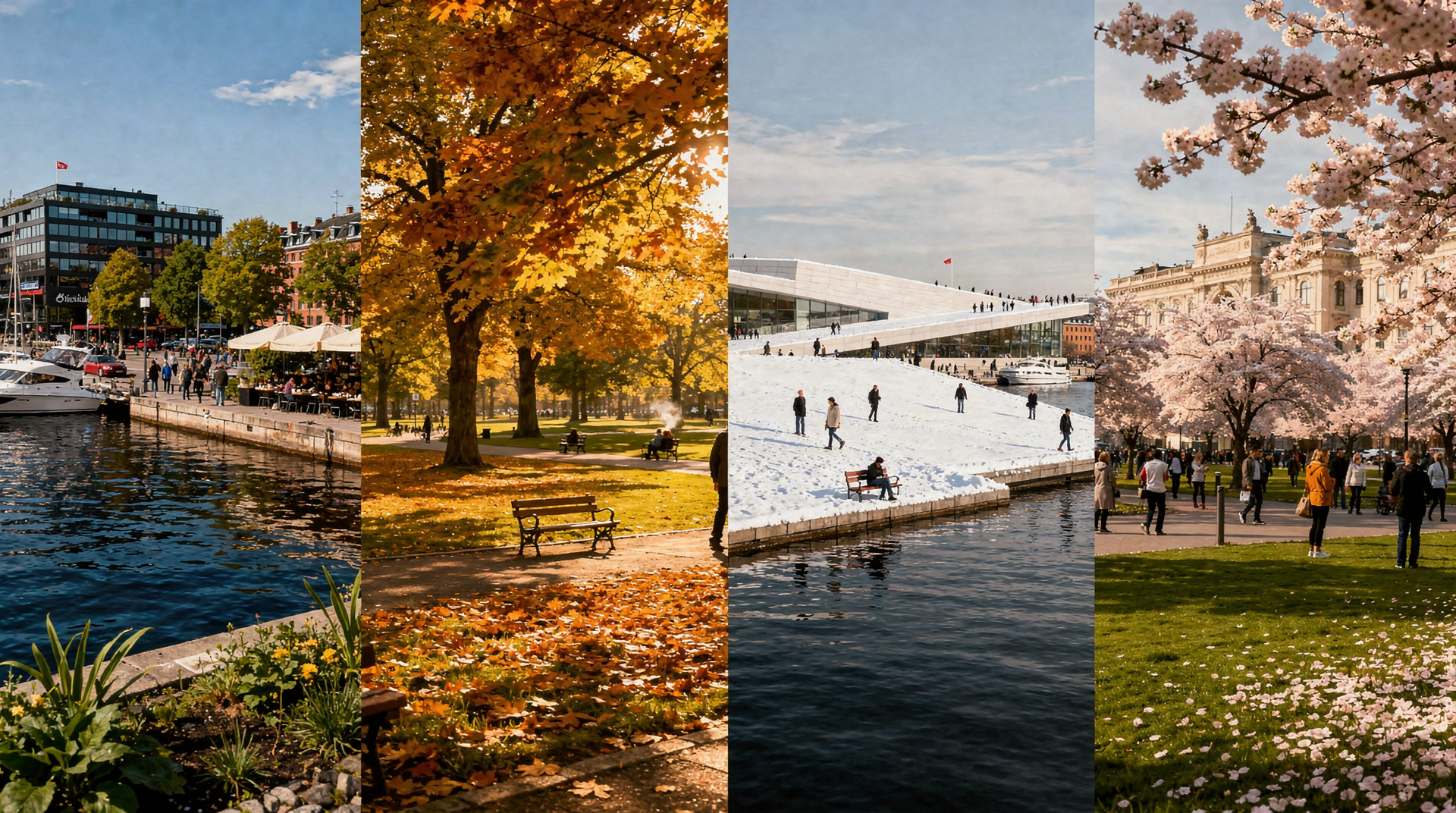
Season changes this comparison more than most people expect. In summer, both cities are at their most pleasant, but Oslo’s fjord comes into play: islands, swimming spots and long evenings on the water turn it into a very different proposition from its reputation as a pricey city break. The Oslo in summer guide covers what that looks like in practice.
In winter, the balance shifts again. Copenhagen stays an urban destination, pleasant but mostly indoors. Oslo turns into a place where snow is part of the plan, and the Oslo in winter activities guide lists what becomes possible. If you are unsure which time of year suits you, the best time to visit Oslo page and the summer versus winter comparison will help you decide before you compare cities at all.
When Oslo is the better choice despite the cost
It is easy to read a value-for-money verdict as a verdict on the whole trip, but cost is only one of the things a traveller is buying. A few situations tilt the decision towards Oslo even for people who care about their budget:
- You want nature and a city in one trip. Oslo is one of the few capitals where a forest walk or a swim is a short ride from the centre, and that is hard to price against a Copenhagen restaurant meal.
- You are travelling in winter and want to do something outdoors. The city’s winter offer is a genuine reason to go, not a consolation prize.
- You plan to continue to the fjords. Oslo is the natural gateway, and the Norway in a Nutshell guide explains how the route works from here.
- You are interested in the sauna culture. The floating saunas guide describes an experience that Copenhagen cannot copy in the same setting.
If none of these apply, and your priority is simply good food and a lively evening for the least money, the honest answer remains Copenhagen. If you do decide on Oslo, the is Oslo worth visiting guide gives a fuller picture of what to expect, and how many days in Oslo helps you size the stay.
Planning a combined trip
For travellers with enough time, the strongest answer is often to refuse the either-or choice. A combined trip lets each city do what it does best: Copenhagen for historic streets, casual food and late evenings, Oslo for water, forest and museums. Spending the first part of the trip in one city and the second in the other also spreads the expensive items, since you are not paying Oslo-level bar prices every night.
If you take Oslo as the second half of the trip, a short plan helps. The Oslo in 3 days itinerary is a balanced way to see the main sights, while the Oslo budget weekend is built for travellers who arrive already worried about spending. Anyone with only a single day can use the Oslo in 1 day itinerary to see the essentials without overplanning.
Getting between them
Flight: 1.5 to 2 hours. Norwegian Air, SAS, and Scandinavian low-cost carriers operate the route frequently. Prices range from approximately USD 40 to 180 depending on booking lead time.
Train: Oslo to Copenhagen via Gothenburg takes approximately 8 hours. Book through Vy (Norway) or SJ (Sweden). Scenic, comfortable, and a genuine way to experience the Scandinavian landscape. The crossing into Denmark via the Öresund Bridge from Malmö to Copenhagen is memorable.
Gothenburg stopover: breaking the train journey in Gothenburg for a night gives you a charming intermediate city with excellent seafood and a relaxed pace that differs from both capitals.
Verdict by traveller type
Value-focused travellers: Copenhagen is the obvious choice. Better food value, lower alcohol costs, and comparable culture.
Nature seekers: Oslo is the decisive winner — the fjord and forest access is incomparable.
History and architecture fans: Copenhagen’s historic city centre beats Oslo’s more modern fabric.
Food and dining enthusiasts on a budget: Copenhagen. At high-end splurge level, Oslo competes well.
Winter visit: Oslo is the better winter city — Christmas markets are equally good, but Oslo adds skiing and proper winter activities. Copenhagen in winter is attractive but primarily urban.
Summer long-day visit: Oslo’s near-white nights give it an edge in pure atmospheric summer experience. Copenhagen’s summer is excellent but without the extraordinary light phenomenon.
For a deeper honest assessment of Oslo’s costs and what you get for your money, read our Oslo trip cost guide and overpriced food warning. If you are coming to Oslo having chosen it over Copenhagen, our tourist traps guide will help you spend your money better.
Frequently asked questions about Oslo vs Copenhagen — honest comparison for a Scandinavia trip
Which is cheaper, Oslo or Copenhagen?
Copenhagen is meaningfully cheaper, especially for alcohol and dining. Oslo's alcohol prices are among the highest in Europe due to Norway's state monopoly. A Copenhagen restaurant meal runs 15–30% less than an Oslo equivalent, and a Copenhagen beer is roughly half the price of an Oslo bar beer.Which city has better architecture?
Copenhagen, clearly. Nyhavn's 17th-century townhouses, Christiansborg Palace, Amalienborg, and the old Indre By street grid give Copenhagen a historic architectural depth that Oslo (largely rebuilt 19th–20th century) cannot match.Is Copenhagen or Oslo better for food?
Copenhagen leads at mid-range and street food level — better value, more variety, stronger New Nordic heritage (Noma's influence permeates the city's food culture). Oslo has excellent restaurants but is more expensive. For a full week of good eating, Copenhagen is stronger.Can you visit both Oslo and Copenhagen on one trip?
Yes — the Oslo to Copenhagen flight takes 1.5 hours. By train, it is about 8 hours via Oslo–Gothenburg–Copenhagen. Many visitors combine both on a 10-day Scandinavia itinerary. A stopover in Gothenburg adds scenic value.Which has better nightlife?
Copenhagen has a more vibrant and varied nightlife scene. Oslo's bars close earlier (last orders typically around 02:30–03:00), alcohol is pricier, and the scene is smaller. Copenhagen's Meatpacking District (Vesterbro) and the broader bar scene stays active later and is more international.Does Copenhagen have good nature?
Not to the same degree as Oslo. Copenhagen is flat and urban; the nearest significant natural scenery is the north Sjælland coast, about 30 minutes north. Oslo's immediate access to Nordmarka forest and the fjord is a structural advantage in the nature category.
Top experiences
Bookable activities with verified prices and instant confirmation on GetYourGuide.