Oslo hop-on hop-off bus guide: routes, stops, and honest verdict
Oslo: 24 or 48-hour hop-on hop-off sightseeing bus (Gray Line)
Duration: Full day
- Free cancellation
- Multiple stops
Is the Oslo hop-on hop-off bus worth it?
The hop-on hop-off bus is best for visitors with limited mobility, those travelling with heavy luggage, or first-timers who want an overview before exploring independently. It covers Bygdøy (where multiple museums cluster) efficiently. For physically active visitors who can walk 5-10 km/day, a combination of the Ruter transport pass and self-guided walking will show more of Oslo for less money.
What the hop-on hop-off bus is: a quick definition
For first-time users: a hop-on hop-off bus is a sightseeing vehicle running a fixed loop of tourist stops. You buy a day ticket (typically 24 or 48 hours), board at any stop, ride as many or as few stops as you like, disembark to visit attractions, and reboard the next bus on the same ticket. Audio commentary describes what you’re passing. In Oslo, the buses are double-decker — the upper open deck gives the best views; the lower covered deck is available in rain.
No prior booking is technically required (walk-up tickets are sold at the main boarding points), but booking online in advance is cheaper and avoids queuing.
| Cost | Around NOK 350–420 (USD 38–45) for 24 hours |
| Time needed | 90 min full loop; 4–6 hrs with Bygdøy museum stops |
| Best for | Winter Bygdøy access, limited mobility, first orientation |
| Skip if | You’re an active walker visiting June–August |
| Getting on | Board at Rådhusplassen, Oslo S, or National Theatre |
| Best time | Activate early morning to use the full 24 hours |
Three ways to get around Oslo as a tourist
Before deciding on the hop-on hop-off bus, it helps to understand your options:
Option 1: On foot + Ruter. Oslo’s city centre is walkable. The Opera House to Vigeland Park is 3.5 km — a pleasant 45-minute walk. Add a Ruter day pass (NOK 105 / USD 11) for trams and metro, and you can cover everything from Grünerløkka to Akershus without a guided tour vehicle. Most active visitors aged 20-70 prefer this combination.
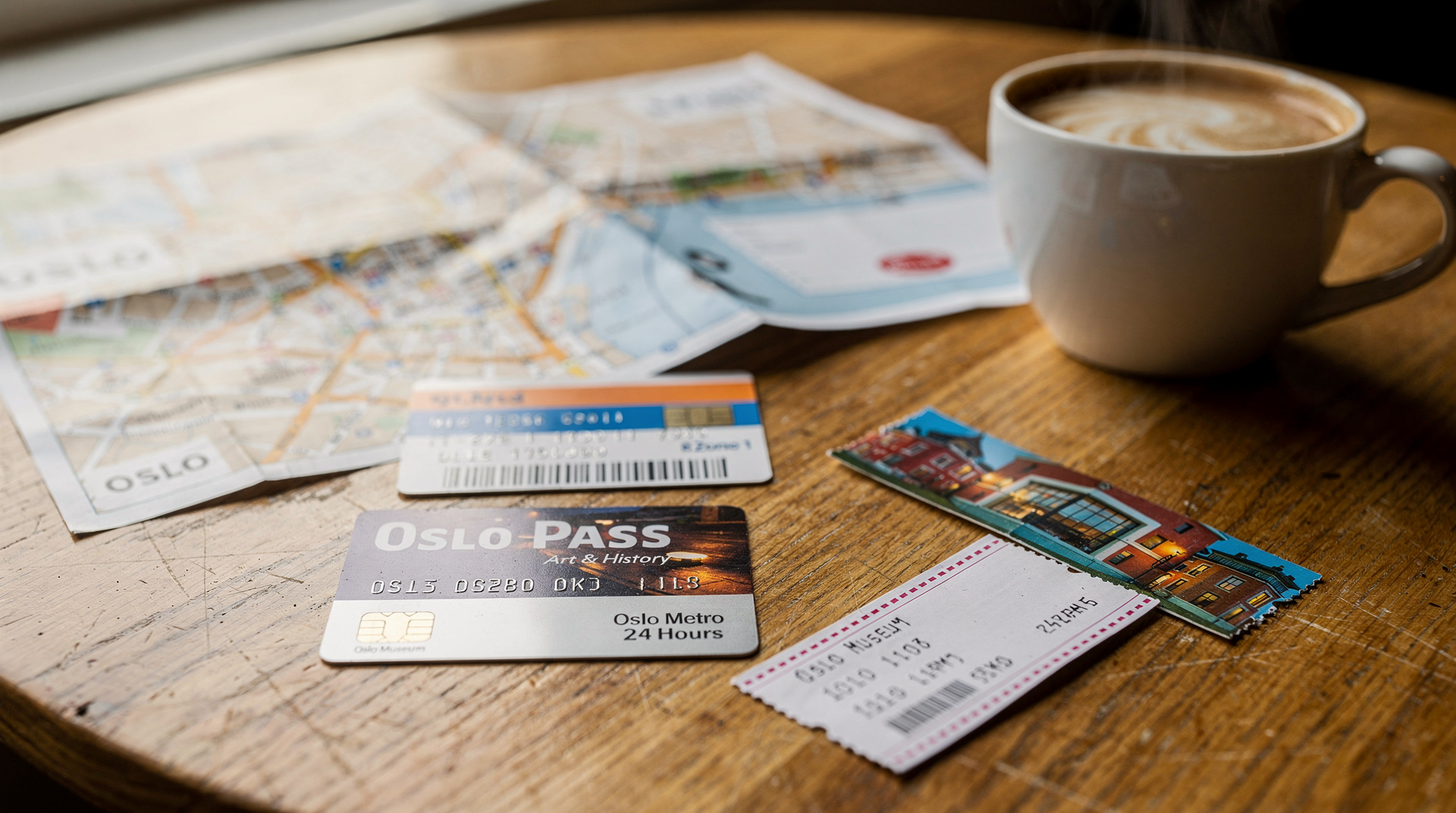
Option 2: Oslo Pass + Ruter. The Oslo Pass (NOK 595 / USD 64 for 24 hours) includes Ruter public transport AND free museum admission. The Ruter ferry to Bygdøy runs in summer. This approach beats the hop-on hop-off bus for museum-focused visitors.
Option 3: Hop-on hop-off bus. Best for visitors who want audio commentary, prefer not to plan transport themselves, or need to cover Bygdøy efficiently on a day when the Ruter ferry isn’t running (winter/spring). Also genuinely useful for visitors with mobility limitations.
This guide focuses on Option 3 with honest comparison.
The main route: what the bus covers
Both major operators (Gray Line and City Sightseeing) run a loop that covers Oslo’s primary tourist areas. Typical stops in order:
City centre cluster:
- Oslo Central Station / Jernbanetorget
- Oslo Opera House and Bjørvika
- Akershus Fortress
- City Hall and Aker Brygge
Bygdøy museum peninsula:
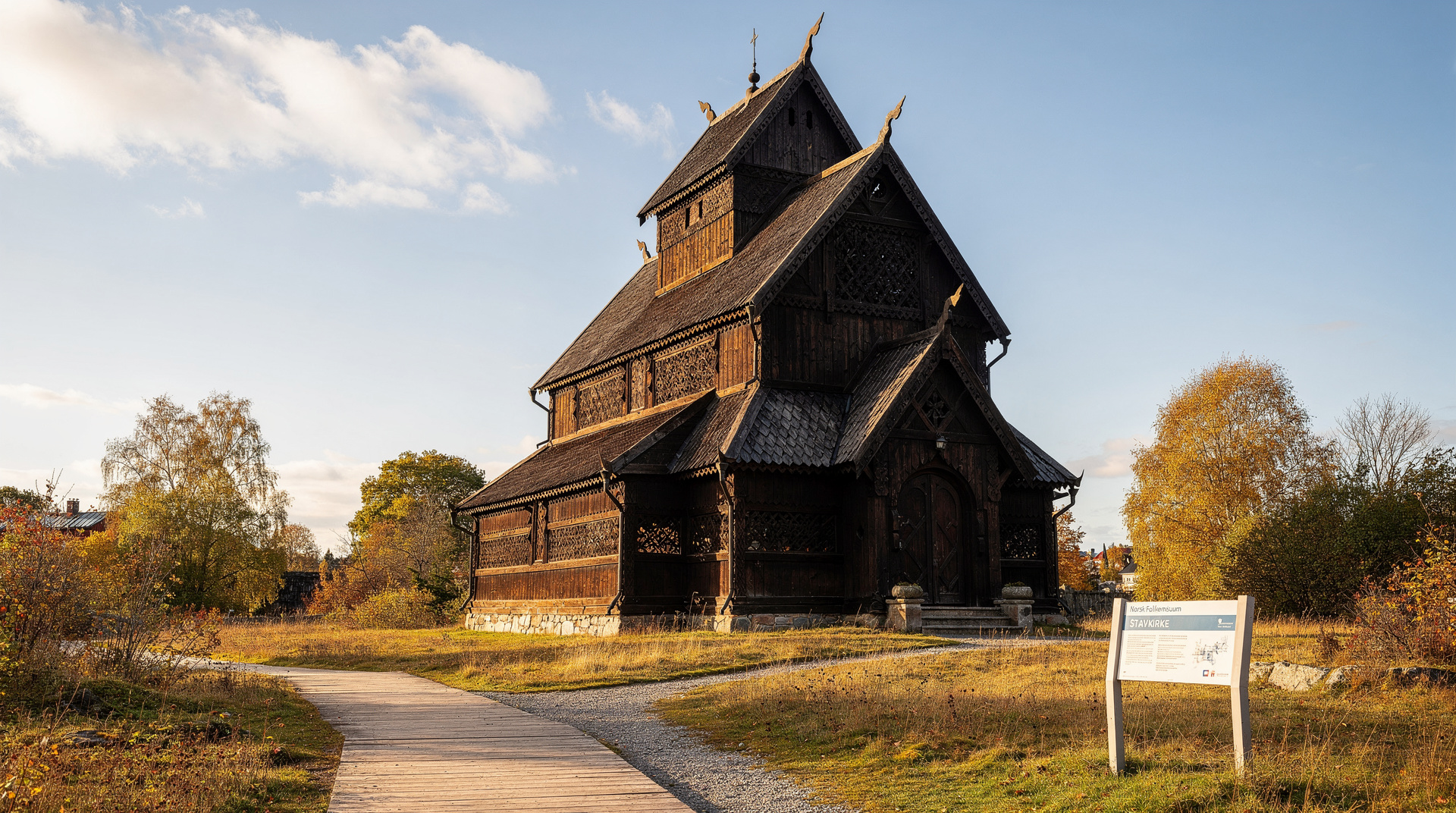
- Norsk Folkemuseum
- Fram Museum and Kon-Tiki Museum
- Norwegian Maritime Museum
West side:
- Vigeland Sculpture Park (Frogner)
- Royal Palace
- National Theatre
- Karl Johans gate area
The full loop runs approximately 90 minutes without stopping. With stops at Bygdøy, expect to return to your start point 4 to 6 hours after departure if you visit two or three museums.
Gray Line vs City Sightseeing: the practical differences
Gray Line is the longer-established operator in Oslo. Their double-decker buses have audio commentary in multiple languages (English, German, French, Spanish, plus others). In peak season (June-August), buses depart every 30-45 minutes. In shoulder season, every 60-90 minutes. Board at Rådhusplassen (City Hall square) or Oslo Central Station.
City Sightseeing runs a similar double-decker format with audio commentary. The route order differs slightly from Gray Line. Board at Rådhusbrygge (City Hall pier) or National Theatre.
Practically, the difference is minimal for most visitors. Check the real-time departure boards at the main boarding points and take whichever bus comes first.
How to buy tickets
Purchase online in advance — this avoids queuing and is usually the same price or cheaper than buying from the driver. Both operators sell directly on their websites and through GetYourGuide. Tickets can also be bought at the Oslo Visitor Centre and at most central hotel front desks.
Tip: if you’re also buying an Oslo Pass, compare the bundle prices at the visitor centre — combined hop-on hop-off plus Oslo Pass deals sometimes offer NOK 50 to 100 savings.
When the hop-on hop-off bus is genuinely the best choice
You’re visiting in winter or early spring. The Ruter passenger ferry to Bygdøy stops operating from approximately October to April. Bus 30 replaces it but is slower and less atmospheric. The hop-on hop-off bus runs year-round and covers Bygdøy directly — making it more convenient in winter for reaching the museum cluster.
You’re travelling with young children or older adults with limited walking. The bus covers 15+ km of city circuit that would require multiple separate Ruter journeys to replicate on foot. For families where everyone can board one vehicle and see the overview before deciding where to stop, the bus simplifies logistics.
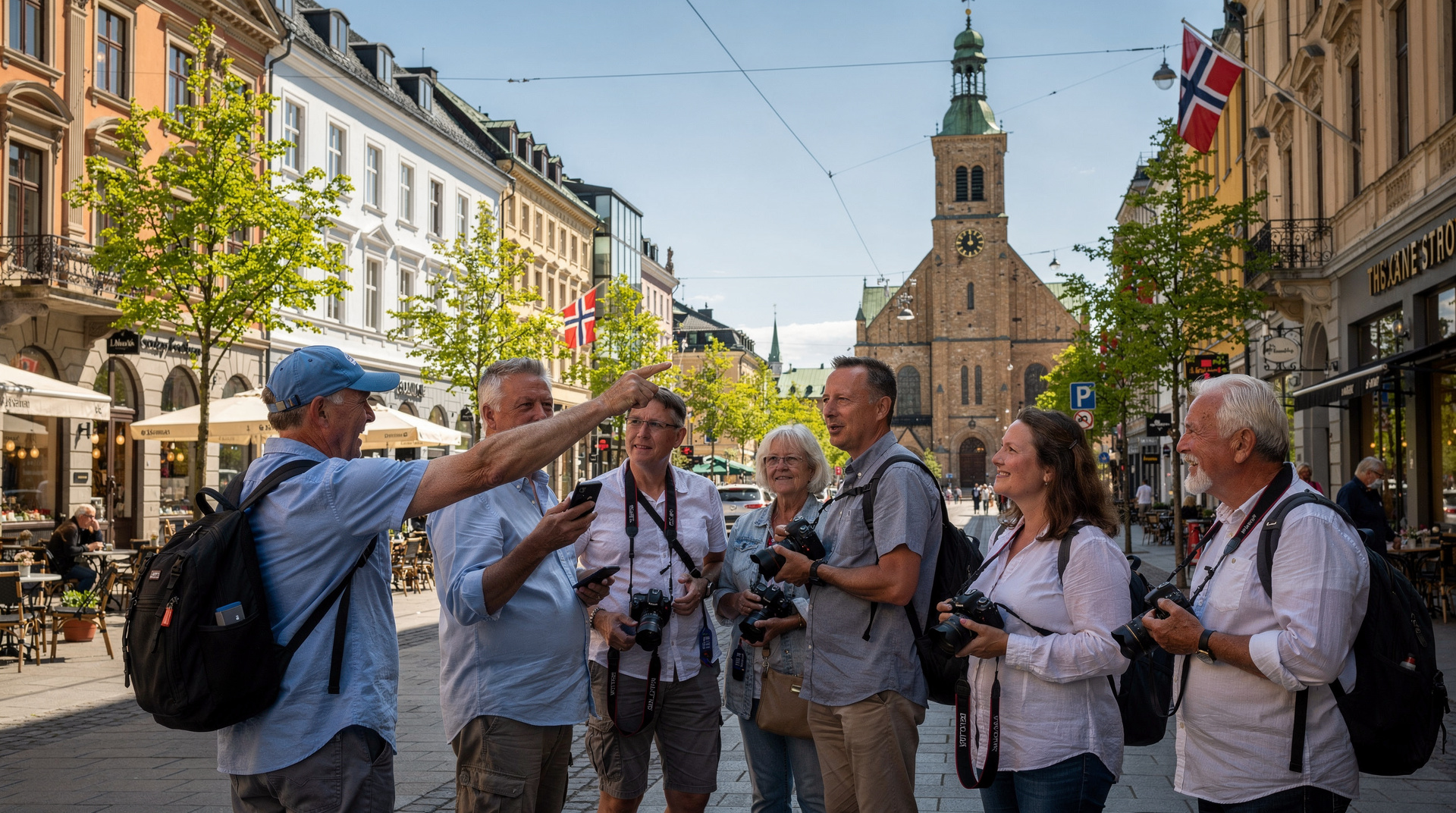
You want an initial orientation. Arriving in an unfamiliar city, a complete loop of the hop-on hop-off bus as a passive observer — just listening to commentary and seeing the layout — is a genuinely useful first two hours. Do the loop once without getting off, then use public transport and walking for the rest of the trip.
You have limited mobility. The buses are wheelchair accessible. Public trams and metro in Oslo are generally accessible but not uniformly so — certain stations have no elevators.
When the hop-on hop-off bus is NOT the best choice
You’re an active walker visiting June through August. Vigeland Park is 3.5 km from the Opera House. Akershus Fortress is 1.5 km from the Central Station. Bygdøy is served by the pleasant Ruter ferry. You will see more of Oslo — including neighbourhoods the bus doesn’t cover — by walking.
You prioritise museum visits over transport convenience. The Oslo Pass bundles transport and museum admission more cost-effectively for museum-heavy days.
You’re looking for genuine local insight. Hop-on hop-off audio commentary gives accurate facts, but it skews toward the expected and doesn’t take you to Grünerløkka cafés, the Vulkan food scene, or the Grønland neighbourhood. A small-group walking tour covers those.
The Bygdøy question
Bygdøy deserves special attention because it’s where the bus earns its keep for many visitors. The peninsula houses five museums clustered within a 20-minute walk:
- Norsk Folkemuseum (open-air, 3-4 hours)
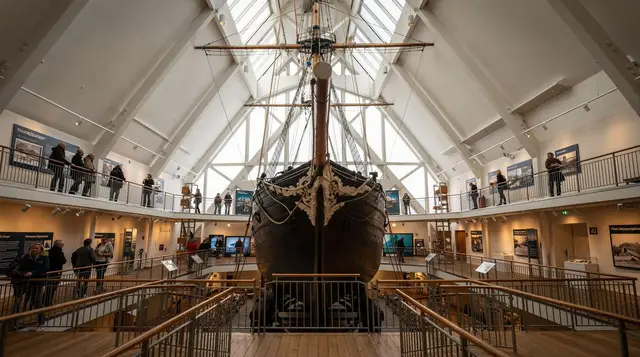
- Fram Museum (polar ship, 1-2 hours)
- Kon-Tiki Museum (adventure sailing, 1 hour)
- Norwegian Maritime Museum (1 hour)
- Viking Ship Museum — closed until approximately 2027
Getting to Bygdøy by hop-on hop-off bus is straightforward: board at Rådhusplassen, ride to the Norsk Folkemuseum stop, spend your time there, then reboard to Fram and Kon-Tiki. Compared to navigating Ruter bus 30 independently, this is marginally more convenient — though the Ruter ferry from Aker Brygge (summer only) is genuinely pleasant.
See the full Bygdøy destination guide for museum hours, prices, and the best order to visit.
Practical tips if you decide to book
Activate your ticket early. 24-hour tickets expire exactly 24 hours from first use. Activate at 9am not 3pm if you want a full day.
Download the app. Both Gray Line and City Sightseeing have apps showing real-time bus positions. This avoids standing at stops for unknown waits.
Check winter frequency before booking. Outside peak season, buses run every 60-90 minutes. Missing a bus means a 90-minute wait in Norwegian autumn rain. In winter, verify the timetable before committing.
Headphones are better. Bus audio commentary through on-board speakers is hard to hear clearly. Both operators support audio through the app — use your own headphones for much better sound.
The stop-by-stop experience: what you’ll actually see
A practical description of what the hop-on hop-off loop delivers, from the perspective of someone sitting on the upper deck:
From Oslo Central Station heading south: The bus passes through the Bjørvika tunnel exit and emerges at the Opera House waterfront. The Opera House roof — the white marble slope descending to the water — is visible on the right. The Munch Museum tower appears across the canal. Oslo’s new public library is behind it. This stretch shows the city’s most recent and ambitious urban transformation.
Along the waterfront toward Aker Brygge: The bus passes Akershus Fortress on the headland to the right — the medieval stone walls against the sky. Below them, the harbour is busy with fjord ferries and pleasure craft. Aker Brygge’s restaurant terraces come into view. The National Museum’s new building appears set back from the waterfront.
Turning west toward Tjuvholmen: The Renzo Piano curved roof of the Astrup Fearnley Museum is visible. The Tjuvholmen residential and cultural quarter — all built since 2012 — shows how Oslo has remade its waterfront.
Up through the city to Frogner: The bus climbs away from the harbour through older 19th-century residential streets. This section shows the upper-bourgeois Oslo of wide avenues and apartment buildings with ornamental facades. The Vigeland Park stop gives enough time for a 30-minute walk through the main axis of the sculpture park before reboarding.
Across to Bygdøy: The loop descends to the peninsula via a residential road. The Bygdøy stops are in a quieter, tree-lined part of the peninsula that gives no hint of the major museum cluster ahead. The bus drops you at separate stops for Norsk Folkemuseum and for Fram/Kon-Tiki.
Return to the city centre: Via the Royal Palace, past the National Theatre, and back down Karl Johans gate to the starting point. The upper-deck view down Karl Johans gate from the Palace end gives the best visual understanding of how this street was designed — long, straight, downhill toward the fjord.
Comparing costs: hop-on hop-off vs individual components
To make the decision concrete:
| Option | Cost |
|---|---|
| Hop-on hop-off 24h | NOK 350-420 (USD 38-45) |
| Ruter day pass | NOK 105 (USD 11) |
| Oslo Pass 24h (incl. transport + museums) | NOK 595 (USD 64) |
| Panoramic bus tour (non-hop) | NOK 250-320 (USD 27-34) |
If you’re going to visit two or more Bygdøy museums on the same day, the Oslo Pass delivers more value than the hop-on hop-off ticket for a similar price. The only case where hop-on hop-off alone beats the alternatives is the dedicated sightseeing bus experience — the commentary, the upper-deck views, and the flexibility to deboard — without the museum component.
Holmenkollen detour: does the bus go there?
No standard hop-on hop-off route covers Holmenkollen — the ski jump and museum 10 km into the forested hills northwest of Oslo. To reach Holmenkollen, take T-bane line 1 from the city centre to Voksenkollen or Frognerseteren (the terminus). This is covered by a Ruter day pass or Oslo Pass. The Holmenkollen detour is worth doing as a separate excursion; see the Holmenkollen guide for details.
Alternative: the panoramic city bus tour
If you want a guided bus overview but don’t need the hop-on component, the panoramic city tour is a better-value option. These run fixed circuits with a live or recorded guide, take 2-3 hours, and cost less than a full-day hop-on hop-off pass. Good for orientation on arrival. See the panoramic tour option in the related tours section for details.
Making the decision
Use the hop-on hop-off bus if:
- You’re visiting in winter and need to reach Bygdøy without the ferry
- You’re travelling with small children or have mobility needs
- You want a passive orientation loop on your first morning
Skip the hop-on hop-off if:
- You’re visiting June-August and can walk 4+ km per day
- You plan to spend most of your time in museums (use Oslo Pass instead)
- You want to explore real neighbourhood Oslo beyond the tourist circuit
For a comparison of all Oslo guided tour formats, see the Oslo walking tours compared guide. If you decide to use a guided walking tour instead, see which Oslo walking tour to pick for an honest breakdown of what each format delivers.
Using the hop-on hop-off bus with an Oslo Pass
The Oslo Pass does NOT include the hop-on hop-off bus — these are separate commercial products. However, the Oslo Pass covers the Ruter public transport network, which includes:
- T-bane (metro) to Holmenkollen and the forest
- Trams across the city centre
- Ruter summer ferry to Bygdøy
- Bus 30 to Bygdøy in winter
In practice, the Ruter network takes you everywhere the hop-on hop-off bus does — just without audio commentary and sometimes with multiple connections rather than one direct vehicle. For most visitors with the Oslo Pass, Ruter is sufficient.
The hop-on hop-off bus adds value specifically when:
- You want audio commentary while moving between sights
- You’re visiting with a group that prefers a single vehicle experience
- You’re in Oslo for one day only and want the most efficient possible orientation
The children’s experience
Families with children aged 4-12 generally find the hop-on hop-off bus a positive experience. The upper deck seats with the city visible in all directions are inherently exciting for children. The 90-minute loop feels like an adventure rather than transport. The audio commentary keeps children engaged when the narration covers things they find interesting (fortresses, ships, polar exploration) and can be ignored when it doesn’t.
The main downside with children: you’re locked into the bus’s route and timing for moving between Bygdøy museums. If a child needs to stop for a bathroom break or snack at an inopportune point, you lose a bus departure. With Ruter’s flexible individual stops, you can adjust more freely.
Strollers: Double-decker buses accommodate strollers in the lower deck. The upper deck requires lifting the stroller, which staff assist with at boarding.
Seasonal availability
Both major operators run reduced services outside peak season:
June through August: Full service, buses every 30-45 minutes, all stops operational.
April-May and September-October: Reduced frequency (every 60-90 minutes). Some less-visited stops may be skipped.
November through March: Skeleton service or seasonal closure depending on the operator. Verify before booking in winter. The Ruter ferry to Bygdøy is not operating in this period, making the hop-on hop-off bus the most convenient Bygdøy option for the few winter visitors who want to make the trip.
Always check the current timetable at grayline.com/oslo or citysightseeing.com/oslo before booking.
Rain, wind, and the open-top deck
Norwegian weather is genuinely variable across the seasons this bus operates in, and it’s worth planning your seating around it. The upper open deck delivers the best photos and the clearest views of the Opera House roofline and the Akershus Fortress walls, but Oslo showers arrive with little warning even in July, and the wind picks up noticeably once the bus is moving along the waterfront stretch toward Tjuvholmen.
Bring a light rain layer even on a forecast-clear day, and know that the covered lower deck is always available if conditions turn — you can move between decks at most stops without losing your ticket validity. In winter, the open upper deck is genuinely cold at speed; most visitors stick to the lower deck and step up briefly for photos at scenic points like the Vigeland Park approach.
Combining the bus with a walking day
Many visitors find the best approach isn’t choosing bus or walking exclusively, but sequencing them. Doing the full 90-minute loop once on your first morning without getting off gives you a mental map of the city — where Bjørvika sits relative to Aker Brygge, how far Frogner is from the centre, how Bygdøy connects back to town — that makes every subsequent walking decision faster.
From there, use the bus specifically for the Bygdøy museum leg (especially outside summer ferry season) and walk the compact city-centre sights — Karl Johans gate, the Royal Palace, Akershus Fortress — where the distances are short and the street-level experience is genuinely better than the bus window. This hybrid approach costs the same as buying the bus ticket alone but gets more out of both halves of the day.
What the audio commentary actually covers — and what it misses
The commentary is accurate and well-produced, but it’s built for a general international audience and stays close to headline facts: opening dates, architects, historical milestones. It won’t tell you which café in Grünerløkka has the best kanelbolle, why locals argue about the Munch Museum’s Bjørvika location, or where Oslonians actually eat on a Tuesday night. If that kind of texture matters to your trip, treat the bus as the orientation layer and add a small-group walking tour or a neighbourhood guide like the Grünerløkka neighbourhood guide for the local perspective the recorded narration can’t provide.
Frequently asked questions about Oslo hop-on hop-off bus guide
How much does the Oslo hop-on hop-off bus cost?
A 24-hour ticket costs approximately NOK 350 to 420 (USD 38 to 45) depending on operator and season. A 48-hour ticket runs NOK 450 to 550 (USD 48 to 59). Children under 5 are usually free; children 5-15 pay half price.Which is better, Gray Line or City Sightseeing Oslo?
Both cover the main route with similar stops. Gray Line is the larger operator with more frequent departures in peak season. City Sightseeing runs a slightly different loop order. Neither is definitively superior — compare departure times on the day you visit, as frequency drops outside June-August.How long does the full hop-on hop-off loop take?
The full loop without stopping takes approximately 90 minutes. With typical museum stops at Bygdøy, expect to use most of a full day to make the bus worthwhile.Does the hop-on hop-off bus go to Bygdøy?
Yes. Both operators include Bygdøy stops, serving the Norsk Folkemuseum, Fram Museum, and Kon-Tiki Museum. In winter, Bygdøy ferry service stops and the bus becomes particularly useful for the museum peninsula.Is the Oslo Pass better than a hop-on hop-off ticket?
They serve different purposes. The Oslo Pass covers unlimited Ruter transport plus free museum admission. The hop-on hop-off provides a guided audio commentary loop but no museum entry. Many visitors combine both. If you only have one day and want to cover Bygdøy, the Oslo Pass plus Ruter bus 30 achieves the same result more cheaply.
Top experiences
Bookable activities with verified prices and instant confirmation on GetYourGuide.

Oslo: City Sightseeing hop-on hop-off bus tour
- Instant confirmation
- Audio guide

Oslo: panoramic sightseeing bus with Holmenkollen and Vigeland Park
- Hotel pickup
- English guide
Oslo: city sightseeing discovery tour by bus with 2 museums
- Includes museum entry
- English guide

Oslo: Oslo Pass with public transport and free museum entry
- Instant confirmation
- Free public transport
- Skip museum queues