The best views over Oslo: four vantage points honestly ranked
Oslo: panoramic sightseeing bus with Holmenkollen and Vigeland Park
Duration: 3 hours
- Hotel pickup
- English guide
A city built on hills, designed to be looked at
Oslo sits at the head of the Oslofjord, surrounded on three sides by forested ridges that rise to between 300 and 800 metres. This geography, which makes Oslo such an extraordinary place to live, also gives the city an unusual number of genuine vantage points — places where you can look back at the city and the water and understand the whole layout at once.
I have spent an embarrassing amount of time seeking out Oslo’s best views over several visits, across multiple seasons. What follows is my honest assessment of the four that stand out: not just for the visual reward, but for the effort they require, the context they provide, and the realistic experience of being there with other visitors.
| Highest / easiest | Holmenkollen (417m) is highest; Opera House roof is easiest, no elevation gain |
| Cost | Free at Ekeberg, Opera roof, Grefsenkollen; Holmenkollen museum NOK 160–200 |
| Time needed | 30–45 minutes at each, longer with the Holmenkollen museum |
| Getting there | All reachable by tram or T-bane, no car needed |
| Best light | Late afternoon and dusk, especially in autumn |
Ekeberg: the view Oslo forgets to mention
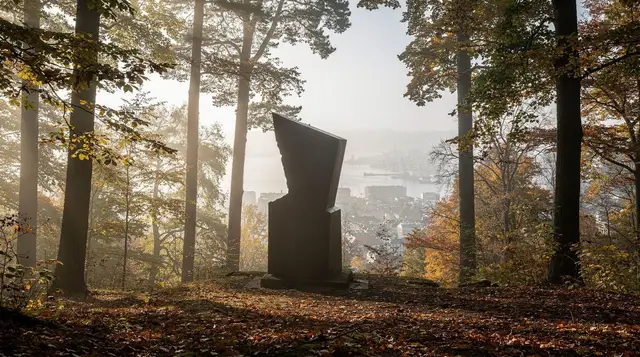
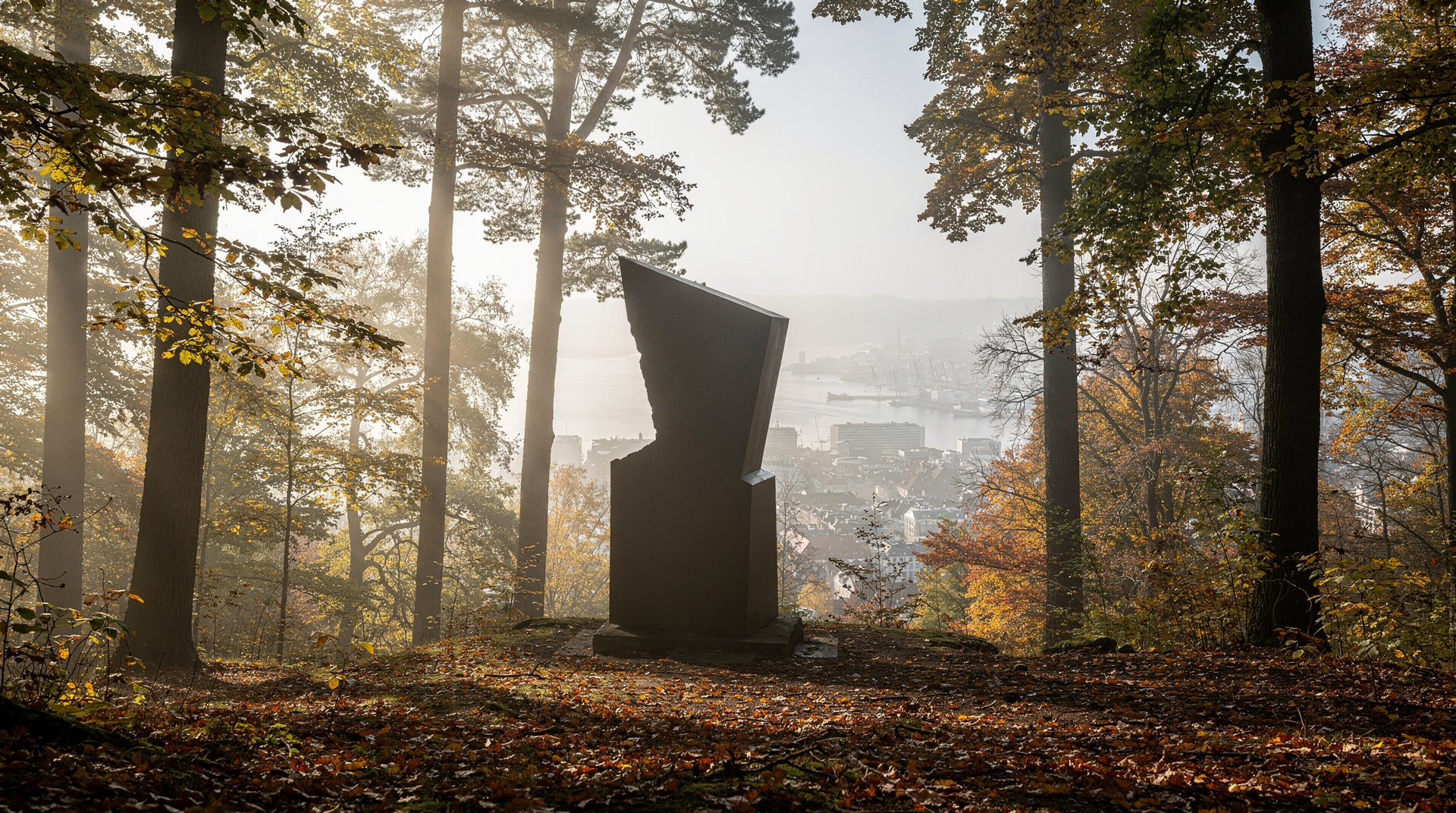
The Ekeberg sculpture park sits on a forested ridge above Gamle Oslo, about 3 kilometres southeast of the city centre. The park itself is a remarkable place — 226 sculptures scattered across 26 hectares of mixed forest, including works by Rodin, Vigeland, and Dali — but the reason to mention it first in a views context is the panorama from the main esplanade.
From Ekeberg, you look north and northwest across the entire Oslo basin: the harbour, the Barcode buildings in Bjørvika, the compact city centre, the fjord extending southward, and the islands of Bygdøy and the archipelago beyond. On clear days you can identify individual buildings. At dusk in autumn, when the city lights begin to come on against a pale orange sky reflected in the fjord, Ekeberg produces one of the most satisfying views in Oslo.
The lesser-known fact is that Edvard Munch painted his most famous version of The Scream from this hillside in 1893. The exact spot is marked, and the view — the fjord curving below, the sky prone to dramatic atmospheric effects — explains something about why Munch’s imagination ran toward the apocalyptic. The landscape invites that kind of thinking. If the connection interests you, the Munch Museum guide covers the painting’s full story and where to see the actual canvas.
Getting to Ekeberg is simple: tram 18 or 19 from the city centre to Ekebergparken, or tram 13 to Nordstrand. Journey time from the centre is about 12 to 15 minutes. The park is free and open year-round. The sculpture map at the entrance is worth picking up; some of the best works are hidden in the woods above the main esplanade.
Best time to visit: late afternoon in autumn, when the light is low and the deciduous trees have colour. Also excellent in early summer evenings when the sun does not set until after 11pm.
The Oslo Opera House roof: the accessible classic
The roof of the Oslo Opera House is the most visited viewpoint in the city, and it is good enough to justify the popularity without quite deserving the superlatives that Visit Oslo routinely applies to it.
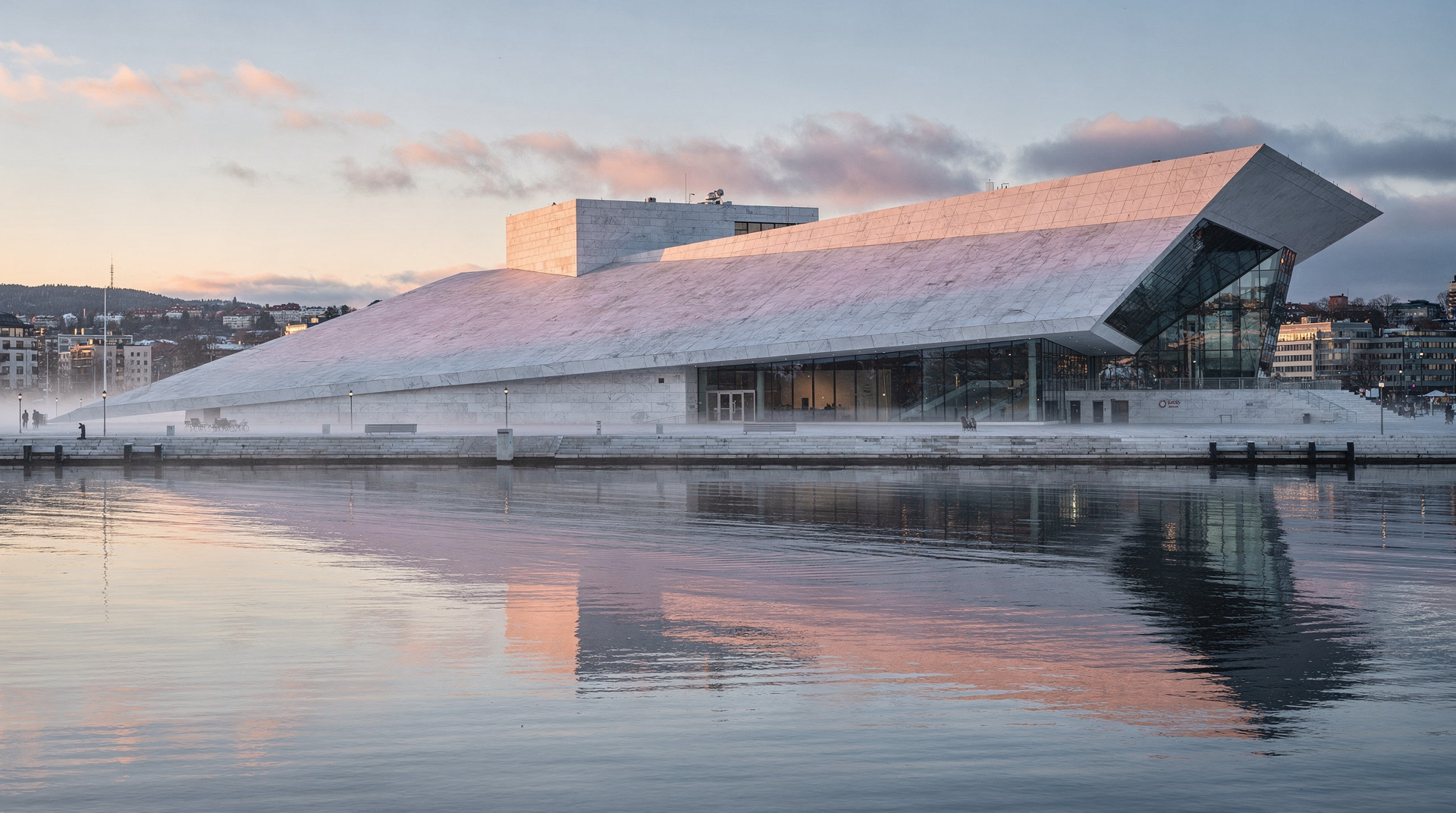
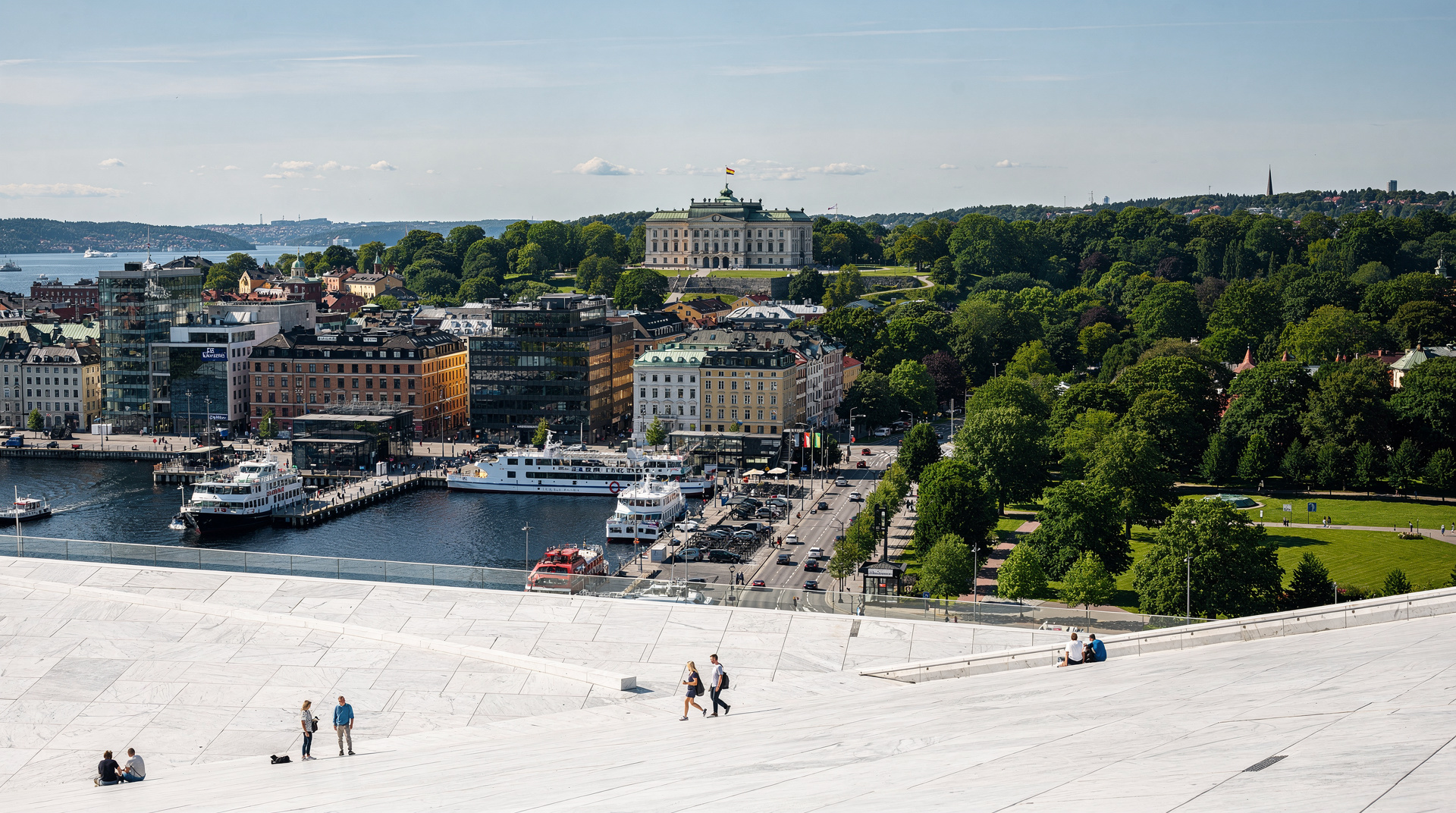
The building, designed by Snøhetta and opened in 2008, rises from the Bjørvika waterfront in a slope of white marble and granite that is walkable from ground level to the apex — an architectural invitation that Osloites accepted immediately and have not stopped accepting since. On a warm summer day, the roof is populated with a cross-section of Oslo life: tourists with cameras, families with children, teenagers dangling their feet over the edges, couples lying in the sun watching the ferries. The whole Bjørvika waterfront district that surrounds the building is worth a slower look too, not just a quick roof visit and departure.
The views from the roof are genuinely good and genuinely unusual: you are essentially standing on water level, looking across the Oslofjord toward the southern islands and back at the city behind you. The perspective is low and wide, which gives you a strong sense of the waterfront and the harbour infrastructure but less of the city’s interior geography. You see the fjord better from the Opera roof than from almost anywhere else.
What you do not get from the Opera roof is elevation. At its highest point, the roof reaches about 15 metres above sea level. The view is more panoramic waterscape than city panorama. For the classic city-from-above photograph, you need to go higher.
The roof is free, open at all hours, and five minutes’ walk from Oslo Central Station. It is genuinely worth 30 to 45 minutes of your Oslo visit. Just manage your expectations: it is a beautiful building with good views, not a mountain summit.
Holmenkollen: altitude and context
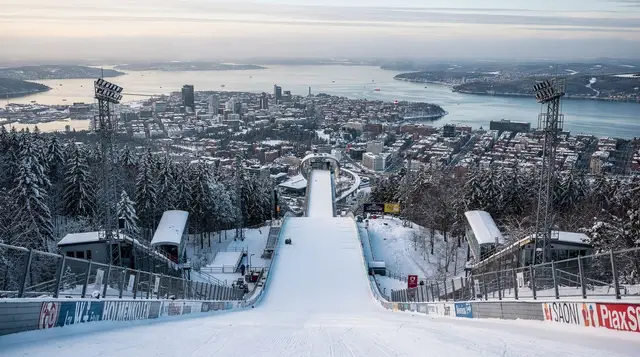
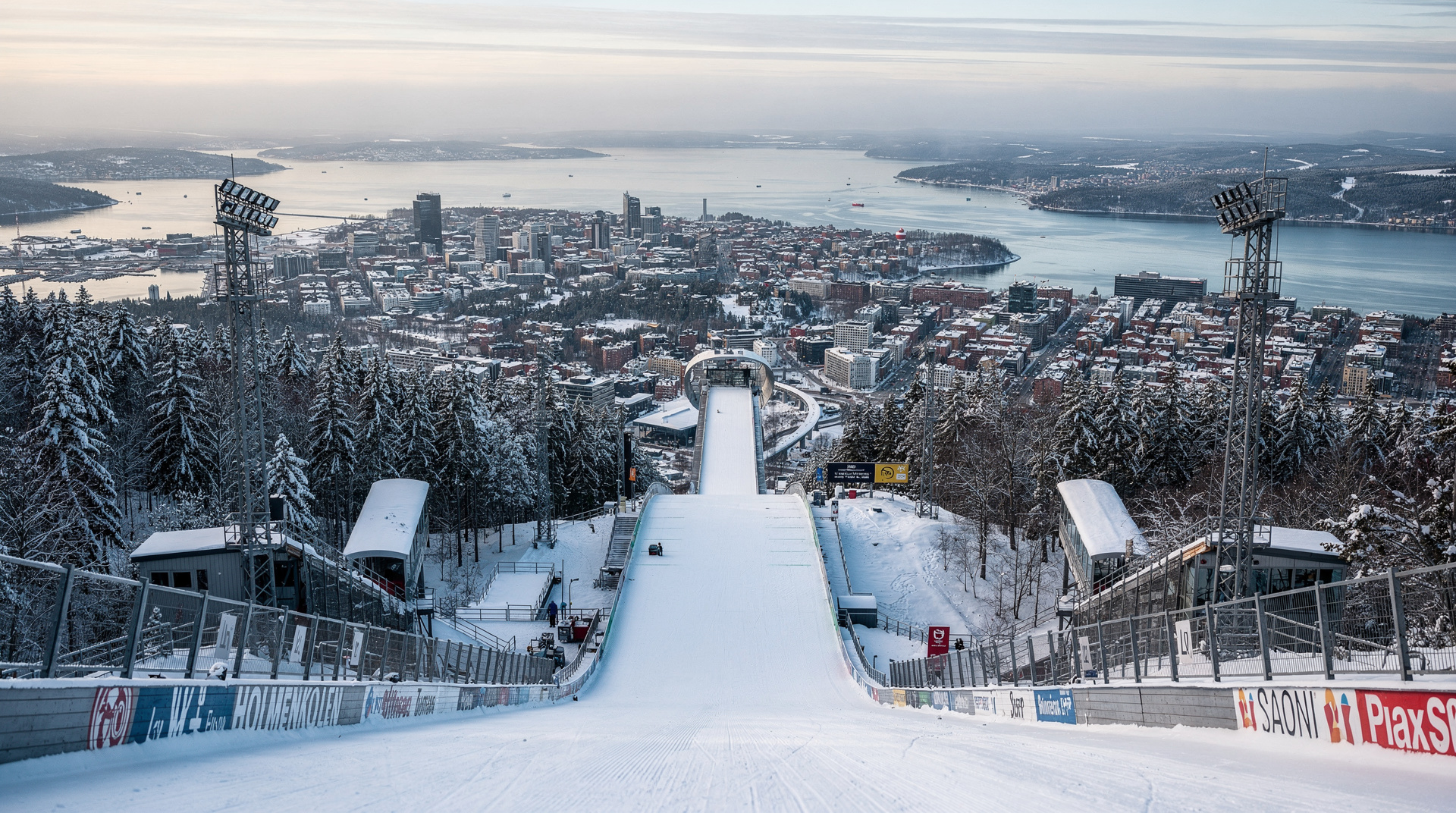
The Holmenkollen ski jump observation deck sits at 417 metres above sea level on the ridge northwest of the city, and the view from the top of the jump tower is the most vertiginous and panoramic in Oslo.
The observation deck is attached to the top of the ski jump ramp — the point from which world-class ski jumpers launch themselves into the air each March during the Holmenkollen Festival. Looking straight down from the railing gives you an immediate, visceral sense of what that involves. Looking south gives you Oslo laid out below: the entire city basin, the fjord, the islands, and on very clear days the coastal districts beyond.
The scale of the view is larger than from Ekeberg or the Opera House. From Holmenkollen you can see the Oslofjord all the way to its broadening toward the Drøbak Narrows, and the forest stretching northward toward Nordmarka covers the entire northern horizon. The combination of the ski museum in the base of the jump tower (admission covers the observation deck) and the sweeping view makes Holmenkollen Oslo’s most complete single-attraction experience on the city’s outskirts.
The T-bane line 1 runs directly to Holmenkollen station, about 30 minutes from the centre on a Ruter ticket. The station is a five-minute walk from the jump tower entrance. Admission to the museum and observation deck is NOK 160 to 200 per adult (USD 17 to 22), and the Oslo Pass covers entry.
Practical note: the view is best in clear weather, obviously, but the jump itself is architecturally striking even in fog or snow. Winter visits when the surroundings are snow-covered have their own appeal. The approach through the residential suburb of Holmenkollen — an extraordinarily handsome cluster of traditional Norwegian wooden villas — is worth paying attention to.
Grefsenkollen: the local secret
Most Oslo visitors have never heard of Grefsenkollen, and this is a shame. At 379 metres, on the eastern ridge above Grefsen, it offers a view over Oslo that rivals Holmenkollen in scope and surpasses it in the quality of the light — because Grefsenkollen faces southwest, it catches the afternoon sun directly on the city below for most of the year.
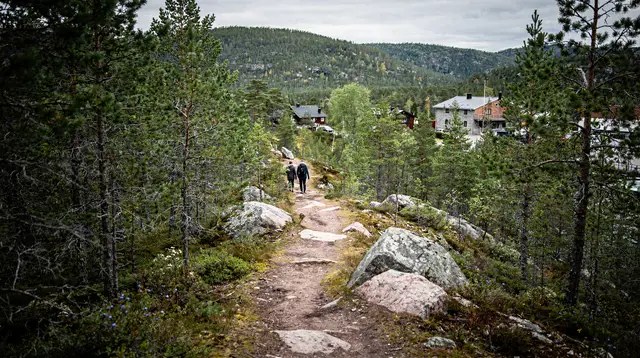
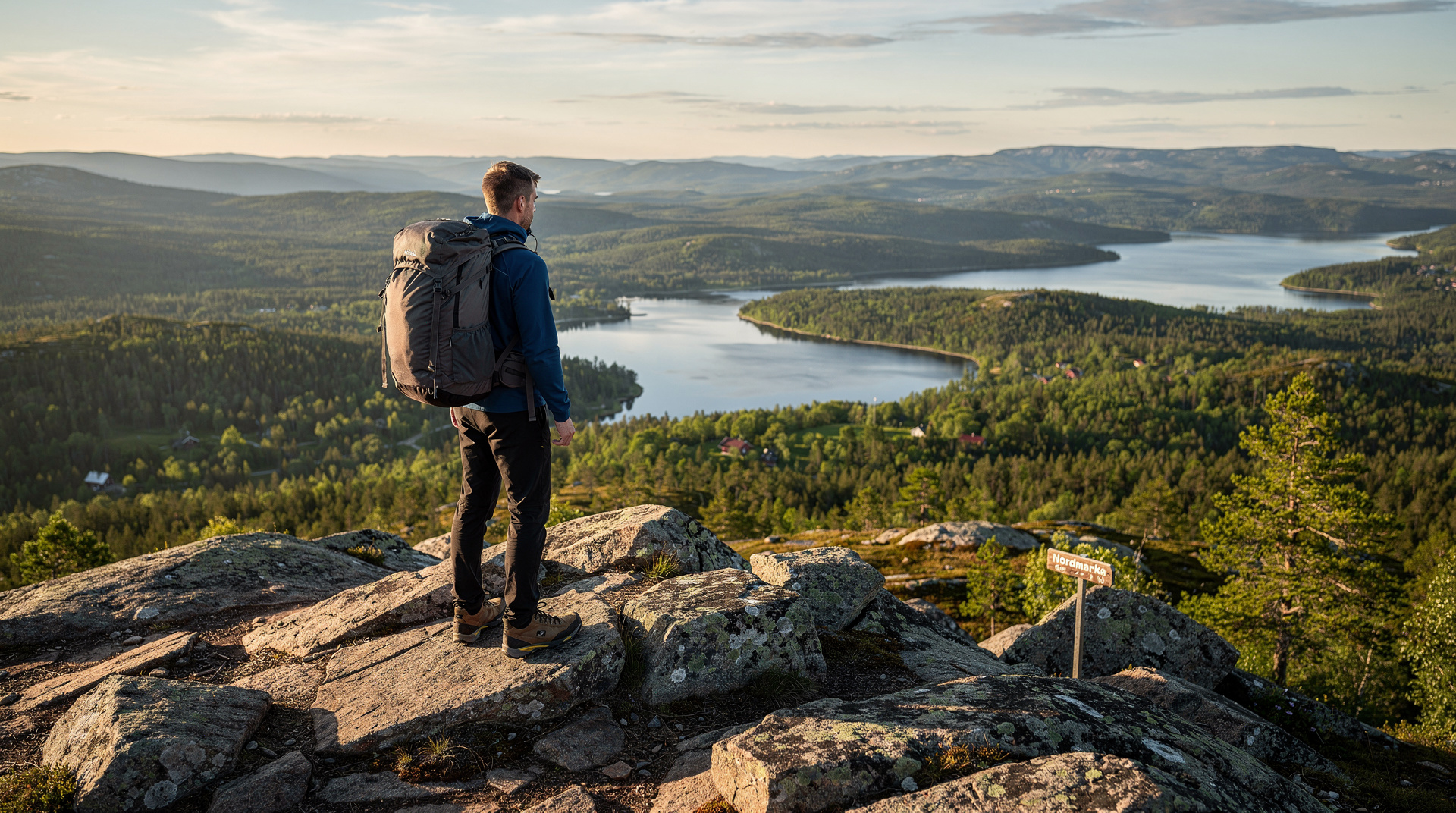
The forested ridge is criss-crossed with hiking trails that connect to the broader Nordmarka trail network. The summit area has a simple café (the Grefsenkollen restaurant, open year-round, with a terrace in summer) and a television transmission tower that is not attractive but does serve as a navigation landmark. The hiking trails from Grefsen station — T-bane line 4 — reach the summit in approximately 45 minutes through mixed forest.
What makes Grefsenkollen special for photographs is the angle: from the southern end of the ridge, you look directly across Oslo toward the fjord with the afternoon sun at your back. This produces photographs with better colour and less of the haze that the city basin generates. The crowds are negligible compared to Holmenkollen — you will often be sharing the summit viewpoint with a dozen Oslo residents out for a weekday walk, rather than a hundred tourists.
For hikers who want more context about the Nordmarka trail network that Grefsenkollen connects to, the Nordmarka hiking guide covers the full range of routes from easy forest walks to multi-day traverses.
The four viewpoints side by side
| Viewpoint | Elevation | Cost | Effort | Best for |
|---|---|---|---|---|
| Ekeberg | ~50m ridge | Free | Tram + short walk | Munch history, dusk light |
| Opera House roof | ~15m | Free | 5-min walk from station | Waterfront, zero effort |
| Holmenkollen | 417m | NOK 160–200 | T-bane + short walk | Biggest panorama, museum |
| Grefsenkollen | 379m | Free (café extra) | T-bane + 45-min hike | Local crowd, afternoon sun |
Timing your viewpoint visit around the season
Light quality changes these views more than most people expect — a hazy midsummer midday flattens all four, while a clear October late afternoon makes Ekeberg and Grefsenkollen genuinely dramatic. Our daylight hours by season guide has sunrise and sunset times if you want to time a visit precisely, and the best time to visit Oslo guide covers how the wider season affects visibility and crowds at all four spots.
Doing all four on a budget
Three of the four viewpoints — Ekeberg, the Opera House roof, and Grefsenkollen — cost nothing beyond a transit fare, and even Holmenkollen is covered by the Oslo Pass if you are using one for other museums. Pairing a viewpoint day with our free things on a budget guide and a stop at Sognsvann on the way back from Grefsenkollen or Holmenkollen makes for a full, low-cost day that still delivers Oslo’s best scenery.
Honestly comparing the four
If I had to send a visitor to exactly one viewpoint, the choice would depend entirely on what they were optimising for.
For the full city panorama on limited time: Holmenkollen. The T-bane access is easy, the ski museum context is genuinely excellent, and the elevation gives you the most comprehensive view of Oslo from above.
For a free, atmospheric experience with cultural depth: Ekeberg. The sculpture park is underrated, the Munch connection is meaningful, and the afternoon-to-dusk timing in autumn produces views that rival anything in the city.
For the waterfront perspective and architectural experience: the Opera House roof. It is not the highest view, but it is uniquely beautiful and completely free.
For a genuine local experience without tourist infrastructure: Grefsenkollen. The hike in is rewarding, the café is simple and pleasant, and the view is legitimately excellent.
There is no wrong answer. Oslo is, from all four directions and elevations, a beautiful city to look at.
For a broader list of things to see across the city, the top things to do in Oslo guide places these viewpoints in the context of a full Oslo visit. For hiking routes that combine views with trail walking, the best Oslo hikes guide covers the full range.
Top experiences
Bookable activities with verified prices and instant confirmation on GetYourGuide.