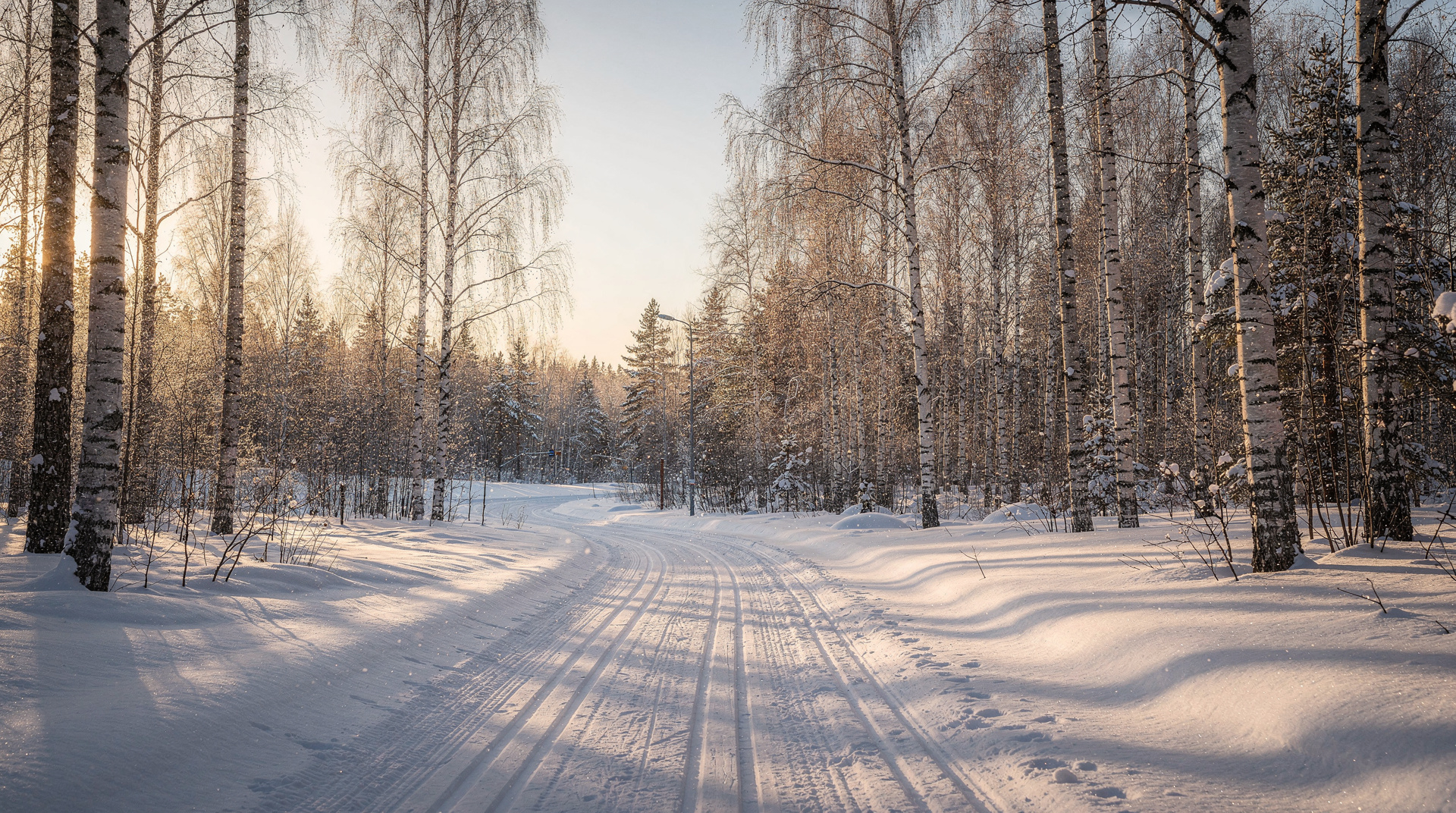
Nordmarka — Oslo's vast forest
Nordmarka is 300 sq km of forest directly behind Oslo, reached by T-bane. Hike in summer, ski in winter — and Sognsvann lake is the classic starting point.
From Oslo: Nordmarka forest 6.5-hour guided walk
Duration: 6.5 hours
- Nordmarka forest
- Full day
Quick facts
- Best time
- Year-round; summer for hiking (June–September); winter for skiing (December–March)
- Days needed
- Half-day to full day; multi-day possible with overnight cabins
- Getting there
- T-bane line 5 to Sognsvann (30 min from city centre) or Frognerseteren for higher trailheads
- Budget per day
- NOK 0–400 (USD 0–43) — trails are free; ski track passes and guided tours extra
The forest that begins where the city ends
Oslo has a remarkable urban boundary. On the city’s northern edge, apartment buildings and residential streets give way — within metres — to an unbroken forest that extends for roughly 300 square kilometres without a town or village of any consequence. This is Nordmarka: the northern section of Oslomarka, the larger protected forest zone that surrounds the Norwegian capital on three sides.
The forest is ancient, practically speaking. Norse farming communities used its lakes and timber for centuries, and remnants of old charcoal-burning sites can still be found in the deeper valleys. The modern allemannsretten — Norway’s universal right of access to the outdoors — guarantees that every hectare of Nordmarka is public territory regardless of who owns the individual plots. You can walk, ski, swim, and camp (respecting the standard rules) across the entire forest without asking permission or paying access fees.
What makes Nordmarka genuinely extraordinary is the access: metro line 5 from central Oslo reaches Sognsvann station in under 30 minutes. From the station, you’re in the forest in five minutes. On a Saturday morning in February, the Sognsvann platform discharges a hundred Oslonians in ski suits, who spread immediately into the trail network and vanish into the trees. The city is invisible within 20 minutes of walking. This relationship between metropolis and wilderness is one of the things that makes Oslo different.
| Where | Directly north of central Oslo, 300 sq km of protected forest |
| Getting there | T-bane line 5 to Sognsvann (30 min) or line 1 to Frognerseteren |
| Time needed | Half-day to full day; multi-day possible with DNT cabins |
| Cost | NOK 0–400 (USD 0–43) — trails free, ski passes and tours extra |
| Best time | Dec–Mar for skiing; Jun–Sep for hiking and swimming |
Getting there
By T-bane (metro)
The standard approach is T-bane line 5 from Majorstuen or Nationaltheatret stations to Sognsvann (end of the line, roughly 25–30 minutes from the city centre). Sognsvann sits at the southern edge of Nordmarka and is the most-used entry point: the lake is immediately below the station, and the main trail network radiates from there.
For higher trailheads with better winter views, continue on T-bane line 1 to Frognerseteren — the famous hilltop restaurant and starting point for trails towards Tryvann and beyond. Frognerseteren is also the upper station of the Holmenkollbanen, the historic mountain tram that has been running since 1898. From Frognerseteren, you’re already at 434 metres elevation, with open views over Oslo and the Oslofjord before you’ve taken a step into the forest proper.
By car
Most Oslonians access Nordmarka by metro; a car adds little for day hikers and complicates the logistics of loop routes. That said, the forest has a network of logging roads accessible by car to a few specific starting points, which allows access to more remote trailheads. For winter skiing in particular, some people drive to Kikut or Skjennungstua rather than walking in from Sognsvann.
Sognsvann: the classic starting point
Sognsvann lake, at the metro terminus, is Oslo’s most beloved swimming and running spot. In summer, the lake path — a mostly flat circuit of about 3.4 kilometres around the water — is one of Oslo’s most used running routes. At weekends, it resembles a Nordic running track: serious athletes with race bibs alongside families pushing prams alongside old men with their hands clasped behind their backs.
The lake itself is swimmable from June through August; the water is clean and cool (typically 15–19 °C at peak summer). Several wooden jetties extend into the water and fill quickly on sunny afternoons. The kiosk at the lake shore serves coffee, waffles, and hot dogs — the Norwegian outdoor combination that Oslonians regard as perfectly satisfactory.
Beyond the lake circuit, Sognsvann is the starting point for longer routes into Nordmarka. A well-marked path heads north towards Kikut (a viewpoint) and eventually Sandungen lake — a route of 8–12 kilometres one-way depending on the variant chosen. Most day hikers walk to Kikut or Sandungen and return the same way, making a half-day or full-day outing.
Summer hiking: what to expect
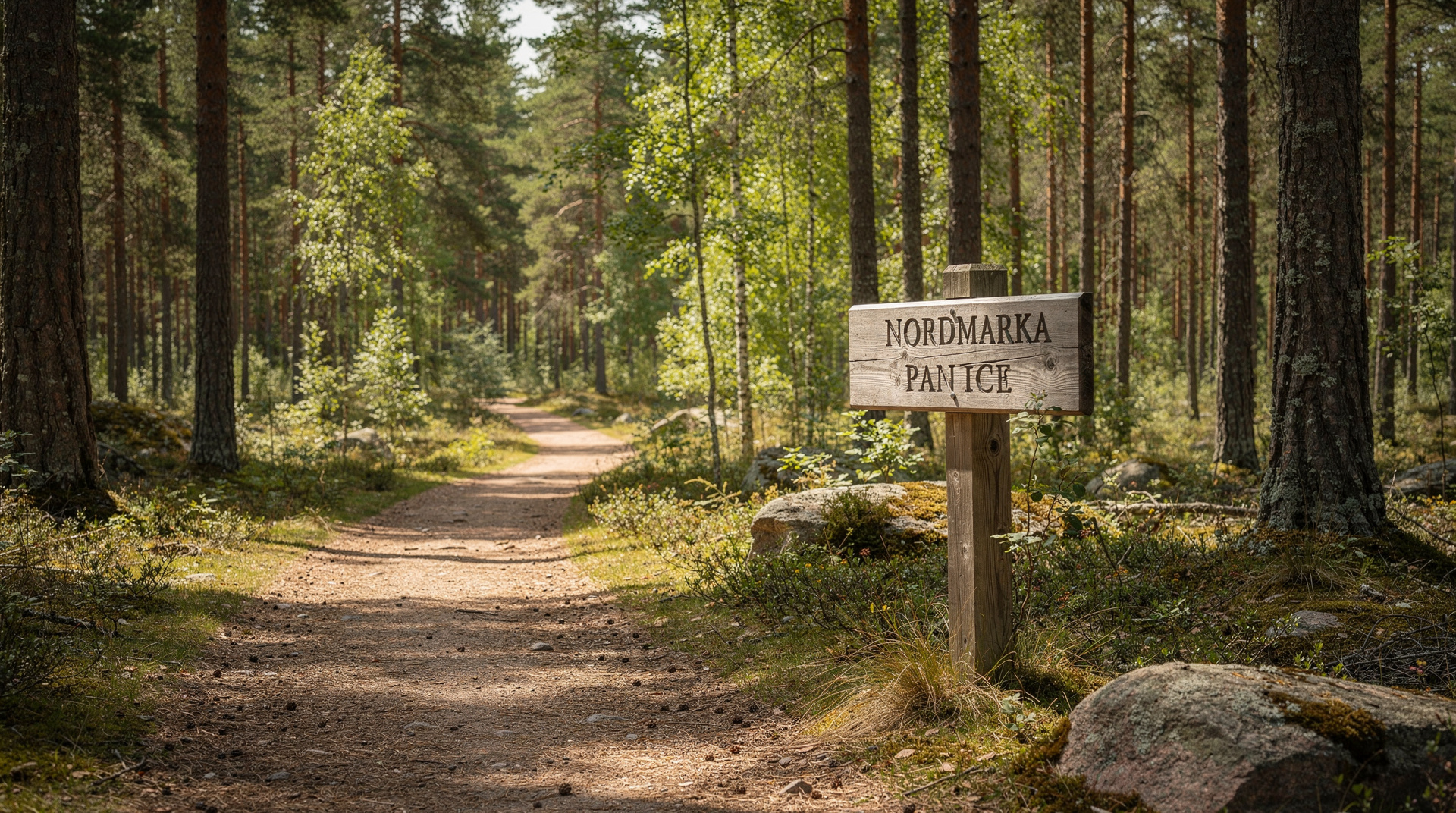
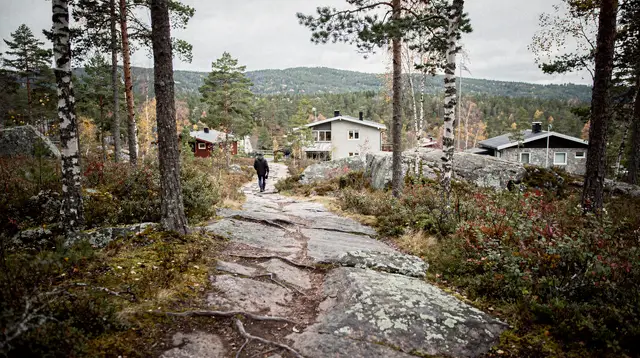
Nordmarka’s trails are not dramatic mountain hiking. The terrain is gentle — rolling forest hills between about 250 and 600 metres, with lakes in the valleys and open rocky summits above the treeline in a few places. The draw is the forest itself: old-growth stands of spruce, birch-lined lake shores, the silence broken only by woodpeckers and the occasional creak of a tall tree.
Trail marking varies. The main routes from Sognsvann are marked with red-painted stones and cairns; more remote paths are less clearly signed. The Norwegian Trekking Association (DNT) maintains a network of self-service and staffed cabins through Nordmarka, which allows multi-day routes. Detailed maps are available from DNT in Oslo or as digital downloads; the Ut.no app has accurate trail data for the entire forest.
Recommended summer routes:
The Sognsvann circuit (3.4 km, flat, 1 hour) is the easy introduction — good for first visits and families with young children.
The Sognsvann to Kikut route (about 8 km one-way, 2–3 hours) climbs gently through forest to a viewpoint over the northern lakes. The return is the same path or a slightly varied route via different valleys.
The forest-to-fjord walk — starting from the Holmenkollen area and descending through forest to Frognerseteren, then continuing to the fjord — is one of Oslo’s signature hikes. The forest-to-fjord walk guide covers this route in detail.
The Vettakollen hike (accessible from Hakadal or by longer approach from Sognsvann) reaches one of Nordmarka’s best viewpoints at 476 metres. See the Vettakollen guide for approach options.
Winter skiing: Nordmarka’s strongest card
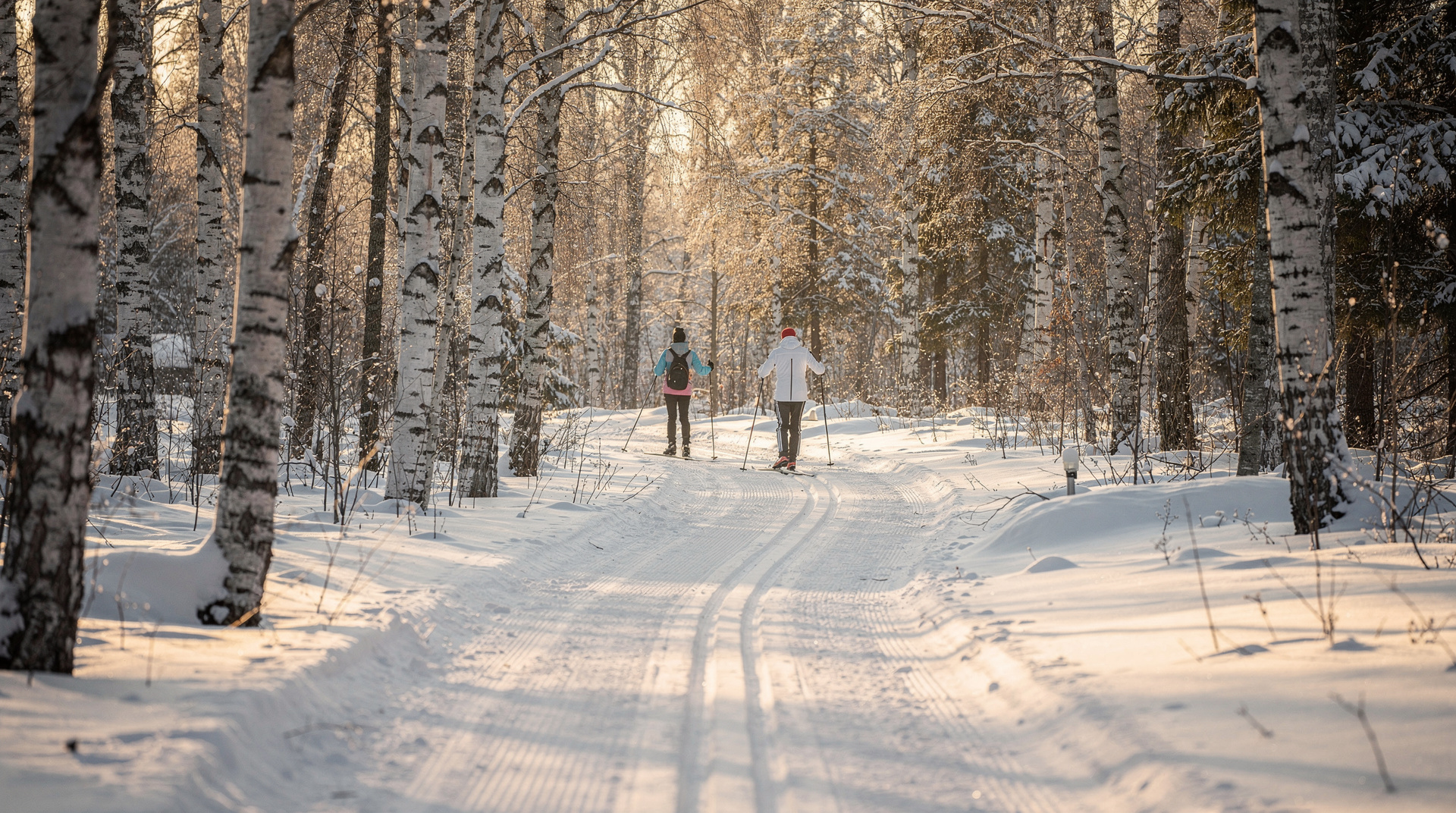
In winter, Nordmarka transforms. When Oslo gets sustained cold — typically from December through March, though some years not until January — the trail network becomes a groomed cross-country ski system of over 2,000 kilometres managed by Oslo Skisenter and partner organisations. This is not alpine skiing: it’s Nordic, on classic or skating skis, following prepared tracks through the forest and across frozen lakes.
The Sognsvann lake is groomed into a 5-kilometre oval track once the ice is thick enough; the lake path becomes a skiing circuit used by everyone from competitive athletes to tottering beginners. The flat terrain makes it forgiving for learners. Ski rental is available at several points near Sognsvann and Holmenkollen.
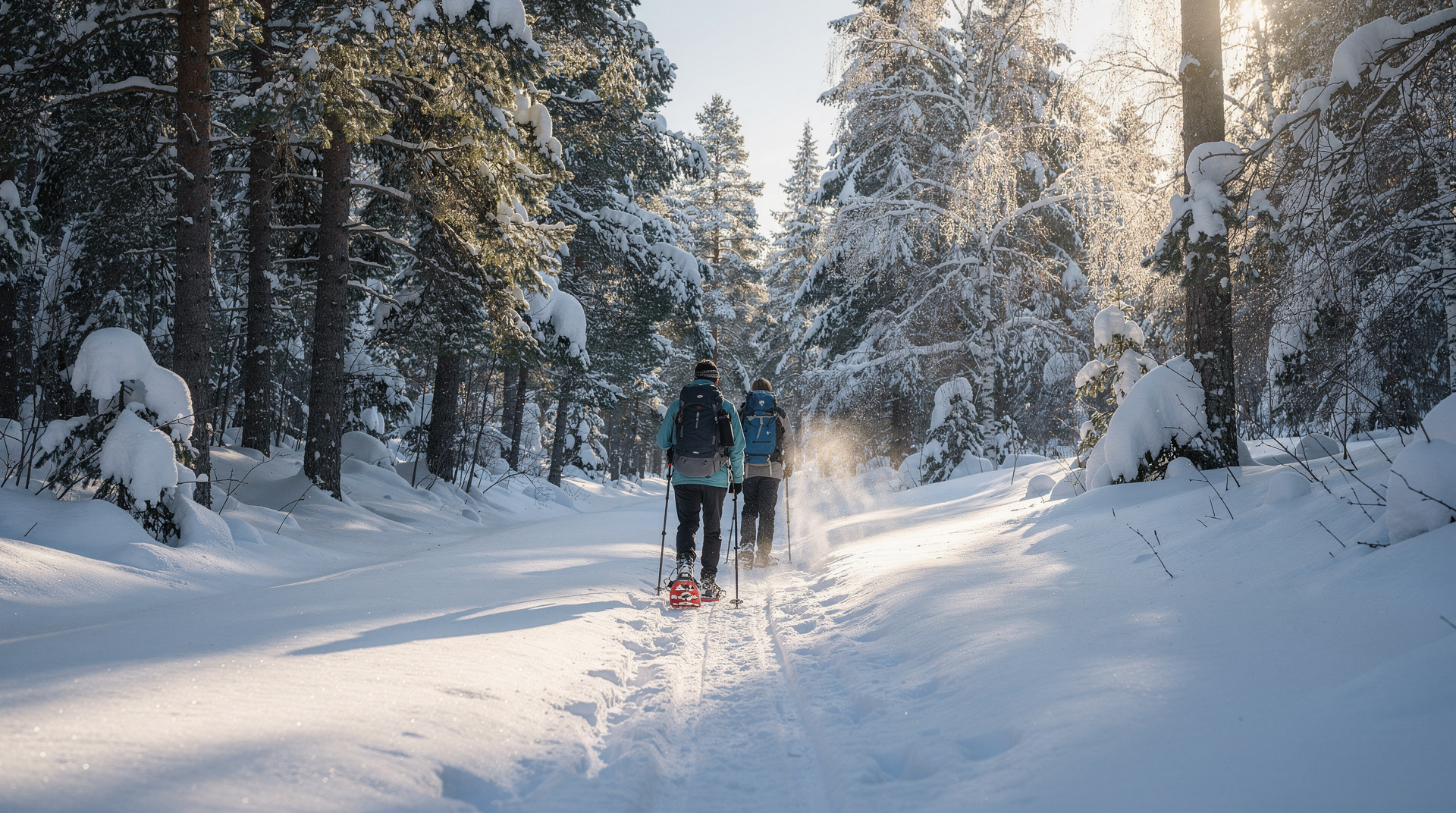
For those without ski experience, snowshoeing is an accessible winter alternative. Organised snowshoe tours in Nordmarka are available from Oslo and reach sections of the forest that are too deep for day-trippers on their own. The snowshoeing guide covers conditions, recommended operators, and realistic expectations.
The Holmenkollen area — where the famous ski jump sits above the city — connects directly to the Nordmarka trail network. The annual Holmenkollen Ski Festival in March brings elite cross-country and biathlon races to these exact trails. See the Holmenkollen guide for the festival calendar and what it’s like to watch.
The DNT cabin network
Nordmarka has four main DNT staffed cabins and a larger number of self-service huts with wood-burning stoves and basic provisions. Overnight stays in the forest are possible year-round; in summer you can also camp freely (more than 150 metres from buildings, one night in the same spot). This allows multi-day routes that go deeper into the forest than any day trip can reach.
The most accessible staffed cabin from Sognsvann is Kikut (a short alternative, self-service), and further north Sandungen and Skjennungstua. The DNT Oslo Og Omegn membership (NOK 550 / USD 59 per year) gives access to all huts at member rates, which is worth it if you plan more than two overnight stays.
Seasonal honesty
Nordmarka’s appeal is genuinely seasonal and weather-dependent:
Summer (June–September): trails are dry and accessible, Sognsvann is swimmable, the long daylight allows evening walks after 9pm. The forest is green and the birdlife is active. Some trails are rutted and muddy in early June after snowmelt.
Winter (December–March): the skiing is exceptional when conditions hold. But Oslo winters are variable — some years the snow arrives in December and stays until March; other years it’s patchy until January and gone by February. Check Oslo Skisenter’s website for current ski conditions before making a winter Nordmarka trip central to your plans.
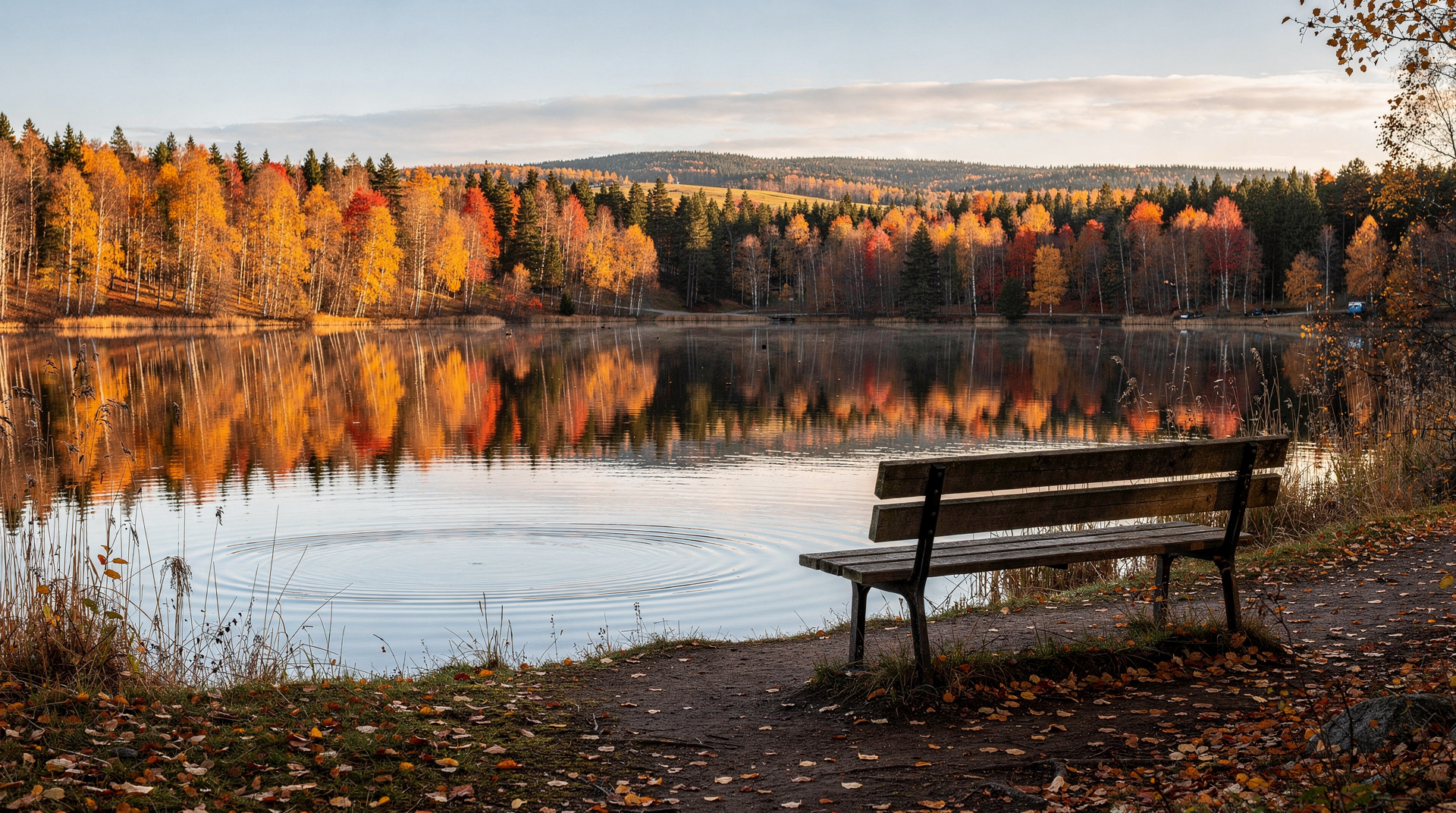
Autumn (October–November): beautiful colour but often wet. The trails can be slippery. Not recommended as a primary destination but lovely for a morning walk in October when the birches have turned.
Spring (April–May): the forest wakes up fast. Muddy paths early in the season; by late May it’s excellent walking again.
For the autumn experience specifically, the autumn colours in Nordmarka blog post documents what to expect and when colour typically peaks.
Guided tours versus going it alone
For first-time visitors nervous about navigating Nordmarka’s trail network unaided, guided options exist for most of the forest’s main activities: snowshoe tours, cross-country ski lessons, and summer forest walks with local guides who add context on the geology, wildlife, and the history of the charcoal-burning sites deeper in the valleys.
The honest assessment: for the Sognsvann circuit and the well-marked routes to Kikut or Frognerseteren, a guide adds little beyond convenience — the paths are clear, well-used, and safe for independent walkers. Guides earn their fee on winter cross-country instruction for complete beginners, and on the deeper, less-marked routes where local knowledge genuinely helps. If you are confident on your feet and have downloaded the Ut.no trail map, going independently is entirely reasonable for most of Nordmarka’s popular routes.
What to bring
Nordmarka infrastructure outside the cabin network and the Sognsvann lakeside kiosk is minimal. Day hikers should bring:
- Water (the forest has clean streams but you need to treat before drinking; the Sognsvann kiosk sells water and coffee)
- Food for a full day (nothing available deep in the forest)
- Layers — forest temperatures drop quickly when you stop moving, even in summer
- A printed or downloaded map for anything beyond the Sognsvann circuit (mobile signal is unreliable deeper in the forest)
- In winter: proper ski or snowshoe gear; emergency layers; a headtorch if timing is uncertain
For hiking gear, Oslo’s XXL Sport and Intersport stores (central Oslo, near Karl Johans gate) are the reliable large-format options. Specialist gear is at Norwegian Mountain Gear near Majorstuen.
Nordmarka’s ecology and wildlife
The forest is predominantly boreal — spruce and pine dominate the higher ground, with birch in the valleys and beside the lakes. The age structure of the trees varies significantly: the areas closest to Oslo were heavily logged through the 19th and early 20th centuries, and those stands are now second or third growth. Deeper in the forest, particularly in the valleys north of Kikut, some trees are genuinely old-growth by Norwegian standards — 150 to 200 years, and the forest floor beneath them has the biological complexity of undisturbed woodland.
Moose (elg) are common throughout Nordmarka and the most likely large animal you’ll encounter. The population is managed through annual culling; encounters on the trails are a genuine possibility, particularly at dawn and dusk when moose feed most actively. They are not dangerous to humans who give them space, but females with calves in late spring (May–June) can be protective. If a moose turns to face you, stop and give it room; it will generally move off. Chasing or approaching moose closely is both inadvisable and contrary to Norwegian outdoor norms.
Foxes are present throughout the forest and often visible near the trailheads where human food waste provides supplementary feeding. Beavers have recolonised several of the Nordmarka waterways after near-extinction in Norway in the 19th century; their dams and gnawed tree stumps are visible along streams near Sandungen and other northern lakes.
Birdlife is excellent throughout the year. Spring (April–May) brings the first warblers and flycatchers from Africa; summer is dominated by blackbirds, redstarts, and the drumming of woodpeckers; autumn migration through Nordmarka is significant, with raptors moving along the ridge lines on suitable winds. Winter brings Siberian species including waxwings in irruption years and the reliable great grey owl in the deep forest, though the latter requires specialist knowledge to locate.
For serious naturalists, the Naturvernforbundet (Norwegian Society for Nature Conservation) publishes walking guides to ecologically significant Nordmarka sections, available through their Oslo office or as downloads.
The Frognerseteren restaurant: a practical note
Frognerseteren restaurant, at the T-bane terminus above Oslo, is one of the city’s most famous viewpoints and a legitimate dining experience. The building is a classic Norwegian dragon-style wooden structure from 1891, designed by architect Holm Hansen Munthe. The views from the terrace over Oslo and the Oslofjord — on a clear day, the fjord visible 15 kilometres south — are exceptional.
Honest assessment: the restaurant is expensive even by Oslo standards (mains NOK 350–500 / USD 38–54), the waiting list for terrace tables in summer can be long, and the food, while good, is not remarkable enough to justify the price alone. The reason to come is the view and the architectural experience. The waffles and hot drinks at the adjacent kiosk cost considerably less and achieve the same view. Many Nordmarka visitors stop here at the start or end of a walk for the kiosk rather than the restaurant.
Combining Nordmarka with other Oslo activities
A standard half-day combination: T-bane to Frognerseteren, look out over the city from the terrace of Frognerseteren restaurant, walk 20 minutes to the Holmenkollen ski jump area, and return to Oslo via the Holmenkollen museum and jump. This gives a taste of the forest and city in half a day.
For the full winter experience, the Oslo winter 3-day itinerary builds a Nordic skiing day in Nordmarka into a broader city stay, with honest notes on what to do if snow conditions are poor.
The cross-country skiing in Oslo guide goes deep on the trail network, equipment rental, and how to ski if you’ve never done it before.
Frequently asked questions about Nordmarka
How do I get to Nordmarka without a car?
T-bane line 5 from central Oslo to Sognsvann (end of line) is the standard approach, taking about 25–30 minutes. Line 1 to Frognerseteren gives access to a higher starting point. No extra fare beyond a standard Ruter pass. Both stations have trail access within a 5-minute walk.
Can I ski in Nordmarka as a complete beginner?
Yes, at Sognsvann and Holmenkollen specifically. The groomed tracks include flat sections ideal for learning. Ski rental is available at both entry points. A 2–3 hour beginner’s guided ski session is the most efficient way to learn the technique; the skiing guide lists reliable instruction options. Don’t attempt the longer forest routes until you have basic control — the trails go far enough that a fall and injury is serious.
Is Nordmarka suitable for running?
Very much so. The Sognsvann circuit is one of Oslo’s prime running routes. The forest trails are used by trail runners year-round; in summer, the weekly parkrun at Sognsvann attracts regular runners and visitors. The terrain suits everything from beginners’ road shoes (on the main circuit) to trail shoes (for forest tracks).
Can you swim in Nordmarka’s lakes?
Yes — many of the forest lakes are swimmable in summer. Sognsvann itself is the most accessible, with wooden jetties and a gentle entry. Deeper in the forest, the more remote lakes are colder but cleaner. Allemannsretten gives you the right to swim anywhere in the forest. Lifeguards don’t exist here: this is self-reliant swimming.
What is the best day walk from Sognsvann?
The 8-kilometre route from Sognsvann to Kikut and back takes 2–3 hours, gains moderate elevation, and reaches an open viewpoint. It’s the standard recommendation for a first proper Nordmarka walk. For a longer route, continue from Kikut to Sandungen lake (4 km further), making a full half-day. Take the same path back or pick up one of the parallel forest tracks for variety.
Does Nordmarka have bears or wolves?
Wolves and bears exist in Norway’s wilderness but not in the forests immediately around Oslo. The closest confirmed wolf territory is several hours north. The most significant wildlife in Nordmarka is moose (elg), which are common enough that encounters on the trails are plausible, especially early morning and evening. Moose are generally not dangerous but should be given space, especially females with calves in spring.
Nordmarka versus Holmenkollen: do you need both?
Holmenkollen and Nordmarka overlap — the ski jump area is itself an entry point to the forest — but they answer slightly different needs. Holmenkollen gives you the ski jump, the Ski Museum, and a curated introduction to the forest edge in under an hour. Nordmarka proper, entered at Sognsvann, gives you the forest itself: longer trails, genuine solitude within 20 minutes of walking, and a much larger area to explore. If time is short, Holmenkollen covers both in a single half-day trip. If you want depth — a real hike, real quiet, a swim in a forest lake — head to Sognsvann directly. See the Holmenkollen guide for how the two combine.
Top experiences
Bookable activities with verified prices and instant confirmation on GetYourGuide.
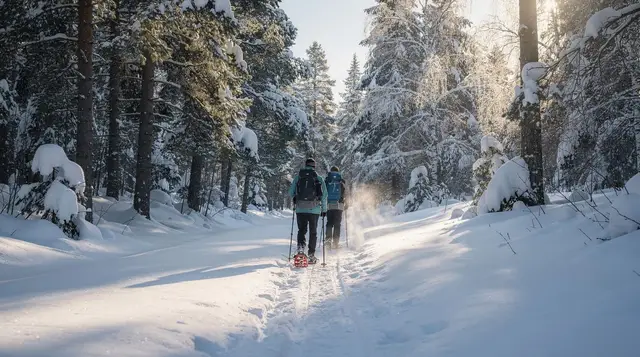
From Oslo: Oslomarka forest guided snowshoeing tour
- Winter only
- Snowshoes included
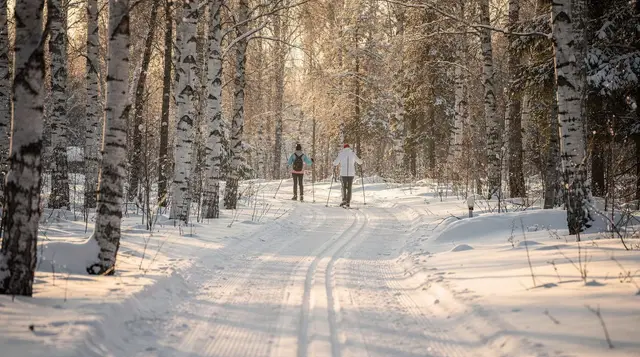
Oslo: 3-hour cross-country skiing trip with equipment and guide
- Winter only
- Gear + guide
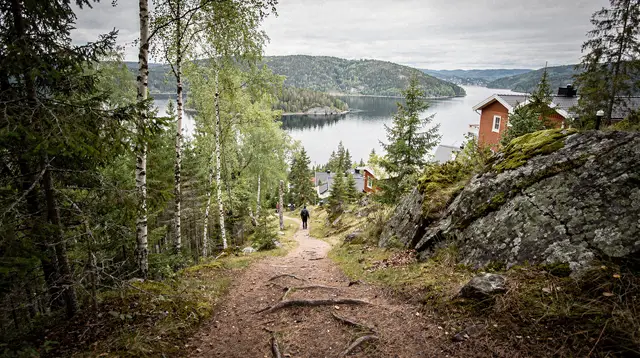
Oslo nature walk: forest to fjord
- Forest + fjord
- Local guide
Oslo: half-day panoramic lakes and forests hiking tour
- Lakes + forests
- Half day