Sognsvann lake — Oslo's metro-accessible swimming and hiking lake
From Oslo: Nordmarka forest 6.5-hour guided walk
Duration: 6.5 hours
- Nordmarka forest
- Full day
How do I get to Sognsvann lake from Oslo?
Take metro line 3 (the Sognsvann line) from the city centre to the end of the line at Sognsvann station. The journey takes 20 to 25 minutes from Nationaltheatret. The lake is a 2-minute walk from the metro station. No car needed.
Why Sognsvann deserves a place in every Oslo itinerary
In most cities, getting to a pristine forest lake for a swim requires a car and a significant investment of time. In Oslo, it requires a 25-minute metro ride and a 2-minute walk. Sognsvann — a clear, 1.6 km long lake at the southern edge of Nordmarka forest — is one of Oslo’s best and least complicated outdoor experiences.
This is where Oslo residents go on summer evenings after work. It’s where families spend Sunday afternoons in August. In winter it transforms into the start of a 100+ km groomed cross-country ski network. It costs nothing to visit, needs no planning, and works for almost everyone regardless of fitness level.
| Where | Metro line 3 terminus, 25 min from central Oslo |
| Cost | Free (standard NOK 41 Ruter fare to get there) |
| Time needed | 1–2 hours for a swim/walk; half a day combined with Holmenkollen |
| Best for | Swimming (June–mid Sept), the 3.3 km lake loop, ski access (Dec–March) |
| Best time | Weekday evenings or before 10:00 on summer weekends |
Getting there
Metro line 3 (the Sognsvann line, sometimes called line 3 or the green line) runs from Stortinget in central Oslo directly to Sognsvann terminus. The journey from:
- Stortinget (Sentrum): 22 minutes
- Nationaltheatret: 24 minutes
- Majorstuen: 15 minutes
- Blindern (university campus): 8 minutes
The line operates every 8 to 15 minutes depending on the time of day. Standard Ruter ticketing applies — NOK 41 (USD 4.40) single journey, or covered by 24-hour/multi-day passes. See our Ruter transport guide for ticketing details.
From Sognsvann station, turn right and walk 2 minutes to reach the lake shore.
Swimming
The main beach area is on the southeast shore near the metro station — a combination of grass and a small sandy section that fills with swimmers and sunbathers on warm summer days. The water is clear and cold-fresh: temperature runs from around 14°C in late May to 18 to 22°C at peak summer (July to early August) and back down to 14°C by mid-September.
There are no formal swimming restrictions, lifeguards, or entry charges. The depth drops off gradually from the shore, making it genuinely suitable for children and non-swimmers in the shallower sections. Further sections of the lake shore (accessible from the trail) have jumping rocks for those who want a more active swim.
Facilities: Toilets near the main beach (open in summer), a seasonal kiosk selling ice cream and snacks. No changing rooms — most people change on the grass or behind towels. The metro station has a small waiting shelter but no proper facilities.
Sognsvann water temperature by month (typical range):
| Month | Water temp | Swimming? |
|---|---|---|
| May | 10–14°C | Cold-water swimmers only |
| June | 14–18°C | Comfortable for most |
| July | 18–22°C | Peak swimming season |
| August | 17–21°C | Still warm, quieter than July |
| September | 12–16°C | Early month only for most swimmers |
| October–April | Below 10°C | Not for casual swimming |
Compared to the Oslofjord’s saltwater beaches, Sognsvann is consistently a degree or two warmer in peak summer because it is a shallow inland lake rather than open sea — one reason it fills up faster on the first genuinely hot day of the year.
The lake circuit trail
The 3.3 km loop trail around Sognsvann is Oslo’s most-used running circuit. The terrain is flat (very unusual for Oslo, which is hilly by most standards) and the surface alternates between gravel path and packed earth. The entire loop follows the lake shore through mixed birch and pine forest.
Walking time: 35 to 50 minutes at a relaxed pace. Running time: 15 to 20 minutes for a normal-pace run.
The trail is wide enough for two people side by side throughout. Families with pushchairs can manage most of the circuit, though one or two root-crossed sections require care. Dogs are common — Oslo dog culture is strong and Sognsvann is a favourite dog-walking destination.
The best views of the lake open to the northwest across the water toward the Nordmarka forested hills. In the right light (morning or evening) the reflections are exceptional.
Into Nordmarka
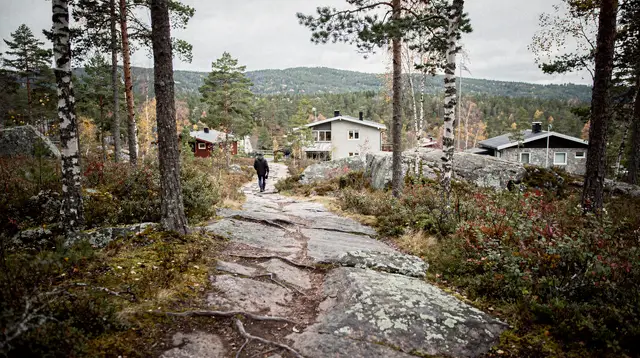
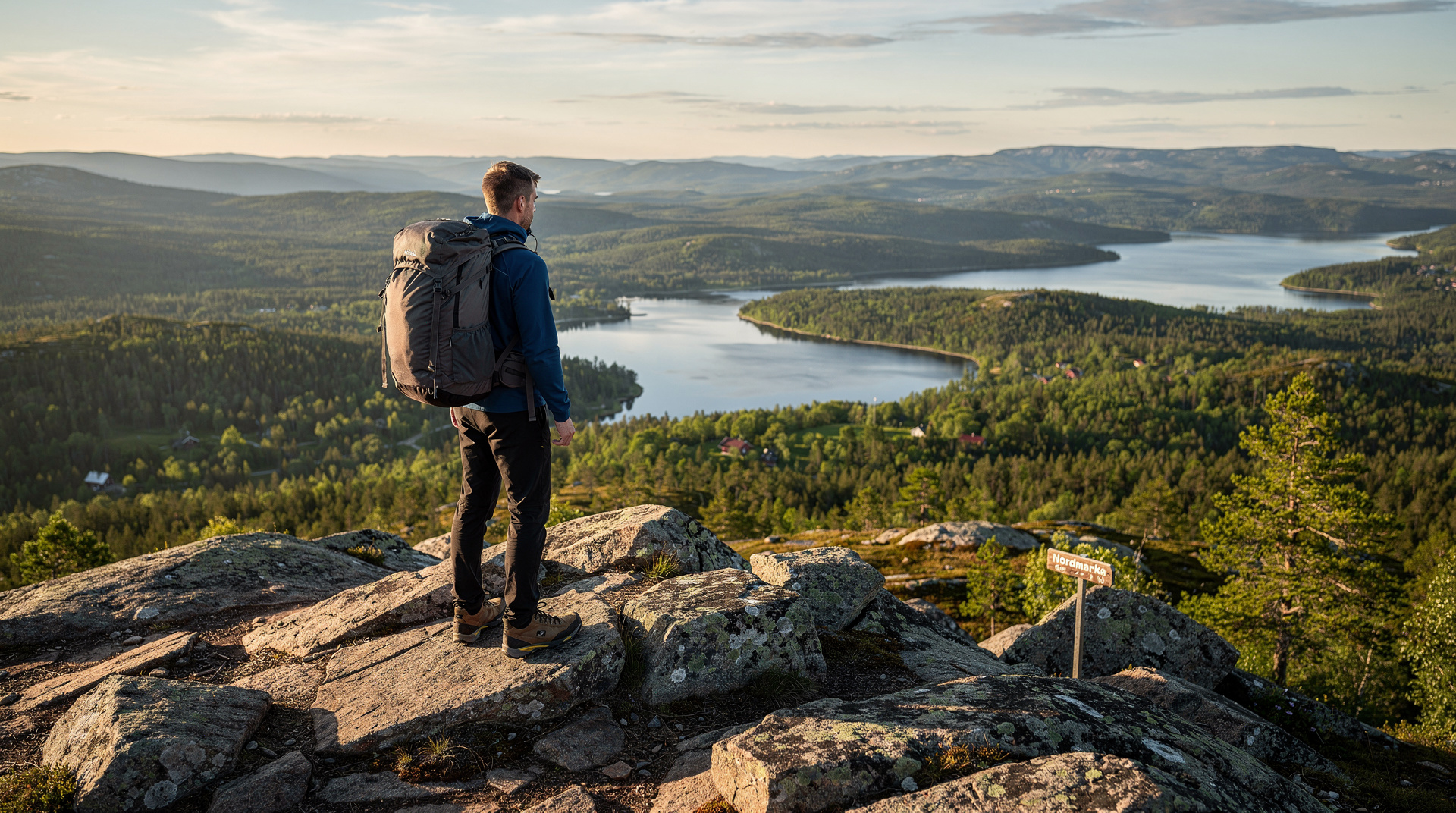
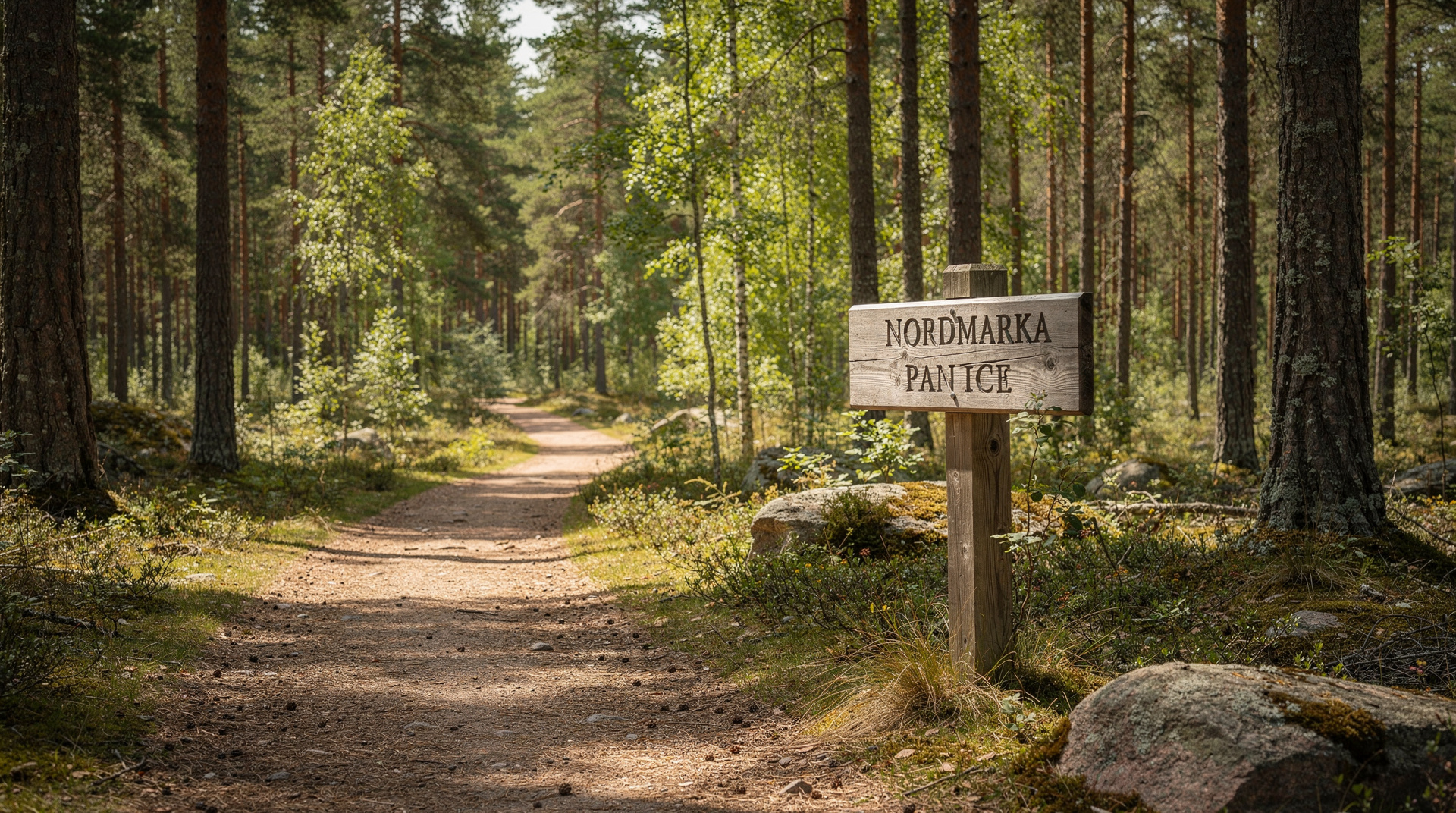
Sognsvann is the gateway to Nordmarka — the vast forest wilderness north of Oslo that stretches for 40 km and contains hundreds of kilometres of trails, dozens of smaller lakes, and several staffed mountain cabins (DNT huts). The transition from metro terminus to genuine wilderness happens within 10 minutes of leaving the lake.
For hiking, the most accessible route from Sognsvann is the trail to Kikutstua cabin (about 8 km north, 2.5 to 3 hours one way). More ambitious hikers can continue to Ullevålseter or complete multi-day loops through the forest. See our Nordmarka hiking guide for trail options and distances.
For lake swimming, several other small lakes (Åklungen, Gryta) are accessible within 1 to 3 km of Sognsvann on foot, offering quieter alternatives on busy summer days.
Winter: cross-country ski hub
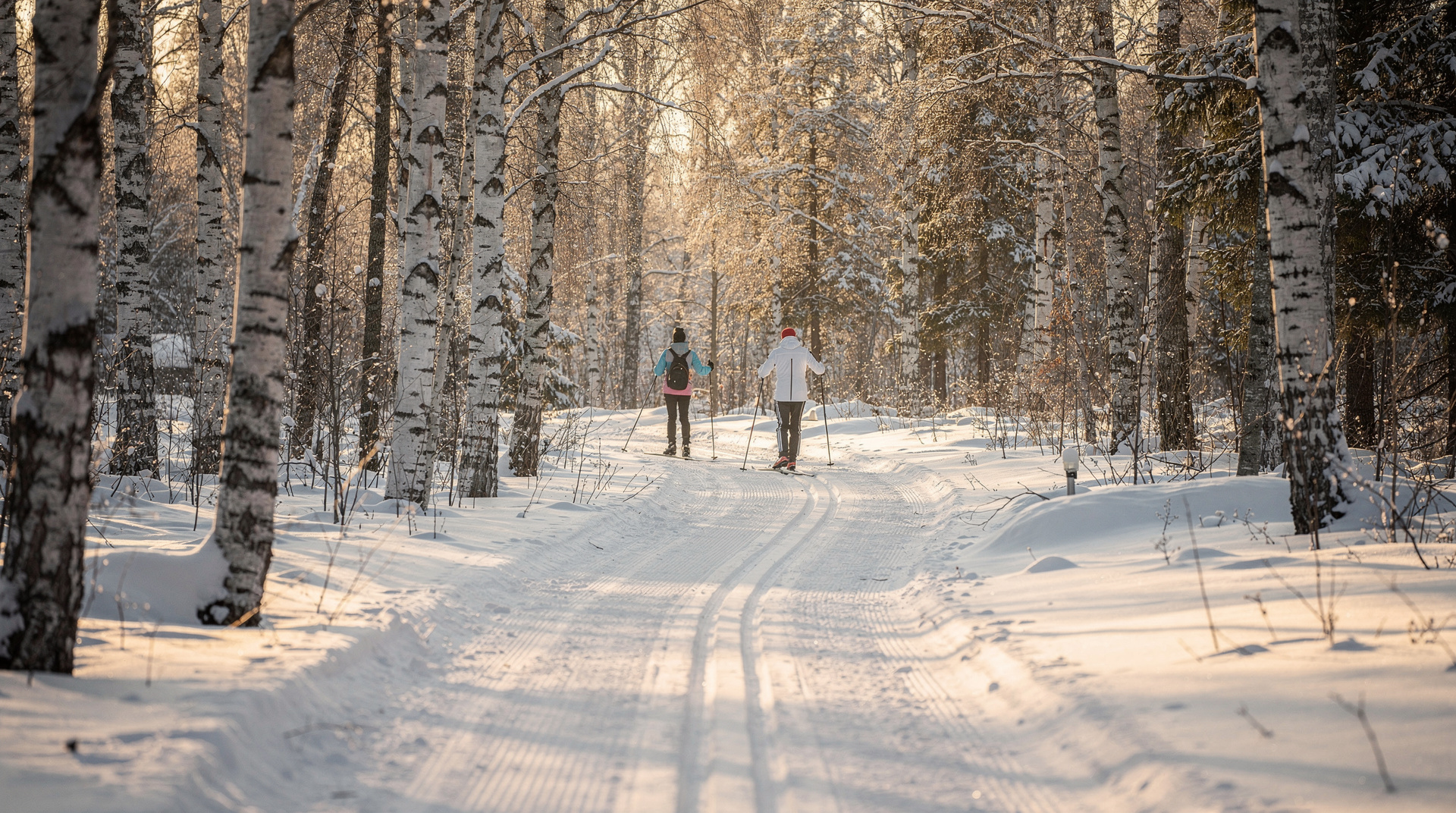
In winter, Sognsvann transforms. When snow conditions are good (roughly December to late March), the Nordmarka ski network is groomed and lit for evening skiing. The first groomed section begins immediately north of the lake.
The ski network extends over 100 km of prepared trails with varying difficulty levels. The loop around Sognsvann itself is groomed and lit for evening skiing when snow allows.
Ski rental is available in a small facility near the lake station. Rental costs approximately NOK 250 to 350 (USD 27 to 38) per day for complete cross-country ski equipment (skis, boots, poles). Lessons are available through Oslo’s cross-country ski schools — ask at the rental facility.
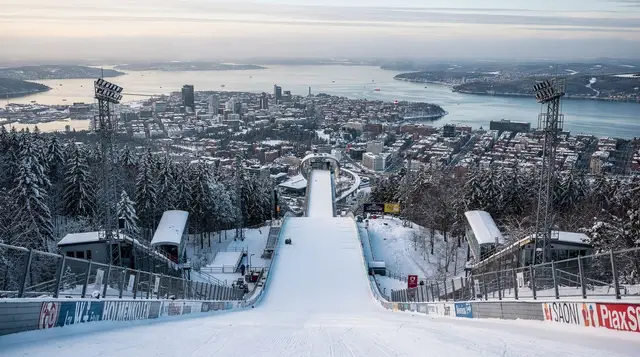
For a guided cross-country skiing introduction, there are organised experiences starting from the Oslo area — see our cross-country skiing in Oslo guide. The spectacular Holmenkollen ski jump and museum are accessible one stop back on the metro at Holmenkollen — see our Holmenkollen guide.
The Holmenkollen line — a metro route worth knowing
Line 3 to Sognsvann is the same line that stops at Holmenkollen, making it easy to combine both destinations in a half-day:
- Take the metro from Majorstuen to Holmenkollen (10 minutes)
- Visit Holmenkollen (1 to 2 hours)
- Continue on the same line to Sognsvann (5 minutes)
- Swim or walk the lake circuit
- Return direct to the city centre
This is one of Oslo’s most satisfying compact half-days: world-famous ski architecture + alpine views + forest swimming with a single metro ticket.
Practical planning
What to bring in summer:
- Swimming costume and towel (no changing facilities)
- Picnic food and water (kiosk is seasonal and limited)
- Sunscreen (lake exposure can be significant on clear days)
- Layers for the return journey — it cools quickly after swimming
What to bring in winter:
- Full winter outdoor clothing if hiking or skiing (temperatures commonly minus 5 to minus 15°C)
- Thermos with hot drink — the journey into Nordmarka from the lake takes you away from any warm facilities
- Ski kit if you have it; rental if not
When is it most crowded? Summer weekend afternoons (13:00 to 17:00) when the city empties toward the nearest swimming spots. Going early morning (08:00 to 10:00) or on weekday evenings after 18:00 gives a quieter experience even in high season.
Dogs: Permitted on the lake trail and in the forest. Not permitted in the water on the main beach section during the official swimming season (some local enforcement, though informal).
Sognsvann vs other Oslo swimming spots
Oslo has several accessible outdoor swimming locations. Sognsvann is the easiest to reach by public transport from the city centre. For fjord swimming from Oslo’s beaches, see our Oslo swimming spots guide and Oslo beaches guide. The fjord islands are accessible by public ferry in summer — see Oslo island hopping guide for the Hovedøya, Langøyene, and Gressholmen options.
For the complete free-Oslo picture, our free things to do in Oslo guide covers all the no-cost experiences worth building your itinerary around.
Sognsvann for first-time visitors: what to expect on arrival
Arriving at Sognsvann for the first time, the sequence is simple: the metro doors open onto a forest platform, a short gravel path leads downhill through birch trees, and within two minutes the lake appears through the trees. There is no ticket gate, no entrance fee, and no queue — just a gap in the treeline and open water. On a clear summer evening, the first view across the lake toward Nordmarka’s forested ridge is one of the more understated “this is why Oslo is different” moments the city offers, precisely because it requires so little effort to reach.
First-timers sometimes underestimate how genuinely close Sognsvann sits to real forest wilderness. Within ten minutes of leaving the lakeside, the character changes from a busy local swimming spot to quiet forest trail, with far fewer people and a noticeably different atmosphere. Bringing a map or the Ut.no app is worthwhile if you plan to walk beyond the immediate lake loop.
Building Sognsvann into a wider Oslo plan
Sognsvann works best as the calm counterweight to a busy sightseeing day. If you have spent the morning in the museums, a lake afternoon resets everyone, and the national museum or the Munch museum pair well with a late-day swim. Travellers who like a slower rhythm can fold the lake into the two-day itinerary or the more outdoorsy active three days, where it fits naturally as the forest stop between city and fjord.
If you are still deciding how long to stay, the how many days in Oslo guide helps you see where a half-day at the lake belongs. Visitors on a tight budget will find that Sognsvann is one of the cheapest good afternoons in the city, which is why it features in the Oslo on a budget advice and in our free things to do roundup.
Choosing your season
Each season gives Sognsvann a different personality, so it is worth deciding what you want before you go. Summer is about swimming, picnics and long light evenings; the Oslo in summer guide and the daylight hours by season page explain how late you can stay out. Autumn is quieter and colourful, and the Oslo in autumn guide shows how the forest around the lake changes. Winter swaps the beach for skis and snowshoes, covered in Oslo in winter activities and snowshoeing near Oslo. For a wider comparison, see best time to visit Oslo.
Combining the lake with sauna and cold water
Norwegians rarely treat a cold swim as a stand-alone activity. A dip in fresh water is often paired with heat afterwards, and if you enjoy that rhythm you may want to read about Oslo’s floating saunas and the sauna and cold plunge options in the city. Sognsvann itself is the simple, free version of the same idea: cool water, fresh air, and a warm layer waiting on the grass. If you are new to the culture, the sauna etiquette guide is a useful read before your first session.
Taking children to the lake
The calm shoreline and the flat loop make the lake easy with young children, and the practical tips are mostly common sense. Bring more snacks than you think you need, pack a change of clothes for each child, and let them set the pace on the trail. Our Oslo with kids guide covers other family-friendly stops, and the family museums page is a good fallback for a day when the weather turns. Keep an eye on little ones near the water’s edge, since there are no lifeguards.
Getting the most from the walk
Take your time on the loop rather than treating it as exercise. Stop at the quieter coves, look for birds along the shore, and let the forest light do its work. If the loop leaves you wanting more, the best Oslo hikes page lists longer options, while the Vettakollen hike and the forest to fjord walk give you views and a sense of how the forest meets the city. The wider Nordmarka destination page explains the geography of the forest you are standing at the edge of, and the Holmenkollen destination page covers the hill neighbourhood on the same line.
Frequently asked questions about Sognsvann lake — Oslo's metro-accessible swimming and hiking lake
Can you swim at Sognsvann?
Yes — Sognsvann is one of Oslo's most popular outdoor swimming spots. The main beach area on the southern shore near the metro station has a sandy section, grass for sunbathing, and clear fresh water. Swimming is free. The lake is typically warm enough for swimming from June to mid-September; water temperature peaks around 18 to 22°C in July and August.Is there a running or walking trail around Sognsvann?
Yes — a 3.3 km trail circles the entire lake on flat terrain, making it Oslo's most popular running circuit. It's suitable for walking, running, and cycling (cycling is restricted to the main path, not off the trail). The loop takes 35 to 45 minutes to walk at a leisurely pace.Can you ski at Sognsvann in winter?
Yes — Sognsvann is the main access point for Oslo's groomed cross-country ski network. The Nordmarka trail system begins immediately north of the lake. In good snow conditions, over 100 km of prepared trails are accessible from here. Ski rental is available at a small facility near the lake. Skiing is possible roughly December to March.Are there any facilities at Sognsvann?
The lake has a seasonal kiosk (open June to August) selling ice cream, hot drinks, and light snacks. There are toilets near the main beach. A small ski rental and service point operates in winter. No restaurant or formal café — bring your own food for longer visits.Is Sognsvann good for families with children?
Excellent. The flat terrain around the lake, the shallow and calm water for swimming, the accessible metro connection, and the low cost (free entry) make it one of Oslo's best family outdoor destinations. The 3.3 km trail is manageable for children aged 5 and above.
Top experiences
Bookable activities with verified prices and instant confirmation on GetYourGuide.