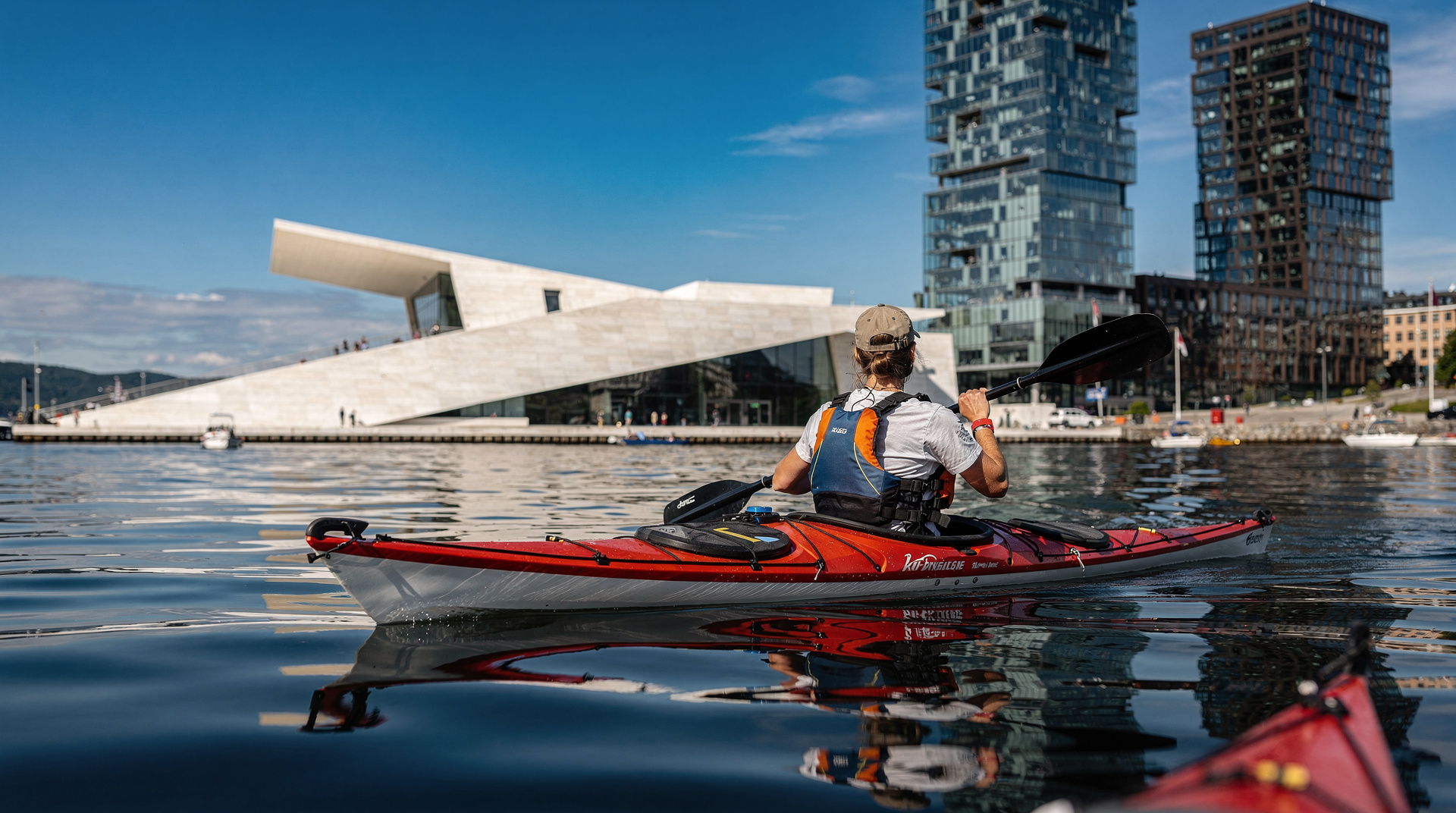
Oslo forest-to-fjord guided walk — what to expect
Oslo nature walk: forest to fjord
Duration: 3 hours
- Forest + fjord
- Local guide
What is the Oslo forest-to-fjord walk?
A guided half-day nature walk that combines Nordmarka forest trails with ridge viewpoints and fjord vistas, typically running 3–4 hours with a small group. The guide provides ecological and cultural context about Norway's forest-fjord connection. Departures from central Oslo.
Why forest and fjord belong together in Oslo
The Norwegian capital has always understood itself through a particular geography: city in the middle, forest above, fjord below. This is not metaphor — it is physical reality. Stand on any of Oslo’s forested ridges and the Oslofjord is visible through the trees to the south; stand on the harbourfront and the dark treeline of Nordmarka frames the city against the sky. The forest-to-fjord walk makes this connection literal, threading a route from the forest interior down through Oslo’s green gradient to a fjord vantage point.
This guide explains what the tour delivers, who it is best suited to, and how to decide whether the guided format is right for you or whether you would be happier exploring independently.
| Where | Nordmarka forest to an Oslofjord viewpoint or harbour finish |
| Time needed | 3–4 hours, 7–10 km |
| Cost | Guided tour price varies; DIY costs only a Ruter ticket (NOK 40–80) |
| Getting there | Starts near Sognsvann (T-bane 3) or Frognerseteren (T-bane 1) |
| Best time | April–October; winter available as guided snowshoe format |
What the guided walk covers
The forest section
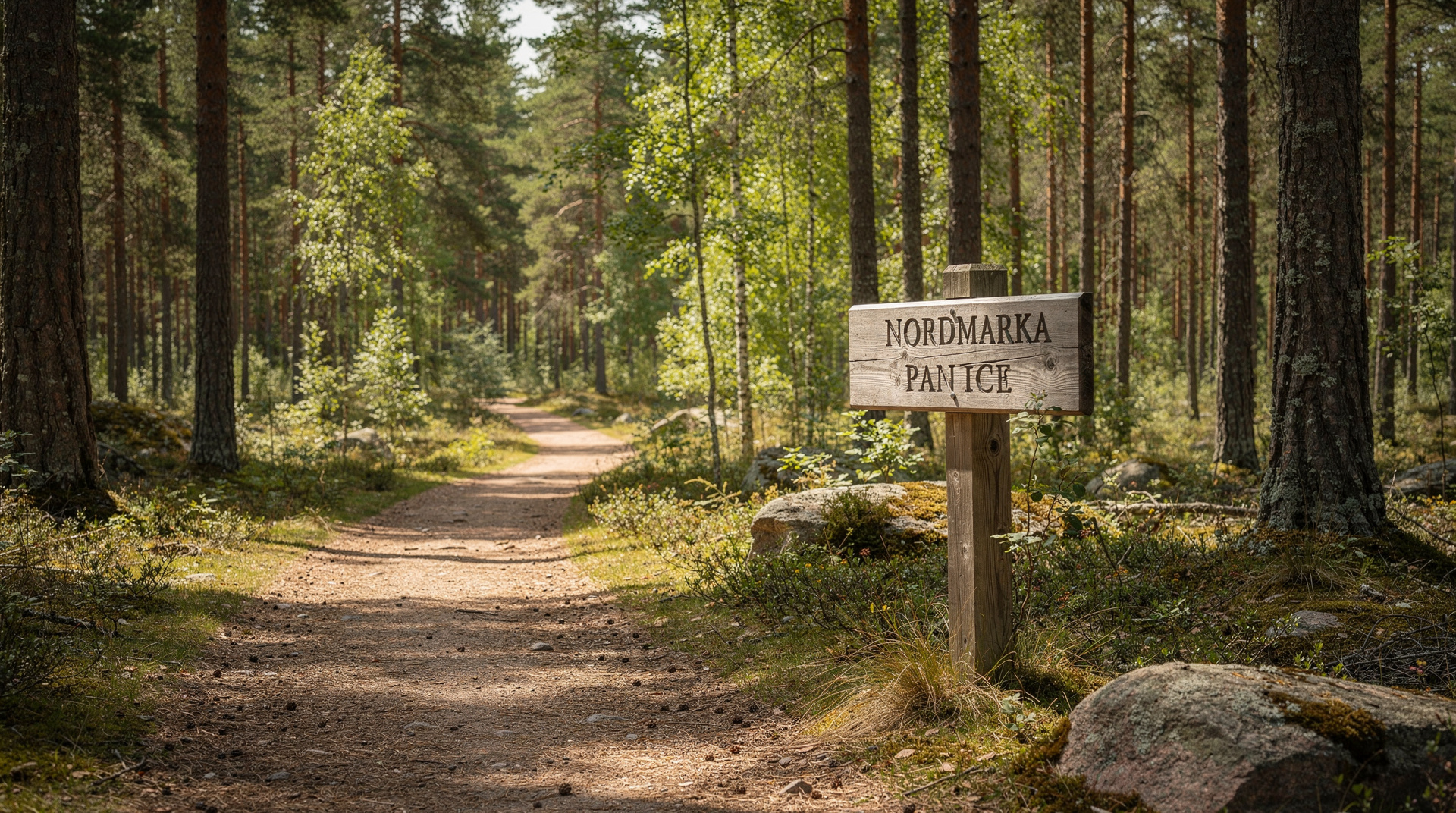
The walk begins in the forest — either from Sognsvann (T-bane line 3) or from Frognerseteren (T-bane line 1), depending on the specific tour schedule. From either start point, the guide leads the group along marked trails through Nordmarka’s characteristic spruce and birch landscape.
The forest sections of the walk are more than transit between viewpoints. A good guide will pause to explain Norway’s relationship with the forest — the traditional right of allemannsretten (public access to uncultivated land), the role of the skog (forest) in Norwegian national identity, the management practices that keep Nordmarka accessible while controlling commercial logging near Oslo. You learn how Norwegians use the forest not just as a recreational space but as a philosophical anchor — the concept of friluftsliv (free outdoor life) is alive in practice here, not just in marketing brochures.
Depending on the season, the forest section may pass a small lake, a stream with visible salmon or trout if the season is right, or meadows where elk tracks are sometimes fresh in morning mud.
The viewpoint section
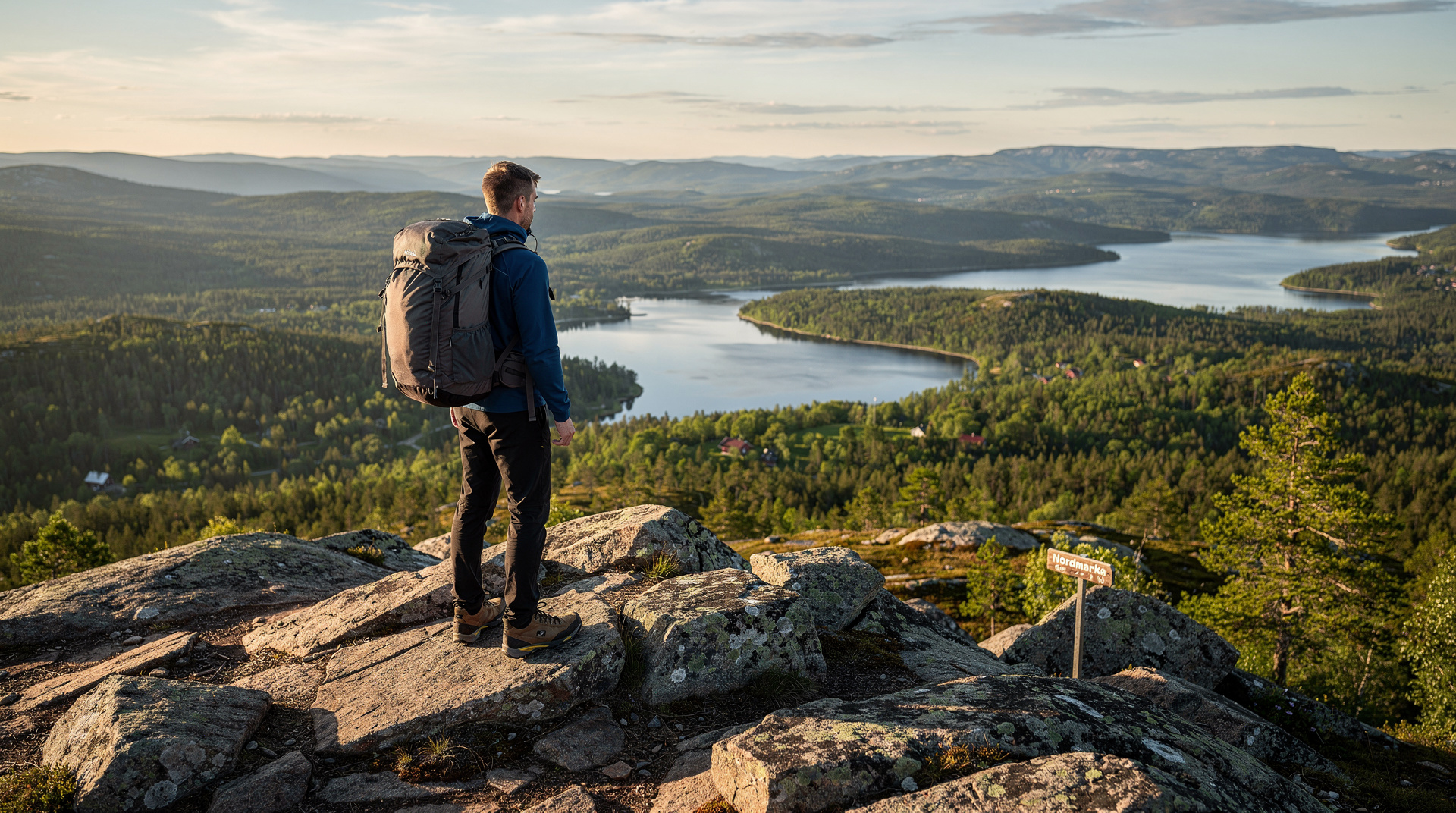
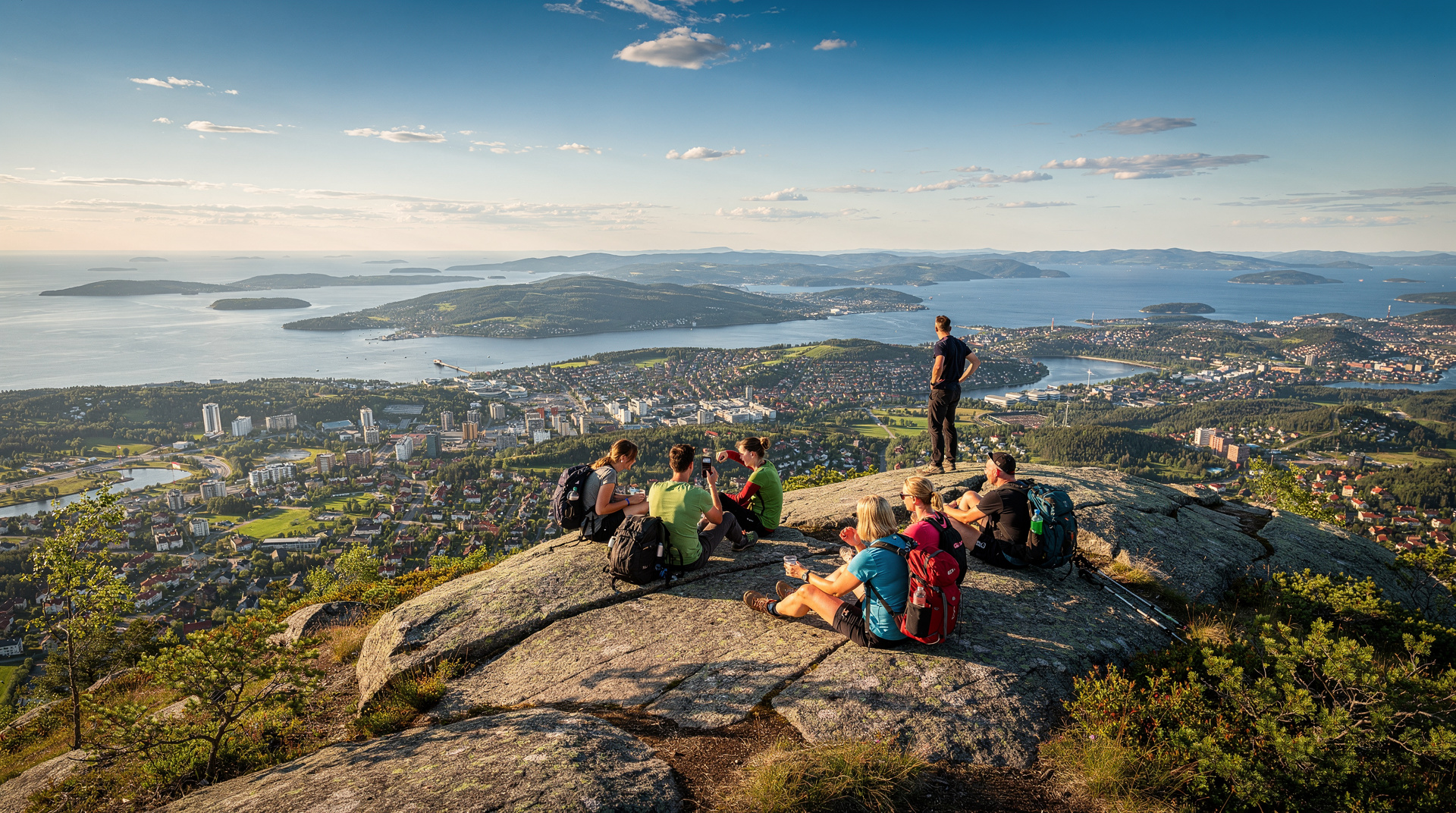
The walk climbs to a ridge or summit where the fjord becomes visible. This is typically somewhere on the arc of Oslo-facing ridges — Vettakollen area, Kolsås ridge, or the Grefsenkollen plateau — giving a view south over the city to the water. The guide will often contextualise the view: pointing out key landmarks on the Oslofjord, explaining the ferry routes to the islands, and noting the 59.9°N latitude that puts Oslo firmly outside the northern lights zone (a fact many visitors have to be corrected on — see our northern lights myth-buster).
The descent and fjord approach
The descent varies by route but often brings the group through residential Oslo — the kind of walk through a Nordic city neighbourhood that travel blogs rarely photograph. The final section may end at an Oslofjord viewpoint, at a harbour area like Aker Brygge or Tjuvholmen, or at a café with fjord views. Some tours include a brief boat-side stop or a light refreshment.
Who this tour is best suited for
First-time Oslo visitors who want to understand the city’s relationship with nature rather than simply ticking viewpoints. The guided format provides context that makes the landscape meaningful, not just scenic.
Solo travellers who find independent forest navigation uncertain and want the security of a knowledgeable local, plus the social element of a small group.
Couples and small groups who want a structured half-day that combines exercise with cultural learning, leaving the afternoon free for museums or the harbour.
Families with children aged 8 and above — most forest-to-fjord walks are child-appropriate in pace. The guide’s nature commentary (identifying birds, tracks, plants) tends to engage younger walkers well.
This tour is less suited to experienced hikers who know Norwegian trails well and prefer to move at their own pace. For self-guided options, our Nordmarka hiking guide covers the same landscape in independent format.
Practical details
Duration: 3–4 hours including all trail time and breaks. Most tours depart morning (09:00–10:00) or early afternoon (13:00–14:00).
Distance and difficulty: 7–10 km, moderate. Elevation gain of 200–250 metres. Sturdy walking shoes are essential; trail shoes preferred. The trail involves no technical sections but some uneven rocky ground on ridge approaches.
Group size: Typically 4–12 participants. Small groups allow the guide to adjust pace and answer questions without shouting.
What to bring: Water (1.5 litres per person), a light layer, sunscreen in summer. Rucksacks are useful but not required for the 3-hour format.
Meeting point: Confirmed at booking — usually a central metro or tram station. Transfers to the trailhead are included in the guided format.
How it compares to hiking independently
The honest assessment: if you have hiking confidence, Ut.no on your phone, and two or more companions, you can walk any version of this route independently for the cost of a Ruter ticket (NOK 40–80, USD 4–9 per person). The trail markers are reliable, Nordmarka is safe, and the views are the same whether a guide explains them or not.
The guided format earns its premium through context and confidence: you spend no time on navigation, you hear the Norwegian names and stories attached to the landscape, and you are unlikely to get lost or turn back early because the terrain looks uncertain. For many visitors — particularly those for whom Norway is a first trip and who have a week or less — that confidence and context is worth paying for.
For a purely practical outdoor day without a guide, build your own version using our ranked hikes guide, Vettakollen trail detail, and Nordmarka overview.
Combining the walk with water activities
The forest-to-fjord walk naturally ends near the water, making it an ideal first half of a full outdoor day. After the walk concludes near the harbour, consider adding:
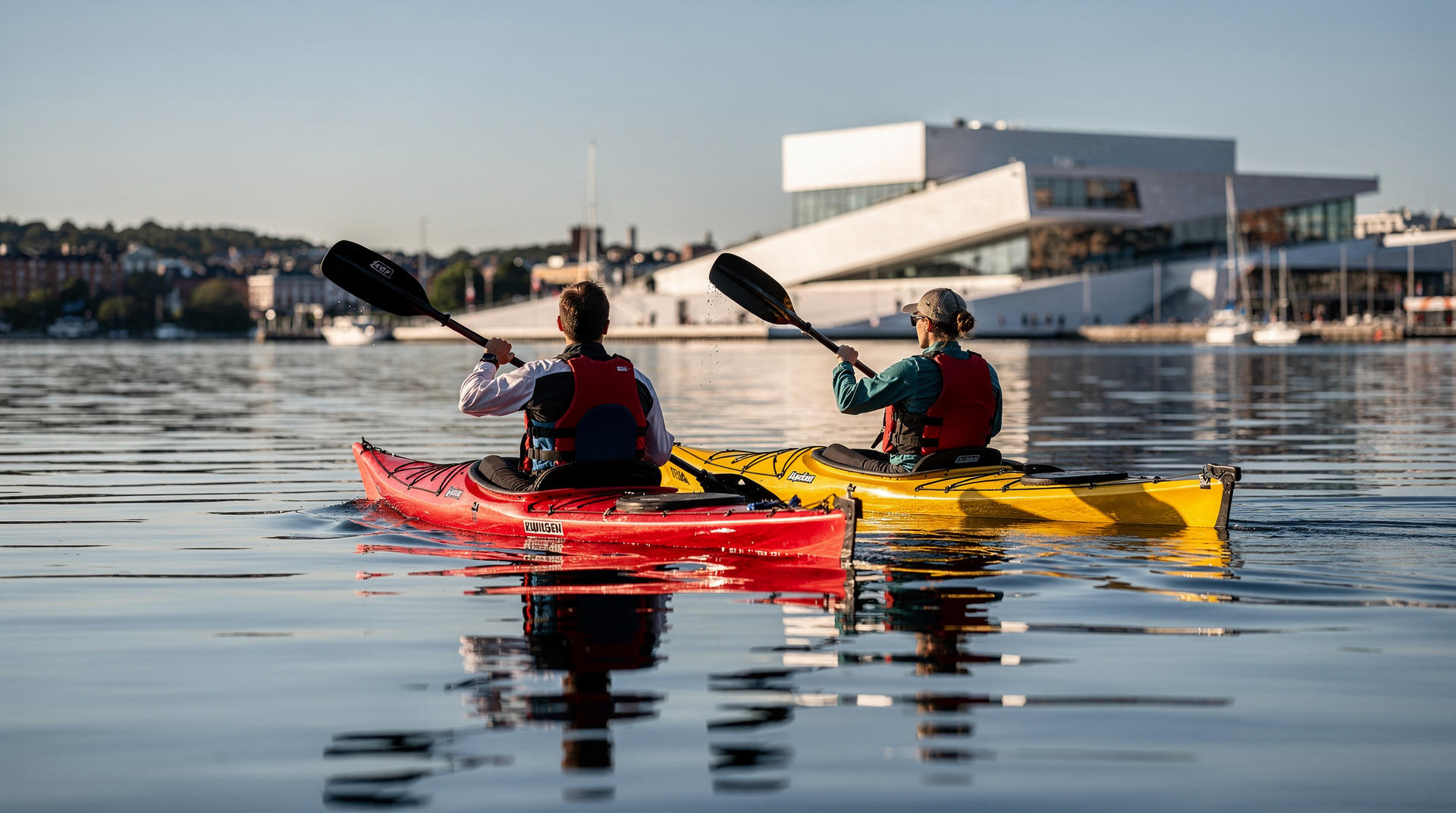
- A sea kayak session on the Oslofjord (departures from Sørenga or Tjuvholmen, 2–3 hours)
- Stand-up paddleboarding on the harbour (rental available from Aker Brygge and Tjuvholmen, May–September)
- A swim at one of Oslo’s urban swimming spots — Sørenga Sjøbad or Operastranden are the most accessible from the city-side end of the walk
This combination of forest in the morning and fjord in the afternoon is the purest possible expression of Oslo’s skog og fjord identity — and it requires nothing more than public transport and a willingness to get moderately muddy in the first half.
For those building a full active Oslo trip, the active 3-day itinerary places this walk on day one, followed by the Oslofjord and Nordmarka on days two and three.
The guide’s role in making the landscape legible
One of the most consistent things visitors say about guided outdoor activities in Norway is that the guide unlocked the landscape for them. Norway’s nature is beautiful but it is not always immediately readable to visitors from different climates and cultural contexts. Why is the forest structured this way? Why do Norwegians use these particular paths and not others? What is the plant with the white three-petalled flower covering the entire forest floor in May? What made the groove in this rock face?
A good forest-to-fjord guide answers these questions — not exhaustively, but enough to make the landscape feel inhabited by meaning rather than just scenery. The DNT-trained guides who lead these walks typically have a background in outdoor education or ecology, and the good ones are generous with their knowledge without being didactic about it.
This is, in the end, the argument for the guided format that is hardest to replicate independently: you can download the Ut.no map, you can read our trail guides, but you cannot replicate the moment when your guide stops on a ridge, points north and south, and says something that makes you suddenly understand exactly where you are in Norway’s geography, and why it looks the way it does.
Weather and what to do if conditions are bad
The forest-to-fjord walk, like all outdoor Oslo activities, is weather-dependent but not weather-blocked. Norwegian guides are comfortable operating in rain, and the forest provides substantial natural shelter on all but the most windswept ridge sections.
In heavy rain, the forest is actually beautiful — the spruce darkens, the moss glows neon green, the smell of wet earth and pine is intensely Norwegian. Expect muddy sections on the lower forest paths. The guide will adjust pace and route to avoid the most exposed terrain in genuinely poor conditions.
What to bring for uncertain weather:
- Waterproof jacket (essential)
- Waterproof trousers or overtrousers (optional but useful)
- Waterproof hiking shoes or trail shoes — trail runners are fine if the soles have grip
- Extra warm layer in a dry bag — a fleece in a plastic bag as insurance
- Hat — the ridge sections are exposed and wind-chill can drop the felt temperature 5–8°C
Thunder and lightning will cause a tour cancellation or early return — guides monitor Yr.no and will make the call. If a tour is cancelled due to severe weather, reputable operators provide a full refund or rebooking.
After the walk — food and recovery
The guided walk typically ends near the city, making it easy to transition to lunch or dinner without any additional planning. Oslo’s harbour area has abundant café and restaurant options at every price point.
Budget (NOK 100–200 per person, USD 11–22): The street food market near Aker Brygge (summer and weekends) has excellent traditional Norwegian dishes including fiskeboller (fish balls in white sauce) and bacalao. The Mathallen Food Hall at Vulkan, near Grünerløkka, has 30+ food vendors and is a post-hike favourite for those wanting variety.
Mid-range (NOK 250–400 per person, USD 27–43): Fiskeriet at Youngstorget is a reliable seafood option with honest pricing and good fish soup. Smalhans at Ullevålsveien has an excellent neighbourhood Oslo atmosphere and a menu focused on seasonal Norwegian ingredients.
Splurge (NOK 600–900+ per person, USD 65–97): Maaemo (three Michelin stars) is for special occasions only and requires advance booking of weeks or months. For a more accessible splurge with genuine culinary ambition, Arakataka near Oslo Central Station offers Nordic cuisine at approximately NOK 800 for a full tasting menu (USD 86).
For visitors who want to debrief on the walk over good Norwegian food, the local Frognerseteren restaurant at the top of T-bane line 1 is the most thematically appropriate choice — Norwegian forest food after a Norwegian forest walk, in a historic wooden building with terrace views.
Booking and availability
Forest-to-fjord walks are bookable through standard tour platforms. Because group sizes are small (typically 4–12), weekend slots in summer sell out faster than weekday options. If your visit date is fixed, booking 3–7 days in advance is advisable for June through August. May and September have more availability.
Most operators offer morning and afternoon departures. Morning walks (09:00–12:00) have the advantage of cooler temperatures in summer and are better for wildlife sightings (birds are active, elk are moving). Afternoon walks (13:00–17:00) offer warmer temperatures and better light for photography on south-facing ridge sections.
The walk is available with Ruter-friendly logistics: meeting at a central T-bane station means no need to arrange a taxi or car. Wear your walking shoes and bring a daypack — everything else is provided.
Oslo’s skog og fjord identity
The phrase “skog og fjord” (forest and fjord) appears constantly in Norwegian outdoor culture and particularly in Oslo’s self-description as a city. The forest-to-fjord walk makes this phrase physically concrete by threading a route that moves between the two ecosystems in a single outing.
The forest (skog) in question is the marka — the legally protected wilderness that begins immediately above the city. The fjord in question is the Oslofjord, which pushes 100 km inland from the sea and reaches its head at Oslo harbour. Between them, the city occupies a narrow coastal valley, a fact that is easy to lose in the density of urban life but becomes obvious from any elevated point.
This geography is not coincidental — it is why Oslo exists here. The fjord gave the location strategic maritime value; the forest gave it building materials, game, and fuel. For a thousand years before the oil economy, these two resources defined what was possible for the settlements at the fjord’s head. The walk you take on the forest-to-fjord tour follows ground that was walked for entirely practical reasons long before it became recreational.
Wildlife you might encounter
A morning forest-to-fjord walk in Oslo’s green corridor may reveal more wildlife than first-time visitors expect. The key species to look for:
Elk (elg): Norway’s largest land mammal, common in Nordmarka. Morning and dusk are the most productive times. If you see an elk, stop and watch quietly — they are accustomed to humans on trails but will move away if you approach.
Roe deer: Much smaller than elk, reddish-brown in summer. Common on forest edges and in the transitional scrub areas between dense forest and open ridge. More easily startled than elk.
Birds: The forest has a rich bird community. Great spotted woodpeckers are audible (drumming) before they are visible (look for movement on birch trunks). Mistle thrush, coal tit, marsh tit, and Eurasian jay are all common. In summer, listen for the willow warbler’s descending cadence in the birch scrub. At the fjord end of the walk, common eider ducks and black-headed gulls are year-round residents.
Harbour seals: Occasionally seen in the inner Oslofjord, particularly near the islands. Not a reliable sighting but always worth scanning the water surface near rocky outcrops.
A guide who knows the forest will point out tracking signs (elk browsing damage on young birch, fox prints on muddy sections) even when the animals themselves are not visible. This is a significant part of the guided format’s value — learning to read the forest’s non-human population from its traces.
The walk in different seasons — what changes
Spring (late April–June): The forest floor undergoes its most dramatic transition. White wood anemones (hvitveis) carpet the ground in May; wild garlic (ramsløk) fills the air with its distinctive scent in damp hollows near streams. The trees are bare in early April and fully leaved by late May. A spring forest-to-fjord walk — with flowers, birdlife, and the forest visibly waking up — is one of the most rewarding times to do it.
Summer (July–August): Dense green canopy, long light, warm temperatures. The fjord viewpoints look out over a glittering surface with sailboats and island ferries visible. The descent through suburban Oslo brings you to warm streets where ice cream (best source: Hansens Iskrembar near Bjørvika) costs NOK 60–80 (USD 6–9) for a double scoop.
Autumn (September–October): The birch colour transforms the forest sections from green to gold. The light is lower and warmer. The fjord often has the calm, clear quality of settled autumn anticyclone weather. This is the most photogenic season.
Winter (November–March): Guided winter walks operate with snowshoe or crampons for the snow-covered forest sections. The fjord in winter has a metallic, still quality. Guides typically include a campfire stop — see our snowshoeing guide for the full winter forest walk format.
Photography tips along the route
The forest-to-fjord walk offers two very different photographic environments, and a little planning improves the results from both:
- Forest sections: Dappled light under the canopy is contrasty and can blow out highlights; a slight underexposure preserves detail in bright gaps between trees. Overcast days actually photograph the forest interior better than harsh sun.
- Ridge viewpoints: The fjord view benefits from a wider lens to capture both the water and the framing tree line. Late afternoon light on a clear day gives the most saturated colour on the fjord surface.
- Wildlife: If you spot elk or roe deer, resist the urge to approach for a closer shot — a longer lens (or your phone’s zoom) and patience work better than proximity, and the guide will ask you to keep distance regardless.
- The descent through residential Oslo: Often overlooked, but the ordinary Nordic streetscape — wooden houses, gardens, quiet order — is a worthwhile contrast to the wilder forest and ridge shots earlier in the walk.
Fitness level: what to honestly expect
The 7–10 km distance and 200–250 metre elevation gain sound modest on paper, and for most reasonably active adults they are. But a few honest caveats:
- Uneven terrain matters more than distance. Forest trail surfaces vary — roots, rocks, occasional mud — so the effort feels greater than a flat 8 km city walk.
- The pace is set for the group, not the individual. A guided walk moves at a pace that accommodates the slowest comfortable walker in the group, which suits most visitors but can frustrate very fit hikers wanting a workout.
- 3–4 hours including breaks is the realistic total time commitment, not the walking time alone — factor this into a day that also includes museums or a harbour lunch.
Anyone with a baseline of regular walking (30+ minutes several times a week) will find this comfortable. Those recovering from injury or with significant mobility limitations should ask the operator about alternative shorter routes before booking.
How this compares to other guided Oslo outdoor tours
| Tour | Duration | Physical demand | Best for |
|---|---|---|---|
| Forest-to-fjord walk | 3–4 hrs | Moderate | Context-seeking first-timers |
| Guided kayak tour | 2.5–3 hrs | Moderate (upper body) | Water-focused visitors |
| Guided island-hopping | 3–4 hrs | Low | Families, relaxed pace |
| Snowshoe tour (winter) | 3–4 hrs | Moderate–high | Winter visitors wanting snow experience |
The forest-to-fjord walk sits in the middle of Oslo’s guided outdoor offerings — more physically engaging than an island-hopping boat tour, less specialised than kayaking or snowshoeing. See the kayaking guide and family fjord activities guide for the water-based alternatives.
Frequently asked questions about Oslo forest-to-fjord guided walk — what to expect
How long is the forest-to-fjord walk?
The guided version runs approximately 3 to 4 hours including breaks. The distance is roughly 7–10 km depending on the exact route. The elevation gain is moderate — around 200–250 metres total.Is the forest-to-fjord walk suitable for beginners?
Yes. The walk is designed for mixed fitness levels and the guide sets a comfortable pace. Sturdy walking shoes are recommended but trail-running shoes are fine. No technical terrain is involved.What do I see on the forest-to-fjord walk?
The route typically combines Nordmarka forest — old spruce, birch glades, open ridges — with viewpoints where the Oslofjord is visible below. You might pass a small lake, a DNT-style cabin, or a rocky viewpoint. The guide explains Norway's relationship with the skog og fjord landscape.Is there a self-guided version?
The trail can be walked independently using Ut.no maps but the guided format adds ecological and cultural context you won't get from a map. For independent trail options, see our Nordmarka hiking guide and the Vettakollen hike guide.When does the forest-to-fjord walk run?
Typically April through October, weather permitting. Check current availability as schedules vary by season. Winter guided walks in Nordmarka are available as snowshoe tours (see our snowshoeing guide).
Top experiences
Bookable activities with verified prices and instant confirmation on GetYourGuide.
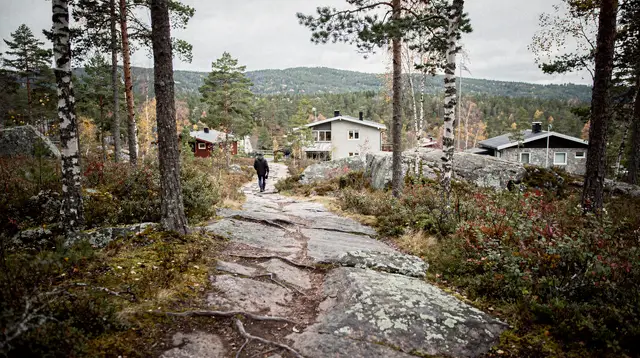
Oslo summit: a scenic hiking adventure to Vettakollen
- Panoramic views
- Local guide
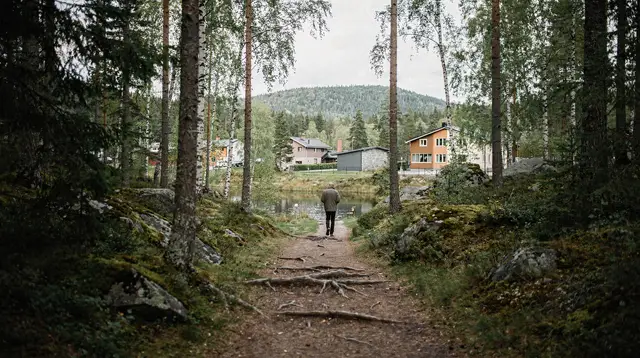
From Oslo: Nordmarka forest 6.5-hour guided walk
- Nordmarka forest
- Full day
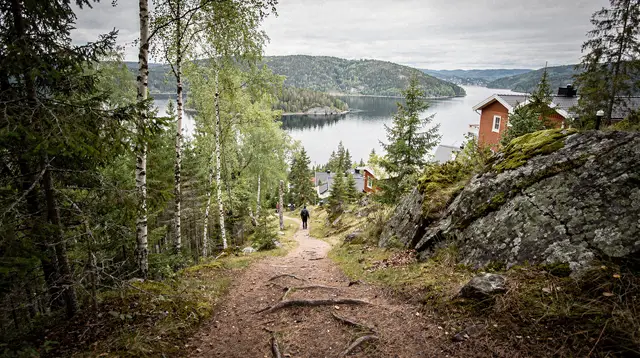
Oslo: half-day panoramic lakes and forests hiking tour
- Lakes + forests
- Half day
Oslo: scenic forest hike with a dog and local guide
- Friendly dog
- Forest