Oslo food walking tour: review, tips and booking
Oslo: 3.5-hour walking tour for great food
Duration: 3.5 hours
- Tastings included
- Local guide
| Where | Sentrum/Aker Brygge or Grünerløkka, depending on tour |
| Cost | Around NOK 680–800/adult |
| Time needed | 3–4 hours |
| Getting there | Meeting point confirmed at booking (often Mathallen or Aker Brygge) |
| Best time | Book early in your trip for follow-up recommendations |
The case for a guided food tour in an expensive city
Oslo is one of the most expensive cities in Europe to eat and drink in. A main course at a decent restaurant runs NOK 250 to 380 (USD 27 to 41); a beer is NOK 90 to 130 (USD 10 to 14). For travellers who want to sample multiple Norwegian foods without either blowing their budget at a restaurant or defaulting to supermarket provisions, a guided food tour makes genuine economic sense. You pay once and eat across several stops — typically 6 to 10 distinct tastings for a total outlay of NOK 680 to 800.
The other argument is navigational. Oslo’s food scene has moved decisively beyond the Viking-ships-and-salmon clichés of 20 years ago, but it is not always obvious where the interesting local food exists without someone who knows the city well. A good guide takes you to places you would not find independently: a specific stall at Mathallen food hall, a bakery that sells the best cardamom buns in Grünerløkka, a dairy shop stocking an unusual cave-aged Norwegian cheese. That insider knowledge is the core product, not just the food itself.
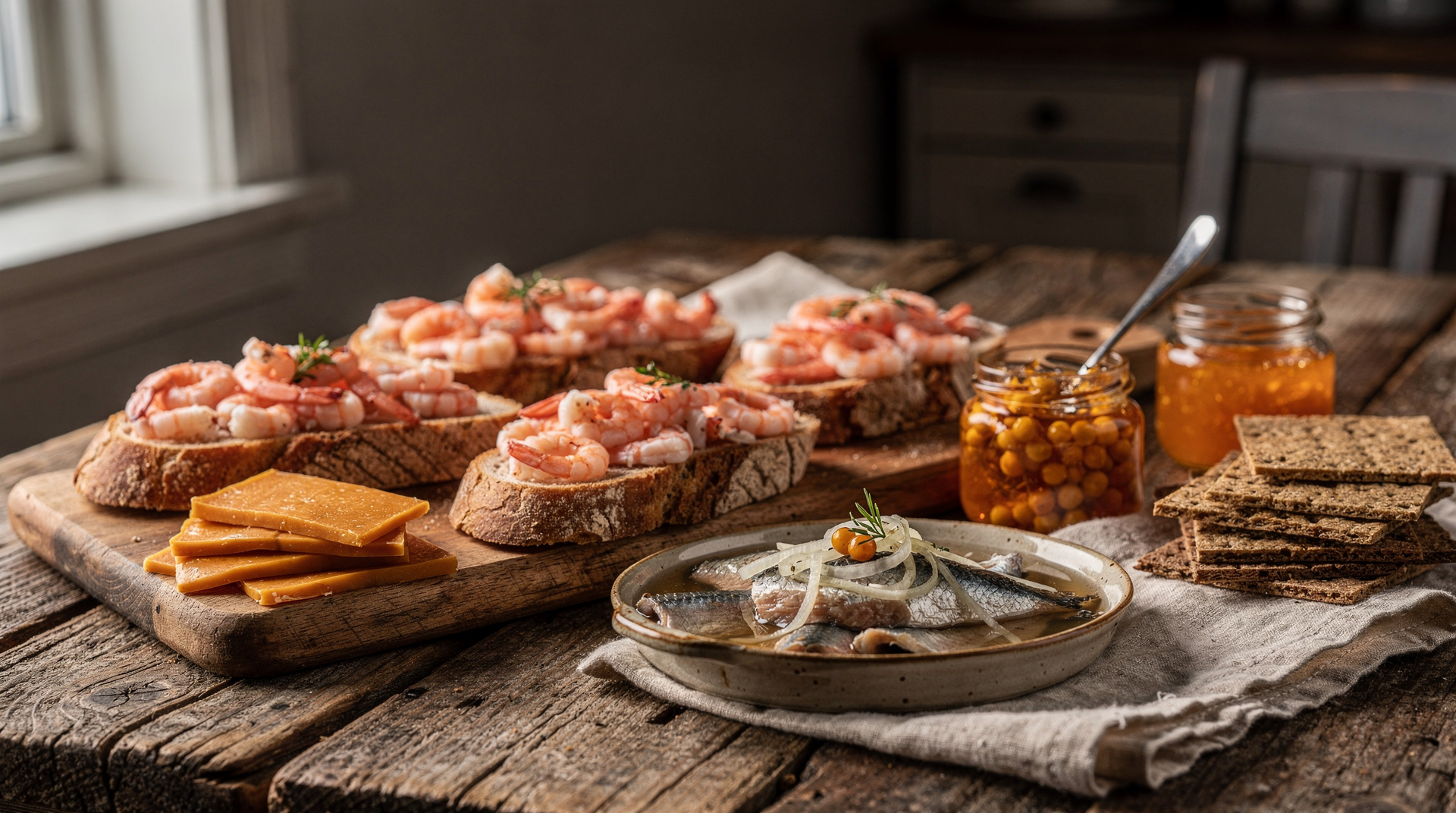
There is also a third argument that applies specifically to Norwegian food: context makes it better. Brown cheese (brunost) eaten without explanation can seem confusing and slightly odd. Brown cheese eaten after a guide has explained its history — a 19th-century dairy invention from Gudbrandsdalen, originally a way to use excess whey from butter production, now a Norwegian national food identity marker — becomes interesting. The cultural framing that a good food guide provides is not padding; it is part of the product.
The main food tour with a local: what to expect
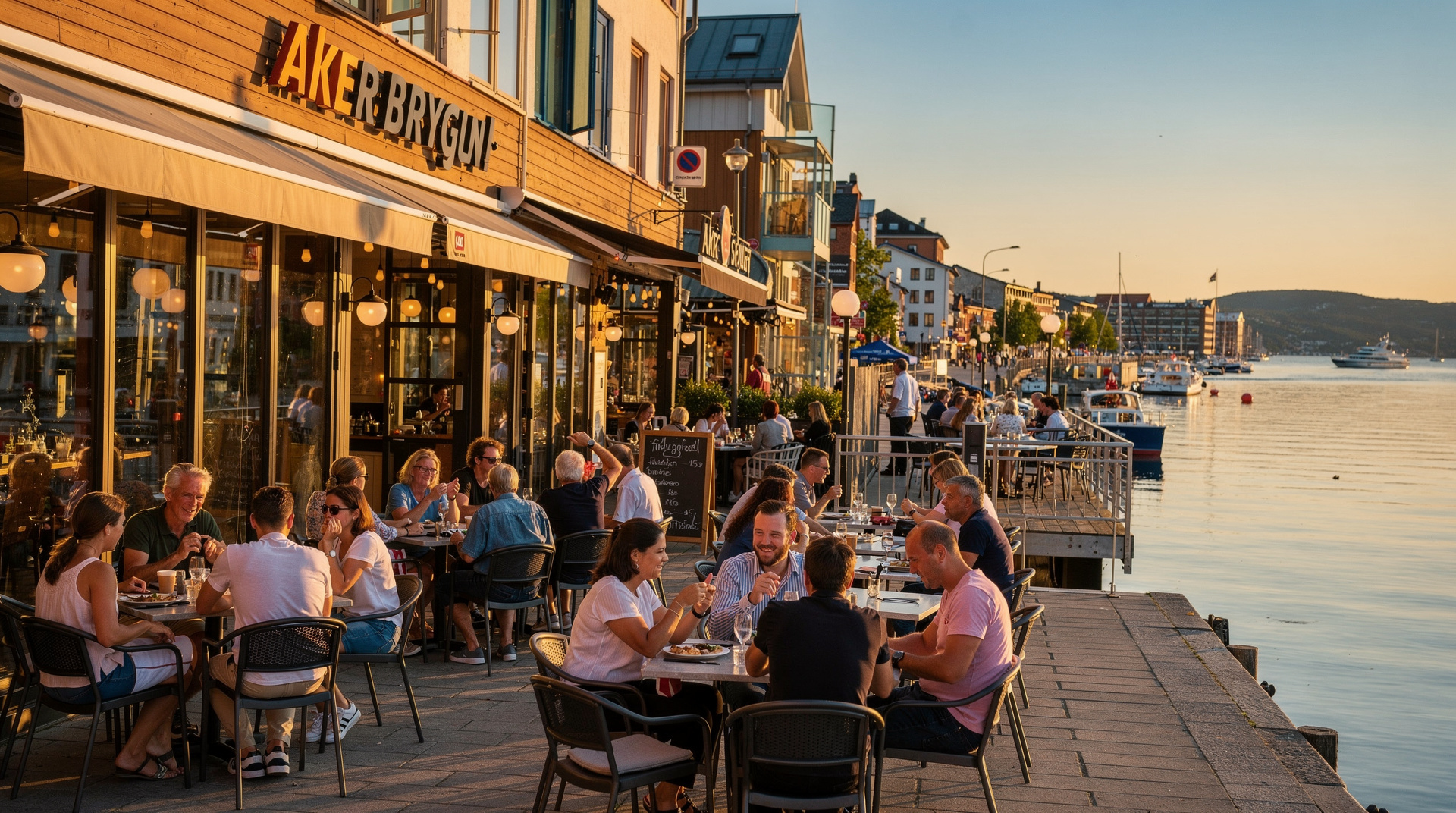
The flagship food tour (oslo-food-walking-tour-local) runs for 4 hours and typically starts in the Sentrum area, moving through Aker Brygge and toward the market zones. The guide is a local — not a trained tour-company employee reading from a script, but someone with genuine personal connections to Oslo’s food culture. The difference matters in a city this size; local food knowledge in Oslo is specific and personal.
Typical stops on this tour include:
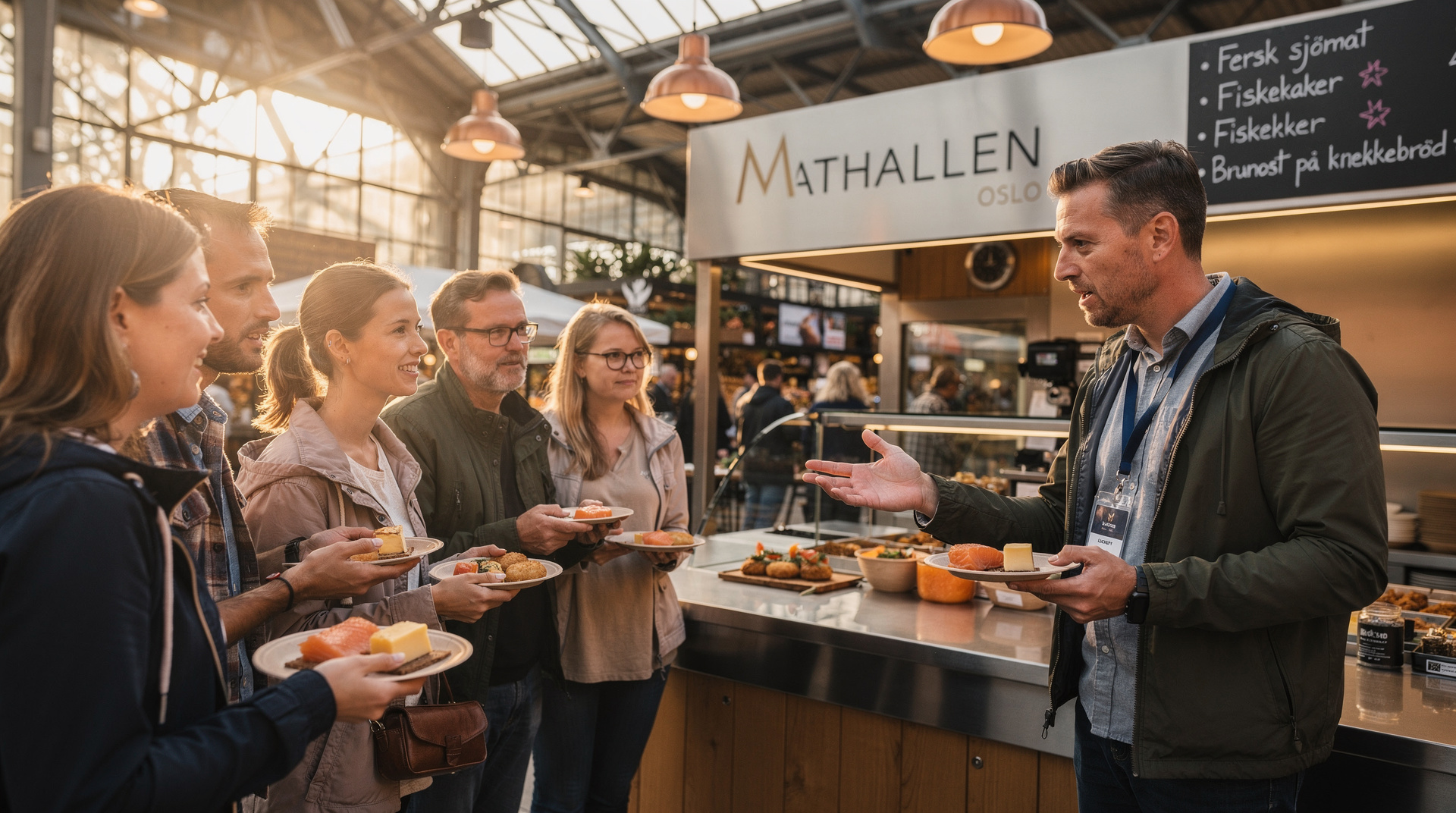
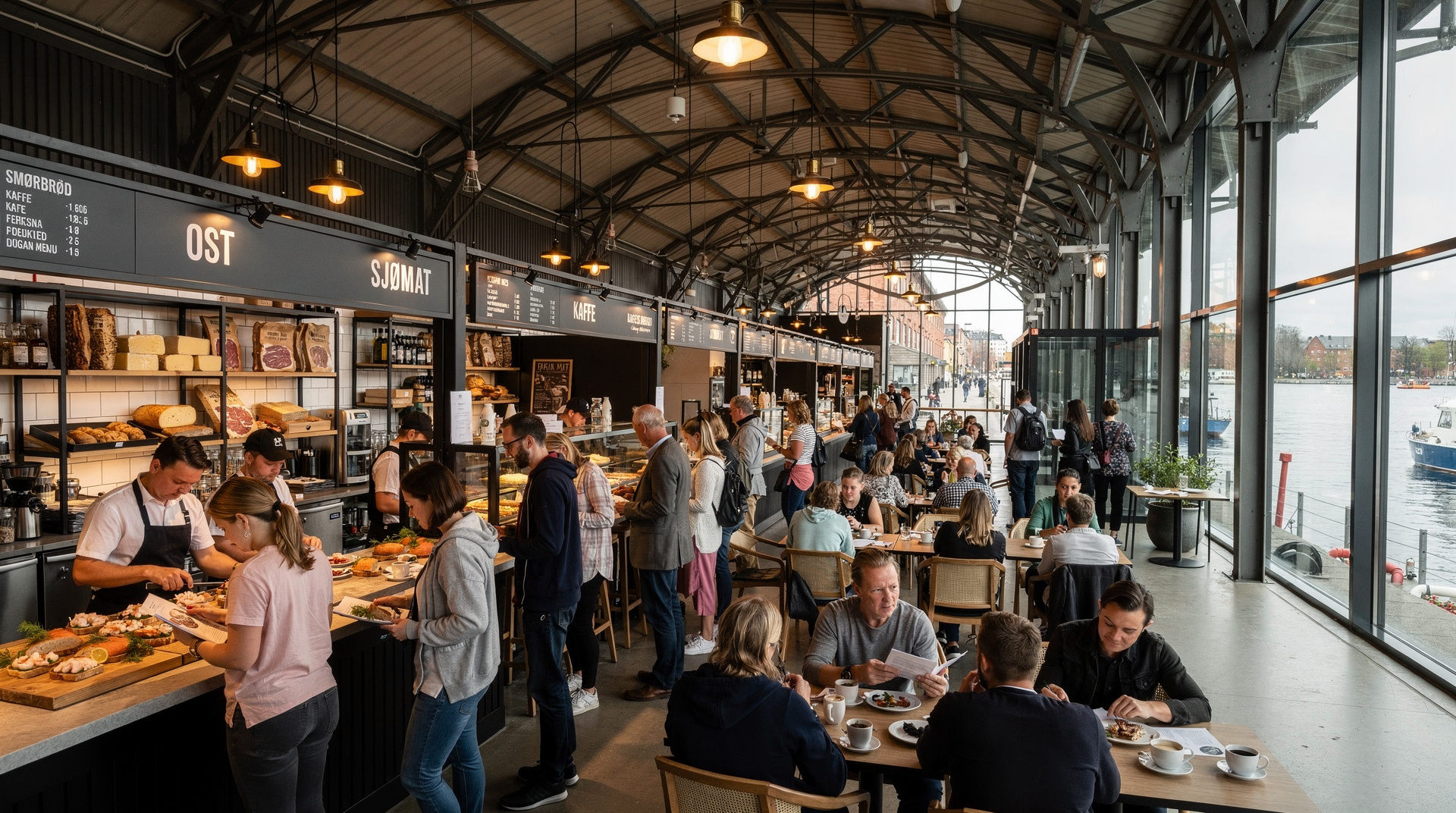
Mathallen Oslo — the indoor food market in Vulkan, near Grünerløkka. Opening in 2012, Mathallen consolidated a cluster of specialist food vendors: a charcuterie, a fish purveyor, a bread baker, a Norwegian cheese shop, several restaurant-quality food stalls. The guide navigates you through specific vendors rather than the overwhelming totality of the market. Expect a brunost tasting and a stop at the smørbrød counter.
A traditional bakery — cardamom buns (kardemommeboller), cinnamon twists (skoleboller), and waffles with sour cream are typically on offer. Norwegian baking uses less sugar than most European traditions and more spice; the results are distinctive and very good.
Seafood: gravlaks or smoked salmon is almost always included; some tours include a rakfisk tasting (fermented trout, an acquired taste). Oslo’s proximity to clean-water fjord fisheries means the quality of cured fish is excellent.
A savory element — a small hot dish, a cheese platter, or a Norwegian cold cuts board depending on the season and the specific tour.
Coffee: Norwegian coffee culture is serious. Oslo has some of the best specialty coffee in Europe, and a stop at a local roastery or speciality café is typically woven into the route.
The tour ends at a neighbourhood bar or café for a final tasting — a local beer, an aquavit, or a non-alcoholic option.
The Grünerløkka alternatives
Two food tours focus specifically on Grünerløkka, Oslo’s most interesting neighbourhood for independent food culture:
The Norwegian food tour and hidden gems walk (oslo-norwegian-food-hidden-gems) is a 3-hour tour that mixes food tastings with off-the-beaten-path Grünerløkka locations. More compact than the 4-hour flagship, with 5 to 6 stops rather than 8 to 10. A better fit for travellers with limited time or lower appetites.
The Grünerløkka 7 tastings tour (grunerlokka-7-tastings) is the most focused option: seven specific tastings in the Grünerløkka district, with the food itself rather than the guiding narrative as the explicit product. Less cultural background, more eating. Suited to food-first travellers who want to cover specific local venues efficiently.
For visitors who want to explore Grünerløkka’s food scene independently after a tour, the neighbourhood guide has recommended cafés, restaurants, and market spots by day and evening.
Comparing the “Taste of Oslo” tour
The Taste of Oslo food tour (taste-of-oslo-food-tour) is a slightly different format: a 4-hour tour with a different operator, covering overlapping territory but with its own stop selection. The quality is comparable to the local guide tour. The Taste of Oslo tends to emphasise Norwegian culinary history more explicitly — the tasting of traditional versus modern Norwegian food is a recurring theme.
If you are deeply interested in how Norwegian food has evolved over the past three decades — from a fairly limited repertoire of fish, potatoes, and game to a genuinely contemporary food culture — the Taste of Oslo’s narrative structure may suit you better. If you prefer a more personal, guide-as-local-friend format, the food tour with a local is the right choice.
For solo travellers who are uncertain about joining a group food tour, these tours are consistently reported as social-friendly environments. The shared experience of eating something unfamiliar together breaks conversational ice quickly, and the tour format — moving through a city stopping to taste things — creates natural conversation opportunities between participants who do not know each other.
Oslo’s food scene and what it’s like now
Norway’s “New Nordic” moment reached its peak in media coverage around 2011 to 2015, propelled by Noma’s influence from Copenhagen and a cluster of Oslo restaurants that applied the same foraging-and-fermentation philosophy to Norwegian ingredients. The trend has since matured into something more genuinely rooted: chefs in Oslo today use local seafood, mountain dairy, game, and foraged plants not because it is fashionable but because it reflects what Norway actually produces well.
Oslo’s produce quality is genuinely excellent in several categories. Cold-water Atlantic fish and shellfish — cod, skrei (migratory cod, a seasonal delicacy), prawns, scallops, and crab — are outstanding when fresh. Norwegian dairy, particularly the sour cream (rømme) and the aged cheeses from mountain farms, is distinctive. Brown cheese (brunost) is uniquely Norwegian and unlike anything in standard cheese traditions elsewhere. Lamb from coastal farms eating seaweed-rich grass (particularly from coastal Vestlandet) is some of the finest in Europe.
Mathallen food hall in Vulkan (near Grünerløkka) remains the single best place to understand Oslo’s contemporary food culture in a concentrated space. Opened in 2012, it now houses around 30 vendors including a charcuterie, a Norwegian cheese specialist, a fish counter, an outstanding bread baker, several restaurant-grade prepared food stalls, and a coffee roastery. The guided food tour typically uses Mathallen as a centrepiece.
Vippa, on the Akershus Fortress waterfront, is a street food market in repurposed shipping containers — cheaper, more international, popular with a younger Oslo crowd, and worth a visit if you are staying near Bjørvika. The contrast between Mathallen (refined, expensive, Norwegian-focused) and Vippa (casual, diverse, cheaper) is itself a useful lens on Oslo’s food culture.
What Norwegian food actually tastes like: honest assessment
Norwegian cuisine is not a world-conquering food tradition. It is honest, ingredient-focused, and relatively simple. The best Norwegian food — good fish, excellent bread, fine cheese, quality cured meats, good coffee — is very good because the ingredients are exceptional. The weakest Norwegian cooking is bland and heavy.
The food tour navigates toward the first category and away from the second, which is the guide’s primary value-add: they take you to the vendors and products that represent Norwegian food at its best rather than the tourist-facing cafés along Karl Johans gate (which are almost uniformly overpriced and mediocre). Oslo has plenty of tourist trap restaurants around the waterfront and the central streets; the food tour explicitly avoids these.
For anyone who wants to explore Oslo’s food scene independently after a tour, the where to eat in Oslo guide covers specific restaurant recommendations at multiple price levels, and the budget eats Oslo guide focuses specifically on where to eat well without spending full Oslo restaurant prices.
Alcohol and the peculiarities of Norwegian drinking culture
One aspect of Norwegian food culture that surprises many visitors is the relationship with alcohol. Norway has some of the highest alcohol taxes in Europe, and wine and spirits are sold only through Vinmonopolet — the state-owned monopoly chain — which does not operate in the evenings or on Sundays. Beer is available in supermarkets, but only weak beer (under 4.7 percent) until 20:00 on weekdays and 18:00 on Saturdays.
The practical implication for a food tour is that alcoholic drinks are either omitted entirely or represented by a single craft beer or aquavit tasting at a licensed bar. The tour’s food focus means this is rarely a problem; most participants are more interested in the Norwegian food than in drinking. But if you are specifically hoping for a beer-heavy experience, the Oslo craft beer guide covers that territory separately.
Aquavit — Norway’s caraway-and-dill-flavoured spirit — is worth trying on a food tour if offered. Norwegian aquavit is distinct from Swedish and Danish versions, typically barrel-aged and considerably more complex.
After the tour: extending the food exploration independently
A good food tour ideally leaves you with specific places to return to and specific products to seek out. Most guides will give you recommendations for follow-up eating and shopping beyond the tour itself — ask directly if they do not volunteer this.
For independent follow-up: Mathallen is open Tuesday to Friday 10:00 to 20:00, Saturday 09:00 to 20:00, Sunday 10:00 to 18:00, closed Mondays. The cheese shop and the bread baker have the most consistent quality; the prepared food stalls vary. For a proper sit-down meal in Grünerløkka at mid-range prices, Smalhans on Ullevålsveien is one of Oslo’s most reliable neighbourhood restaurants. For a quick excellent lunch, the Grünerløkka neighbourhood has numerous affordable café options along Thorvald Meyers gate.
The Mathallen guide and the Grünerløkka food guide cover both areas in more detail for independent exploration.
Practical details
- Duration: 4 hours (main tour with local guide), 3 hours (Grünerløkka variants)
- Meeting point: confirmed in booking confirmation — typically Mathallen, Aker Brygge, or a tram stop in the Grünerløkka area
- Price: NOK 680 to 800 adult (USD 73 to 86), depending on tour and season
- Includes: all food tastings throughout the tour; some drinks (coffee, water) included; alcoholic drinks may be extra or at one dedicated tasting stop
- Dietary requirements: vegetarian accommodated with advance notice; vegan is more difficult given the dairy and fish focus of Norwegian food — confirm specifics at booking
- Group size: typically 6 to 12 people
- Booking: advance booking recommended; summer weekend tours fill up one to two weeks in advance
- Cancellation: GetYourGuide typically offers free cancellation up to 24 hours before departure
For the full range of Norwegian food specialities and what to try beyond a food tour — including where to buy quality Norwegian produce to take home — see Norwegian food to try and Norwegian brown cheese and food specialties.
Group size and the personal-guide dynamic
Most Oslo food tours cap groups at 6 to 12 people, small enough that the guide can address individual dietary questions and steer conversation rather than simply reciting a fixed script to a large crowd. This matters more in Oslo than in some larger food-tour markets: because the “local guide” framing is central to the product, a genuinely personal guide-to-group ratio is part of what you are paying for. Groups above 12 tend to feel more like a moving lecture than a shared meal experience, and the better-reviewed Oslo operators keep numbers deliberately smaller even at the cost of running more frequent, smaller departures.
Solo travellers specifically benefit from this format: the small-group, communal-tasting structure creates natural conversation with fellow participants without anyone needing to make an effort, which is a meaningfully different social dynamic to eating alone at a restaurant.
Comparing the main food tour options at a glance
| Tour | Duration | Focus | Best for |
|---|---|---|---|
| Local guide food tour | 4 hours | Sentrum, Aker Brygge, Mathallen | First-timers wanting broad context |
| Taste of Oslo | 4 hours | Similar area, historical narrative | Those interested in food history |
| Norwegian food & hidden gems | 3 hours | Grünerløkka, off-beaten-path | Limited time or lower appetite |
| Grünerløkka 7 tastings | 3 hours | Grünerløkka, food-first | Efficient, focused eaters |
What to skip eating before the tour
Because a well-run food tour delivers 6 to 10 distinct tastings, arriving hungry rather than full is the single most important preparation. Skip a large breakfast or lunch on the day of your tour; a light meal a few hours beforehand is ideal. Participants who eat a normal-sized meal right before a tour consistently report struggling to finish the later tastings, particularly the bread-and-cheese-heavy stops toward the middle of the route. If your tour departs in the morning, a small coffee and pastry beforehand is a reasonable compromise — just leave room.
Compare alternative tours
| Tour | Duration | Rating | Price | Highlights | |
|---|---|---|---|---|---|
| Oslo: the taste of Oslo food tour | 4 hours | — | — | Tastings included · Small group | Check |
| Oslo: Norwegian food tour and hidden gems city walk | 3 hours | — | — | Tastings included · Hidden gems | Check |
| Oslo: Grünerløkka district food tour of 7 authentic tastings | 3 hours | — | — | 7 tastings · Trendy district | Check |
Frequently asked questions about Oslo food walking tour
How much does an Oslo food walking tour cost?
The main guided food tours run around NOK 680 to 800 per adult (approximately USD 73 to 86) in 2026. Prices vary by operator and tour length. The price always includes all food tastings; drinks are occasionally extra.How much food do you actually get?
On a well-run 4-hour food tour you typically receive 6 to 10 distinct tastings across multiple stops. Most participants report feeling comfortably full rather than satisfied by small bites. Do not eat a large meal beforehand.What kind of food is included?
Typical stops on Oslo food tours include Norwegian brown cheese (brunost), open-faced sandwiches (smørbrød), cured fish (gravlaks, rakfisk), traditional baked goods, craft cheeses, and either a coffee or a small beer tasting. The exact stops vary by tour and season.Which neighbourhood do food tours cover?
The most popular food tour itineraries cover either the market and Sentrum area (Mathallen food hall, Vippa market area) or Grünerløkka. Some tours combine elements of both. The Grünerløkka-specific tour focuses on the area's independent food scene.Are Oslo food tours suitable for vegetarians?
Most operators can accommodate vegetarians with advance notice, substituting the fish or meat tastings. Vegan accommodation is possible but more limited — Norwegian food culture is heavily seafood and dairy-centric. Confirm with the operator when booking.How long are the food tours?
The main food tour with a local guide runs 4 hours. The Grünerløkka 7-tastings tour is approximately 3 hours. The Norwegian food and hidden gems walk is around 3 hours.Is Oslo food expensive compared to other European cities?
Yes, significantly. A sit-down lunch at a mid-range Oslo restaurant typically costs NOK 180 to 280 per person (USD 19 to 30) for a single main course. The food tour price, spread across 6 to 10 tastings with a guide, is reasonable value in Oslo terms.What is brunost and is it good?
Brunost (brown cheese) is a uniquely Norwegian product made by boiling whey until the milk sugars caramelise. The result is a firm, fudgy, sweet-salty block with an umami depth unlike anything in standard cheese. Most visitors either love it immediately or need a second taste to come around. It is eaten thinly sliced on bread or waffles.Should I book the food tour early or late in my Oslo trip?
Early is generally better. A food tour on your first or second day gives you specific restaurant and shop recommendations from the guide that you can then use for the rest of your stay, rather than discovering good options only as you are about to leave.Do food tours run in winter?
Yes, most operators run food tours year-round, though winter departures may have smaller groups and slightly adjusted routes if outdoor market stalls have reduced winter hours. Indoor stops like Mathallen operate on their normal schedule regardless of season.