Norway in a Nutshell: our honest review after doing the full route
From Oslo: self-guided Norway in a Nutshell round trip (Flåm train and Nærøyfjord cruise)
Duration: Full day
- Flåm Railway
- Nærøyfjord cruise
We almost did not go
I will be honest: we nearly skipped Norway in a Nutshell. Every travel forum we consulted in advance had at least one thread questioning whether it was worth the price, whether it was too crowded, whether it had become a tourist conveyor belt that had lost all connection to the actual Norwegian experience.
The price point was a real sticking point. The classic self-guided round trip from Oslo — train to Myrdal, the Flåmsbana railway down to Flåm, boat through Nærøyfjord to Gudvangen, bus to Voss, train to Bergen, train back to Oslo — costs in the region of NOK 2,000 to 2,800 per person (USD 215 to 300) depending on the season and how far in advance you book with Vy. That is serious money by any standard, and absurd money when you remember that this is transportation cost, not accommodation.
We went anyway, in September, on a clear morning when frost had settled on the mountains above Myrdal. And I need to report that the cynics were wrong, and also that the cynics were right, and that both things are true simultaneously.
| Where it starts | Oslo Central Station, self-guided round trip |
| Cost | around NOK 2,000–2,800 per person, transport only |
| Time needed | a very long single day, or better as a Bergen overnight |
| Getting there | Vy trains, Flåmsbana railway, Nærøyfjord boat, bus |
| Best time | May, early June, or September for lighter crowds |
The Bergensbanen: the part everyone forgets to mention
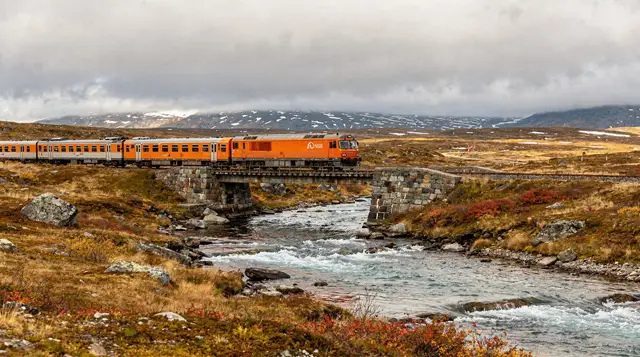
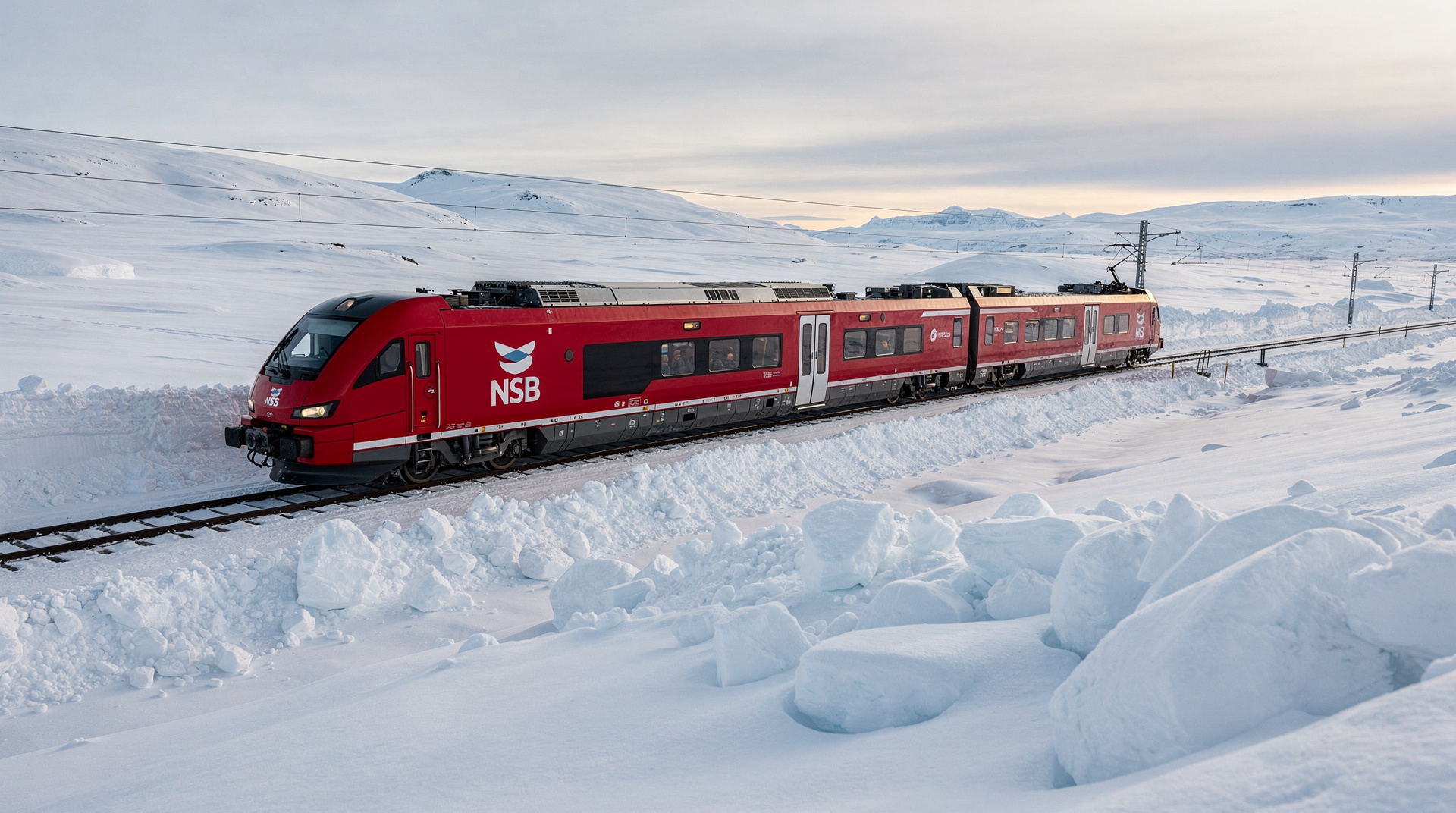
The journey begins before the famous parts. The Oslo to Myrdal train section — part of the Bergensbanen, Norway’s famous Bergen railway — runs for about three hours through a progression of landscapes that starts suburban, passes through agricultural valleys, climbs through birch forest, and eventually reaches the high plateau of Hardangervidda at 1,222 metres above sea level.
This section is extraordinary. At its highest, the train runs through a landscape that looks more like Iceland or the Scottish Highlands than anything Central European: vast, empty, treeless, with snowfields in every direction even in September. The village of Finse sits on the edge of the Hardangerjøkulen glacier and is accessible only by train. The scale of the Norwegian interior, seen from a comfortable heated railway carriage, is genuinely humbling.
Nobody talks about this section. All the marketing focuses on the Flåmsbana and the fjord. But the high plateau passage from Geilo through Finse to Myrdal was the part of the journey that produced the longest silences in our carriage — that particular quality of quiet that happens when a group of strangers are all looking out the same window at something large and strange.
For the logistics of the Bergen railway itself, the Oslo to Bergen train guide has the full breakdown of booking, seat selection, and the best times to travel.
The Flåmsbana: yes, it is as good as they say
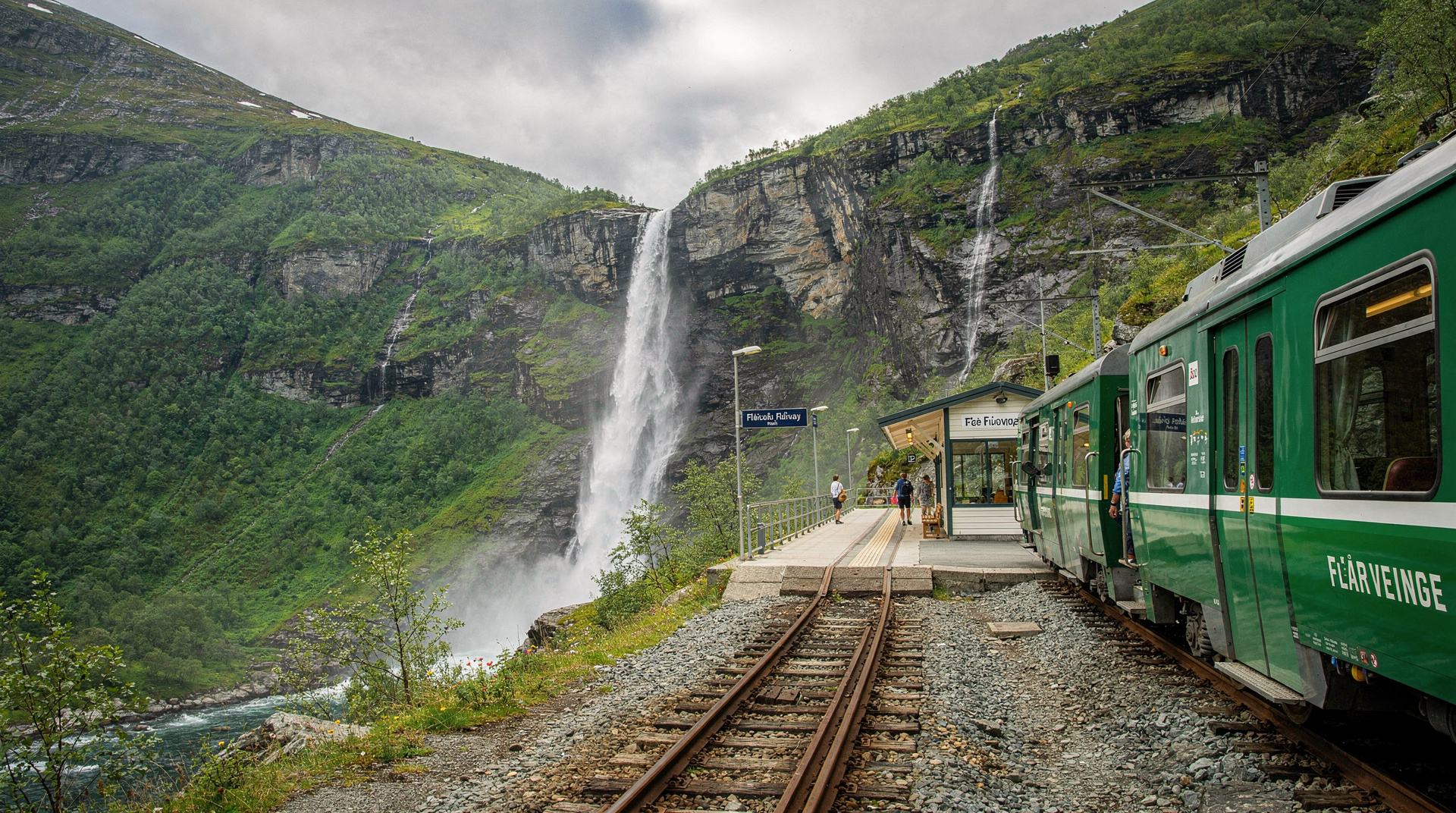
At Myrdal, the train descends on the Flåmsbana — the Flåm Railway — 20 kilometres down a valley wall with a gradient of 1 in 18 for most of its length. The engineering is remarkable: 20 tunnels, 18 of them carved by hand in the 1920s and 1930s, with the train spiralling inside the mountain at several points to lose altitude without the grade becoming impossible.
The scenery through which this descent happens is, by any reasonable measure, spectacular. Waterfalls appear on the valley walls above you and below you. The Kjosfossen waterfall has its own scheduled stop — the train halts for five to seven minutes to let passengers photograph the 225-metre cascade. In high summer, a performer in traditional dress appears on the rocks above the falls (this is part of the official experience; your reaction to it will depend heavily on your tolerance for theatrical folklore).
What none of the photos prepare you for is the sound and the mist. At Kjosfossen, standing on the platform below the falls with the spray reaching you and the roar filling the narrow valley, the experience has a genuine physical intensity that photographs simply cannot convey. We were cold and damp and completely delighted.
The Flåm Railway guide covers the history, the best seat positions (left side going down for the most dramatic views), and current booking.
The journey from Myrdal to Flåm takes approximately 55 minutes. Flåm itself — the village at the bottom — is a tourist hub. There is no diplomatic way to say this: it exists to serve the Norway in a Nutshell traffic, and it shows. The souvenir shops, the cruise ship arrivals, the crowds of visitors all arriving and departing on the same schedule, create an atmosphere that has very little to do with Norwegian life as it is actually lived. Eat before you arrive, or plan on paying NOK 200 to 300 for a fairly ordinary lunch.
Nærøyfjord: the heart of the route
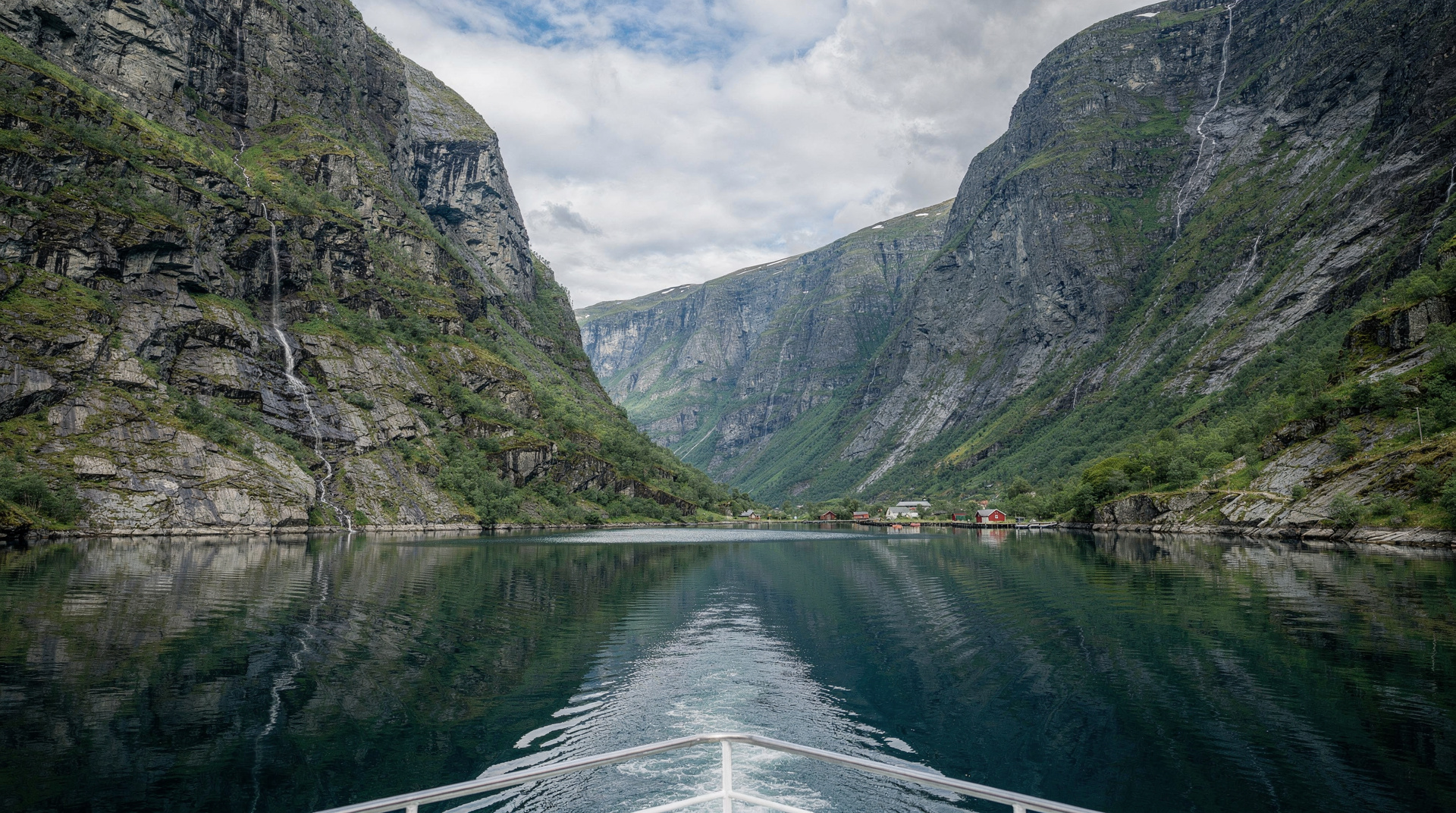
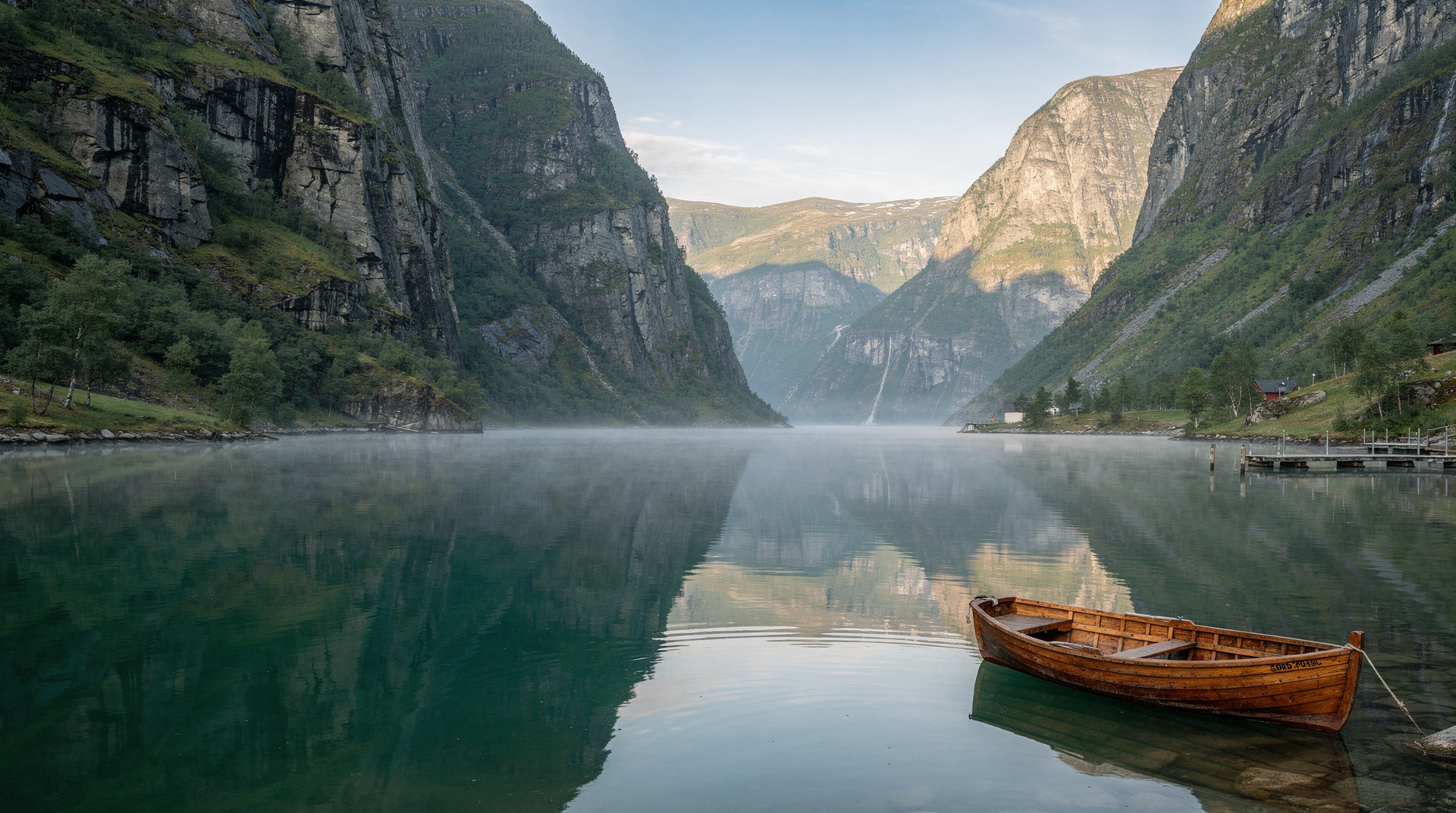
The boat journey from Flåm through Nærøyfjord to Gudvangen is the section that justifies the entire route. Nothing we had read or seen prepared us for it adequately.
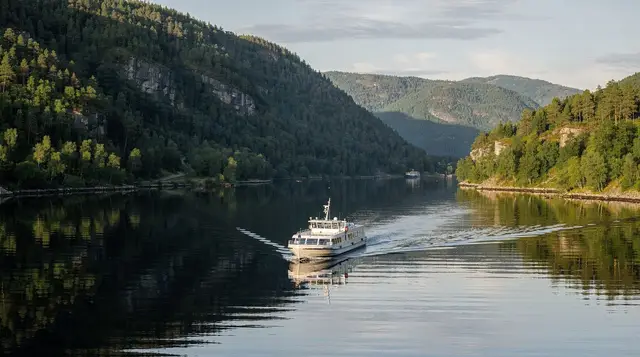
Nærøyfjord is one of the narrowest fjords in Norway. At its narrowest point, the cliff walls are 250 metres apart and rise almost 1,000 metres on both sides. The boat is a small passenger ferry, not a cruise ship, and when you are in the narrowest section you feel surrounded by rock in a way that produces a very specific kind of awe — the slightly frightened variety that comes from being physically small in a very large place.
The light in September, when the sun is lower, does something extraordinary to these walls. The shadows move across the cliffs in real time as the boat passes through the canyon. There are farms — actual farms — perched impossibly on ledges hundreds of metres above the water. Waterfalls emerge from the cliff tops and fall directly into the fjord alongside you.
The Nærøyfjord section is a UNESCO World Heritage Site, and for once the designation feels earned rather than bureaucratic. This is among the most dramatic landscapes in Europe.
The boat journey runs approximately two hours. The temperature on the water in September was 12°C and the wind made it feel colder; bring more layers than you think you need regardless of the weather when you left Oslo.
For a deeper look at the fjord system and what makes the geology so dramatic, the Sognefjord destination guide provides context for the broader fjord system that Nærøyfjord feeds into.
Gudvangen to Bergen: the part you survive
The bus from Gudvangen to Voss, and the subsequent train from Voss to Bergen, are operationally necessary parts of the route that are significantly less scenic than everything that preceded them. The bus follows a valley road that is competently Norwegian but not remarkable. The train from Voss to Bergen runs through pleasant but unspectacular lowland scenery.
This is also the point in the day where the self-guided-versus-guided question becomes real. We booked every leg ourselves through Vy and the Flåmsbana website, which is not difficult but does require checking connection times carefully — the margin between the boat docking at Gudvangen and the bus departure is sometimes under 15 minutes. A packaged version of the route exists and removes that anxiety at a modest premium; we would still choose self-guided, but travellers doing this for the first time without much patience for logistics should budget an extra hour of buffer at each connection rather than cutting it fine.
By this point in the day — depending on your departure time from Oslo, you are likely arriving in Bergen between 5pm and 8pm — most visitors are experiencing a form of beauty saturation. The Nærøyfjord has a way of filling whatever imaginative capacity you brought with you, and the later legs of the journey function as a quiet decompression.
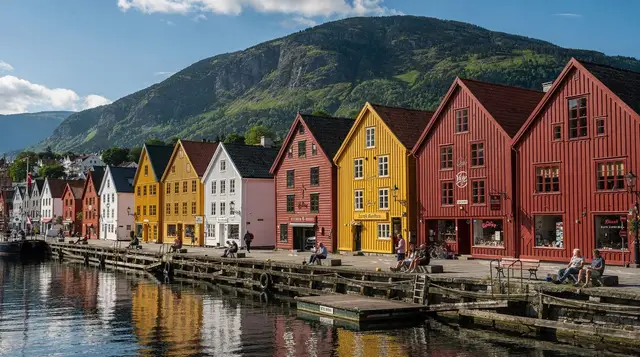
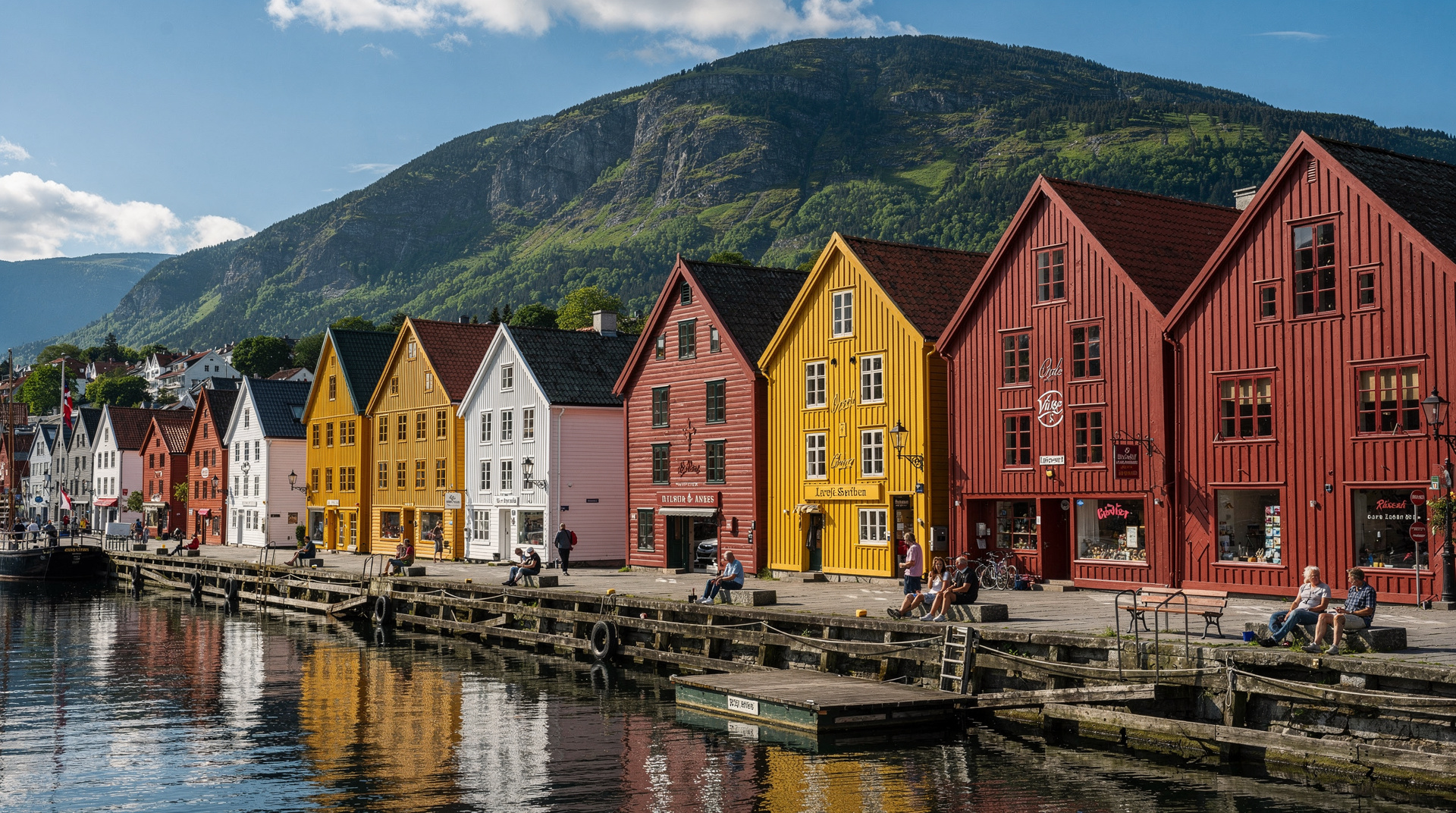
Bergen itself is worth an overnight stay if your schedule allows. The Bryggen wharf, the funicular up Fløyen, the fish market, and the exceptional concentration of wooden architecture make it one of Norway’s most enjoyable cities. But if you are doing a day-return to Oslo, allow yourself at least two hours in Bergen before the return train — the full journey back on the Bergensbanen in the other direction is six and a half hours of good scenery you will already partly recognise from the morning.
Is it worth it? The honest calculation
For the price, the honest answer is: yes, but with clear conditions.
Go in shoulder season (May, early June, September). July and early August bring the full weight of European summer tourism to this route, and the ratio of waiting in queues to experiencing scenery shifts uncomfortably. In September the crowds are reduced, the light is better for photography, and the mountain sections have the first hints of autumn colour.
Book in advance. Vy seats and Flåmsbana tickets sell out, particularly in summer. The complete Norway in a Nutshell planning guide covers booking logistics in detail.
Do the full route, not the abbreviated day version. The tendency to shorten the journey to save time or money tends to cut exactly the parts — the high plateau on the Bergensbanen, the full Nærøyfjord passage — that make the experience distinctive.
Accept that Flåm is a tourist village and do not let it colour your impression of the whole. The village exists; you spend about an hour in it; the rest of the day is genuinely extraordinary.
The price is real and it is significant. At NOK 2,000 to 2,800 per person, it is one of the more expensive days you will spend in Norway. But in terms of the sheer volume and variety of dramatic landscape compressed into a single day, I have found nothing in Europe that rivals it.
Day trip or two-day Bergen overnight?
The single hardest logistical decision is whether to treat this as a very long day trip from Oslo (out and back in around 12 to 14 hours, most of it on the move) or to break the journey with a night in Bergen. Our honest recommendation, having done both versions across two visits, is the overnight. The day-return version works, but it means arriving in Bergen with barely two hours before the return Bergensbanen, which does not do the city justice and adds real fatigue to what is already a long day of transfers.
The 2-day Nutshell itinerary and the Oslo to Bergen options guide both lay out the trade-offs, including cost differences and how to book the Bergen leg back to Oslo by air instead of retracing the whole train route.
If your schedule truly only allows a single day, protect the Nærøyfjord and Bergensbanen sections above everything else — they are what makes the route worth doing, and Flåm and Bergen itself are the parts you can compress without losing much.
If your Oslo trip allows even one day away from the city, make it this one. See the Bergen from Oslo day trip guide for logistics on combining this with a Bergen overnight.
Before you commit to the route
It helps to weigh the Nutshell against the other ways of reaching the west coast. If what you want is simply the best train ride, the Bergen railway scenic guide explains what the Bergensbanen offers on its own, without the fjord leg. If you are still deciding how much of Norway to fit into one trip, Oslo vs Bergen helps you judge where your time is better spent.
Money matters too. A day like this changes the shape of your whole budget, so it is worth reading is Oslo expensive before you lock it in, and balancing the splurge with a few of the free things to do in Oslo on the days you stay in the capital.
Finally, if the fjords are what drew you in, Flåm is worth reading about as a place in its own right, and the wider Bergen destination page shows what a longer stay on the other end of the route could look like.
Top experiences
Bookable activities with verified prices and instant confirmation on GetYourGuide.