Oslo's coffee obsession: the city that takes its flat whites seriously
Oslo: 3.5-hour walking tour for great food
Duration: 3.5 hours
- Tastings included
- Local guide
Norway drinks more coffee than you think
The statistic always surprises people: Norway is the second-largest coffee consumer per capita in the world, behind only Finland. The average Norwegian drinks around 10 kg of coffee per year. To put that in context, the average American drinks about 4.5 kg. This is not a new trend — coffee arrived in Norway in the 18th century and never really left. What changed in the 2000s was how Norwegians started drinking it.
| Where | Grünerløkka, with outposts in Tjuvholmen and Youngstorget |
| Cost | around NOK 45–80 per drink |
| Time needed | a couple of hours for a relaxed café crawl |
| Getting there | tram to Olaf Ryes plass, or a 15-minute walk from the centre |
| Best time | weekday mornings, before the weekend queues build |
Oslo became, somewhat improbably, one of the great coffee cities of the world. Not because of its scale — Oslo has fewer than 750,000 people — but because of its density of excellent roasters and the seriousness with which the city approached coffee quality at exactly the moment the international “third wave” movement was beginning to articulate what specialty coffee could be.
Our full coffee culture guide maps the best cafés by neighbourhood. This post is about the story — how it happened, why it matters, and what it actually feels like to drink coffee in Oslo.
The Tim Wendelboe effect
If you ask anyone in the international coffee world when Oslo arrived on the map, they will usually say 2004 — the year Tim Wendelboe won the World Barista Championship. He was the first Scandinavian to do so, and he did it with a level of technical precision and flavour focus that influenced the entire industry.
Wendelboe went on to open his micro-roastery and espresso bar on Grünerløkka’s Grüners gate in 2007. The shop is tiny — perhaps 30 square metres — and the menu is deliberately minimal. There are espresso-based drinks, filter options, and whatever the current seasonal offerings are. There is usually a queue. The coffee is as good as it has ever been.
What Wendelboe represented was not just skill — it was a philosophy. Coffee as an agricultural product. Flavour as something to be discovered, not masked with dark roasting and sugar. Direct relationships with farmers. Light roasting that preserves the fruit and complexity of origin. These ideas were radical in 2007 and are now the bedrock of specialty coffee globally. Oslo, via Wendelboe and the cohort of roasters who followed, helped put them there.
Fuglen: the place that made Grünerløkka fashionable
If Tim Wendelboe is the technical heart of Oslo’s coffee scene, Fuglen (the name means “The Bird”) is its aesthetic soul. The original Fuglen on Universitetsgata in Frogner opened in 1963 as a jazz bar, and it still looks roughly the same — mid-century Norwegian furniture, warm light, and a record player. It became a coffee bar in the early 2000s and is now one of the most recognisable Norwegian café experiences.
Fuglen opened a second location in Grünerløkka and, more remarkably, outposts in Tokyo and New York — because the Japanese coffee market was fascinated by Nordic roasting approaches. The idea of an Oslo café having a following in Tokyo tells you something about how seriously Oslo’s coffee culture is taken internationally.
The coffee at Fuglen is excellent. The atmosphere is even better. It is a place where you can arrive at 10 am, order a filter coffee, work for two hours, and not feel like you are overstaying your welcome. The furniture is for sale — the pieces rotate as they sell — which adds an unusual layer of impermanence to the décor.
Supreme Roasters and the Grünerløkka concentration
Grünerløkka has become the neighbourhood where Oslo’s coffee culture concentrates most visibly. Alongside Tim Wendelboe and Fuglen, Supreme Roasters operates from a space on Thorvald Meyers gate that manages to be both a serious roastery and a relaxed neighbourhood café simultaneously. Their approach is slightly more approachable than Wendelboe’s — the menu is broader, the vibe less austere.
The Grünerløkka neighbourhood rewards a slow coffee-focused morning. The walk from the tram stop on Olaf Ryes plass north to Tim Wendelboe takes about 15 minutes on foot and passes half a dozen good cafés. It is not unusual to see people doing a deliberate coffee crawl — one pour-over at Wendelboe, a flat white at Supreme, an Aeropress somewhere in between.
What you actually pay for coffee
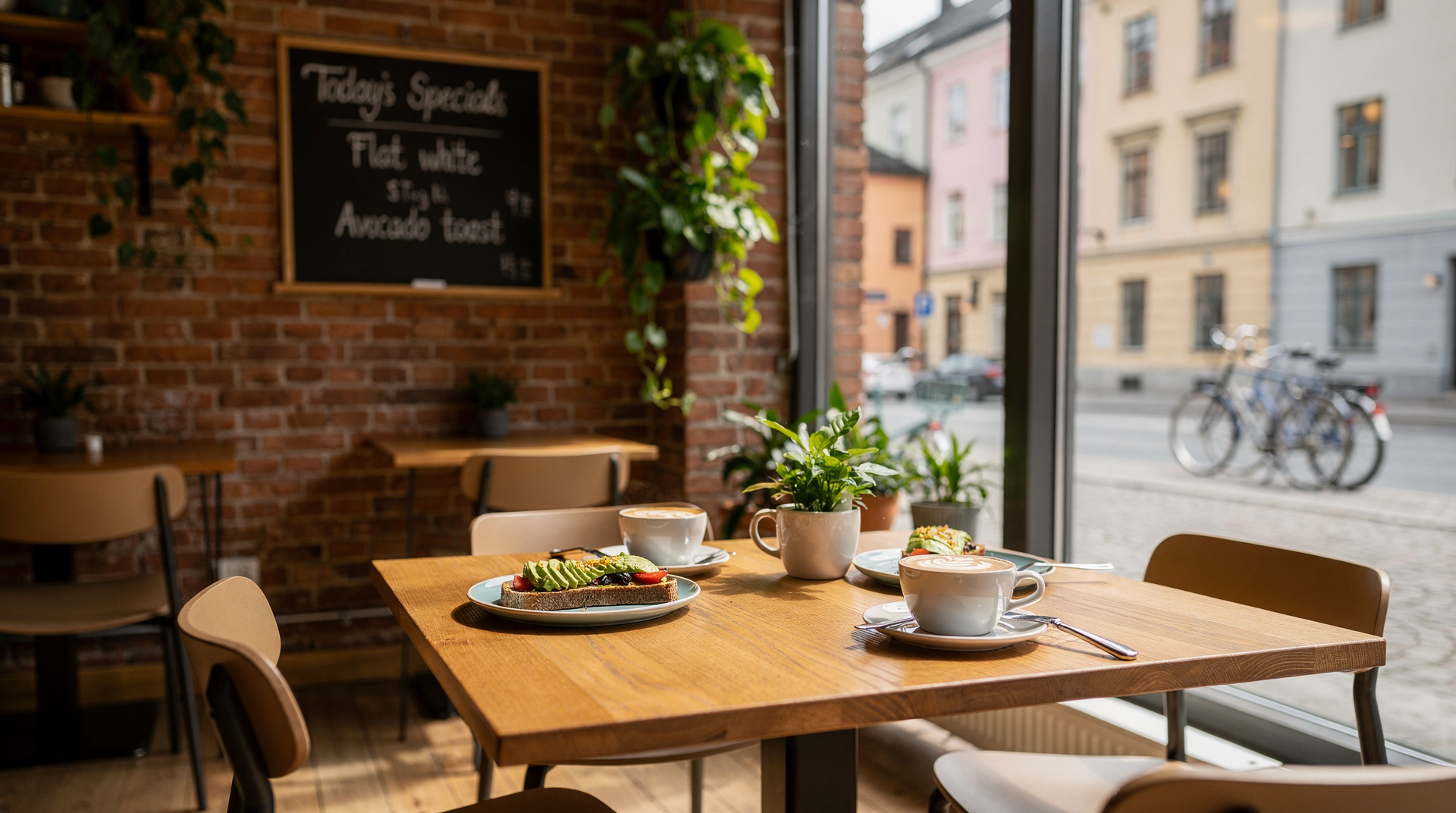
Oslo coffee is expensive by almost any measure. A double espresso costs NOK 45–60 (USD 4.80–6.50). A flat white or cortado is typically NOK 60–80 (USD 6.50–8.60). A filter coffee at a specialty roaster is NOK 45–65 (USD 4.80–7). These prices are significantly higher than in most European cities.
The justification is partly the cost of living (everything in Oslo is more expensive), partly the quality of the product, and partly the labour costs. Baristas in Oslo are paid living wages — there is no tipping culture and no low-wage exception for café work. When you pay NOK 70 for a flat white, the economics of that transaction are different from paying EUR 2.50 at a standing bar in Naples. Neither is wrong; they are just different models.
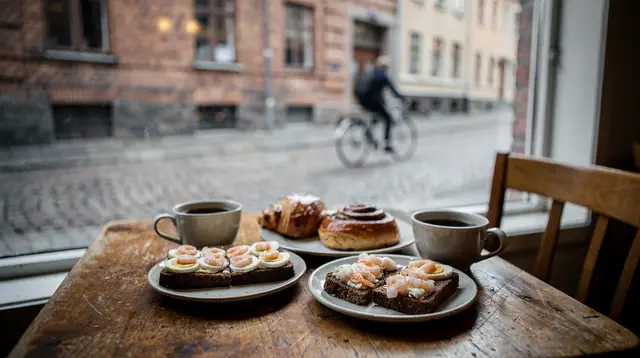
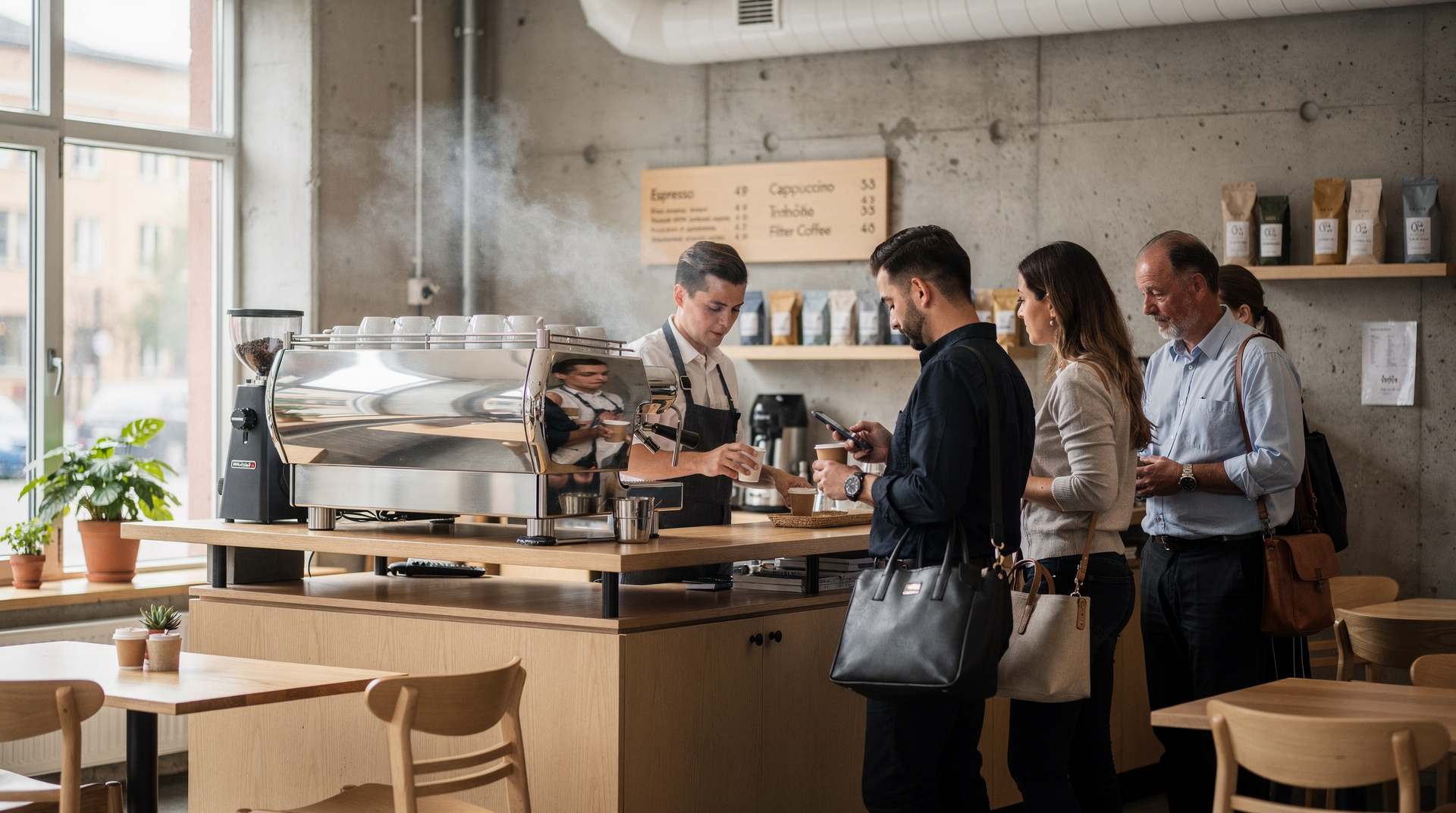
One practical note: you will not find good espresso at traditional “kafé” establishments — the old-style Norwegian café with open sandwiches and drip coffee. The specialty roasters are a distinct world. If you see a La Marzocco or Kees van der Westen machine behind the counter, you are in the right place.
Coffee culture beyond Grünerløkka
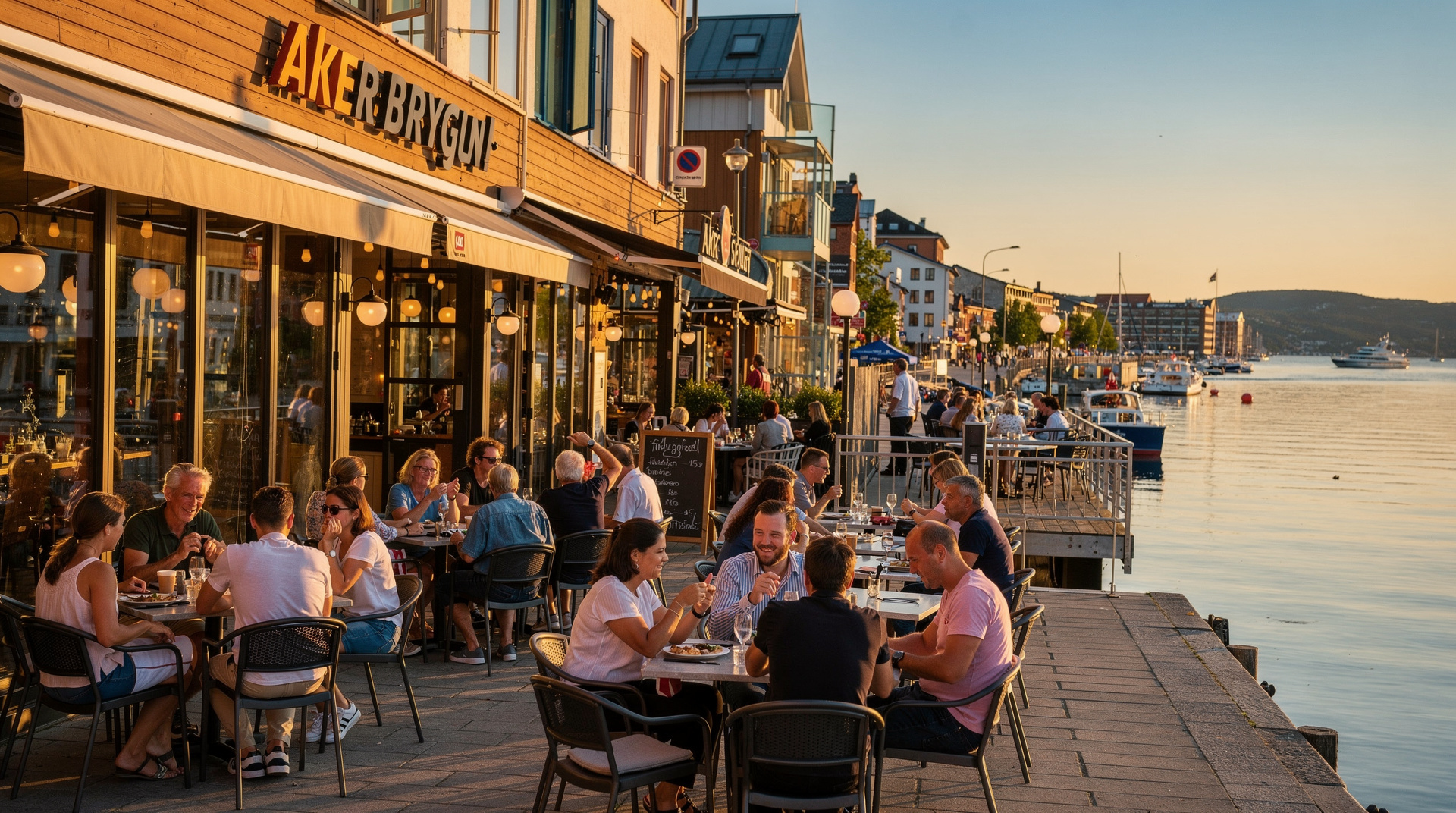
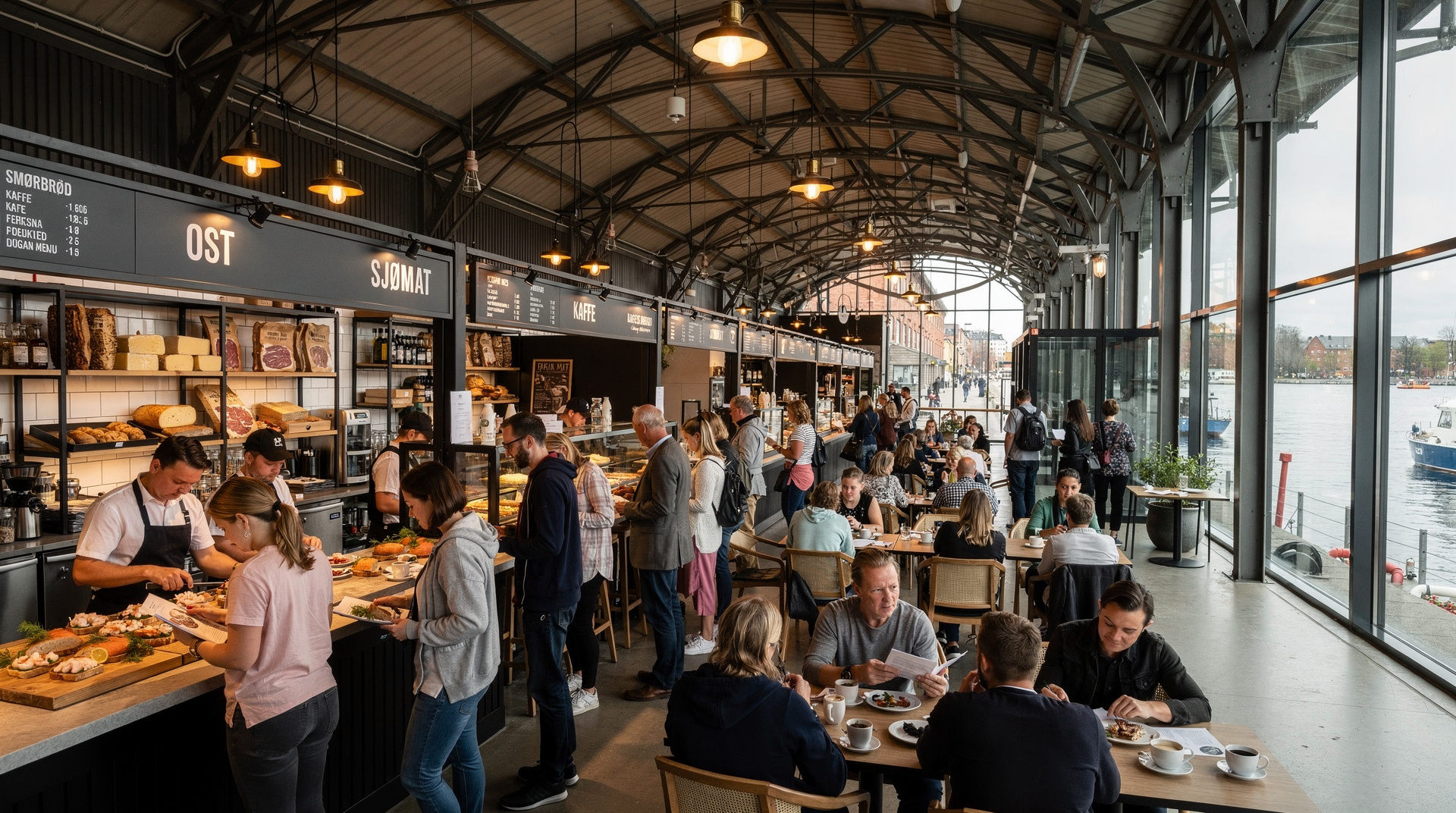
Grünerløkka gets most of the attention, but Oslo’s coffee culture has spread to other neighbourhoods. Tjuvholmen in Aker Brygge has a number of excellent spots suited to the post-gallery crowd from the Astrup Fearnley Museum. Mathallen Food Hall in Vulkan has a good roaster on the ground floor. The city centre around Youngstorget has seen several strong additions in recent years.
Our Grünerløkka food guide includes coffee recommendations alongside the restaurant listings, and the broader where to eat in Oslo guide touches on café culture more generally.
Building your own coffee crawl
If you only have a morning, here is roughly how we would sequence it, starting from the Olaf Ryes plass tram stop and moving north through Grünerløkka:
| Stop | What to order | Why |
|---|---|---|
| Fuglen | filter coffee | best atmosphere, mid-century furniture |
| Supreme Roasters | flat white | broader menu, relaxed café feel |
| Tim Wendelboe | pour-over or espresso | the technical benchmark, expect a queue |
Budget 30 to 45 minutes per stop if you actually want to sit down rather than grab and go — rushing a Grünerløkka coffee crawl misses the point. Pair the walk with the Grünerløkka neighbourhood guide for shops and galleries along the same streets.
Fitting coffee into a wider Oslo day
A coffee morning works best as the opening act rather than the whole plan. Grünerløkka rewards wandering afterwards, and our Grünerløkka destination page and the post on how Grünerløkka has changed give useful context for what you are walking through. If you are building a longer trip around food and design, the food and design weekend itinerary slots a coffee morning in naturally.
Fuglen’s original home sits in Frogner, so if you stay on that side of town, the Frogner neighbourhood guide is a good companion for the rest of the day. And if the weather turns, a long café session pairs well with the rainy-day museum options.
Coffee and your budget
Oslo coffee is a small, repeatable cost that adds up across a trip. If you are watching spending, it helps to decide in advance which stop is worth a full sit-down and which can be a quick takeaway. Our guide to whether Oslo is expensive and the post on the real cost of eating out put the price of a flat white next to everything else, so you can judge it in context rather than in isolation.
Coffee also pairs naturally with something small to eat. The guide to Norwegian food to try is a good place to find a local pastry or snack to go with your cup.
The Norwegian coffee ritual
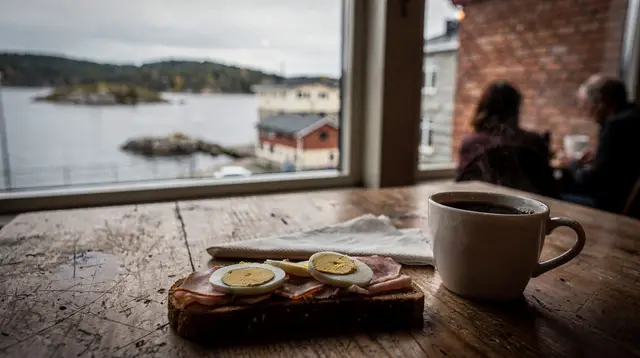
A note on how Norwegians actually drink coffee, as opposed to how visitors typically consume it. The traditional Norwegian coffee moment is black filter coffee, strong, from a thermos, in a cabin in the forest or on a mountain. This is not what you find at Tim Wendelboe — but it is where the cultural relationship with coffee actually begins.
The shift toward specialty espresso and light-roasted single origins represents a particular urban Oslo phenomenon. Outside the cities, and especially in older generations, black filter coffee remains the default. The specialty scene exists alongside this tradition, not instead of it. Many Norwegians would find a conversation about coffee terroir somewhat bewildering, and they would not be wrong to. But in Oslo, on a Tuesday morning in Grünerløkka, the conversation about coffee terroir is entirely normal.
That gap between forest cabin thermos and Grünerløkka micro-roastery is, in a way, the story of modern Oslo — a city that has held onto its austere, practical Nordic roots while developing a parallel world of sophisticated urban culture. The coffee is a small but telling illustration of the whole.
Top experiences
Bookable activities with verified prices and instant confirmation on GetYourGuide.