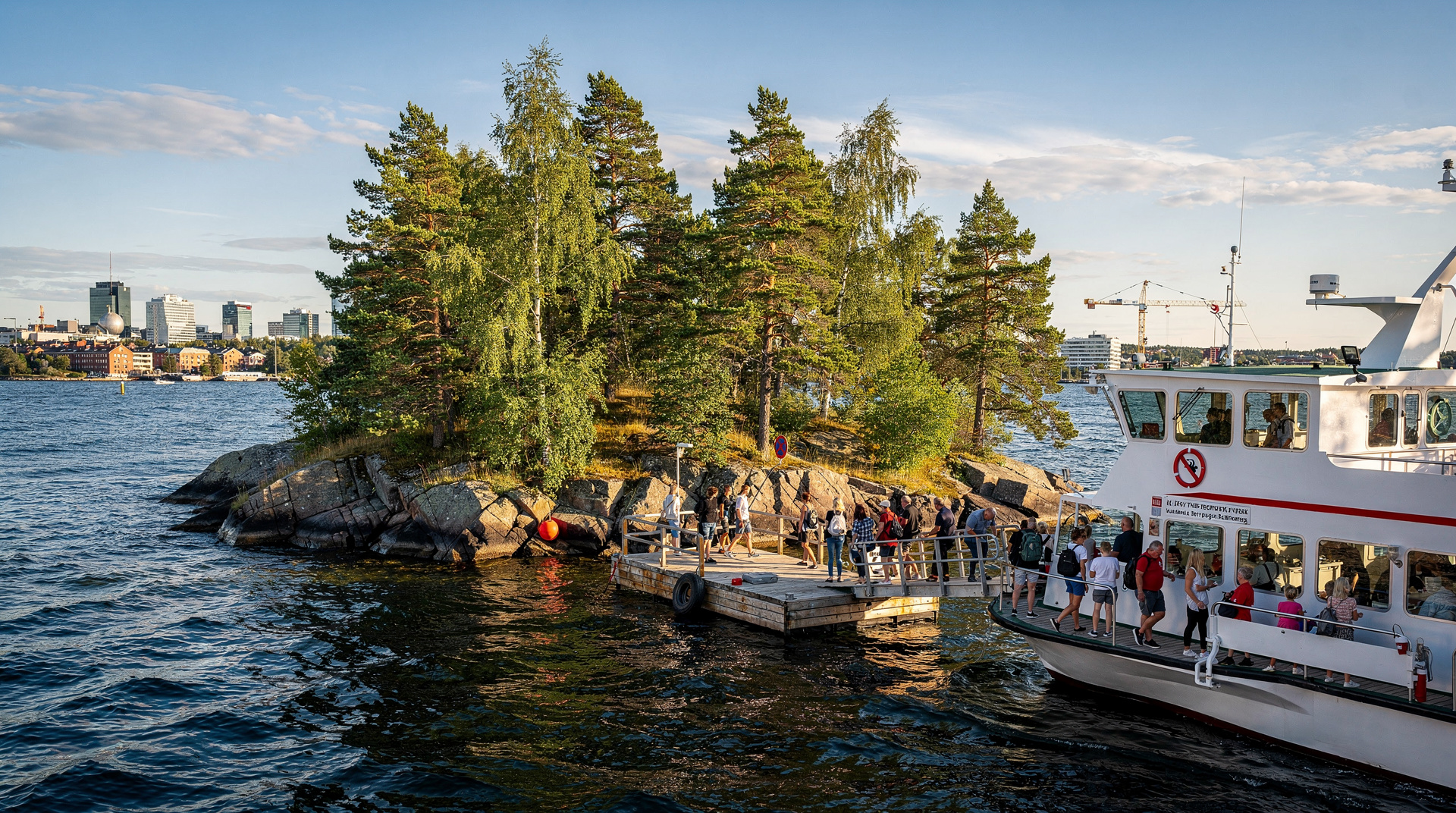
One perfect summer day on the Oslofjord
Oslo: Hovedøya and Nakholmen island hopping tour
Duration: 3 hours
- Hovedøya
- Swimming spots
The day begins at the water
It is a Tuesday in late June, 7 am, and the light is already doing something extraordinary. Oslo at this latitude — 59.9°N — does not get the midnight sun you find in Tromsø or Svalbard, but in the weeks around midsummer the sky never fully darkens. Last night, at midnight, it was a deep blue-grey, like the moment just before sunrise holds itself indefinitely. By 4 am it was already pale. By 7 am, when we walk down to Aker Brygge, the fjord is lit from a low angle that makes everything look slightly heightened, slightly more itself.
| Where | Aker Brygge pier out to Hovedøya and the inner Oslofjord islands |
| Cost | around NOK 42 per ferry leg, or included in a Ruter day pass |
| Time needed | a full day, roughly 7 am to 11 pm in June |
| Getting there | Ruter public ferries from Rådhusbrygga, no booking needed |
| Best time | late June to early August, around the summer solstice |
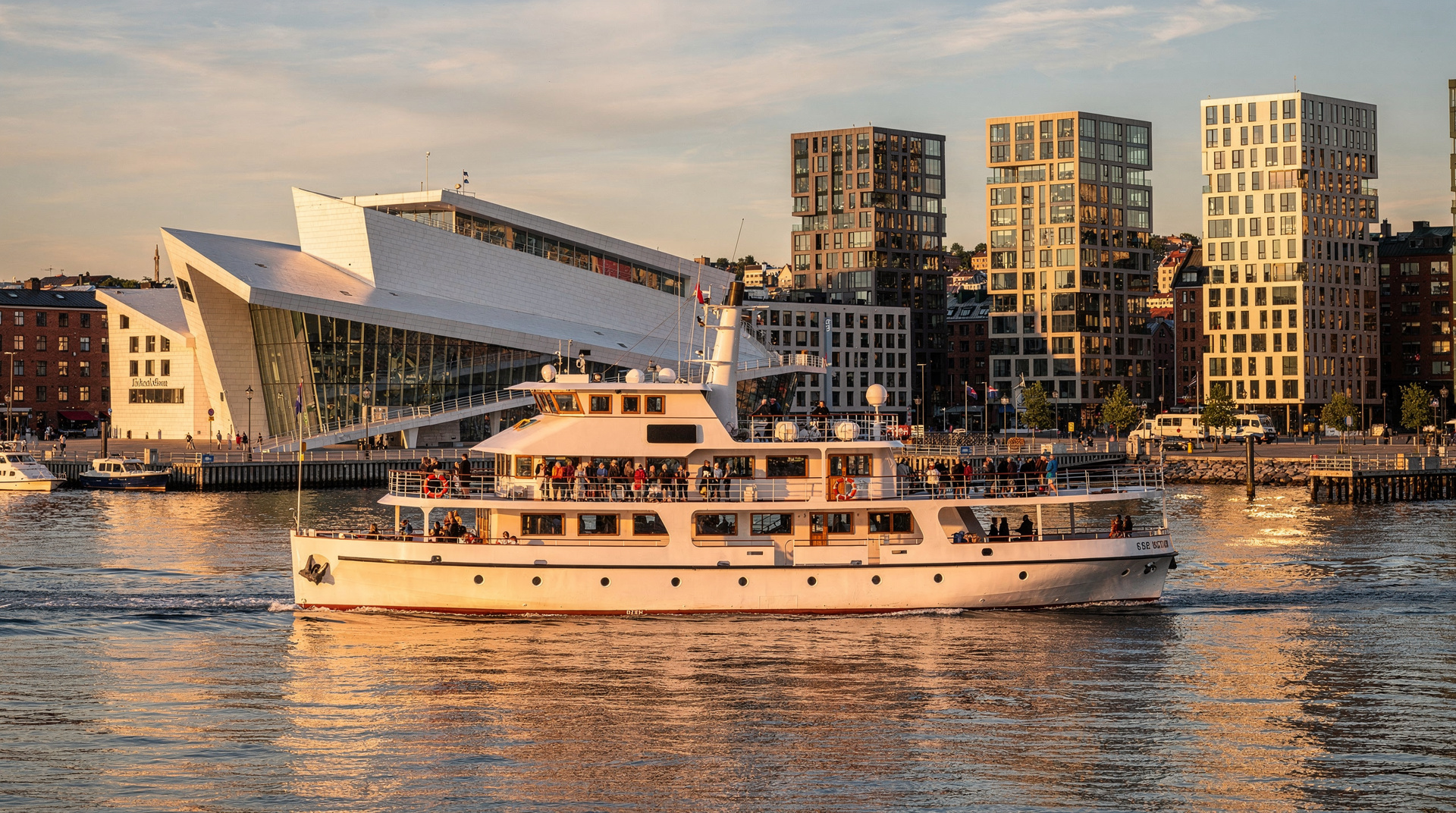
The ferry to Hovedøya leaves from Rådhusbrygga pier 3 at 9 am in summer, and we are early because we want seats on the outside deck. The boat — an electric Ruter ferry, part of the regular public transport network — takes 10 minutes to cross to Hovedøya. The ticket is a standard Ruter fare (NOK 42 / USD 4.50 with a single ticket, or included in the Oslo Pass and Ruter day passes).
This is the thing about the Oslofjord that surprises many visitors: some of the best island access uses completely ordinary public transit. You are not booking a special excursion. You are riding the bus on the water.
Hovedøya: the island closest to the city
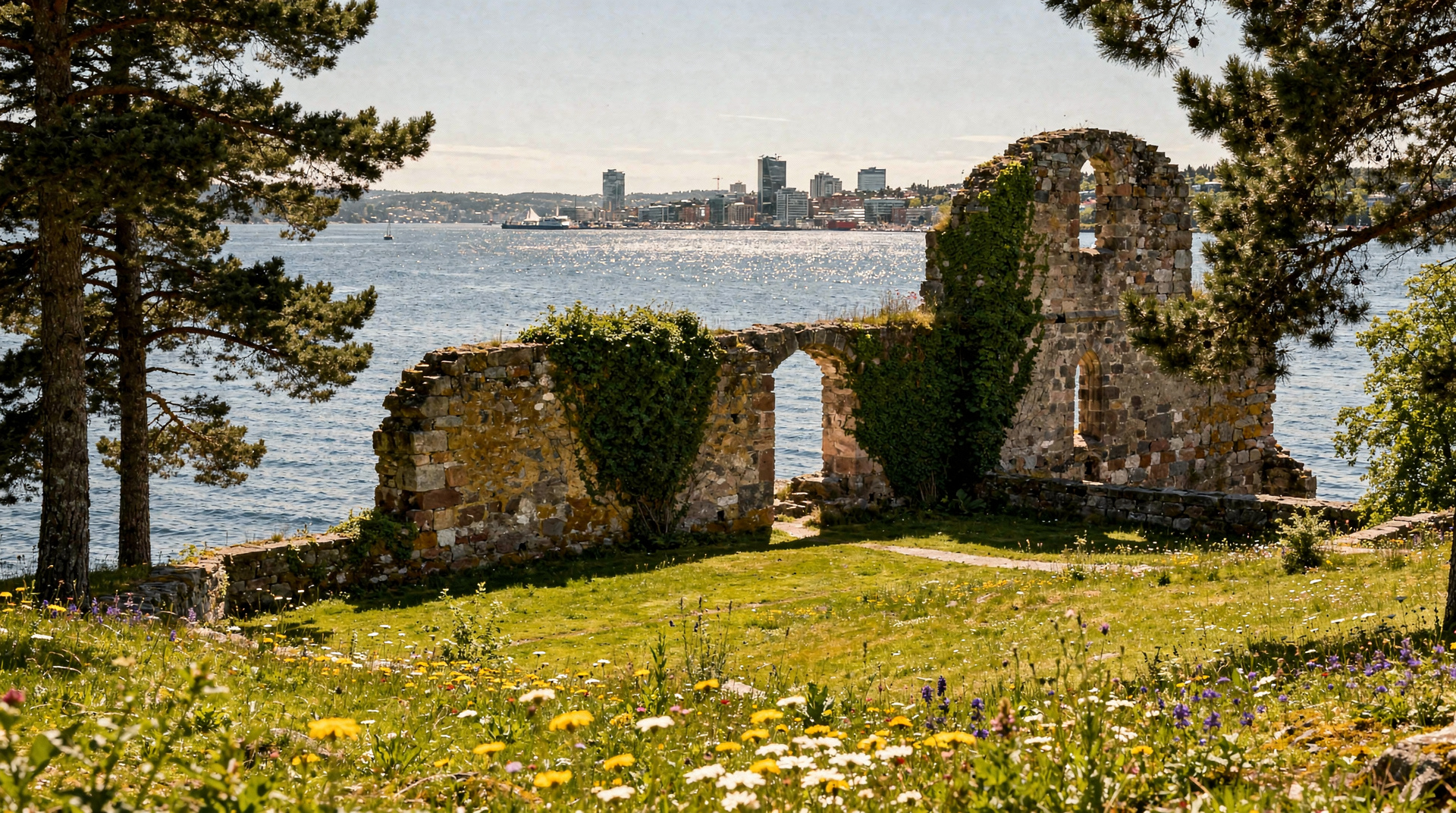
Hovedøya is the first island you reach and the most visited, but its scale means it absorbs the crowds better than you might expect. The island is about 700 metres long by 400 metres wide — walkable in any direction within 20 minutes. It has a ruined 12th-century Cistercian monastery, rocky and grassy shores that face the city on one side and the open fjord on the other, and a single café (Klosterkjøkkenet) that opens in summer for coffee and simple food.
The monastery ruins are free to wander. There is something particularly affecting about standing in a roofless medieval nave with Oslo’s skyline visible across the water through a collapsed arch. The Cistercians chose this site carefully — the approach from the water on a clear morning still justifies their decision.
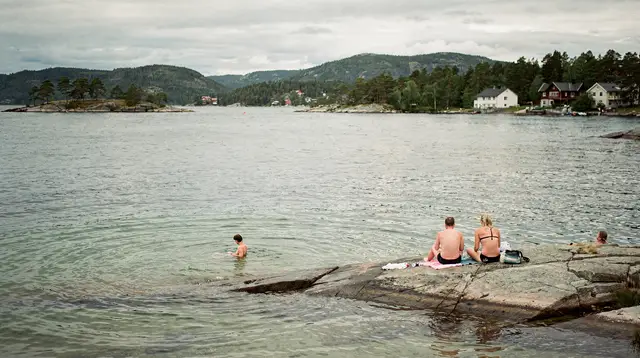
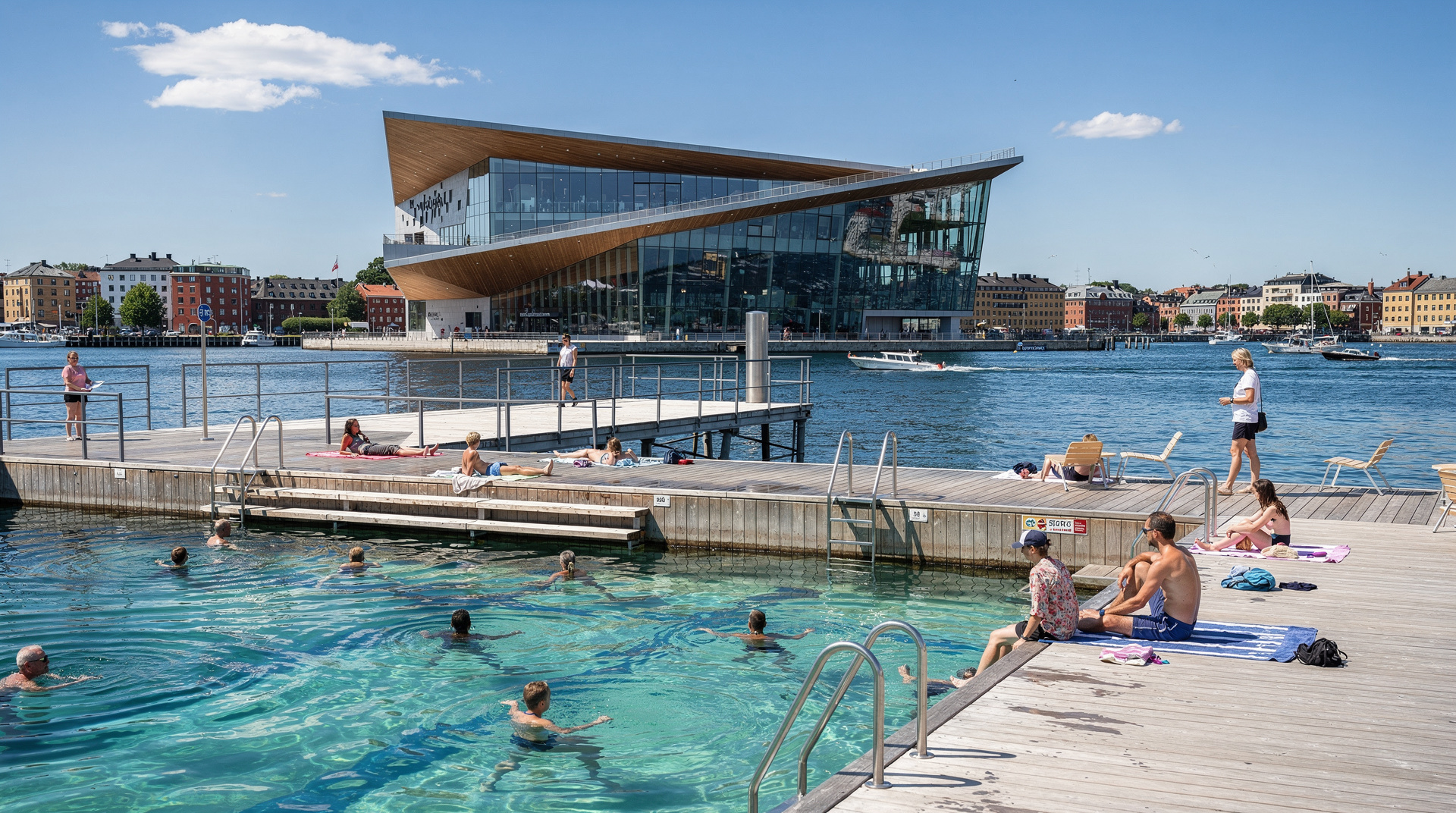
We walk the perimeter path (about 2.5 km, gently uneven) and end up on the south shore rocks facing away from the city. On a warm day, this is where you swim. The fjord water around the inner islands is clean — tested regularly, and consistently rated safe for bathing by Oslo municipality. The water temperature in late June is around 17–19°C, which is cold by any southern European standard and acceptable by Norwegian standards. You swim, you dry on the rock, you eat whatever you brought. It is uncomplicated and excellent.
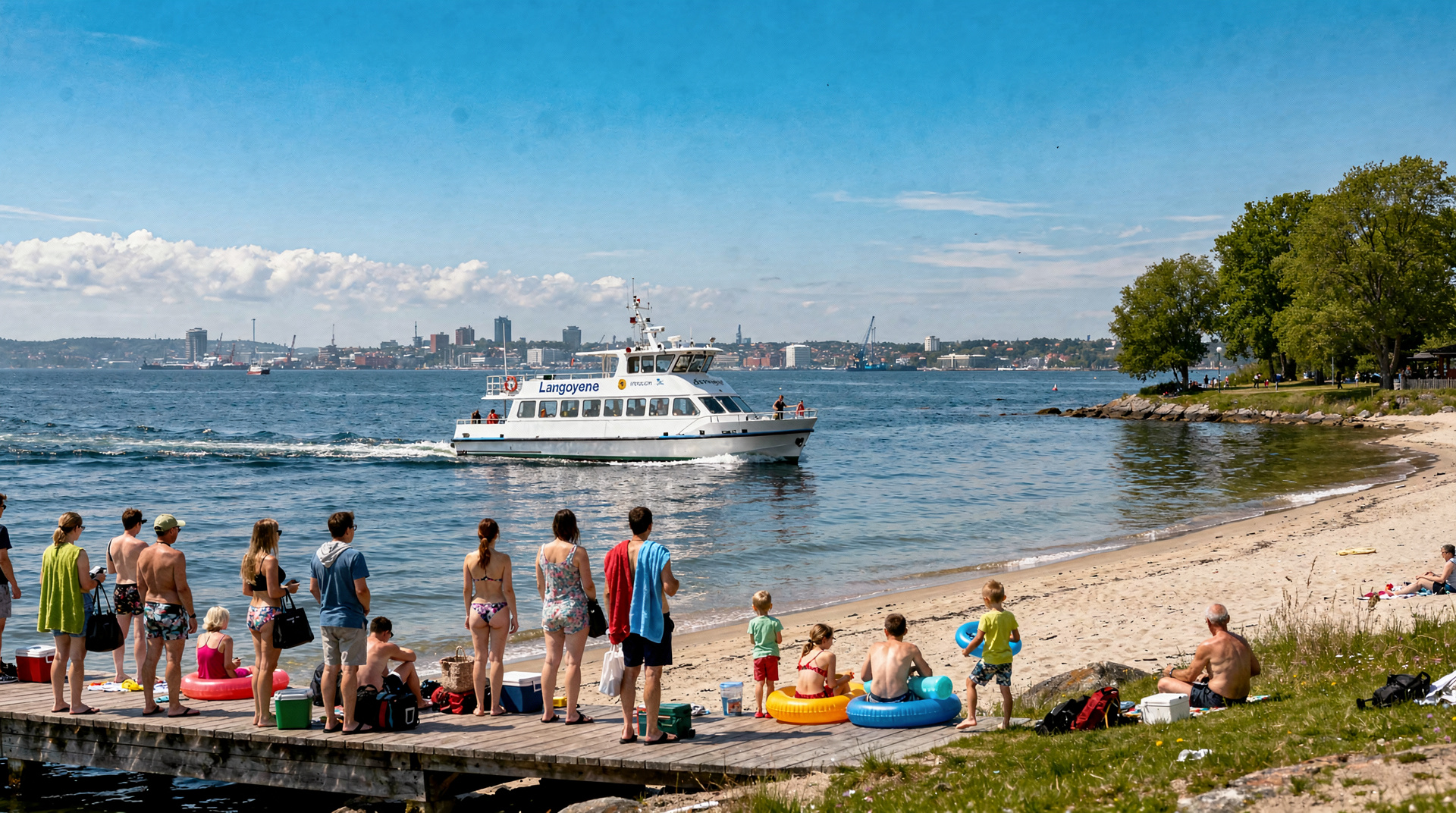
Our detailed island hopping guide and Hovedøya guide cover the other islands and practical logistics in full. For a long summer day, we recommend following Hovedøya with a hop to Langøyene (further out, wilder, with sandy beaches) or Gressholmen (with its resident hares and wildflowers). Both are accessible on the same island ferry network.
Which island for which mood
If Hovedøya is the easy, well-rounded choice, the other Oslo islands each have a distinct character worth knowing before you plan the day:
| Island | Character | Best for |
|---|---|---|
| Hovedøya | Monastery ruins, easy access, café | First-timers, short visits |
| Langøyene | Sandy beaches, further out, wilder | A full afternoon of swimming |
| Gressholmen | Quiet, hares, wildflowers | Escaping the crowds |
| Nesodden | Larger, forested, more of a local escape | A half-day away from the city |
We usually pair Hovedøya in the morning with Langøyene for the swimming-heavy stretch of the afternoon, saving the cruise for evening. If you only have time for one island, Hovedøya’s mix of history and easy swimming makes it the honest default; if swimming is the whole point of your day, skip straight to Langøyene.
Early afternoon: back toward the city, lunch at Aker Brygge
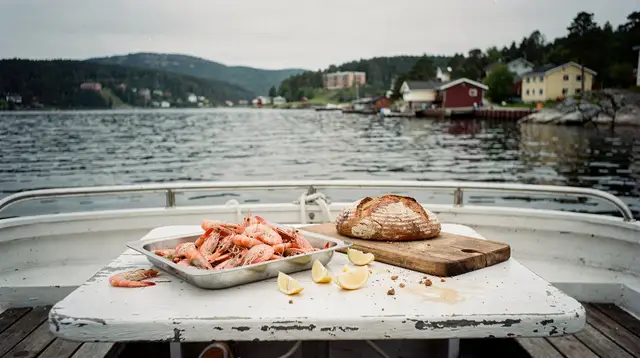
The midday ferry back from Hovedøya brings us to Aker Brygge around 1:30 pm. We take the outdoor seats at one of the waterfront restaurants — acknowledging that this is tourist-trap territory in terms of pricing, but the view of the fjord from Aker Brygge on a summer afternoon makes the premium slightly more forgivable. NOK 280–350 (USD 30–38) gets you a decent fish and chips or a prawn open sandwich with a beer. It is not the best value in Oslo, but it is exactly the right lunch for this kind of day.
The alternative — and arguably better — option is to take food from Mathallen in Vulkan (a 15-minute walk inland) and eat at the tables on the Tjuvholmen waterfront next to the Astrup Fearnley Museum. The museum building by Renzo Piano doubles as a visual backdrop, the water is right there, and the food you bring can be much better than the waterfront restaurant default.
Afternoon: into the fjord on a smaller boat
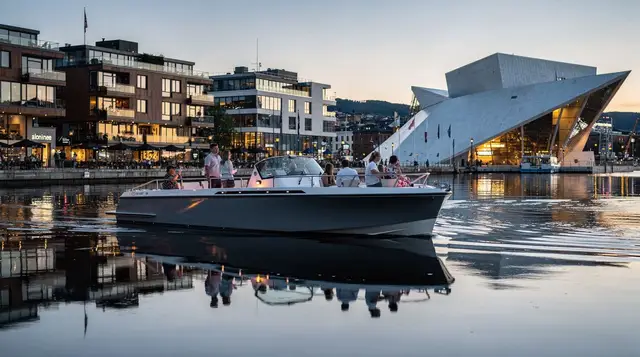
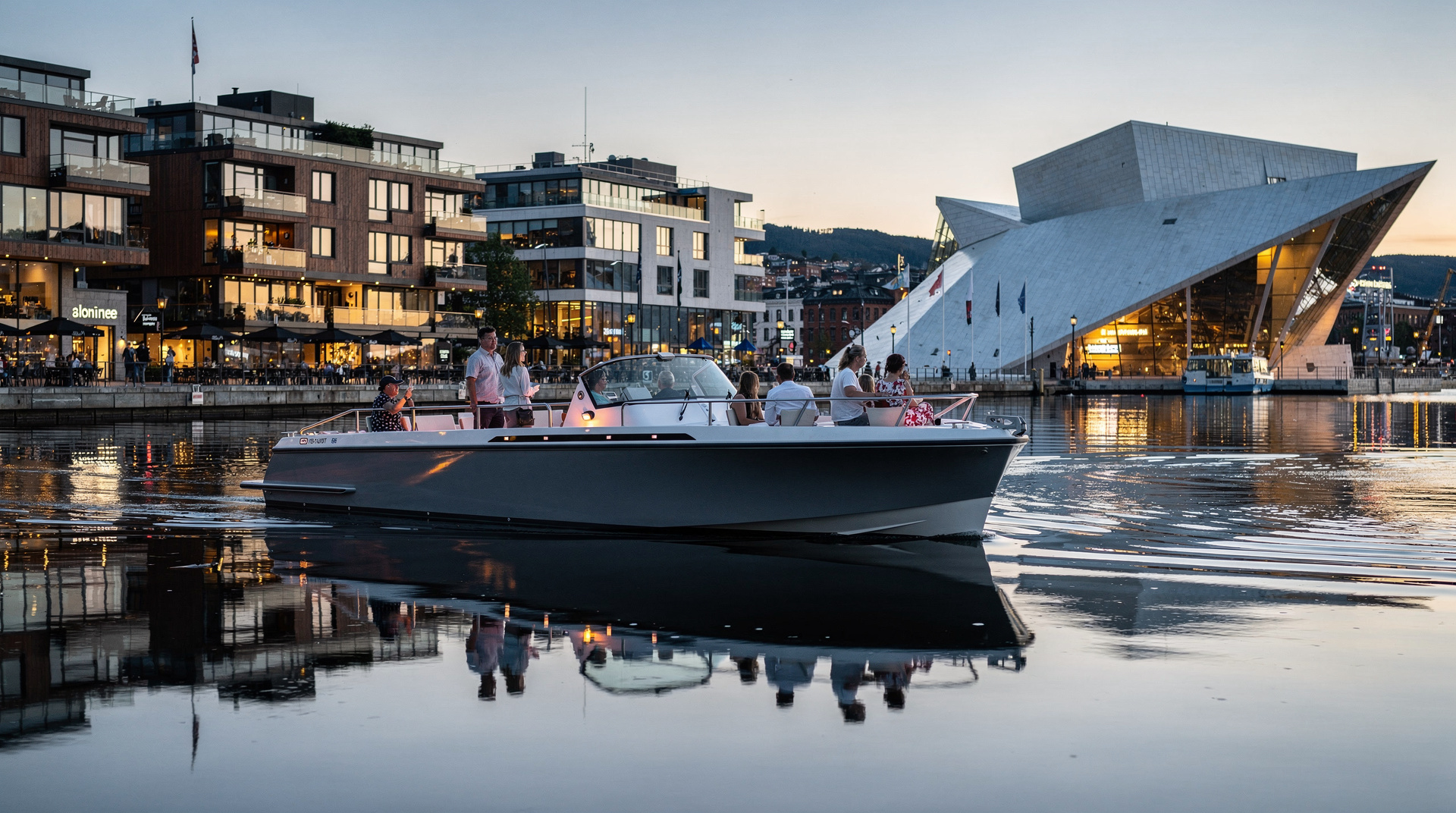
The afternoon is for the cruise. Not the large sightseeing boat with its audio guide and fixed route, but something smaller and more deliberate. The silent electric boat cruise runs from Aker Brygge and moves through the inner fjord and around the nearest islands on an electric vessel that produces no engine noise at all. The quiet is remarkable — you hear the water, the birds, and the people on the boat. Nothing else.
These cruises typically last 90 minutes to 2 hours and cost around NOK 400–600 (USD 43–65) per person. Book ahead in summer, as they fill quickly. The departure point is Aker Brygge marina. Our fjord cruises guide compares all the available options — from the budget sightseeing boats to the evening dinner cruises — so you can choose based on budget and group size.
As the boat moves out past Bygdøy and the Bygdøy peninsula, you get the perspective that Oslo’s city-based visitors rarely see: the city as it appears from the water, with the hills behind it and the fjord spreading south. The Holmenkollen ski jump is faintly visible on the ridgeline to the north. The Opera House catches the afternoon light and reflects it in unpredictable patterns. It is the best way to understand Oslo’s geography.
Evening: back in the city, the long dusk
By 7 pm we are back at Aker Brygge. Dinner somewhere in the city — we like the Grünerløkka options, or the fish counter at Mathallen if we want something quick and good. After dinner, we walk. Oslo’s long summer evenings demand walking. The light at 9 pm in June has a quality that is hard to describe — warm and golden and horizontal, the same light that Edvard Munch painted the city under in some of his landscapes. It does not feel like evening. It feels like a very long afternoon.
The walk from Grünerløkka south along the Akerselva to Bjørvika, then east along the waterfront to the Opera House, then back west past the fortress to Aker Brygge takes about 90 minutes at a relaxed pace and passes through four distinct urban environments. By the time you finish, it will be 10:30 or 11 pm. The sky will still have light in it. The cafés will still be open.
Summer in Oslo is not a myth or a marketing slogan. The long days are real, and they produce a quality of outdoor life that is genuinely different from anywhere further south. The fjord and the islands and the evening light make a summer day here one of the best travel experiences in northern Europe — and much of it costs almost nothing.
Our Oslo in summer guide has the complete seasonal logistics, and the 5-day summer itinerary shows how to build a full week around the fjord and city combination.
Top experiences
Bookable activities with verified prices and instant confirmation on GetYourGuide.