Oslo's Christmas markets: gløgg, ice skating, and Nordic hygge
Oslo: Christmas tour with gløgg and Christmas sweets
Duration: 2.5 hours
- December only
- Gløgg included
The season that transforms Oslo
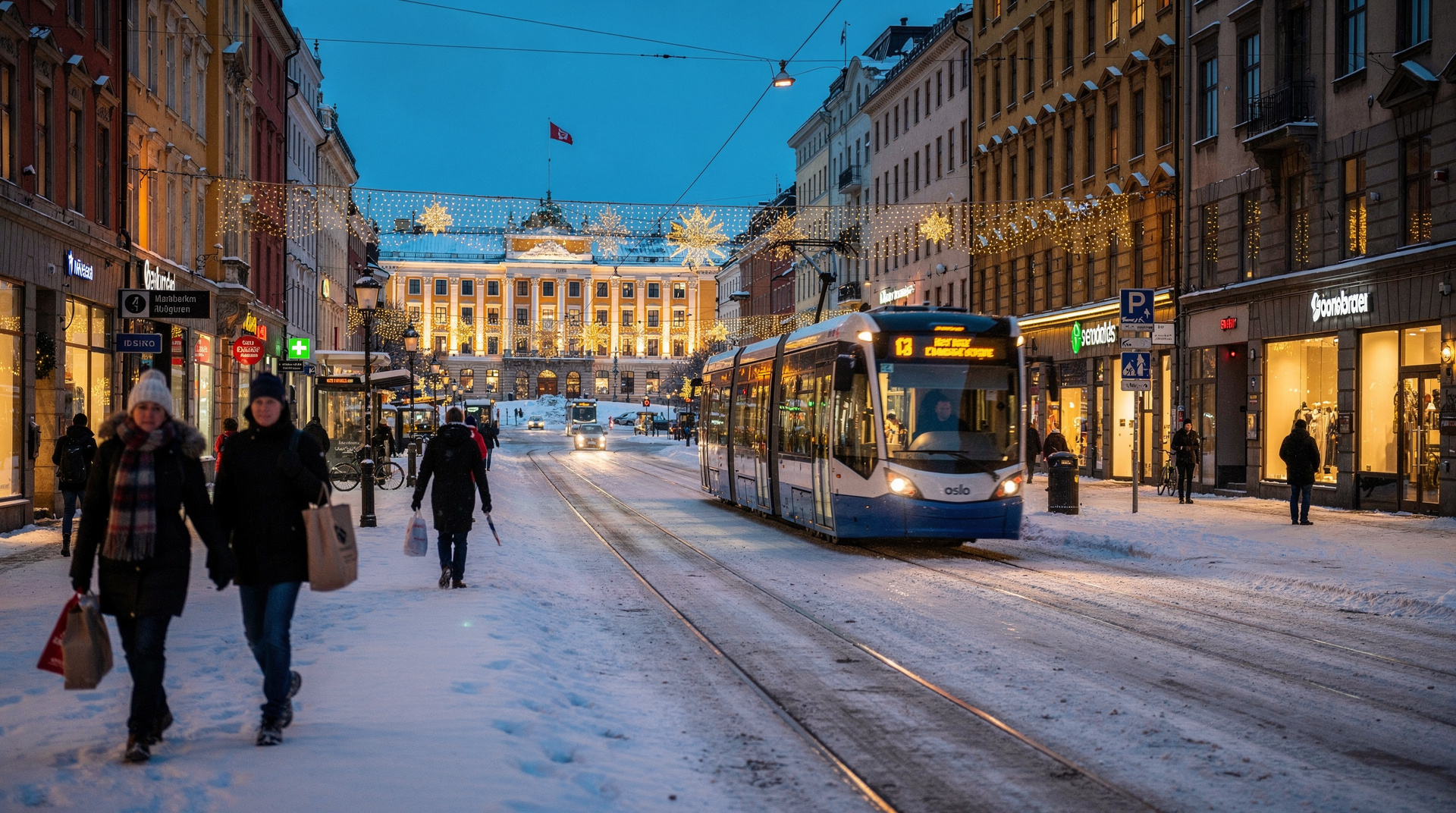
Oslo does not pretend winter is not happening. It leans in. From late November through the Christmas period, the city puts up considerable effort — lights along Karl Johans gate that are genuinely impressive rather than token, a ring of outdoor ice rinks, Christmas markets with actual artisan craft rather than just cheap imported goods, and the smell of gløgg (Norwegian mulled wine) drifting through the cold air in a way that makes the season feel real.
We want to be honest about scale: Oslo’s Christmas markets are not Cologne or Vienna. They are smaller, more contained, and in some ways more authentic for it. You will not find the dizzying sprawl of a 300-stall German market, but you will find something more characteristically Norwegian — quality over quantity, a real engagement with the season, and prices that remind you this is still Oslo (a cup of gløgg runs NOK 80–120 / USD 8.60–13).
| Where | Spikersuppa, Frogner Park, Aker Brygge, plus smaller Røa/Majorstuen markets |
| Cost | Gløgg package around NOK 100–140 (USD 11–15); rink skating free, rentals NOK 60–80 |
| Time needed | An evening covers Spikersuppa well; a full afternoon for Frogner Park + rink |
| Best time | First two weeks of December, before the pre-Christmas crush |
| Getting there | All central markets walkable from Karl Johans gate or a short tram ride |
Comparing the main markets
| Market | Character | Best for | Crowds |
|---|---|---|---|
| Spikersuppa | Central, photogenic, ice rink | First-time visitors, photos | Busy, especially evenings |
| Frogner Park | Family-oriented, handmade crafts | Families, combining with Vigeland | Moderate |
| Aker Brygge | Waterfront, commercial | Gift shopping, waterfront views | Moderate to busy |
| Røa / Majorstuen | Local, low-key | Residents, west-side visitors | Light |
The main markets
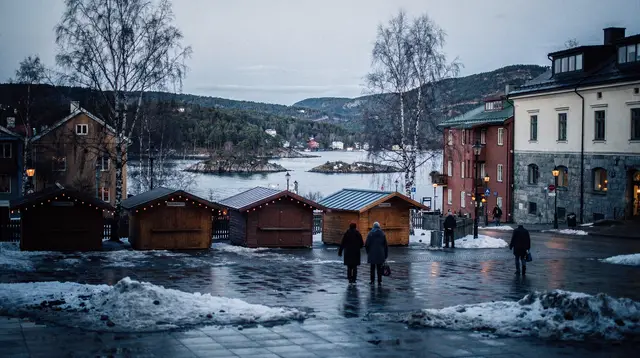
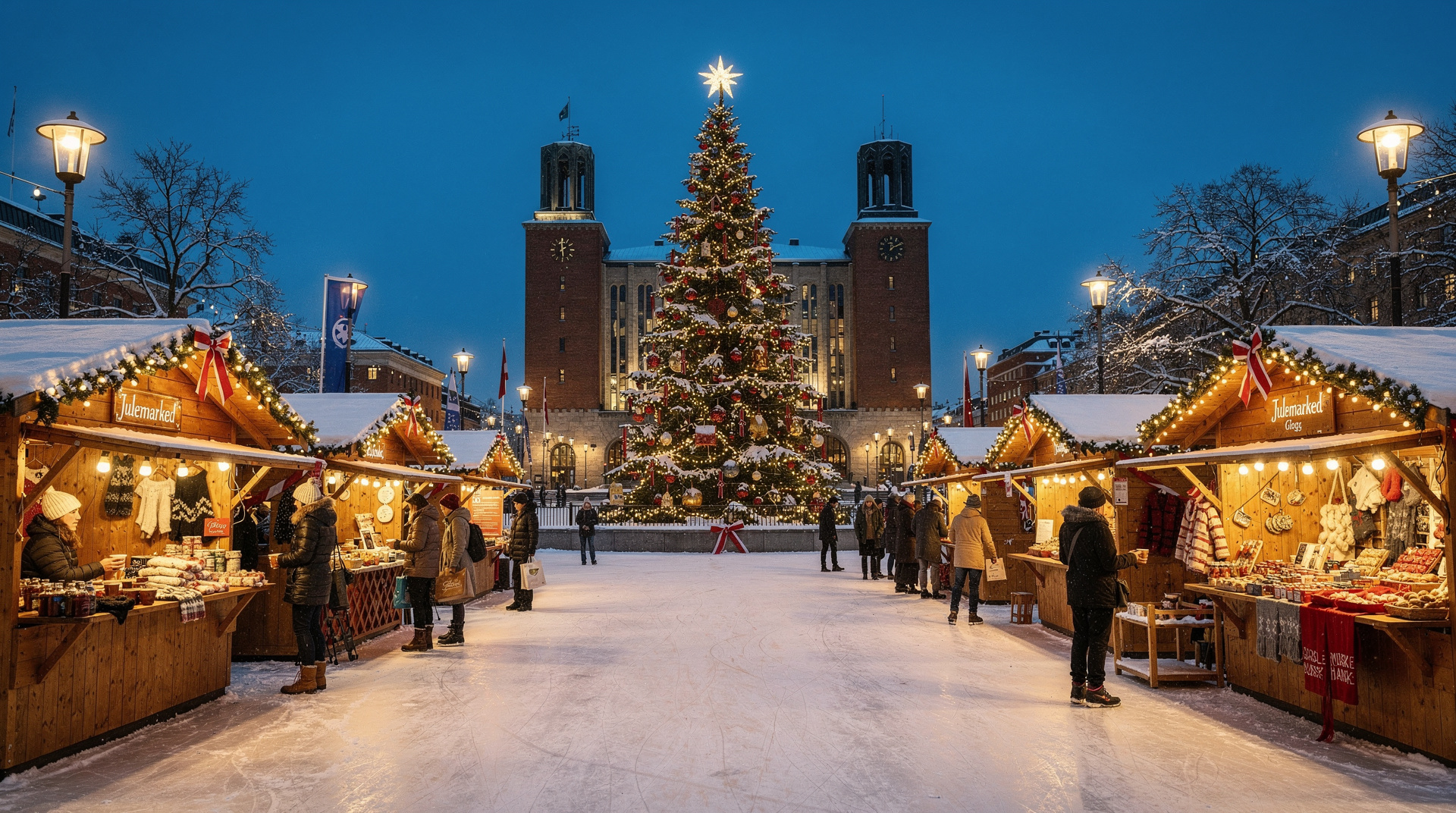
Spikersuppa is the most central market — a cluster of wooden stalls surrounding the outdoor ice rink on Spikersuppa lake, directly in front of the Grand Hotel on Karl Johans gate. The rink is free to skate (bring your own skates or rent for NOK 60–80 / USD 6.50–8.60). The market stalls sell Norwegian crafts, woollen goods, Christmas decorations, and food — pastries, smoked meats, hot drinks. This is the most photographed of Oslo’s Christmas markets, and in the evening with the lights reflected on the ice it earns the photographs.
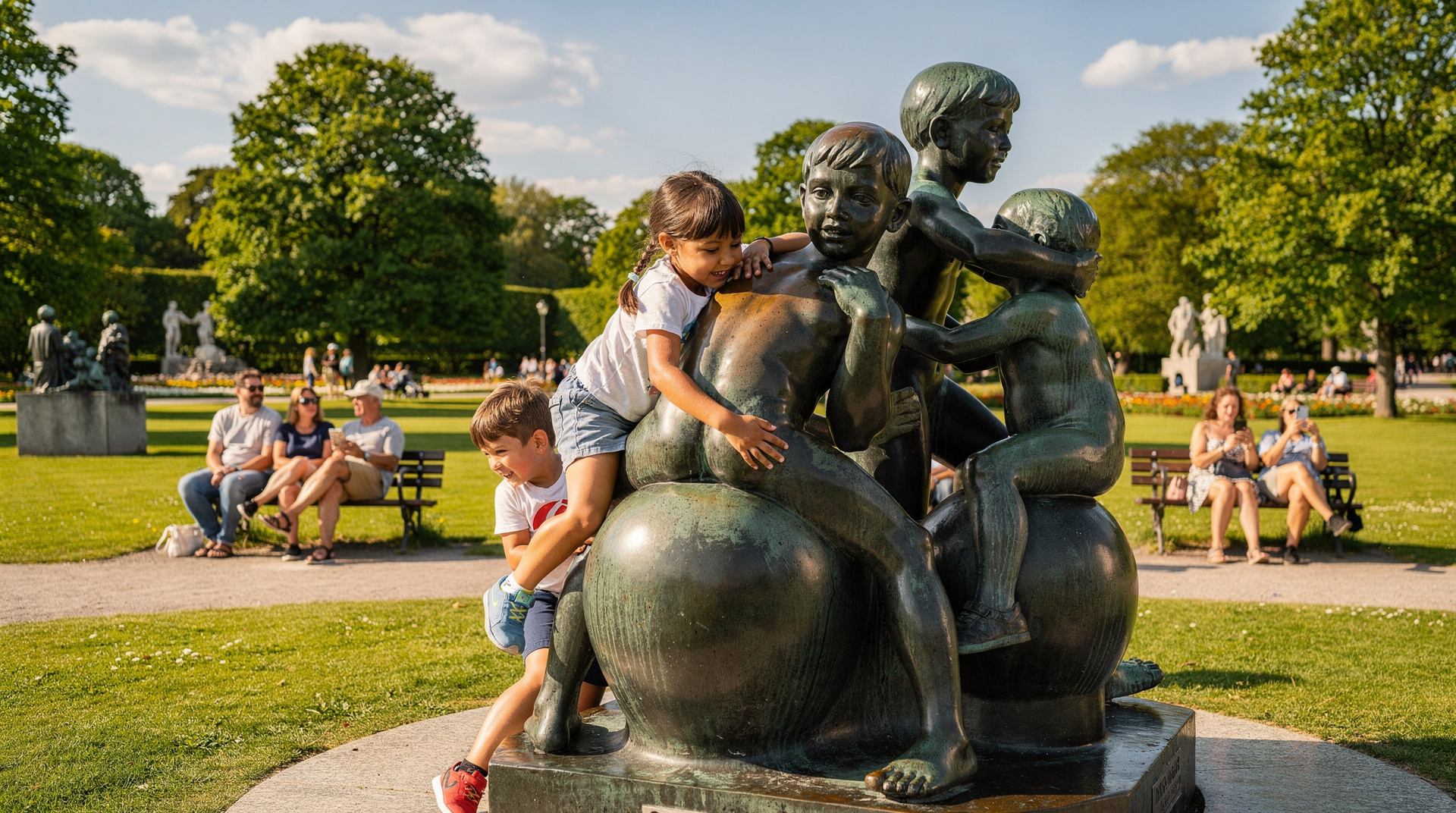
Frogner Market (Jul i Frognerparken) runs through the Frogner Park adjacent to Vigeland Sculpture Park. This market has a more family-oriented character and tends toward handmade crafts and food. The Vigeland Park itself is worth walking through in winter — the sculptures take on a different quality with snow or frost, and the park is much quieter than in summer. The wider Frogner–Vigeland district has plenty of cafés nearby if you need to warm up between stalls.
Røa and Majorstuen have smaller neighbourhood markets that are more local in character and less tourist-oriented. If you are staying in the west side of the city or making a visit to the Holmenkollen area, these are worth timing your trip around.
Aker Brygge runs a waterfront Christmas market that is attractive visually but, frankly, the most commercially oriented of the main options. The setting is good; the stalls lean toward gifts and packaged goods rather than artisan production.
Gløgg: what it is and where to drink it properly
Gløgg is Norway’s version of mulled wine — red wine or sometimes port mulled with spices (cardamom, cloves, ginger, cinnamon, sometimes with a shot of aquavit stirred in) and served hot. The traditional accompaniments are “pepperkaker” (gingerbread biscuits) and “krumkake” (thin crispy waffle cones). A full gløgg package at most markets — drink plus a small plate of sweets — is around NOK 100–140 (USD 11–15).
The quality varies considerably. The market versions are usually fine. The best gløgg we have had in Oslo in recent years came from two places: the rooftop bar of the Thon Hotel on Pilestredet (seasonal winter offering, book ahead — see our rooftop bars guide for others that do winter drinks) and the Julehuset on Karl Johans gate, which is a somewhat touristy but earnest Christmas shop that sells gløgg with genuine spice complexity.
The traditional Norwegian Christmas drink is actually aquavit, not gløgg — the herb- and caraway-flavoured spirit that is as Norwegian as Viking history. The Christmas table at Norwegian homes features julenisse (the Norwegian Santa figure), the Christmas tree, pinnekjøtt (rack of smoked lamb), and a glass of aquavit. If you see a bottle labelled “Julenisse Aquavit” or something similar in a Vinmonopolet, it is the seasonal release and worth picking up as a souvenir.
Christmas food beyond gløgg
The Norwegian Christmas food tradition is serious and regional. In Oslo, the dominant Christmas dishes include:
Pinnekjøtt: salted and dried rack of lamb, typically reconstituted by soaking and then steamed over birch sticks. It has a strong, almost funky flavour that is acquired but becomes addictive. This is the Christmas dish most associated with western Norway but eaten across the country.
Ribbe: roasted pork belly with crispy crackling. This is perhaps the most common Christmas main course in Oslo households. Several restaurants in the city put ribbe on their pre-Christmas menu.
Juleribbe og medisterkaker: the full Christmas plate includes the pork belly alongside medisterkaker (pork and veal meatballs), potatoes, sauerkraut, and lingonberry jam. Restaurants charge around NOK 350–500 (USD 38–54) for the full Christmas menu.
Risgrøt: rice porridge, traditionally served on Christmas Eve, often with a hidden almond — finding the almond means luck for the coming year. This is overwhelmingly a domestic tradition, but some cafés put it on their menu in December.
Our Norwegian food guide covers these and other seasonal specialties.
Ice skating beyond Spikersuppa
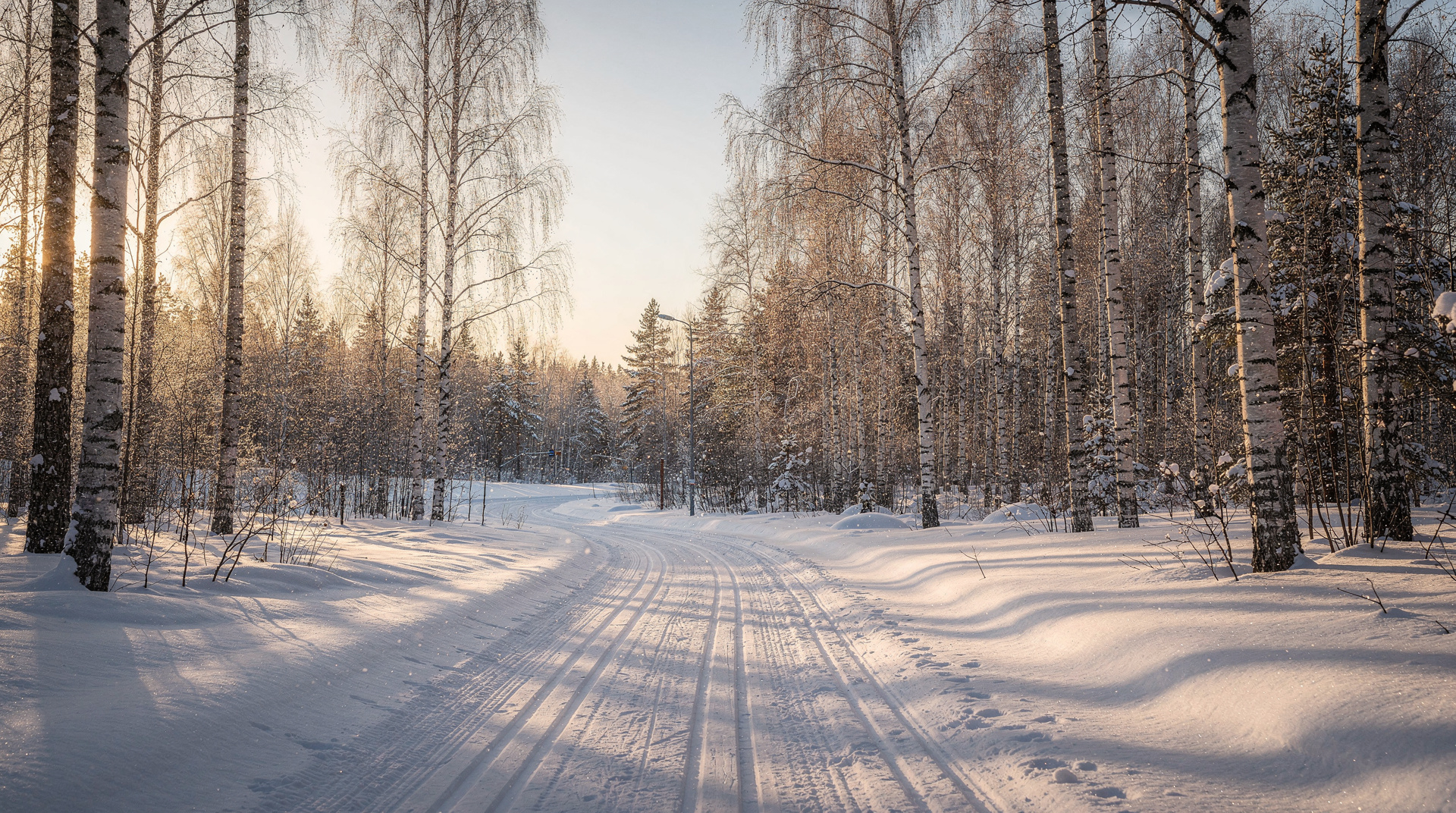
The outdoor rink at Spikersuppa is the most central, but not the only option. Vigelandsparken (in Frogner Park) has an ice skating rink in winter when temperatures permit. The natural lake at Sognsvann in Nordmarka freezes most winters and is one of the most atmospheric skating experiences you can have in Oslo — surrounded by forest, lit by low winter sun, with Nordic skiers crossing on the snow alongside. Take T-bane line 3 to Sognsvann (about 25 minutes from the city centre).
Our winter activities guide covers skating options alongside skiing, snowshoeing, and other cold-season activities. Skate at Sognsvann on a proper natural-ice day and it is genuinely one of the best free winter experiences the city offers — see our Sognsvann guide for current ice conditions and how to check before you go.
Budgeting for a Christmas market visit
None of this is cheap by international standards — Oslo rarely is, and our is Oslo expensive guide sets the general expectation. A realistic evening covering two gløgg, a skate rental, and a plate of Christmas street food runs about NOK 350–450 (USD 38–48) per person. Where to stay also matters for how easily you can market-hop after dark without a long cold walk back — our where to stay guide flags the neighbourhoods within easy reach of Spikersuppa and Karl Johans gate.
Practical notes for the Christmas visit
The Christmas markets typically run from the last weekend in November through December 22–23. The city itself is decorating from mid-November, and the overall festive atmosphere begins well before the markets open formally.
Oslo gets very busy in the week before Christmas (roughly December 18–22) as Norwegians come into the city for final shopping. Accommodation prices rise and availability drops during this period. If you want the Christmas atmosphere without the peak prices, the first two weeks of December are the sweet spot.
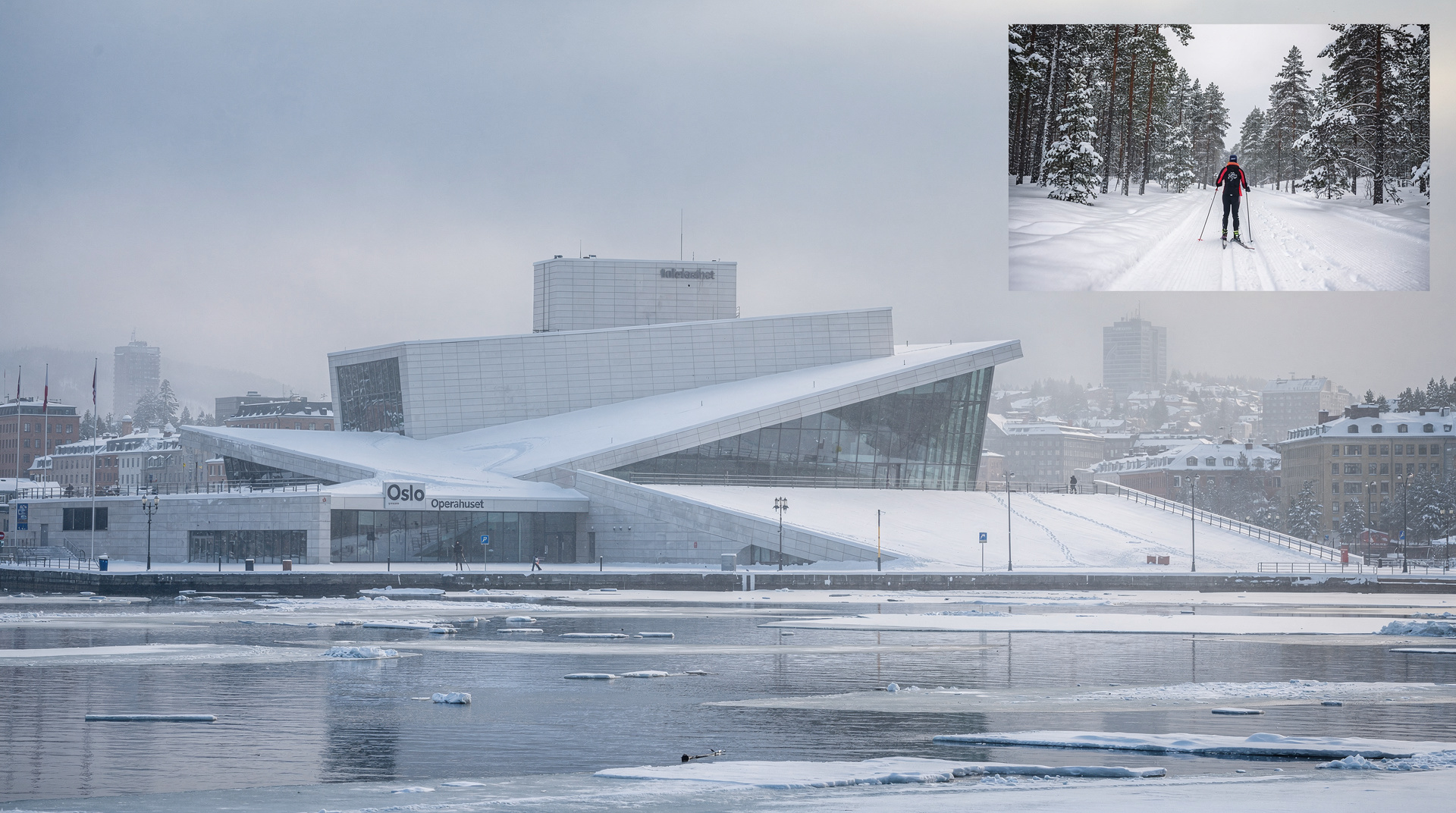
The Christmas and New Year period (December 23 through January 1) is quiet in the city — many Osloites leave town for family celebrations elsewhere in Norway. Restaurants and attractions may have reduced hours. New Year’s Eve in Oslo is celebrated with fireworks over the fjord, visible from the Opera House roof and Akershus Fortress.
For a complete winter visit plan, our 3-day winter Oslo itinerary and the Christmas in Oslo guide have everything you need.
Top experiences
Bookable activities with verified prices and instant confirmation on GetYourGuide.