Where to see Vikings in Oslo: every site open in 2026
Oslo: The Viking Planet entry ticket with VR movie
Duration: Flexible
- VR experience
- Family friendly
Where can I see Vikings in Oslo right now?
In 2026, the two main options are Viking Planet (an immersive VR experience at Nedre Vollgate 4 in the city centre) and the Historical Museum on Karl Johans gate, which holds the Oseberg burial treasures. The Viking Ship Museum on Bygdøy is closed until approximately 2027 for complete reconstruction. Day trips to Borre burial mounds near Horten expand your options significantly.
The honest picture: Viking Oslo in 2026
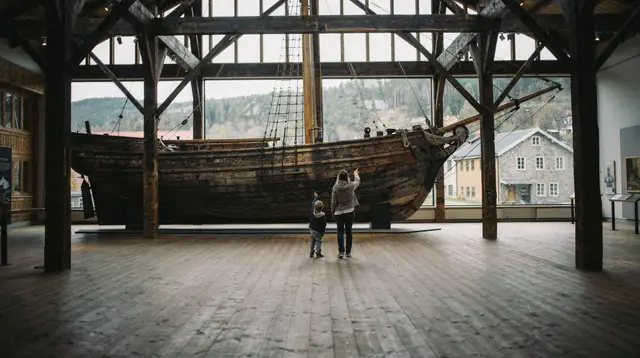
Let’s be direct. Oslo’s most famous Viking attraction — the Vikingskipshuset on Bygdøy with the Oseberg, Gokstad, and Tune ships — is completely closed. It has been since early 2023 and will remain so until approximately 2027, when the rebuilt Museum of the Viking Age is expected to open. The three original ships are in conservation storage and cannot be seen anywhere.
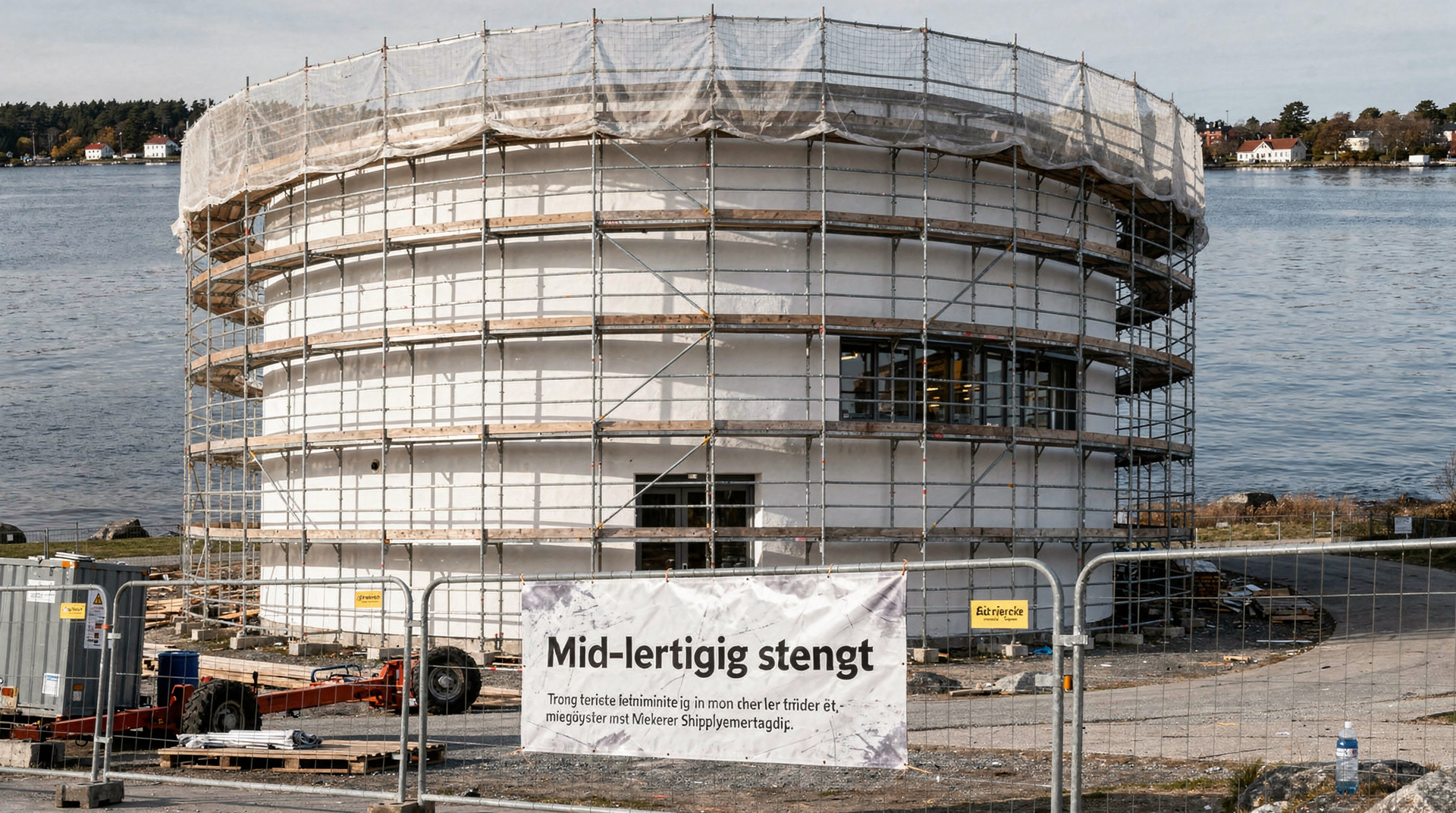
This is not a minor renovation. The entire building is being demolished and replaced. See our dedicated Viking Ship Museum status guide for full details.
What remains? More than you might expect — but you need to know where to look. This guide covers every Viking-related site and experience available in and around Oslo right now, honestly rated.
| Ships in Oslo? | No — closed until ~2027, in storage |
| Best artefacts | Historical Museum, Karl Johans gate (Oseberg gold) |
| Best experience | Viking Planet, city centre (VR longship) |
| Best day trip | Borre burial mounds near Horten (free) |
| Half-day budget | Around NOK 389–450 per adult |
Viking Planet — the experiential option
Address: Nedre Vollgate 4, Oslo city centre (12 min walk from Oslo S; tram lines 11/12/13/17/18/19 to Stortinget) Cost: NOK 249 adults (~USD 27), NOK 199 children (3-15) Duration: 45-60 min experience, allow 1.5 hours total Oslo Pass: Not included
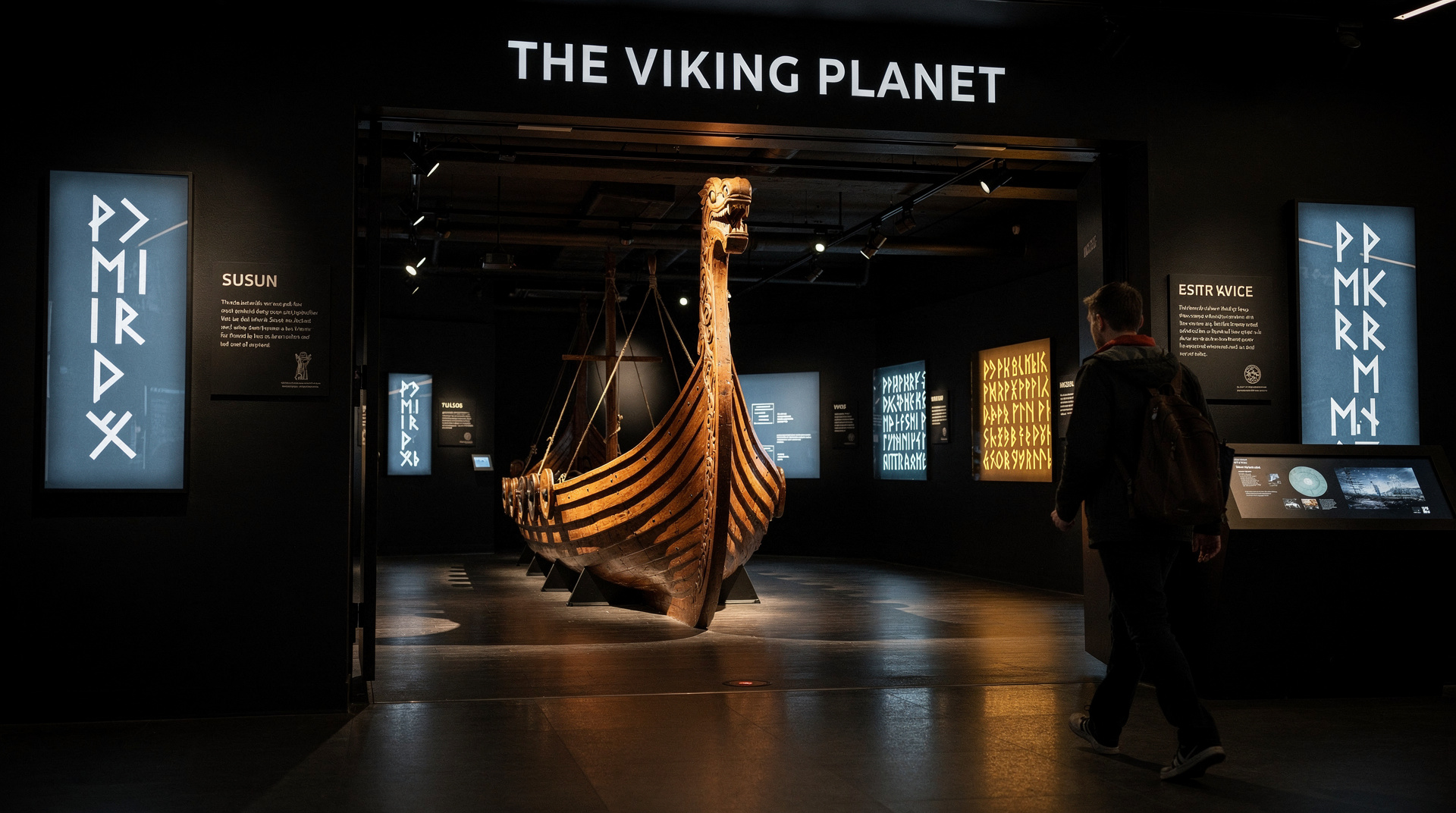
Viking Planet opened in 2021 and offers something the traditional museum never did: a full-sensory immersive experience. The centrepiece is a VR longship simulator — you sit in a motion seat, put on a headset, and travel through a Norse seascape. The visual and audio production is high quality, and the gentle motion convincingly replicates ocean conditions.
A Saga Cinema follows, presenting Norse mythology through projection and practical effects (wind, sound, light). An exhibition space contextualises both with historical information and artefact replicas.
Best for: Families with children aged 7 and up, first-time visitors wanting a visceral feel for Viking seafaring, anyone visiting while the ship museum is closed.
Honest note: Adults seeking scholarly depth may find the experience brief for NOK 249. It is entertainment-forward. That said, the VR quality is genuinely impressive and fills a gap that no other Oslo attraction currently covers.
Historical Museum — the artefact option
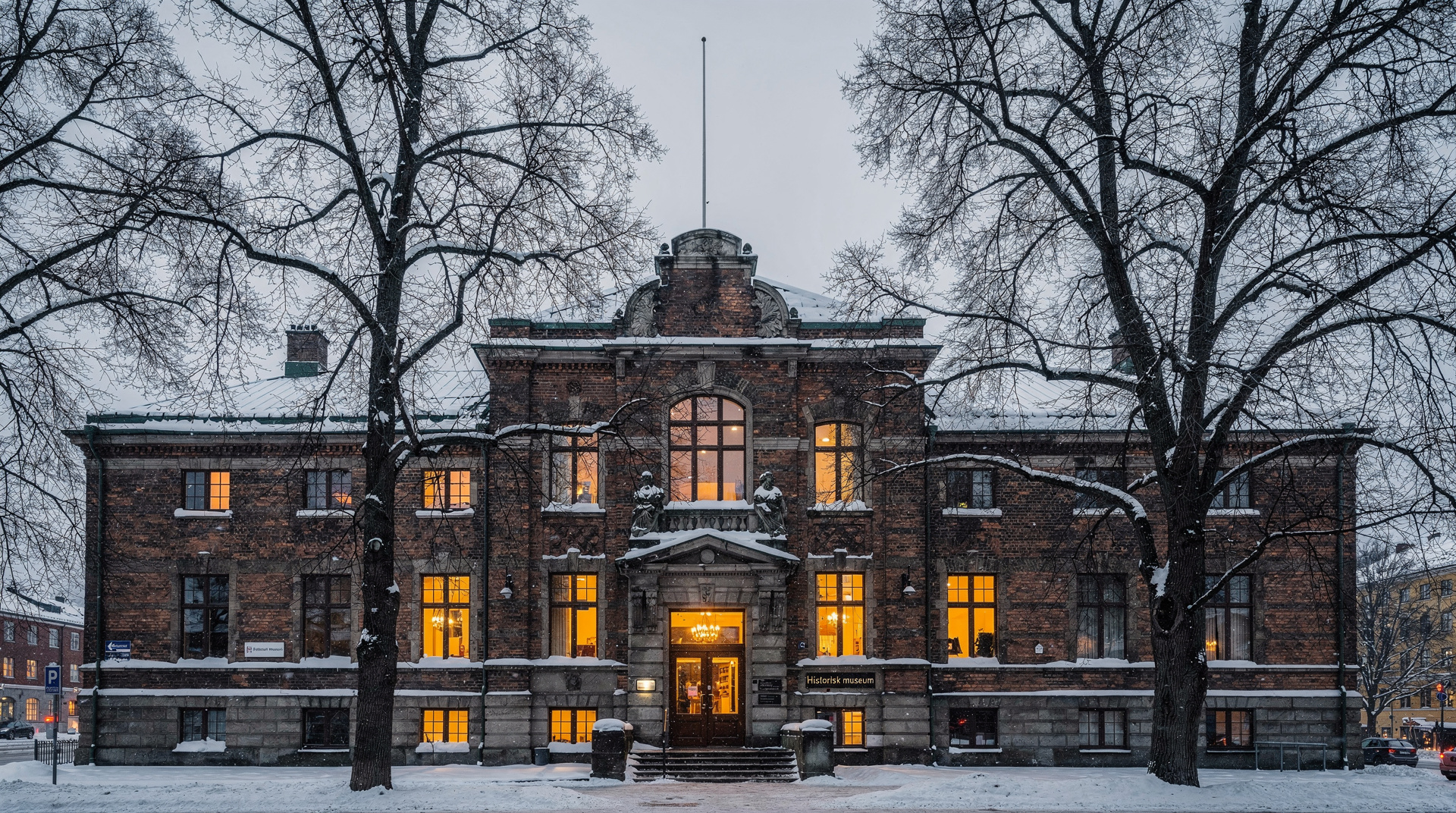
Address: Frederiks gate 2, central Oslo (near the Royal Palace / Universitetsplassen) Cost: NOK 140 adults (~USD 15), free under-18s and Oslo Pass holders Duration: 1.5-2 hours for the Viking section alone Oslo Pass: Included
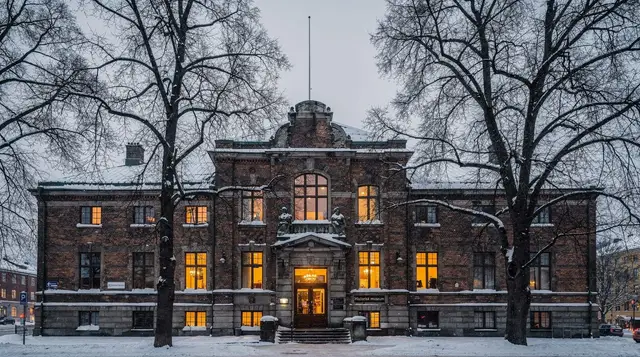
The University of Oslo’s Historisk Museum is the most undervisited major attraction in Oslo. While tourists queue for the Munch Museum and Vigeland Park, the Oseberg treasures sit in nearly empty rooms on the ground floor.
The Viking collection here includes:
The Oseberg burial goods. The ship itself is in storage, but the objects from the burial are here: the elaborately carved wooden wagon (the most ornate Viking object ever found), three sleighs with serpentine carvings, five animal-head posts that once decorated the burial tent, tools, kitchen equipment, and what appear to be a queen or high priestess’s personal belongings from around 834 AD.
The Oseberg gold hoard. Norwegian Viking Age gold jewellery of exceptional quality — brooches, pendants, and intricate metalwork that demonstrates the sophistication of Norse craftsmanship.
Coins and trade goods. Silver coins from the Arab world, Byzantine weights, and objects tracing the Norse trading network from Ireland to the Black Sea.
Weapons and everyday objects. Swords, shields, agricultural tools, and combs that give a human-scale view of Viking daily life beyond the warrior stereotype.
Honest note: The museum has limited signage in English in some sections; a printed guide (ask at the desk) or the free app helps. The building itself — a grand 1902 historicist structure — is also worth noting. See our full Historical Museum Oslo guide.
Combining the two for a half-day Viking visit
The most effective Viking half-day in 2026:
Morning (10:00-11:30): Viking Planet — book a timed 10:00 slot to beat school groups. The VR experience is most immersive before mental fatigue sets in.
11:45-12:30: Walk or take tram to Karl Johans gate area. Lunch at Kaffistova (Rosenkrantz gate 8) for affordable Norwegian classics — kjøttkaker (meatballs) or lapskaus (stew) for around NOK 180-220 per person (roughly USD 19-24).
13:00-15:00: Historical Museum — Oseberg gold and Viking section. Take your time; it rewards slow reading.
Total cost: approximately NOK 389-450 per adult (~USD 42-48) for both Viking experiences plus budget lunch. This is roughly half the cost of many organised tour activities.
Bygdøy — still worth visiting in 2026
Even though the Viking Ship Museum is closed, Bygdøy remains one of Oslo’s best half-days. The peninsula holds several museums within walking distance:
Norsk Folkemuseum: Norway’s largest open-air museum, with over 150 historic buildings from the Norse period through the 20th century, including a stave church from around 1200. Excellent Viking-to-medieval context. Cost: NOK 180-220 depending on season.
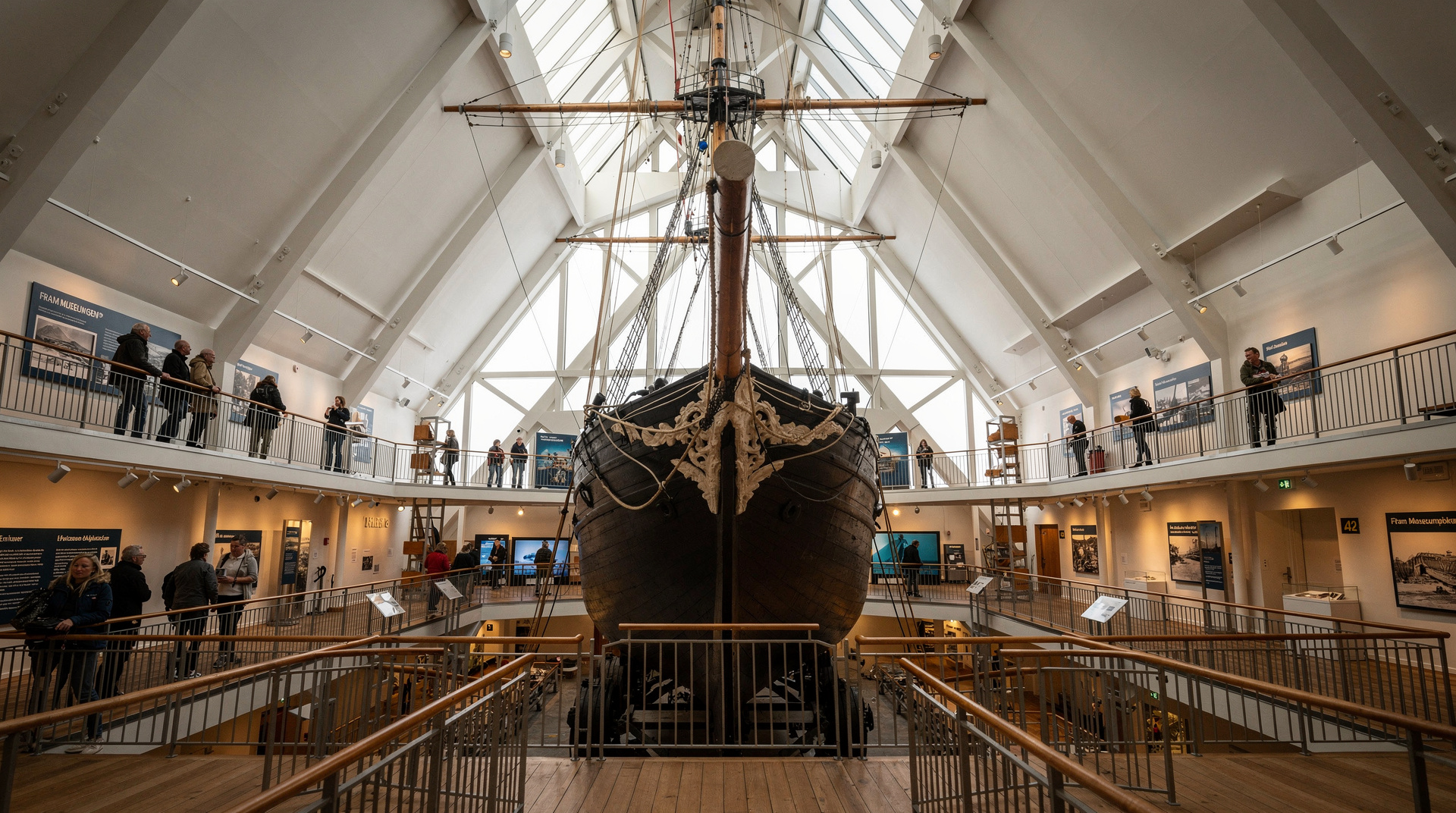
Fram Museum: The polar ship Fram is housed here — not Viking, but the same tradition of Norwegian seafaring. The ship itself is extraordinary. Oslo Pass included.
Kon-Tiki Museum: Thor Heyerdahl’s transatlantic balsa-raft voyage has an indirect Viking parallel (sea daring, navigation), though the content is 20th century.
Getting to Bygdøy: Bus 30 from Jernbanetorget, or in summer, the Bygdøy ferry from Aker Brygge pier 3 (approximately 10 minutes; included in Ruter tickets and Oslo Pass).
Borre National Park — the day trip option
If you are serious about Viking history, Borre National Park near Horten is the most significant Viking site accessible from Oslo.
The park holds the largest collection of Viking burial mounds in Scandinavia — nine large mounds and several smaller ones, dating from the 6th to 10th centuries. Some are 50 metres in diameter. They sit in a coastal forest above the Oslofjord at Borre, near the medieval town of Åsgårdstrand.
What is extraordinary: these mounds are the burial ground of the Yngling dynasty — possibly the same royal family that the Oseberg burial belongs to. You are standing in the cemetery of the family that became the kings of Norway.
Entry to the park is free. Getting there: train from Oslo S to Skoppum (Vestfold line, about 80 minutes), then local bus to Borre (ask at the tourist information in Horten). The journey is long but the site justifies it for dedicated Viking enthusiasts. There is a small museum at the park; check seasonal opening hours before you go.
Viking Age traces in Oslo’s urban landscape
Romerike and the Oslo region: The valley east of Oslo — Romerike — was a core Norse agricultural area. Place names throughout the Oslo region preserve Norse geography: Akershus (the Aker homesteads), Aker (the cultivated land), and the -vin suffix in many local place names indicates Viking-Age meadow settlements.
Akershus Fortress: Akershus Fortress was built around 1300 — post-Viking — but its strategic position above the Bjørvika fjord entrance reflects the same defensive geography that Viking-era settlements used. The medieval city of Oslo developed in the shadow of what was then a Norse settlement area.
Grønland district: The area around Grønland was outside the medieval city walls and has deep roots as a waterside settlement. Nothing Viking-specific survives, but the landscape of the Akerselva (river) flowing to the fjord gives a sense of Norse geography.
The Oslofjord itself as Viking landscape
The fjord is not a museum but a living landscape. Norse sailors navigated these exact waters; the islands of the outer Oslofjord — Hovedøya, Lindøya, Nakholmen — were waypoints and landing places. Several Viking ship finds came from the fjord region.
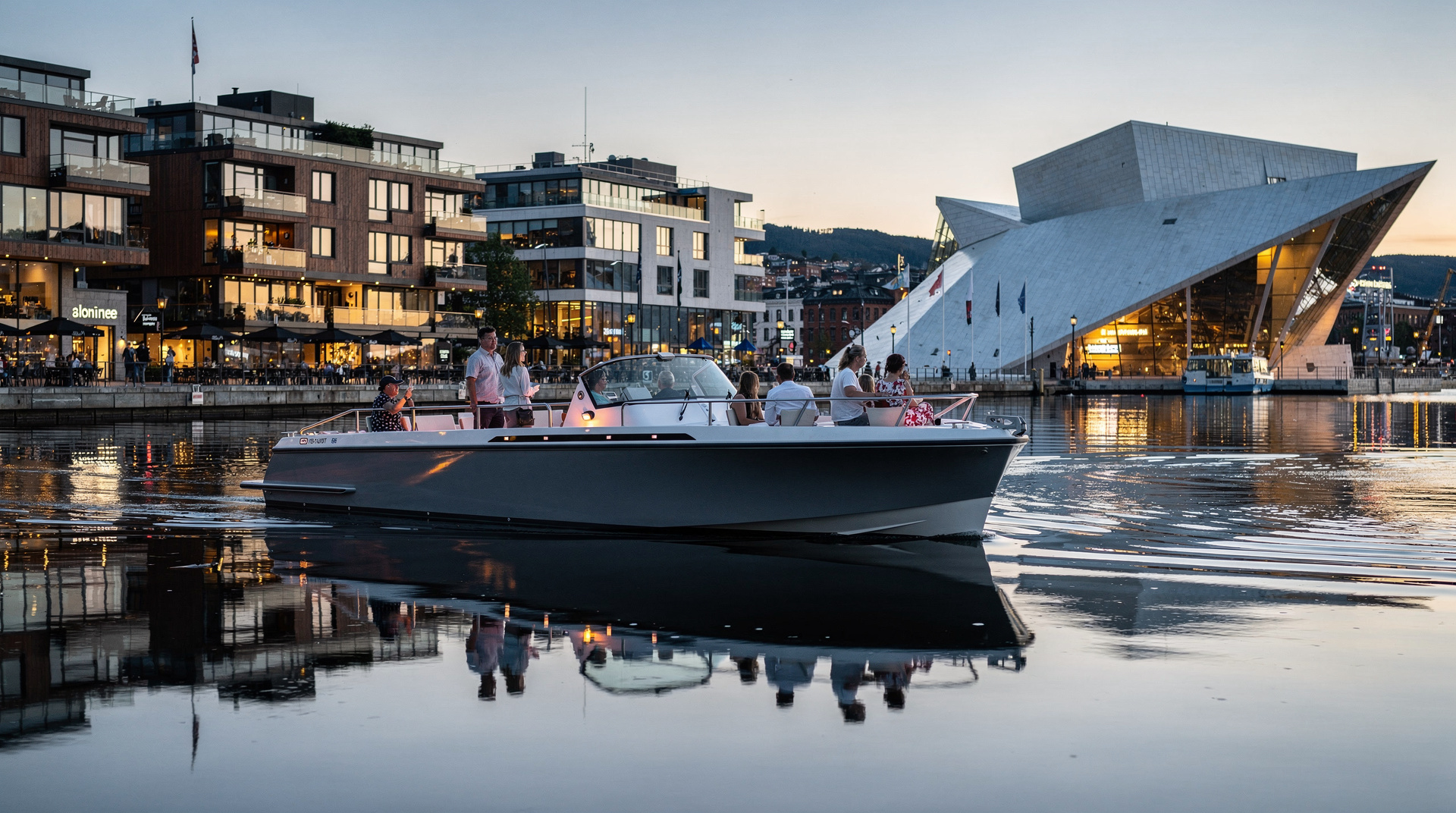
Taking a silent electric boat cruise from Aker Brygge gives a powerful sense of why the Norse were a maritime culture: the fjord is wide, deep, and perfectly positioned as a gateway between inland Norway and the open sea.
How much time to budget
For a focused Viking visit inside Oslo itself (Viking Planet plus the Historical Museum), budget three to four hours including a lunch break and transit time between the two sites — both are within a 15-minute walk of each other near Karl Johans gate. Add the Bygdøy peninsula museums for a full day if you want broader Norwegian maritime history alongside the Viking content. The Borre day trip is a separate commitment: budget a full day given the roughly 80-minute train journey each way, and check bus connections from Skoppum station before you go, since services are infrequent outside peak season.
Planning around the weather and the season
Viking Oslo is easy to fit around the weather because the two central sites are indoors. On a grey or wet day, the Historical Museum and Viking Planet make a natural pairing, and our rainy day museums guide shows what else sits alongside them. On a clear day, keep the outdoor options for later: Bygdøy, the fjord and Borre all reward good light, and the best time to visit Oslo guide explains how the seasons change what is open and how pleasant the walking is.
If you are building a short stay, the Viking half-day slots neatly into the Oslo in 2 days or Oslo in 3 days plans. Put it on the day when you already plan to be around the city centre, so you are not spending time on transit between sites.
Making it work with children
Viking Planet is the easy win for younger travellers, because a motion seat and a headset hold attention in a way a glass case rarely does. The Historical Museum works better for children if you set them a small mission: find the wagon, count the sleighs, spot the animal heads. Keep the visit short and let them lead. For more ideas, see Oslo with kids and family museums in Oslo.
Getting between the sites
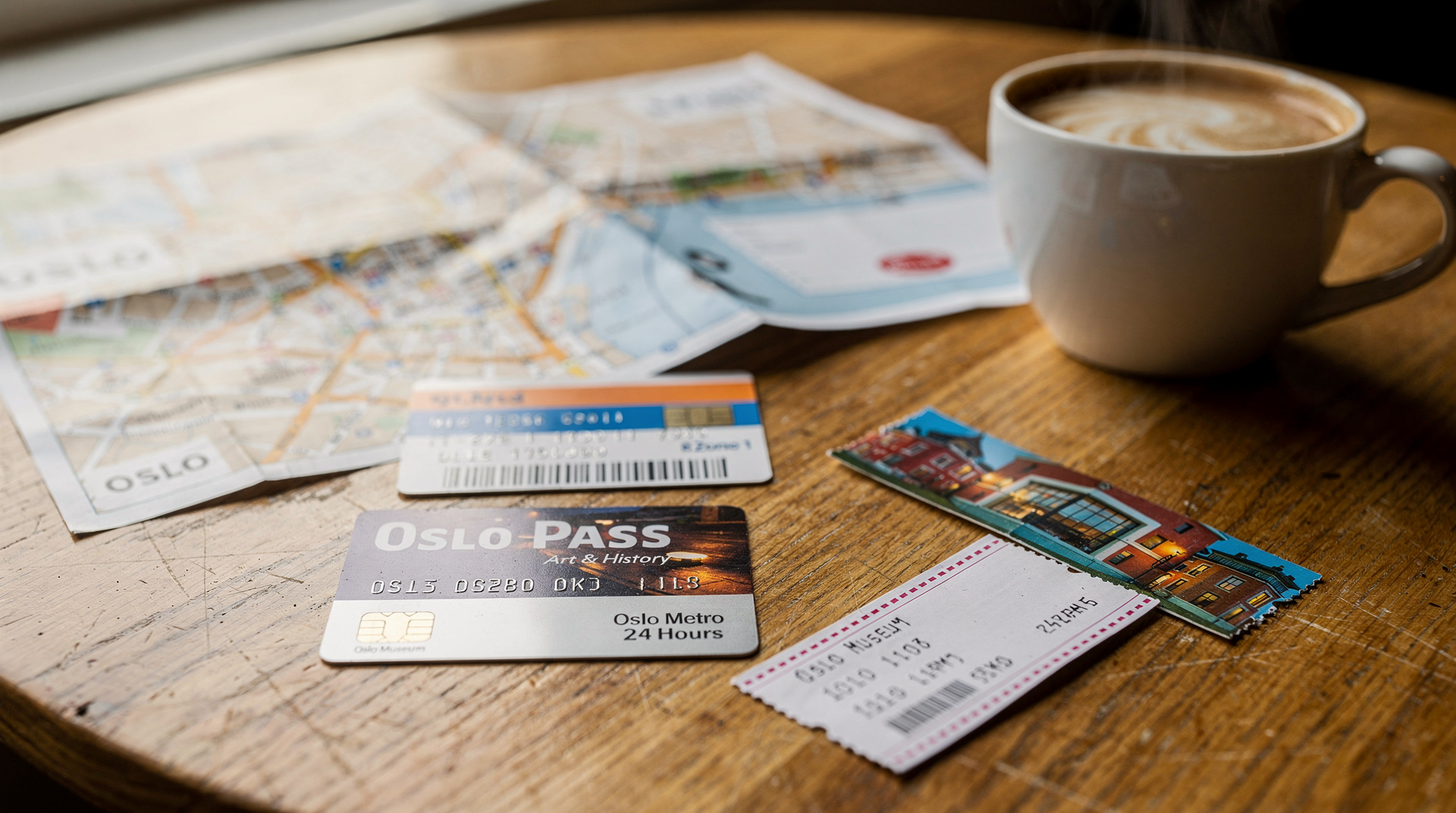
Both central Viking sites sit close to Karl Johans gate, so walking is usually the most pleasant way to link them, and you pass the Royal Palace area on the way. For anything further, the getting around Oslo guide and the Ruter public transport guide cover tickets and routes, including the Bygdøy bus and ferry. If you are deciding whether a pass makes sense for the museums on your list, read whether the Oslo Pass is worth it before you buy.
Pairing Viking history with the rest of the city
A Viking-focused day does not have to be only Vikings. On Bygdøy, the Norsk Folkemuseum, the Fram Museum and the Kon-Tiki Museum show how Norwegians have lived with and crossed the sea across many centuries. If the Borre trip appeals, compare it with the other options in best day trips from Oslo so you pick the excursion that suits your time. And for the water itself, the Oslofjord page is a good starting point for islands and cruises.
The honest approach is to treat Viking sites as one thread in your trip rather than the whole plan. A few focused hours with the Oseberg treasures and the VR longship, followed by a walk or a fjord outing, gives a fuller and more relaxed picture than trying to tick off every site in a single marathon day.
Is it worth visiting Viking sites while the ship museum is closed?
Yes, for almost everyone. The physical ships are extraordinary, but the Oseberg burial goods at the Historical Museum — the wagon, sleighs, and gold hoard — are themselves a world-class collection, and Viking Planet fills the sensory, “what did it feel like” gap that a static museum never could. Genuinely completist Viking enthusiasts may prefer to wait for the 2027 reopening, but most travellers will leave Oslo with a strong sense of Viking history regardless. See our dedicated Viking Ship Museum status guide for the full closure timeline before you plan around it.
Summary: Viking Oslo in 2026 ranked by time/value
| Site | Cost | Time | Best for |
|---|---|---|---|
| Historical Museum | NOK 140 (~USD 15) | 1.5-2 h | Artefacts, quiet, depth |
| Viking Planet | NOK 249 (~USD 27) | 1 h | Families, experience, VR |
| Norsk Folkemuseum | NOK 180-220 | 3-4 h | Context, buildings, setting |
| Borre mounds (day trip) | Free | 30 min + 3 h travel | Serious Viking enthusiasts |
| Oslofjord cruise | NOK 299-450 | 1-3 h | Landscape, atmosphere |
For the full museum picture, see our Oslo museums ranked guide. For overall Oslo planning, start with top things to do in Oslo and how many days in Oslo.
Frequently asked questions about Where to see Vikings in Oslo
Are the actual Viking ships on display anywhere in Oslo?
No — not in 2026. The Oseberg, Gokstad, and Tune ships are in conservation storage during the renovation of the Viking Ship Museum (reopening ~2027). You cannot view the physical ships anywhere in Norway right now.What is the best Viking experience in Oslo right now?
For most visitors, the best combination is Viking Planet in the morning (VR longship experience, about 1 hour, NOK 249 per adult) and the Historical Museum in the afternoon (Oseberg gold and artefacts, NOK 140 per adult). Together they give a comprehensive picture of Viking culture and history.Is the Oseberg collection at the Historical Museum impressive?
Yes, genuinely so. The Oseberg gold hoard is one of Norway's finest treasures, and the burial goods — the wagon, sleighs, animal-head carvings — are extraordinary even without the ship itself. Many visitors are surprised to find it almost empty of crowds compared to the old Viking Ship Museum.Are there Viking burial mounds near Oslo?
The best are at Borre National Park near Horten, about 90 km southwest of Oslo. It holds the largest cluster of Viking Age burial mounds in Scandinavia, set in a forest by the fjord. Easily reached by train to Skoppum then local bus. Free to visit and well worth a half-day.Is there Viking content on the Oslofjord?
Not in a museum sense, but the fjord itself is the Viking landscape. Cruises from Aker Brygge travel through the same waterways that Norse sailors used. The silent electric boat cruise passes several historically significant shoreline locations.How much time should I budget for Viking sites in Oslo?
Three to four hours for Viking Planet and the Historical Museum together, since both sit within a 15-minute walk of each other near Karl Johans gate. Add a full day if you also want to visit Borre burial mounds near Horten, which requires roughly 80 minutes of train travel each way plus a local bus connection.Should I wait until 2027 to visit Oslo for Viking history?
Not unless you specifically need to see the physical ships. The Historical Museum's Oseberg treasures and Viking Planet's VR experience together give most visitors a strong sense of Viking history now, with smaller crowds than the old museum ever had.
Top experiences
Bookable activities with verified prices and instant confirmation on GetYourGuide.