Oslo on a budget: our real weekend spend, itemised in NOK
Oslo: Oslo Pass with public transport and free museum entry
Duration: 24-72 hours
- Instant confirmation
- Free public transport
- Skip museum queues
Before I give you the numbers
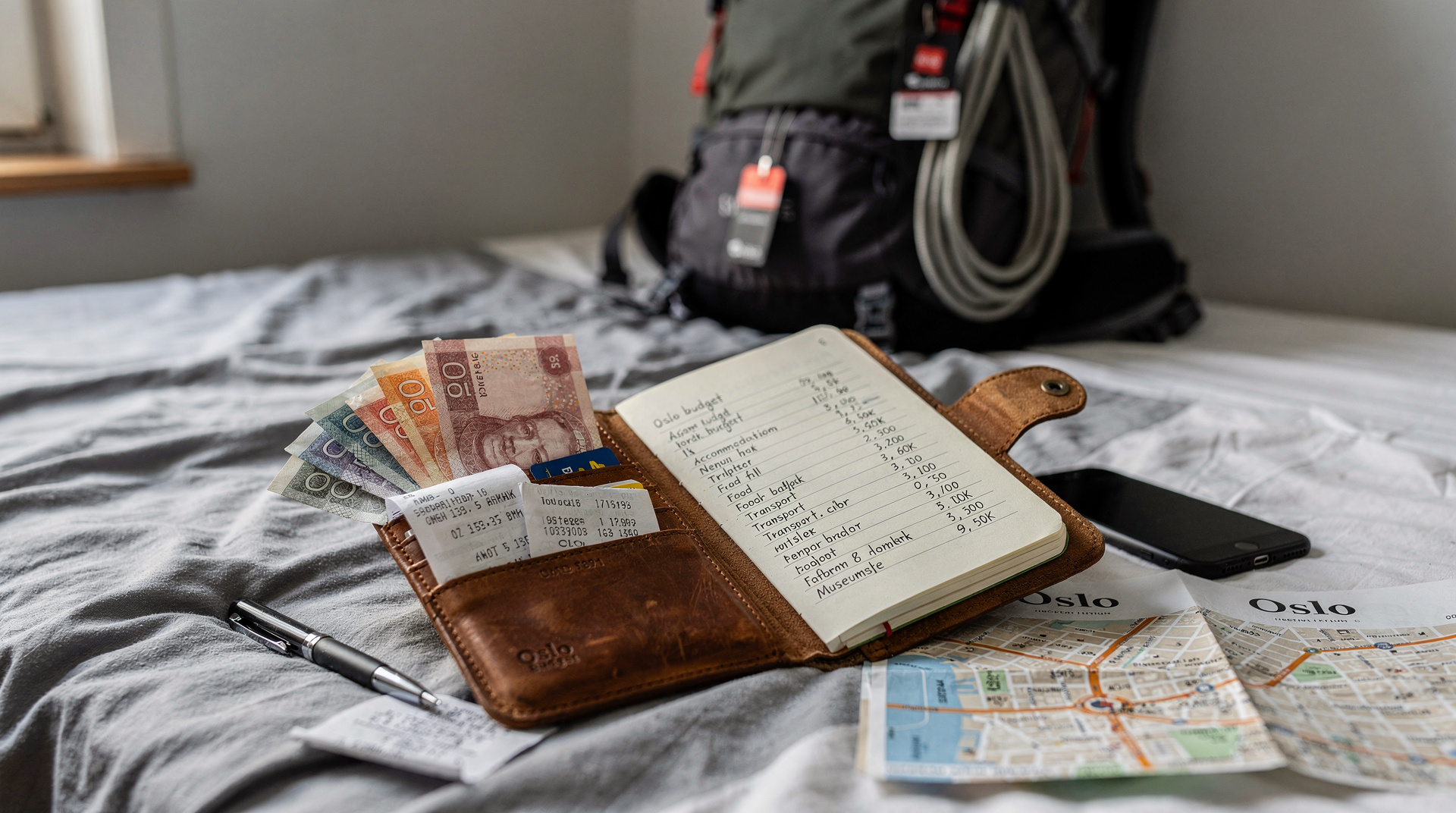
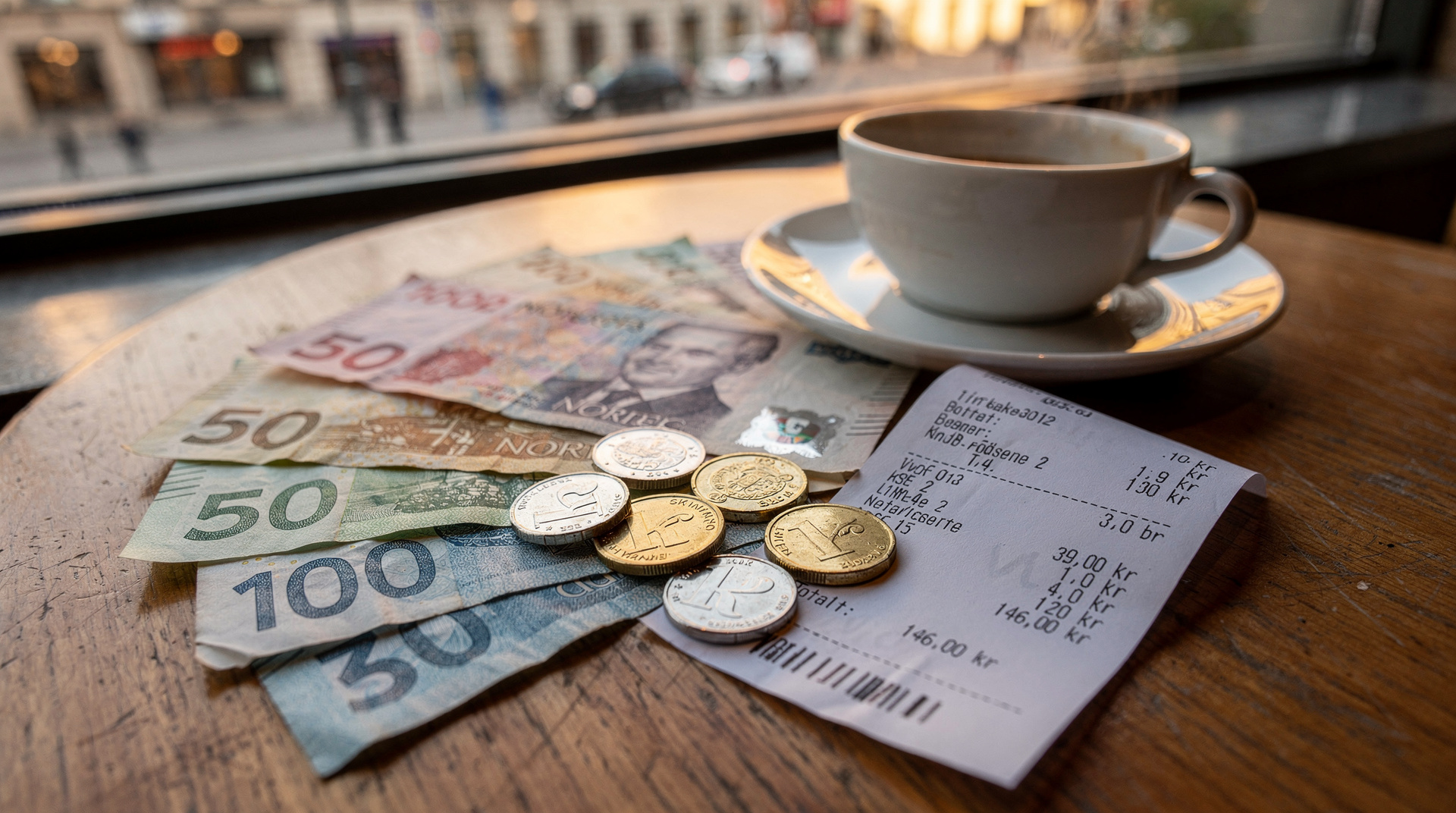
I want to be clear about what this post is and is not. This is a record of what one person actually spent on a Friday-to-Sunday trip to Oslo, with real figures from real receipts. It is not an aspirational budget that requires a level of discipline that most real travellers cannot sustain for three days. It is not a worst-case scenario designed to shock. It is just what happened.
| Where | Grønland hostel base, city-centre sights |
| Cost | around NOK 2,281 total for the weekend, flights excluded |
| Time needed | a Friday evening to Sunday afternoon weekend |
| Getting there | Vy regional train from Gardermoen |
| Best time | any season — this trip was done in January |
The trip was in January 2024. Flights from London were not included in the budget because those are so variable as to be meaningless in a cost-of-visit analysis. The ground costs begin when I walked out of Oslo Airport Gardermoen on Friday evening and end when I walked back in on Sunday afternoon.
The relevant exchange rate context: in early 2024, 1 USD bought approximately 10.5 NOK. By mid-2026, the rate had moved to approximately 9.3 NOK to the dollar. I will give all figures in NOK with USD equivalents in parentheses at the 9.3 rate, since that is more useful for current visitors.
Friday: arrival and the first shock
The first thing that happens to most visitors arriving at Oslo Gardermoen is the airport-to-city transport decision. The Flytoget express train to Oslo Central Station takes 19 minutes and costs NOK 229 (USD 25). The regional Vy train takes 23 to 27 minutes and costs NOK 118 (USD 13). The taxi from the airport to the city centre costs NOK 700 to 900 (USD 75 to 97) depending on traffic.
I took the Vy train. The difference in journey time was negligible, the difference in price was 50%, and the train was perfectly comfortable. This is a decision I would make again immediately.
Friday transport: NOK 118
I stayed in a hostel dorm on Grønland — a neighbourhood that is genuinely excellent value and centrally located, despite not being in the guides that focus on Aker Brygge. The hostel dorm was NOK 350 (USD 38) per night. A budget private room in the same area ran NOK 750 to 950 (USD 81 to 102). A mid-range hotel in the city centre, for context, was NOK 1,400 to 2,200 (USD 151 to 237). Accommodation is where the Oslo budget lives or dies.
Friday accommodation: NOK 350
Dinner on Friday was a deliberate exercise in budget-eating. I had read the budget eats guide before arriving and followed its recommendation of the food court at Oslo City shopping centre, which has a range of options from NOK 110 to 170 for a full meal. I spent NOK 145 (USD 16) on a bowl-based dinner that was genuinely adequate.
A beer in the hostel bar: NOK 89 (USD 10). This is Oslo’s floor for draught beer in a reasonably priced venue. In a standard bar or restaurant, expect NOK 100 to 130. In a hotel bar, do not ask.
Friday food and drink: NOK 234
Friday total: NOK 702 (USD 75)
Saturday: the real day
Saturday was an ambitious day. I had planned to visit the National Museum (free entry on certain days — it is worth checking the website, as occasional free-entry events are scheduled), walk to the Opera House roof (free), and do the Aker Brygge waterfront.
The Ruter day pass covers unlimited bus, tram, metro, and local ferry travel. NOK 115 (USD 12) for a 24-hour pass. If you are making more than about three trips in a day, this is better value than single tickets at NOK 42 (USD 4.50) each.
Transport: NOK 115 for the day pass
The National Museum admission was NOK 200 (USD 22). This is the largest collection of Norwegian art in the world, including the most well-known version of Munch’s The Scream, housed in a building that is genuinely one of Oslo’s great recent architectural achievements. The NOK 200 was easily the best value of the weekend. The museum is closed Mondays.
Lunch was a coffee (NOK 52, USD 6) and a pastry (NOK 45, USD 5) from a bakery near Aker Brygge. This is the Oslo budget lunch: a coffee and a quality baked item from a good bakery costs NOK 90 to 120 (USD 10 to 13) and is far better value than a restaurant meal at the same time of day.
Lunch: NOK 97
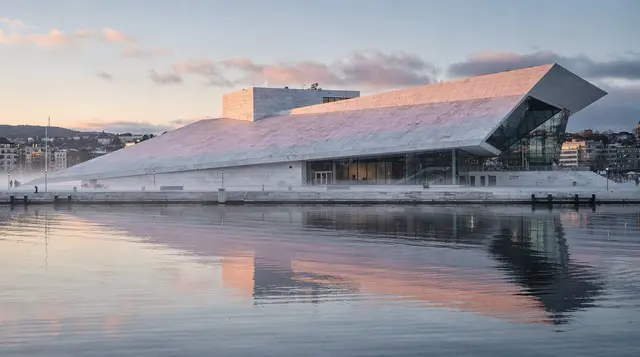
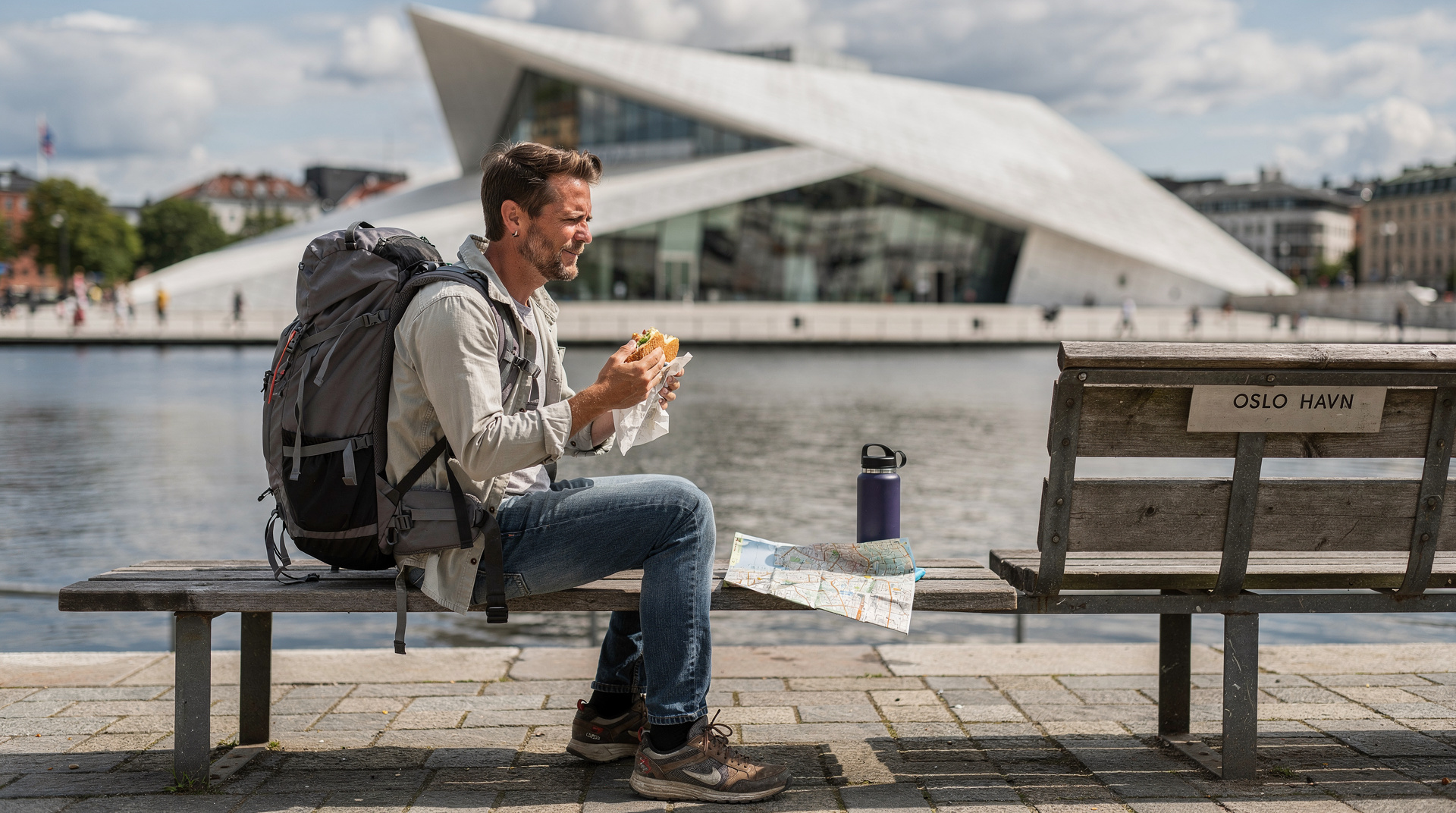
The Opera House roof was free. I spent approximately an hour and a half there. The sun was low and the fjord was silver-grey and very beautiful. Zero cost.
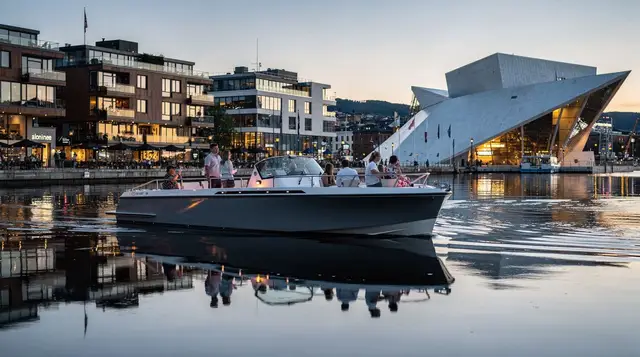
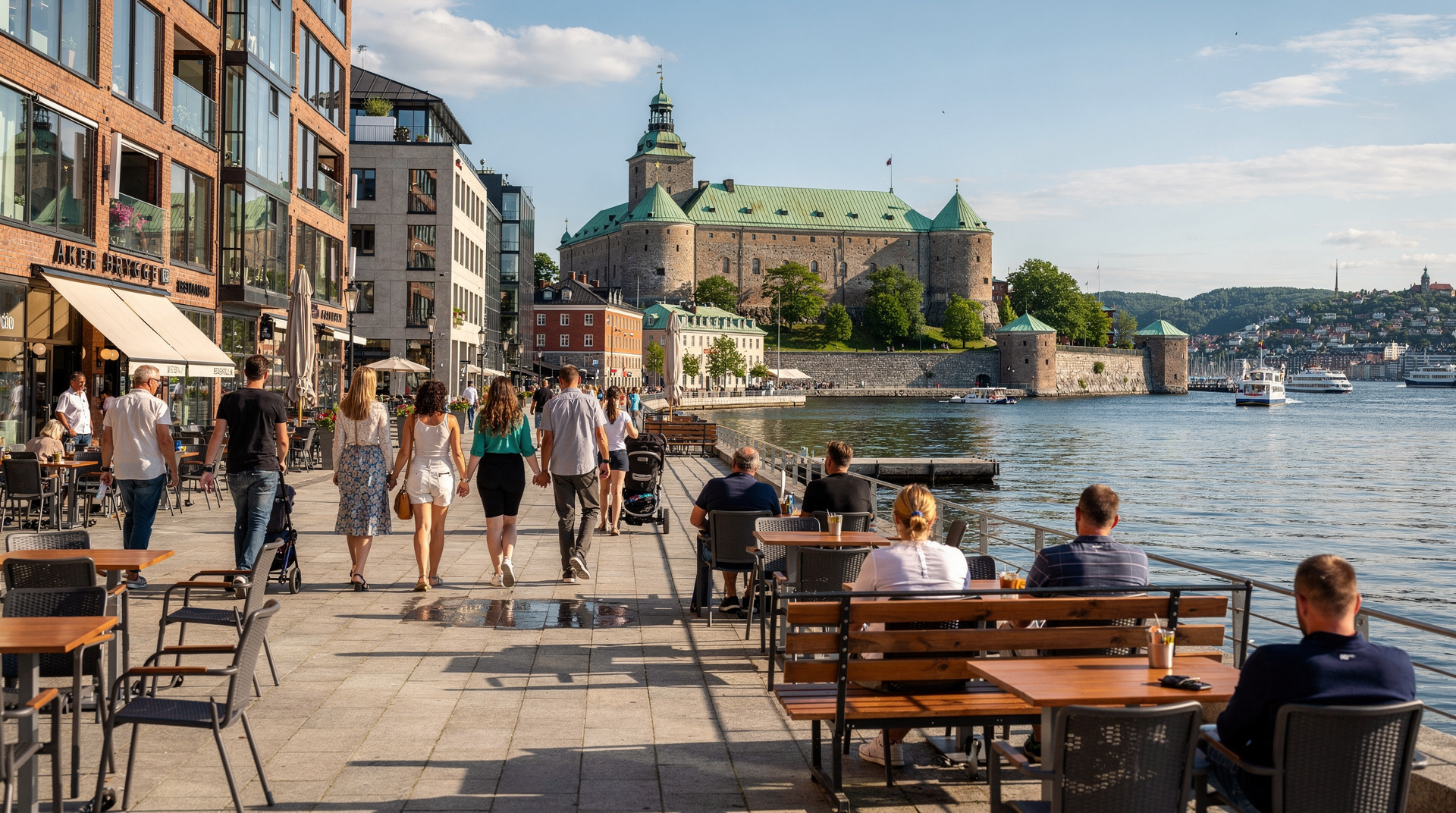
The afternoon involved walking the Aker Brygge and Tjuvholmen waterfront, which is entirely free and very pleasant. A hot chocolate from a kiosk: NOK 65 (USD 7).
Dinner was the decision that would break or save the budget. I chose a Thai restaurant on Grønland that had been recommended by the hostel staff. Two courses and a soft drink: NOK 285 (USD 31). This is genuinely inexpensive by Oslo standards — the equivalent of what you might pay in Berlin or Amsterdam for a similar meal.
One evening beer at a pub near Grønland: NOK 95 (USD 10).
Saturday food and drink total: NOK 594
Saturday total: NOK 909 (USD 98) — accommodation separate
Sunday: the check-out economics
Sunday involved checking out, leaving luggage at the hostel (NOK 40, USD 4.30), and doing the Vigeland Sculpture Park before the airport.
Vigeland is free. 212 bronze and granite sculptures, the most ambitious work of a single sculptor in any public park in the world, in one of Oslo’s finest parks. No admission. This is one of Oslo’s great genuine values, and the Frogner Park surroundings are excellent for a winter walk.
Late breakfast at a café in Frogner: NOK 175 (USD 19) for eggs, bread, coffee. This is a mid-range Oslo café brunch at weekend prices. Budget option (bagel from a kiosk near the park): approximately NOK 65 to 85.
Vy train back to the airport: NOK 118 (USD 13).
Sunday total: NOK 333 (USD 36) — accommodation not applicable
The weekend totals
Accommodation: NOK 700 (two hostel dorm nights at NOK 350 each) Transport: NOK 351 (airport × 2 + day pass) Meals and drinks: NOK 925 Entrance fees: NOK 200 Miscellaneous: NOK 105
Total: NOK 2,281 (USD 245) for a full weekend in Oslo excluding flights
The weekend at a glance
| Day | Transport | Accommodation | Food & drink | Other | Day total |
|---|---|---|---|---|---|
| Friday | NOK 118 | NOK 350 | NOK 234 | — | NOK 702 |
| Saturday | NOK 115 | (already counted) | NOK 594 | NOK 200 entry | NOK 909 |
| Sunday | NOK 118 | — | NOK 175 | NOK 40 luggage | NOK 333 |
The pattern worth noticing: transport and entrance fees were the smallest categories by far. Accommodation and food together account for nearly 90% of the total, which is the honest lesson for anyone building their own Oslo budget — control those two categories and the rest takes care of itself.
For additional analysis of what this cost compares to at different accommodation levels, the Oslo trip cost guide builds out three budget tiers (backpacker, mid-range, and comfort) with realistic day-by-day assumptions. The is Oslo expensive guide provides honest context about where the city’s reputation for high costs is justified and where it is not.
What I learned
The honest conclusion from this exercise is that Oslo is expensive, full stop. At NOK 2,281 for a weekend of genuinely satisfying but hardly lavish travel, I was spending significantly more than I would have in Prague, Lisbon, or Warsaw for a comparable experience.
But the money went somewhere real. The public transport was excellent and ran exactly on time. The museums were world-class. The café coffee was genuinely good. The hostel was clean and well-run. Oslo’s prices are not the prices of a city extracting maximum revenue from captive tourists; they are the prices of a city where the actual cost of running things is high, and where even the bottom of the market reflects that.
The free things to do in Oslo guide documents the city’s considerable free offering — the Opera roof, Vigeland, the harbour walk, the forest trails, several of the best views. Oslo rewards visitors who plan carefully and do not assume that the default option in every situation is the best one.
The budget weekend itinerary builds a full two-day plan around the free and low-cost options, which is a useful supplement to the raw numbers above. It is entirely possible to have a genuinely excellent Oslo weekend for the NOK 2,000 to 2,500 range — but it requires knowing where you are spending and why.
What I would do differently
Looking back, the single biggest lever I did not pull was accommodation. A hostel dorm at NOK 350 a night was already the budget option, but sharing a private room between two people would have brought the per-person cost down further while adding privacy and comfort. The where to stay in Oslo guide covers neighbourhood trade-offs for exactly this kind of decision.
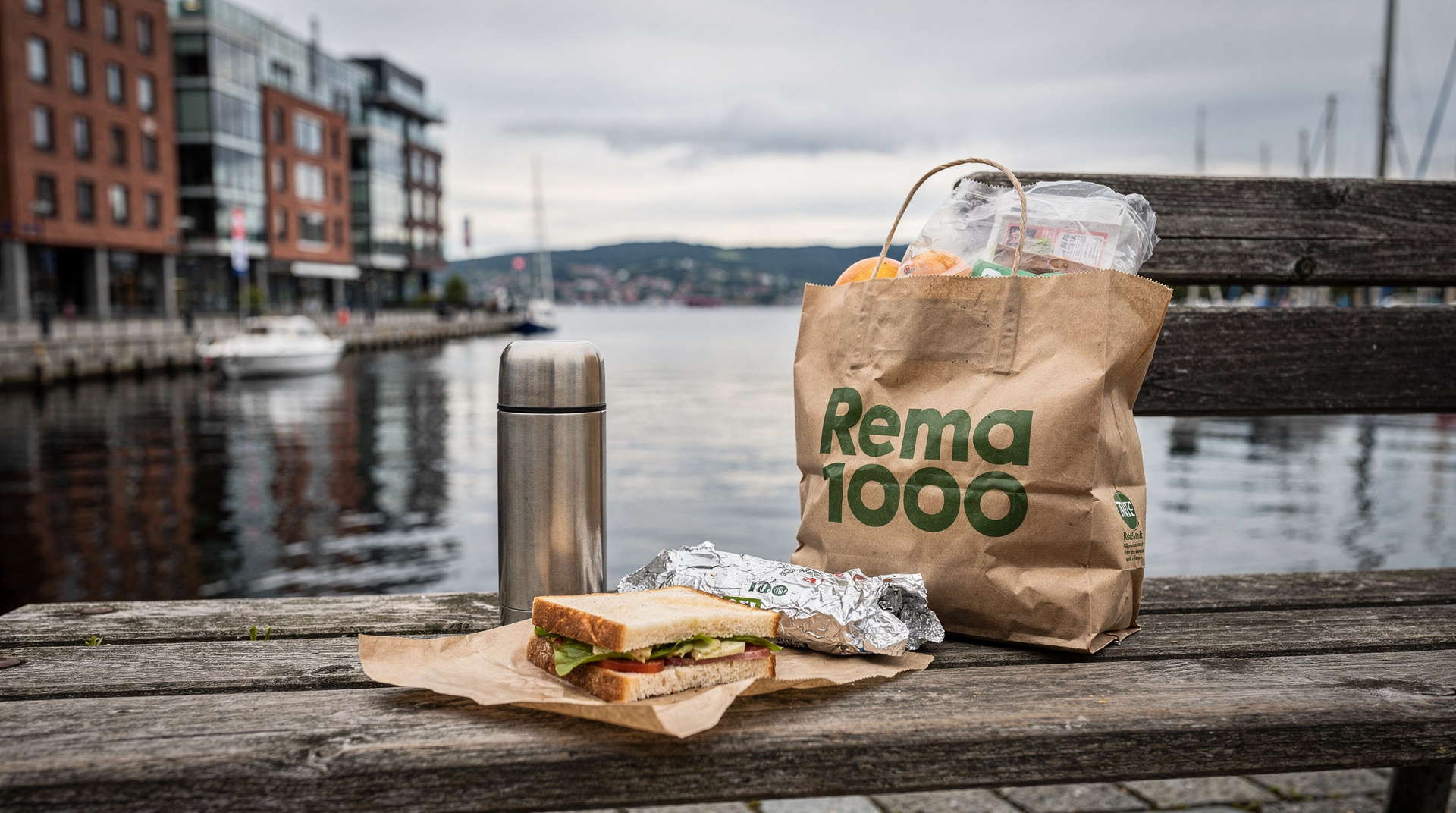
The second lever is grocery shopping. I did not do this on this particular trip, and in hindsight one supermarket breakfast (a Rema 1000 or Kiwi loaf, cheese, and juice for well under NOK 100 total) would have saved NOK 100 to 150 across the weekend versus café breakfasts, with essentially no loss of quality for that particular meal.
Top experiences
Bookable activities with verified prices and instant confirmation on GetYourGuide.