Oslo's design scene: Scandinavian craft, the National Museum, and where to shop
Oslo: National Museum of Norway entry ticket
Duration: Flexible
- Instant confirmation
- Mobile ticket
The city that built quality into its everyday life
There is a design philosophy embedded in ordinary Norwegian life that takes most visitors a few days to identify. It shows up in the way a café arranges its chairs. It is visible in the particular typeface used by Oslo’s public transport system. It appears in the hardware stores, in the sports shops, in the simple, precise forms of the textiles sold in neighbourhood boutiques that nobody has written a travel article about.
Norwegian design is not about maximalist statement or fashion-forward novelty. It is about the considered relationship between form and function — objects made to be used well, by people who will use them repeatedly, in conditions that include very cold winters and a cultural preference for the understated. This tradition has deep roots and a contemporary vitality, and Oslo is the best place in Norway to encounter it.
| Where | National Museum (Aker Brygge), Grünerløkka, Tjuvholmen |
| Cost | around NOK 150–200 for museum entry, shopping variable |
| Time needed | half a day for museums, a full afternoon with shopping |
| Getting there | walkable from the centre, or tram to Grünerløkka |
| Best time | weekday mornings for quieter design galleries |
The National Museum: the essential starting point
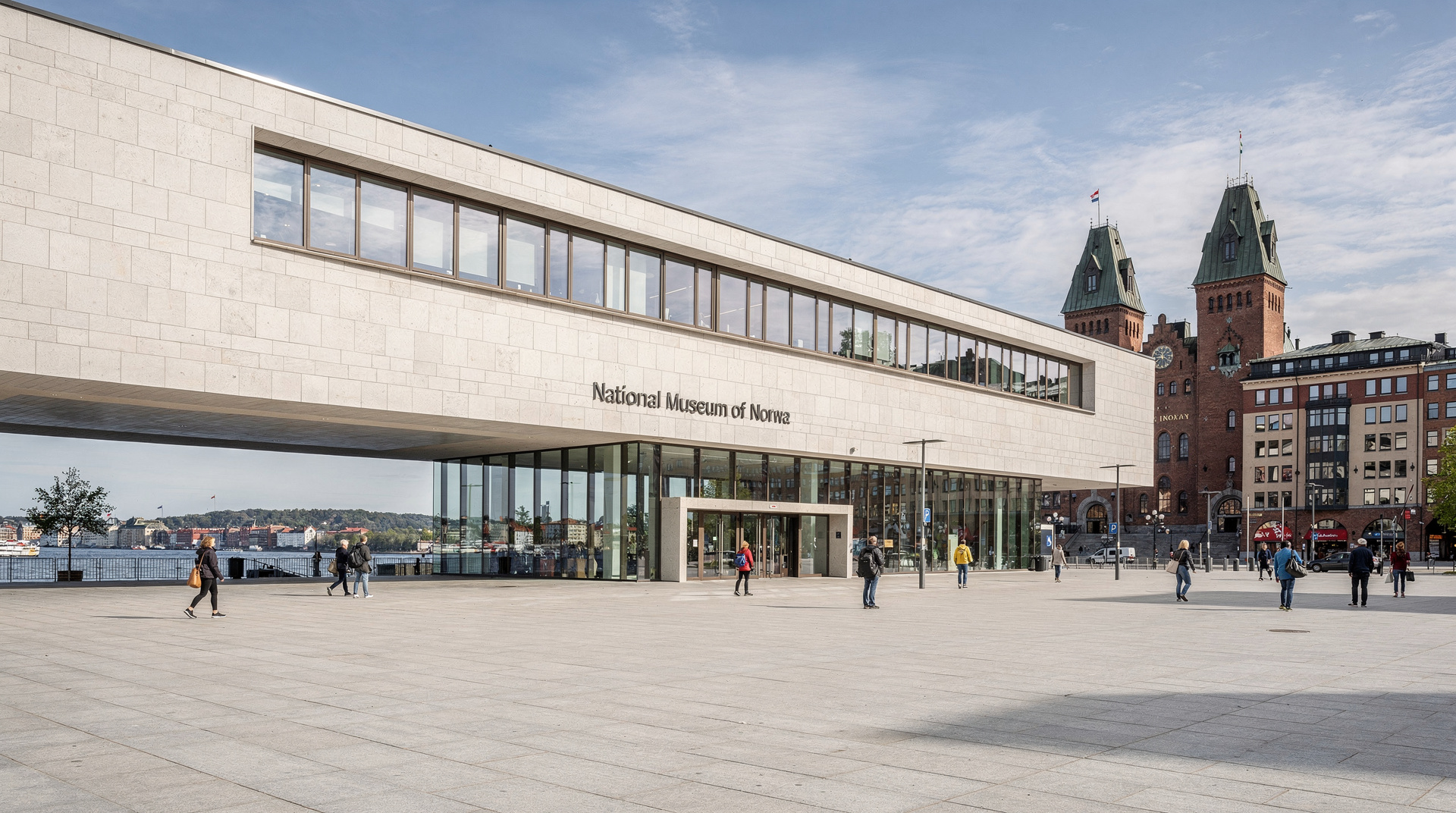
The National Museum, which reopened in its vast new building on Aker Brygge in 2022, is Oslo’s most important cultural institution and its design collection is central to understanding the whole Norwegian aesthetic tradition.
The museum holds Norway’s most significant collection of applied arts and design alongside its collections of paintings, sculpture, and architecture. The furniture, ceramics, glass, and textiles collection documents the development of Norwegian design from folk craft traditions through the Arts and Crafts period, the modernist revolution of the mid-twentieth century (when Norwegian designers like Arne Korsmo were producing furniture that influenced the whole European modernist tradition), and into the contemporary work of designers like Anderssen and Voll and Andreas Engesvik.
The applied arts galleries are often less crowded than the painting galleries — visitors come for Munch and the masters, not always aware that the furniture and ceramic collections are as significant. This is worth knowing because it means you can sometimes have the design galleries to yourself on a quiet morning.
Admission is NOK 200 (USD 22). The building itself — designed by Kleihues and Kleihues in collaboration with Norheim, Gjertsen and Slaatto — is worth studying architecturally. The sequence of rooms, the handling of light through the tall galleries, and the rooftop terrace with its views over the fjord demonstrate exactly the quality of spatial thinking that Norwegian design education emphasises.
Grünerløkka: where the living design scene is
If the National Museum shows you where Norwegian design came from, the Grünerløkka neighbourhood is where you find what it looks like right now.
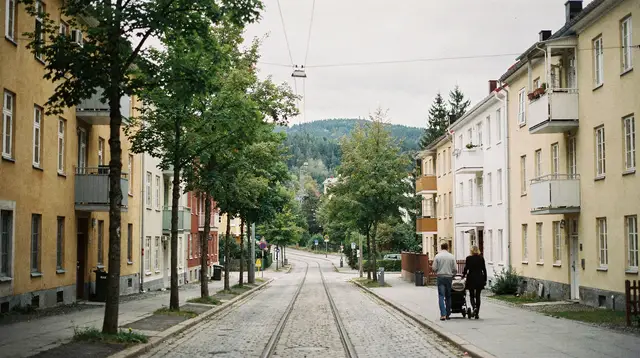
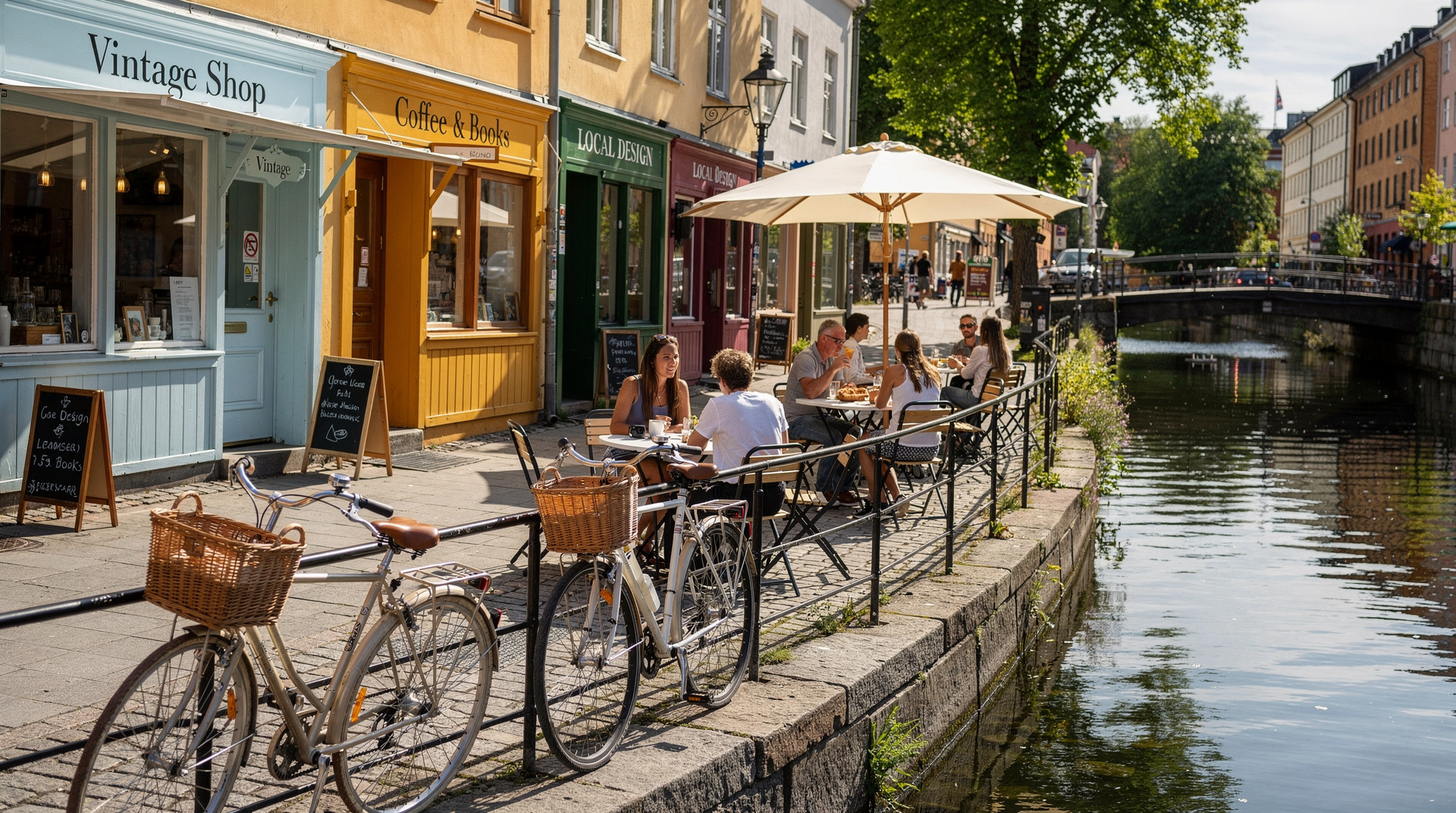
The district northeast of the city centre, centred on Thorvald Meyers gate and the streets radiating from it, is Oslo’s most interesting neighbourhood for independent shops, studios, and galleries. It is also where most of Oslo’s designers under 40 live and work, which means that what the neighbourhood shops are selling reflects genuine local taste rather than curated Scandinavian exports.
A few specific places worth knowing about:
Blå is primarily a music venue but its adjacent concept space stocks design objects, books, and clothing from Norwegian and Scandinavian makers. The curation is genuinely good and the price points range from accessible to significant.
Vestkanttorget flea market runs on weekends in Frogner, about 20 minutes by tram from Grünerløkka, and is one of the better sources of vintage Norwegian design in the city. The ceramics and glass from the 1950s to 1980s Norwegian industrial tradition — Porsgrunn porcelain, Hadeland glass — appear regularly and are still underpriced relative to their design significance.
The side streets off Thorvald Meyers gate — Markveien, Helgesens gate, Schleppegrells gate — have the highest concentration of independent design shops. The turnover in individual shops is reasonably high, so specific recommendations date quickly, but the character of the neighbourhood has been consistent for a decade: craft studios, design boutiques, furniture restorers, and the occasional architects’ office with a retail window.
For more on the neighbourhood and its food and café culture, the Grünerløkka neighbourhood guide covers the full picture.
The design tradition in three objects
If I had to explain Norwegian design through three objects, I would choose: the Stokke Tripp Trapp highchair (1972, Peter Opsvik), the Porsgrunn blue-and-white everyday ceramic range, and a pair of Åsnes cross-country skis.
None of these are luxury objects. All of them are products designed for use in real Norwegian conditions — the high chair that grows with the child; the everyday ceramics that are neither precious nor disposable; the skis that enable the Oslo commuter to travel through Nordmarka in January. Norwegian design at its best is the design of things that make ordinary life more functional and more beautiful simultaneously.
This philosophy shows up throughout the city’s architecture too. The Oslo S railway station, the Ruter bus shelters, the Holmenkollen ski jump, the Opera House — all demonstrate a consistent commitment to quality in public infrastructure that is expensive to maintain but creates a pervasively high standard of built environment.
Where architecture and design overlap in the city
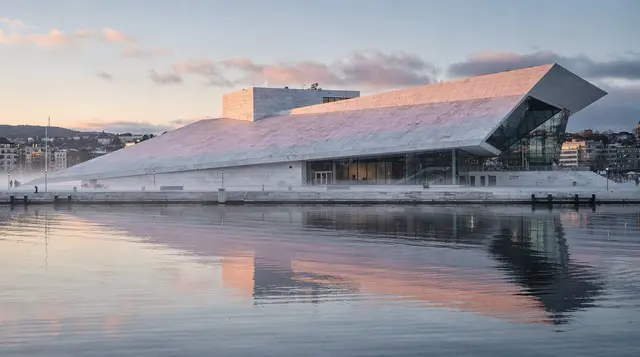
Beyond the museums, Oslo’s design sensibility is visible in its public buildings, and a short architectural walk makes the point better than any single museum visit. The Opera House at Bjørvika, with its sloping walkable marble roof, is the clearest large-scale expression of the same values found in the National Museum’s applied arts collection: material honesty, restraint, and a building designed to be used rather than simply admired.
The Akershus Fortress offers the historical counterpoint — centuries of Norwegian building tradition predating the modernist movement entirely, worth seeing on the same day to understand how far the design language has travelled.
If the architecture side interests you, the district around the Opera House is covered in the Bjørvika destination page, and our longer piece on the Opera House looks at the building in more detail. The waterfront quarter of Aker Brygge and Tjuvholmen is the other place where contemporary architecture and art sit side by side.
A practical half-day design itinerary
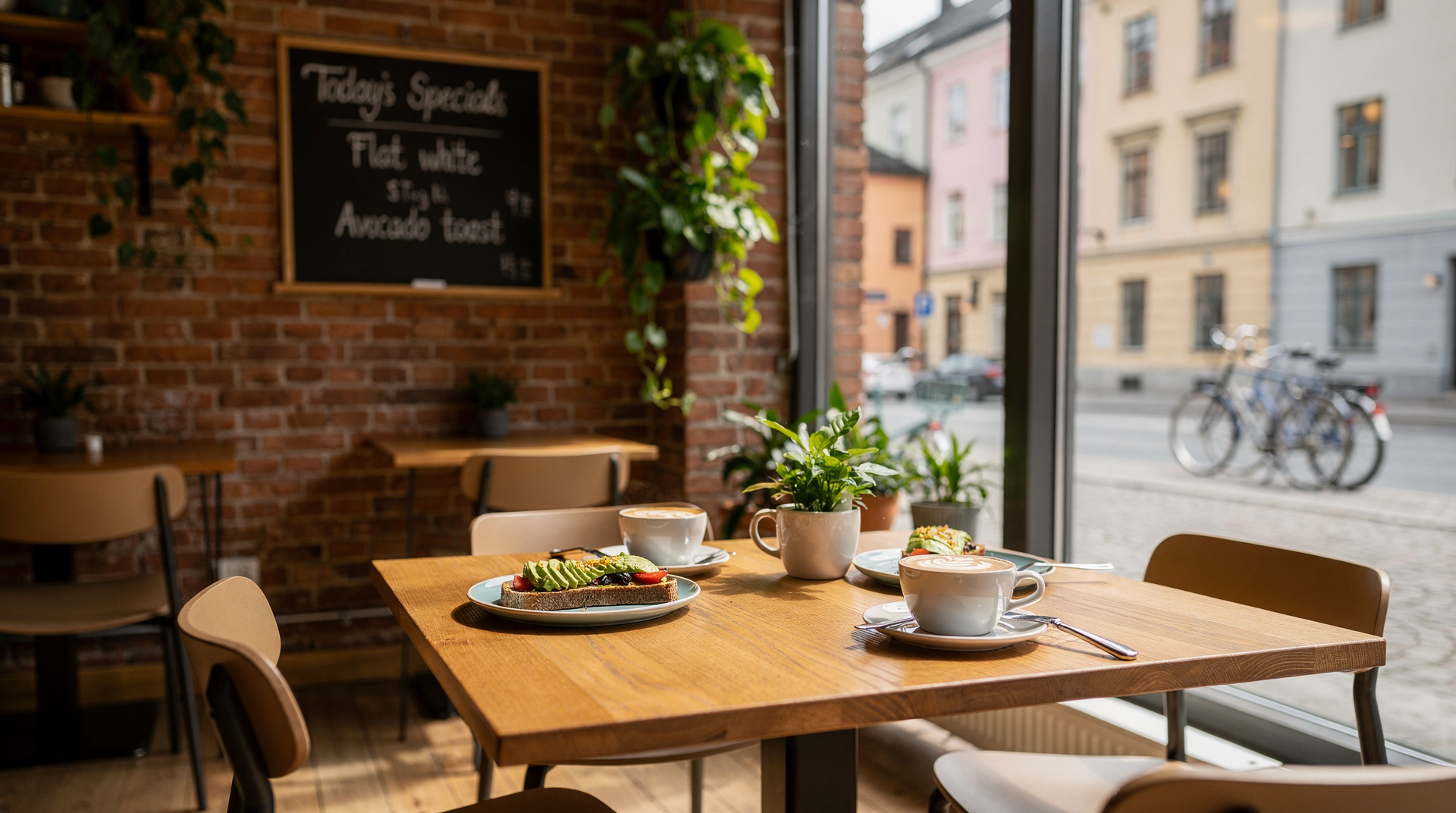
For visitors with limited time, we suggest: start at the National Museum for the historical and applied arts context, walk 20 minutes to Grünerløkka for the independent shops and studios, and finish at the Astrup Fearnley in Tjuvholmen for contemporary art and the museum shop. This sequence moves roughly chronologically from tradition to the present and takes about five hours including a coffee stop, pairing naturally with the coffee culture guide for where to pause along the way.
The Astrup Fearnley and contemporary Norwegian art
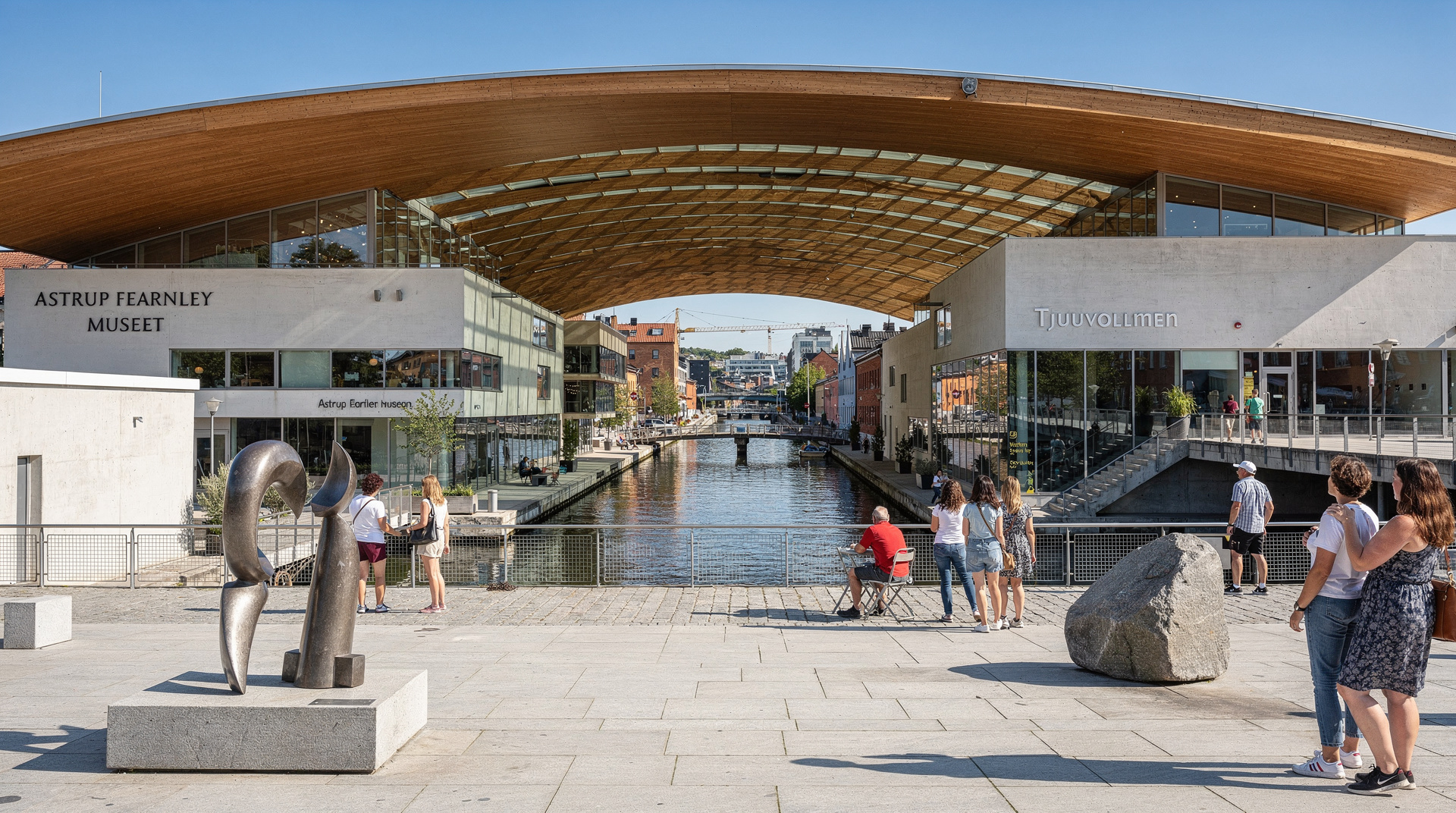
Adjacent to the design conversation is the Astrup Fearnley Museum in Tjuvholmen, which is Oslo’s strongest contemporary art institution and one of the best private-collection museums in Scandinavia.
The museum building, designed by Renzo Piano and opened in 2012, is worth the visit independently of what is inside: a glass-and-timber structure on the water’s edge with a canal running through it and a public promenade along the fjord. The collection includes significant works by Jeff Koons, Cindy Sherman, and the Norwegian artist Bjarne Melgaard, as well as contemporary Norwegian artists who are not yet well-known internationally.
Admission is NOK 150 to 180 (USD 16 to 19). The museum shop is genuinely one of Oslo’s better design shops, stocking catalogue publications, prints, and design objects at a range of price points.
Shopping: what to actually buy and what to skip
The honest assessment of Oslo design shopping is that the best objects are expensive and the budget options are mostly the same international brands available everywhere in Europe.
Norwegian wool is genuinely worth buying. Icebreaker merino, Dale of Norway sweaters, and the various Åsnes and Madshus technical outdoor products represent quality that justifies Oslo prices. The outdoor gear shops on Karl Johans gate and in Aker Brygge stock the full range.
Norwegian craft ceramics, particularly from the independent ceramicists working in Grünerløkka, are another category where Oslo represents good value relative to equivalent quality in other European cities. A hand-thrown mug or bowl from a Grünerløkka ceramicist costs NOK 300 to 600 (USD 32 to 65) and is a genuinely distinctive object.
The Viking and troll souvenir category is best avoided, with the exception of the Norsk Folkemuseum shop at Bygdøy, which has some genuinely good reproductions of historical objects that are made in Norway rather than imported from Southeast Asia.
Because the best shops are not cheap, it helps to read how expensive Oslo really is before setting a souvenir budget, and the Frogner neighbourhood guide is a useful companion if you head out to the flea market.
For a weekend that combines design exploration with food and neighbourhood culture, the Oslo food and design weekend itinerary builds a two-day programme around the best of both worlds.
Top experiences
Bookable activities with verified prices and instant confirmation on GetYourGuide.