Scandinavia's greenest capital: how Oslo is actually doing it
Oslo: guided sightseeing fjord cruise on a premium silent electric boat
Duration: 2 hours
- Silent electric boat
- Free cancellation
- Best seller
What it actually means to be the European Green Capital
Oslo was named European Green Capital for 2019 — an EU designation that had not previously gone to a non-EU member (Norway is outside the EU but part of the EEA). The award recognised Oslo’s progress on climate action, urban biodiversity, sustainable transport, and waste management. It was not a self-congratulatory marketing exercise. The metrics were independently assessed, the targets were legally binding, and Oslo had actually met most of them.
| Designation | European Green Capital 2019 (EU award, non-EU winner) |
| Transport | Electric ferries, near-zero-emission transit fleet by 2028 |
| EV adoption | Roughly 90% of new car sales in Norway are electric |
| Green space | Nordmarka forest (~1,700 km²) borders the city, free access |
| Car needed? | No — walkable centre, extensive cycling and transit |
But what does it feel like on the ground? What is actually different about moving through Oslo compared with other European capitals? After several extended visits and a lot of conversations with Osloites who are neither naive about their city’s failings nor dismissive of its genuine progress, here is our honest account.
Electric everything (and we mean everything)
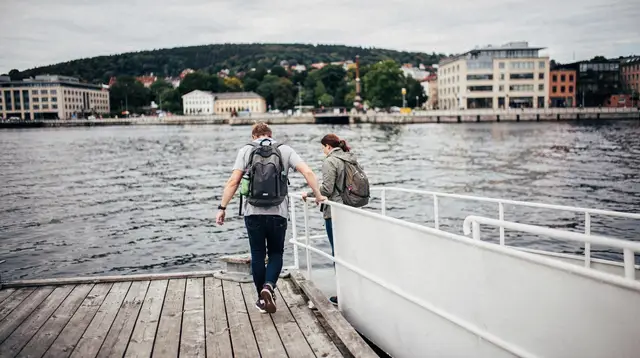
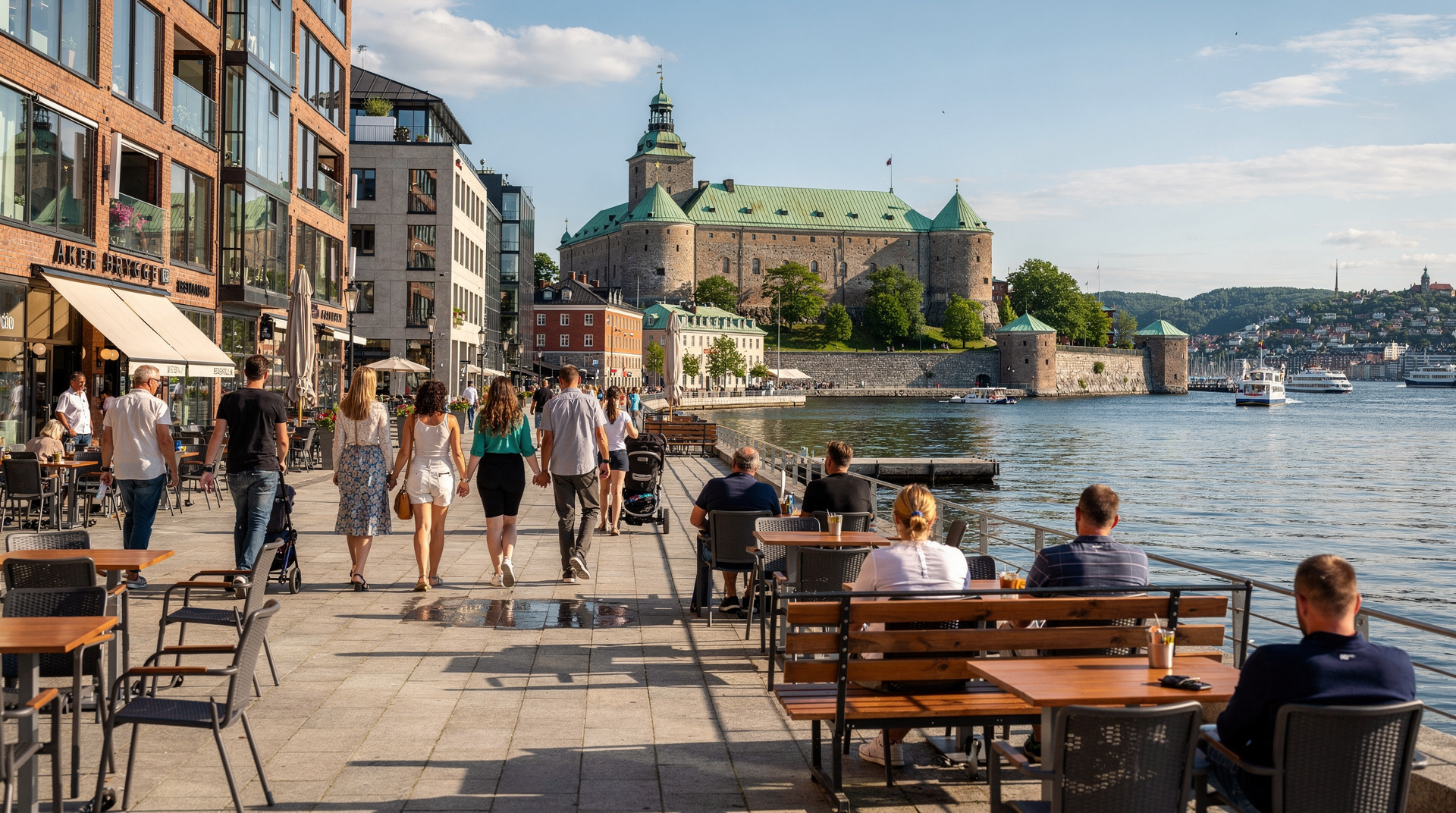
The most immediately visible thing about Oslo’s transport ecosystem is how quiet it is. The harbour ferries that cross between Aker Brygge and Bygdøy, or run from Rådhusbrygga out to the islands, run on electric motors. The fleet has been progressively electrified over the last decade, and the difference in the harbour atmosphere — no diesel rumble, no exhaust — is tangible. When you take the ferry to Bygdøy on a summer morning, the experience is genuinely more pleasant than it would be on a conventional combustion vessel.
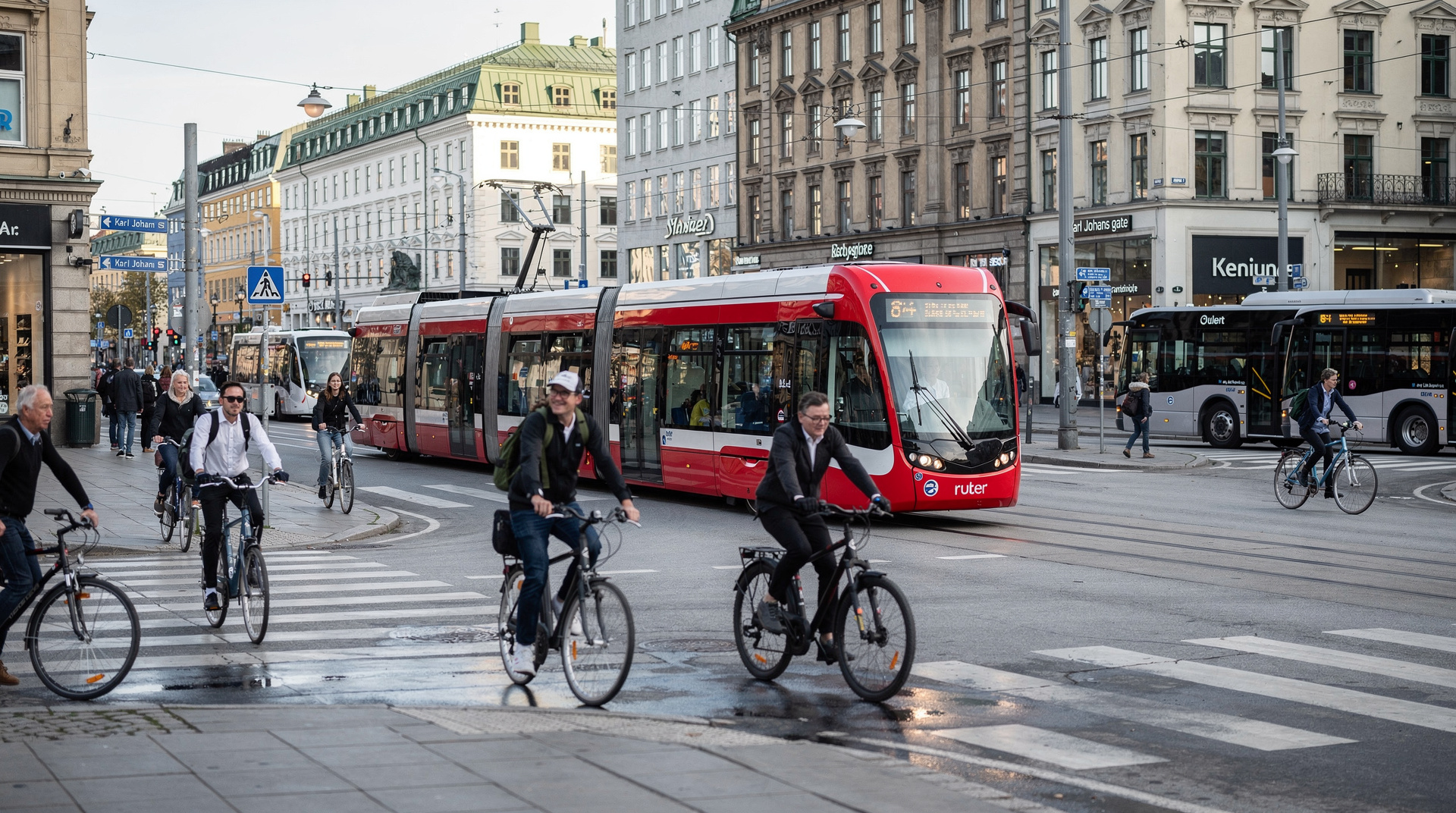
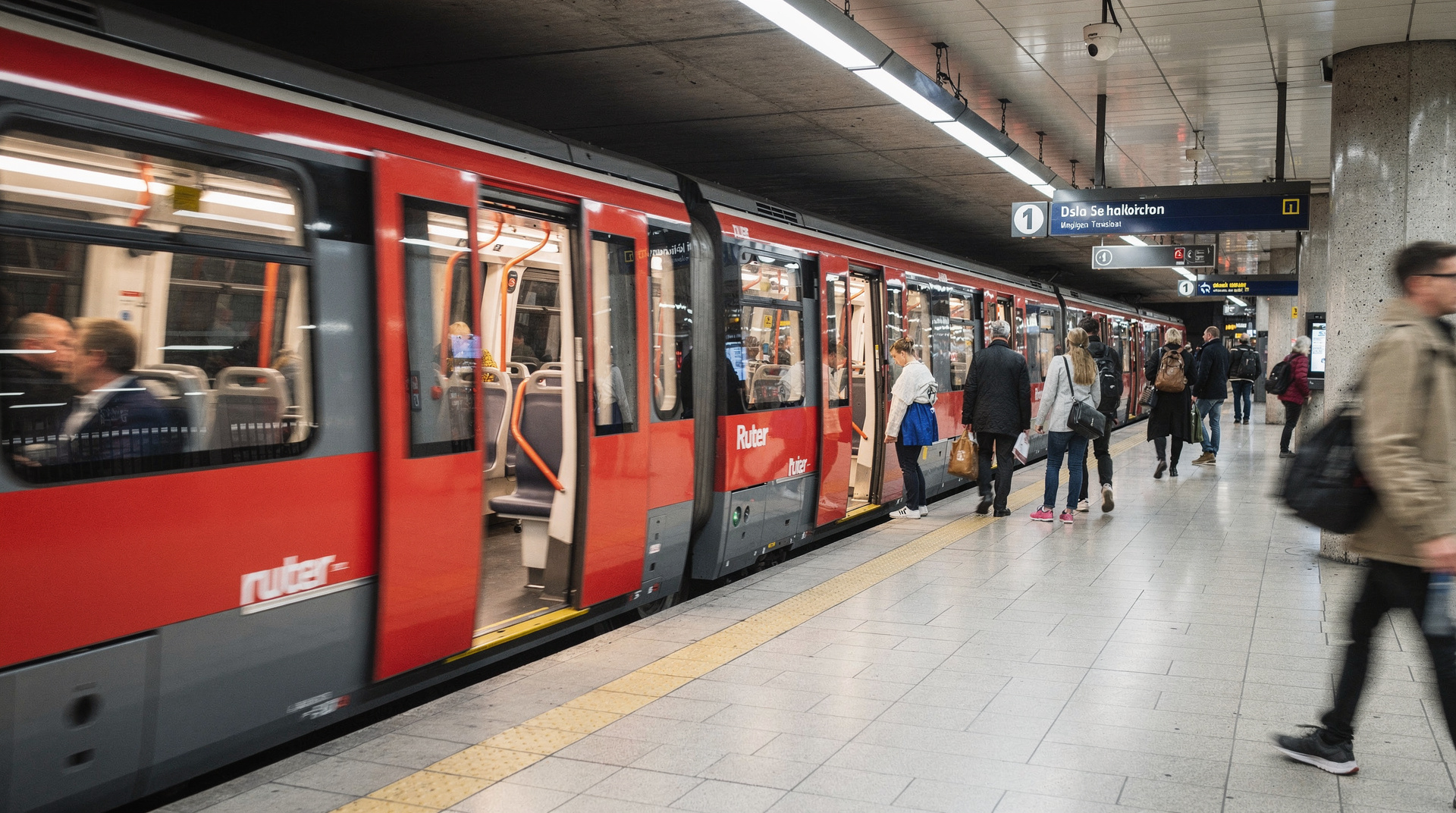
Ruter, the transit authority that manages Oslo’s public transport, has committed to a fully zero-emission fleet. The newer trams and many buses already run on electricity or hydrogen. By 2028, the plan is for every Ruter vehicle in service to produce zero emissions at the point of use.
Norway’s private EV adoption is the highest in the world. Roughly 90% of new cars sold in Norway in recent years have been fully electric, driven by a combination of tax exemptions, access to bus lanes, and cheap electricity from hydropower. Walking around Oslo, you notice this: the majority of cars you see on the street are EVs, the charging infrastructure is everywhere, and the ambient noise level of the city is noticeably lower than in comparable European capitals.
The car-free city centre project
Oslo has been progressively removing parking spaces and closing streets to private cars in the city centre since 2016. The target — largely achieved — was to remove approximately 700 parking spaces from the most central neighbourhoods and replace them with bike lanes, pedestrian space, and greenery.
The results have been controversial with some residents and business owners, but the data on pedestrian use is positive: footfall in the affected streets increased, cycling increased significantly, and the visual quality of the central streets improved substantially. Karl Johans gate, previously shared uneasily with buses and taxis, is now largely pedestrianised for much of its length.
Oslo has also invested heavily in cycling infrastructure. The city now has over 180 km of dedicated bike lanes, with significant expansion underway. Oslo City Bikes — a docked public bicycle sharing scheme — runs from April to November and covers most of the central city, with annual memberships (NOK 399 / USD 43) or 24-hour passes (NOK 129 / USD 14) available via app.
The fjord and the forests
One of the things Oslo’s sustainability advocates rightly emphasise is that the city’s greatest green assets are not human-made. The Oslofjord and Nordmarka — the vast forest to the north of the city — are what make Oslo genuinely special as a natural environment.
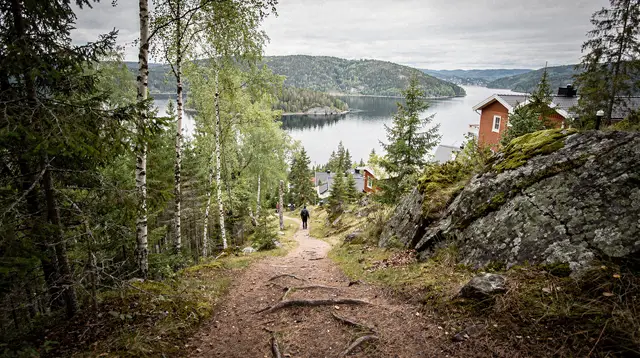
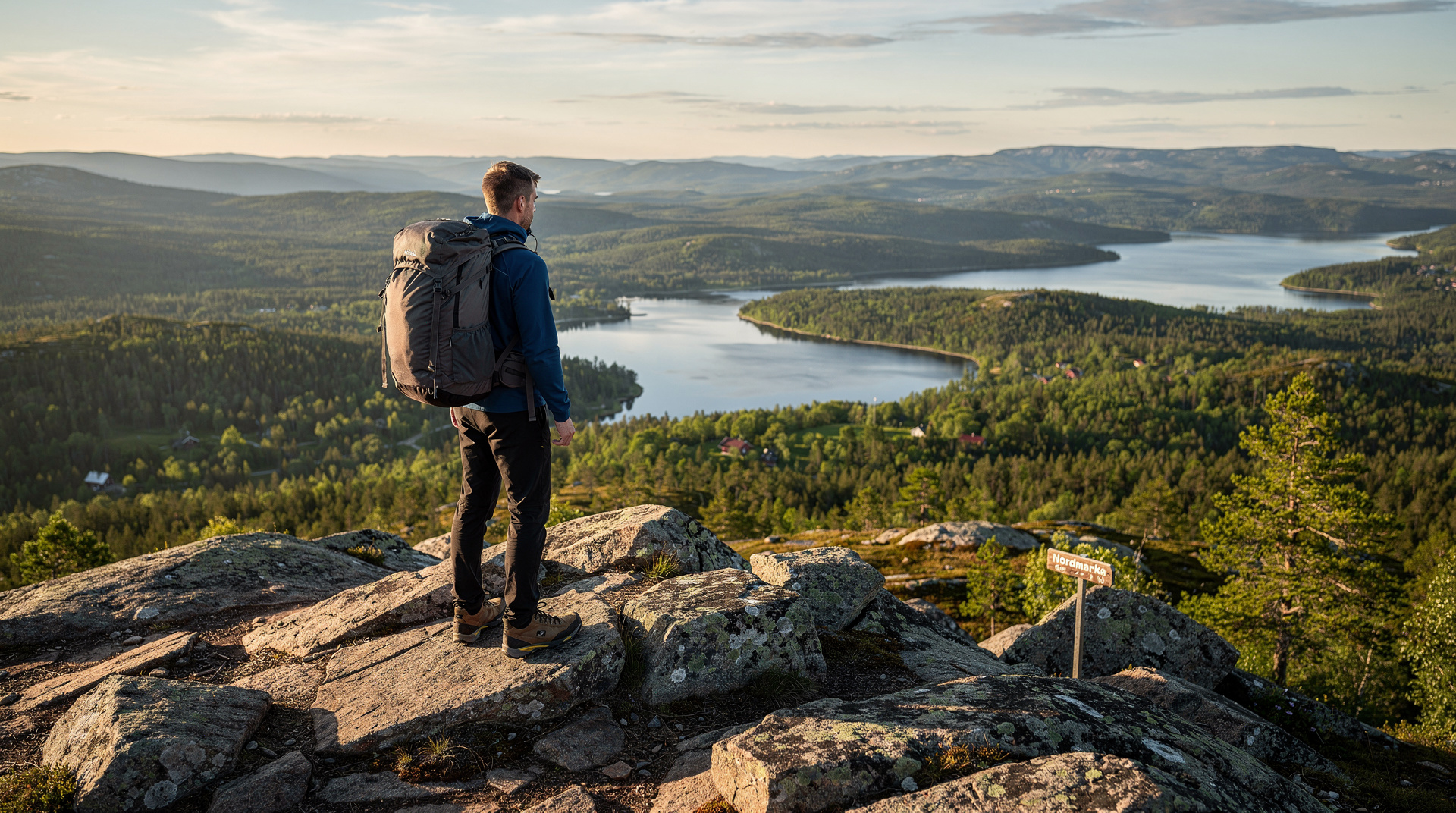
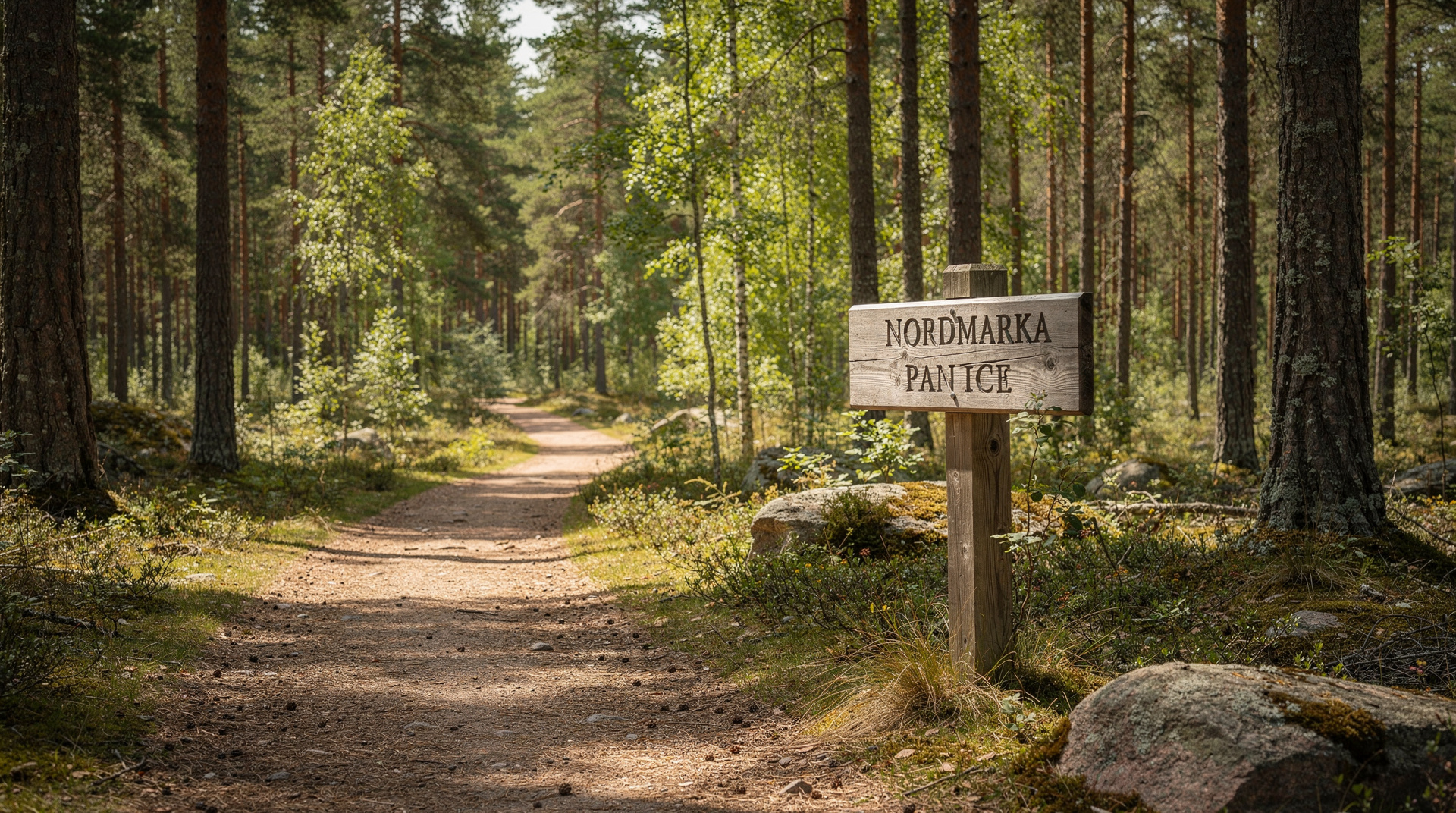
Nordmarka covers approximately 1,700 square kilometres of forest, lakes, and ridgelines. It begins at the T-bane terminus (line 1 to Frognerseteren) and stretches north and west for tens of kilometres. In summer, Nordmarka is full of hikers, swimmers, and people picking berries. In winter, it has over 2,600 km of marked ski trails, many of them groomed. Entry is free. There is a Norwegian concept — allemannsretten, the “right of all” — that guarantees public access to uncultivated land regardless of ownership. In practice, this means the forests around Oslo belong, in the most meaningful sense, to everyone.
Our Nordmarka hiking guide and the broader Oslo hiking overview give you the practical details. The key point is that Oslo’s relationship with the outdoors is structural, not aspirational — the city was built around forest access and the population uses it constantly.
How Oslo compares with its Scandinavian rivals
Oslo is not alone in this competition. Copenhagen is still the reference point for urban cycling — its bike-lane network and cycling mode share are, on balance, more mature than Oslo’s, though Oslo has closed the gap fast since 2016. Stockholm’s district heating network and older green-space planning are arguably more sophisticated on paper.
What Oslo does better than either is transport electrification at speed and unmediated forest access from the city centre — you can be on a marked forest trail 20 minutes from Karl Johans gate by tram and T-bane, which neither Copenhagen nor Stockholm quite matches. Our Oslo vs Copenhagen and Oslo vs Stockholm comparisons go deeper into the specifics for anyone weighing a Scandinavian capital trip partly on environmental grounds.
Do you need a car? No — and that is the point
A recurring visitor question is whether renting a car makes sense for exploring Oslo and the surrounding fjord and forest. The honest answer, covered in full in our do you need a car in Oslo guide, is no. The city centre is compact and walkable, Ruter’s transit network reaches the forest edges and the fjord ferries, and a car becomes a genuine liability in neighbourhoods where street parking has deliberately been removed. Visitors who bring a car often end up paying for expensive parking they barely use.
Green space inside the city, not just around it
Beyond Nordmarka, Oslo has invested in green space within the built-up city itself. Frogner Park, home to the Vigeland sculptures, is also simply an excellent large urban park — mature trees, ponds, and lawns that fill with picnicking Osloites the moment the sun appears.
The Botanical Garden, part of the Natural History Museum, is a quieter green pocket near Tøyen that most visitors overlook entirely. Both are free to enter, both are covered in our free things to do in Oslo guide, and both reinforce the same point: Oslo’s green identity is not confined to one flagship forest, it runs through the ordinary fabric of the city.
Where Oslo is still falling short
An honest account requires acknowledging where Oslo’s green credentials are more complicated.
Norway is one of the world’s largest oil and gas exporters. The country’s sovereign wealth fund — built entirely on petroleum revenues — is the largest in the world. The sustainability measures within Oslo’s boundaries exist alongside a national economy that remains heavily dependent on fossil fuel extraction. Norwegians are aware of this tension. The government has committed to winding down new oil exploration, but the timeline is contested and the current pace of transition is a subject of genuine domestic political debate.
Oslo’s waste system is impressive — food waste is composted at scale, plastic is collected separately, and the city has an impressive record on recycling. But Norwegian per-capita consumption of goods (and the embedded carbon in those goods) remains high.
None of this invalidates what Oslo has done on urban transport and mobility. But it is worth naming the gap between what the city has achieved locally and the wider picture.
What this means for a visitor
As a visitor, Oslo’s sustainability orientation has concrete practical benefits. The public transport is excellent and covers almost everywhere you want to go. The city is walkable and increasingly bike-friendly. The air quality in the city centre is genuinely good. The fjord water — remarkably for a major city waterfront — is clean enough to swim in. In summer, people do swim in the fjord, regularly, off rocks and beaches within 15 minutes of the city centre. See our swimming spots guide for the best locations.
The electric ferry network means that even visiting the outer islands of the Oslofjord — places like Hovedøya with its ruined monastery and beaches — involves a pleasant, quiet electric crossing from the city centre. Our island hopping guide and beaches guide cover the best of what is reachable by boat.
Oslo is not perfect — no city is. But the effort is real, the infrastructure exists, and the natural environment that surrounds and permeates the city gives it a quality of daily life that is genuinely unusual for a European capital. Walking to the forest from a tram stop. Swimming in fjord water you would trust your children in. The quiet of electric ferries on a summer morning. These are not marketing slogans. They are the actual texture of what it is like to be in Oslo.
Top experiences
Bookable activities with verified prices and instant confirmation on GetYourGuide.