48 hours in Oslo: a classic weekend itinerary
Oslo: Oslo Pass with public transport and free museum entry
Duration: 24-72 hours
- Instant confirmation
- Free public transport
- Skip museum queues
Your first 48 hours in Oslo
There is a particular feeling you get when you step out of Oslo Central Station for the first time — Karl Johans gate stretches ahead of you, the Royal Palace sits at the top of the hill like something from a fairy tale, and the whole city seems to say come, explore, we have coffee. We have done this weekend more times than we can count, with visitors ranging from backpackers to parents with strollers, and the shape of it is always roughly the same. Here is what we recommend.
A quick note on money before we begin. Oslo is genuinely expensive. A coffee costs around NOK 60–75 (roughly USD 6.50–8), a simple restaurant lunch NOK 180–250 (USD 19–27), and a pint of craft beer can easily reach NOK 110–130 (USD 12–14). None of this should scare you away — you just need to know it going in. Budget a realistic NOK 1,800–2,500 per day (USD 195–270) for a comfortable experience that includes one museum, one fjord activity, and decent meals.
| Where to base yourself | Sentrum or Grünerløkka, both walkable to everything below |
| Cost for two days | Around NOK 3,600–5,000 (USD 390–540), museums and one meal out included |
| Getting around | Ruter trams, metro and ferries — walk when weather allows |
| Best time to go | May–September for the fjord cruise; December for Christmas market atmosphere |
| Book ahead | Fjord cruise and Munch Museum timed entry on weekends |
Day one: Bjørvika, the Opera House, and the eastern edge
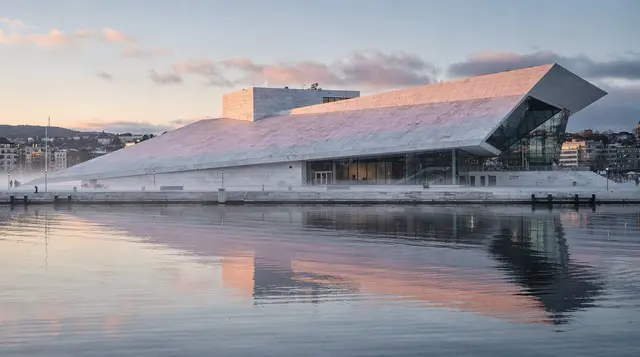
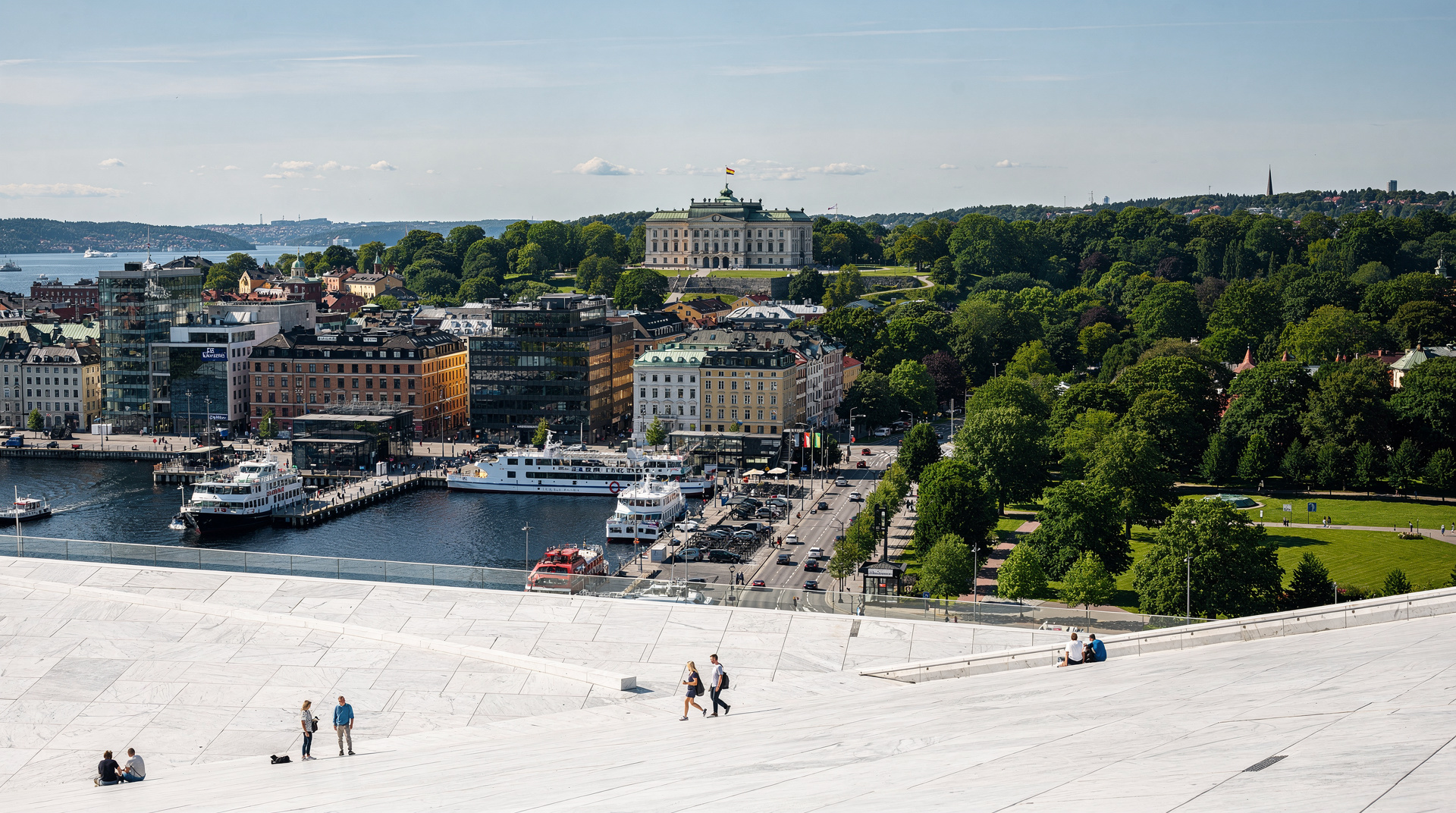
Start at the water. The Bjørvika waterfront is Oslo’s most dramatic urban gesture, and the best way to understand it is to walk the roof of the Oslo Opera House. There is no charge to do this — you just walk up the sloping marble exterior and stand there, water on three sides, the Munch Museum rising like a Jenga tower to your left, the old city behind you. Allow 45 minutes to an hour here; read more in our full Opera House guide.
After the Opera, cross under the Dronning Eufemias gate overpass toward the Munch Museum. The building is polarising (we like it; many locals still hate it), but the collection is extraordinary. Entry is around NOK 200 (USD 21) for adults. You do not need a full morning here — two hours covers the permanent collection and the temporary exhibitions well. Learn more in our Munch Museum guide.
Lunch on the Barcode strip or — better — walk ten minutes west to Mathallen Food Hall in Vulkan. It is the closest thing Oslo has to a market lunch culture, with everything from Korean bao to smoked salmon open-faced sandwiches. Expect to spend NOK 180–220 (USD 19–24) for a proper meal with something to drink.
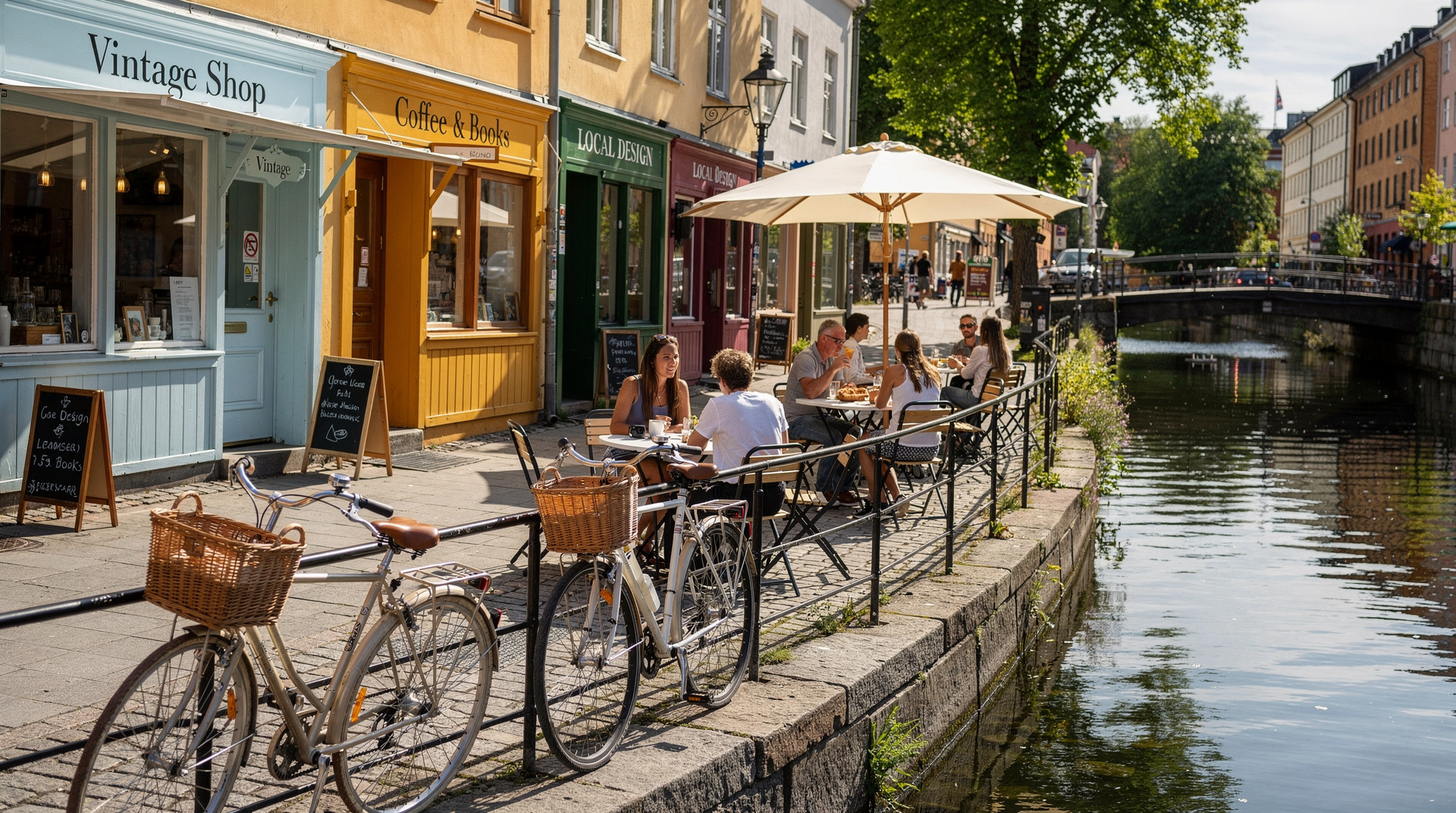
The afternoon belongs to Grünerløkka. Take tram line 11 or 12 three stops north from the city centre and you land in Oslo’s most characterful neighbourhood. Wander Thorvald Meyers gate, dip into vinyl shops and independent clothing stores, and end up at one of the neighbourhood coffee bars — Fuglen, Tim Wendelboe, or Supreme Roasters are all within walking distance. A full introduction to the area lives in our Grünerløkka neighbourhood guide.
If the weather is reasonable, end day one with a walk along the Akerselva river south from Grünerløkka toward the city. The path takes you past old textile mill buildings now turned into studios and bars. There is almost always something happening along this stretch on a Friday evening.
Day one dinner: where to eat in Oslo without regret
The honest advice: avoid the tourist-facing restaurants along Karl Johans gate and the central Aker Brygge waterfront unless you specifically want the view with your meal. The food is often average and the bill is never less than punishing. Better options in the NOK 250–450 (USD 27–48) per person range with drinks include Smalhans in Ullevål (seasonal Norwegian), Arakataka in Sentrum (creative small plates), or — for the full traditional experience — a smørbrød counter lunch somewhere that is then traded for a light dinner from a supermarket. Yes, we really do recommend occasional supermarket evenings in Oslo. Rema 1000 and Kiwi are your friends.
Day two: Bygdøy and the fjord
Day two is water-and-museums. Oslo’s Bygdøy peninsula holds five major museums in comfortable walking distance of each other. The question is which ones. Our honest view: the Fram Museum (the actual polar exploration ship Fram, indoors) and the Norsk Folkemuseum (an open-air museum of 150+ historic Norwegian buildings) are the standout experiences. The Kon-Tiki Museum is compact and good. The Viking Ship Museum is currently closed for a major renovation with reopening expected around 2027 — do not show up expecting to see the longships.
Take ferry line 91 from Rådhusbrygga (City Hall Pier) to Bygdøynes — the ferry itself is a mini fjord experience and costs only a Ruter transit fare (NOK 42 / USD 4.50 with a single ticket). If you have an Oslo Pass, the ferry is included.
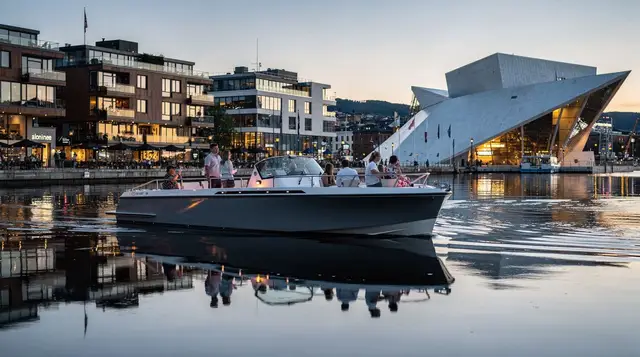
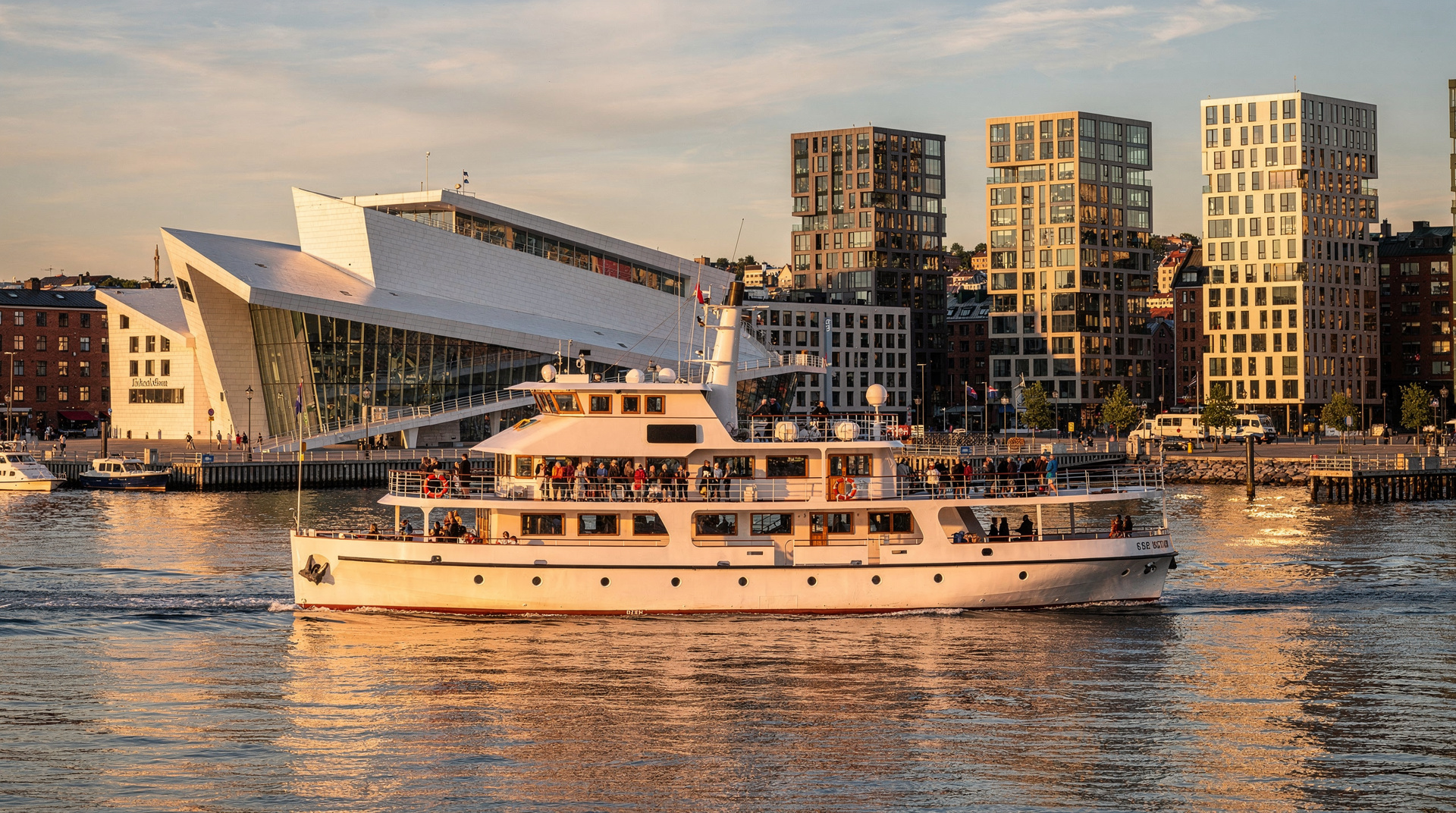
In the afternoon, depending on the season: if it is May to September, book a fjord cruise. Even the short 90-minute sightseeing departures from Rådhusbrygga give you a completely different perspective on the city — Oslo from the water is a genuinely beautiful experience. The silent electric boat is our particular favourite for smaller groups; larger groups do well on the evening dinner cruise. If you are visiting in winter, the fjord options are more limited but not nonexistent — our winter activities guide covers what stays open.
The Oslo Pass question
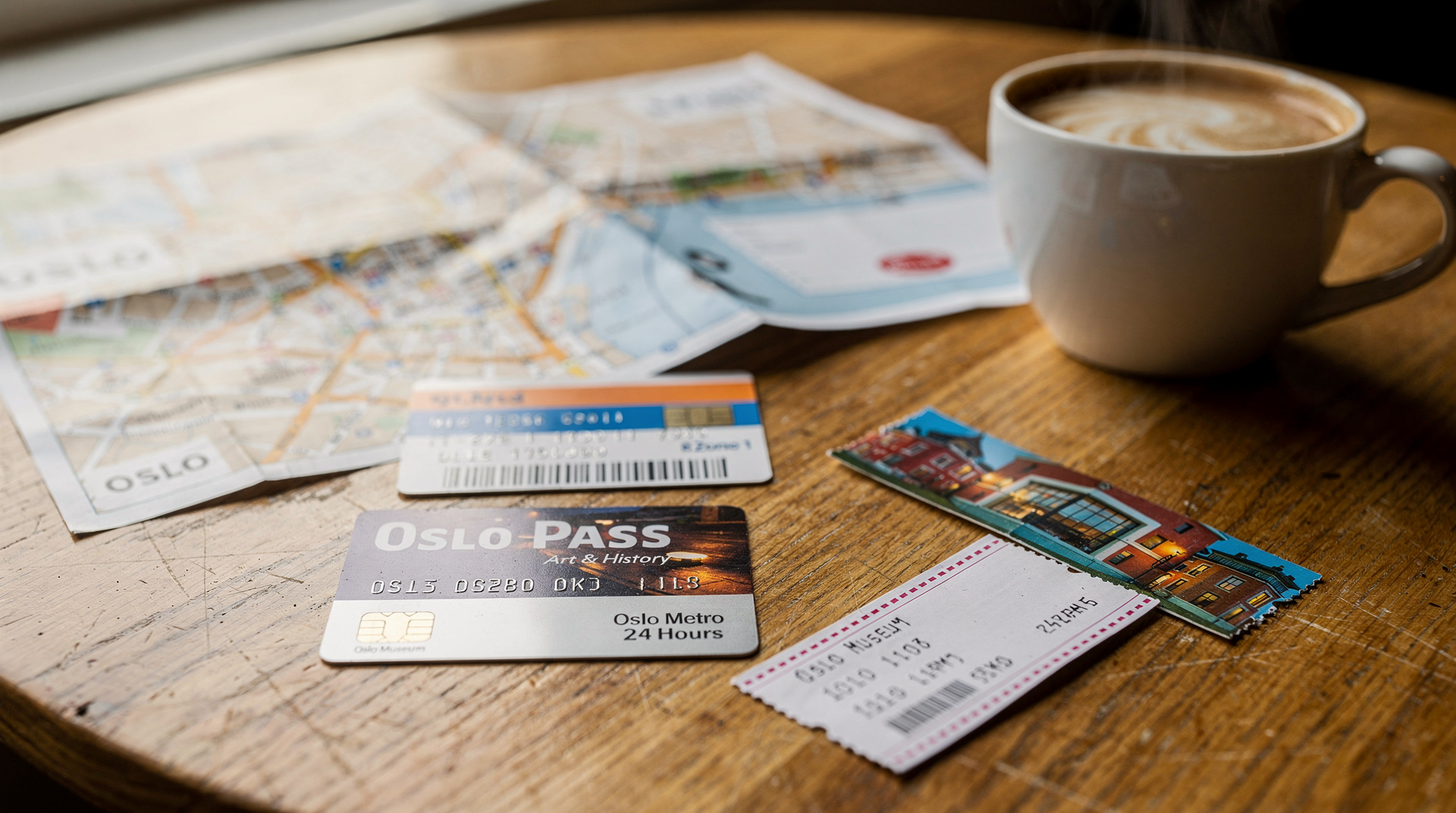
Over a weekend, the Oslo Pass can pay for itself — but only if you are genuinely visiting multiple museums in one day and using public transport heavily. For two days with a Bygdøy morning (three museums) plus the Munch Museum, plus transport, the 48-hour pass at around NOK 695 (USD 75) makes sense. For a more relaxed weekend with one museum and lots of walking and café time, individual tickets probably work out cheaper. We have a dedicated honest Oslo Pass assessment if you want to run your own numbers.
Getting around the city
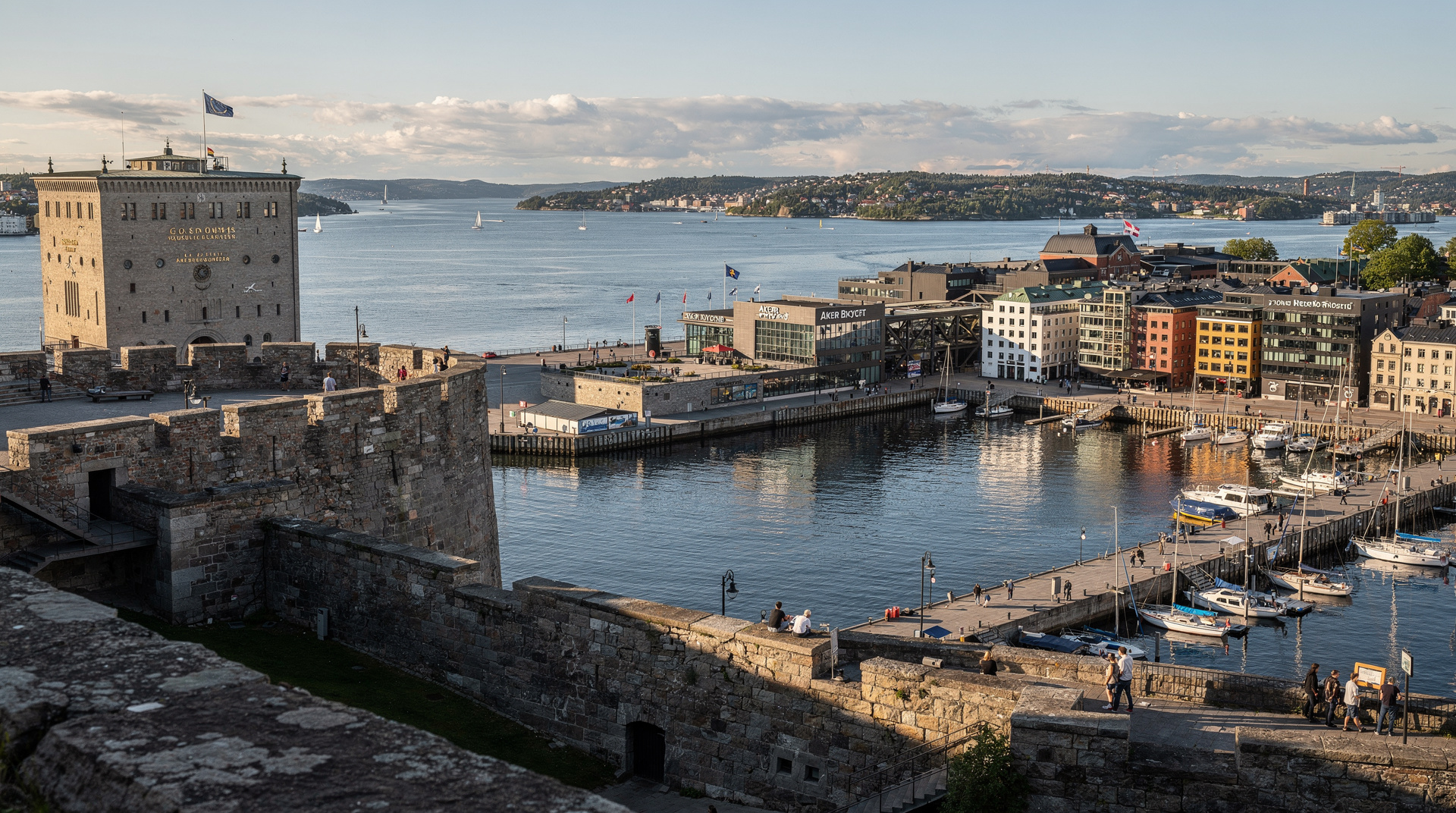
Oslo’s public transport is run by Ruter, and it is excellent. A single journey (valid 90 minutes) costs NOK 42 (USD 4.50) if bought via the Ruter app — never buy from drivers. The city is also extremely walkable. The distance from Oslo Central Station to Aker Brygge is about 20 minutes on foot; from Aker Brygge to the Opera House along the waterfront is another 25. We walk more than we use transit when the weather cooperates.
Taxis are very expensive (NOK 200–400 / USD 21–43 for most city journeys) and largely unnecessary given how well the trams and metro work.
What to skip on a first weekend
The Vigeland Sculpture Park in Frogner is famous and worth an hour, but it is not the transcendent experience some guidebooks suggest. Skip it if your feet are tired. Karl Johans gate itself is perfectly pleasant but needs no more than a single stroll. And the boat trip to Drøbak — lovely as it is — is a half-day commitment better suited to a longer trip. Save it for visit two.
Packing the most in
If you want a structured tick-list approach, our 2-day Oslo itinerary maps out the exact routing. If you are arriving by air, read our airport to city guide so you hit the ground running — the Flytoget express takes 19 minutes to Oslo Central and costs NOK 230 (USD 25); the regional Vy train takes about 25 minutes and costs around NOK 121–135 (USD 13–14.50).
Day one vs day two at a glance
| Day one | Day two | |
|---|---|---|
| Focus | Bjørvika, Opera House, Munch Museum, Grünerløkka | Bygdøy museums, fjord |
| Pace | Urban, walkable, café-driven | Ferry-and-museum, slower |
| Best weather for it | Any — mostly indoors and covered walks | Clear skies help the fjord cruise a lot |
| Rough cost | NOK 700–950 (USD 75–102) | NOK 900–1,300 (USD 97–140) with a cruise |
Where to stay for this exact itinerary
For this route, base yourself in Sentrum or Grünerløkka rather than further out — both put you within a 15–20 minute walk of the Opera House, Bygdøy ferry pier, and the Grünerløkka cafés, which matters when you are trying to cram two neighbourhoods and five museums into 48 hours. Staying near Majorstuen or Frogner works too if you would rather start with the Vigeland Sculpture Park next door, but it adds tram time to everything else on this itinerary.
If it rains
Oslo does not stop for weather, and this itinerary mostly survives rain intact — the Opera House roof is less fun soaked, but the Munch Museum, Mathallen, and all five Bygdøy museums are indoor. If day two turns into a washout before your fjord cruise, our rainy day museums guide has good swaps, and a cruise can typically be rescheduled a day if you book directly rather than through a non-refundable third party.
Doing it on a tighter budget
If NOK 1,800–2,500 per day feels steep, it can be trimmed hard without losing the shape of the weekend. Skip the Oslo Pass, buy single museum tickets, eat one supermarket meal per day, and lean on the free things to do in Oslo list — the Opera House roof, Akerselva walk, and most of Karl Johans gate cost nothing. Our daily costs breakdown and full trip cost guide both go deeper on realistic numbers if you are planning down to the krone.
The city rewards the curious. Forty-eight hours is enough to fall in love with it. Two days is rarely enough to actually understand it — but it is a very good start.
Top experiences
Bookable activities with verified prices and instant confirmation on GetYourGuide.